
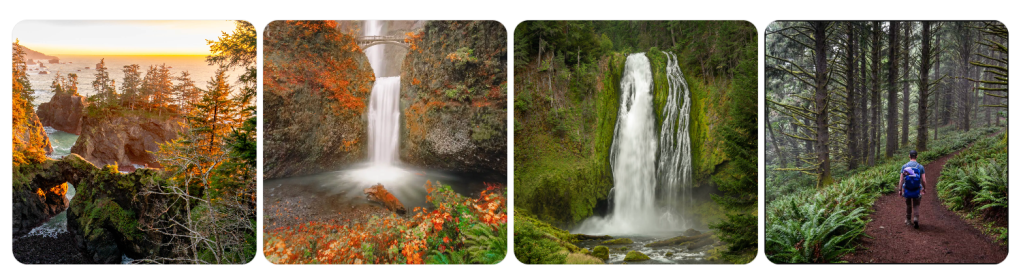
Oregon’s diverse landscapes—from rugged coastlines to towering mountains—offer some of the most scenic and varied hiking experiences in the Pacific Northwest. Here are 20 of the state’s top hiking trails, each showcasing unique natural beauty.
- Trail of Ten Falls (Silver Falls State Park) – A 7.8-mile loop featuring ten stunning waterfalls, including the iconic South Falls, which hikers can walk behind.
- Garfield Peak (Crater Lake National Park) – A 3.5-mile out-and-back trail offering panoramic views of Crater Lake and Wizard Island.
- Eagle Creek Trail (Columbia River Gorge) – A 13-mile round-trip hike passing dramatic waterfalls like Tunnel Falls, with a section behind the falls.
- Timberline Trail (Mount Hood) – A challenging 40.7-mile loop around Mount Hood, offering alpine meadows, glaciers, and panoramic views.
- Mount Scott Trail (Crater Lake National Park) – A 5-mile round-trip hike to the highest point in the park, providing sweeping views of the caldera.
- Herman Creek Trail (Columbia River Gorge) – An 8.6-mile round-trip hike through lush forests and past seasonal waterfalls.
- Tamanawas Falls Trail (Mount Hood) – A 4.2-mile round-trip hike leading to a 100-foot waterfall in a mossy canyon.
- Blue Basin Loop (John Day Fossil Beds) – A 4-mile loop showcasing colorful rock formations and fossil deposits.
- Elk Mountain–King Mountain Loop (Tillamook State Forest) – A strenuous 10-mile loop with nearly 4,000 feet of elevation gain, offering expansive forest views.
- Discovery Point Trail (Crater Lake National Park) – A 2-mile trail leading to breathtaking views of Crater Lake.
- Mount Jefferson Wilderness (Jefferson Park) – Accessed via the Whitewater Trail, this area offers alpine meadows, lakes, and panoramic mountain views.
- Pacific Crest Trail (Oregon Section) – A 430-mile stretch through Oregon, offering diverse landscapes from desert to alpine environments.
- Mount Hood’s Timberline Trail – A 40.7-mile loop around Mount Hood, providing alpine meadows, glaciers, and panoramic views.
- Oregon Skyline Trail – A historic 260-mile trail connecting Mount Hood to Crater Lake, part of the Pacific Crest Trail system.
- Mount Jefferson Wilderness – A remote area accessible by foot or horse, featuring alpine lakes and meadows.
- Crater Lake Rim Trail – A scenic trail offering panoramic views of Crater Lake and surrounding landscapes.
- Cascade Head Trail (Central Oregon Coast) – A 4-mile trail leading to ocean vistas and through coastal meadows.
- Opal Creek Trail (Willamette National Forest) – A 6.5-mile trail through old-growth forest to the historic Opal Creek.
- McKenzie River Trail (Willamette National Forest) – A 26-mile trail known for its turquoise waters and waterfalls.
- Mount Thielsen Trail (Umpqua National Forest) – A challenging hike leading to a jagged peak with panoramic views.

These trails offer a glimpse into the diverse natural beauty of Oregon, catering to all levels of hikers. Whether you’re seeking waterfalls, alpine vistas, or coastal views, Oregon’s trails provide unforgettable experiences.
Let me tell you something right out the gate: Oregon isn’t for the faint of heart. Sure, the postcards show waterfalls and meadows blooming with wildflowers, and yes, you’ll find those. But real hikers—those of us who eat trail mix like it’s sacred ritual and sharpen our blades before sunrise—we know the truth. Out here, the wilderness doesn’t just whisper. It growls. And for every breathtaking summit view, there’s a sheer cliff waiting to test your resolve.
I’ve hiked across most of the Lower 48, from the granite peaks of the Sierra Nevadas to the swampy backroads of the Everglades. But Oregon? Oregon demands your respect. You either come prepared, or you don’t come back.
The Rogue River Trail – Wild Country, No Second Chances
Down in southern Oregon, the Rogue River Trail carves through 40 miles of unforgiving terrain. Don’t let the name fool you—it’s not just a river. It’s a lifeline, a snake coiled through deep canyons and under jagged ridgelines. If you’re the kind that likes soft switchbacks and cell service, turn around now.
The trail is remote, with no easy bail-out points. This is where the wild things roam—black bears, cougars, and more than a few rattlers that blend into the rocks like ghosts. I carry a .357 out here, not because I’m scared, but because I’m smart. And don’t even think about trying this trail in shoulder season without a survival kit. Temps swing like a mood-drunk pendulum. I’ve seen guys in shorts get hypothermia within hours of a cold front.

Bring a filter and iodine tablets—redundancy keeps you breathing. The river’s beautiful, sure, but upstream isn’t always clear. Giardia doesn’t care how fit you are.
Mount Hood – Beauty With an Edge
You can see Mount Hood from Portland, standing like a sentinel over the land. But don’t mistake visibility for safety. Climbing around Hood—even just the trails near Timberline Lodge—is a whole other game. Storms move in fast, blinding fog rolls in without warning, and snow can linger well into summer on the upper reaches.
The Timberline Trail circles the mountain for 40 miles, and it’s one of the best tests of endurance and preparedness in the Pacific Northwest. River crossings will challenge your balance, and mudslides from spring melt can wipe out sections overnight. Carry a topo map, not just your phone with GPS. Electronics fail. Paper doesn’t.
I’ve hiked parts of this trail when it felt like a battlefield. One minute the sun is out and the next you’re in a whiteout with ice crystals biting your cheeks. That’s why I say: layer like your life depends on it—because it does.
Eagle Creek – A Trail Forged in Fire
This one’s legendary, both for its jaw-dropping beauty and its brutal reminder of nature’s fury. The 2017 Eagle Creek Fire scorched thousands of acres, transforming parts of the Columbia River Gorge into a blackened wasteland. But the trail is back—partially—and it’s still a must-do if you’ve got the grit.
You’ll walk narrow ledges blasted into basalt cliffs, water thundering hundreds of feet below. And yeah, there’s a cable to hold onto in spots, but don’t rely on it like it’s gospel. I’ve seen cables snap, and I’ve seen hikers freeze mid-step because they didn’t respect the drop. This is the kind of trail where a moment’s distraction means a helicopter evacuation—if you’re lucky.
The area’s regrowth is stunning, but also fragile. Don’t start fires. Don’t mess around. And watch for loose rock. The Gorge isn’t done shifting.
The Wallowas – Oregon’s Forgotten Mountains
Over in eastern Oregon, the Wallowa Mountains get less foot traffic than they deserve—and maybe that’s a good thing. They’re remote, steep, and riddled with grizzly-grade solitude. Nicknamed the “Alps of Oregon,” the Wallowas give you views so grand they feel almost fake, like someone painted them just to mess with you.
But out here, you need serious backcountry savvy. We’re talking multi-day treks with no service, minimal signage, and terrain that turns hostile fast. Thunderstorms in the Wallowas aren’t just noisy—they’re killers. Lightning hits high ridges like sniper fire. I’ve hunkered under a granite overhang, clutching my pack like a shield, praying I wasn’t the tallest object for a mile.
This is prime territory for your full kit: compass, fire starter, thermal blanket, med pack, extra calories. I recommend stashing a second set of maps and a signaling mirror too. If something happens out here, you’re your only rescue team.
Crater Lake – A False Sense of Security

Everyone thinks Crater Lake is just a family destination with ranger talks and scenic overlooks. Let me tell you, that caldera holds secrets. Rim Trail hikes are deceptively tough, with exposure that’ll catch you off guard and sudden elevation gains that drain your lungs like a siphon.
And the weather? In spring or early summer, a sunny morning can turn into a sleet storm by lunch. Visibility plummets and the trail markers might as well vanish into the mist. I’ve had to break trail with microspikes more than once while clueless tourists wandered around in sneakers.
You want to hike here? Come early, watch the sky, and always pack for winter—even in August.
Survival Mindset: The Oregon Creed
Here’s the deal. Hiking in Oregon isn’t a walk in the woods. It’s a test. Every trail is a gamble. The deck is stacked with rockfalls, flash floods, hypothermia, and predators. But you don’t come here for comfort. You come for the raw edge of the world.
Your gear matters. Don’t skimp. Boots should be broken-in and bombproof. Always pack a knife, a multi-tool, a fire source, and a water filter—even for short day hikes. The number of people I’ve seen turn around because of wet socks or blistered heels? Embarrassing.
Mindset is everything. If you panic out there, you’re already lost. I’ve spent nights huddled under tarps, soaked to the bone, eating jerky while rain thundered like war drums. But I’ve never once thought of quitting. Why? Because I trained for it. I live for it.
Learn the land. Study the terrain. Know your trailheads. Tell someone where you’re going and when you’ll be back. That’s not paranoia. That’s respect.
Oregon doesn’t hand out its secrets. You earn every view, every ridge line, every canyon echoing with nothing but the sound of your breath. The trails here are beautiful, yes—but they’re dangerous by design. That’s what makes them worth it.
So if you’re heading out, don’t just bring your pack—bring your grit.
Because in Oregon, adventure always comes with teeth.
 TheDailyChristian