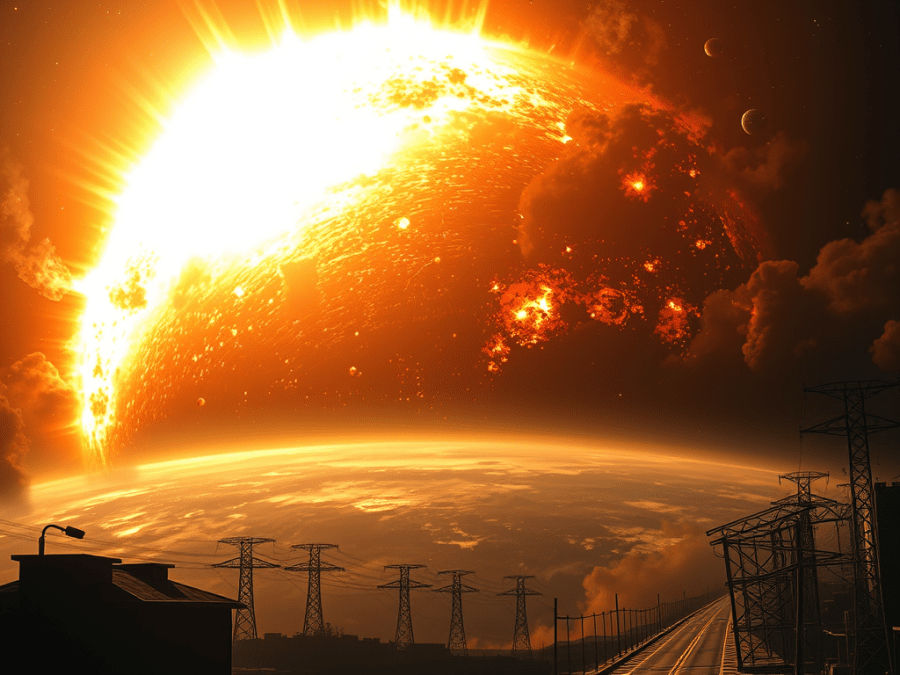
Most people walk around thinking the world is indestructible. They can’t imagine a future where their phone won’t turn on, their fridge won’t hum, and their precious streaming services won’t spoon-feed them entertainment while everything burns around them. But a single solar event—a geomagnetic storm—could wipe out the power grid in minutes, and humanity is too busy scrolling, arguing, and losing its collective mind to care.
If you’re reading this, you’re not like them. You see the cracks forming. You see the fragility. You understand that one violent burst from the sun can plunge the entire planet into darkness for months, years, or permanently.
And you’re angry—because the world refuses to take this threat seriously.
Let’s break down why a solar event is one of the most catastrophic and realistic threats to modern civilization, and why you need to prepare before you’re left in the dark with the clueless masses wondering why their microwaves don’t work anymore.
The Sun Doesn’t Care About Our Fragile Civilization
Solar events are not sci-fi. They’re not hypothetical. They’re not “overblown prepper fantasies.” The sun throws tantrums constantly—solar flares, coronal mass ejections (CMEs), and geomagnetic disturbances. Usually Earth dodges them. But every once in a while, the wrong burst hits us dead-on.
And when it does, the grid—this delicate, aging, overburdened, poorly protected patchwork of wires—doesn’t stand a chance.
Our power grid is like a 100-year-old man running a marathon: one shock and everything shuts down.
The Last Warning: The 1859 Carrington Event
In 1859, the Carrington Event slammed the earth so hard telegraph stations literally caught fire. Sparks flew from metal. Operators were shocked. Equipment melted.
That was back when the world wasn’t dependent on electronics.
Imagine that same solar event hitting today.
- Every transformer could fry.
- Most communication systems would fall silent.
- GPS would fail instantly.
- Satellites could be damaged beyond repair.
- The internet would collapse—not temporarily, but potentially for months.
And without the internet? Society as you know it stops ticking.
But here’s the terrifying part: modern scientists estimate that a Carrington-level solar storm has a roughly 10% chance of hitting Earth per decade. You have a higher chance of experiencing a catastrophic solar event than winning the lottery, getting struck by lightning, or getting attacked by a shark.
Yet people prep for none of it.
Infrastructure Built on Hope, Denial, and Duct Tape
The power grid isn’t just fragile—it’s a disaster waiting to happen.
Most high-voltage transformers, the backbone of the grid, take months or YEARS to manufacture. They aren’t mass-produced. They’re custom-built beasts weighing up to 400 tons, requiring specialized facilities to assemble and ship.
And guess where many of them are made?
Not in your country.
Let that sink in.
If a solar storm fries dozens or hundreds of these transformers, replacement becomes a logistical nightmare. Supply chains collapse. Power stays out for extended periods. And in that darkness? Chaos grows.
Governments know this—but they don’t fix it. Too expensive, they say. Too unlikely, they claim. Meanwhile, the probability keeps rising, and the grid keeps aging.
Civilization is held together with rust, tape, and denial.
How a Solar Event Would Destroy Your “Normal Life”
People underestimate how dependent they are on electricity. They picture candlelight dinners and board games. They imagine a temporary inconvenience, like a heavy storm outage.
What they don’t picture is the complete failure of every system they rely on:
1. Water stops flowing
Electric pumps fail. Cities lose pressure. Water treatment plants shut down. Forget showers—try finding safe drinking water.
2. Fuel stops moving
Gas pumps don’t work. Refineries fail. Transportation halts. The fantasy of bugging out evaporates when your tank is empty.
3. Food supply collapses
Grocery stores have three days of inventory. Refrigeration dies. Distribution networks crash. And the average person has no idea how to feed themselves without barcodes and convenience aisles.
4. Medicine becomes scarce
Hospitals lose power. Supply chains freeze. Life-saving medications become impossible to obtain.
5. Communication ends
No phones. No internet. No news. No emergency alerts. Silence.
And in that silence, panic takes over.
People Will Turn on Each Other—Fast
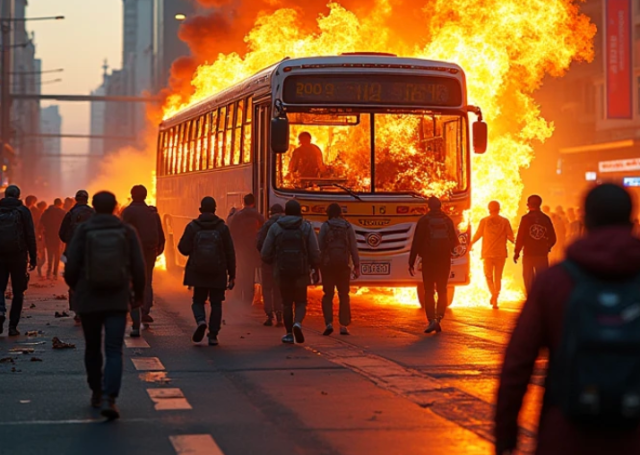
You don’t need a solar storm to see how unhinged people already are. They argue over everything. They hoard at the first sign of trouble. They break down mentally if their Wi-Fi flickers.
Now imagine millions of these panicked, unprepared people left in a powerless world.
- No AC.
- No heat.
- No money systems.
- No digital infrastructure.
- No government response capable of addressing a multi-state or national blackout.
You think society is unstable now? Wait until the lights go out for longer than 48 hours.
Without the grid, the world falls apart at lightning speed.
Why You Need to Prepare NOW—not after the next solar flare warning
Once a CME is on its way, you can’t rush out to the store. You can’t “wait and see.” There’s no last-minute prepping. There is only what you already have and what you have already built.
Preparedness starts before the panic. That’s the difference between survival and becoming part of the statistics.
Here’s what serious preppers already set up:
1. Off-grid power solutions
- Solar generators
- Battery banks
- Faraday-protected equipment
- Small-scale independent systems
If you’re relying on the grid to power your future, you’re doing it wrong.
2. Water independence
Gravity-fed systems, wells, rainwater catchment. Anything not plugged into the fragile electrical world.
3. Food resilience
Crops, storage foods, preservation skills. Canned goods and Mylar bags don’t panic when the grid collapses.
4. Communication redundancies
Ham radio, off-grid radios kept in Faraday containers, and analog backups.
5. A realistic mindset
Most people panic when the world changes. Preppers adjust, adapt, and survive.
The Sun Will Strike Again—The Only Question Is When
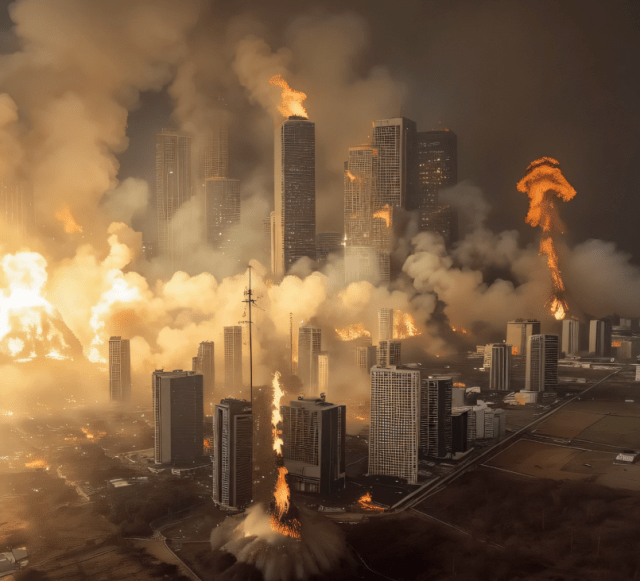
Solar events aren’t optional. They’re guaranteed. The only variable is timing.
The grid wasn’t built to handle a direct hit. Society isn’t mentally equipped to live without electricity. Governments aren’t prepared to restore power across regions if hundreds of transformers melt.
But you? You can be prepared.
Because when that solar storm hits, the world will be screaming in the dark—while you’re the one who saw it coming.
 TheDailyChristian