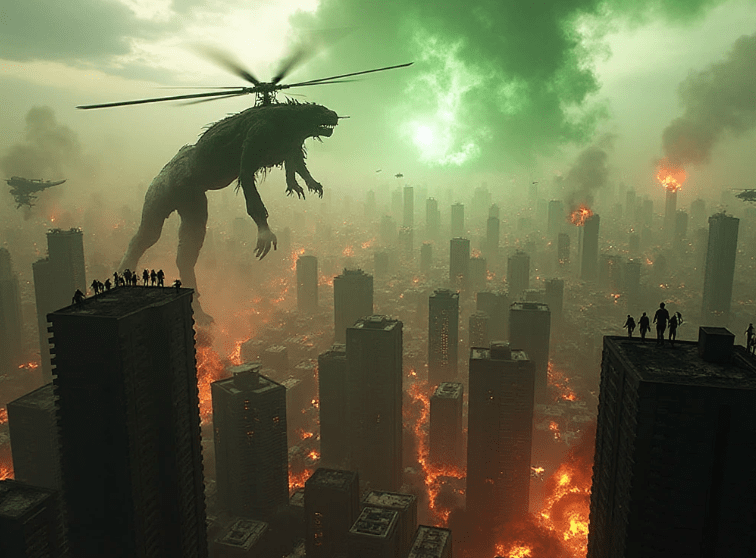
The Water Apocalypse: Why Humanity Is Staring Down Its Own Thirst-Driven Obliteration

If there were ever a way humanity was going to finally wipe itself off the face of the earth, it wouldn’t be from something gloriously cinematic like volcanic eruptions, meteor impacts, or nuclear firestorms. No, the downfall of the human species is going to be infinitely dumber: people refusing to store and purify their own water. We are staring down an extinction-level event because humanity has developed a suicidal obsession with trusting broken systems, polluted tap water, and an infrastructure held together with duct tape and bureaucracy.

You want real talk? Sit down.

The world is already failing. Not “maybe one day,” not “if things get worse,” not “in some distant future.” Now. Civilization is wobbling like a rotted tree ready to snap. Water treatment plants are ancient, pipelines are decaying, contamination events are weekly news, and half the country drinks more chemicals than hydration. And that’s before the real collapse comes.

When the grid finally dies — from cyberattacks, solar storms, political incompetence, or plain old entropy — your water flow ceases instantly. No power for pumps. No power for treatment facilities. No power for filtration systems. No trucks delivering bottled water. No emergency crews. No nothing.

Your tap will go dry so fast your denial won’t even have time to finish a sentence.

And yet? People still drink tap water right now like it’s natural spring purity. Let’s call it what it is: an unregulated chemical cocktail spiked with industrial runoff, pharmaceutical residue, agricultural waste, heavy metals, microplastics, and whatever else local authorities casually shrug off. But sure, keep drinking it — if your long-term survival goals involve weakened immunity, chronic illness, and collapsing faster when the real crisis hits.

This is why preppers are always angry. Because we’re watching a species sprint toward extinction and brag about how “the government will handle it.” Yeah, they’ll handle it — the way they “handle” everything: late, poorly, and only after the damage is done.

Step One: Store Water Like You Expect Civilization to Fail (Because It Will)

Let’s get the baseline out of the way:
FEMA’s “one gallon per person per day” is a fantasy. A bureaucratic bedtime story meant to calm the sheep. In a collapse scenario, you need 3–5 gallons per person per day bare minimum — and that’s if you’re being conservative, cautious, and completely ignoring comfort.

Real survivalists know:

  • 30 days is the beginner tier.
  • 90 days is serious preparedness.
  • 180+ days is what an intelligent species would do if it wanted to avoid extinction.

Store water in:

  • 55-gallon barrels
  • Water bricks
  • IBC totes
  • Underground tanks
  • Rain catchment systems
  • Every spare container that won’t degrade

If it holds water and won’t poison you, fill it.

Step Two: Purify Water Like Everything Is Contaminated (Because It Will Be)

When collapse hits, no water on earth is safe.

Not the lakes.
Not the rivers.
Not the streams.
Not the rainfall.

Once the grid fails, contamination becomes universal and unavoidable.

Human desperation alone destroys waterways within days. People dump trash, waste, chemicals, and runoff everywhere when they panic — and they will panic. Water you could drink today becomes a biological and chemical hazard overnight.

You need purification redundancies:

  • Gravity filters (Berkey-style, Alexapure)
  • Ceramic filters
  • Portable purifiers (Sawyer Squeeze, Lifestraw)
  • Chemical treatments (chlorine dioxide, iodine)
  • Boiling capability
  • Distillation setups
  • Pre-filters for sediment

If you only have one method, you’re not prepared. You’re gambling.

And in an extinction-level scenario, gamblers die fast.

Step Three: Become Your Own Water Infrastructure

The people who survive extinction-level collapse aren’t the “lucky ones.” They’re the ones who planned like pessimists and prepared like realists.

You need:

  • Rain catchment systems with food-grade gutters
  • Gravity-fed storage tanks
  • Backyard cisterns
  • Manual pumps for wells
  • Off-grid filtration rigs
  • Redundant water caches hidden on your property

You build your own water grid because the one you rely on now will fail spectacularly.

Step Four: Stop Pretending Tap Water Is Anything but Slow Poison

Let’s finally address the delusion at the core of the problem: people think tap water is “safe.” They think government regulation means anything in a world where cities legally pump water through outdated lead pipes and industrial contamination is dismissed as “acceptable risk.”

Drinking unfiltered tap water is self-inflicted sabotage.

When collapse hits, the unprepared will drop fast — dehydrated, sick, or too weak to fight for survival. And yes, fight. Because when water vanishes, humanity drops its mask and reverts to its most primal instinct: take or die.

Step Five: Accept That Survival Is on You — No One Else Is Coming

People think they’re “good people,” which means they assume society will magically hold together even after infrastructure dies. That’s wishful thinking with extra stupidity.

When water stops flowing, everyone goes feral.

The only barrier between you and extinction is what you store, what you purify, and what you build now, while the lights are still on and the taps still drip their contaminated sludge.

If you want to survive the extinction event unfolding around us, start acting like a species that wants to exist tomorrow.

Because if you don’t?
You’ll be one of the billions who vanish — thirsty, shocked, and unprepared.


Tap Water Is Poison. The Apocalypse Is Coming. Store Water or Perish.

If you think the world is going to “pull through,” you’re living in a fantasy fit for children and cowards. Look around: civilization is rotting from the inside out. Infrastructure is failing. Water systems are collapsing. Governments are lying. Populations are clueless. And when the end finally comes — and it will — water will be the first resource to vanish and the first thing people kill each other for.

You think you’re safe because your faucet still drips out something that looks like water?
Cute.
That tap is the thinnest thread holding your life together, and it can snap without warning at any moment.

This isn’t fearmongering.
This is the slow-motion death of a society too stupid to save itself.


Tap Water: The Toxic Death Juice You’ve Been Guzzling Without Thinking

Let’s get one thing straight: tap water is not clean. It’s not safe. It’s not pure.
It’s the byproduct of a decaying system being patched together by exhausted workers and aging equipment.

Every glass contains:

  • Lead from pipes older than your grandparents
  • PFAS (“forever chemicals”) that sit in your organs permanently
  • Chlorine byproducts linked to cancer
  • Microplastics littering your bloodstream
  • Agricultural runoff
  • Industrial pollutants
  • Trace pharmaceuticals
  • Bacteria that slip through “acceptable” standards
  • Whatever spills, leaks, or discharges they don’t publicly report

You are drinking a legal level of poison — because the law allows it.

And that’s during normal operations.

Imagine what you’ll be swallowing when:

  • Power goes out
  • Pumps stop
  • Purification plants fail
  • Filtration systems break
  • Chemical spills occur
  • Floods push sewage into reservoirs
  • Or society simply collapses under its own weight

The people who rely on unfiltered tap water will not survive what’s coming.
They won’t even last the first week.


Water Storage: The Line Between Survival and Becoming Another Body on the Ground

When the apocalypse hits — whether slowly through decay or instantly through disaster — people will scream, panic, riot, and die for water. You’ve seen how unhinged society gets over toilet paper. Imagine that, but with water — the one thing humans REQUIRE to live.

If you don’t store it now, you’re preparing to die thirsty.
Simple.
Cold.
Final.


How Much Water You Actually Need to Avoid Becoming a Statistic

Forget the weak government guidelines.
Those are for people who plan to rely on handouts and FEMA ration lines.

Actual survival requires:

  • 2–3 gallons per person per day
  • 30–60 days minimum
  • More if you have pets, kids, or a functioning brain

If you want to last longer than the first wave of casualties, double it.
If you want to outlive the desperate mobs, triple it.

The apocalypse doesn’t reward minimalism.


The Only Storage Options Worthy of Surviving Collapse

1. IBC Totes (275–330 gallons)

These aren’t containers. They’re lifeboats.

2. 55-Gallon Barrels

The prepper classic. Heavy, durable, battle-ready.

3. Water Bricks

Stackable, portable, apocalypse-friendly.

4. Thick-Walled BPA-Free Jugs

Not the brittle garbage that fractures when the temperature drops.

Every container you choose is a vote for whether you live or die.


Hidden Sources of Water While the World Burns

When the grid dies and panic erupts, your neighbors will run around screaming while you calmly access:

  • Water heaters
  • Toilet tanks (again: TOP tank, not the bowl)
  • Ice reserves
  • Rain barrels
  • Pools (with purification—unless you enjoy parasites)

The unprepared will watch their families deteriorate.
You won’t.


Purification: Because Drinking Bad Water in the Apocalypse Is a Death Sentence

In a grid-down world, waterborne diseases spread like wildfire. People will drop like flies from diarrhea, infections, parasites, and bacteria.

You need redundancy.
Backup for your backup.
Layers upon layers of purification.

Boiling

If you can’t boil water correctly, you won’t last.

Berkey, Katadyn, Sawyer

Filters designed for people who plan to live, not hope.

Bleach

The old-world lifesaver.
8 drops per gallon | ½ teaspoon per 5 gallons

Purification Tablets

Light. Deadly effective. Mandatory.

Solar Disinfection

Slow. Primitive. Keeps you alive.

Every method you ignore is another nail in your own coffin.


Tap Water Must Be Filtered NOW — Before Collapse Makes It Unusable

People say, “I’ll start filtering when things get bad.”

Wake up.
Things ARE bad.
You’re just numb to it.

Every sip of tap water carries microscopic threats your body doesn’t want — and the system barely controls.

Filtering tap water TODAY is your training for filtering “water” tomorrow that may come from:

  • mud holes
  • ditches
  • storm runoff
  • contaminated rivers
  • emergency relief points
  • decaying reservoirs

If you don’t build the habit now, you’ll die when the stakes are real.


Rainwater Harvesting: The Only Renewable Water Source Once Civilization Collapses

If there’s one system that separates survivors from statistics, it’s this one.

Rainwater = freedom.
Rainwater = independence.
Rainwater = survival.

All you need:

  • Gutters
  • Downspouts
  • A diverter
  • Storage barrels or tanks

While the desperate masses fight in dry streets, you’ll be gathering water from the sky.


Rotate or Rot: Stored Water Doesn’t Last Forever

Rotate:

  • every 6 months (tap water)
  • every 12 months (treated water)

Label. Track. Rotate.
Sloppiness kills.


The Final Commandment: NEVER Tell Anyone How Much Water You Have

In the apocalypse, thirsty people become animals.
Starving people become predators.
Desperate people become enemies.

Your water is your lifeline.
Your water is your power.
Your water is your survival.

Protect it or lose it.
Hide it or die with it.
Silence is your shield.

The Ultimate Doomsday Prepper Starter Pack

The Ultimate Doomsday Prepper Starter Pack: A Movie Critic’s Guide to Survival Skills

When it comes to preparing for the inevitable end, the world of doomsday prepping has captured our imagination. Hollywood has long been fascinated with apocalyptic scenarios, from plagues to natural disasters and alien invasions. And while some may dismiss preppers as a fringe group, the reality is, the need for survival preparation is more mainstream than ever. Whether you’re preparing for a natural disaster or a total societal collapse, having the right skills and equipment can make all the difference in your survival. So, let’s explore the ultimate doomsday prepper starter pack, featuring essential survival skills, key tools, and Hollywood films that might just offer some valuable lessons along the way.


1. Water Filtration

First and foremost, it’s all about water. Sure, you can live without food for a while, but without clean water, you’re a goner. Investing in a water filtration system, like the Lifestraw or a high-end portable filtration pump, is essential. This ensures that even if your water sources become contaminated, you’ll have the tools to purify them. Survival movies like The Road (2009), where a father and son trek through a post-apocalyptic landscape, emphasize the dire need for basic essentials like clean water.

2. Fire Starting Kit

Nothing says survival more than the ability to make fire. It’s warmth, light, and the means to cook your food. A fire starting kit, whether it’s a reliable ferro rod, waterproof matches, or a flint-and-steel set, should be an absolute staple. In films like Cast Away (2000), where Tom Hanks’ character is stranded on an island, his struggle to start a fire symbolizes the core of human survival. A fire means hope in a hopeless world.


3. Shelter Building and Tarp Setup

The ability to quickly set up shelter can be the difference between life and death in the wilderness. From tents to tarps, being able to shield yourself from the elements will keep you safe and comfortable when it all hits the fan. If you’ve ever seen Into the Wild (2007), where Emile Hirsch’s character endures nature’s harshness, you understand that shelter is a must-have in your prepper toolkit.

4. Emergency Food Supplies

Survivalist films always emphasize one thing: food is vital. Whether it’s protein bars, freeze-dried meals, or canned goods, having an emergency food supply can keep you going for days. One movie that hammers this point home is The Martian (2015), where Matt Damon’s character uses his ingenuity to grow food and survive on Mars. It’s a perfect reminder that with the right tools and preparation, you can survive in the most unexpected places.


5. First Aid and Medical Knowledge

In any survival scenario, injuries are bound to happen. Having a first aid kit stocked with bandages, antiseptics, and pain relievers is non-negotiable. More importantly, you’ll want to know how to use the supplies effectively. Movies like 127 Hours (2010) and The Revenant (2015) show us the raw reality of survival, where characters find themselves in dire medical situations, and the most important thing is knowing how to tend to wounds.


6. Self-Defense Skills

Self-defense is another critical skill for preppers, as societal breakdowns often bring about dangerous situations. Knowing how to protect yourself, whether with hand-to-hand combat or weapons training, is essential. The Walking Dead (TV series) has drilled this concept into our minds, with its depictions of human survival in a post-apocalyptic world where both zombies and humans are threats. The importance of self-defense is highlighted in the brutal, no-holds-barred world the characters navigate.


7. Navigation and Orienteering

In an emergency, you may need to navigate through unfamiliar terrain or find your way to safety. Skills in map reading, compass usage, and GPS navigation are vital. The Grey (2011), starring Liam Neeson, is a prime example of how navigation and situational awareness can make or break your survival chances. After a plane crash in the wild, Neeson’s character must rely on his wits to survive in the harsh conditions.


8. Building a Bug-Out Bag

Having a well-packed bug-out bag is a must for any prepper. It should include essentials like a multi-tool, fire starter, first aid kit, extra clothing, and survival food. World War Z (2013) is an exciting example of the bug-out bag in action. Brad Pitt’s character goes on a worldwide hunt for a solution to the zombie pandemic, and it’s his preparedness that keeps him one step ahead of the chaos.


9. Mental Toughness

Perhaps the most underrated survival skill is mental toughness. Whether you’re facing a natural disaster or a long-term societal collapse, your mindset can determine your success or failure. The Road (2009), a bleak but beautiful tale about a father and son’s journey through a destroyed world, shows us that survival isn’t just about the physical tools—it’s about keeping your mental state strong when everything around you is crumbling.


10. Knowledge of Renewable Energy

When the grid goes down, renewable energy sources like solar power can be your saving grace. Solar-powered lights, chargers, and even solar ovens can provide a way to stay functional when your conventional energy sources are unavailable. Children of Men (2006) hints at a world on the brink of collapse, where technological breakdowns and energy crises are just as dangerous as societal chaos.


11. Bartering and Negotiation Skills

In a world where currency becomes obsolete, bartering will be the next best thing. Whether it’s trading food, supplies, or knowledge, being able to negotiate and barter will be key. The TV series The Walking Dead again comes to mind, as characters constantly negotiate for resources in a world where everything is scarce. Understanding value beyond traditional currency can ensure that you stay afloat in a collapsed economy.


Survival Prepper Skills to Master Before the End

  1. Water purification – Learn how to filter and purify water, one of your most precious resources in any survival situation.
  2. Fire making – Practice starting a fire in different environments and with various methods.
  3. Shelter building – Learn how to create emergency shelters using tarps, tents, and natural resources.
  4. Foraging – Understand which plants and insects are safe to eat and which are not.
  5. Trapping and hunting – Basic knowledge of trapping and hunting can provide you with much-needed food.
  6. Basic carpentry – Learn how to build structures and create useful items from wood.
  7. Self-defense – Take a class on hand-to-hand combat or weapons handling to protect yourself.
  8. Signaling for help – Practice using mirrors, flares, or other signaling methods to attract rescue teams.
  9. Cooking over a fire – Learn how to prepare meals using just a campfire or other primitive methods.
  10. Critical thinking and problem-solving – A clear mind can help you assess any situation and come up with a creative solution.
  11. Leadership and team coordination – Being able to lead and work in a group during stressful times is vital for long-term survival.

Hollywood Movies That Relate to Survival Prepping

  • The Road (2009) – An emotionally charged film about survival in a post-apocalyptic world where every decision counts.
  • The Martian (2015) – Matt Damon proves that ingenuity and resourcefulness are key to surviving in isolation.
  • Into the Wild (2007) – The true story of Chris McCandless, who seeks freedom in the wild, teaches us the importance of self-reliance.
  • Cast Away (2000) – Tom Hanks’ epic solo survival saga is a masterclass in patience, creativity, and mental fortitude.
  • The Grey (2011) – A gripping tale of survival against nature’s harshest elements, proving that perseverance can defy the odds.