
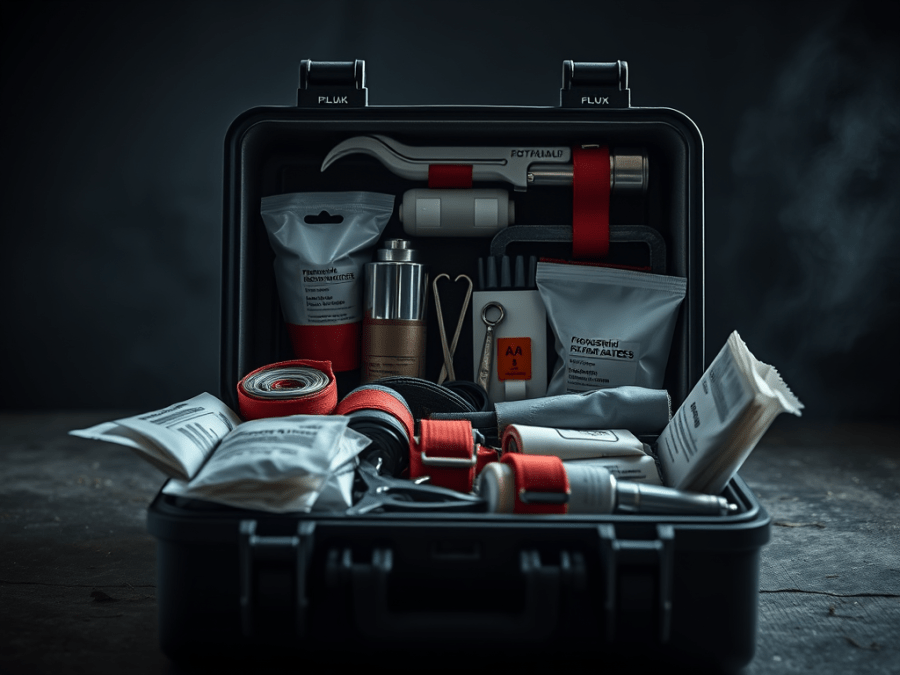
Let’s get something straight right from the start: most people’s first aid kits are pathetic. They’re nothing more than a plastic box of dollar-store Band-Aids, dusty ointment packets, and maybe—maybe—a sad roll of half-shredded gauze. People buy these useless kits thinking they’re “prepared,” when in reality they’re one infection, one sprain, one accident away from complete meltdown.
And the worst part? These people actually trust the system. They trust hospitals, emergency rooms, and a medical infrastructure that’s one power outage away from collapsing completely. They believe help will “always be there.” They genuinely think trained professionals will rush to assist them when things go bad.
The rest of us—the ones paying attention—know better.
When the grid goes down, when supply chains snap, when roads shut down, or when people panic and flood emergency services… you will be on your own. No ambulance. No pharmacy. No doctor on call. Just you, your knowledge, and the medical supplies you’ve actually invested in.
That is the reality every prepper must face.
And if that reality makes you uncomfortable, good. It means you’re waking up.
This article will show you exactly what you need in a real, collapse-ready first aid kit—not the fluffy civilian version. Not the “cute and colorful” kits sold in retail stores. This is the medical gear that gives you a fighting chance when the world goes silent.
WHY MOST FIRST AID KITS FAIL BEFORE YOU EVEN OPEN THEM

Let’s examine the nonsense most people rely on:
- Adhesive strips that fall off if you look at them wrong
- Tiny antiseptic wipes that dry out in six months
- Scissors too dull to cut thread
- A joke of a “CPR mask”
- No trauma supplies whatsoever
- No medication besides a single ibuprofen packet
These kits might help treat a paper cut… maybe. But in a real emergency? They’re dead weight.
The world is growing weaker, more complacent, and more delusional. People think medical emergencies will politely wait for backup. They think disaster will strike somewhere else. Not them. Never them.
You and I know the world doesn’t work that way.
If you want to survive, your first aid kit must be built for the ugly, unpredictable chaos reality throws at you—especially when the grid fails, help doesn’t come, and you’re the only responder.
THE PREPPER FIRST AID KIT: WHAT IT MUST INCLUDE (NO EXCUSES)

This isn’t about luxury.
This isn’t about convenience.
This is about staying alive when society’s safety nets tear apart.
Below is the gear every prepper first aid kit needs—not the soft civilian stuff, but real-world equipment useful when infrastructures crumble.
1. Trauma Supplies (The Gear That Actually Saves Lives)
When medical help is unavailable and seconds matter, you need tools that stop bleeding, stabilize injuries, and keep someone alive long enough to recover or move to safety.
Absolute essentials:
- Tourniquet (CAT or SOFTT-W) – Not the knockoff garbage you find online.
- Pressure bandage / Israeli bandage
- Hemostatic gauze (QuikClot, Celox)
- Mylar emergency blankets
- Trauma shears that actually cut
- Chest seals (vented preferred)
- Compressed gauze
- Triangle bandages
If your kit doesn’t include trauma supplies, it’s a toy—nothing more.
2. Wound Care Supplies (Because untreated wounds take people out fast)

In any situation where the grid is down, even a minor injury can turn into a major problem. Infection does not care about your optimism.
Include the following:
- Antiseptic solution (povidone-iodine or chlorhexidine)
- Alcohol wipes
- Sterile gauze pads in multiple sizes
- Medical tape (cloth and waterproof)
- Hydrocolloid dressings
- Antimicrobial ointment
- Cotton pads
- Finger splints
- Tweezers
If you think “just washing it with water” is enough, you’re living in a fantasy.
3. Medications (The supplies everyone ignores until it’s too late)

No pharmacy.
No urgent care.
No driving to the nearest clinic.
When you’re off grid or in crisis, medications you took for granted become invaluable.
Include:
- Ibuprofen
- Acetaminophen
- Aspirin
- Antihistamines (diphenhydramine + cetirizine)
- Anti-diarrheal tablets
- Antacids
- Electrolyte packets
- Glucose gel
- Cold/flu medications
- Cough suppressant + expectorant
- Topical burn gel
- Hydrocortisone cream
You don’t need a medical degree to understand that without antibiotics or medical oversight, controlling symptoms becomes vital.
4. Splinting & Immobilization Tools

Sprains, fractures, and soft-tissue injuries become massive liabilities during emergencies.
You’ll need:
- SAM splint
- Elastic bandages
- ACE wraps
- Sling materials
- Medical-grade tape
Mobility is survival. Injury is vulnerability. Prepare accordingly.
5. Airway & Breathing Supplies
You don’t need advanced tools. You need simple, reliable equipment that buys precious time.
- CPR mask
- Nasal airway (for trained individuals only)
- Face shield
- Emergency blanket for shock
You can’t rely on help arriving. You are the help.
6. Tools & Equipment
Your medical gear is only as good as your ability to deploy it.
Include:
- Nitrile gloves (multiple pairs)
- Headlamp (hands-free medical light)
- Thermometer
- Safety pins
- Trauma shears
- Compact mirror (self-inspection + signaling)
- Waterproof cases or pouches
Tools matter as much as supplies.
7. Wilderness & Off-Grid Medical Additions

If you’re living or bugging out off grid, your medical kit must adapt to that reality.
Necessary additions:
- Snake bite kit (not the outdated suction devices)
- Tick removal tools
- Burn dressings
- Water purification tablets
- Aloe gel
- Antifungal cream
- Suture kit (for trained individuals only)
When you’re miles away from help, these items are not optional—they’re survival essentials.
THE PREPPER MEDICAL MINDSET
Gear is useless without knowledge.
People think buying equipment makes them “prepared.” It doesn’t. You need training, practice, and a serious understanding that when things fall apart, you are the only medical provider available.
Learn:
- CPR
- Basic wound care
- How to apply a tourniquet
- How to splint
- How to clean and dress wounds
- How to recognize dehydration, heat stroke, hypothermia
- How to manage shock
If you’re relying on the world to stay put together so you don’t have to learn these skills, you’re not a prepper—you’re a wishful thinker.
THE WORLD IS GETTING SOFTER—YOU CAN’T AFFORD TO
Modern society pretends danger doesn’t exist. It pretends emergency services will always be seconds away. It pretends medicine will never run out.
The truth?
Everything is fragile.
Everything breaks.
Everything collapses eventually.
Your first aid kit is not a hobby.
Not a “nice idea.”
Not something to buy once and forget.
It is your lifeline—the literal difference between a fixable crisis and a fatal disaster.
If you build it now, while supplies are available and society still functions, you won’t panic when the day comes that everyone else realizes how unprepared they are.
Because you’ll already be ready.
 TheDailyChristian