The EMP Threat Is Real: Why Prepared Families Are Safer Families

If there’s one thing I’ve learned after helping over 9,000 people get prepared, it’s this: you will never regret being ready, but you will always regret being caught off guard. And when it comes to the threat of electromagnetic pulse (EMP) weapons, that saying has never been more true.

I’m a happy prepper—not because I’m excited about disasters (far from it), but because I’ve seen firsthand how empowered and joyful a family becomes once they take control of their safety. Preparedness isn’t fear. Preparedness is FREEDOM. And today, I want to talk about a topic that many folks still believe lives only in sci-fi movies… but in reality, it’s as current as the phone in your pocket.

EMP weapons are no longer something governments merely research. They’re no longer hypothetical “maybe one day” scenarios. EMPs—whether naturally occurring from solar flares or man-made through specialized devices—are very real, very present, and very capable of turning modern society upside down in seconds.

But here’s the good news (and I always bring good news): with preparation, your family can weather an EMP event with confidence, comfort, and capability. Let’s break it all down so you walk away empowered—not overwhelmed.


What Exactly Is an EMP? (And Why It Matters)
An electromagnetic pulse (EMP) is a sudden burst of electromagnetic energy that can disrupt or disable electronics and electrical systems. You don’t need to understand the physics behind it to grasp the critical point: an EMP can knock out the power grid and anything dependent on it.

That means:

  • No lights
  • No refrigeration
  • No cell phones or computers
  • No ATMs
  • No functioning gas pumps
  • No running water in many areas
  • No modern vehicles that rely heavily on electronics

In other words, an EMP could set us back technologically by decades—overnight.

There are two major sources to be aware of:

1. Natural EMPs

These stem from massive solar storms or coronal mass ejections (CMEs). These have happened many times in Earth’s history, including the famous Carrington Event of 1859. Back then, telegraph systems caught fire—imagine that level of energy hitting our digital society today.

2. Man-Made EMPs

These include specialized devices designed to generate powerful electromagnetic bursts. You don’t need details about how they’re made or deployed (and I won’t provide any), but it’s enough to know: the technology exists, is well-understood, and multiple nations acknowledge its development.

EMP weapons have moved from the “maybe someday” category into the “they exist today” category.

And that’s why YOU are smart for wanting to prepare your family.


Why You Need to Prepare Your Family NOW

EMP preparedness isn’t about panic. It’s about practicality. It’s about loving your family enough to put a plan in place while life is calm and peaceful—so that if chaos ever arrives, you’re ready to rise above it.

Here are five reasons preparation is essential:

1. The Grid Is Vulnerable

Our electrical grid is a patchwork of aging components. Engineers, government reports, and infrastructure experts regularly point out its vulnerabilities. Even without malicious threats, it’s fragile enough that storms knock out power for thousands each year.

Add in an EMP? The impact could be nationwide.

2. Society Relies Almost Entirely on Electronics

Think of how much everyday life depends on digital systems. Banking, communication, transportation, heating, water purification—all electrical, automated, and interconnected.

EMP preparedness is really just basic societal failure preparedness.

3. Emergency Services Will Be Overwhelmed

When 9,000 people look to me for help, I can handle that. When 90 million people look to emergency responders? Impossible. If you’re not prepared, you’re in a race with millions of others who suddenly need the same resources.

4. Prepared Families Thrive While Others Panic

I’ve seen this over and over: families that have even a modest preparedness plan experience calm, confidence, and capability during crisis. Instead of scrambling, they adapt. Instead of fear, they move with purpose.

5. It Doesn’t Take Much to Be Far Ahead

The beauty of EMP preparation is that small actions create big advantages. You don’t need a bunker, a thousand acres, or a doomsday fortress. You simply need a plan and a few smart tools.


How to Prepare Your Family for an EMP (Without Stressing Out)

Let’s get to the fun part. Yes—FUN. Because prepping isn’t doom and gloom. It’s a lifestyle of empowerment. It’s about building a cushion of safety and independence.

Here are the foundational steps I’ve taught for years, the same steps that have helped thousands of families get ready without overwhelm.


1. Build a Reliable Food & Water Plan

In a grid-down scenario, food supply chains and water systems can fail quickly.

Water:
Store at least one gallon per person per day for two weeks. Add filtration and purification tools, because stored water eventually runs out.

Food:
Build a pantry of shelf-stable foods you already love. Canned meats, beans, rice, oats, pasta, freeze-dried meals—simple, comforting items your family already eats.

A prepared pantry means peace of mind.


2. Protect Critical Electronics in a Simple Faraday Container

You don’t need anything fancy. Metal containers with tight-fitting lids, specialized EMP bags, or a galvanized steel trash can with rubber insulation can all act as Faraday cages.

Items worth protecting include:

  • Small radios
  • Flashlights
  • Rechargeable batteries
  • Portable solar chargers
  • Medical devices that can be stored safely
  • Hard-drive backups of important family documents

Remember: you’re not protecting luxury—you’re protecting capability.


3. Get Comfortable Going Off-Grid

You don’t have to live off-grid—you just have to be capable of doing so temporarily.

Skills to practice include:

  • Cooking without electricity
  • Heating safely without the grid
  • Using alternative lighting
  • Managing sanitation

Make these practice days fun. Turn them into family adventures. I promise—kids love “grid-free nights.”


4. Strengthen Family Communication & Plans

In an EMP event, communication networks may fail. Your family needs a simple plan:

  • Where to meet
  • Who checks on whom
  • What to do if separated
  • What gear each person is responsible for

Prepared families don’t panic—they execute.


5. Build a “Grid-Down” Emergency Kit

A basic kit includes:

  • First-aid supplies
  • Flashlights
  • Batteries
  • Portable solar chargers
  • A crank radio
  • Water filters
  • Emergency blankets
  • Extra medications

This isn’t about fear—it’s about being comfortable when others aren’t.


Preparedness Is Love in Action

I’ve helped thousands of people build resilient, capable families. Every time I meet a newly prepared household, their eyes light up with confidence.

You’re not preparing because disaster is inevitable. You’re preparing because your family is worth protecting.

EMP threats aren’t futuristic—they’re part of our modern reality. But with the right mindset, the right tools, and the right plan, you can transform that reality into peace of mind.

And I’ll tell you this from experience:
Prepared families are happier families.

So take the next step. Build your plan. Protect your loved ones. And join the growing community of joyful preppers who face any challenge with a smile and a full toolkit.

You’ve got this—and I’ve got your back.

Emergency Preparedness Planning 101: What to Do Before Everything Falls Apart

If you’re reading this, congratulations—you’re at least aware enough to realize the world is a mess and getting messier by the day. Most people shuffle through their lives staring at their phones, trusting the government, corporations, or some miraculous stroke of luck to save them when disaster strikes. Spoiler alert: no one is coming to save you. Emergency preparedness isn’t a hobby; it’s the bare minimum level of responsibility any halfway conscious adult should take. And yet here we are, in a society where people panic when the WiFi goes down for twenty minutes.

Welcome to Emergency Preparedness Planning 101—the class everyone should have taken, but most didn’t because they assumed everything would always be fine. Those of us who actually prepare know better. We don’t do it because it’s “fun” or because we want to feel special. We do it because we’ve seen enough to know that chaos is inevitable. And when chaos comes, you’re either ready… or you’re a liability.

Let’s go through what you should already know but probably don’t.


1. The First Rule: Accept That Disasters Happen

Most people cling to the fantasy that emergencies are rare. They’re not. At any moment, you could be dealing with:

  • Natural disasters
  • Power grid failures
  • Economic collapse
  • Social unrest
  • Pandemics
  • Infrastructure breakdown
  • Supply chain interruptions

And let’s not pretend any of these are far-fetched. Recent years have made it painfully clear how quickly society falls apart when even small disruptions hit. Yet people still act shocked when they walk into a store and see empty shelves. The truth is that modern society is held together with duct tape and wishful thinking. Preparing isn’t pessimism—it’s realism.


2. Water: The One Thing You Can’t Afford to Overlook

It’s astounding how many people stockpile gadgets, weapons, or flashlights but forget water—the literal foundation of survival. The rule is simple: one gallon per person per day, and that’s scratching the surface. Add pets, hygiene, cooking, and unforeseen emergencies, and that number climbs quickly.

If you think a few plastic bottles shoved in a closet is enough, you’re fooling yourself. Water sources get contaminated, municipal systems fail, and bottled water disappears instantly during any crisis. You need:

  • A minimum two-week supply stored
  • A long-term water storage plan
  • Filtration and purification systems
  • Redundant backup methods

Because if you don’t plan now, you’ll be fighting your neighbor at the nearest drainage ditch when the taps run dry.


3. Food Storage: Not the Instagram Version

People love the idea of food prepping until they realize it involves work and discipline. Emergency food storage is not about bragging rights or looking cool in a bunker selfie. It’s about having the calories and nutrients you need to keep going when grocery stores are stripped bare—which happens faster than most people believe.

Your food storage should include:

  • Shelf-stable staples (rice, beans, oats, pasta)
  • Freeze-dried meals
  • Canned protein
  • Long-term storage containers with oxygen absorbers
  • A rotation schedule

And before you even think it: no, your freezer doesn’t count. When the power goes out and everything inside turns into a thawed, useless mess, don’t say you weren’t warned.


4. Power: Because Sitting in the Dark Isn’t a Plan

If a grid failure happened right now, most people would be paralyzed. You need alternative power sources—plural. Relying on a single generator is a rookie mistake. Fuel runs out. Systems fail. Weather gets unpredictable.

A real prepper builds redundancy:

  • Solar power systems
  • Portable solar panels
  • Battery banks
  • Hand-crank chargers
  • Generators (as a secondary system)

This isn’t paranoia. It’s accepting the reality that modern life depends on electricity, and electricity is far more fragile than anyone wants to admit.


5. First Aid: Because the World Doesn’t Hand Out Second Chances

You don’t need to be a doctor, but you need more than an outdated band-aid box from 2004. When emergencies strike, hospitals overload instantly, and you may be on your own.

Your first aid preparedness should include:

  • A professional-grade trauma kit
  • Knowledge of wound care
  • Skills in CPR and basic first aid
  • Over-the-counter medications
  • Prescription backups (if possible)

Because when someone gets hurt—and someone will get hurt—waiting for help isn’t an option.


6. Security: The Topic Everyone Tiptoes Around

Let’s be honest: during real emergencies, people can be almost as dangerous as the disaster itself. Society runs on rules and consequences—take those away, and human behavior becomes incredibly unpredictable.

You need a plan to keep yourself and your loved ones safe. That includes:

  • Physical security
  • Situational awareness
  • Reinforced entry points
  • Lighting
  • Alarms
  • Nonviolent self-defense tools
  • Communication plans

The point isn’t to live in fear; it’s to not be blindsided when people act desperate, irrational, or opportunistic.


7. Communication: Because Isolation Is a Death Sentence

You need to be able to reach others—and they need to be able to reach you—when the world goes quiet. Don’t rely on cell towers and internet providers; they’re usually the first to collapse during crises.

A real emergency communication setup should include:

  • Battery-powered radios
  • NOAA weather radios
  • Two-way radios
  • Backup power sources
  • Written communication plans for your group or family

Being disconnected during an emergency is not only dangerous—it’s completely avoidable with minimal planning.


8. A Mindset That Doesn’t Crumble

Gear is useless without the right mindset. Emergency preparedness is about being mentally ready to deal with unpredictability. It’s about accepting that you’re responsible for you, no matter how much society has trained people to outsource responsibility.

Mindset means:

  • Staying calm under pressure
  • Being adaptable
  • Making decisions when others freeze
  • Thinking ahead
  • Maintaining discipline even when everything feels pointless

Preparing isn’t pessimistic—it’s acknowledging reality. Anyone who thinks the world is stable hasn’t been paying attention.


Final Thoughts

Emergency preparedness planning isn’t complicated. What makes it difficult is the denial people cling to. If you’re reading this, you’re already ahead of most. But being aware is only step one. Doing something about it is what matters. Stocking up, planning, learning, and preparing aren’t overreactions. They’re survival.

If the world goes sideways—and eventually it will—your only regret will be not preparing sooner.

When Terror Strikes, Don’t Count on Anyone: How Americans Can Actually Communicate When Attacked

If you’re waiting for the government, the cell towers, or the so-called “resilient infrastructure” of this country to save you during a terrorist attack, then you’ve already lost. And no, I’m not sugarcoating anything—because the world doesn’t sugarcoat disaster. Americans walk around glued to their screens, convinced that the same fragile networks delivering cat videos and grocery coupons are going to hold up the moment a coordinated terrorist attack strikes. Spoiler alert: they won’t. They never do.

Every single major emergency—from 9/11 to hurricanes to localized attacks—shows the same predictable pattern: communication systems fail, and people are left in the dark. Literally and figuratively. The angry part of me isn’t because disaster is unavoidable—it’s because we, as a nation, still refuse to learn. We built our entire society on a digital house of cards, and everyone acts shocked when it collapses.

So here’s the reality check nobody wants but everybody needs: if you don’t have a communication plan BEFORE a terrorist attack, you won’t have one DURING it.

You either prepare, or you gamble your life on luck. And luck doesn’t care about you.


Why Cell Phones Become Useless During a Terrorist Attack

Most Americans cling to their cell phones like life rafts, as if holding the slab of glass in their hands gives them some sort of immunity to chaos. But during a terrorist attack? That device becomes dead weight.

Here’s what actually happens:

1. Networks Get Overloaded

Every terrified human in a radius of miles starts calling everyone they know. Emergency lines get overwhelmed. Non-essential calls clog bandwidth. And soon, even emergency responders lose connection.

It’s not sabotage. It’s not a conspiracy. It’s math. Too many people, not enough capacity.

2. Towers Can Be Taken Offline

A single attack on critical infrastructure—or even a precautionary shutdown—can erase all connectivity in seconds. Terrorists know this. Emergency planners know this. The general public pretends not to.

3. GPS and Apps Become Useless

People think they’ll “just use Google Maps to find safety.” Sure. If satellites cooperate, towers stay online, and your battery doesn’t die in the 45-minute gridlock evacuation.

Good luck.


The Government Will Not Magically Communicate With You

We all love to imagine FEMA sending perfectly timed alerts and instructions. The reality? Emergency systems can—and do—fail. Even when alerts go out, they’re often delayed or inconsistent across regions.

And let’s be honest… even when the alerts work, half the country ignores them because they think everything is a test.

You can trust official alerts to help when possible. But you absolutely cannot rely on them exclusively. That’s not paranoid—that’s practical.


So What CAN Americans Do?

Thankfully, you’re not entirely doomed—unless you stay unprepared. You want communication options during a terrorist attack? Then you need redundancy, self-reliance, and a plan that works even when the entire digital system collapses.

Here’s what actually works, even when the world comes apart:


1. Create a Family Emergency Communication Plan

No, not a vague “text me if something happens.” A real plan. Written. Practiced.

It should include:

  • Two primary contacts
  • Two backup contacts
  • A meeting location
  • An alternate meeting location
  • A designated out-of-state contact (often easier to reach when local lines are jammed)
  • Instructions for what to do if separated

This isn’t overkill. This is responsibility.


2. Learn the Power of SMS Over Calls

Text messages use a fraction of the bandwidth of phone calls. Even when networks are collapsing, SMS might still sneak through. It’s slow, unreliable, and agonizing—but better than screaming into the void.

Use short, clear texts like:

  • “Safe.”
  • “Evacuating.”
  • “Meet at location A.”
  • “Can’t reach you. Will try again in 20 min.”

If you send long essays during a crisis, then maybe the crisis isn’t the biggest problem.


3. Two-Way Radios Are Not Just for Hobbyists

Americans love to mock preppers and their radios—right up until the moment those radios are the ONLY working communication method left.

FRS/GMRS Radios

Inexpensive. Widely available. Great for short-range family communication.

HAM Radio (Amateur Radio)

This is where the real reliability lies. Yes, it takes time to learn. Yes, you need a license. But you gain:

  • Independent communication
  • Long-distance reach
  • Access to emergency frequencies
  • The ability to receive real-time local information

HAM radio operators are often the first and last people communicating during disasters.

If you’re too busy to learn HAM radio, fine—just don’t pretend your phone will save you instead.


4. Keep an Emergency Power Source

Your fancy phone is just a useless brick once the battery dies. And it will die.

You need:

  • Portable battery banks
  • Solar chargers
  • Car chargers
  • A hand-crank emergency radio

If your communication tools can’t stay powered, they may as well not exist.


5. Have Hard Copies of Critical Information

Everyone relies on digital info—until the digital world collapses.

Print:

  • Emergency contacts
  • Maps of your city
  • Evacuation routes
  • Family meeting points
  • Medical info
  • Important addresses

Paper doesn’t lose signal. Paper doesn’t need WiFi. Paper doesn’t die.


6. Neighborhood Communication Networks

Yes, I know the world feels like it’s full of unreliable people. But in a crisis, neighbors can be your lifeline—or you can be theirs.

Organize:

  • A shared radio channel
  • A check-in system
  • A basic alert system (whistles, horns, etc.)

Community resilience matters, even in a world that often feels disappointingly fragile.


7. Stay Informed WITHOUT Internet

You need devices capable of receiving emergency broadcasts when cellular and internet systems go offline:

  • NOAA weather radios
  • Emergency alert radios
  • Battery-powered AM/FM radios

When terrorists strike, ignorance is deadly. Information is survival.


Final Thought: Communication Isn’t a Gadget—It’s a Mindset

Americans love easy solutions. But communication during a terrorist attack isn’t about apps, phones, or gadgets. It’s about preparation. The bitter truth is that most Americans simply aren’t prepared—and their complacency will cost them.

You don’t have to become a bunker-dwelling hermit (though some people could benefit from less screen time and more survival time). You just need to accept reality: no system is guaranteed to protect you. You must protect yourself.

Prepare now, or panic later. And panic never communicates anything worth hearing.

Best Survival Products Hiding in Your Grocery Aisles

Civilization is not a guarantee—it’s a temporary arrangement held together by apathy, duct tape, and a population that assumes “someone else” is handling things. Maybe that used to be true. Not anymore. Every week the cracks get wider, and every year we pretend that supply chains, government agencies, and corporate giants will somehow keep functioning even as everything around us falls apart.

And yet, most people wander through grocery stores like zombies, tossing snacks into their carts and giggling on their phones, never stopping to consider that the lights above their heads and the food on those shelves rely on systems that can collapse overnight. All it takes is one power grid failure, one fuel shortage, one cyberattack, one natural disaster—pick your poison—and the whole façade drops.

I’m tired of watching people sleepwalk through danger. I’m tired of pretending everything is fine. So here’s the truth: if you’re even half awake, you should already be stocking up. Fortunately, you don’t need a bunker, a forest cabin, or a shipping container full of MREs to prepare. You can find real, practical, shelf-stable survival gear right inside your everyday grocery store—if you know what to look for.

Below are the best survival products you can buy before the masses finally panic or the shelves go bare (again).


1. Canned Meat: The Only Protein You Can Trust When Reality Crumbles

Everyone loves to sneer at canned meat—right until the day the refrigerated section dies and the fresh meat aisle becomes a biohazard zone. Canned chicken, tuna, spam, and roast beef are some of the most underrated survival foods on the planet.

They last for years, require no cooking, maintain protein content, and can be eaten straight out of the can. When the world decides to malfunction, people who used to mock canned meat will regret tossing organic kale chips into their carts instead of stocking up like sane adults.

Stop worrying about the label aesthetics and grab the cans. Protein is survival, period.


2. Rice and Beans: The Boring Duo That Will Keep You Alive Longer Than Your Favorite Politician

People roll their eyes at rice and beans because they’re “too basic.” Well, guess what? Basic foods built civilizations long before electricity, refrigeration, and food delivery apps turned humanity soft. Rice and beans together form a complete protein, and both store for absurdly long periods if you keep them dry.

Everyone wants “fun” survival foods. Good luck staying alive on granola bars and high-priced freeze-dried meals. Rice and beans aren’t glamorous, but they’ll outlast every influencer who thinks prepping is a quirky aesthetic.


3. Peanut Butter: Nutrient-Dense, Calorie-Dense, and Doesn’t Give a Damn About Power Outages

One jar of peanut butter contains thousands of calories, lasts over a year, and requires no heating or preparation. That’s called dependable. Meanwhile, the world around you is becoming the opposite of dependable.

If inflation spikes, if the grid goes down, if transportation collapses even for a week—you will want foods that don’t care about temperature, convenience, or refrigeration. Peanut butter will carry you through days when chaos eats everything else.

Grab the jars. All of them.


4. Salt: The Mineral That Built Empires (And Will Save You When Your Fridge Is Just a Box of Rotting Hope)

Modern people treat salt like a seasoning. Precarious societies treat it like gold. In a real crisis, salt becomes one of the most valuable survival items on the planet because it preserves food, balances electrolytes, and extends the lifespan of almost anything perishable.

Refrigeration is temporary. Salt is forever. A few dollars now could save your entire supply stash later.


5. Shelf-Stable Milk: You’ll Thank Yourself When Fresh Dairy Turns Into Toxic Waste

You don’t have to live without milk during a crisis. Shelf-stable milk (boxed or powdered) lasts months to years and can be used for cooking, coffee, cereal, and sanity. When fresh milk disappears—and it will, very quickly—you’ll be watching people panic over shortages you solved months ago.

Most people don’t even realize shelf-stable milk exists. That’s why it’s still sitting quietly on store shelves. For now.


6. Instant Coffee: The Survival Comfort That Will Keep You From Losing Your Mind

Humans underestimate morale. They think survival is only calories, water, and shelter. But a demoralized mind collapses faster than a crumbling supply chain. That’s where instant coffee comes in.

When your entire neighborhood is losing it, when the sun rises on chaos, when the nights feel too long and too dark—one hot cup of coffee can keep your sanity tethered. Instant coffee stores forever, requires only water, and can be a mental anchor when everything else gets ugly.


7. Bottled Water: The Most Boring Thing in the Store, But the First Thing to Vanish

People laugh at preppers storing bottled water—right until a storm hits and they’re fighting strangers for the last case. Water is life. Water goes fast. Water stops being available the moment pumps lose electricity.

If the grocery store STILL has a wall of bottled water, consider it a miracle. Get it while you can. You will never regret having too much water—but you will regret not having enough.


8. First-Aid Supplies: Because Hospitals Might Be the First Thing to Collapse

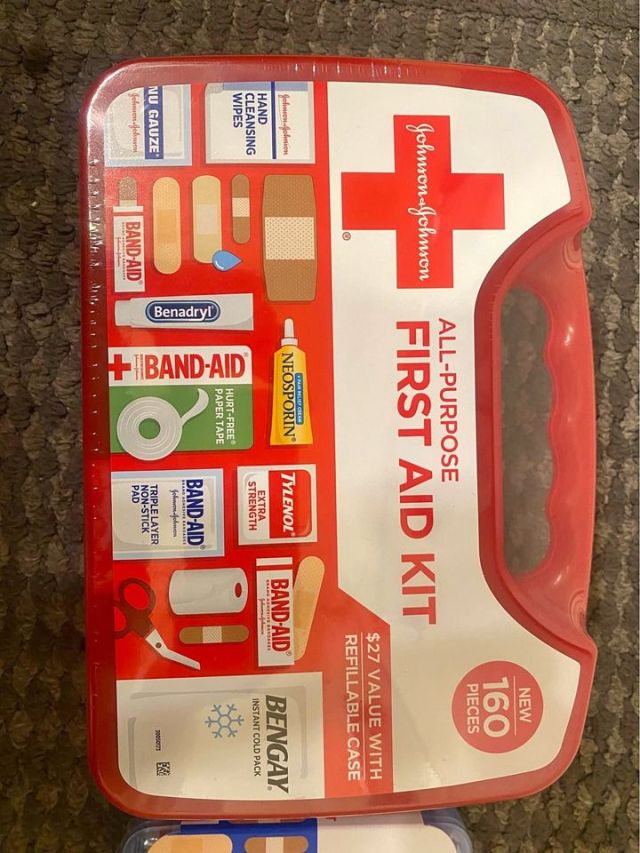
Most grocery stores stock basic medical supplies that become invaluable when the healthcare system becomes overwhelmed. Gauze, bandages, antiseptic wipes, pain relievers, and antibacterial ointments can turn a crisis into an inconvenience instead of a death sentence.

People will scream that “someone” is coming to help. The problem is that “someone” is never as fast or reliable as your own preparation.


9. Trash Bags and Aluminum Foil: The Silent Titans of Survival

No one talks about these, and maybe they should start. Industrial-sized trash bags can be used for shelter, insulation, water collection, sanitation, and gear protection. Aluminum foil can cook, reflect heat, block moisture, and preserve food.

When you look at a simple shopping bag and see survival tools instead of household products, that’s when you finally wake up to how fragile this world has become.


10. Manual Can Opener: Because Electricity Won’t Open Anything for You

People buy stacks of canned food and forget the one item that actually lets them access it. A manual can opener is the difference between eating and starvation when the grid decides it’s had enough.

You don’t need a fancy one. You just need one that works without power—something the modern world seems to have forgotten how to function without.


Final Thoughts (Not That Anyone Listens)

The grocery store is more than a place to wander around mindlessly while the world deteriorates outside. It’s a temporary armory of supplies, a sanctuary before the storm, a fragile lifeline that won’t stay intact forever. The things that keep you alive in a crisis are sitting there on the shelves right now—quiet, unappreciated, ignored by a population that thinks the system will always work.

The truth? It won’t. And when it fails, you’ll either be the one holding the last can opener…
or the one begging for it.