

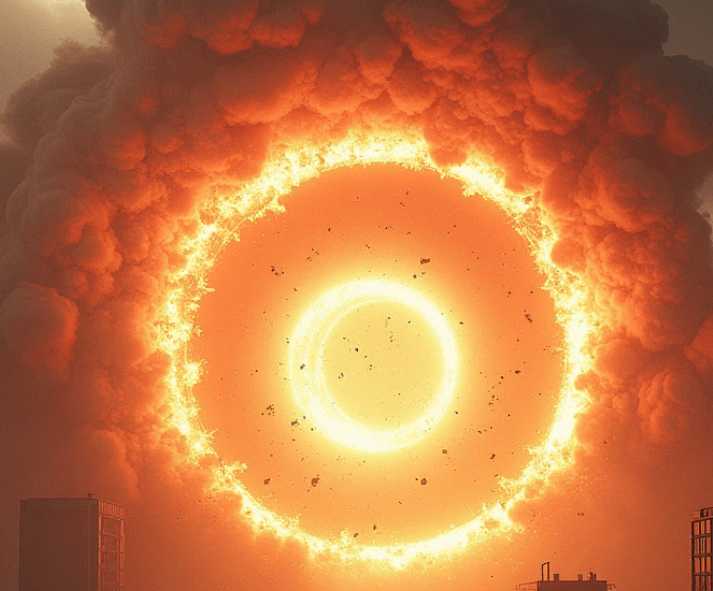
Let me be real blunt—most people aren’t ready for the coming storm. I’m not talking about a power outage or a snowstorm. I’m talking about a full-blown electromagnetic pulse (EMP)—natural or man-made—that will knock us right back into the 1800s in the blink of an eye. You think your phone, your car, or your precious smart fridge is going to survive that blast? Think again, cupcake.
A single EMP could fry every unprotected circuit, every wire, every device you depend on. No power. No communication. No transportation. Civilization as you know it—gone. And 99% of folks will sit there crying because they didn’t take five minutes to prepare. Well, not me. And not you, if you’ve got the guts to listen.
The Faraday cage—your best line of defense. It’s not a damn sci-fi gimmick. It’s a grounded, shielded container that protects electronics from high-frequency electromagnetic radiation. If you don’t have one yet, make one. A galvanized metal trash can with a tight-fitting lid and insulation inside works fine. But that’s only step one.
Step two? Knowing what the hell to put in it. So let’s break down the 10 must-have items you need to EMP-proof your life. Skip these, and you’re toast.
1. Two-Way Radios (with Extra Batteries)

When the cell towers fry, and the internet goes black, you’ll want to communicate with your group. That cheap Motorola walkie-talkie in the kids’ toy chest ain’t gonna cut it. Get a reliable set of long-range two-way radios, and for the love of common sense, store the batteries separately in the Faraday cage. Wrap them in plastic or cardboard first. Don’t be an idiot—don’t short them out by cramming them next to metal.
2. Solar Charger
You can’t just store electronics and expect them to last forever. Eventually, you’ll need to power them. Grid’s gone, remember? No plugging into the wall. A solar charger is your best bet. EMP won’t touch it if it’s shielded right, and it’ll give you the juice you need for radios, lights, and other small gear. Make sure it’s compact and has a wide compatibility range—USB, 12V, all of it.
3. Emergency Radio (Hand-Crank + Solar)
This one’s a no-brainer. When the world goes quiet, radio broadcasts might be the only info coming out of the chaos. Get a hand-crank and solar combo emergency radio with AM/FM/NOAA capability. It might be the only way to hear emergency updates, weather patterns, or any sign that order still exists. Don’t store your fragile ego in the Faraday cage—store the damn radio.
4. Back-Up Flash Drives (With Important Documents)
You ever tried rebuilding your life from scratch with no ID, no records, and no proof of who you are? That’s what it’ll feel like if you lose your digital footprint. Toss in a few encrypted flash drives with PDFs of your ID, passport, insurance, medical records, survival manuals, and offline maps. This isn’t paranoia—it’s insurance.
5. Prepaid Cell Phone (Burner + Extra SIMs)
Yeah, yeah, I hear you. “What’s the point of a phone if the grid’s down?” Listen, not every EMP takes out every satellite or cell tower permanently. And there’s always a chance of recovery—if not tomorrow, maybe in a few months. When service does come back, you’ll want to be ready. A cheap burner phone, stored dead and clean, might be your ticket to early communication. Load it with key contacts now.
6. Old-School GPS Unit

Your smartphone GPS? Forget it. It’ll be dead or fried. But an old-fashioned handheld GPS unit, especially a ruggedized hiking model, can still pull satellite signals and help you navigate. Don’t count on paper maps alone unless you’ve got a damn good sense of direction and a death wish. Store the GPS, plus batteries or solar charger, and learn how to use it BEFORE disaster hits.
7. Spare Car Key Fob / Vehicle Electronics
Newer vehicles rely on electronic control modules—ECUs—to function. If your vehicle gets fried, it’s useless. But some vehicles can survive, especially older ones, and some can be salvaged with backup electronics. If you’ve got a bug-out vehicle, store a spare key fob, a copy of the onboard computer (if swappable), or critical modules. Hell, store a whole spare ignition system if you can.
8. Mini Laptop or Tablet (With Offline Data)
I’m not talking about streaming Netflix while the world burns. I’m talking about storing offline survival manuals, maps, communication protocols, encryption tools, HAM radio guides, plant identification databases—knowledge. Knowledge is power when the lights go out. A small, rugged tablet or netbook with long battery life, stored and updated quarterly, could be your lifeline.
9. HAM Radio Equipment
I cannot stress this enough: HAM radio is the backbone of post-collapse communication. When everything else goes dark, the HAM community will still be transmitting. Get licensed, learn the protocols, and stash a basic transceiver, antenna, cables, and manuals in the cage. This isn’t some prepper fad. It’s what the military, emergency responders, and hardcore survivalists rely on when the SHTF.
10. Digital Multimeter
It’s not sexy, but it’s damn useful. A digital multimeter lets you check batteries, circuits, and power output. Want to know if your solar panel is producing? Want to troubleshoot a jury-rigged circuit? This tool is your friend. Stick a manual in there too, unless you’re an electrical engineer or like gambling with smoke and sparks.
Final Rant: Don’t Be a Clueless Sheep

Now let me end with this: if you think this list is overkill, you’re part of the problem. The government isn’t coming to save you. Your neighbors will turn desperate. Your bank won’t be reachable. The rule of law? It’ll be written in blood, not on paper.
An EMP attack or solar flare isn’t fiction—it’s science. It’s history. And it’s coming. I don’t prep because I’m afraid—I prep because I want to live. If that makes me angry, it’s because I see too many people laughing at survival while they scroll TikTok and pretend they’re safe.
Well, guess what?
When the sky lights up and the grid dies, I’ll be ready.
Will you?
Build the cage. Pack it smart. Protect what matters.
Because once it hits, it’s too damn late.







 TheDailyChristian