Chaos in the Aisles: How to Stay Alive During a Grocery Store Mass Shooting

I’ve spent most of my life preparing for disasters most people hope never come. Storms. Grid failure. Civil unrest. Food shortages. But one of the most sobering realities of modern life is this: violence can erupt anywhere, even in places designed to feel safe, familiar, and routine—like your local grocery store.

A grocery store is one of the worst possible environments for a mass-casualty event. Wide open aisles, reflective surfaces, limited exits, crowds of distracted shoppers, and carts that slow movement all work against you. You don’t have to be paranoid to survive—but you do have to be prepared.

This article is not about fear. It’s about awareness, decisiveness, and survival.


Understanding the Grocery Store Threat Environment

Before we talk about survival, you must understand the battlefield—because whether you want it or not, that’s exactly what a mass shooting turns a grocery store into.

Why Grocery Stores Are Vulnerable

  • Multiple public entrances and exits
  • Long, narrow aisles that limit escape angles
  • Loud ambient noise masking gunfire at first
  • Glass storefronts and windows
  • High population density
  • Shoppers mentally disengaged and focused on lists, phones, or kids

Survival begins before anything happens.


How to Be Proactive: Spotting Trouble Before It Starts

Most people don’t realize this, but many mass shooters telegraph their intent—sometimes subtly, sometimes blatantly. You don’t need to profile people. You need to recognize behavioral red flags.

Warning Signs to Watch For

  • Someone wearing heavy clothing in hot weather
  • Visible agitation, pacing, clenched jaw, or shaking hands
  • Fixated staring or scanning instead of shopping
  • Carrying a bag or object held unnaturally tight
  • Entering without a cart, basket, or intent to shop
  • Rapid movement toward central store areas
  • Audible statements of anger, grievance, or threats

Trust your instincts. If something feels wrong, leave immediately. Groceries can wait. Your life cannot.

Strategic Awareness Tips

  • Always identify two exits when entering
  • Note where bathrooms, stock rooms, and employee-only doors are
  • Avoid lingering in the center of the store
  • Shop near perimeter aisles when possible
  • Keep headphones volume low or off

Prepared people don’t panic—they move early.


Immediate Actions When a Shooting Begins

If gunfire erupts, seconds matter. Your goal is simple:

SurVIVE. ESCAPE if possible. HIDE if necessary. RESIST only as a last resort.

This is not movie hero time. This is survival time.


How to Escape a Mass Shooting in a Grocery Store

Escape is always the best option—but only if it can be done safely.

Escape Principles

  • Move away from gunfire, not toward it
  • Drop your cart immediately
  • Use side aisles, not main aisles
  • Avoid bottlenecks at main entrances
  • Exit through employee doors, stock areas, or fire exits if accessible
  • Leave belongings behind—speed is survival

If you escape:

  • Run until you are well clear of the store
  • Put hard cover between you and the building
  • Call 911 when safe
  • Do not re-enter for any reason

Hiding to Survive Inside a Grocery Store

If escape is impossible, hiding may save your life—but only if done correctly.

Best Places to Hide

  • Walk-in freezers or coolers (if they lock or can be barricaded)
  • Employee-only stock rooms
  • Behind heavy shelving units
  • Storage areas with solid doors
  • Office areas away from public access

How to Hide Effectively

  • Turn off all phone sounds immediately
  • Lock or barricade doors
  • Stack heavy items (carts, pallets, shelving)
  • Sit low and remain silent
  • Spread out if hiding with others
  • Prepare to stay hidden for an extended period

Avoid:

  • Bathrooms with no secondary exits
  • Glass-fronted rooms
  • Large open spaces
  • Hiding under checkout counters alone

Stillness and silence keep you alive.


Slowing or Stopping a Mass Shooting: Survival-Focused Actions

Let me be very clear: your primary responsibility is survival, not confrontation. However, there are non-offensive actions that can reduce harm and increase survival odds.

Defensive, Survival-Oriented Actions

  • Barricade access points with heavy objects
  • Pull shelving units down to block aisles
  • Lock or wedge doors
  • Turn off lights in enclosed areas
  • Break line of sight using obstacles

Group Survival Measures

  • Communicate quietly
  • Assign someone to watch entrances
  • Prepare to move only if necessary
  • Aid the injured if safe to do so

Direct confrontation should only be considered if immediate death is unavoidable, escape is impossible, and lives are imminently threatened. Even then, survival—not heroics—is the goal.


What to Do If You Are Injured

Bleeding kills faster than fear.

Immediate Medical Priorities

  • Apply direct pressure
  • Use tourniquets if available
  • Pack wounds if trained
  • Stay still once bleeding is controlled

If You Are Helping Others

  • Drag them to cover if safe
  • Do not expose yourself unnecessarily
  • Focus on stopping bleeding first

Learning basic trauma care saves lives.


Survival Gear You Can Always Have at the Grocery Store

Preparedness doesn’t mean looking tactical. It means being smart and discreet.

Everyday Carry (EDC) Survival Items

  • Tourniquet (compact, pocket-sized)
  • Pressure bandage
  • Flashlight
  • Whistle
  • Phone with emergency contacts preset
  • Minimal first-aid kit
  • Pepper spray (where legal, used defensively only)

Vehicle-Based Gear

  • Trauma kit
  • Extra tourniquets
  • Change of clothes
  • Emergency water
  • Phone charger

You don’t need everything—just the right things.


Mental Preparedness: The Survival Mindset

Survival is as much mental as physical.

Key Mental Rules

  • Accept reality quickly
  • Act decisively
  • Avoid freezing
  • Help others only if it doesn’t cost your life
  • Stay calm and breathe deliberately

People survive because they decide to survive.


After the Incident: What to Expect

Once law enforcement arrives:

  • Keep hands visible
  • Follow commands immediately
  • Expect confusion and delays
  • Provide information calmly
  • Seek medical evaluation even if you feel fine

Trauma doesn’t end when the noise stops. Take care of your mental health afterward.


Final Thoughts from a Survival Prepper

You don’t prepare because you expect violence—you prepare because you value life.

Most days, a grocery store is just a grocery store. But preparedness means acknowledging that things can change in seconds. Awareness, movement, concealment, medical readiness, and mindset save lives.

You don’t need fear.
You need readiness.

Stay aware. Stay humble. Stay alive.

Top 10 Killers in America (Non-Health Related) and How to Outlive Them with Prepper Wisdom

I’m a prepper. That means I stock food, rotate water, check batteries twice a year, and assume that if something can go wrong, it will—usually at the worst possible moment.

But here’s the thing most folks don’t like to think about: the majority of Americans don’t die from mysterious diseases or dramatic movie-style disasters. They die from ordinary, everyday, painfully preventable events.

The kind that happen because someone was distracted, unprepared, or assumed “it won’t happen to me.”

This article isn’t meant to scare you (okay, maybe a little). It’s meant to make you harder to kill. Below are the top 10 most common non-health-related causes of death in the United States—and practical, prepper-approved ways to avoid each one.

Strap in. Literally. That’s tip number one.


1. Motor Vehicle Accidents (AKA: Death by Commuting)

Cars are the single most dangerous tool most Americans use daily—and we treat them like comfy metal sofas with cup holders.

Why it kills so many people:

  • Speeding
  • Distracted driving
  • Drunk or impaired drivers
  • Poor vehicle maintenance

Prepper Survival Tips:

  • Wear your seatbelt. Every time. No exceptions.
  • Assume every other driver is actively trying to kill you.
  • Don’t text. That meme can wait.
  • Keep your vehicle maintained like it’s an escape vehicle—because one day it might be.
  • Carry a roadside kit: flares, flashlight, water, first-aid, jumper cables.

Prepper rule: If you’re behind the wheel, you’re on patrol.


2. Accidental Poisoning & Overdose (Not Just “Drugs”)

This category includes illegal drugs, prescription misuse, household chemicals, and even carbon monoxide.

Why it happens:

  • Mixing medications
  • Improper storage of chemicals
  • Poor ventilation
  • “Eyeballing” dosages (never eyeball anything except suspicious strangers)

Prepper Survival Tips:

  • Install carbon monoxide detectors on every level of your home.
  • Label all chemicals clearly.
  • Lock meds away from kids—and adults who “just grab whatever.”
  • Read labels like your life depends on it… because it might.

A prepper doesn’t trust fumes, powders, or mystery pills. Ever.


3. Falls (Yes, Gravity Is Still the Enemy)

Falls kill more Americans than fires and drownings combined, especially as people age.

Common scenarios:

  • Ladders
  • Slippery stairs
  • Bathroom wipeouts
  • “I don’t need help” moments

Prepper Survival Tips:

  • Use ladders correctly. No standing on buckets.
  • Install grab bars in bathrooms. Pride heals slower than broken bones.
  • Wear shoes with traction.
  • Don’t rush. Gravity loves impatience.

Survival mindset: If you fall, you’ve surrendered the high ground—to the floor.


4. Fire and Smoke Inhalation

Fire doesn’t care how tough you are or how expensive your couch was.

Why it kills:

  • Faulty wiring
  • Unattended cooking
  • Candles
  • Smoking indoors
  • No escape plan

Prepper Survival Tips:

  • Install and test smoke detectors regularly.
  • Keep fire extinguishers in the kitchen and garage.
  • Never leave cooking unattended.
  • Practice fire escape routes with your family.

Rule of flame: If you smell smoke, you’re already behind schedule.


5. Firearms Accidents (Negligence, Not the Tool)

Firearms themselves aren’t the issue—carelessness is.

Common causes:

  • Improper storage
  • Failure to check chamber status
  • Treating firearms like toys

Prepper Survival Tips:

  • Store firearms locked and unloaded when not in use.
  • Treat every firearm as loaded.
  • Never point at anything you don’t intend to destroy.
  • Educate everyone in the household on firearm safety.

A prepper respects tools. Especially the loud ones.


6. Drowning (Even Strong Swimmers Die This Way)

You don’t need the ocean to drown. Pools, lakes, rivers, and even bathtubs qualify.

Why it happens:

  • Overconfidence
  • Alcohol
  • Poor supervision
  • No flotation devices

Prepper Survival Tips:

  • Never swim alone.
  • Wear life jackets when boating.
  • Supervise children constantly.
  • Learn basic water rescue techniques.

Remember: Water doesn’t negotiate.


7. Workplace Accidents

Construction sites, warehouses, farms, and factories are full of hazards—many ignored until it’s too late.

Common issues:

  • Skipping safety gear
  • Fatigue
  • Rushing
  • Improvised “shortcuts”

Prepper Survival Tips:

  • Wear PPE. All of it.
  • Follow lockout/tagout procedures.
  • Speak up about unsafe conditions.
  • Don’t rush—speed kills more than boredom ever will.

A prepper values fingers, limbs, and spines. Try living without them sometime.


8. Suffocation & Choking

Food, small objects, confined spaces—oxygen deprivation is fast and unforgiving.

Why it happens:

  • Eating too quickly
  • Poor chewing
  • Unsafe sleeping environments
  • Confined spaces without ventilation

Prepper Survival Tips:

  • Learn the Heimlich maneuver.
  • Cut food into manageable pieces.
  • Keep small objects away from children.
  • Never enter confined spaces without airflow testing.

Breathing is non-negotiable. Guard it fiercely.


9. Homicide (Situational Awareness Matters)

While less common than accidents, violence still claims lives every year.

Risk factors:

  • Poor situational awareness
  • Escalating confrontations
  • Unsafe environments
  • Alcohol-fueled decisions

Prepper Survival Tips:

  • Trust your instincts.
  • Avoid unnecessary confrontations.
  • Learn basic self-defense.
  • Keep your head on a swivel in public.

The best fight is the one you never show up to.


10. Extreme Weather Exposure

Heat, cold, storms, and floods kill more people than most realize.

Common mistakes:

  • Underestimating conditions
  • Lack of preparation
  • Ignoring warnings

Prepper Survival Tips:

  • Monitor weather forecasts.
  • Have emergency kits ready.
  • Dress for conditions.
  • Know when to shelter and when to evacuate.

Weather doesn’t care about optimism. Prepare accordingly.


Final Prepper Thoughts: Survival Is a Daily Habit

Most people imagine survival as something dramatic—zombies, EMPs, or alien invasions. But the truth is much less cinematic.

Survival is:

  • Wearing your seatbelt
  • Installing detectors
  • Slowing down
  • Paying attention

The goal isn’t to live in fear. The goal is to live long enough to enjoy the good stuff—family, freedom, and a pantry that’s always suspiciously well stocked.

Stay safe. Stay prepared. And don’t let preventable nonsense take you out early.

Don’t Be a Hero: How to Survive Being Held Hostage During a Robbery

The world is not full of good people waiting to do the right thing. It’s full of selfish, desperate, reckless individuals who will happily gamble with your life if it means getting what they want. Civilization is thin. Paper-thin. And when someone storms into a restaurant or bank with bad intentions, that illusion shatters instantly.

You didn’t choose to be there. You didn’t provoke it. But now you’re stuck inside someone else’s bad decisions. Survival becomes your only objective—not bravery, not justice, not heroics. Survival.

This isn’t about playing action-movie fantasy. This is about staying alive when the situation is completely out of your control.


First Rule: Accept Reality Immediately

The moment you realize a robbery is happening, kill the denial. People die because they hesitate, because they assume “this won’t involve me,” or because they wait for clarity that never comes.

If someone is threatening others, brandishing fear, or issuing commands, this is no longer a normal environment. Your job is to mentally switch into survival mode. That means:

  • You are not in charge
  • You are not special
  • You are not invincible

The faster you accept that, the faster you stop making dangerous assumptions.


Second Rule: You Are Not the Main Character

Hollywood lies. In the real world, “heroes” often end up as cautionary tales. When a robbery turns into a hostage situation, the people holding power are unstable, stressed, and unpredictable. Any action that draws attention to you increases risk.

Your goal is to become forgettable.

That means:

  • Don’t argue
  • Don’t make eye contact longer than necessary
  • Don’t stand out physically or verbally
  • Don’t volunteer information

You want to blend into the background like furniture.


Follow Instructions—Even If They’re Humiliating

Pride gets people killed. If you’re told to sit, lie down, stay quiet, or move slowly, you comply unless doing so puts you in immediate danger. Robbers and hostage-takers are often operating on adrenaline and fear. They’re looking for threats, not logic.

Sudden movements, resistance, or “correcting” them can trigger panic-driven violence.

It doesn’t matter how unfair or degrading it feels. Your dignity can be rebuilt later. Your life cannot.


Control Your Body Before It Betrays You

Fear causes people to shake, cry, hyperventilate, or freeze. While emotional reactions are natural, uncontrolled panic can make you look unpredictable—and unpredictable people get watched more closely.

Focus on:

  • Slow, steady breathing
  • Minimal movement
  • Keeping your hands visible if possible

You are trying to project compliance and calm, even if your mind is screaming.


Observe Quietly, Not Actively

There’s a difference between awareness and interference.

You should mentally note what’s happening around you without staring, pointing, or reacting. This helps you stay oriented and gives your mind something productive to do instead of spiraling into panic.

Pay attention to:

  • Where you are in the room
  • Who is near you
  • Changes in tone or urgency

But don’t try to “solve” the situation. You’re not there to intervene. You’re there to endure.


Do Not Try to Negotiate or Reason With Them

This isn’t a debate. These people are not interested in your opinions, explanations, or clever ideas. Attempting to reason can be interpreted as manipulation or defiance.

Unless you are directly spoken to, say nothing.

If addressed, keep responses:

  • Short
  • Neutral
  • Honest but minimal

The less emotional energy you inject into the situation, the safer you remain.


Time Is Not Your Enemy—Impatience Is

Hostage situations feel endless because fear stretches time. Minutes feel like hours. This is where people make fatal mistakes: they assume things are escalating when they aren’t, or they act because they want it to be over.

The ugly truth? Many situations end without harm if no one forces an outcome.

Your mindset should be:

“I can endure this longer than they can remain unstable.”

Patience is a survival tool.


Avoid Group Behavior

Crowds amplify panic. If people around you start crying, shouting, or moving unpredictably, do not mirror them. Emotional contagion can cause sudden chaos, and chaos leads to mistakes.

You don’t need to isolate yourself dramatically. Just don’t become part of a panicked cluster drawing attention.

Stay still. Stay quiet. Stay forgettable.


When Authorities Intervene, Stay Passive

If the situation changes suddenly—loud commands, rapid movement, confusion—this is not the moment to improvise.

Do not:

  • Run unless clearly directed
  • Grab objects
  • Make sudden movements

Follow commands exactly as given, even if they feel abrupt or harsh. In chaotic moments, clarity matters more than comfort.


Afterward: Expect the Shock

Surviving doesn’t mean walking away untouched. After the danger passes, your body may shake, your memory may feel fragmented, and emotions may hit hours or days later.

This is normal.

What’s not normal is pretending you’re fine when you’re not. Survival doesn’t end when the threat leaves. Give yourself space to recover.


Final Reality Check

The world is not getting kinder. Desperation is rising, patience is thinning, and people are increasingly willing to endanger strangers for personal gain. You don’t survive situations like this by being brave or bold.

You survive by being:

  • Calm
  • Compliant
  • Patient
  • Invisible

It’s not heroic. It’s not cinematic. But it works.

And when the worst kind of person walks into the room, staying alive is the only victory that matters.

American Women Are Being Targeted and Murdered on Subways

The subways and trains that once symbolized the pulse of major cities have devolved into breeding grounds for unpredictability. You can stand in a crowded car and still feel completely alone — and worse, completely unprotected. Women, especially, are being targeted more often, more brazenly, and in ways that make you question whether humanity’s collective moral compass snapped in half somewhere along the line.

I’m not interested in offering false hope or pretending that the world is still the safe, civilized place that people like to imagine. It isn’t. The headlines are everywhere — women assaulted while commuting to work, stalked between train cars, attacked on platforms, shoved onto tracks, harassed in empty cars, or cornered by violent offenders who know exactly how slow response times can be underground. The predators know the environment favors them. They thrive in the chaos.

If you’re a woman riding the subway today, you’re not paranoid. You’re paying attention. And in times like these, paying attention is the only thing keeping you alive.

Below is not a “feel good” guide. This is not a cheerful pamphlet you’d get at a transit kiosk. This is a reality check — written from the mindset of someone who assumes the worst because the worst keeps happening. If you ride subways or trains, you deserve to know what you’re up against and how to stack the odds in your favor.

Because the system isn’t going to protect you. Society certainly isn’t. You have to do it yourself.


The Ugly Truth About Modern Transit Violence

Let’s get something straight: attacks on women in public transit aren’t “random anomalies.” The system is full of cracks, and predators slip through them like water through rusted pipes. Look around any subway system and you’ll see:

  • Platforms with minimal visibility
  • Cars with no staff presence
  • Delayed police response times
  • Broken cameras or cameras that “aren’t monitored live”
  • Overcrowded tunnels paired with understaffed stations
  • Social decline, untreated mental illness, and growing desperation
  • Strangers who behave erratically but face no intervention
  • Bystanders glued to their phones, oblivious or frozen

This perfect storm creates an environment where violent individuals can target women with startling ease. And it’s getting worse, not better. Cities keep promising safety. Transit authorities keep posting cheery posters with “See Something, Say Something,” as if words on paper can physically stop a deranged attacker from lunging at you.

Down in those tunnels, you’re on your own. Let’s stop pretending otherwise.


Mindset: The Most Important Tool You Have

Forget the fantasy that “being nice” or “not making a scene” keeps you safe. Predators count on that kind of thinking. What women need today is situational awareness, controlled suspicion, and a survival mindset.

This doesn’t mean walking around terrified. It means walking around prepared.

Adopt These Mental Rules Immediately:

  1. Assume anyone can be a threat until proven otherwise.
    It’s not pessimism. It’s self-preservation.
  2. Never ignore your instincts.
    If someone makes you uncomfortable, listen to that discomfort as if it’s a warning siren.
  3. Don’t be polite at the expense of your own safety.
    Move seats. Move cars. Stand up. Speak up. Leave.
  4. Know where the exits and emergency intercoms are — always.
    Do not board a train without identifying your escape route.
  5. Keep your senses open.
    Headphones may as well be blindfolds underground. You can’t detect danger if you can’t hear it.

Before You Even Step on the Train

Your safety starts before your foot touches the platform.

1. Stay in well-lit, populated areas

Avoid standing at the far ends of the platform. Predators prefer isolation, and so should you — if you want to avoid them.

2. Let someone know your travel route

Not because you’re weak — because you’re practical. Create a breadcrumb trail in case something goes wrong.

3. Have your essentials ready

  • Keys accessible
  • Phone charged
  • Emergency numbers pre-set
  • Personal safety tool ready but discreet

Do not dig through your bag when seconds matter.

4. Scan everyone around you

Not in fear — in analysis. Who’s agitated? Who’s pacing? Who’s staring? Who’s intoxicated? Your brain is more powerful than you think at identifying danger if you let it.


Choosing the Safest Car (Yes, There Is Such a Thing)

You can’t guarantee safety, but you can make smarter tactical choices.

Best options:

  • Cars with more people, not fewer
  • Cars that are near the conductor
  • Cars with working cameras
  • Cars where you have a clear view of the exit doors

Worst options:

  • Nearly empty cars
  • Cars with a hostile or unbalanced individual already inside
  • Train ends or between-car areas
  • Cars where the only available seat is boxed into a corner with no escape route

If a car “feels wrong,” trust that thought. Move. You owe no one an explanation.


What to Do Once You’re Inside the Car

Once inside, your goal is simple: reduce exposure, increase awareness, and maintain control over your space.

1. Sit near the exit doors

This gives you mobility. If trouble sparks, you can get out before being trapped.

2. Keep your back toward a wall or pole

You want to minimize blind spots. Sitting with your back exposed in a crowded car is practically an invitation for trouble.

3. Keep your phone visible but your attention outward

Pretending to be distracted is never worth the risk.

4. Keep a safety tool ready

Something legal, discreet, and practical — but only used if your life is truly in danger. The goal is escape, not confrontation.

5. Watch for behavioral red flags

  • Someone moving too close
  • Unwanted staring
  • Aggressive mumbling
  • Someone shadowing your movements
  • Someone blocking your exit path

These are not “maybe it’s nothing” situations. These are “keep every alarm bell ringing” moments.


If You Sense You’re Being Targeted

This is the part no one wants to think about, but ignoring it won’t make it go away.

1. Move immediately

Switch seats. Switch cars. Step off the train.
Action beats hesitation.

2. Make yourself less isolated

Stand near others, even if they’re strangers. Predators want privacy. Don’t give it to them.

3. Use your voice if needed

A loud, commanding “BACK UP” or “STOP” can disrupt an attacker’s plan and draw witnesses.

4. Hit the emergency intercom

That’s what it’s there for. Use it. Don’t wait for “proof.”

5. Exit the moment the doors open

If something feels off, leave. Even if it’s not your stop. Survival beats convenience every time.


If a Situation Escalates

Let’s hope it never reaches this point, but if it does, prioritize escape over fighting. Fighting is a last resort — not because you’re incapable, but because the environment is unpredictable and confined.

If physically attacked, your goal is:

  • Create distance
  • Break the attacker’s grasp
  • Move toward the nearest exit
  • Get off the train or into the next car

Call for help loudly and directly. “YOU — IN THE BLUE JACKET — CALL 911!” works better than vague shouting.


After You Get to Safety

If you experience or witness an attack:

  • Report it as soon as possible
  • Mention every detail you remember
  • Get medical attention if needed
  • Contact someone you trust

Even if law enforcement is slow, reporting helps build a pattern and can protect future victims.


Final Thoughts From a Cynical Realist

We can’t pretend anymore. Public transit has become a battlefield disguised as a commute. Women are being targeted because predators know they can get away with it. So don’t wait for society to wake up or for the system to fix itself — it won’t. Your safety is your responsibility, and your awareness is your strongest weapon.

The world may be spiraling, but you don’t have to spiral with it. Prepare. Stay alert. Trust your instincts. And remember: hope is not a strategy.

Survival is.

Parking Lot Survival: A Fugitive’s Warning to Women About Staying Safe While Shopping

I’ve learned in the hardest ways that danger doesn’t wait for permission, it doesn’t give warnings, and it doesn’t discriminate. It lurks where people feel safest, where the lights are bright and the music from passing cars spills over the quiet pavement. Shopping centers—places built to make you feel comfortable—are the same places where shadows linger the longest.

You probably don’t know me, and it’s better that way. Let’s just say I’ve been living on the edges of the map lately, moving from one place to another, looking over my shoulder more than I look ahead. Survival does that to you. You start noticing things other people ignore. And lately, I’ve been watching the way women walk through parking lots—heads down, hands full, keys buried somewhere in a purse, completely unaware of how exposed they are.

This isn’t paranoia. It’s pattern recognition. And if there’s one thing I’ve learned through the mistakes I’ve made—and the ones I’ve watched others make—it’s this: the parking lot is the hunting ground of predators.

I’ve seen too much to stay quiet about it.


Shopping Center Parking Lots: A Predator’s Comfort Zone

I’ve spent enough time hiding in the out-of-the-way corners of society to understand how people think when they intend harm. Predators don’t pick dark alleys anymore—they pick normalcy. They choose the places where people feel too safe to pay attention. They want cover, confusion, and distraction. Shopping center parking lots offer all three.

Women juggle bags, food, receipts, coupons, phones, car keys, kids, returns—everything except the awareness of who’s walking behind them. And it’s not their fault. Society teaches women to be polite before it teaches them to stay alive.

But I’m going to lay it out in the grim, unfiltered way I’ve seen it:

The most vulnerable moment in a shopping trip is the walk from the store door to your vehicle.

Not inside the store.
Not while driving.
Not when you get home.

Right there, in the open lot.

Because that’s where you transition from a crowd to isolation. That’s where shadows, blind spots, between-car gaps, and slow-rolling vehicles all merge into one unpredictable terrain.

And if someone wants to follow you? They only need to watch you long enough to choose the moment.


People Disappear Faster Than You Think

I’m not saying this to scare you without purpose. I’m saying it because I’ve been in situations where seconds mattered—and sometimes seconds weren’t enough.

Most people think kidnappings are dramatic, violent affairs. They imagine someone inside a van yanking a screaming person off their feet. But the truth is quieter, faster, and far more calculated.

A predator only needs:

  • A five-second window
  • Your distraction
  • Your hands full
  • Your back turned

That’s all.

Maybe you’re loading groceries.
Maybe you’re answering a text.
Maybe you’re unlocking your door.
Maybe you’re returning the shopping cart because you don’t want to be rude.

All noble intentions. All exploitable moments.


Know Your Surroundings the Moment You Step Outside

When I was younger—before life forced me onto wilder paths—I didn’t think much about “situational awareness.” Now it’s the only reason I’m still breathing. So listen close:

When you walk out of that store, your head needs to come up.
Your eyes need to scan.
Your steps need to be deliberate, not casual.

Here’s what to look for:

1. People who leave the store right after you

This doesn’t always mean danger—but it always means you should notice them. Predators often shadow their targets from the entrance because it’s where they can blend in without suspicion.

2. Cars that start moving when you pass them

Vehicles can act like traps. Someone can idle with their engine off, waiting. Or they can roll slowly behind you, matching your pace.

3. Anyone lingering, leaning, or pretending to be busy

Most people in parking lots are in transition—they’re going somewhere. The ones who aren’t? Those are the ones you watch.


Your Keys Are a Survival Tool—Not an Afterthought

Digging through a purse while walking to a car is as dangerous as walking blindfolded along a cliff’s edge. What you need is simple:

  • Keys out before stepping into the lot
  • Key between your fingers or in your fist
  • Head up, scanning
  • Shoulders back

You don’t have to look threatening. You just have to look not worth the effort.

Predators don’t choose targets based on beauty or age. They choose based on opportunity and vulnerability. If you look alert, aware, and ready to cause a problem, they’ll move on.


Listen to the Feeling—It’s There for a Reason

I once ignored a bad feeling and paid for it with months of consequences that still follow me to this day. Never again. And neither should you.

If something feels wrong:

  • Stop walking.
  • Turn around.
  • Change direction.
  • Step back inside the store.
  • Call someone.
  • Wave down security.

You owe politeness to no one.
You owe your life everything.


Don’t Let Anyone Approach You

I know it sounds harsh. Maybe it sounds like paranoia to the uninitiated. But I’ve seen too many scams, too many ambush tactics, too many “distraction approaches” to ever let a stranger come within grabbing distance.

If someone walks toward you:

  • Create distance.
  • Put a car between you and them if possible.
  • Hold your hand up and say, “Stop there, please.”
  • If they ignore that, it’s no longer innocent.

Remember: distance is safety.


Your Car Is a Fortress—If You Treat It Like One

Once you get inside:

  • Lock the doors immediately.
  • Start the engine first, adjust mirrors later.
  • Never sit scrolling on your phone before driving away.
  • If something is on your windshield, don’t get out—drive to a safer spot first.

Kidnappers rely on hesitation. Don’t give them the luxury.


Final Words From Someone Who Knows Too Much

Look, I’m not telling you these things to frighten you. I’m telling you because the world is not as tidy or predictable as people pretend. I’ve seen what happens when someone thinks “it won’t happen to me.” I’ve seen what happens when fear hits too late.

Women are being hunted in places that should be safe.
Parking lots are modern ambush zones.
And predators aren’t the monsters you imagine—
They’re ordinary-looking people counting on your distraction.

You don’t have to live in fear.
But you do have to live aware.

Because no shopping deal, no coupon, no errand is worth becoming the next missing flyer on a bulletin board.

Stay alert.
Stay sharp.
Stay alive.

When the Crowd Turns Deadly: How to Survive a Human Stampede

Humans are unpredictable, emotional herd animals, and most people walk around like the world magically keeps itself in order. They stare at their phones, wander into crowds without a second thought, and assume that because a venue has security guards, everything is “under control.”

The rest of us—those who actually pay attention—know that control is an illusion. And a fragile one at that.

Human stampedes aren’t rare freak accidents. They’re a natural outcome of packing too many people into too small a space, mixing in fear, noise, confusion, bad planning, and—my personal favorite—sheer stupidity. If you think that sounds harsh, you haven’t seen people trample each other for a Black Friday discount. Trust me, humans don’t need an emergency to act like panicked cattle.

So let’s talk about how to survive a human stampede, because clearly nobody else is going to protect you. If anything, the average person will push you down without blinking if it means they get three inches forward in the chaos.


Welcome to the Reality Nobody Wants to Admit

Crowd crushes and stampedes happen at concerts, sporting events, religious gatherings, parades, protests, and anywhere else humans gather in numbers large enough to overwhelm their own sense of reason. Most people don’t prepare for things like this because they think:
“It won’t happen to me.”

Yeah—tell that to the countless victims who thought the same before they were knocked over and swept away by a five-ton wave of panicked humanity. If you’re reading this, congratulations—you’re at least thinking about it. That’s step one in surviving anything: awareness.

This article won’t sugarcoat things. If you want a cheerful “stay safe!” pamphlet, go read something printed by an events committee. This is the real version—the version that tells you what to do when the crowd turns into a living bulldozer and you’re stuck in the middle of it.


Step 1: Actually Pay Attention to Your Surroundings

Revolutionary, I know.
But you’d be astonished how many people walk into crowds without even scanning their environment. Before you enter any dense crowd, do what a responsible person should always do:

  • Identify exits, plural. If you only know one way out, congratulations—you’re already a liability to yourself.
  • Note barriers like fences, railings, walls, and stages—these become death traps if the crowd surges.
  • Observe the density. If you can’t raise your arms without hitting someone, you’re in the danger zone.
  • Listen for changes in energy—shouting, pushing, sudden movement, or panic.

If you’re thinking, “Wow, that sounds paranoid,” good. Paranoia is just foresight that hasn’t been appreciated yet.


Step 2: When a Crowd Starts Moving, You Move With It—Or You Die

Remember this: you cannot fight a crowd surge head-on. When thousands of pounds of pressure push in one direction, you’re not going to out-muscle it. You move with the flow, gradually and strategically angling toward the side or an exit.

If you plant your feet thinking you can hold your ground like some heroic movie character, the crowd will crush your ribs into your spine. Don’t be a martyr. Be efficient.

Move diagonally, like a fish cutting through a current. You’re not trying to sprint—you’re trying to escape the pressure zone without falling.


Step 3: Protect Your Chest—It’s the Difference Between Living and Suffocating

Most stampede deaths happen due to compressive asphyxiation, not trampling. That means people get squeezed so hard they literally can’t breathe.

The fix?
Create a protective “box” around your chest using your arms.
Put your forearms horizontally in front of your ribcage, fists near your shoulders, making space for your lungs to expand even when the pressure tightens.

If the crowd squeezes in, this posture could buy you the oxygen you need to stay conscious. Consciousness is what keeps you moving. And movement is what keeps you alive.
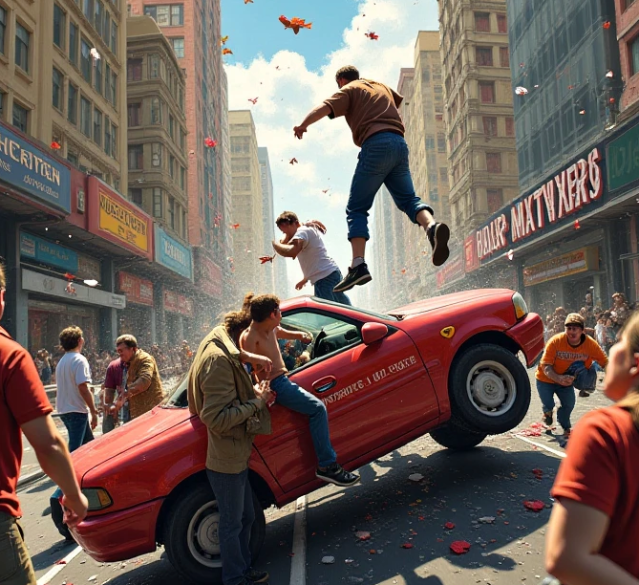

Step 4: If You Fall, You Don’t Stay Down

This is the nightmare scenario, but it’s survivable if you act fast. Do not curl into a ball like some brochure will tell you. You’re not a turtle and you will not get “protected.” That advice comes from people who have clearly never experienced a crowd crush.

Instead:

  1. Turn onto your side.
  2. Pull your knees toward your chest.
  3. Use your arms and legs to crawl or roll toward open space.
  4. The second you’re on your feet, don’t celebrate—keep moving.

If people fall on top of you, keep your head protected with one arm and use the other to create space to breathe. Survival is ugly. It’s not graceful. It’s not cinematic. It’s pure determination.


Step 5: Don’t Follow the Crowd—Think Past It

People are lemmings. They follow the person in front of them even when it leads them straight into a bottleneck or a dead-end barrier. You have to think faster than the herd.

Look for:

  • Side exits
  • Gaps in barriers
  • Staff-only doors that open toward safety
  • Open spaces where pressure decreases

People cram themselves into the nearest exit because they’re overwhelmed and scared. You, however, have the advantage of thinking before panic hits. Use it.


Step 6: Know the Early Signs of a Stampede Before It Happens

This is where pessimism is your best friend. You assume things can go wrong so you notice when they start going wrong.

Watch for:

  • People pushing but the crowd can’t move forward (classic crush pattern)
  • A sudden wave-like sway through the crowd
  • Security personnel looking tense or rushing
  • Changes in sound: screaming, shouting, or sudden silence
  • A surge from the back (people trying to move before those in front can)

If you sense any of these, leave.
Don’t wait for instructions. Don’t wait for confirmation. By the time officials announce anything, you’re already behind.


Step 7: Don’t Bring Anything You Aren’t Willing to Lose

This is blunt, but you need both hands free. If you’re weighed down with drinks, merch bags, souvenirs, or your tote full of “essentials,” you’re risking your life.

Your priorities in a crowd emergency are:

  1. Breathing
  2. Balance
  3. Mobility

Everything else is clutter. If something becomes a hazard, drop it. Your phone is replaceable. Your spine is not.


Step 8: Mentally Prepare Before You Ever Step Into a Crowd

This is the part people hate hearing because it requires actual effort. If you want to survive the worst situations, you need to train your mindset ahead of time.

Tell yourself:

  • “If something goes wrong, I will move, not freeze.”
  • “My safety is my responsibility.”
  • “I will not rely on others to think for me.”

Being mentally ready makes you react faster than the crowd. In survival situations, seconds matter. Sometimes they’re all you get.


Final Thoughts from a Pessimistic Prepper

Human stampedes aren’t accidents—they’re the result of human behavior amplified by chaos. People panic. People follow blindly. People shove without thinking. And people assume someone else has a plan.

You’re smarter than that.
You’re reading this because you know the world is unpredictable and that most people sleepwalk through danger.

Survival isn’t luck.
Survival is awareness, preparation, and refusing to be one of the oblivious masses who trust the crowd more than their own instincts.

The world may be messy, reckless, and irresponsible—but you don’t have to be.

Stay alert. Stay sharp. Stay alive.