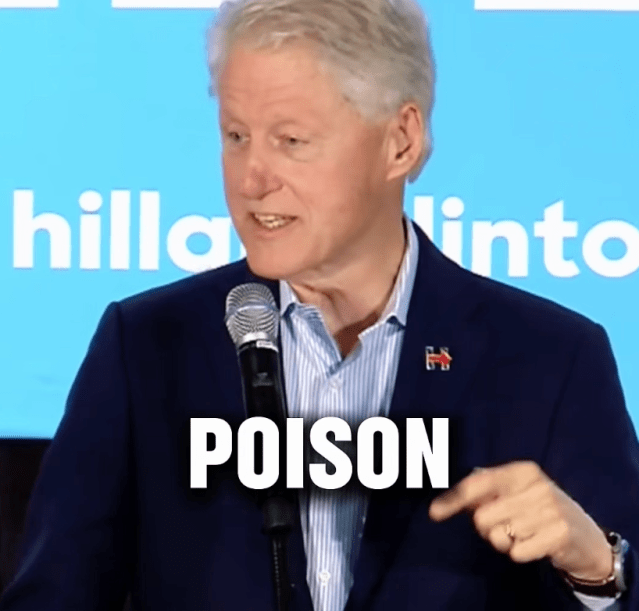
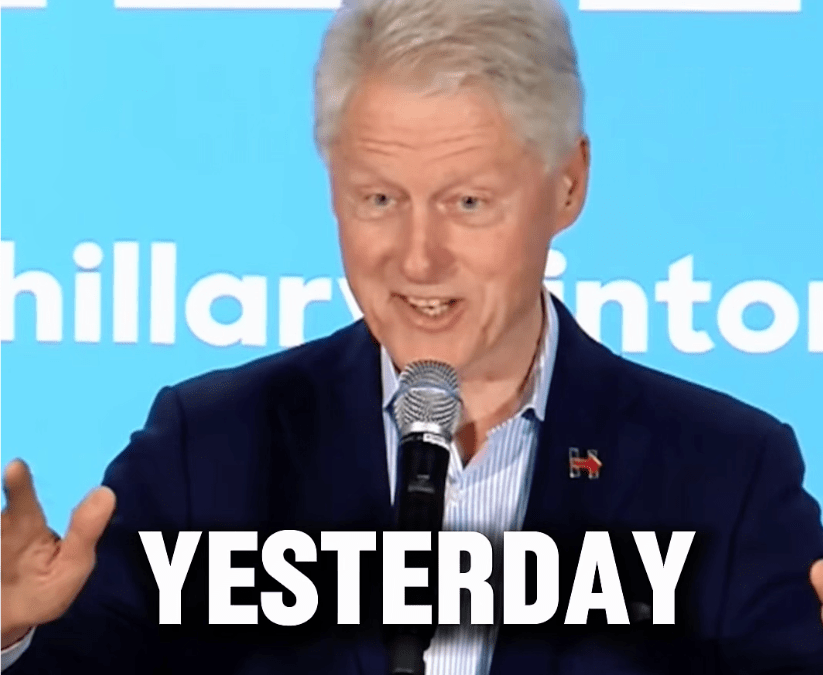
The clip opens with the kind of polished confidence that defined much of Bill Clinton’s public life, but the mood shifts almost instantly when a heckler shouts a pointed question about his past friendship with “Jeffrey.”
The room tightens. Clinton pauses, clearly caught off guard, and what follows is an awkward stretch of half-responses, crowd murmurs, and visible discomfort.
Supporters and critics alike seem unsure how to react, and that uncertainty is what makes the moment so striking. In an era where public trust in institutions is already fragile, the interruption underscores how unresolved questions—regardless of party—have a way of resurfacing at the most inconvenient times.
The clip doesn’t deliver answers or accusations; instead, it captures the collision between a carefully managed public appearance and a raw, unscripted challenge. For some viewers, it’s a reminder that political figures remain accountable long after leaving office. For others, it highlights the difficulty of addressing emotionally charged topics in a live setting without derailing the event entirely. What’s undeniable is how quickly the atmosphere changes, turning a routine appearance into a tense, uncomfortable moment that reflects broader frustrations shared across the political spectrum.
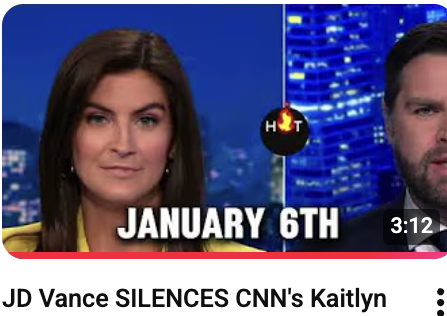
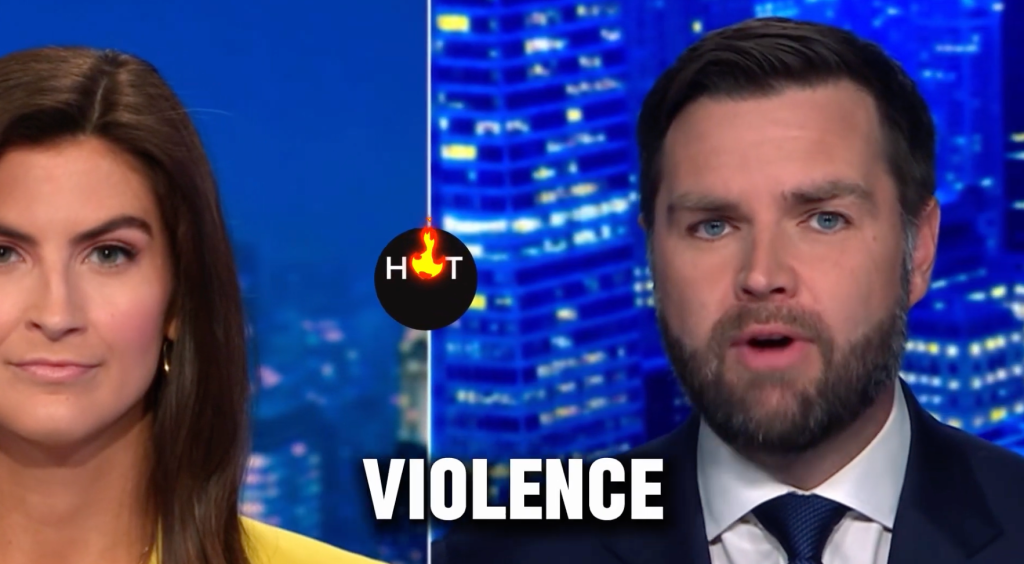
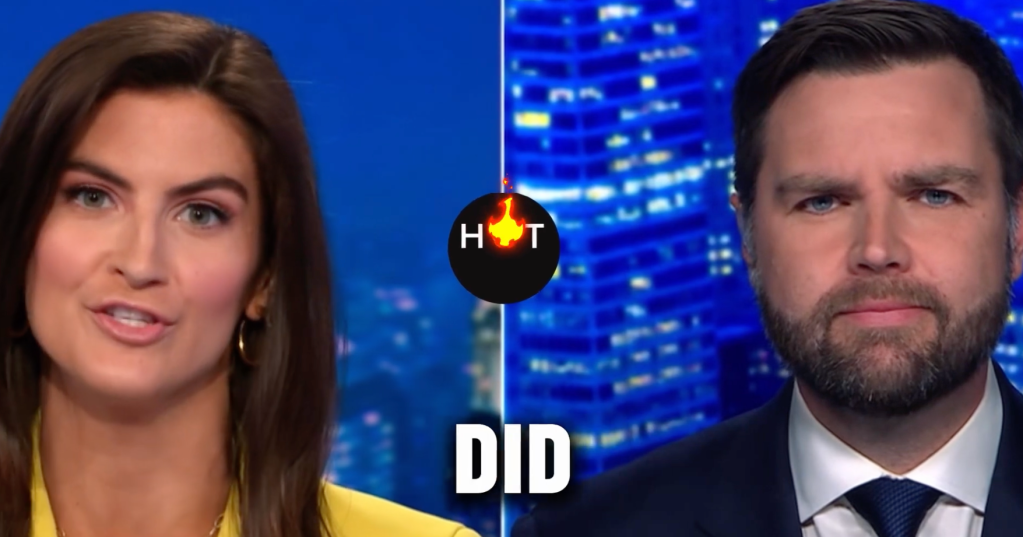
The clip opens with Vice President JD Vance sitting across from Kaitlan Collins on CNN, wearing the expression of a man who knows he’s about to walk into a conversational blender but decided to wear a suit anyway, as the discussion turns to what Vance describes as the left’s selective outrage over political violence.
Collins, calm and precise, frames the issue with that familiar anchor tone that says, “I’m just asking questions,” while Vance responds with the energy of someone who has watched the same highlight reel on a loop and finally gets a chance to commentate. He lays out his argument with a half-smile, pointing out that in recent years, violent protests involving burned buildings, smashed storefronts, and the occasional flying trash can were often explained away as “expressions of frustration,” “mostly peaceful,” or, in one memorable stretch, apparently just very aggressive community organizing.
(Please click or tap on any image to watch this amazing piece of history!)
Yet, Vance notes, when January 6th enters the chat, the tone shifts instantly to solemn piano music and emergency fonts. The humor of the exchange comes not from shouting but from contrast, as Vance lists examples with the cadence of a late-night monologue, pausing just long enough for the audience to connect the dots themselves. Collins pushes back, emphasizing the seriousness of January 6th and the threat to democratic institutions, and Vance nods along, agreeing that it was serious, before pivoting like a man who’s practiced this move in the mirror. He jokes that America now seems to have a protest rating system, where violence is either “an understandable outburst” or “the end of civilization,” depending entirely on which yard sign is in the background. The back-and-forth feels less like a shouting match and more like a comedy sketch performed by two people determined to stay polite while disagreeing fundamentally.
Vance’s delivery stays measured but playful, suggesting that hypocrisy has become the unofficial national pastime, right up there with streaming shows you don’t actually watch and arguing on social media with strangers who have anime avatars. Collins, to her credit, keeps the conversation grounded, occasionally raising an eyebrow in a way that practically deserves its own chyron. By the end of the clip, no minds are dramatically changed, no confetti falls from the ceiling, but the audience is left with a clear sense of why these debates resonate: not because they’re new, but because they highlight how quickly principles can become flexible when political convenience enters the room. It’s a segment that manages to be tense, informative, and unintentionally funny all at once, mostly because watching two smart people debate modern protest politics in America now feels a lot like watching siblings argue over rules they both helped rewrite.



 TheDailyChristian