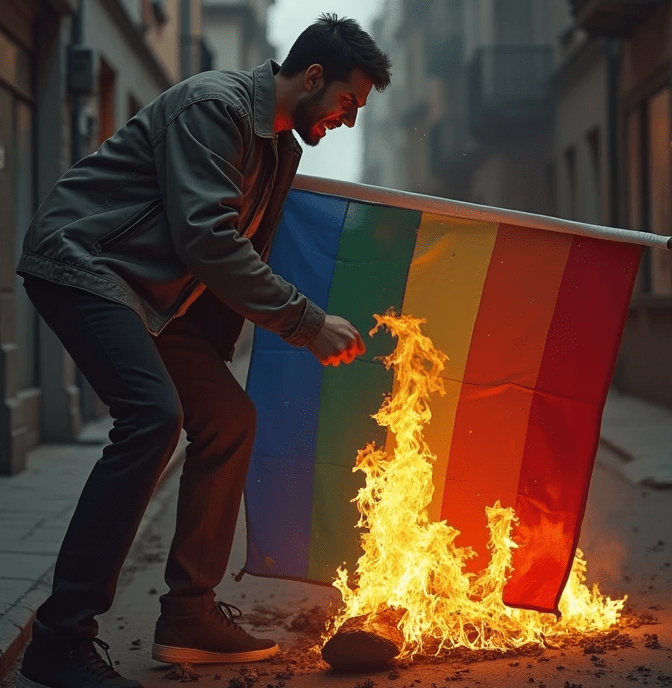
How To Stay Alive During a New York Riot

Let’s be real — when chaos strikes in a place like New York City, it happens fast, and it hits hard. I’ve lived through enough urban unrest and trained others on how to navigate it without freezing up or making deadly mistakes. Riots are unpredictable, and the average person doesn’t have a plan. But you’re not average — not if you’re reading this. So let me give it to you straight, skill for skill, tool for tool, mindset for mindset. Here’s how to stay safe and survive during a riot in New York.

First Rule of Survival: Know the Terrain

New York is dense. That’s both your greatest challenge and greatest advantage. High population means riots escalate quickly, but it also means there are more exits, more cover, and more places to hide. If you live here, walk your neighborhood weekly. Know alternate exits in every subway station. Know where alleyways connect, which buildings have open lobbies, and where construction zones give access to makeshift cover.

A prepper doesn’t wait for things to go sideways to start learning the streets.

8 Self-Defense Skills You Need to Master

1. Situational Awareness (SA)
This isn’t just “looking around.” SA means understanding what people are doing and why. If you see crowds forming, tension rising, and aggressive energy building — that’s your signal to exit. Notice patterns. Stay off your phone. Constant scanning of exits, people’s hands, and body language can give you a 30-second advantage. That’s life or death.

2. Verbal De-Escalation
It’s not cowardly to avoid a fight — it’s smart. Learn how to lower your voice, use non-threatening body posture, and speak in a way that calms aggressors. You want to give off the vibe: “I’m not your enemy, and I don’t want trouble.” That buys you time.

3. Close Quarters Elbow Strikes
In a crowd, you don’t have space for wide punches. Your elbows are devastating and fast. Strike to the jaw, neck, or ribs. Your goal isn’t to fight — it’s to escape. Learn how to use your elbows like daggers.

4. Knife Defense
If someone pulls a blade on you in a riot, distance is king. But if you’re trapped, you need to know how to redirect, trap, and disable. Look into techniques like the “Pak Sao” (slap-and-trap) used in Filipino martial arts and Krav Maga. Practice with a training knife at home.

5. Escape from Holds and Grabs
Get someone trained to help you drill escapes from wrist grabs, shirt grabs, and rear chokes. You’re more likely to be grabbed in a riot than punched. Your escape moves need to be muscle memory. There’s no time to think.

6. Improvised Weapons
Turn what you have into a tool. A pen in your hand is a stabber. A heavy keychain is a flail. Your belt buckle? A swing weapon. Everything around you can become a defense mechanism when you’re trained to see it.

7. Mobility Training
Learn how to jump fences, scale small walls, and squeeze through tight spaces. If you’re boxed in, mobility is your freedom. Practice parkour basics — vaulting, rolling, and wall climbs — in safe environments.

8. Striking for Distraction, Not Domination
You don’t need to knock someone out. A quick jab to the throat, kick to the knee, or rake across the eyes gives you a chance to run. That’s your win condition.

3 DIY Survival Weapons You Can Make at Home

1. Tactical Baton from a Flashlight
Get a heavy-duty flashlight like a Maglite. Wrap the handle in paracord for grip and stability. It’s legal, useful, and when used right, it’s a powerful blunt-force tool. Bonus: you’ve still got a working light source.

2. PVC Pipe Blow Dart Launcher
You’d be surprised how easy this is. Use a 1/2” PVC pipe, 2 feet long. Carve darts from wooden skewers or nails. Fletch with duct tape. Add a mouthpiece from rubber tubing. Can be used for distraction, pest control, or quiet defense if you train with it.

3. Slingshot with Steel Ball Bearings
Use surgical tubing and a forked branch or 3D-printed frame. Aim for temple, throat, or knee shots if you’re forced to defend. It’s silent, powerful, and easy to hide. Practice precision at 15–25 feet.

Remember: weapon legality in New York is strict. Keep these tools for survival, not aggression. And always know the law.

Shelter In or Bug Out?

If a riot breaks out while you’re home — shelter in. Secure your doors with a bar lock or wedge. Turn off lights, stay silent, and stay away from windows. Keep water and canned food in a blackout kit. Have a backup escape route — like a fire escape or rear hallway — if the building gets compromised.

If you’re caught outside, get out of the crowd. Head perpendicular to the mob’s direction. Avoid getting funneled into alleys or dead ends. Blend in — don’t make yourself stand out. Drop flashy gear and logos. A gray hoodie and jeans go unnoticed.

Survival Gear Checklist for Riot Conditions

  • N95 mask (for smoke, dust, pepper spray)
  • Impact-resistant goggles
  • Compact first aid kit (with clotting agent and bandages)
  • Sturdy gloves (for climbing, protection)
  • Water bottle with filter
  • Tactical flashlight (doubles as weapon)
  • Multi-tool
  • Bandana or shemagh (disguise or filter air)
  • Cash (small bills)
  • Burner phone or power bank

Everything fits in a small, inconspicuous backpack. This is your Riot Go-Bag. Always ready, never flashy.

Mental Fortitude

A lot of survival is mindset. Fear makes people freeze or panic. You’ve got to stay calm, assess, act. Practice stress inoculation: train under pressure, simulate chaos, learn how your body reacts. Breathe slow. Focus your senses. Move with purpose.

You aren’t a hero in a riot. Your goal is survival. You save yourself, your family, your gear. Anyone looking to play vigilante ends up in jail — or worse.

Team Up and Have a Plan

If you’ve got family or close friends in the city, establish a rendezvous point. Make a signal — a phrase or emoji — that means “Meet now.” Text is better than voice. Don’t rely on GPS or phone service. Have an offline map.

Train together. If someone panics, it drags the whole group down. Practice drills. Role-play. Even one hour a month of coordinated prep makes a difference.

Final Word

Riots are like wildfires — unpredictable and destructive. But they’re survivable if you’re trained, aware, and prepared. Whether you’re in Queens, the Bronx, or downtown Manhattan, the same rules apply: stay calm, be smart, and use what you’ve got.

You don’t need to be a Navy SEAL to survive. You need street sense, grit, and the will to keep moving when others freeze. I’ve trained a lot of people, and the ones who make it through the chaos are the ones who prepared when it was calm.

This city tests you. But you’ve got the tools now. So prep smart — and walk safe.

Why The Local Authorities Will Not Always Be Your Ally When SHTF

I see a lot of people who don’t even bother staying in touch with the latest events.

Because as they say “the authorities will let them know if anything major happens.”

But they have it backward, folks.

In an emergency, authorities may not be as transparent as we’d like them to be.

Their priority is to prevent confusion from spreading through the masses.

Panicking often causes more immediate disarray than the emergency itself.

And they know this.

CLICK HERE TO LEARN HOW TO NEVER STARVE WHEN DOOMSDAY HITS!

To them, emergency situations are about the statistics.

What they care about the most is saving face to the public.

And everyday folks who just want to protect themselves and their families may be left in the dark when SHTF

Until it’s too late to do anything about it.

But our families are not just a percentage on the screen.

It is our duty to protect them.

That’s why it’s absolutely essential that we take the reins on how we obtain and process knowledge.

Let’s not rely solely on the local authorities or mainstream media.

There are numerous alternatives that allow us to stay informed and be ready for anything.

Radio, for instance, has long been a reliable source of info during emergencies.

A battery-operated or hand-cranked radio can keep you connected to the outside world, even when the power grid fails.

There are numerous channels and frequencies dedicated to emergency broadcasts, and they can be an invaluable resource when emergencies strike.

And don’t forget about the web.

Sure, you can’t rely on it in the worst-case scenario, but it’s a treasure trove of information as long as it’s available.

Follow trusted alternative info websites, independent journalists, and forums dedicated to emergency preparedness and survival.

Lastly, don’t forget the importance of local community networks.

Your neighbors, your friends, or any acquaintance you have can provide important insights and updates during emergencies.

Building these relationships can pay us back a thousandfold in bad situations.

Our world is unpredictable and often unfair. We can’t always rely on being spoon-fed knowledge in emergencies.

However, by staying proactive and equipping ourselves with the right tools, we can stay ready to move when we have to.

Surviving California: A Prepper’s Guide to Natural Disasters

How California Residents Prepare for the State’s Worst Natural Disasters

Living in California is a double-edged sword. The state’s natural beauty is unparalleled, but it’s also a hotbed for some of the most unpredictable and devastating natural disasters in the U.S. As a seasoned prepper in the Golden State, I’ve learned that survival isn’t about luck—it’s about preparation.

CLICK HERE TO LEARN HOW TO SURVIVE A FAMINE


1. Earthquakes: The Silent Shakers

California sits atop the Pacific Ring of Fire, making earthquakes a constant threat. While we can’t predict when the “Big One” will hit, we can certainly prepare for it. Securing heavy furniture, retrofitting older homes, and practicing the “Drop, Cover, and Hold On” drill are essential. The Great California ShakeOut is an annual event that brings communities together to rehearse earthquake preparedness. Wikipedia


2. Wildfires: The Unforgiving Blaze

With climate change extending fire seasons, wildfires have become a year-round concern. Creating defensible space around your property, using fire-resistant materials, and maintaining a “go-bag” with essentials like medications, important documents, and pet supplies are crucial. The California Governor’s Office of Emergency Services (Cal OES) emphasizes the importance of being prepared for a wildfire. TimeCal OES News+1Axios+1


3. Floods: The Rising Tide

While not as frequent as earthquakes or fires, floods can be equally destructive. Living near rivers or in low-lying areas increases the risk. It’s vital to know your evacuation routes, have sandbags ready, and keep valuable items elevated. Additionally, discussing flood safety and preparedness measures with your family can help reduce fear and anxiety. IZC Insurance+1Cal OES+1Cal OES


4. Tsunamis: The Coastal Threat

California’s coastline is at risk of tsunamis, especially after undersea earthquakes. If you’re near the coast, it’s essential to have a tsunami evacuation plan, practice your route, and keep a disaster kit handy. Familiarity with your escape route, even at night or during inclement weather, can save lives. Cal OES


5. Power Outages: The Silent Disruptor

Natural disasters often lead to power outages. Investing in backup power sources like generators or solar-powered battery systems ensures you can keep essential appliances running. Always place generators outside in well-ventilated areas to prevent carbon monoxide poisoning. IZC Insurance


10 Survival Prepper Tips for California’s Natural Disasters

  1. Stay Informed: Use NOAA Weather Radio with a tone-alert feature to keep you informed of local watches and warnings. Cal OES
  2. Backup Power: Invest in a backup generator or solar-powered battery storage system to keep essential appliances running. IZC Insurance
  3. Fireproofing: Install ember-resistant vents and use non-combustible fencing materials near your home to reduce fire hazards. IZC Insurance
  4. Water Storage: Store at least one gallon of water per person per day for at least two weeks. IZC Insurance
  5. Smart Technology: Install smart smoke and carbon monoxide detectors that send alerts to your phone. IZC Insurance
  6. Evacuation Routes: Know multiple evacuation routes from your home, school, workplace, or anywhere else you may go that is at risk. Cal OES+1California Health and Human Services+1
  7. Family Plan: Create a family disaster plan and designate an emergency meeting place outside of your area. KCRW+3NBC Los Angeles+3disaster.asmdc.org+3
  8. Insurance: Talk to your insurance agent about coverage for natural disasters, including flood insurance. KCRW
  9. Community Training: Join programs like Community Emergency Response Team (CERT) to gain practical skills in emergency preparedness. The Guardian
  10. Stay Connected: Designate an out-of-area contact, a friend or relative, in case local phone lines are clogged. NBC Los Angeles+1disaster.asmdc.org+1

Final Thoughts

In California, we don’t have the luxury of waiting for help to arrive. We must be our own first responders. By staying informed, having a solid plan, and being proactive, we can face the challenges that nature throws our way. Remember, survival isn’t just about enduring—it’s about thriving in the face of adversity.

Should Survival Prepping Be Fun and 5 ways to Prep on a Budget

Have you ever considered having fun with prepping?

Well you can check out my survival prepping TikTok videos here, or just read below!

Survival prepping is not something that is discussed often in this world, but it is starting to get noticed more and more on a daily basis, and that is a fact!

Especially since we are constantly thinking about survival.

What is the point of survival, however, if we are not enjoying our lives?

This might sound too philosophical, but it is a simple thought that not enough people talk about.

I want to share with you a simple way to make prepping easier, and perhaps even relaxing.

First, let’s talk about why you would even need to make prepping fun.

It is simple, really.

We want to survive not just for a day, not for a few weeks, but for years ahead.

It is simply not sustainable to constantly take everything so seriously.

We need to be able to do this for a long time.

A very simple way to do that is by incorporating family activities into your prepping routine.

That makes the process more enjoyable for everyone, and also ensures that everyone in your household is prepared for whatever may come.

For example, you make a game for your children out of prepping.

Create hypothetical survival scenarios where the whole family has to help to survive.

We actually did this last week at my house.

We pretended the water was contaminated and we had to find alternative drinking sources.

And my children did some research online and even found a cool way to purify water.

I hadn’t ever seen them more excited to help with anything prepping-related!

Why don’t you also try it?

Another way to make prepping a family activity is to take a trip to a wilderness survival training course.

These courses teach you and your family valuable skills such as building a shelter, finding food and water, and starting a fire.

Prepping doesn’t just have to be about stocking up and making plans.

By incorporating fun activities into your prepping routine, you can make sure that your whole family is prepared, while also having a good time.

So don’t be afraid to think outside the box and make prepping a family activity.

Try to have your whole family involved in the prepping process.

5 Different Ways To Prep On A Budget

A lot of people have told me that they would prep, but they just can’t afford it.

And to some degree, they have a point.

Prepping might be costly, even if it protects you from spending resources in the future.

For example, if you insulate your house or install solar panels, you will be wasting less energy for years.

But you would still have to put the initial payment down.

If you can’t afford to do that, does that mean that you can’t do anything?

Well, not exactly.

Another resource that a lot of people neglect is time.

If you are willing to put some time into preparing for survival, you don’t need to make any huge investments upfront.

I have gathered different 5 ways you can use to stay safe even if you can’t afford to make large investments.

Learn to make prepping gear yourself.

Back in the day, this is how our grandparents would prep.

They simply couldn’t shop for most things back then.

If you have the time, you can make your own soap, candles, and even fire paste!

It might seem too hard if you haven’t done this before, but you will also be gaining valuable skills that could come in handy in survival situations.

Identify what you already have on hand.

Most people already own basic items like flashlights, batteries, and first aid kits.

Make a list of what you already have, and then focus on slowly adding the items you still need.

Shop in bulk.

Many prepping items can be purchased in bulk for cheaper.

If you find the places that sell them, you will be saving yourself a lot of time and resources.

Look for used items.

You can find many prepping items, such as camping gear, at a fraction of what you would normally pay.

Look out for flea markets, thrift stores, and online marketplaces like Craigslist and Facebook Marketplace for deals on prepping gear.

Prefer multi-purpose items.

Instead of buying a separate tool for every task, look for items that can be used for multiple purposes.

For example, a good quality folding knife can be used for cutting rope, opening cans, and even as a makeshift screwdriver.

Prepping doesn’t have to be as expensive as some people think.

With a little bit of creativity and resourcefulness, you can have everything you need without spending valuable resources.

What NOT to eat in a crisis

I wasn’t planning on writing an article today…

Especially since the Mrs always tells me how I should be spending more time with her and the kids.

But I just saw something at the grocery store that I had to let you know about.

And to make sure you’re not making the same mistake.

There was this dude with a cart filled with canned food.

You know, canned beans, canned soup, canned meat, and the like.

And I overheard him saying how he’s creating an emergency stockpile.

And how these cans will be essential in bad times.

While I appreciate a man who’s trying to look out for his family,

Canned food ain’t it, brother.

What some folks don’t know is that canned food has a high sodium content.

A single can of minestrone soup contains around 1,550 mg of sodium.

That’s more than half a teaspoon of salt!

You might be thinking that’s nothing,

But let me tell you, if you give that to your family in an emergency,

This is what you’re risking.

Picture this.

The power’s been out for days.

The storm of the century has hit.

And you have your water supply starting to run low.

Then you reach for those canned beans.

And you’re stuffing down salt even though you’re dehydrated!

I’m no doc, but this isn’t healthy.

Take a look at what happens when you’re dehydrated.

The last thing you need in an emergency is for your kids and you to have high fever, sweating, or vomiting.

See how easily things can take a turn for the worse?

Everyone thinks canned goods are ideal for emergencies.

But if you think one step ahead, you begin to see the flaws.

So what’s the moral of our story? Balance, folks, and a keen eye on the details.

It’s not just about having enough to eat but having the right things to eat.

Foods that provide sustained energy, require minimal processing and don’t sap your precious water supply are your real allies in a crisis.

Stay safe, stay smart, and remember, survival is as much about what you don’t do as what you do.

Until next time, please stay safe, God bless, and keep your head on a swivel!