
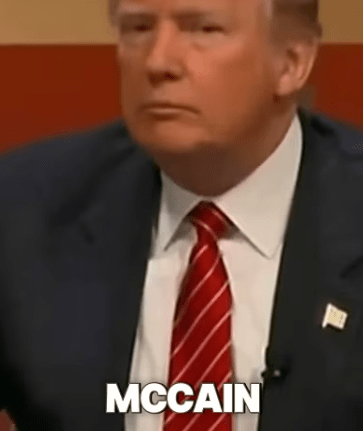
Picture a reporter stepping up to the mic like they’re about to ask a normal, polite, journalist question, and instead they basically go, “Sir, did you really call John McCain a ‘dummy’ for getting captured in war?” and suddenly the whole room feels like when someone brings up politics at Thanksgiving and the gravy stops moving.
Trump’s standing there with that look like he just got accused of stealing office pens—half offended, half impressed anyone noticed—and the joke writes itself because only in America can a man dodge the draft, build a gold elevator, and still decide the real idiot in the story is the guy who got shot down while flying a jet in Vietnam.

That’s like calling a firefighter dumb for being inside a burning building, or calling a lifeguard stupid for getting wet—no, my guy, that’s literally the job description. And the reporter, bless them, is doing that thing comedians love, where they don’t even need to be funny because reality is already doing cartwheels in clown shoes, just calmly pointing out that John McCain spent years as a POW being tortured, while Trump spent those same years bravely battling hair spray and finding new ways to avoid sunlight. The absurdity hits harder when you remember McCain wasn’t captured because he took a wrong turn on Google Maps—he was flying a combat mission, got shot down, and refused early release, which is hero behavior so intense it makes action movies look like yoga tutorials. Meanwhile Trump’s critique sounds like the kind of trash talk you hear from a guy who lost a game of Monopoly and flips the board because he landed on Baltic Avenue.

The humor really peaks when you imagine the logic: “I like people who weren’t captured,” which is such a wild standard that by that metric, every unlucky hiker, every shipwreck survivor, and anyone who’s ever been stuck in an elevator is officially a loser. And the reporter pressing him on it is like a stand-up comic with perfect timing, just letting Trump talk long enough to hang himself with his own punchlines, because nothing beats the comedy of confidence without self-awareness. It’s the kind of moment where the audience isn’t laughing because it’s a joke, they’re laughing because they can’t believe a grown man with nuclear codes is beefing with a dead war hero like it’s a middle school lunch table. You almost expect a rimshot when the reporter asks the follow-up, because this isn’t politics anymore, it’s sketch comedy, it’s satire with a budget, it’s America’s longest-running improv show where the host keeps insisting he’s the smartest person in the room while proving, minute by minute, that history, irony, and basic human decency have all been labeled “dummy” and shoved into the corner.
Watch the Short Clip Below of Ivana Trump Explaining That Donald Trump Didn’t Want His Son Being a Loser

Watch The Video Below To See Who Larry David is Calling a “R-WORD”




 TheDailyChristian