
If you’re in a survival situation, lost in the wilderness, you’ll need survival weapons of some sort to get you through.
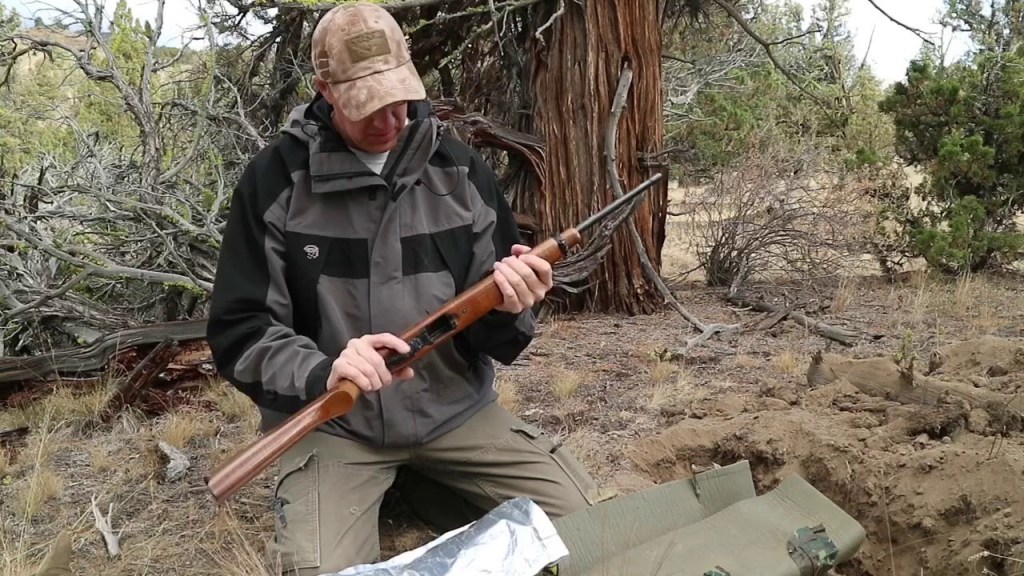
Firearms
Firearms are often the first and most obvious choice for many people when selecting a survival tool. Guns are widely available, relatively easily procured, and easily used and carried. They also provide a level of security against dangerous animals and would-be human assailants that is hard to beat.
They are able to be quickly deployed and, in the case of handguns, can effectively be used with one hand if necessary. For those of us who conceal carry, carrying a handgun is a part of daily existence. You’ll have to decide which caliber and which style of handgun you prefer–revolver or semi-automatic–based on a number of considerations.
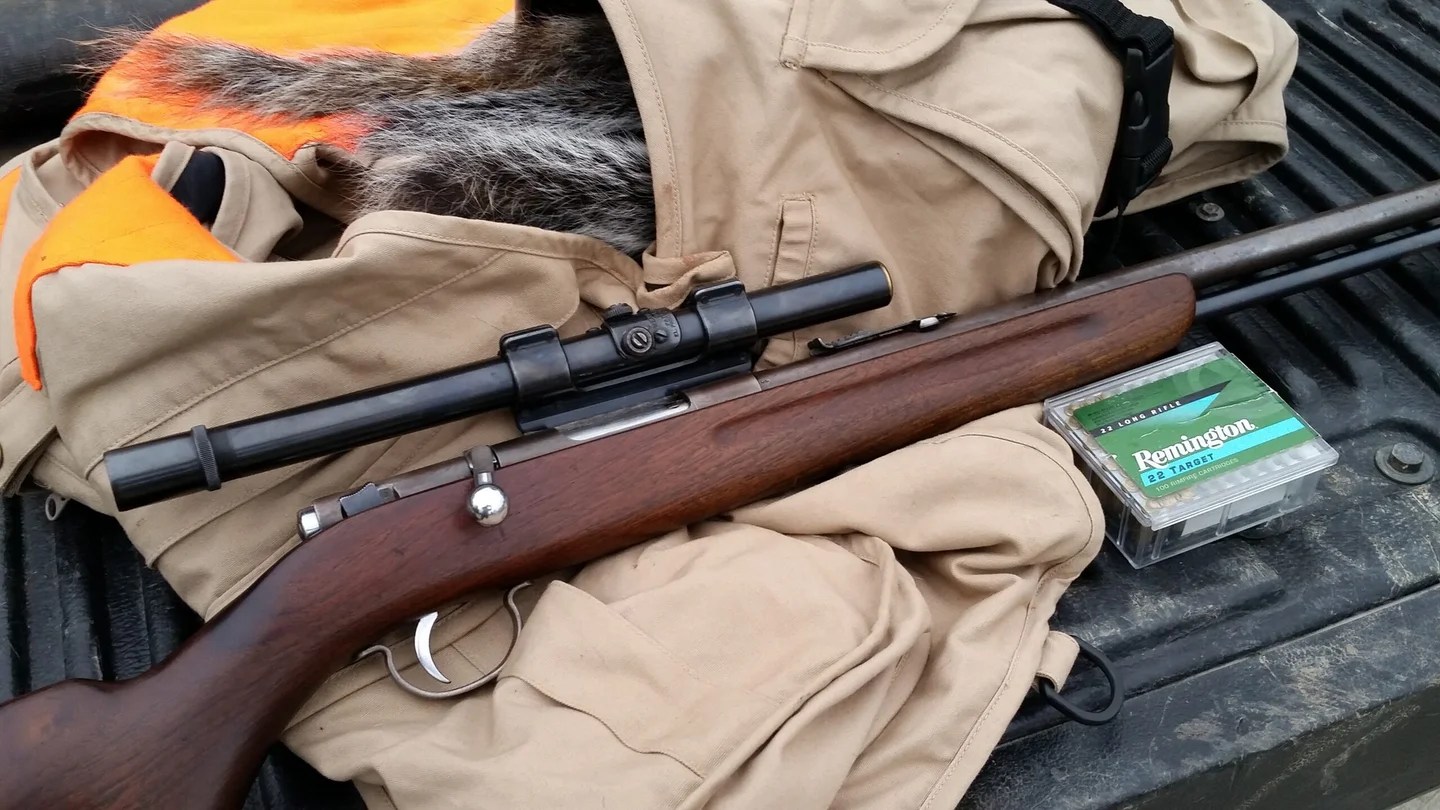
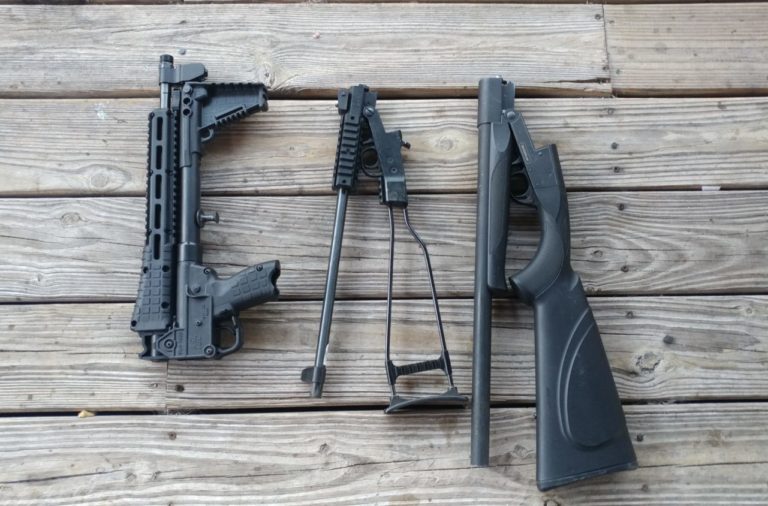
I’d suggest a .22 rifle as an all-around wilderness or urban survival gun, as it’s lightweight, reliable, easy to use, and clean, and the ammunition it uses is cheap, easily affordable, and small. You can kill deer and larger game with a .22. Its report isn’t too loud, which could be a disadvantage if you’re trying to signal someone. I’d also suggest carrying a larger caliber handgun, something akin to a .357 Magnum or .44 Magnum, for self-defense and peace of mind.
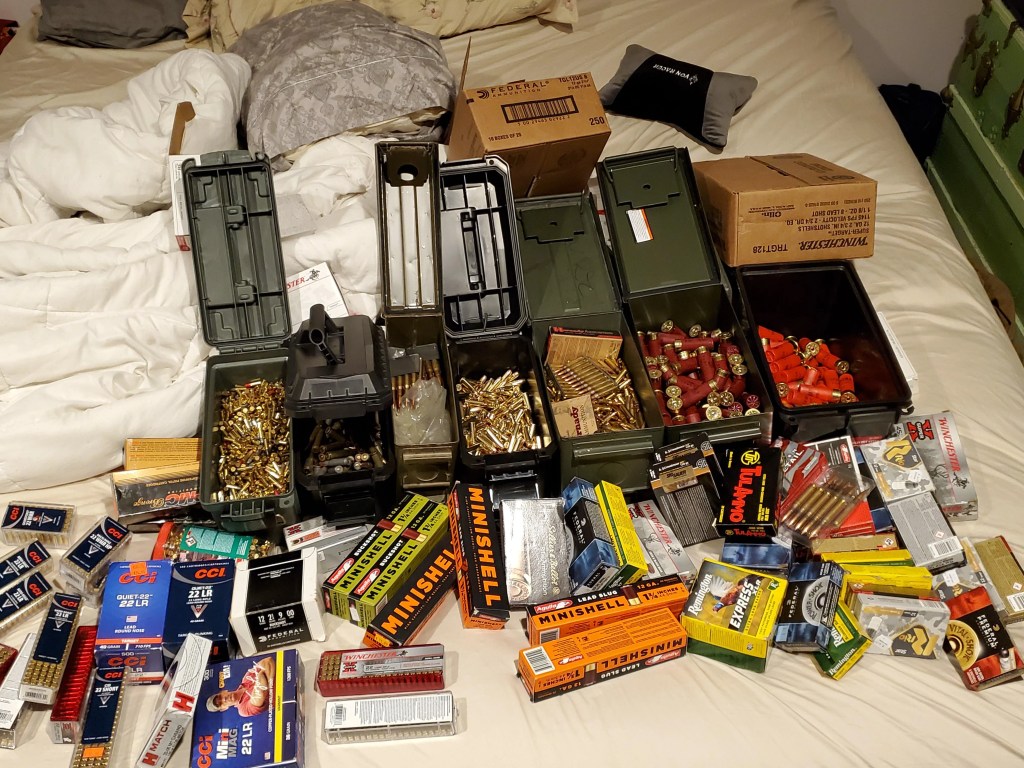
Of course, you should also carry an adequate supply of ammunition, which brings up another disadvantage associated with firearms. Once you run out of ammo, they’re basically useless, with the possible exception of scaring off would-be human attackers.
Knives
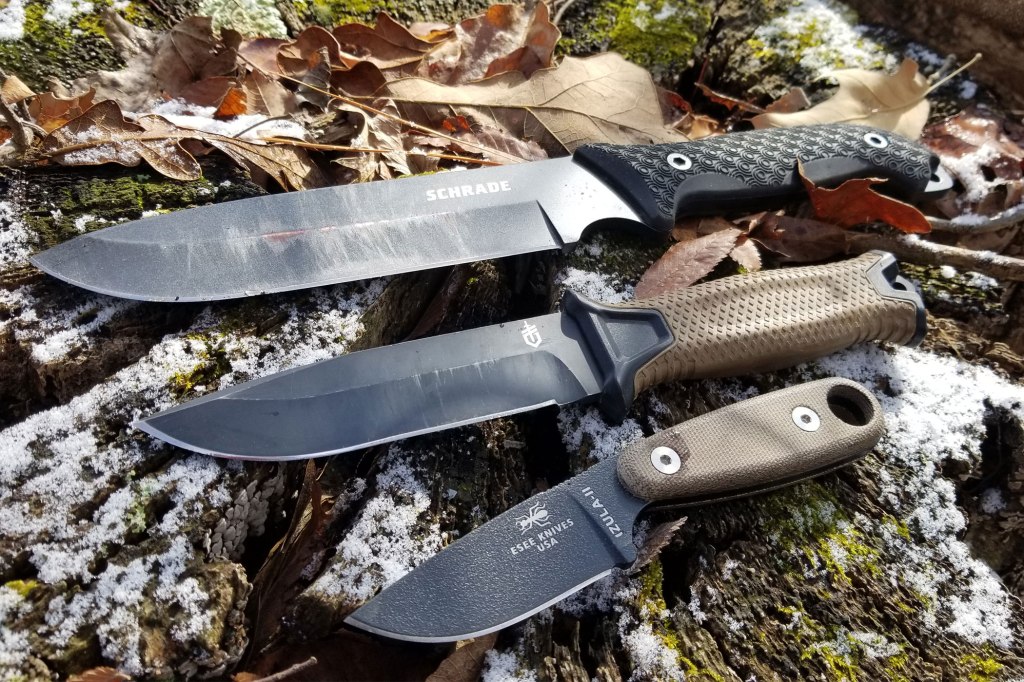
A knife should be considered a must-have survival tool. Carrying at least one knife, and probably more, is a given in any survival situation. Knives are the single most versatile “multitool” you can have. With a knife, you can make other tools and DIY weapons, build a shelter, build a fire, procure food, make clothing, open a can of beans and defend yourself. You can even just whittle away the time when you’re bored waiting for the rain to stop.
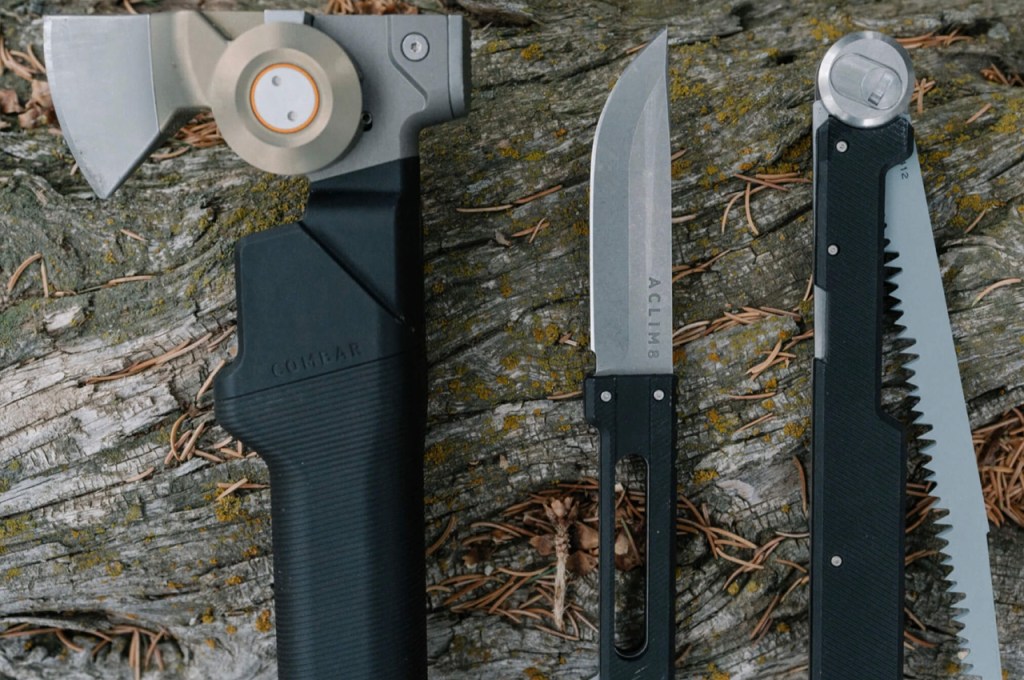
There are many good survival knives on the market today. I won’t go into all of the attributes you should look for when choosing a survival knife. I will, however, a mid-sized fixed blade knife and a folding pocket knife are the knife style you should be carrying. Folding knives aren’t as sturdy as fixed blade knives, but their compactness makes them easy to stow away until needed. Knives are generally lightweight enough that you can easily carry more than one.
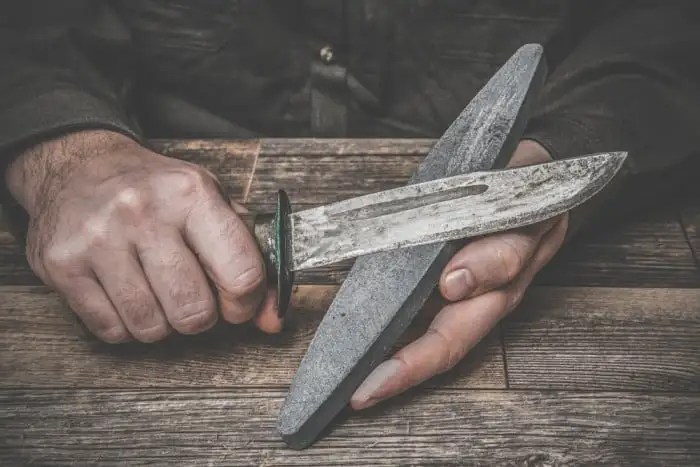
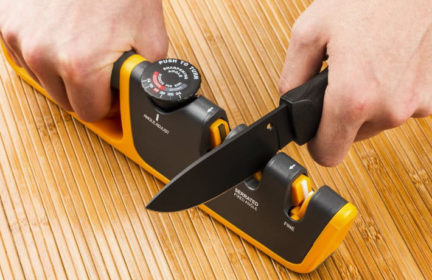
You’ll also probably want to carry a sharpening stone with you in order to keep your knife edge keen. The sheath you choose for your fixed blade knife can also be a source of additional survival tools. For instance, you can have a knife sheath made that’ll also hold fire steel, a whetstone, a compass, and any other tidbits you might find useful in a survival situation.
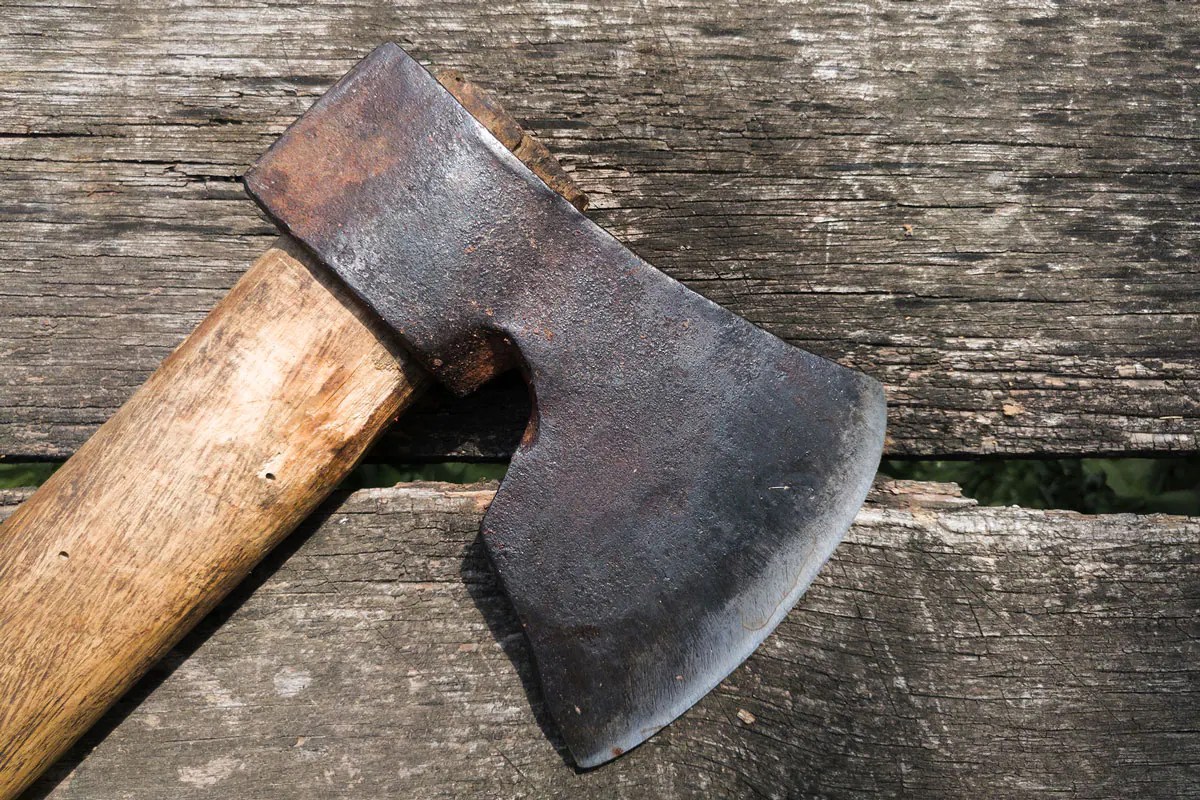
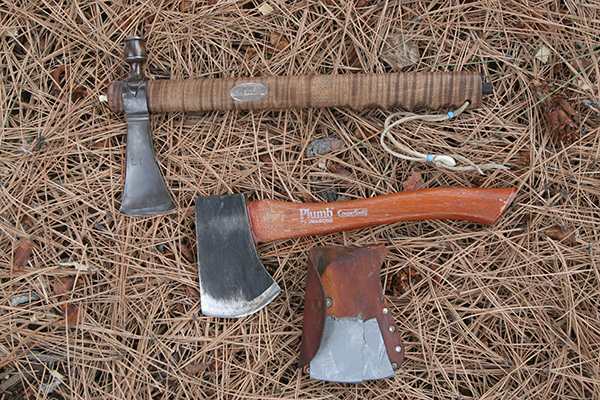
Hatchet
The benefit of carrying a hatchet is that it’s both a functional tool and a self-defense weapon. A hatchet or stout tomahawk can be used to chop wood or small trees, carve a spear, clear brush, and more. It can also put a little more distance between you and a would-be attacker or dangerous animal in close quarters should you need to employ it in that regard.
In a survival scenario, I would definitely want to carry a knife and a hatchet. If you’re able, you should also consider carrying a small file with you to touch up the edge of your hatchet when necessary.
If you can comfortably carry or stow an actual, full-length ax, all the better. The weight of carrying such a tool may be prohibitive, however. You can do a lot more with an ax that might unduly tax a hatchet, but a good, sharp hatchet is a great choice. It’s relatively lightweight and can perform multiple tasks with ease.
 TheDailyChristian