Financial Preparedness: The Most Ignored Part of Emergency Survival

You can stockpile all the canned beans, water filters, and fancy tactical gear you want—but if your financial world collapses the moment the grid flickers, you’re not prepared. People love to talk about fire starters and bug-out bags, but bring up financial preparedness and suddenly everyone thinks it’s too boring or too complicated. They shrug, wave their hands, and say, “I’ll deal with that when things get bad.”

Newsflash: if you start preparing when things are already bad, you’re preparing too late.

The world is unstable—economically, socially, politically. Everything is overpriced, under-maintained, and one bad week away from chaos. Meanwhile, people keep living paycheck to paycheck, pretending everything is fine. They think the systems around them will just magically keep functioning because they always have, as if history isn’t a giant catalog of societies that collapsed under their own weight.

And when those systems finally buckle?
Your credit score won’t save you.
Your job won’t save you.
Your taxes won’t save you.

Only your preparedness—especially your financial preparedness—will matter.


Why Financial Preparedness Is the Most Neglected Part of Survival Planning

The reason people avoid financial preparedness is simple: it forces them to face the truth. It’s easier to buy a new survival gadget than it is to admit your savings account is hanging on by a thread. It’s easier to watch prepping videos than to sit down and calculate how long you could actually last without income, power, or access to the banking system.

But a crisis doesn’t care about your feelings, your denial, or your excuses.

A crisis strips everything down to the brutally practical.
Food. Water. Security. Shelter. Resources.

And resources—whether you like it or not—usually involve money or something that acts like money.

Financial preparedness isn’t about being wealthy. In fact, most wealthy people are absurdly fragile because their entire lives depend on digital numbers not disappearing. It’s about being strategic, resilient, and realistic about what your financial world will look like when the entire system is under stress.


Short-Term Emergency Preparedness: Cash Still Matters When the Lights Go Out

Let’s start with short-term emergencies—the kind most people actually experience:

  • Sudden job loss
  • Power outages
  • ATMs going down
  • Bank “maintenance” that disables account access
  • Natural disasters that shut down entire regions

In these situations, cash becomes king again. Digital money is useless when the network is offline. We’ve already seen small examples of this any time a storm knocks out power. Stores suddenly become “cash only.” People panic because they don’t have any. They act shocked, as if they’ve never considered that electronic banking requires electricity.

A short-term emergency fund—real cash, not imaginary numbers—is the bare minimum for survival. Not for comfort. For survival.

I’m not talking about hundreds of dollars tucked away like “fun money.” I mean enough actual cash to cover:

  • Fuel
  • Food
  • Water
  • Medicine
  • Transportation
  • Temporary lodging

Because when everyone else is standing in line at a dead ATM machine, you’ll be moving, acting, surviving.

But people skip this step. They say, “I don’t want that much cash sitting around.” Great. Yes. Much better to have zero cash when the grid goes down. Brilliant.


Long-Term Disaster Preparedness: When the System Fails, Only Prepared People Thrive

In a long-term disaster—economic collapse, prolonged shortages, cyberattacks on infrastructure, civil disruption—you can kiss the idea of “normal financial life” goodbye. The longer the crisis, the harder the currency shocks hit.

People think “that could never happen here.”
People in every fallen society said the exact same thing.

If the supply chain fails long enough, money changes value—sometimes it loses value altogether. Banks freeze withdrawals. Governments put limits on cash. Digital platforms go down. Inflation spikes. And suddenly the comfortable modern citizen becomes a hostage to the system they trusted.

That’s why financial preparedness isn’t just about savings—it’s about diversification of resources.

1. Physical assets

Not the cute kind that financial advisors love to talk about. I mean things that hold value because they are useful or scarce:

  • Tools
  • Durable goods
  • Seeds
  • Food stores
  • Fuel
  • Medical supplies

These items are currency in a long-term crisis.

2. Precious metals (Yes, the classics)

People scoff at gold and silver until they realize every form of paper money in history has eventually failed. Metals are not magical; they’re simply a hedge against stupidity—specifically the stupidity of governments printing money like it grows on trees.

3. Skills that generate value

Skills become currency when systems fail. The person who can repair things, grow food, purify water, treat wounds, or defend property becomes incredibly valuable. Your job title means nothing when society cracks. Your skills become your real income.

4. Reducing dependency

The less debt you have, the fewer monthly expenses you have, and the more self-sufficient your household is, the harder you are to control or destabilize. Independence isn’t about ego—it’s about survival.

People who depend on fragile systems collapse first.


The Harsh Reality: You Can’t Prep Without a Financial Plan

This is the part nobody wants to hear:
Prepping requires money.

Sure, you can start small and be creative—but the notion that you can fully prepare without any financial foundation is a dangerous fantasy.

Stockpiling food? Costs money.
Building reserves? Money.
Home repairs? Money.
Emergency gear? Money.
Fuel storage? Money.
Training and skills? Money.
Relocation plans? Definitely money.

The world says, “Don’t save, just spend.”
The system says, “Don’t prepare, just trust us.”
Society says, “Nothing bad will happen.”

Meanwhile, everything around us is held together with duct tape and false confidence.

Financial preparedness is not optional. It is not extra. It is not “for later.”

It is survival.


If You’re Waiting for Permission to Prepare, You’re Already Behind

Most people are reactive. They wait for disaster to hit before they even think about preparing—if they can still afford to. They wait because they don’t want to seem paranoid, or because planning feels overwhelming, or because they keep telling themselves they’ll start “next month.”

Well, next month won’t matter when the economy snaps like a dry branch or the supply chain shudders to a halt.

Preparedness only works before disaster.

No one is coming to save you.
No one is going to hand you the money you didn’t save.
No one will give you the resources you didn’t secure.

And no matter how angry you get at the world, the world won’t change for you.
You have to change for it.


Conclusion: Financial Preparedness Is Survival Preparedness

If you’re a prepper—or even if you aren’t—financial preparedness isn’t optional. It is the backbone of every other form of planning. Without it, your entire “survival strategy” collapses the minute the world stops cooperating.

And let’s be honest: the world isn’t exactly reliable these days.

Prepare now, while you still can.
The system won’t warn you before it fails.
It never does.

The Brutal Truth About Surviving a Long-Term SHTF

If you’re even thinking about how to survive a long-term SHTF (S**t Hits The Fan) event, congratulations—you’re already ahead of 90% of the population. And you know what? Most of them don’t deserve saving anyway. They’ve spent their lives glued to screens, worshiping convenience, and depending on systems that were rotting from the inside decades ago. They laughed at preppers. Mocked anyone who stocked a few extra cans of food. Called us paranoid, delusional, fanatics.

But when the lights finally go out—when the trucks stop rolling, the stores go empty, and the illusion of stability cracks into dust—we’ll see who’s laughing then.

This article isn’t here to sugarcoat anything. Long-term SHTF survival isn’t glamorous. It isn’t the fantasy land the movies sell. It’s brutal, exhausting, unforgiving, and—let’s be honest—not everyone is cut out for it. But if you’re reading this, you might be one of the rare few who actually has a chance.

So let’s get into the harsh, ugly truth of long-term SHTF survival, because the world isn’t getting any better out there—and hope sure as hell isn’t going to save you.


1. Accept That No One Is Coming to Save You

If you’re still clinging to the idea that some government agency, humanitarian organization, or magical cavalry is going to swoop in and rescue you during a long-term collapse… let go of that fantasy right now.

In a true SHTF situation:

  • Emergency services collapse first.
  • Law enforcement becomes overwhelmed or disappears entirely.
  • Governments prioritize their own continuity—not yours.
  • Utilities, supply chains, and hospitals crumble almost immediately.

You are on your own. Your family is on their own. Survival becomes entirely your responsibility. Once you fully accept this, you’re finally starting at the right mindset level.


2. Food: The Number One Problem Nobody Takes Seriously

People love to pretend they’ll “just hunt” or “live off the land” during a collapse. Sure—because nothing says “long-term survival strategy” like fighting the entire desperate population over the same dwindling wildlife and edible plants.

In reality:

  • Hunting will be depleted fast.
  • Fishing will become competitive and unsustainable.
  • Farming takes time, land, knowledge, and luck.
  • Foraging can’t sustain you long-term unless you live in an untouched wilderness.

So what’s the real solution?

Stockpile like the world is ending—because someday it very well might.

Long-term SHTF survival requires:

  • Shelf-stable foods (rice, beans, oats, canned meats, dehydrated goods)
  • Long-term storage buckets with oxygen absorbers
  • Seeds—lots of them—for future growing
  • Knowledge of food preservation (canning, smoking, dehydrating)

And don’t kid yourself—food will be the new gold. It will be the most fought-over resource on the planet. If you can secure it, you have power. If you can’t, you’re a future cautionary tale.


3. Water: The Resource Everyone Takes for Granted

The average clueless person assumes clean water will “somehow” still be available in a disaster. Wrong.

Municipal water systems depend on:

  • Electricity
  • Chemical treatment
  • Staff
  • Functioning infrastructure
    …all of which evaporate quickly during a long-term collapse.

You need:

  • A reliable water source (well, spring, river, captured rainwater)
  • Multiple purification methods (filters, boiling, tablets)
  • Redundancy—because filters break, boil times increase, supplies run out

If you don’t have water or a way to purify it, you’re dead within days. It’s that simple.


4. Security: Because Desperation Turns Good People Into Monsters

Everyone pretends humanity is inherently good—right up until the shelves empty. Then morality evaporates, and survival instincts take over.

Long-term SHTF means:

  • Looting won’t last days—it will last months.
  • People will not “ask nicely.”
  • Neighbors turn into threats.
  • Desperation turns ordinary citizens into violent opportunists.

You don’t have to be a soldier, but you damn well better understand:

  • Defensive positioning
  • Hardening your home or retreat
  • Situational awareness
  • Strength in numbers
  • Avoiding confrontation whenever possible

Survival is about staying alive—not playing hero.


5. Community: Because Lone Wolves Die Fast

Despite the rugged lone-wolf fantasies people love to cling to, real long-term survival requires community. Not a massive group—just a small, trustworthy circle.

Why?

  • One person cannot guard, garden, gather, cook, repair, and watch for threats 24/7.
  • Group labor multiplies your capabilities.
  • Shared resources strengthen security and sustainability.

But here’s the catch:
Don’t wait until after SHTF to assemble your tribe. That’s how you end up trusting the wrong people and paying the price.

Vet people now. Build networks now. Discuss expectations now.

In a long-term collapse, your community is your greatest asset—and your greatest liability if chosen poorly.


6. Skill Over Stuff: Your Gear Can Be Stolen, but Knowledge Stays With You

Everyone loves shiny gear. Gadgets. Tactical toys. Tools that look cool but mean nothing if you don’t know how to use them. But in a long-term SHTF?

Skills outrank gear every single time.

Learn:

  • Gardening and seed saving
  • Water filtration
  • Basic medical care
  • Food preservation
  • Navigation
  • Bartering
  • Repair and maintenance
  • Situational awareness and basic defensive tactics

Gear breaks. Batteries die. Tools rust.
Knowledge and skill don’t.


7. Mental Fortitude: The Most Overlooked Survival Skill

Most people aren’t mentally strong enough to survive a long-term collapse. They crumble under pressure. They panic. They freeze. They wallow in denial.

Long-term SHTF survival demands:

  • Mental resilience
  • Adaptability
  • Grit
  • The ability to push through discomfort
  • Control over fear and despair

Survival isn’t about being fearless—it’s about moving forward in spite of fear.

If you can’t manage your mind, you won’t manage your survival.


8. The Harsh Reality: Survival Won’t Be Pretty, Easy, or Fair

Here’s the ugly truth that no one wants to say out loud:

A real long-term SHTF situation will be miserable. It will be grinding, exhausting, and emotionally punishing. You’ll lose people. You’ll face scarcity. You’ll question your decisions. You’ll wonder if the old world—broken as it was—wasn’t so bad after all.

But if you prepare now, while everyone else is asleep at the wheel, you give yourself a fighting chance.

Most people won’t make it.

But maybe you will.

If you’re angry at the world, good. Use that anger. Turn it into preparation. Turn it into discipline. Turn it into the fuel that keeps you alive while society’s fragile shell finally shatters.

The world is already unraveling.
You can’t stop it.
But you can survive it.
If you’re willing to accept the truth—and act on it.

Best Survival Products Hiding in Your Grocery Aisles

Civilization is not a guarantee—it’s a temporary arrangement held together by apathy, duct tape, and a population that assumes “someone else” is handling things. Maybe that used to be true. Not anymore. Every week the cracks get wider, and every year we pretend that supply chains, government agencies, and corporate giants will somehow keep functioning even as everything around us falls apart.

And yet, most people wander through grocery stores like zombies, tossing snacks into their carts and giggling on their phones, never stopping to consider that the lights above their heads and the food on those shelves rely on systems that can collapse overnight. All it takes is one power grid failure, one fuel shortage, one cyberattack, one natural disaster—pick your poison—and the whole façade drops.

I’m tired of watching people sleepwalk through danger. I’m tired of pretending everything is fine. So here’s the truth: if you’re even half awake, you should already be stocking up. Fortunately, you don’t need a bunker, a forest cabin, or a shipping container full of MREs to prepare. You can find real, practical, shelf-stable survival gear right inside your everyday grocery store—if you know what to look for.

Below are the best survival products you can buy before the masses finally panic or the shelves go bare (again).


1. Canned Meat: The Only Protein You Can Trust When Reality Crumbles

Everyone loves to sneer at canned meat—right until the day the refrigerated section dies and the fresh meat aisle becomes a biohazard zone. Canned chicken, tuna, spam, and roast beef are some of the most underrated survival foods on the planet.

They last for years, require no cooking, maintain protein content, and can be eaten straight out of the can. When the world decides to malfunction, people who used to mock canned meat will regret tossing organic kale chips into their carts instead of stocking up like sane adults.

Stop worrying about the label aesthetics and grab the cans. Protein is survival, period.


2. Rice and Beans: The Boring Duo That Will Keep You Alive Longer Than Your Favorite Politician

People roll their eyes at rice and beans because they’re “too basic.” Well, guess what? Basic foods built civilizations long before electricity, refrigeration, and food delivery apps turned humanity soft. Rice and beans together form a complete protein, and both store for absurdly long periods if you keep them dry.

Everyone wants “fun” survival foods. Good luck staying alive on granola bars and high-priced freeze-dried meals. Rice and beans aren’t glamorous, but they’ll outlast every influencer who thinks prepping is a quirky aesthetic.


3. Peanut Butter: Nutrient-Dense, Calorie-Dense, and Doesn’t Give a Damn About Power Outages

One jar of peanut butter contains thousands of calories, lasts over a year, and requires no heating or preparation. That’s called dependable. Meanwhile, the world around you is becoming the opposite of dependable.

If inflation spikes, if the grid goes down, if transportation collapses even for a week—you will want foods that don’t care about temperature, convenience, or refrigeration. Peanut butter will carry you through days when chaos eats everything else.

Grab the jars. All of them.


4. Salt: The Mineral That Built Empires (And Will Save You When Your Fridge Is Just a Box of Rotting Hope)

Modern people treat salt like a seasoning. Precarious societies treat it like gold. In a real crisis, salt becomes one of the most valuable survival items on the planet because it preserves food, balances electrolytes, and extends the lifespan of almost anything perishable.

Refrigeration is temporary. Salt is forever. A few dollars now could save your entire supply stash later.


5. Shelf-Stable Milk: You’ll Thank Yourself When Fresh Dairy Turns Into Toxic Waste

You don’t have to live without milk during a crisis. Shelf-stable milk (boxed or powdered) lasts months to years and can be used for cooking, coffee, cereal, and sanity. When fresh milk disappears—and it will, very quickly—you’ll be watching people panic over shortages you solved months ago.

Most people don’t even realize shelf-stable milk exists. That’s why it’s still sitting quietly on store shelves. For now.


6. Instant Coffee: The Survival Comfort That Will Keep You From Losing Your Mind

Humans underestimate morale. They think survival is only calories, water, and shelter. But a demoralized mind collapses faster than a crumbling supply chain. That’s where instant coffee comes in.

When your entire neighborhood is losing it, when the sun rises on chaos, when the nights feel too long and too dark—one hot cup of coffee can keep your sanity tethered. Instant coffee stores forever, requires only water, and can be a mental anchor when everything else gets ugly.


7. Bottled Water: The Most Boring Thing in the Store, But the First Thing to Vanish

People laugh at preppers storing bottled water—right until a storm hits and they’re fighting strangers for the last case. Water is life. Water goes fast. Water stops being available the moment pumps lose electricity.

If the grocery store STILL has a wall of bottled water, consider it a miracle. Get it while you can. You will never regret having too much water—but you will regret not having enough.


8. First-Aid Supplies: Because Hospitals Might Be the First Thing to Collapse

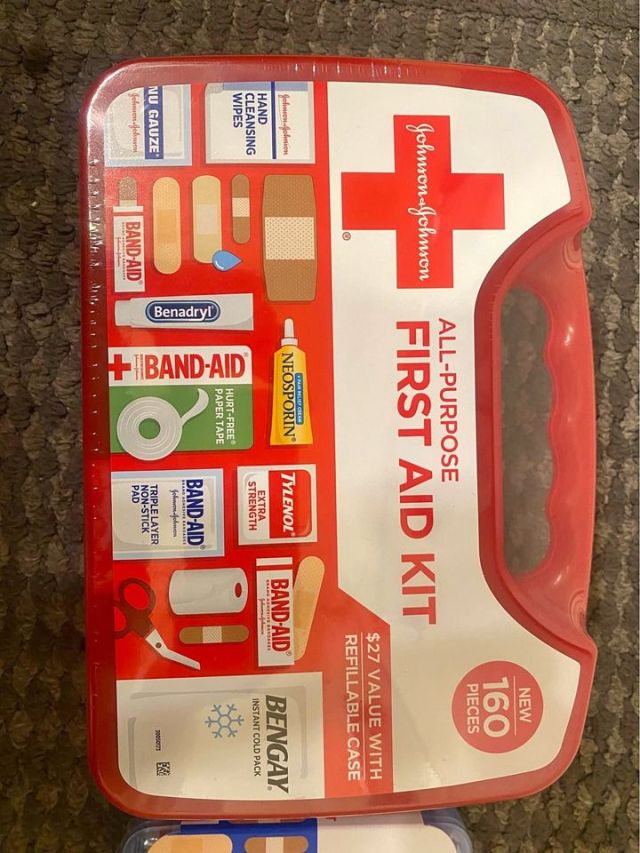
Most grocery stores stock basic medical supplies that become invaluable when the healthcare system becomes overwhelmed. Gauze, bandages, antiseptic wipes, pain relievers, and antibacterial ointments can turn a crisis into an inconvenience instead of a death sentence.

People will scream that “someone” is coming to help. The problem is that “someone” is never as fast or reliable as your own preparation.


9. Trash Bags and Aluminum Foil: The Silent Titans of Survival

No one talks about these, and maybe they should start. Industrial-sized trash bags can be used for shelter, insulation, water collection, sanitation, and gear protection. Aluminum foil can cook, reflect heat, block moisture, and preserve food.

When you look at a simple shopping bag and see survival tools instead of household products, that’s when you finally wake up to how fragile this world has become.


10. Manual Can Opener: Because Electricity Won’t Open Anything for You

People buy stacks of canned food and forget the one item that actually lets them access it. A manual can opener is the difference between eating and starvation when the grid decides it’s had enough.

You don’t need a fancy one. You just need one that works without power—something the modern world seems to have forgotten how to function without.


Final Thoughts (Not That Anyone Listens)

The grocery store is more than a place to wander around mindlessly while the world deteriorates outside. It’s a temporary armory of supplies, a sanctuary before the storm, a fragile lifeline that won’t stay intact forever. The things that keep you alive in a crisis are sitting there on the shelves right now—quiet, unappreciated, ignored by a population that thinks the system will always work.

The truth? It won’t. And when it fails, you’ll either be the one holding the last can opener…
or the one begging for it.

Beyond the Basics: What Survival Skills Alone Can’t Prepare You For

Anyone who’s been around the prepping world long enough knows this: book knowledge and bushcraft skills will only get you so far.

Yes, it’s great if you know how to start a fire with a bow drill or set up a lean-to shelter with paracord. But if you think survival is just about skills, you’re not seeing the whole picture. Survival isn’t just about staying alive—it’s about staying functional, smart, and sane under pressure.

When the grid goes down, society breaks, or you’re deep in the wild with no backup, you’ll need more than just skills—you’ll need grit, mental clarity, and adaptability.


The Real-World Truth About Survival

In real-life situations, things don’t happen like they do in the manuals. You don’t get perfect weather. You don’t get all the right gear. You don’t always have time to think. And your biggest threats? They’re not just hunger or cold. They’re panic, poor judgment, fatigue, and people making bad decisions—including you if you’re not ready.

That’s why mental preparedness, physical endurance, and adaptability are just as critical as any survival skill.


10 Survival Prepper Tips to Go Beyond the Basics

1. Train Your Mind Before You Train Your Hands
It doesn’t matter how good you are with a ferro rod if you can’t stay calm when you’re wet, cold, and lost. Mental discipline saves lives.

2. Get Uncomfortable on Purpose
Practice survival scenarios when conditions suck—rain, cold, hunger, or fatigue. Comfort-based training breeds weakness.

3. Know When to Fight and When to Flee
Prepping isn’t just defense—it’s strategy. Sometimes survival means walking away and saving your strength.

4. Build a System, Not Just a Bag
Your bug-out bag is only part of the plan. Without a system—routes, contacts, backups—it’s just expensive dead weight.

5. Practice Real-World Scenarios
Blindfold yourself and build a fire. Purify water at night. Escape a “stranded vehicle” with limited gear. Don’t train only in fair weather.

6. Harden Your Body Now
You won’t rise to the occasion—you’ll fall to your level of training. Hike. Carry weight. Get stronger. Fitness is survival currency.

7. Learn to Work with People You May Not Like
In a survival situation, you might not get to pick your group. Learn to lead, follow, and manage tension under stress.

8. Diversify Your Skills
Don’t just master fire-starting. Learn comms, basic mechanics, first aid, negotiation, navigation, and bartering. Prepping is about being multi-dimensional.

9. Prepare for Boredom and Isolation
Mental fatigue kills. Pack low-tech distractions—cards, a notepad, even a harmonica. Your mind needs fuel just like your body does.

10. Stock Resilience, Not Just Supplies
The strongest prep isn’t in your pantry—it’s in your mindset. Keep adapting, learning, and staying three steps ahead. That’s the real edge.


Final Word: Skills Are Just the Beginning

Survival is a full-spectrum discipline. It’s not about being the best woodsman or having the fanciest gear. It’s about enduring the unexpected, staying sharp when it matters, and being prepared when others panic.

So train smart. Think deeper. Prepare harder.

Because when it hits the fan, survival doesn’t reward the skilled—it rewards the ready.