Hillary Mocks Trump For Saying the ‘EMMYS’ are Rigged

Watching Hillary Clinton and Donald Trump debate in 2016 felt less like a civic exercise and more like standing in the checkout line during a power outage while two strangers argue over the last pack of batteries, and as a professional survival prepper I can tell you right now that moments like this are exactly why I label my shelves and don’t trust systems that claim they’ll always work the way they’re supposed to. Hillary comes out swinging with that practiced, calm-but-sharp tone, zeroing in on Trump’s greatest recurring hobby—declaring literally everything “rigged”—and she does it the way a seasoned debater does, smiling politely while lighting the match, pointing out that according to Trump, the election is rigged, the media is rigged, the polls are rigged, the courts are rigged, and yes, even the Emmys are apparently rigged because The Apprentice didn’t win every single shiny statue available like it was supposed to sweep Best Drama, Best Comedy, Best Supporting Actor, Best Hair, and maybe Best Documentary About How Great Donald Trump Is.
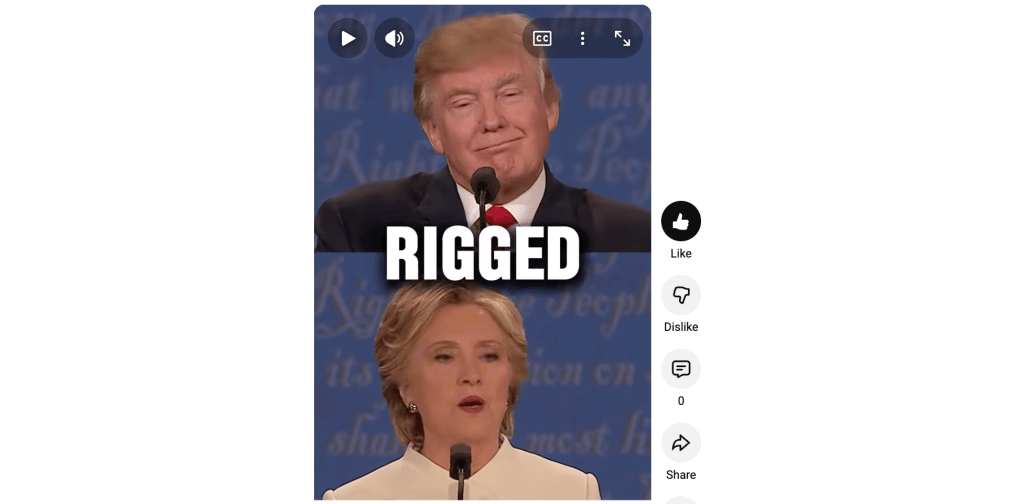
The crowd reacts, half laughing, half gasping, and Trump does that thing where he grins like someone just accused him of hoarding water and he’s proud of it, because to him the accusation isn’t an insult, it’s proof of foresight, and as someone who actually hoards water, I recognize that look immediately. Hillary frames the Emmy comment like a punchline, suggesting Trump believes his show deserved every award every year forever, and from a comedy standpoint it lands because it taps into something universally relatable: we all know that guy who thinks the referee is biased, the dealer is cheating, and the vending machine is personally out to get him. But from a prepper standpoint,

-WATCH THE 20 SECOND CLIP HERE-

I’m sitting there thinking, well yes, institutions do fail, systems do get gamed, and sometimes the vending machine really is rigged against you, which is why I don’t rely on vending machines or award shows for my sense of stability. The audience, however, cheers louder for Trump, and that’s the fascinating part, because in a room full of people watching a debate moderated by the rules of democracy, they respond more enthusiastically to the guy who treats the whole thing like a collapsing supply chain. Trump fires back with that familiar mix of grievance and bravado, essentially saying that when you’ve been treated unfairly as often as he has—by networks, by elites, by award committees who somehow failed to recognize the cinematic brilliance of boardroom finger-pointing—you learn not to trust the process, and the crowd eats it up like it’s freeze-dried beef stroganoff during a blackout. Hillary keeps pushing the point, painting Trump as a man who cries “rigged” whenever the scoreboard doesn’t say what he wants, and she’s right in the way that’s technically correct but emotionally ineffective, because while she’s arguing from the rulebook, Trump is arguing from the bunker. As a survival prepper, I’ve learned that people don’t cheer for the guy explaining how the grid is supposed to function; they cheer for the guy who already bought solar panels and doesn’t care if it goes down. The Emmy joke becomes symbolic of something bigger: Hillary sees Trump’s complaints as narcissism, while Trump’s supporters hear them as vigilance, a warning flare shot into the sky saying don’t trust the system just because it told you to relax.
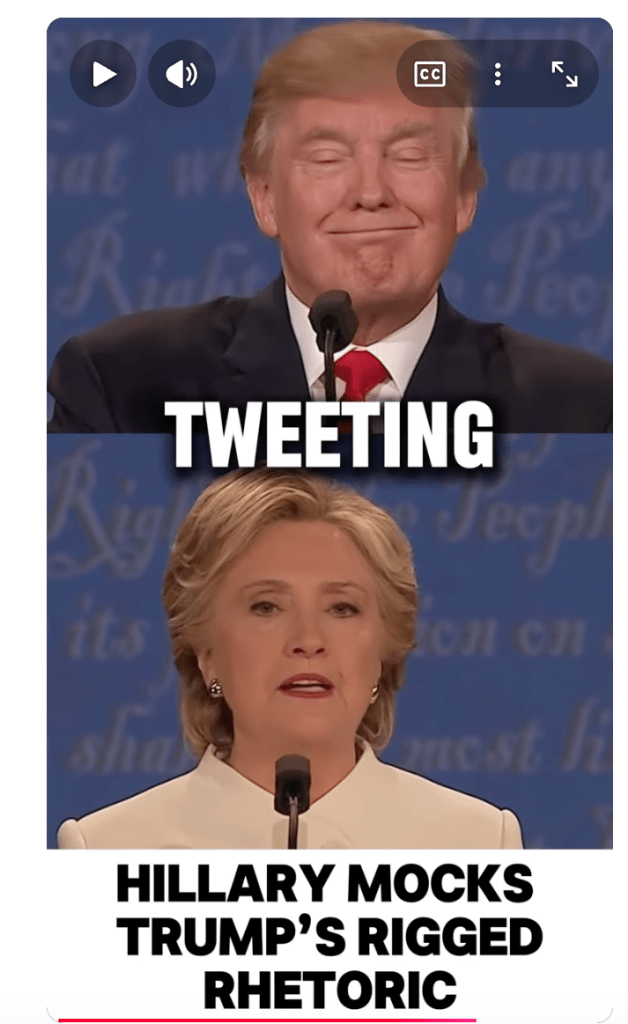
The crowd noise makes that clear, swelling louder for Trump not necessarily because they think he deserved an Emmy sweep, but because they recognize the instinct behind the complaint, that deep suspicion that the game is tilted and the house always wins unless you flip the table. From a stand-up perspective, the whole exchange is comedy gold because it’s two people talking past each other using the same word—rigged—but meaning completely different things, like one person saying “storm coming” and the other saying “but the forecast says sunny,” and as a prepper I side with the guy already filling sandbags. Hillary’s delivery is sharp, polished, and devastating in theory, but theory doesn’t keep the lights on, and Trump’s chaotic, grievance-fueled responses resonate with an audience that senses instability even if they can’t articulate it.
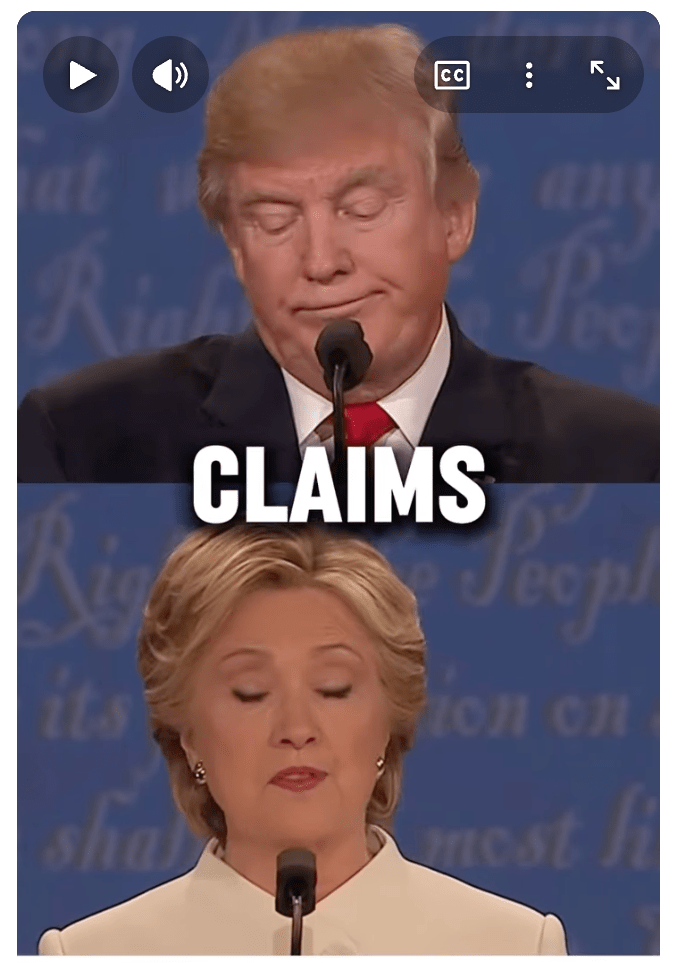
The debate becomes less about policy and more about worldview: Hillary believes in fixing the system from within, Trump believes the system has been compromised so thoroughly that complaining loudly is itself a form of defense, and the Emmy line, ridiculous as it sounds, is the perfect microcosm of that divide. The crowd cheering for Trump isn’t cheering for his television legacy; they’re cheering for the idea that someone is finally saying out loud what preppers have been muttering to themselves for years while stacking supplies in the garage, that you don’t wait for permission to notice something’s wrong. As a comedian, I laugh because the idea of Trump demanding every Emmy is absurd; as a prepper, I nod because distrusting centralized judgment has kept my pantry full and my stress levels low.
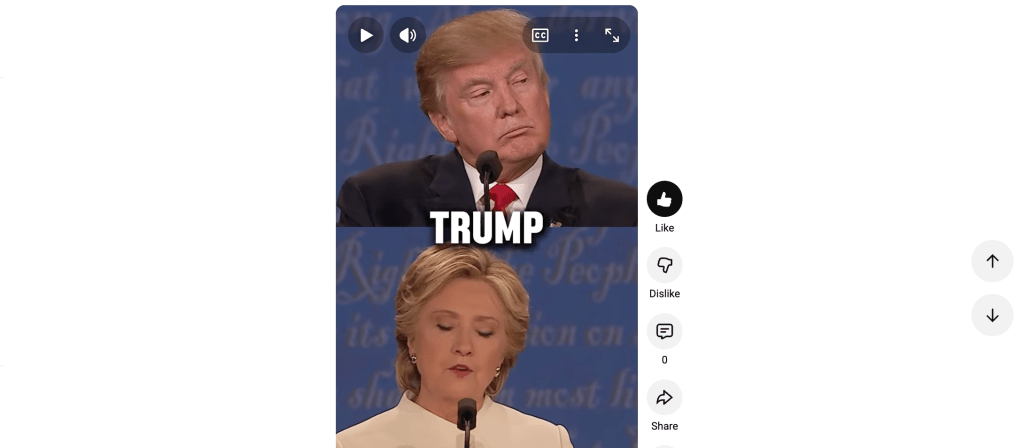
By the end of the exchange, Hillary looks incredulous, Trump looks energized, and the audience sounds like they’ve picked a side not based on who told the better joke, but who feels more prepared for a future where the scoreboard might stop working entirely, and that’s the real punchline of the 2016 debate: one candidate is arguing about fairness in a functioning system, the other is arguing like the system might collapse at any moment, and history has taught anyone with a go-bag that the second mindset, while messier, is often the one people cheer for when the lights start flickering.
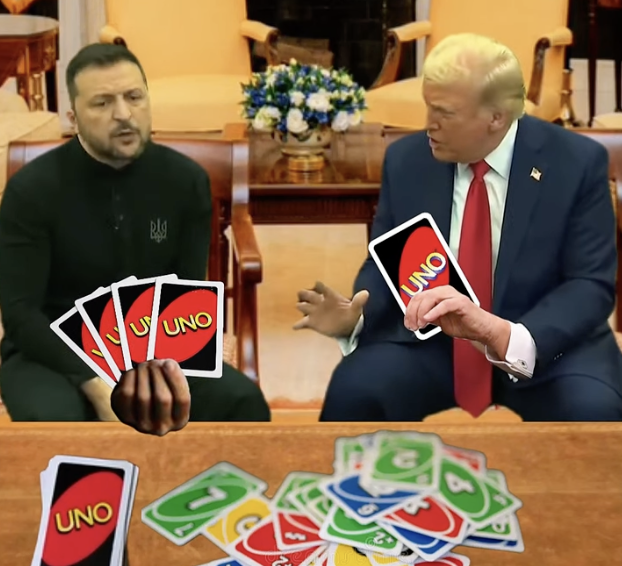
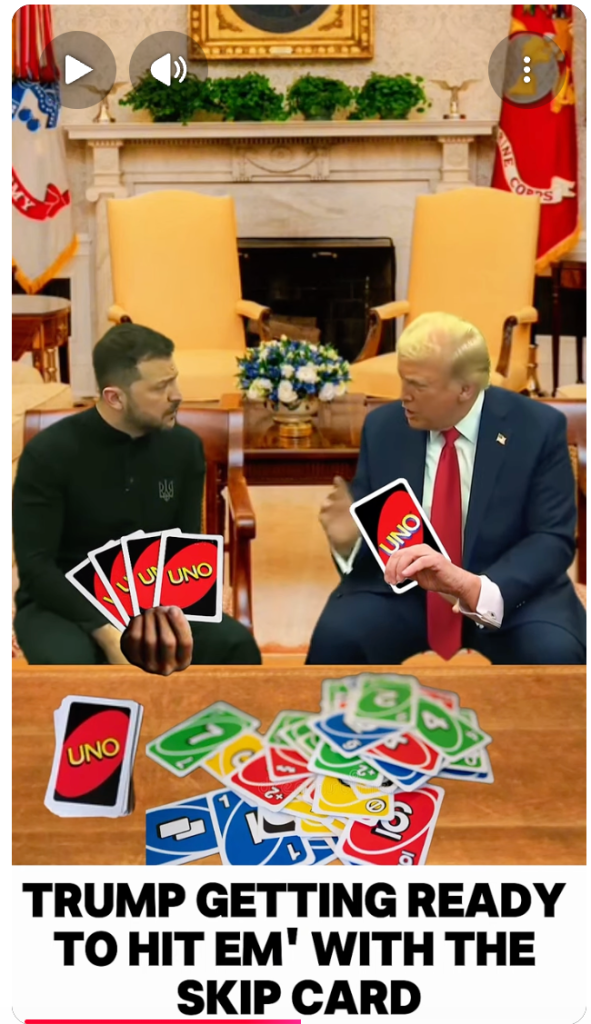
Draw Four or Say Thank You: Trump Battles Zelenskyy in the Oval Office

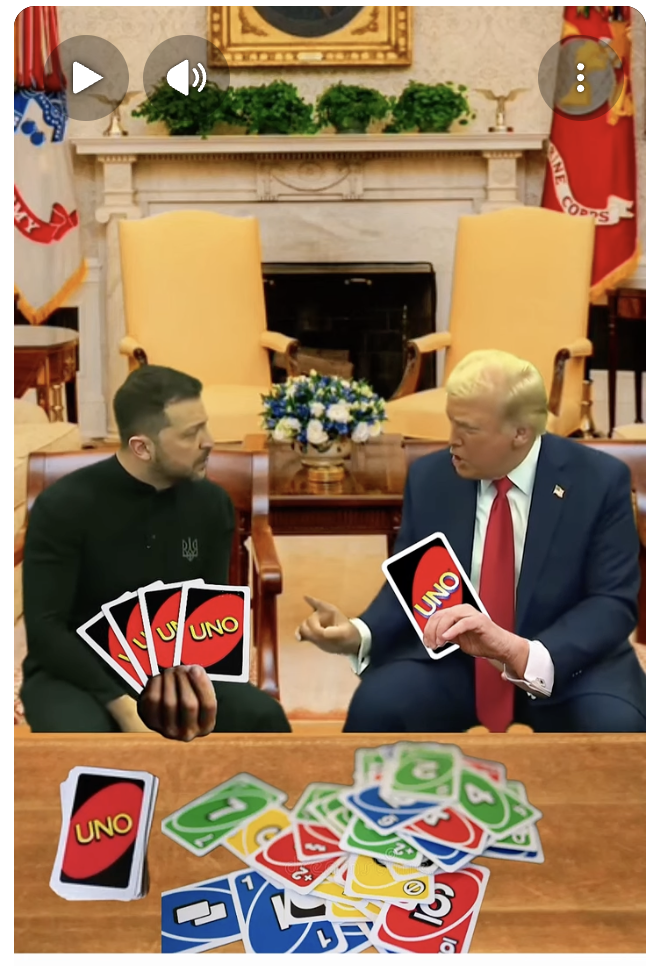
The Oval Office is a room normally reserved for history, diplomacy, and very serious nodding, but today it feels more like a family game night that’s gone completely off the rails, because Donald Trump and Volodymyr Zelenskyy are locked in what can only be described as an international UNO showdown, minus the folding table and plus several nuclear subtexts. Trump is leaning forward like a guy who just slapped down a Reverse card and wants everyone to respect the move, while Zelenskyy looks like he’s holding a fistful of mismatched colors wondering how he ended up playing this game without reading the rules pamphlet. Trump, with the confidence of a man who believes the deck personally favors him, keeps circling back to one central grievance: gratitude. Not policy, not strategy—gratitude.

Somewhere just off-camera, JD Vance is apparently nodding like the world’s most enthusiastic rulebook, chiming in that Zelenskyy is being “rude” and “disrespectful,” which in UNO terms translates to not clapping hard enough when someone plays a +4. Zelenskyy, meanwhile, appears confused, like a guy who thought this was a chess match and just realized everyone else is playing a card game where the loudest player gets to reshuffle reality. Trump gestures broadly, the way someone does when they’re explaining that actually, they’re winning, even though they’ve been picking up cards for ten straight minutes, and he reminds Zelenskyy—again—that he should be thanking him for his “gracious help” against his enemy, the other “Vlady Daddy,” which sounds less like geopolitics and more like an extremely cursed nickname you hear at 2 a.m. in a writer’s room. Zelenskyy tries to respond, but every attempt feels like laying down a perfectly legal yellow six only to be told, no, sorry, the vibes say red right now. Trump’s tone shifts into full game-night enforcer mode, the guy who insists the house rules are universal law, and he drops the line that lands like a Draw Twenty: Zelenskyy “doesn’t hold any cards.” In UNO language, this is devastating trash talk, the equivalent of saying,

“You’re not even in the game, you’re just here watching us win.” Zelenskyy’s expression suggests he’d like to challenge that assertion, but the table has already been flipped metaphorically, and Trump is now explaining that staying “in your lane” is very important, especially when that lane was apparently painted by Trump himself five minutes ago. The whole exchange has the rhythm of a sitcom argument where everyone is technically speaking English but no one is responding to the same sentence, and the tension feels less like impending war and more like the moment when someone accuses you of cheating because you’re about to go out on your last card. You can almost hear the laugh track swell as Trump delivers his closer, the verbal equivalent of slamming down a Wild card and declaring a color no one else wanted, while Zelenskyy sits there like a man realizing that diplomacy has been temporarily replaced by competitive board-game energy.

It’s absurd, it’s uncomfortable, and it’s funny in the way only power struggles can be when they accidentally resemble a sleepover argument between grown adults who all swear they’re being very calm right now. By the end of the clip, no one has officially won, no one has officially lost, but the audience knows exactly what just happened: Trump thinks he’s holding the deck, Zelenskyy thinks he’s playing for stakes that actually matter, JD Vance is somewhere offscreen acting as the world’s most intense UNO referee, and the Oval Office has briefly transformed into the least relaxing game night imaginable, where instead of snacks you’re handed ultimatums and instead of saying “UNO,” you’re told to say “thank you.”

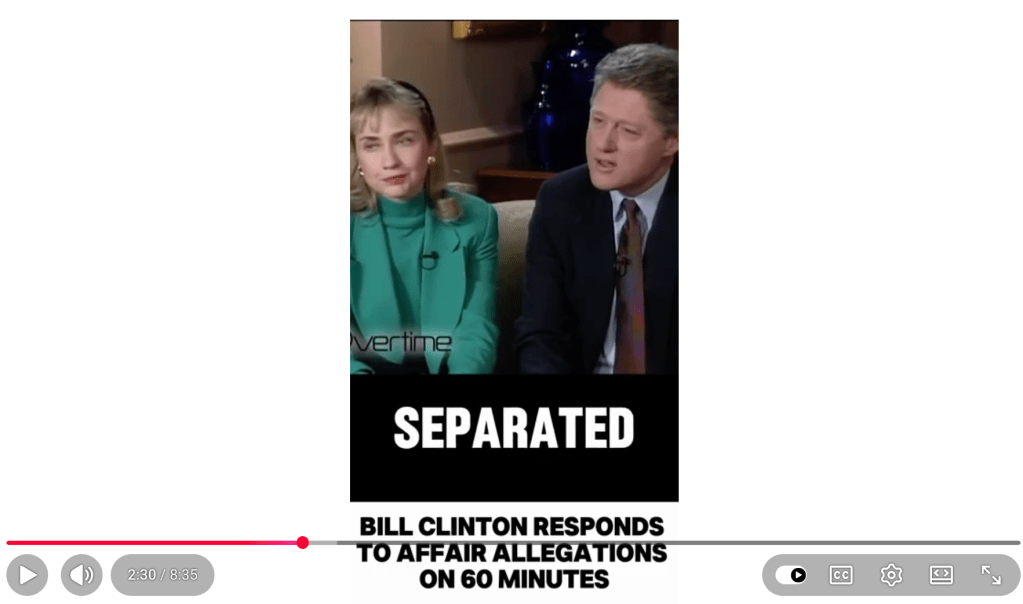
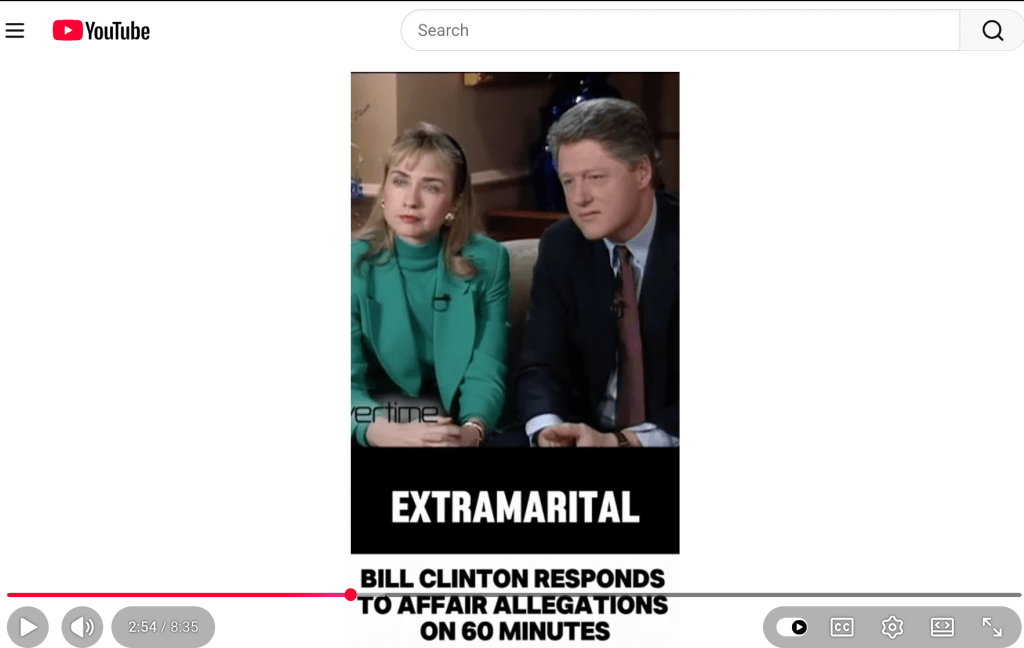
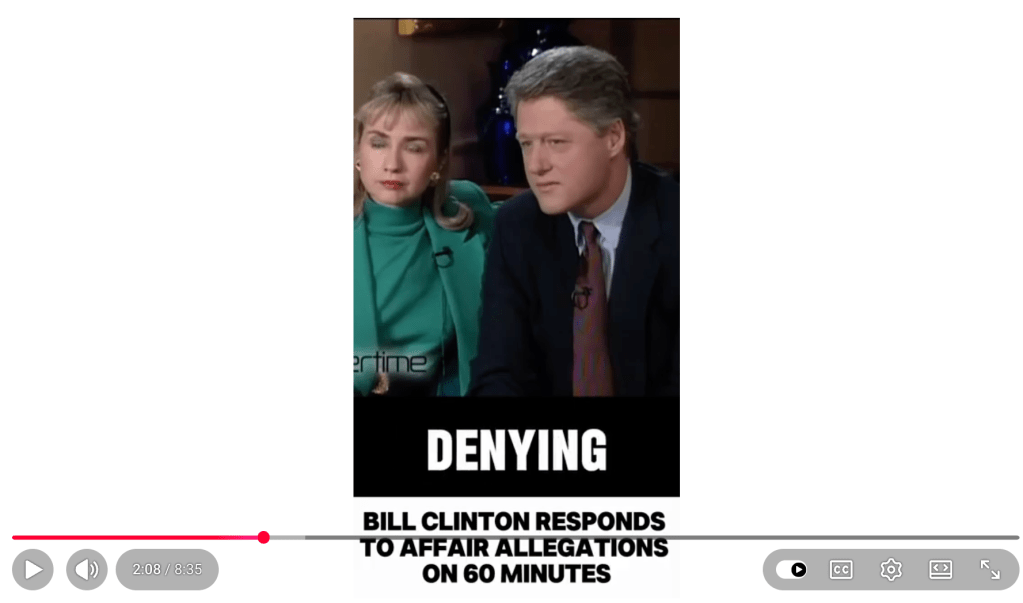
Bill Clinton and Hillary Clinton Discuss the Former President’s Extramarital Affairs on 60 Minutes

(WATCH THE BREATHTAKING VIDEO CLIP BY CLICKING ON THE ABOVE IMAGE)

The 60 Minutes interview unfolds with a gravity that feels heavier than the carefully arranged studio lights, as Bill and Hillary Clinton sit side by side, united by history yet visibly divided by memory, discussing Bill Clinton’s extramarital affairs with a seriousness that strips away any remaining gloss from the Clinton brand. Bill speaks first, his voice steady, practiced, and familiar, framing his actions in the language of regret and responsibility, yet still sounding like a man who has told this story many times and learned exactly where to pause. Hillary, by contrast, listens with a restraint that borders on icy, her posture controlled, her expressions measured, offering little indication that time has softened the wound.

When she speaks, it is not with anger, but with a colder tone—one that suggests endurance rather than forgiveness, survival rather than healing. The dynamic between them feels less like a married couple reflecting on a shared past and more like two political figures bound by mutual necessity, revisiting a scandal that never truly ended but merely aged. The camera lingers on Hillary’s face as Bill explains his behavior, and in those moments, the absence of warmth becomes the most revealing detail of the entire interview. There is no theatrical confrontation, no raised voices, only the quiet discomfort of unresolved truth being repackaged for public consumption.

Bill acknowledges the harm he caused, yet his language remains abstract, carefully avoiding vivid emotional specificity, while Hillary’s responses suggest a woman who has long since internalized the cost of public humiliation and private betrayal. She does not interrupt him, but neither does she affirm him; instead, she reframes the experience as a test of endurance, one that forced her to choose between personal dignity and political survival. The interview casts a dark light on the transactional nature of power marriages, where love becomes secondary to legacy, and personal pain is subordinated to historical consequence. As the conversation continues, it becomes clear that the affair is not merely a past mistake but a defining fracture that reshaped their relationship and hardened Hillary’s public persona.

The viewer is left with the sense that what is being discussed is not reconciliation, but containment—of damage, of perception, of a narrative that has haunted both of them for decades. Bill appears aware of this, offering remorse that feels sincere yet incomplete, while Hillary’s guarded presence suggests that forgiveness, if it exists at all, came at a cost so high it no longer bears discussing. The seriousness of the moment is amplified by what remains unsaid: the emotional toll, the erosion of trust, and the quiet calculation required to continue forward together.

In this exchange, the Clintons appear less like symbols of political resilience and more like embodiments of ambition’s collateral damage, illustrating how power can preserve partnerships long after intimacy has disappeared.

The interview does not redeem, nor does it fully condemn; instead, it leaves viewers with an unsettling portrait of two people who endured a shared scandal not by healing, but by hardening, standing together not as equals in love, but as co-survivors of a political era that demanded silence, sacrifice, and a willingness to live with permanent fracture.

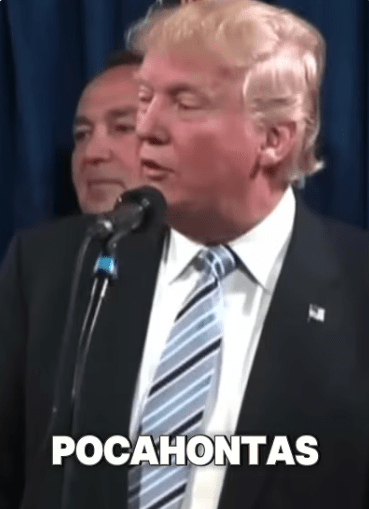
Trump Vs. Pocahontas – The Funniest Moment in Political History

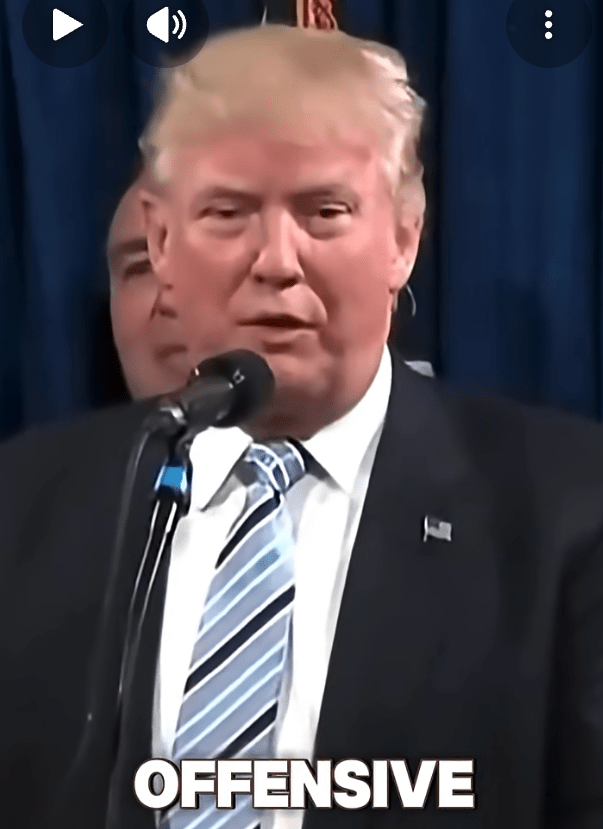
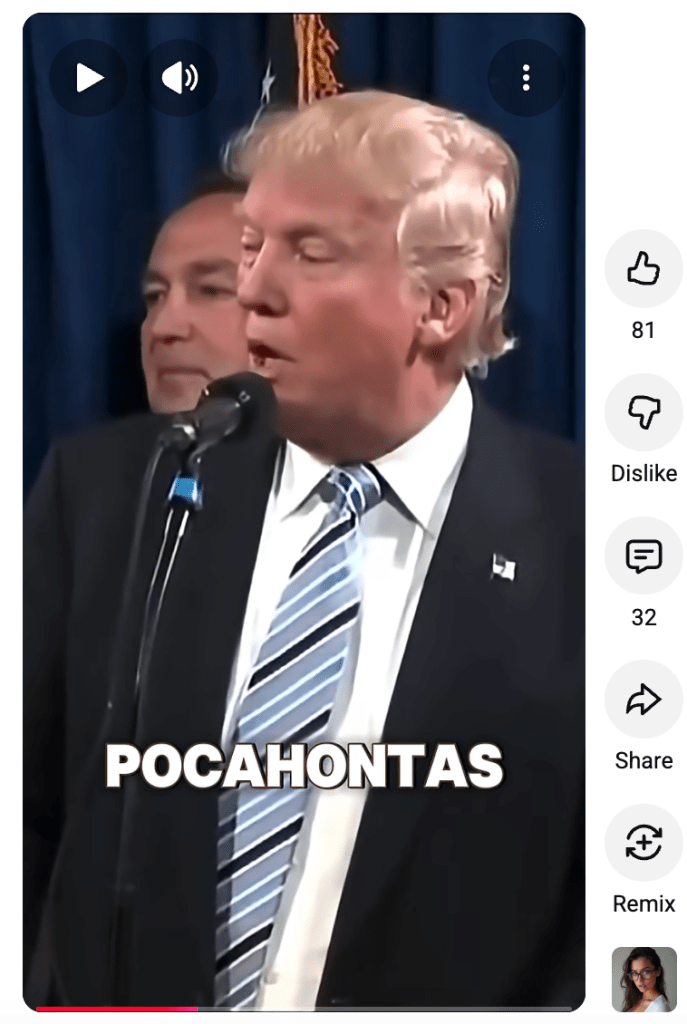
The exchange unfolds in a way that feels less like a sharp confrontation and more like a slow-moving cable news segment that didn’t quite get its footing, as a reporter presses President Donald Trump about his repeated use of the nickname “Pocahontas” when referring to Senator Elizabeth Warren, a term that has long drawn criticism for being dismissive and offensive to Native Americans. Trump, standing at the podium with the familiar confidence of someone who believes repetition eventually turns controversy into routine, appears unfazed by the question, offering a response that seems designed less to clarify than to deflect, leaning on his usual argument that the nickname is political shorthand rather than a personal insult. The moment takes on added tension when another reporter suddenly shouts, “YOU’RE OFFENSIVE,” cutting through the air with a bluntness that disrupts the rhythm of the press conference.

It’s the kind of interruption that briefly startles everyone involved, including the first reporter, who pauses just long enough to let the remark hang there, unanswered, like an awkward commercial break that came too early. From a professional standpoint, the scene reflects a familiar pattern in modern political media: a question about rhetoric, a response that reframes criticism as political correctness, and an unscripted outburst that becomes the headline. Trump’s reaction is measured in his own way—he neither apologizes nor escalates dramatically, instead opting to maintain his posture as someone being unfairly attacked, a stance that has served him well with his supporters over the years.

The reporters, meanwhile, appear caught between doing their jobs and reacting emotionally to language that many view as crossing a line, resulting in a moment that feels more reactive than analytical. Watching it play out, there’s a sense that the exchange never quite reaches a clear conclusion; no policy is discussed, no resolution is offered, and viewers are left instead with another example of how political discourse often stalls at the level of tone and terminology. The shouted accusation of “offensive” becomes less a decisive turning point and more a symptom of a larger frustration, one shared by critics who see such language as corrosive and by supporters who view the criticism itself as overblown. In the end, the clip captures a snapshot of a media environment where confrontations are brief, emotions flare quickly, and clarity sometimes takes a back seat to volume, leaving audiences to sort out for themselves whether the moment was an important stand or just another familiar chapter in an ongoing rhetorical battle.

Joe Biden Asked Jessica Alba for a Job? Lord Have Mercy!

Please click or tap on the above, or below image to watch this cringeworthy moment in political history!

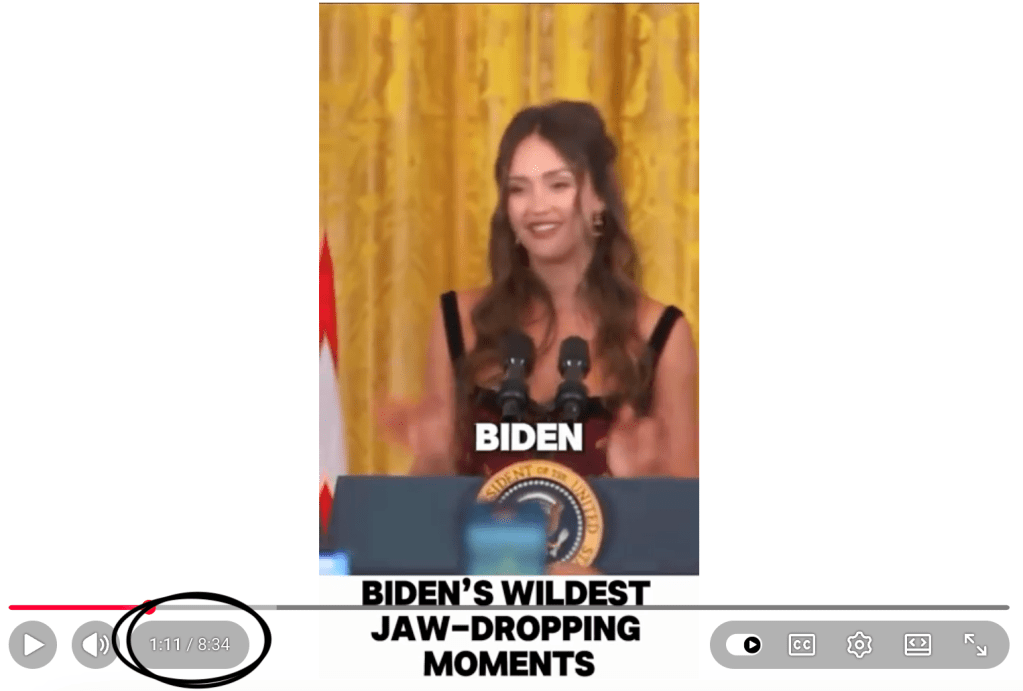
The clip starts at minute 1:11, with Jessica Alba stepping up to the podium looking like she accidentally wandered into a political event on the way to a movie premiere, delivering a gracious introduction of former President Joe Biden with the calm confidence of someone who has never had to introduce a man who once confused directions on a staircase. The crowd is polite, attentive, and ready for the usual handoff—celebrity smiles, politician waves, everyone goes home—but then Biden reaches the microphone and suddenly decides this is less of a speech and more of a networking opportunity.

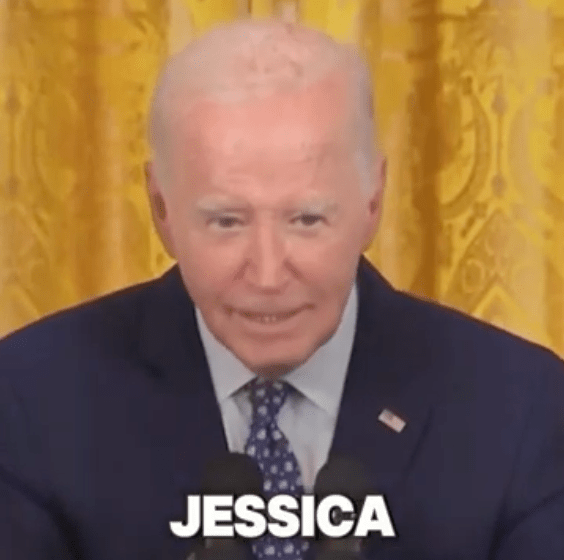
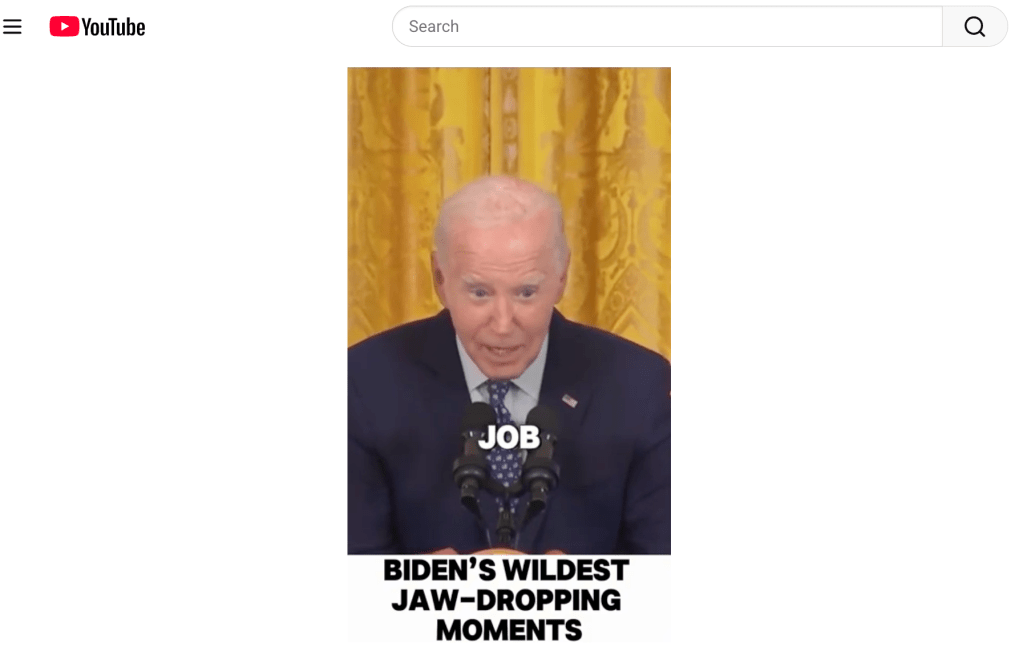
Instead of launching into policy or gratitude, he locks onto Alba like a LinkedIn connection he forgot to message back, and with the earnestness of a man who’s already updated his résumé, he starts half-joking, half-pleading about how she should “give him a job.” And that’s when the moment crosses from standard political fare into full stand-up territory, because there is something deeply funny about a former president of the United States, a man who once commanded nuclear codes, now casually pitching himself like an uncle asking for work at Thanksgiving. You can almost hear the internal monologue: “Sure, I ran the free world, but have you seen the benefits package at Honest Company?”

Alba laughs, the crowd laughs, and Biden keeps going just long enough for everyone to wonder if he’s kidding, or if he’s genuinely open to an entry-level position that involves team meetings and casual Fridays. The humor isn’t mean; it’s situational, like watching someone overshoot a joke and then decide to unpack their bags there. He praises her success, her business acumen, her acting career, and you get the sense that if there were a clipboard nearby, he’d be ready to sign up for onboarding. It’s the kind of moment that no one planned but everyone will remember, because it flips the power dynamic in the most unexpected way: Hollywood star introduces politician, politician immediately tries to pivot into Hollywood intern.

Alba handles it like a pro, smiling through the awkward charm, while the audience enjoys the rare sight of a political figure abandoning the script in favor of pure, unfiltered dad energy. By the time the clip ends, it’s less about the event itself and more about the reminder that politics, at its strangest, can feel like open mic night—where even a former president might shoot his shot, miss slightly, and still get a round of applause just for trying.

Stephanopoulos Presses Biden on the Night That Altered the Election

George Stephanopoulos presses President Joe Biden on what he calls a “bad night” during the 2024 presidential debate against Donald Trump—a night that, in hindsight, became a turning point not just for the campaign but for the entire election. Biden appears reflective, slower in cadence, choosing his words carefully as he acknowledges that the debate performance rattled supporters, donors, and party leaders who had already been anxious about optics, stamina, and the unforgiving spotlight of a televised showdown. Stephanopoulos, maintaining the restrained but pointed tone of a seasoned interviewer, circles back repeatedly to the same underlying question: whether this was merely one off night or a revealing moment that accelerated a decision already forming behind closed doors.

Biden doesn’t fully concede the latter, but his answers suggest an awareness that modern campaigns are less forgiving than they once were, especially when moments are clipped, looped, and dissected in real time across social media and cable news. He frames his eventual exit from the race as an act of responsibility rather than defeat, emphasizing party unity, electoral math, and what he describes as the broader stakes of preventing another Trump presidency. The conversation carries a sense of inevitability, as if both men understand that the interview is less about relitigating the debate and more about documenting a political transition. When Biden speaks about stepping aside so that Vice President Kamala Harris could take the mantle, his tone shifts toward reassurance, underscoring confidence in her ability to prosecute the case against Trump more aggressively and energize voters who had begun to drift. Stephanopoulos doesn’t push theatrics; instead, he lets the weight of the moment sit, allowing pauses to do as much work as the questions themselves.

The interview ultimately plays less like damage control and more like a coda to a long political chapter—one in which a single night, fair or not, became symbolic of broader concerns and faster-moving political realities. For viewers, the clip offers a rare look at a sitting president publicly processing the end of a campaign, acknowledging vulnerability without fully embracing regret, and attempting to shape how history will remember the moment when the race changed hands, the strategy shifted, and the 2024 election entered a new and uncertain phase.

Trump SCOLDED for Calling John McCain a ‘DUMMY’ (FLASHBACK)

Picture a reporter stepping up to the mic like they’re about to ask a normal, polite, journalist question, and instead they basically go, “Sir, did you really call John McCain a ‘dummy’ for getting captured in war?” and suddenly the whole room feels like when someone brings up politics at Thanksgiving and the gravy stops moving.

Trump’s standing there with that look like he just got accused of stealing office pens—half offended, half impressed anyone noticed—and the joke writes itself because only in America can a man dodge the draft, build a gold elevator, and still decide the real idiot in the story is the guy who got shot down while flying a jet in Vietnam.

That’s like calling a firefighter dumb for being inside a burning building, or calling a lifeguard stupid for getting wet—no, my guy, that’s literally the job description. And the reporter, bless them, is doing that thing comedians love, where they don’t even need to be funny because reality is already doing cartwheels in clown shoes, just calmly pointing out that John McCain spent years as a POW being tortured, while Trump spent those same years bravely battling hair spray and finding new ways to avoid sunlight. The absurdity hits harder when you remember McCain wasn’t captured because he took a wrong turn on Google Maps—he was flying a combat mission, got shot down, and refused early release, which is hero behavior so intense it makes action movies look like yoga tutorials. Meanwhile Trump’s critique sounds like the kind of trash talk you hear from a guy who lost a game of Monopoly and flips the board because he landed on Baltic Avenue.

The humor really peaks when you imagine the logic: “I like people who weren’t captured,” which is such a wild standard that by that metric, every unlucky hiker, every shipwreck survivor, and anyone who’s ever been stuck in an elevator is officially a loser. And the reporter pressing him on it is like a stand-up comic with perfect timing, just letting Trump talk long enough to hang himself with his own punchlines, because nothing beats the comedy of confidence without self-awareness. It’s the kind of moment where the audience isn’t laughing because it’s a joke, they’re laughing because they can’t believe a grown man with nuclear codes is beefing with a dead war hero like it’s a middle school lunch table. You almost expect a rimshot when the reporter asks the follow-up, because this isn’t politics anymore, it’s sketch comedy, it’s satire with a budget, it’s America’s longest-running improv show where the host keeps insisting he’s the smartest person in the room while proving, minute by minute, that history, irony, and basic human decency have all been labeled “dummy” and shoved into the corner.


Watch the Short Clip Below of Ivana Trump Explaining That Donald Trump Didn’t Want His Son Being a Loser


Watch The Video Below To See Who Larry David is Calling a “R-WORD”

Trump’s Ex-Wife: Ivana’s “LOSER” Confession Shook Reporter

(CLICK ON ANY PICTURE TO PLAY VIDEO CLIP)

Ivana Trump telling that story about Donald Trump not wanting to name his son Donald Trump Jr. because he was worried the kid might grow up to be a “loser” is one of those anecdotes that feels less like an interview and more like the tightest stand-up bit you’ve ever heard delivered completely by accident. Because think about that logic for a second.

Most parents worry about diapers, college, maybe whether their kid will need braces. Donald Trump is sitting there like, “I don’t know, Ivana… what if this baby ruins the brand?” That’s not a father talking, that’s a Fortune 500 board meeting happening in a maternity ward. And the word choice—“loser”—is doing a lot of heavy lifting. Not “unhappy,” not “unfulfilled,” not “struggling.” Just straight to the Trump family diagnostic test: winner or loser, no middle category, no mercy.

It’s almost impressive how early the pressure starts. The kid isn’t even born yet and already he’s under a performance review. Imagine being Donald Trump Jr. hearing this later in life. Like, “Oh, cool, Dad wasn’t sure I deserved my name because I might’ve ended up normal.”

And the irony is delicious, because Junior grows up, takes the name, leans all the way into it, and makes it his whole personality. The thing Trump was afraid of happening—the name being attached to someone imperfect—turns out to be unavoidable, because that’s how humans work. Ivana telling the story so casually is what makes it comedy gold.

No dramatic pause, no apology, just, “Yeah, he didn’t want to name him that in case he was a loser,” like she’s talking about returning a sweater that might pill. It’s dark, it’s absurd, and it perfectly captures a worldview where love is conditional, success is mandatory, and even newborns are expected to protect the family brand. Honestly, forget DNA tests—this story alone proves that kid was definitely a Trump.

Larry David Paid $5K to Call Donald Trump a ‘Racist’?

(CLICK ON DONALD TRUMP TO PLAY CLIP)

Larry David’s 2016 Saturday Night Live moment in which he called Donald Trump a “racist” can also be read less as brave comedy and more as an example of how late-night satire abandoned nuance in favor of applause-seeking moral grandstanding.

Rather than letting humor expose contradictions or absurdities, the skit reduced a deeply divisive political figure to a single incendiary label, effectively turning comedy into a blunt political weapon. From this perspective, David wasn’t a truth-teller breaking silence, but a wealthy celebrity using a friendly cultural platform to scold half the country without consequence.

The accusation landed not as satire but as a declaration, one that bypassed comedy’s traditional role of inviting reflection and instead told viewers what to think. For critics, this moment symbolized SNL’s growing comfort with preaching to its own ideological choir, prioritizing cheers from a live studio audience over genuine wit or balance. Larry David’s established persona—often praised for its brutal honesty—here risked crossing into smugness, where provocation replaced insight. The laughter and applause that followed felt less organic and more ritualistic, reinforcing the idea that the show was no longer poking fun at power so much as aligning itself with it. In that sense,

David became a “bad guy” not because of the word itself, but because of how casually and safely it was deployed, stripped of comedic tension or risk. The moment arguably deepened cultural divisions by validating outrage rather than challenging assumptions on either side. Instead of comedy serving as a bridge or mirror, it became a hammer, flattening complexity into a single moral verdict. Seen this way, the skit didn’t age as fearless satire, but as a snapshot of an entertainment culture increasingly comfortable substituting political signaling for humor, with Larry David—intentionally or not—standing as a symbol of that shift.