If You’re Not Storing Water, You’re Volunteering to Die First

Let me be blunt: if you’re still drinking unfiltered tap water after 2025, you’re already volunteering to be the first casualty when things fall apart. And if you haven’t started storing emergency water, you’re basically writing your own obituary in advance.

This world is collapsing — slowly, loudly, and stupidly — and most people are so distracted by their screens and cheap conveniences that they don’t even realize the danger sloshing around inside their own pipes. You think your municipal water is “perfectly safe”? You think the government is “taking care of it”?

Yeah. And the Titanic was “unsinkable.”

I’ll say it again: water is the FIRST system to fail and the LAST thing anyone prepares for. And it’s going to be the thing that kills more people than any blackout, riot, or storm ever will.


Tap Water Isn’t Clean — It’s a Chemical Cocktail with a Fancy Label

Here’s what nobody wants to admit: tap water is not pure. Not even close.

Municipalities pump it full of:

  • Chlorine
  • Chloramines
  • Fluoride
  • Heavy metals from ancient pipes
  • Microplastics
  • Agricultural runoff
  • Pharmaceuticals (yes, people’s flushed medications show up in trace levels)
  • And God knows what else during a “minor contamination event” they don’t bother telling you about

If you can drink that without filtering it, congratulations — you have a stronger stomach than most people have brains.

And that’s BEFORE the system collapses. That’s the “good times.” Imagine what you’ll be drinking when the purification plants shut down, the pumps stop working, or some chemical spill turns your local reservoir into a toxic soup.

Unfiltered tap water is a liability during normal life.
During an emergency, it becomes a threat.


Water Storage: Because Society Is Too Dumb to Plan Ahead

Ask the average American how much water they have stored.
Go ahead. Ask.

You’ll hear:

  • “I have a case of bottled water somewhere.”
  • “I’ll just fill the bathtub if something happens.”
  • “The government will help.”
  • “My tap always works.”

It would be funny if it weren’t so tragic.

Meanwhile, one power outage, one cyberattack, one chemical spill, one grid failure — and the entire water system collapses like a cheap lawn chair.

If you’re not storing water, you’re preparing to be a victim.

Plain and simple.


How Much Water You REALLY Need

Forget the government’s ridiculous “1 gallon per person per day” nonsense. That’s enough to barely keep you alive, as long as you don’t plan on cooking, cleaning, sweating, or thinking.

Actual prepper minimum:

  • 2–3 gallons per person per day
  • A 30-day supply for each person
  • More if you live somewhere hot, crowded, or stupidly dependent on the grid

Do the math.
Then triple it.
Then start storing.


Best Water Storage Options (aka: The Stuff That Won’t Fail When Everything Else Does)

1. Water Bricks

Stackable. Durable. Practically apocalypse-proof.

2. 55-Gallon Barrels

Old-school but reliable.
Store them off concrete unless you enjoy slow chemical leaching.

3. IBC Totes (275–330 gallons)

If you’re serious about survival, you need at least one.
If you’re REALLY serious, you have three.

4. Proper Rotating Jugs

Not the bargain-bin trash that cracks in winter.
Real, thick-walled, BPA-free containers.


Hidden Water Sources (If You’re Smart Enough to Spot Them)

When the grid fails, your clueless neighbors will stampede toward Costco. You, meanwhile, will calmly access:

  • Water heaters
  • Toilet tanks (TOP tank, not the bowl… this shouldn’t have to be explained)
  • Rain barrels
  • Ice
  • Backyard pools (spoiler: it needs purification)

But if you think you can just drink any of this straight, you’re delusional. Dirty water kills faster than dehydration.


Purification: The Stuff That Actually Keeps You Alive

1. Filters

Not optional.
Not “nice to have.”
Mandatory.

Best options:

  • Berkey (the king of home filtration)
  • Sawyer Mini (the pocket workhorse)
  • LifeStraw (good, but not a replacement for actual storage)
  • Katadyn (rugged, dependable, built like a tank)

These remove bacteria, protozoa, and sediment — but don’t depend on one method alone.
Chemical contamination? Microplastics? Heavy metals?
Filters aren’t miracle workers.


2. Boiling

If you can boil water and still screw it up, I don’t know how to help you.
Rolling boil for one minute. Done.


3. Purification Tablets

Lightweight. Long shelf life.
Perfect backup.


4. Bleach

Oh yes, your grandmother’s favorite disinfectant is still one of the most effective tools in your prepper arsenal — IF you use the right kind.

8 drops per gallon
½ teaspoon per 5 gallons
Wait 30 minutes.
Then filter taste, smell, and leftover debris.

Just make sure it’s:

  • Unscented
  • Regular chlorine bleach
  • No additives
  • Replaced every 6–12 months

5. UV Purification & Solar Disinfection

Slow, but it works. Especially when the sun is the only thing still working in this dysfunctional world.


Why You Must Filter Tap Water NOW — Not “Later”

There’s this fantasy floating around that tap water is “safe enough until an emergency.”
Wrong. Very wrong.

Tap water today already carries:

  • Lead from aging pipes
  • Microplastics from industrial waste
  • PFAS (“forever chemicals”) linked to cancer and hormonal issues
  • Chlorine byproducts
  • Bacteria that pass through when filtration plants get lazy

If you think drinking unfiltered tap water is harmless, just wait until your body starts disagreeing.

A disaster won’t suddenly make you smarter.
A filter will.


Rainwater Harvesting: If You’re Not Doing It, You’re Losing

If you have a roof, you have the ability to generate your own water supply — for FREE. And yet most people let thousands of gallons pour into the dirt while they line up at Walmart to fight over bottled water like medieval peasants.

All you need:

  • Gutters
  • Downspouts
  • A first-flush diverter
  • Barrels or tanks

Congratulations — you’ve just become more self-sufficient than 90% of the country.


Rotate Your Water or Watch It Become Useless

Stored water does NOT last forever unless properly sealed and treated.
Rotate:

  • Every 6 months for untreated tap water
  • Every 12 months for treated, sealed containers

Label everything like your life depends on it — because it does.


Final Rule: NEVER Tell Anyone How Much Water You Have

People are friendly…
Until they’re thirsty.

A person without water is irrational.
Dangerous.
Desperate.
Willing to do anything.

Your water supply is sacred.
Silent.
Private.
Non-negotiable.

Keep it that way or lose it.
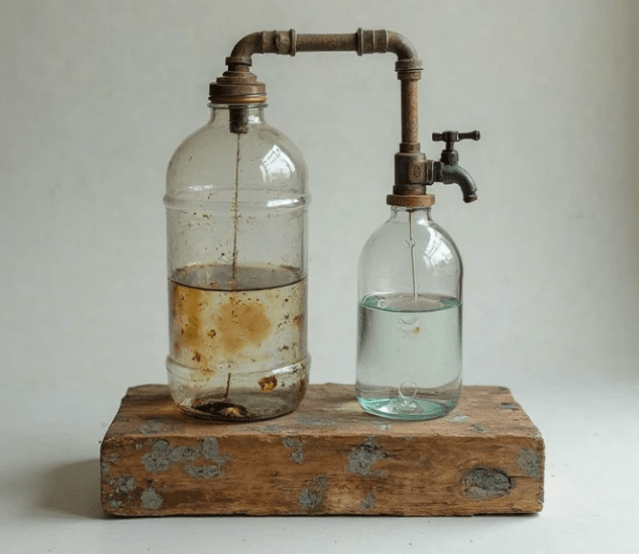
The Dirty Water Drinking Crisis No One Takes Seriously

I keep saying it, and nobody listens: water is the first thing that will vanish when society finally collapses. Not your Wi-Fi. Not your gasoline. Not your overpriced organic snack bars. Water. The same stuff everyone wastes every day as if the tap is some magical, eternal fountain. Spoiler alert: it isn’t.

And when the taps run dry, the unprepared masses will panic, trample each other in grocery stores, and fight over the last case of bottled water like feral animals. It’s predictable. It’s avoidable. But people love ignoring reality — right up to the moment reality wipes the floor with them.

So, if you’re one of the rare people who actually gets it, let’s talk about water storage and purification before the world proves (yet again) how fragile it really is.


Why Water Will Fail First (And Why It’s Your Problem)

Most people don’t realize how unbelievably delicate the water grid is. A power outage, a chemical spill, a cyberattack, or a natural disaster is all it takes for the water system to crumble like wet cardboard. Municipal water plants rely on electricity, skilled staff, and supply chains — three things our society has proven it cannot reliably maintain even on a good day.

Yet people trust the system blindly.

They actually believe that if something goes wrong, the government will “step in and help.”

Yeah. Sure. The same government that told you to expect a 72-hour emergency kit while they stockpile years’ worth of supplies in their bunkers.

If you want water in an emergency, you’d better secure it yourself.


How Much Water You Actually Need (Not the Ridiculous Bare Minimums)

The official recommendations say one gallon per person per day. Cute. That’s enough to keep you technically alive but miserable, dehydrated, filthy, and nonfunctional.

A prepper needs at least:

  • 2–3 gallons per person per day (drinking, cooking, minimal hygiene)
  • At least 14–30 days stored — minimum

If you think that sounds excessive, congratulations — you’re thinking like the average person who ends up on the news crying because they had “no idea something like this could happen.”


The Best Water Storage Containers (For People Who Don’t Trust Cheap Plastic Junk)

1. Thick-Walled BPA-Free Water Jugs

These are good, but only if you buy quality. Not the dollar-store garbage that cracks when the temperature changes by five degrees.

2. Water Bricks

Stackable. Durable. Practically indestructible. If everything else collapses, these will still be standing like tiny blue monuments to your sanity.

3. 55-Gallon Drums

A classic. Store them in a cool area, put them on a platform (never directly on concrete), and use a hand pump. You’ll feel like a pioneer, except smarter and better prepared.

4. IBC Totes (For the Serious Prepper)

275–330 gallons of glorious security. A single tote can keep a family hydrated through weeks of chaos. Just don’t brag about it — desperate neighbors have a funny habit of suddenly remembering where you live.


Hidden Water Sources Everyone Else Is Too Stupid to Notice

When the grid goes down and your neighbors start panicking, you’ll see them sprinting to stores instead of using common sense. Meanwhile, you’ll be collecting from:

  • Water heaters (40–80 gallons sitting right there)
  • Toilet tanks (the top tank, not the bowl — obviously)
  • Rain barrels
  • Ice in the freezer
  • Backyard pools
    (Purify it first — it’s full of chemicals and child pee)

People walk around surrounded by hundreds of gallons of emergency water and never think twice. That’s why preparing feels like shouting into the wind.


Purification Methods (Because Dirty Water Will End You Faster Than Thirst)

1. Boiling

The simplest and most reliable method. Bring it to a rolling boil for one minute. That’s it.
And yet, somehow, people still mess this up.

2. Water Filter Systems

  • Sawyer Mini – small, cheap, reliable
  • LifeStraw – good for individuals
  • Berkey – the gold standard for home preppers
  • Katadyn – rugged and long-lasting

Filters remove pathogens and debris, but not all chemicals, so pair them with other methods when dealing with questionable sources.

3. Water Purification Tablets

Lightweight, long-lasting, and perfect when boiling isn’t an option.
If the taste bothers you, good — it means you’re alive enough to complain.

4. Unscented Household Bleach

Yes, bleach.
Use only unscented, plain chlorine bleach, and replace your bottles every 6–12 months.

8 drops per gallon
½ teaspoon per 5 gallons
Wait 30 minutes.
If it still smells weird? Filter it again.

5. Solar Disinfection (SODIS)

Put water in a clear bottle, leave it in the sun for six hours.
Slow but effective, especially when you’re out of options.


Rotating Water Storage (Because Nothing Lasts Forever — Especially Not Tap Water)

Stored water isn’t immortal. Rotate it every:

  • 6 months for basic tap water
  • 12 months for treated, sealed containers

Mark dates. Keep records. Don’t guess. Guessing is for people who die first in every disaster movie.


Rainwater Harvesting: The Prepper’s Secret Weapon

If you aren’t harvesting rainwater yet, start immediately.

All it takes is:

  • A roof
  • Gutters
  • A first-flush diverter
  • A few storage barrels or tanks

And suddenly you’re producing your own water supply while everyone else is begging FEMA for a case of Dasani.

In many places it’s legal. In some places it’s restricted. Either way — water falling from the sky belongs to you. I’m not telling you to break laws… I’m just saying governments love regulating things they don’t provide themselves.


Final Prepper Tip: Never Tell Anyone How Much Water You Have

People are friendly right up until they’re thirsty.

When desperation hits:

  • Friends become competitors
  • Neighbors become threats
  • The unprepared become dangerous

Your water supply is nobody’s business. The less people know, the safer you are.

Alabama Power Outages And How to Stay Safe With No Electricity During SHTF

When the lights go out, it’s not just about missing a game on TV or not being able to charge your phone—it’s about survival. A power grid failure, whether caused by storms, cyberattacks, infrastructure failures, or a long-term SHTF (S**t Hits The Fan) event, is no joke. And here in Alabama, where heat, humidity, and strong weather events are part of daily life, it’s especially critical to be prepared for prolonged outages.

Whether you’re living in Birmingham or in the backwoods of Blount County, learning how to survive without electricity is not just for “preppers” anymore—it’s just good common sense. Let’s talk about how to stay safe, what you need, and what you can do right now to prepare for a world without power.


5 Essential Survival Skills for Living Without Electricity

1. Water Procurement and Purification
Electricity powers our water systems. When the grid fails, your tap could run dry or worse, run dirty. Every household should know how to find, collect, and purify water. Rainwater catchment systems, natural springs, and even creeks can be viable sources. Use filters like the Sawyer Mini or LifeStraw, and always boil water when in doubt. Being able to build a fire (we’ll get to that next) is key for this.

2. Firecraft
Fire is warmth, cooked food, boiled water, and a morale booster. Learn how to start a fire without matches or a lighter. Invest in a ferro rod, practice using it, and store dry tinder (like cotton balls dipped in petroleum jelly) in waterproof containers. Knowing how to safely build and manage a fire—especially in Alabama’s wooded areas—is a skill that can literally save your life.

3. Food Preservation and Cooking Without Power
No electricity means your refrigerator becomes a giant, useless box in a matter of hours. Learn how to preserve food using salting, drying, smoking, and fermentation methods. Keep a propane camping stove, rocket stove, or solar oven handy. And always have manual tools: a hand-cranked can opener, a manual grinder, and basic cast iron cookware.

4. Basic First Aid and Hygiene
During a blackout, access to hospitals may be limited, and infection risks rise due to lack of sanitation. Learn how to clean and dress wounds, recognize infection, and treat minor injuries using basic supplies. Stock a first aid kit, and keep it updated. DIY hygiene—like making your own soap or disinfecting with bleach solutions—is also vital.

5. Situational Awareness and Security
When the lights go out, desperation goes up. Be aware of your surroundings, especially in urban environments. Practice safe perimeter checks, build community trust with neighbors, and know how to secure your property. Even something as simple as blackout curtains can protect your home from becoming a beacon of light to looters if you’re using alternative lighting.


3 DIY Electricity Hacks When the Grid Goes Down

1. Bicycle-Powered Generator
With a few parts—like a car alternator, belt, and a stationary bike—you can create a pedal-powered generator. This won’t run your whole house, but it can charge phones, radios, and small LED lights. It’s a great project to build before a disaster strikes.

2. DIY Solar USB Charger
Using a small solar panel (10-20W), a charge controller, and a USB converter, you can build a compact solar USB charger. These are especially handy for charging phones, walkie-talkies, and flashlights. Even cloudy Alabama days can give you enough juice to stay connected.

3. Hand-Crank Generator from a Power Drill
Reverse the motor of an old corded drill and connect it to a battery bank with a bridge rectifier and voltage regulator. Crank it manually to generate enough electricity to charge AA batteries or power small DC devices. Not fast, but in an emergency, it’s a lifesaver.


The 3 Most Important Survival Products to Have When There’s No Power

1. Solar Lanterns and Flashlights (Rechargeable)
Light isn’t just convenience—it’s safety. Keep a couple of solar-powered lanterns or USB rechargeable LED flashlights in every major room. Bonus if they come with USB outputs to charge your phone.

2. Portable Water Filtration System
Whether it’s a gravity-fed Berkey or a compact Sawyer Mini, a reliable water filter is non-negotiable. You can survive weeks without food, but only 3 days without clean water.

3. Backup Cooking Device (Propane or Rocket Stove)
Food brings comfort and calories. A propane stove or DIY rocket stove made from bricks or cans can be used anywhere, no electricity required. Store extra fuel or materials, and practice with it before you need to.


The 5 Worst Cities in Alabama to Be During a Blackout

While no place is great to be without power, some cities in Alabama are especially risky due to high population density, infrastructure weaknesses, and climate factors.

1. Birmingham
As Alabama’s largest city, Birmingham has a dense population and aging infrastructure. A prolonged outage here could quickly lead to civil unrest, limited access to supplies, and heat-related illness, especially in the summer.

2. Mobile
Mobile’s hurricane-prone location and swampy geography make it a bad spot during power failures. Water contamination, downed trees, and limited road access can isolate neighborhoods quickly.

3. Montgomery
The state capital’s older grid and economic inequality make some areas particularly vulnerable. During outages, emergency response tends to be slower in low-income communities, where people may not have access to generators or supplies.

4. Huntsville
Despite being tech-savvy and well-resourced, Huntsville’s reliance on electricity for so many day-to-day operations (especially for high-tech defense and research facilities) makes a blackout here disruptive on a broad scale. Expect panic buying and traffic jams quickly.

5. Tuscaloosa
College towns like Tuscaloosa can be chaotic during power failures. Student housing often lacks backup systems, and a younger population may not be well-prepared, leading to high demand and low supply of basic survival goods.


How to Stay Safe and Sane During a Blackout in Alabama

Power outages are stressful. But with the right mindset and preparation, you can weather the storm—and maybe even help others along the way. Here’s how:

  • Stay Calm – Don’t panic. Get your family together and assess your supplies.
  • Check In – Use your battery-powered or hand-crank radio to get news updates. Avoid rumors and misinformation.
  • Preserve Cold Items – Keep fridge and freezer doors closed. Move perishables into coolers with ice if needed.
  • Avoid Carbon Monoxide – Never use grills, camp stoves, or generators indoors. It’s an invisible killer.
  • Conserve Resources – Ration water, light, and food early. Don’t wait until you’re running low.
  • Stay Cool or Warm – In summer, stay shaded and hydrated. In winter, insulate rooms and dress in layers.
  • Engage the Community – Check on neighbors, especially the elderly. Share resources if you can afford to.

The most powerful survival tool isn’t something you buy. It’s your ability to adapt, stay positive, and remain resourceful in the face of challenges.


Final Thoughts from One Prepper to Another

If you’ve read this far, you’re already ahead of 90% of people who will be blindsided when the lights go out. Prepping isn’t about paranoia—it’s about peace of mind. Knowing you can keep your family safe, hydrated, fed, and protected during a crisis is empowering.

Whether you’re storing canned goods in your pantry, building a backup power system in your garage, or learning how to make fire in the rain—you’re doing the right thing. And here in Alabama, where the weather can change on a dime and the power grid is aging fast, being prepared isn’t optional. It’s essential.

Stay safe, stay kind, and keep prepping.