

Aubrey Plaza seated across from David Letterman, delivering a story so specific and awkward that it could only be true—or at least true enough to feel spiritually accurate.
Plaza, in her signature deadpan, explains that long before indie films, critical acclaim, and becoming the patron saint of controlled chaos, she once worked as a costumed mascot, the kind of anonymous, foam-headed job where dignity clocks out before you do. Letterman, already amused, leans in as she describes how one unexpected assignment turned surreal when Donald Trump—years before politics, back when he was just a loud real estate mogul with a permanent presence in tabloids—requested a photo with the mascot for his infant son.
(CLICK ANY PICTURE TO WATCH THE ACTUAL MOMENT AUBREY PLAZA TELLS LETTERMAN HER TRUMP ENCOUNTER)
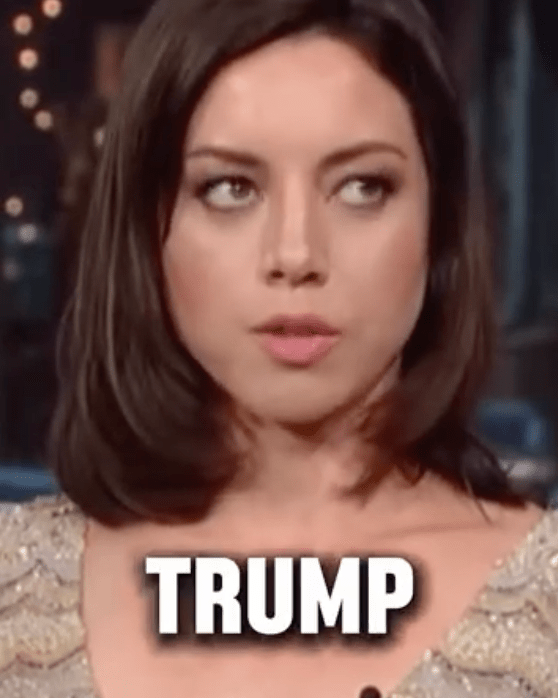
Plaza explains that there she was, fully encased in costume, sweating and unable to speak, holding a baby who had no idea he was being introduced to a future anecdote that would someday be told on national television. Letterman, clearly enjoying the absurdity, lets her set the scene slowly, allowing the audience to savor the contrast between Plaza’s current cultural status and the reality of being a human prop in someone else’s moment.
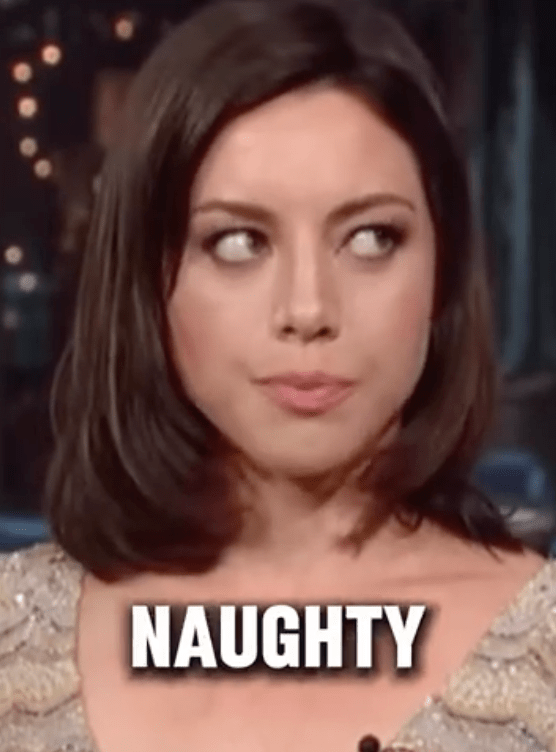
(Aubrey Plaza’s Deadpan Story Brings the House Down on Letterman)
The humor lands not because she exaggerates, but because she doesn’t; she treats the memory with the same flat seriousness she might apply to a dramatic monologue, which only makes it funnier. There’s something inherently comic about the idea of Trump carefully orchestrating a photo-op involving a silent mascot, a confused baby, and a future movie star who, at the time, was just hoping the shift would end without incident.
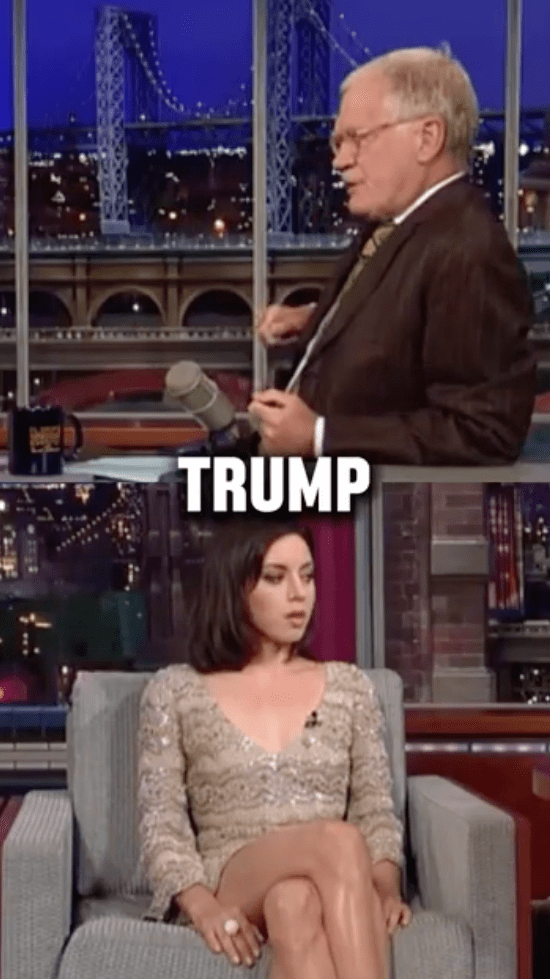
(Before Fame: Aubrey Plaza, a Mascot, and a Baby Photo With Trump)
Letterman reacts like a man who has seen thousands of celebrity stories but knows when he’s been handed something special, peppering her with light questions while giving her space to let the awkwardness breathe. The clip works because it captures Plaza in her most natural state—unimpressed, observational, and fully aware of how strange the world can be when you look at it from the wrong costume.

It’s not a political moment, not a Hollywood flex, and not a carefully packaged anecdote; it’s a reminder that many famous careers pass through deeply unglamorous checkpoints. By the time the story wraps, the audience isn’t just laughing at the image of a mascot holding Trump’s baby—they’re laughing at the randomness of fame, the unpredictability of life trajectories, and the quiet comedy of realizing that some of the strangest chapters only become funny once you’re far enough away from them to tell the story on a late-night couch.
 TheDailyChristian