

Let me be blunt: if you’re still drinking unfiltered tap water after 2025, you’re already volunteering to be the first casualty when things fall apart. And if you haven’t started storing emergency water, you’re basically writing your own obituary in advance.
This world is collapsing — slowly, loudly, and stupidly — and most people are so distracted by their screens and cheap conveniences that they don’t even realize the danger sloshing around inside their own pipes. You think your municipal water is “perfectly safe”? You think the government is “taking care of it”?
Yeah. And the Titanic was “unsinkable.”
I’ll say it again: water is the FIRST system to fail and the LAST thing anyone prepares for. And it’s going to be the thing that kills more people than any blackout, riot, or storm ever will.
Tap Water Isn’t Clean — It’s a Chemical Cocktail with a Fancy Label
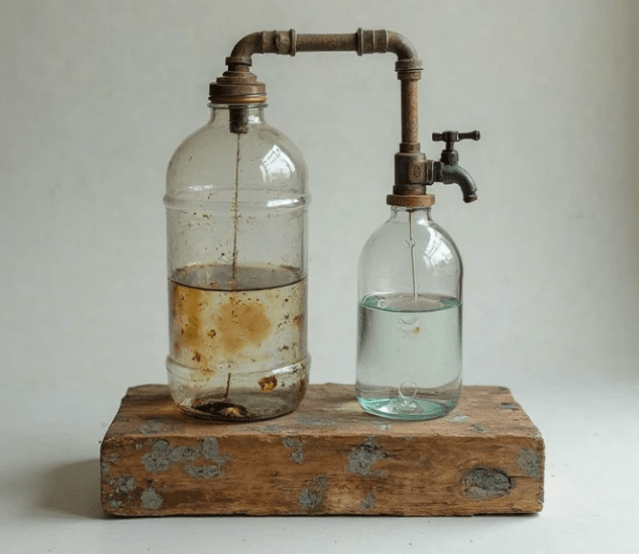
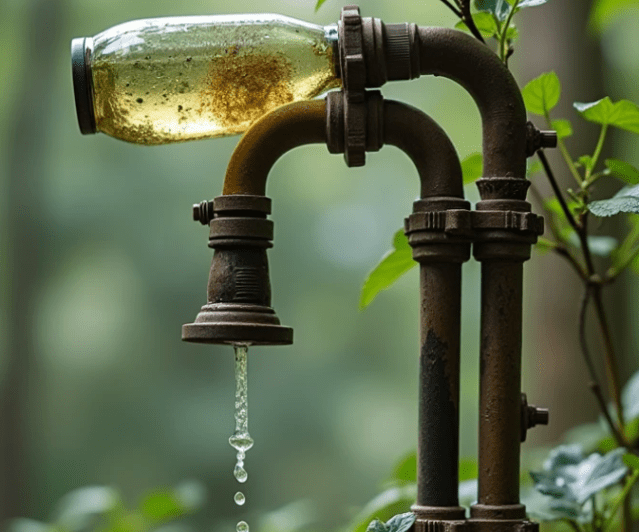
Here’s what nobody wants to admit: tap water is not pure. Not even close.
Municipalities pump it full of:
- Chlorine
- Chloramines
- Fluoride
- Heavy metals from ancient pipes
- Microplastics
- Agricultural runoff
- Pharmaceuticals (yes, people’s flushed medications show up in trace levels)
- And God knows what else during a “minor contamination event” they don’t bother telling you about
If you can drink that without filtering it, congratulations — you have a stronger stomach than most people have brains.
And that’s BEFORE the system collapses. That’s the “good times.” Imagine what you’ll be drinking when the purification plants shut down, the pumps stop working, or some chemical spill turns your local reservoir into a toxic soup.
Unfiltered tap water is a liability during normal life.
During an emergency, it becomes a threat.
Water Storage: Because Society Is Too Dumb to Plan Ahead
Ask the average American how much water they have stored.
Go ahead. Ask.
You’ll hear:
- “I have a case of bottled water somewhere.”
- “I’ll just fill the bathtub if something happens.”
- “The government will help.”
- “My tap always works.”
It would be funny if it weren’t so tragic.
Meanwhile, one power outage, one cyberattack, one chemical spill, one grid failure — and the entire water system collapses like a cheap lawn chair.
If you’re not storing water, you’re preparing to be a victim.
Plain and simple.
How Much Water You REALLY Need

Forget the government’s ridiculous “1 gallon per person per day” nonsense. That’s enough to barely keep you alive, as long as you don’t plan on cooking, cleaning, sweating, or thinking.
Actual prepper minimum:
- 2–3 gallons per person per day
- A 30-day supply for each person
- More if you live somewhere hot, crowded, or stupidly dependent on the grid
Do the math.
Then triple it.
Then start storing.
Best Water Storage Options (aka: The Stuff That Won’t Fail When Everything Else Does)
1. Water Bricks
Stackable. Durable. Practically apocalypse-proof.
2. 55-Gallon Barrels
Old-school but reliable.
Store them off concrete unless you enjoy slow chemical leaching.
3. IBC Totes (275–330 gallons)
If you’re serious about survival, you need at least one.
If you’re REALLY serious, you have three.
4. Proper Rotating Jugs
Not the bargain-bin trash that cracks in winter.
Real, thick-walled, BPA-free containers.
Hidden Water Sources (If You’re Smart Enough to Spot Them)
When the grid fails, your clueless neighbors will stampede toward Costco. You, meanwhile, will calmly access:
- Water heaters
- Toilet tanks (TOP tank, not the bowl… this shouldn’t have to be explained)
- Rain barrels
- Ice
- Backyard pools (spoiler: it needs purification)
But if you think you can just drink any of this straight, you’re delusional. Dirty water kills faster than dehydration.
Purification: The Stuff That Actually Keeps You Alive
1. Filters
Not optional.
Not “nice to have.”
Mandatory.
Best options:
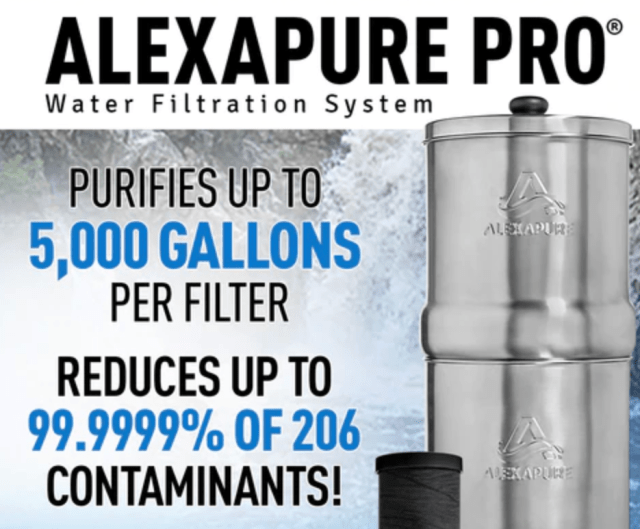
- Berkey (the king of home filtration)
- Sawyer Mini (the pocket workhorse)
- LifeStraw (good, but not a replacement for actual storage)
- Katadyn (rugged, dependable, built like a tank)
These remove bacteria, protozoa, and sediment — but don’t depend on one method alone.
Chemical contamination? Microplastics? Heavy metals?
Filters aren’t miracle workers.
2. Boiling
If you can boil water and still screw it up, I don’t know how to help you.
Rolling boil for one minute. Done.
3. Purification Tablets
Lightweight. Long shelf life.
Perfect backup.
4. Bleach
Oh yes, your grandmother’s favorite disinfectant is still one of the most effective tools in your prepper arsenal — IF you use the right kind.
8 drops per gallon
½ teaspoon per 5 gallons
Wait 30 minutes.
Then filter taste, smell, and leftover debris.
Just make sure it’s:
- Unscented
- Regular chlorine bleach
- No additives
- Replaced every 6–12 months
5. UV Purification & Solar Disinfection
Slow, but it works. Especially when the sun is the only thing still working in this dysfunctional world.
Why You Must Filter Tap Water NOW — Not “Later”

There’s this fantasy floating around that tap water is “safe enough until an emergency.”
Wrong. Very wrong.
Tap water today already carries:
- Lead from aging pipes
- Microplastics from industrial waste
- PFAS (“forever chemicals”) linked to cancer and hormonal issues
- Chlorine byproducts
- Bacteria that pass through when filtration plants get lazy
If you think drinking unfiltered tap water is harmless, just wait until your body starts disagreeing.
A disaster won’t suddenly make you smarter.
A filter will.
Rainwater Harvesting: If You’re Not Doing It, You’re Losing
If you have a roof, you have the ability to generate your own water supply — for FREE. And yet most people let thousands of gallons pour into the dirt while they line up at Walmart to fight over bottled water like medieval peasants.
All you need:
- Gutters
- Downspouts
- A first-flush diverter
- Barrels or tanks
Congratulations — you’ve just become more self-sufficient than 90% of the country.
Rotate Your Water or Watch It Become Useless
Stored water does NOT last forever unless properly sealed and treated.
Rotate:
- Every 6 months for untreated tap water
- Every 12 months for treated, sealed containers
Label everything like your life depends on it — because it does.
Final Rule: NEVER Tell Anyone How Much Water You Have
People are friendly…
Until they’re thirsty.
A person without water is irrational.
Dangerous.
Desperate.
Willing to do anything.
Your water supply is sacred.
Silent.
Private.
Non-negotiable.
Keep it that way or lose it.

 TheDailyChristian