DAY 10 AFTER THE SHTF — SURVIVAL ISN’T JUST ABOUT FINDING FOOD

It’s Day 10 since everything went sideways. The grid’s down. The streets are lawless. You’re living off what’s left of your preps and what you can scavenge in the ruins. Your family comes first—your kids eat before you do—because that’s what a real protector does.

Your gut’s been gnawing at itself for days now, that deep hunger turning into something primal. You’ve grown used to the emptiness. It becomes part of you. A constant reminder: you’re still alive.

Watch What The Off Grid Survivalist of the Year Has to Say About Survival Prepper!

Then it happens. You strike gold—a hidden stash of food. Maybe it was buried, maybe left behind in a rush, maybe a forgotten emergency cache. Either way, it’s yours now.

You dig in like a starving wolf. Your family devours every bite. For a moment, you taste victory.

And then—bam. Nausea. Dizziness. Weakness. Your body betrays you. What you thought was salvation turns into a full-blown emergency.

You’ve just met the silent killer called refeeding syndrome.


WHAT IS REFEEDING SYNDROME?

When you go without food for an extended time—say 10 days or more—your body hits the brakes. It slows your metabolism, conserves every last ounce of energy. You’re running on fumes, and your electrolytes (magnesium, potassium, phosphorus) get drained.

Then, you eat like it’s Thanksgiving. Your system gets shocked. That sudden spike in nutrients flips the metabolic switch, demanding electrolytes you no longer have. The result? Cardiac failure, seizures, coma—or worse.


SURVIVAL PREPPER TIPS: AVOIDING THE REFEEDING TRAP

  1. Reintroduce food SLOWLY after extended starvation.
    Start with fluids or broths. Give your system time to adjust.
  2. Focus on electrolyte-rich foods first.
    Bananas, bone broth, leafy greens, nuts—these can restock your depleted reserves.
  3. Avoid carbs in the first refeeding stage.
    Carbs spike insulin and demand phosphorus. Go with fats and proteins first.
  4. Keep oral rehydration salts (ORS) in your bug-out bag.
    They’re lightweight and can save your life during refeeding.
  5. Know the symptoms: weakness, confusion, shortness of breath.
    Don’t mistake these signs for just being “tired.” It could be fatal.
  6. Keep a stash of electrolyte tablets or powders.
    A little prep now can prevent a deadly crash later.
  7. Always rotate your food preps to avoid long fasts.
    Prevent running out altogether by tracking expiry dates and cycling through supplies.
  8. Train your body to adapt with occasional fasts before disaster strikes.
    This builds metabolic resilience and makes you more adaptable.
  9. Teach your family about phased eating.
    Survival isn’t just about feeding them—it’s about feeding them smart.
  10. Don’t let relief override discipline.
    Finding food isn’t the finish line—it’s just another checkpoint. Stay sharp.

Remember: In survival, it’s not always the obvious threats that take you down. Sometimes it’s the first meal after the storm that does it.

Stay vigilant. Stay smart. And for the love of all that’s sacred, don’t let your guard down just because you’ve found food. Survival is a marathon, not a sprint.

Prep hard. Stay ready. Live to tell the tale.
This Is The First Sign Society Is About To Collapse

When most people think about the start of the apocalypse

They usually picture something out of a dystopian movie. A sudden, widespread terror, or perhaps a catastrophic event.

But in reality, societal breakdowns don’t happen overnight.

The first sign is far subtler than that

It’s a shift in trust.

That’s right, folks.

Trust is the glue that holds our society together.

The belief that your neighbor will respect your property.

That the grocery store will have food..

That your funds are safe.

But when that trust begins to erode, we’re on a slippery slope.

When people start losing confidence in the institutions that uphold society

When faith in the authorities dwindles…

We start edging closer to a societal breakdown.

Imagine going to work one day, and noticing a huge crowd of worried individuals outside of the biggest local banks.

Everyone is suddenly trying to withdraw their funds

Why?

Are banks not to be trusted anymore?

Do you have to withdraw your savings too?

Or imagine if trust in law enforcement begins to falter, and individuals may take matters into their own hands

Leading to an increase in vigilante justice and public unrest.

I am not sharing this to scare you. Quite the opposite. Awareness is the first step towards preparation.

If we can spot the signs early enough, we can prepare, adapt, and survive.

So, what can we do?

We can keep a close eye on societal sentiment.

Pay close attention to current events, the rumblings on social media, and the worries and concerns of your neighbors and friends.

These can provide valuable insights into the state of societal trust.

Then, you can ensure you are prepared for self-sufficiency.

This means having a reliable stockpile, honing our survival skills, and fostering a close-knit community of like-minded individuals.

Societal collapse is a gradual process.

If we spot it early enough, it can give us the upper hand.

So let us stay vigilant and aware.

This Is Why Most People Will Not Make It When SHTF

Imagine you’re planning a road trip that will last a week.

You figure out where you’ll stay, what you’ll eat, and which sights you’ll see.

But what if this trip wouldn’t last a week, but an entire year

Would you be able to remain safe?

This is a real possibility, folks.

Emergencies can force us to transform our way of living for good.

Most people think about what they’ll do for an emergency that might last a couple of days or weeks.

But that’s just not enough.

To really thrive when SHTF, we need to think months, years, and even decades ahead.

The long-term, day-to-day living in a different world.

Canned food and bottled water will keep you safe for some time. Months even.

But what happens when those run out?

In the long run, skills like hunting, fishing, farming, preserving food, and sourcing clean water are essential.

This is why what we do is so important.

We constantly improve our prepping abilities and add to our skill set.

Just like our ancestors did.

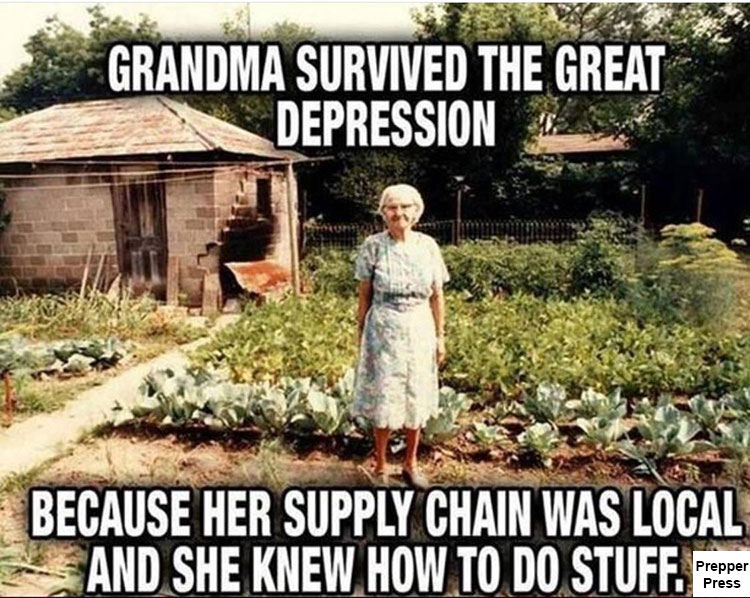
They knew the land, the seasons, the plants, and the animals. They understood that prepping wasn’t a sprint, but a marathon.

We have to adopt this kind of mindset as well.

We need to think beyond the initial emergency, beyond the canned goods, and towards a future where we don’t just think about what we have, but about what we know and what we can do.

Prepping is a lifestyle.

For most people, this shift in thinking is not easy. For others, it isn’t even possible.

But you and I both know the peace of mind that comes from knowing you’re ready for anything.

So, let’s not be like most people. Let’s think ahead. Let’s stay prepared. And let’s keep improving.

“Preppers Don’t Have Fun”

Someone once accused me of taking things too seriously.

She said that since I’m always trying to prepare for the worst, I don’t ever enjoy the present moment.

When I heard about this, I couldn’t help but chuckle.

Yes, I’m focused on prepping.

Yes, I’m keen on making sure my family and I can weather any storm that comes our way.

But who’s to say that I don’t have fun doing it?

You see, there is a certain joy that comes with being prepared for anything that most people can’t ever understand

A joy that most people will not ever understand.

When you are constantly acquiring different skills that can help survive potential threats, it’s like solving an exciting puzzle.

Remember the excitement as a child, that spark of curiosity when you first learned to ride a bike or tie your shoelaces? 

This is how I feel every time I learn about a different way to purify water, start a fire, or build a survival shelter.

And the reason I created this newsletter is because I wanted to share my excitement with people like you.

People who appreciate the value of emergency preparedness.

But the fun of prepping doesn’t end with the thrill of learning different skills. 

It’s also about putting these skills to the test, challenging yourself, and celebrating those moments of achievement.

Imagine successfully building a survival shelter from scratch for the first time.

It’s not just a place with a roof. It’s a testament to your resilience and resourcefulness.

Or think about the feeling of triumph when you manage to start a fire using just flint and steel.

There’s an indescribable sense of fulfillment in these moments.

I know “fun” is not something we think about when we talk about survival situations.

But it’s an important topic.

It’s what makes prepping sustainable in the long run.

So if someone says you’re a “doomsayer” or accuses you of being too focused on bad situations, just ignore them.

Keep prepping, and enjoy the process.

Survival prepping Like This Could Be A Double-Edged Sword

Prepping Like This Could Be A Double-Edged Sword

Have you ever heard the saying, “a little knowledge is a dangerous thing”?

Well, I’ve been thinking about this lately, especially when it comes to prepping.

Everyone knows that the right gear is essential.

But there’s a concealed risk lurking beneath the surface — something that might catch us unprepared if we’re not careful.

It will become clear once you read this story.

Last week, I was talking to a buddy of mine who’s also into prepping.

He was excited to show me the latest thing he bought. A top-of-the-line water filtration system.

He proudly explained its features and how it would provide clean water for his family in case of an emergency.

So far so good

But then he said something that made me pause.

“I feel so much safer ever since I have it. I don’t have to worry about anything.”

I couldn’t fault him for his enthusiasm.

But his words struck me as a stark reminder of the pitfall that is complacency.

When we feel like we’ve got everything covered, it’s easy to let our guard down. To assume that we’re invincible.

And yet the truth is, no matter how ready we are, there’s always something that can catch us by surprise.

That’s why it’s essential to remain vigilant, to continuously challenge ourselves and adapt to different situations.

At the end of the day, it’s not just about what we have at our disposal. It’s about our ability to think on our feet, to adapt and overcome.

Our mindset is what truly sets us apart as preppers.

So folks, let’s not fall into the trap.

Let us keep improving our skills, our equipment, and let us keep expanding our knowledge.

That way, we can ensure that our prepping efforts serve us well when the time comes.

Stay safe and vigilant.

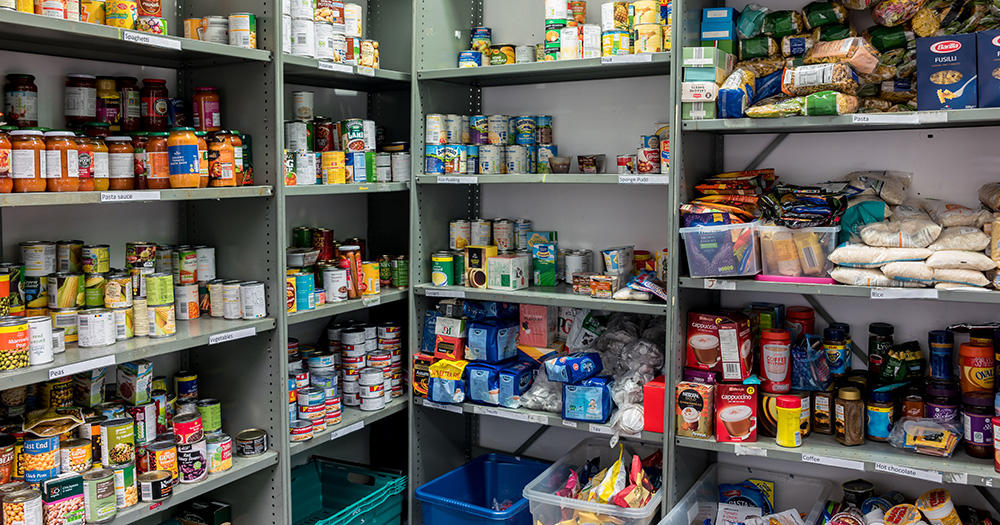
How much food should you stockpile?

Everyone in the prepping world talks about stockpiling food for an emergency situation.

Beans, cans, rice, anything that lasts a long time can allow us to make it through emergency situations.

And even though it’s crystal clear that stockpiling is essential

People usually don’t know how much food is too much or too little.

I want to provide some clarity, so you can decide how much to stockpile based on your specific circumstances.

The answer, as always, is that it depends.

Everything boils down to the specifics of your situation. Your family headcount, dietary needs, and the type of emergency you’re prepping for.

But don’t worry, we’ll break it down together.

First and foremost, it’s essential to consider the duration of the emergency.

Are you expecting a short-term disruption, like a brief power outage or a snowstorm?

Or are you prepping for a more long-term scenario, like a natural emergency or an economic collapse?

For short-term emergencies, a supply of about two weeks’ worth of food should suffice.

This will tide you over until services are restored, and you can replenish your pantry.

But remember, it’s always more ideal to have a little more, just in case.

So let’s talk about long-term emergencies.

In these cases, you’ll want to have a minimum of three months’ worth of food stocked up.

However, to truly be on the safe side, I would recommend aiming for a full year’s supply.

This might sound daunting, but it’s a goal worth striving for. The future is uncertain, and it’s more reasonable to be over- than underprepared.

If this seems too difficult, there is a way to make it easier.

That is by gradually building up your stockpile.

Don’t try to shop for everything at once.

Instead, focus on adding to your reserves over time.

Slow and steady wins the race.

And don’t forget to diversify your stockpile.

A well-rounded supply should include non-perishable items such as canned goods, dried fruits, grains, and freeze-dried meals.

Also, make sure you account for any dietary restrictions or allergies.

And there you have it, folks!

Being mindful of these factors will put you on the right path.

Remember, it’s not about hoarding. It’s about being ready and self-reliant in the face of uncertainty.

Do you have any other topics that you would like me to cover? Let me know by commenting on this survival preppers article.

How much emergency food should every American stockpile?

Most survival experts out there say every American, no matter your age or weight, needs a 72-hour supply for each person in your house.

3 days in other words.

But let’s be real. When was the last time an emergency packed up and left in exactly three days?

Exactly.

You gotta have at least a two-week supply of food.

And that’s for short emergencies.

But what about when the unexpected turns into the indefinite?

This is where things become more complicated.

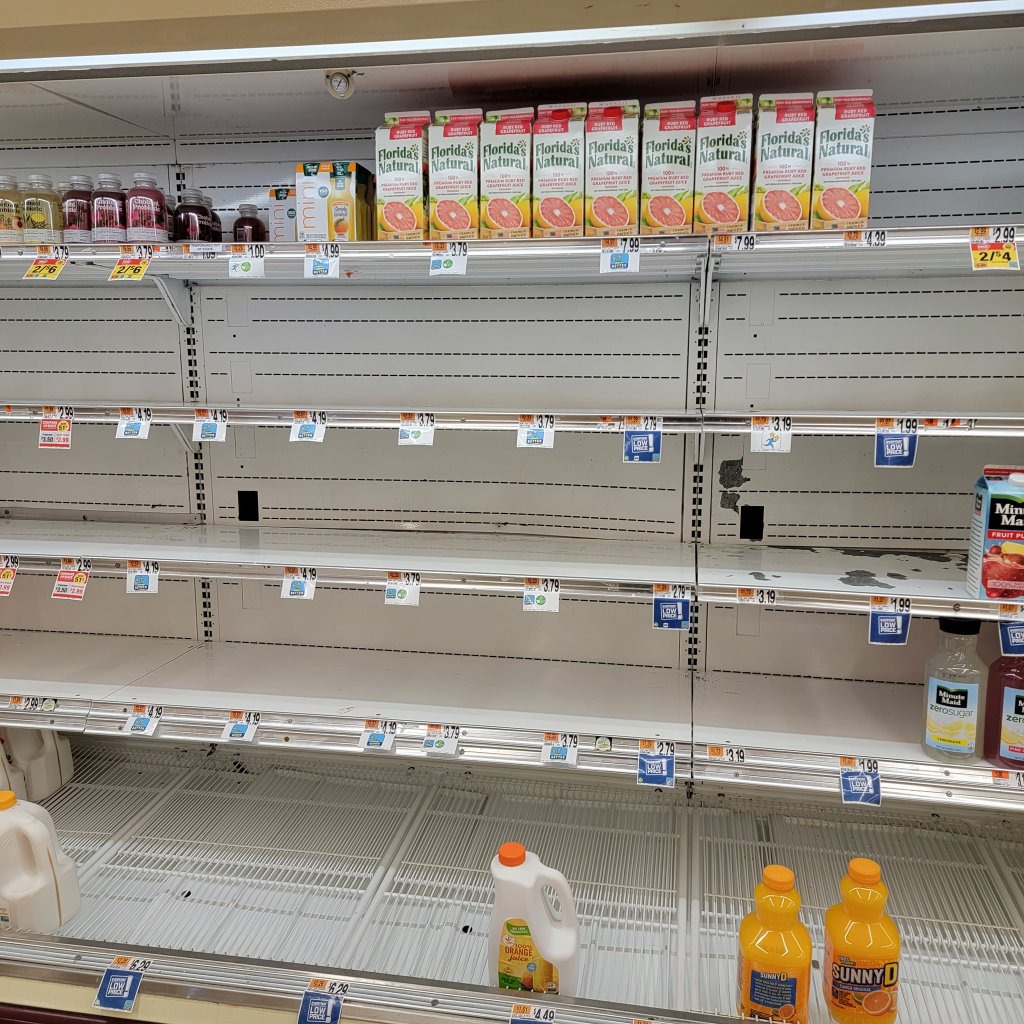
In emergencies like these, where supermarkets become a memory and the grocery store aisles are bare, the rules of the game begin to shift.

And if you’re unprepared, you might as well lay down and accept your fate.

Let’s talk about what most folks neglect.

Preservation is your ally.

Learning to preserve food can be a game-changer.

Canning, dehydrating, and smoking are methods that can extend the lifespan of your food significantly.

Ever thought about pickling those cucumbers or making jerky from that deer meat?

This is the time to do so.

But you have to be careful!

This is what happens when you don’t can your food properly.

But don’t worry, if you’re not sure you’re able to can your food properly, you have more options.

Grow your own food!

In an indefinite emergency, becoming self-reliant is non-negotiable.

Take advantage of your backyard.

Even a small patch can produce a surprising amount of food. And don’t forget about herbs and sprouts, they can be grown even in a sunny window.

Bulk up on knowledge

Knowledge trumps everything.

The more you know, the safer you are.

This is why the emails you’re reading are so important.

Because I hold nothing back.

And I talk about everything that lets me survive in the world’s harshest conditions possible.

Keep learning about foraging, hunting, and fishing. Understand your local environment and what it can provide.

And stay curious. That’s important, brother.

Community strength

Humanity’s lived so long because we’ve stuck together.

Pooling resources, sharing knowledge, and supporting each other can make a world of difference.

The Mental game

This one’s tricky.

You can’t underestimate the power of a positive mindset.

The ability to stay calm, think clearly, and keep morale high is just as crucial as any physical preparation you’ve made.

This is how you build mental toughness.

Folks, preparing for prolonged emergencies ain’t easy.

And that’s why most folks don’t do it.

But I know my readers are not like most folks.

You guys are tough.

This is why I tell you these things.

Because I know you’re going to put in the work.

So keep doing what most folks aren’t willing.

And do whatever necessary to keep your family safe.

Also, I created a rather in-depth survival prepper TikTok account that you may want to check out!

Post-apocalyptic currency

As much as I hate to say it

The dollar, like the current US military, is losing its value around the world.

I remember when the American currency, as well as the military, used to be proud.

A global leader.

But not anymore, folks.

Inflation is on the rise. And we are currently going through a tough US recession.

And yet, experts say it’s nothing compared to what’s coming.

There could be a time when our wallets are as good as empty.

If that time comes, we have to be ready.

And think outside of the box.

If the world goes to an end of times scenario, and everyone struggles to meet their basic needs, how can we ensure we have food to eat and a roof over our heads?

Well, how did our ancestors do it?

By trading valuable goods and services.

When we talk about bartering, most people think of precious metals, ammunition, or medication as the leading currency.

And while that’s true, there are some humbler and underrated everyday items that will become invaluable in times of need.

Matches, for example.

We take them for granted these days. But in a post-apocalyptic world, the ability to build a fire can mean the difference between a hot meal and going hungry.

So stocking up on waterproof matches? Not a bad idea.

Next up, hygiene products. In extended emergencies, cleanliness can be the first casualty.

Simple items like soap, toothpaste, or sanitary products can suddenly skyrocket in importance, not just for comfort but for health.

An infection in an emergency situation? Not on my watch.

Another underrated example is seeds. Yes, those tiny things we plant in our gardens.

The ability to grow your own food can be a lifesaver.

And, of course, skills will be as valuable as items.

Knowing how to mend clothes, repair tools, or even basic first aid? That knowledge can make you indispensable in a pinch.

My advice? Take a moment to reconsider the value of what’s around you.

Begin collecting a few essential items.

Not just for your use,

But as potential barter material.

Remember, in challenging times, it’s often the little things that make the biggest difference.

Let’s keep an eye on the details, folks.

Imagine this chilling scenario unfolding before your very eyes:

The emergency alarms blare, indicating a dire situation.

A government official, closely tied to the current administration, barges into your sanctuary, demanding access to your hard-earned stockpile.

Your carefully accumulated supplies are loaded into their bag, and they start distributing them among neighbors, including those who once mocked the idea of a disaster ever occurring.

It sounds like a nightmare straight out of a dystopian novel or a page from a history book on communist regimes.

But believe it or not, due to Executive Order 13603, recently signed into effect by the Dems, this frightening reality is happening in America right now.

Under this executive order, the government has the authority to seize and redistribute YOUR essential resources, including food, water, and other vital supplies.

However, there is hope.

A survival expert has shared a 30-second “stockpile hack

That can effectively block the government from laying hands on your carefully curated gear.

This invaluable information is a game-changer for every prepper out there.

Don’t delay! Watch the expert’s short video, especially the crucial segment at 3 minutes and 54 seconds, to safeguard your stockpile and protect your family’s well-being.

Outsmart the government by securing your stockpile.

Remember, knowledge is power, and the time to act is now.

Share this vital information with your fellow preppers before it’s too late.

God bless you for reading this, and please keep your family safe!

Can Christians Also Be Survival Prepper’s?

I read a story today that really freaked me out because it said “it’s a sin to be a prep for the end of the world”. It went into detail about having faith in God and knowing he would take care of his believers (regardless of how bad or dangerous of a situation) is all you need to do.

As a fellow Christian, my faith in God has never been stronger. however, If there was a black-out due to a power grid failure, leaving me and my family with no food or water for days or weeks on end, how would I survive that?

I called my good friend and pastor, Chris because he always helps with calming my nerves and remembering god’s message. As it turns out, I’m not the only one that feels puzzled and scared about my future from time to time. 

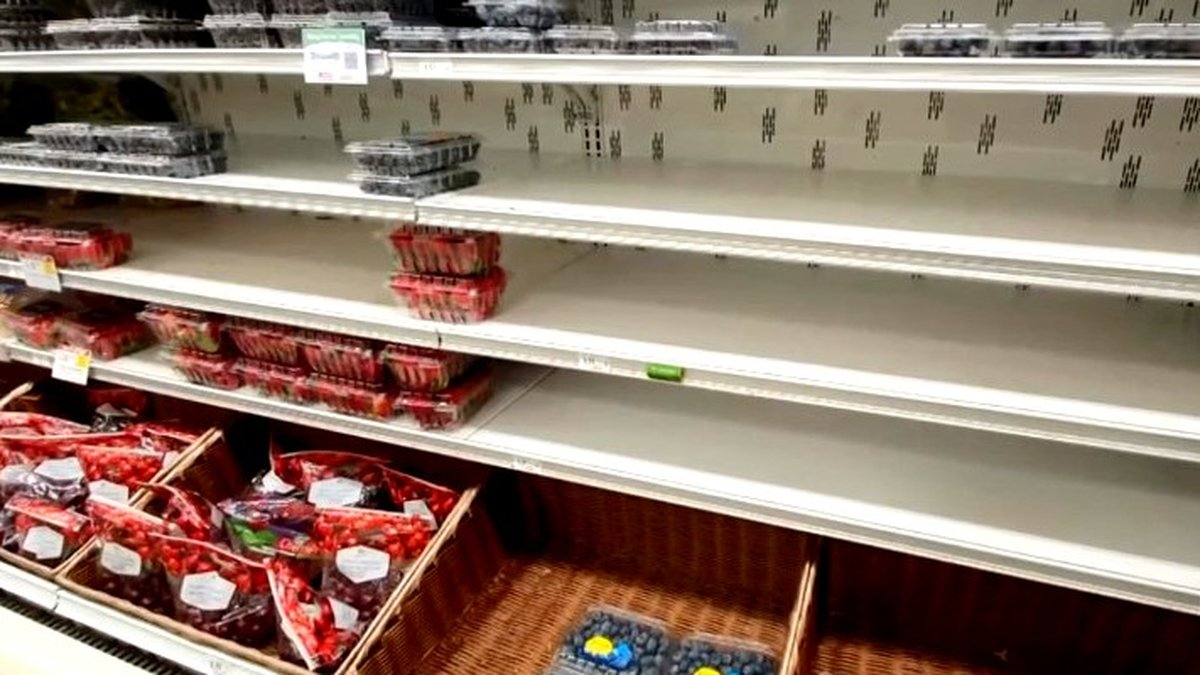
Christians all around the world are preoccupied with the end of the world. The media has shown the empty shelves in grocery stores nationwide, and price gouges in almost every food and product. In pop culture, you see it in movies and TV series. However, there is a balance It’s easy to look at today’s world and feel unsettled. Although many Christians are troubled with fear, anxiety, and worry. There’s a sense of feeling powerless and defeated as we look at the unstable and roller-coaster of a world we live in today. Always remember, “God is our refuge and strength, a very present help in trouble. Therefore we will not fear though the earth gives way, though the mountains are moved into the heart of the sea, though its waters roar and foam, though the mountains tremble at its swelling.” Psalm 46:1–3. 

Our savor does not want us to live in a constant state of anxiousness. During hard times like these, he wants us to remember God has not failed us. He has promised to be with us in the middle of tragedy.

A huge area of controversy in prepping today is whether Christians should be preppers. Each situation is unique, but it’s highly encouraged to take your unique situation to God in prayer and ask for His guidance. 

Without a question, It is absolutely biblical to prepare yourself and your family for the future when God provides you with the opportunity to do so—spiritually and physically.

Our faith and focus should always remain on Christ, prepping is purely an opportunity we can utilize to be a good steward of God’s blessings and minister to others in times of need.

Well, that’ll all from me for the day. My best friend from Puerto Rico is in town for his birthday and I’ve got to start getting ready (we’re going to a fancy sushi restaurant). But I did want to share what’s been on my mind all day and see if anyone else feels the same? I would love to hear all about it if anyone feels comfortable enough to share. 😊 

Survival Prepper: Blueprint To Perseving Water

With summer approaching and high temperatures once again breaking records. It’s safe to assume there will be some crisis. Or, in some cases, the electrical companies must turn the power off during extreme weather events like wildfires or rolling blackouts. 

Prepping does not have to cost you an arm and a leg. The only thing you should be preparing for is maintaining your basic needs. After all, once the power goes out, you risk your health, food, and overall livelihood. Tbh, there are many ways you can survive a short-term disaster with very minimal inconvenience. In this post I wanted to strictly focus on water resources and storage.

Keeping Water On Hand For Emergencies

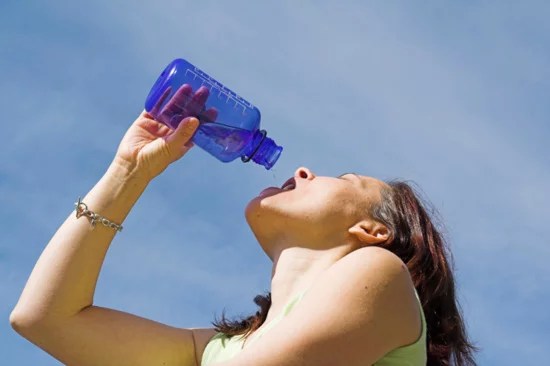
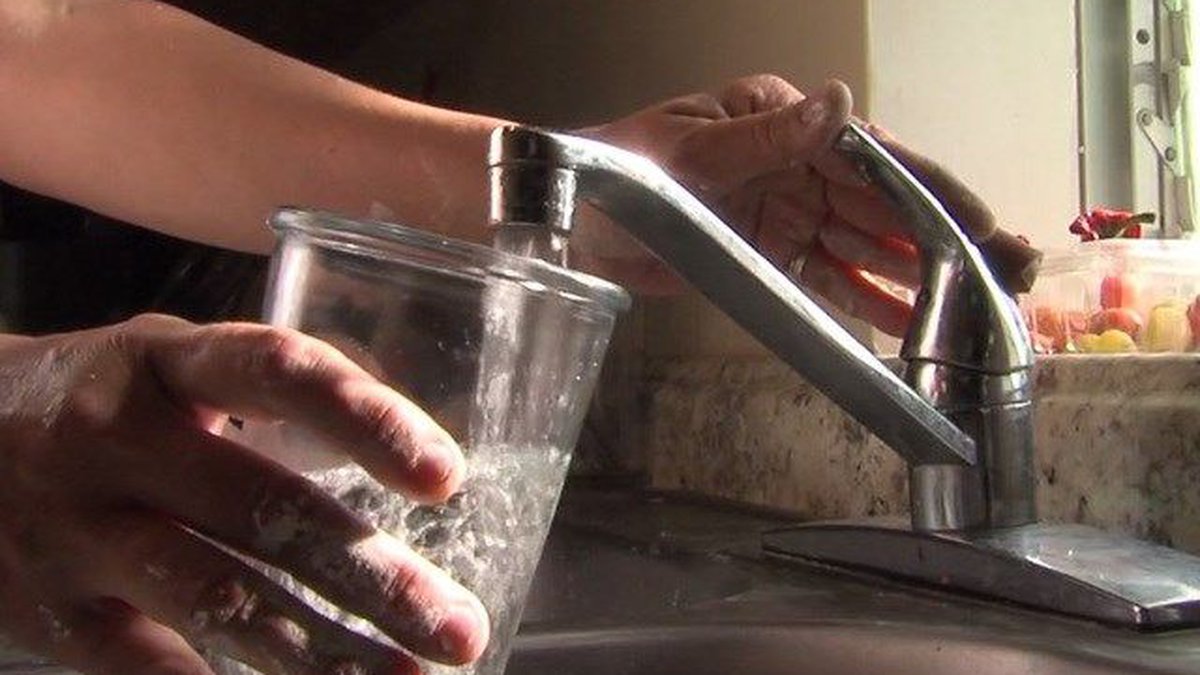
When the power goes out, you can bet so do the water treatment facilities. Because they use electricity to pump the water, once the power is out, your water may no longer be safe for drinking, personal hygiene, or cooking. When that happens most will turn to boiling water or other resources, having water stored ahead of time can circumvent this situation.

If we follow the recommendation of emergency organizations, each person will need a gallon per day per person. That means a family of 4 would require 28 gallons a week! Can you imagine what the grocery stores would look like if a crisis were to strike now? Well, we don’t need to imagine it, we’ve been living it on and off for the last couple of years. It’s so much easier to pick up a few gallons every time you’re heading to the grocery store, rather than wait for a disastrous situation.

Building An Emergency Water Supply

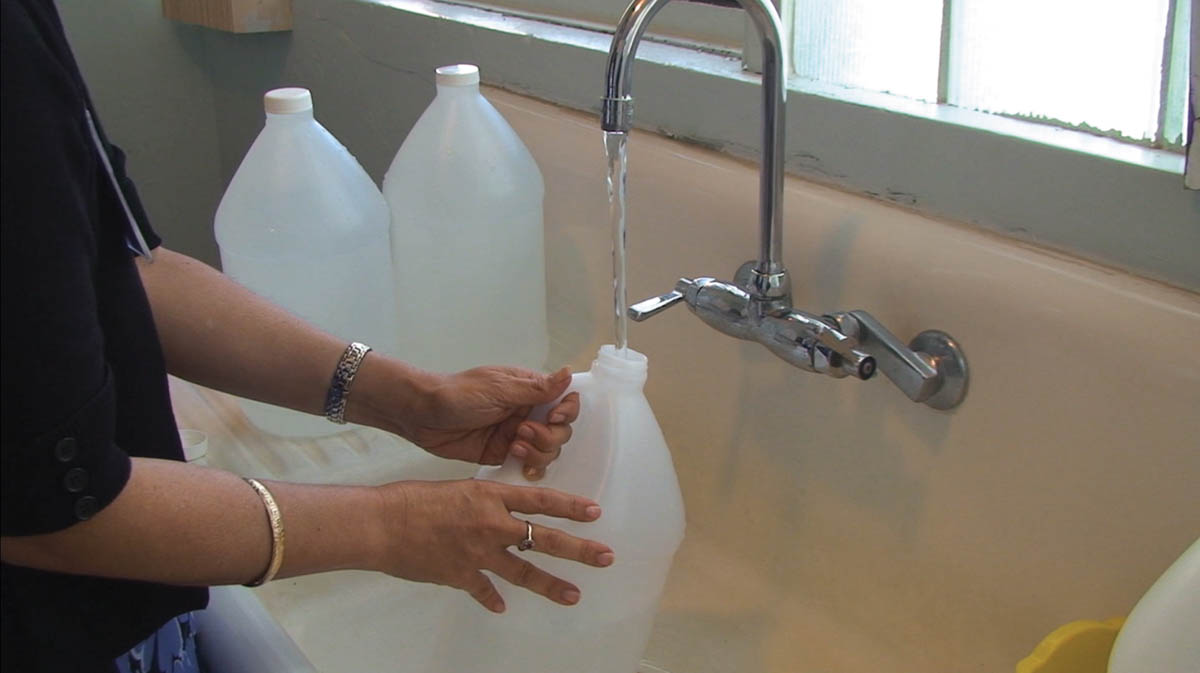
To start, you really need to think about what type of container would be the safest for long-term storage. Plastic containers that are polyethylene-based plastics, or plastics #1, #2, and #4. All food-grade plastics are made of High-density polyethylene (HDPE) #2. You can also use glass bottles as long as they haven’t stored non-food items. Stainless steel is another option, but keep in mind you won’t be able to treat your stored water with chlorine, as it wears down steel. It’s important that you seal and label your water stating what it’s used for and the expiration date. Store the containers in a cool, dry, and dark place for up to 6 months. Though its flavor can change over time, it’s still considered safe to drink if properly stored.

Store Bought Water

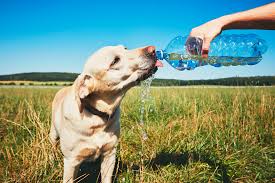
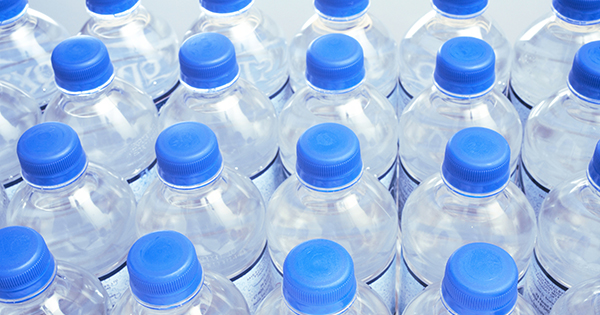
Although buying pre-packaged water would be the easiest route to stock up on your emergency supply, it is slightly more expensive (depending on the brand) than using tap water. It’s also cleaner, well-sealed and already comes in food-grade plastic. More importantly, bottled water is highly portable, which comes in handy if you need to bug out. This is a great option if you have limited space in your home or apartment. All you need to do is buy a bunch of packages and store them under beds.

Reuse, Reduce and Recycle


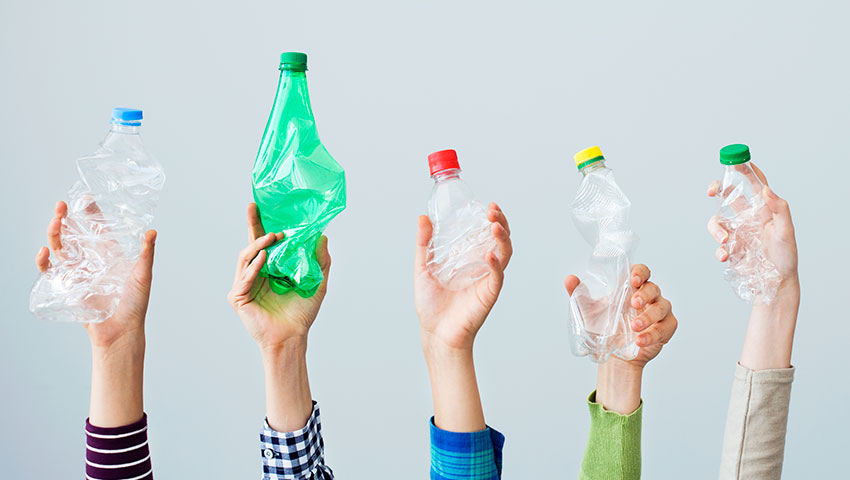
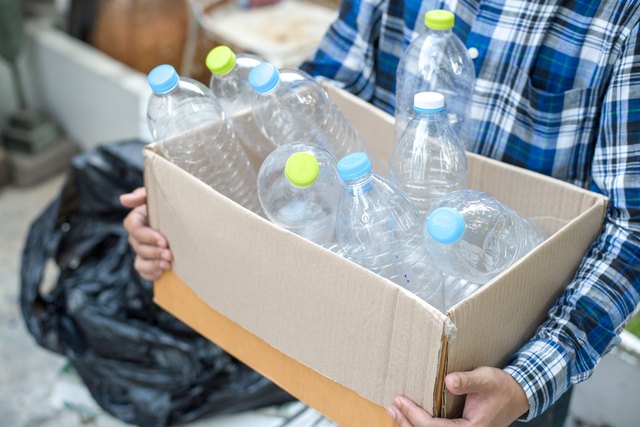
If you care about the environment and are not interested in purchasing more plastic. A great alternative is using old soda and Gatorade bottles, so as long as you properly wash the previously used bottles. It’s a great way to recycle, and you’re getting the very same benefits without making the initial purchase.

Larger water jugs (in the 5-7 gallon region) that you would normally take camping are also a great option for water storage, and the blue water jugs have an added bonus of restricting light, which will help prevent the growth of algae.

The Conclusion

Certain chemicals found in plastic can leach into bottled water over time, which could potentially damage your health. Therefore, it’s probably best to avoid commercially bottled water that’s far past its expiration date.

Always remember to practice good habits regarding water storage and consumption for you and your family’s safety.