How to Stay Alive When the Unthinkable Happens: A Survivalist’s Guide to School Shootings

Listen up. This world is broken. While soft-spoken politicians and delusional adults keep patting themselves on the back for “raising awareness,” our kids are getting gunned down in classrooms. You think it’s enough to hide under a desk and pray? Think again. If you want to survive an active shooter situation in school, you better start thinking like a warrior, not a victim.

I’m not here to sugarcoat it. I’m here to give you what you need: the skills, the mindset, and the hacks to stay alive. Because when bullets start flying, only the prepared survive. The rest? They become statistics. Don’t let that be you.


15 Survival Skills You Need to Drill into Your Brain (and Your Kids’ Too)

1. Situational Awareness

You can’t defend yourself if you don’t even know what’s going on. Scan rooms when you enter. Know the exits. Know who looks off, what’s normal, what’s not.

2. Memorize Escape Routes

Don’t wait for an adult to tell you what to do. Know every exit from every room you’re in — the front door, back door, windows, stairwells. Map it in your mind like your life depends on it — because it does.

3. Shadow Movement

Learn to move like a ghost. Stay low. Stay quiet. Hug the walls. Avoid open hallways. Never be a silhouette in front of glass doors or windows.

4. Improvised Lockdown

No lock? Make one. Use belts, shoelaces, backpack straps to bind door handles. Wedge desks, chairs, or trash cans under door handles. Disable the doorknob from the inside if you can. Be a barrier.

5. Barricade Strategy

Stack desks, chairs, and cabinets in front of doors. Build the barricade high and tight. Make it so the shooter would have to waste time breaking in — and time is your best friend in this fight.

6. Weaponization of Everyday Objects

If it comes down to it — you fight. Scissors, fire extinguishers, chairs, metal rulers, even a heavy Chromebook. If you’re cornered, don’t freeze — attack like your life depends on it. Because it does.

7. Silent Communication

Whispering kills. Learn hand signals with your friends or classmates. Thumb up = OK. Two fingers point = shooter direction. Fist = silence. Teach each other. Practice.

8. Phone Discipline

Turn off sound, vibration, brightness. Your glowing screen in a dark room is a beacon. Text quietly if you have to — but don’t make a sound. And don’t call, unless you’re safe or out.

9. First Aid: Bleeding Control

A bullet doesn’t care if you’re popular or smart. Know how to use a tourniquet (belt works in a pinch). Press hard. High and tight on limbs. Keep them alive until help comes.

10. Decoy Diversion

Throw something — a phone, a textbook — in the opposite direction. Sound draws attention. Give yourself that extra 3 seconds to escape or move.

11. Read the Shooter

Is this person walking slowly? Sprinting and shouting? Is it targeted or random? This isn’t compassion — it’s intel. It tells you if they’re hunting someone or spraying indiscriminately.

12. Know the Drill — and Then Go Beyond It

Those fire drills and lockdowns? Half-baked. Real life isn’t rehearsed. Use the drills to run your own plan. Where do you hide? Where do you run? Who’s with you?

13. Escape, Evade, Survive

When in doubt — RUN. Don’t huddle in a corner if there’s a way out. Run in zigzags. Break visual contact. Move behind cover (not just concealment).

14. Group Mentality Strategy

Small groups move faster than mobs. Choose two or three people you trust. Watch each other’s backs. Assign tasks: one watches hallway, one blocks the door, one sends messages.

15. Post-Shooting Awareness
Just because the shooting stops doesn’t mean the danger’s over. Wait for law enforcement’s signal. Don’t run toward sirens blindly. Shooters sometimes fake being victims or plant traps.


3 DIY Survival Hacks That Could Save Your Life

Hack #1: The Belt Lock

In a room with outward-opening doors and no lock? Wrap a belt tightly around the top hinge or door closer, loop it through the handle, and yank hard. It keeps the door from opening easily. Old-school trick, but effective.

Hack #2: Sound Masking Speaker

Keep a cheap Bluetooth speaker in your bag. In a lockdown, crank white noise or static near the door if you’re hiding and want to confuse directionality. The shooter won’t know where the people are if you disorient him.

Hack #3: Window Exit Tool

Carry a keychain glass breaker. Yes, even in school. They’re legal and lifesaving. If you have to bail out a window, this thing turns tempered glass into an open exit in one strike. Cheap. Quiet. Smart.


What the Adults Won’t Tell You

You’re not helpless. But they want you to be. Because if you learn how to think for yourself, act decisively, and fight like hell — you make the system look weak. And guess what? It is weak. It’s reactive. You need to be proactive.

Stop pretending evil won’t walk through your doors. Stop depending on policy to save you. A locked door slows a shooter. A survivor stops him.

Every second matters. Every breath counts. You don’t get do-overs. If a shooter walks into your school, you need to think fast, move smart, and stay deadly calm.


Last Words — and They’re Not Nice

I’m sick of the hand-wringing. I’m done with the candles and hashtags. You want to survive? Good. You better be willing to train harder than your gym teacher ever made you. You better be willing to do what the cowards won’t.

Because when the shooter steps through those doors, it’s not going to be a politician who saves you. It’s not going to be a motivational poster or a principal on the PA system. It’s going to be you.

You and your mind. You and your will to survive. You and every skill you drilled for this very moment.

The world’s gone mad. So be smarter. Be faster. Be tougher.

Be the one who walks out alive.

What No One Considers When Bugging Out…Until It’s Too Late

Imagine you’re coming back from work one day, and you receive this message.

“Emergency Alert – Hurricane Warning”

You are being instructed to evacuate as quickly as possible.

But that doesn’t scare you.

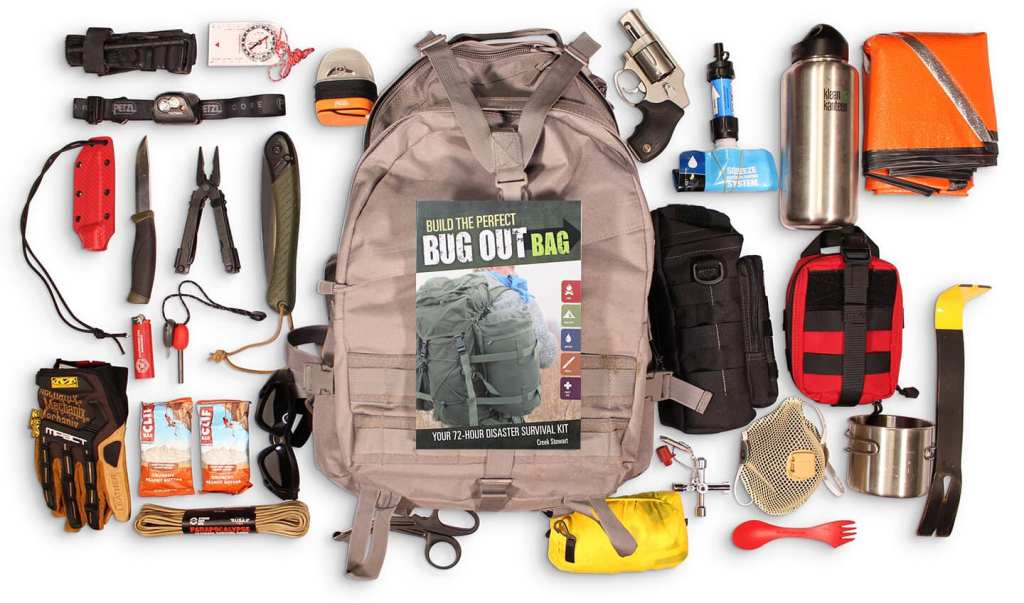
You grab your bug-out bag, gather your family, and head for the road.

Following your carefully planned escape route.

But there’s one factor you haven’t considered. Everyone else is trying to do the same thing.

The reality is, when emergency strikes, roads will be congested, gas stations will run dry, and tensions will be high.

And the approaching hurricane will not be making things any easier.

Doesn’t sound ideal, does it?

This is why having one escape route is not enough.

You need multiple options.

Begin by evaluating your escape routes and identifying less-traveled alternatives that could allow you to stay away from congested areas.

Also, consider the timing of your departure. Leaving at the first sign of trouble, before the masses clog the road, could give you a critical head start.

Additionally, it’s essential to prepare for the possibility that you may need to abandon your vehicle and continue on foot.

Ensure that your bug-out bag is equipped with the necessary items for a long trek and that your loved ones are physically prepared for such a journey.

And don’t forget to have a backup plan.

In the unpredictable world we live in, it’s essential to be adaptable and ready to alter course if your initial plan proves unfeasible.

I know people who are dead set on their emergency plans, and refuse to modify them.

However, adaptability is essential in emergency situations.

Follow these 10 survivalism steps to craft multiple emergency plans quickly.

By taking the time to rethink your bug-out plan you can account for the often-overlooked risk of getting caught in the disarray of a mass evacuation.

And you can make more informed decisions when emergency strikes.

Remember, it’s not just about planning for things you can expect. It’s also about being ready to face unexpected challenges that may arise along the way.

So take the time to consider every option available.

Don’t Bug Out Unless You’ve Thought About This

Sometimes we have to make tough decisions.

Decisions that can determine the fate of our families and our own future.

One of these decisions is knowing when to bug out, and when to stay put.

Deciding whether you should bug out or not is like choosing a partner.

It can either make you or break you.

Sometimes, it can be a lifesaving choice.

But bug out when you shouldn’t, and the consequences could be catastrophic.

I will tell you everything you need to know before you make a decision.

So you can protect yourself and your family with confidence.

First and foremost, always trust your instincts.

As I’ve mentioned in previous articles, our intuition is an incredible thing that can assist in guiding us in high-stress situations.

If your gut is telling you that it’s time to bug out, take that feeling seriously.

Next, consider the severity of the hazard.

Is it something that’s likely to escalate?

Or is it a situation that may subside without causing any significant harm?

For example, if you’re facing a natural emergency like a wildfire or hurricane, bugging out might be the greatest option to escape imminent risk.

On the other hand, if it’s a temporary power outage or a localized matter, staying put might be wise.

So these are the factors that you can’t control

Let’s talk about the things you can control.

Your resources.

When deciding whether to bug out or not, take a good look at your stockpiles.

If you have enough food, water, and first aid to last you throughout the whole emergency, then might want to stay indoors.

But if you need to look elsewhere for gear and essentials, then evacuating could be a necessity.

Then there’s the condition of your vehicle.

Whether we like it or not, our cars are essential for bugging out.

Evacuating on foot can be a hundred times tougher.

Another critical factor is the well-being of your family.

If you have young children, elderly relatives, or anyone with special needs, bugging out may be more challenging.

In some cases, staying put and fortifying your house could be safer.

Making the decision to bug out or not isn’t easy.

By considering these factors, however, you can pick the correct option.

Remember, having a well-thought-out plan in place will always beat getting caught unprepared.

So think about the things that you can and can’t control, and choose wisely.

Keep This Versatile Item In Your Bug-Out Bag.

Did you know you have an incredible prepping tool in your bathroom cabinet?

It’s true. No one thinks about it.

And yet dental floss has many uses that might come in handy when the chips are down.

First and foremost, it is essential for maintaining oral hygiene.

In a post-emergency scenario, dental care may be nonexistent.

Taking care of your teeth and gums is essential for preventing infections and other health hazards.

Dental floss can allow you to maintain good oral health, even in the most challenging circumstances.

But beyond its primary use, it has a surprising number of other applications that can come in handy in an emergency situation.

Its thin yet incredibly strong nature makes it a versatile tool.

For example, dental floss can be used as a makeshift fishing line.

If you find yourself needing to catch fish for sustenance, simply attach a hook to the end of the floss and cast it into the water.

Its inconspicuous appearance makes it less likely to scare fish, and its strength ensures that it can handle the weight of your catch.

Another practical use for dental floss is as a sturdy thread for sewing.

Whether you need to mend torn clothing, stitch up a wound, or create makeshift gear, dental floss is a reliable option.

Dental floss can also be used to create a tripwire alarm system around your camp or bug-out location.

By stretching it taut between trees or other anchor points, you can create a simple perimeter that will alert you if someone or something attempts to enter your area.

Tie a few aluminum cans or other noise-making objects to the floss, and you’ll have an early warning system in place.

These are just a few examples of the many uses for dental floss in an emergency situation.

What I love the most about it is that it comes in small packaging, so it doesn’t take up any space in your bug-out bag.

It’s light, compact, and versatile.

Why don’t you throw one in your bug out bag?