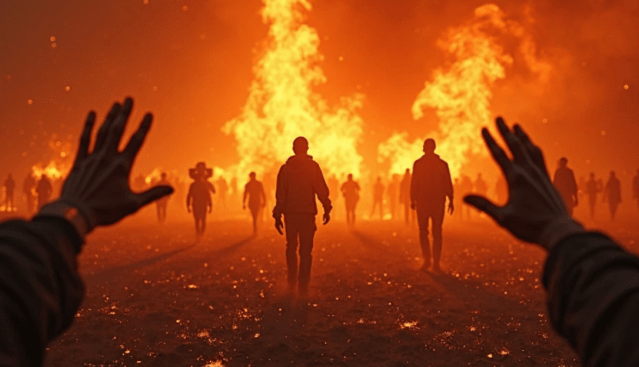
Indiana’s Worst Roads to Drive on During a Disaster

’ve been through more broken terrain and disaster zones than most folks see in a lifetime. Desert rubbles, forest mud, coastal storms—everywhere I’ve pushed my rig to the limit. But if you ask me, it’s Indiana’s worst roads that sneak up on you during a crisis. They may not look dangerous on a GPS map, but once the storm hits or civil disruption starts, what seems like a harmless rural highway can become a deathtrap in minutes.

So here’s my comprehensive guide: how to survive driving through those back roads, gravel highways, and forgotten bridges when everything goes sideways, and how to drive your way out without fuel when the gas pumps go dead.


Indiana’s Worst Roads in a Disaster Scenario

  1. County Road 600 East (Shelby County)
    Narrow, winding, crosses multiple creek beds. Wooden planks on bridges rot fast, and without maintenance during a disaster, collapse is just a matter of time.
  2. Old Vincennes Trail (Vigo County)
    Overgrown, poorly marked, passing through wooded areas. Fallen trees and wildlife are common obstacles after high winds.
  3. State Road 156 (Clark County)
    Cliffside road overlooking the Ohio River. Erosion from flash flooding can cause sudden landslides.
  4. County Road 775 South (Jennings County)
    Sandstone ridges and blind turns; when mud shows up, traction vanishes.
  5. Old State Road 32 (Madison County)
    Sporadically paved, pocked with sinkholes. In a quake or flooding, you’ll be playing dodge‑the‑hole.
  6. Several river‑low bridge crossings
    Any small under‑maintenance crossing becomes dangerous when water rises. Think County Road 700 South over the Muscatatuck River.
  7. Backcountry farm‑access lanes (any county)
    Dusty or muddy, they often turn to impassable quagmires when rain hits.
  8. Abandoned railroad crossings
    Rails burst, gravel shifts, axles break.
  9. Hilly switchbacks around Brown County
    Steep, no guardrails, deceptively narrow, and easy to overlook black ice in winter emergencies.
  10. Unlighted stretches of US 41 (Benton–Newton counties)
    In power outages, you’re blind and vulnerable to stranded vehicles or ambush.

These roads share traits: narrow width, degraded pavement, poor signage, multiple natural‑feature crossings, and few civil‑support options. In a disaster—whether tornadoes, floods, EMP, or civil unrest—any one could strand you or worse.


15 Survival Driving Skills

  1. 4×4 Engagement on Uneven Terrain
    Always be familiar with how and when to shift into 4‑wheel drive or low‑range. Too early or too late, and you get wheelspin or lock‑up.
  2. Reading Water Flow Through Bridges
    Wet bridge? Look for current direction and debris patterns. Back off immediately if it’s choppy or fast; wood‑plank bridges hide structural damage until they fail.
  3. Low‑Torque Start on Loose Surfaces
    Feather throttle at launch — high RPMs on gravel or mud dig you in faster than a front‑end dig.
  4. Heel‑and‑Toe Shifting for Descents
    Mismatched revs cause lurching. Master heel‑and‑toe for smooth downshifts steeply.
  5. Left‑Right Shake Method for Stuck Tires
    Shift between drive and reverse while gently applying throttle to jar tires free.
  6. Smart Air‑Down for Gravel or Sand
    10–15 PSI lower gives better traction—but don’t go below 15 PSI to avoid bead‑seals popping.
  7. Tire Chains Without Chains
    Use rope in a crisscross pattern to dig into ice/mud if you don’t have actual chains.
  8. Maintaining Momentum on Uphill Soft Spots
    Too fast, you’ll dig; too slow, you’ll stall. Keep steady momentum to pass through.
  9. Stone‑Dodging
    Steer around big rocks on uneven road — never drive directly over them unless you’ve got rock‑sliders.
  10. Trail‑Guided Spotting
    Have a passenger get out and direct you slowly through tricky curves or washed‑out areas.
  11. Exit Planning at Intersections
    If disaster intensifies, always identify the safest route exit early—not just the shortest.
  12. Steering On‑Point at Loss of Traction
    Caused by mud or ice? Don’t brake hard. Gently steer into the skid.
  13. Fuel Conservation by Dialing Back Speed
    Drive at half throttle; aerodynamic drag kills your range quickly.
  14. Emergency Braking Without ABS
    Pump brakes to hold control; heard of ABS, but pumps manually if needed.
  15. Night Vision with High Beams and Mirrors
    Angle mirror to reflect headlight glare onto signs/obstacles; life‑saving when power’s out.

3 DIY Survival Driving Hacks When You Run Out of Gas

On Indiana’s worst roads, gas stations may be gone—or unreachable. If you’re out of gas, here’s how to keep moving.

Hack 1: Gravity‑Feed from Above‑Ground Tank

You carry a soft fuel bladder or five‑gallon jerry can? Strap it securely on roof or tailgate. Use gravity hose to feed fuel into a tank primed inlet loop. Makeshift pump: suck to prime, then let gravity take over. Yes, risk of spillage—but it beats being stranded at night on County Road 600 East with a creek rising fast.

Hack 2: Charcoal‑Filtered Woodgas Retro‑Burner

If you have a small steel tank and angle grinder, you can convert it into a woodgas generator to run a carbureted engine. On cold nights near wooded backroads, scavenge sticks and deadfall. Build small charcoal gasifier, pipe the gas in. Maintains low RPM just to get out. It’s not clean or fast—but it moves you miles on firewood alone.

Hack 3: Pedal‑Truck Push Start

Now, I’ve done this solo. Use tire pressure: lower rear tires a bit to increase traction, fold the rear tailgate down. Shift to neutral, starting at a slight decline if available (maybe an abandoned bridge ramp on State Road 156). Hop in and start pushing with hands or foot‑brace on tailgate. Once you get it rolling, jump in and pop it into second gear—bump start. Works until engine turns over. Yes, slower than a patrolling cop with a machine gun, but it gets you moving.


Navigating Disaster on Indiana’s Harsh Roads

Picture this: the power’s out, emergency sirens howl somewhere in the east. You’ve just fled town with enough gear for 72 hours—food, water, med kit, fuel bladder, jumper cables, axe, tow strap. You’re on County Road 600 East, heading toward high ground. Two miles in, the wooden bridge over Little Blue Creek creaks and tilts as fast‑flowing water pounds foundations.

You stop. You don’t cross. Use skill #2: read the flow and bounce the front bumper light on the water. You see rippling eddies that signal rising water. Bridge side rotted. You turn around onto a mud‑marked service road parallel to the creek. Feather throttle, use 4×4 low, and push through ruts. Two more creek crossing ahead—one small, one large. Use #1 and #6—air‑down and steady momentum. Scrape mud clear with shovel, dig out puddles that could bury axles. You make it safe.

Your fuel runs low. You cross paths with another driver stranded without fuel. He offers you 3 gallons of white‑gas camp fuel. It’ll work—just add it to your mix and run at carrot‑and‑stick half throttle (#13)—and avoid highways where you’d burn through it too fast. You ration. You’re still miles from ignition.

That night, you set camp by Old Vincennes Trail edge. Rain pounds, mud deepens. You build woodgas maker (#2 hack) from a steel drum scavenged at a burned‑out farmstead. You fire it up. Squeaky, smoky, home‑built. Smoke trails under your chassis. You manage a mile—overnight goal reached.

By dawn, you’re near State Road 156, cliffside curves ahead. You check erosion signs, use heel‑and‑toe to descend without overheating brakes (#4). Bridges? You test the surface. Shake the suspension as you ease on. Good to go. You make it off the worst route.


Tips for Staying Alive on These Roads

  • Pre‑trip inspection: check tires (wear, mud, gravel patterns), steering tightness, brake fade. Repair immediately—mobile tools are useless once you’re 10 miles from pavement.
  • Pack a survival driving kit: include rope, small pump, low‑pressure gauge, charcoal, steel pipe, welding gloves (for woodgas hack), funnel, shovel, jerry can, battery jumper leads, emergency blankets, hand winch.
  • Drive early or late: midday brings heat and storms; night brings opportunistic threats. Dusk to dawn is quietest—but use high‑beam night‑vision tricks (#15).
  • Scan shoulder signs: any unusual piles of brush, stones, or barricades likely indicate you’re heading into flashpoint or unstable terrain.
  • Avoid predictable routes: towns near rivers, dams, power substations are likely to bubble in a disaster zone. Take alternative farmland roads instead.
  • Stay low and quiet: engine off, wheels straight, lights out at rest points. Listen to water, wind, wildlife patterns—silent terrain reveals more than loud engines.
  • Log your route: draw progress on map as you go—even if GPS dies, you’ll have a paper chart with mileage and direction.

Why Indiana’s Worst Roads Demand Respect

Most disasters don’t strike the urban core first—they hit infrastructure: rural roads, bridges, culverts. Maintenance stops, communication fails. Suddenly, that unassuming county road you took as a shortcut becomes the only passable route… until it buckles under pressure. In a hurry, without the right skills and foresight, you end up trapped in a flash flood, landslide, or worse.

Every survivalist knows: it’s not a matter of if your route becomes compromised—it’s when. That’s why you build redundancy: alternative tracks, vehicle adaptability, ability to jury‑rig fuel systems. You learn dirt, water, slope, and engine behavior by night, when mistakes hurt, and climb back into that rig knowing it’s re‑broken now. Only after 10 nights of living on a plateau under the first light of dawn do you begin to respect the roads ahead again.


Final Takeaways

  • Indiana’s worst roads—narrow, rural, weakly maintained—become death zones in any significant disaster.
  • Master 15 survival driving skills: from mud starts to heel‑and‑toe downshifts and on‑point skid control.
  • Carry the tools to jerry‑rig fuel or make woodgas: 3 DIY hacks for zero‑fuel emergencies.
  • Drive defensively—know every mile, test every creek, carry a detailed map, and plan your exits.
  • Above all: stay calm, keep momentum, trust your training—and remember: in a crisis, speed is a trap; control is what gets you home.

When the sirens fade and normalcy bleeds back in, folks will talk about how the interstate jammed, how the airport shut down. You’ll be working on your truck, re‑packing your gear, cleaning your woodgas rig. You’ll drive through forgotten roads, patch bridges, and smile: you chose the hard way—and lived to tell the tale.


How to Stay Alive When the Unthinkable Happens: A Survivalist’s Guide to School Shootings

Listen up. This world is broken. While soft-spoken politicians and delusional adults keep patting themselves on the back for “raising awareness,” our kids are getting gunned down in classrooms. You think it’s enough to hide under a desk and pray? Think again. If you want to survive an active shooter situation in school, you better start thinking like a warrior, not a victim.

I’m not here to sugarcoat it. I’m here to give you what you need: the skills, the mindset, and the hacks to stay alive. Because when bullets start flying, only the prepared survive. The rest? They become statistics. Don’t let that be you.


15 Survival Skills You Need to Drill into Your Brain (and Your Kids’ Too)

1. Situational Awareness

You can’t defend yourself if you don’t even know what’s going on. Scan rooms when you enter. Know the exits. Know who looks off, what’s normal, what’s not.

2. Memorize Escape Routes

Don’t wait for an adult to tell you what to do. Know every exit from every room you’re in — the front door, back door, windows, stairwells. Map it in your mind like your life depends on it — because it does.

3. Shadow Movement

Learn to move like a ghost. Stay low. Stay quiet. Hug the walls. Avoid open hallways. Never be a silhouette in front of glass doors or windows.

4. Improvised Lockdown

No lock? Make one. Use belts, shoelaces, backpack straps to bind door handles. Wedge desks, chairs, or trash cans under door handles. Disable the doorknob from the inside if you can. Be a barrier.

5. Barricade Strategy

Stack desks, chairs, and cabinets in front of doors. Build the barricade high and tight. Make it so the shooter would have to waste time breaking in — and time is your best friend in this fight.

6. Weaponization of Everyday Objects

If it comes down to it — you fight. Scissors, fire extinguishers, chairs, metal rulers, even a heavy Chromebook. If you’re cornered, don’t freeze — attack like your life depends on it. Because it does.

7. Silent Communication

Whispering kills. Learn hand signals with your friends or classmates. Thumb up = OK. Two fingers point = shooter direction. Fist = silence. Teach each other. Practice.

8. Phone Discipline

Turn off sound, vibration, brightness. Your glowing screen in a dark room is a beacon. Text quietly if you have to — but don’t make a sound. And don’t call, unless you’re safe or out.

9. First Aid: Bleeding Control

A bullet doesn’t care if you’re popular or smart. Know how to use a tourniquet (belt works in a pinch). Press hard. High and tight on limbs. Keep them alive until help comes.

10. Decoy Diversion

Throw something — a phone, a textbook — in the opposite direction. Sound draws attention. Give yourself that extra 3 seconds to escape or move.

11. Read the Shooter

Is this person walking slowly? Sprinting and shouting? Is it targeted or random? This isn’t compassion — it’s intel. It tells you if they’re hunting someone or spraying indiscriminately.

12. Know the Drill — and Then Go Beyond It

Those fire drills and lockdowns? Half-baked. Real life isn’t rehearsed. Use the drills to run your own plan. Where do you hide? Where do you run? Who’s with you?

13. Escape, Evade, Survive

When in doubt — RUN. Don’t huddle in a corner if there’s a way out. Run in zigzags. Break visual contact. Move behind cover (not just concealment).

14. Group Mentality Strategy

Small groups move faster than mobs. Choose two or three people you trust. Watch each other’s backs. Assign tasks: one watches hallway, one blocks the door, one sends messages.

15. Post-Shooting Awareness

Just because the shooting stops doesn’t mean the danger’s over. Wait for law enforcement’s signal. Don’t run toward sirens blindly. Shooters sometimes fake being victims or plant traps.


3 DIY Survival Hacks That Could Save Your Life

Hack #1: The Belt Lock

In a room with outward-opening doors and no lock? Wrap a belt tightly around the top hinge or door closer, loop it through the handle, and yank hard. It keeps the door from opening easily. Old-school trick, but effective.

Hack #2: Sound Masking Speaker

Keep a cheap Bluetooth speaker in your bag. In a lockdown, crank white noise or static near the door if you’re hiding and want to confuse directionality. The shooter won’t know where the people are if you disorient him.

Hack #3: Window Exit Tool

Carry a keychain glass breaker. Yes, even in school. They’re legal and lifesaving. If you have to bail out a window, this thing turns tempered glass into an open exit in one strike. Cheap. Quiet. Smart.


What the Adults Won’t Tell You

You’re not helpless. But they want you to be. Because if you learn how to think for yourself, act decisively, and fight like hell — you make the system look weak. And guess what? It is weak. It’s reactive. You need to be proactive.

Stop pretending evil won’t walk through your doors. Stop depending on policy to save you. A locked door slows a shooter. A survivor stops him.

Every second matters. Every breath counts. You don’t get do-overs. If a shooter walks into your school, you need to think fast, move smart, and stay deadly calm.


Last Words — and They’re Not Nice

I’m sick of the hand-wringing. I’m done with the candles and hashtags. You want to survive? Good. You better be willing to train harder than your gym teacher ever made you. You better be willing to do what the cowards won’t.

Because when the shooter steps through those doors, it’s not going to be a politician who saves you. It’s not going to be a motivational poster or a principal on the PA system. It’s going to be you.

You and your mind. You and your will to survive. You and every skill you drilled for this very moment.

The world’s gone mad. So be smarter. Be faster. Be tougher.

Be the one who walks out alive.

GOOGLE FIRES ANOTHER REPUBLICAN ENGINEER WHO DISAGREED WITH DEMOCRAT PARTY POLICIES

The firing happened in early June, but I was busy at the time, and didn’t blog about it. This isn’t the first time that Google has fired software engineers for disagreeing with Democrat party policies. The last one, you’ll remember, was James D’Amore. This time, it’s Mike Wacker, who was fired for expressing Republican views and dissenting from Google “reporting” policies.

The Daily Caller reports:

A Republican Google software engineer has written an open letter describing a culture of left-wing “outrage mobs” that make use of the company’s anonymous bias reporting channels to shut down dissent.

The open letter, published Tuesday morning on Medium, was written by software engineer Mike Wacker, who was reported himself multiple times via the company’s anonymous reporting tools.

“If left unchecked,” Wacker wrote, “these outrage mobs will hunt down any conservative, any Christian, and any independent free thinker at Google who does not bow down to their agenda.”

In one case, Wacker describes a fellow Republican employee who was reported for saying nice things about the University of Toronto academic Jordan Peterson. He was given a note in writing that said, “One Googler raised a concern that you that you appeared to be promoting and defending Jordan Peterson’s comments about transgender pronouns, and this made them feel unsafe at work.”

Wacker himself was twice reported via the company’s anonymous reporting channels.

The full article by Wacker is here on Medium. Keep in mind that we have so many stories like this coming out of Google. The James D’Amore story was big, but it’s not the only one. Google apparently fires any employee who is caught disagreeing with the company’s political objectives.

Google-related companies donate 90% to Democrats
This firing of the Republican software engineer makes me wonder whether Google has a policy of discriminating against employees to make sure that no Republicans can work at Google.

According to the Washington Examiner, Google, YouTube and other Google-linked companies gave 90% of their political donations to Democrats:

A study released Thursday found that 90 percent of political donations by Google, YouTube, and other subsidiaries of Alphabet have gone to Democrats.

In 2016, when Donald Trump defeated Hillary Clinton, Alphabet employees donated more than $5.8 million to Democratic candidates and causes, while only $403,042 was contributed to Republicans. Ninety-four percent of Alphabet contributions in that year went to Democrats.

Would that be a sign that their products and services are biased to support Democrats?

Are there any SENIOR EXECUTIVES AT GOOGLE who voted for Donald Trump? She’s not aware of any. What about the $1.315 million given to Hillary Clinton in 2016 by Google employees and $0 given to Donald Trump? She has no answer.

I have some questions of my own. Would Google fire any employees that did give money to Republicans? Would Google prevent employees who gave to Republicans from advancing in the company? Would these political contributions to Democrats be a sign that the products and services offered by Google are biased to support Democrats? It seems to me that the firings that we know about, and the complete lack of donations to Republicans show that Google is discriminating against conservatives, so that they are unwilling to go on the record as supporting Republican candidates.

Studies show bias in Google products and services
What about the study showing that they promote progressive news sources ahead of conservative or unbiased ones?

Breitbart News reported in March 2019 on how Google used their products to influence elections:

New research from psychologist and search engine expert Dr. Robert Epstein shows that biased Google searches had a measurable impact on the 2018 midterm elections, pushing tens of thousands of votes towards the Democrat candidates in three key congressional races, and potentially millions more in races across the country.

The study, from Epstein and a team at the American Institute for Behavioral Research and Technology (AIBRT), analyzed Google searches related to three highly competitive congressional races in Southern California. In all three races, the Democrat won — and Epstein’s research suggests that Google search bias may have tipped them over the edge.

This confirms a previous study from 2016:

The research follows a previous study conducted in 2016 which showed that biased Google results pushed votes to Hillary Clinton in the presidential election. Democrats and Google executives have disputed these findings.

[…]Users performing Google searches related to the three congressional races the study focused on were significantly more likely to see pro-Democrat stories and links at the top of their results.

Here’s another study reported in May 2019 by the UK Daily Mail:

Google’s bias towards left-wing media outlets has been laid bare by an algorithm which detected that it favors sites including CNN and The New York Times over others.

According to data compiled by researchers from Northwestern University, the search engine promoted those sites over others repeatedly in November 2017.

Of the 6,302 articles that appeared in Google’s ‘top stories’ page that month after a term was searched, more than 10 percent were by CNN.

The New York Times was the second most favored and accounted for 6.5 percent of articles. The Washington Post was third with 5.6 percent.

By contrast, Fox News, the most right-wing outlet in mainstream media, was the source of just three percent of the stories which appeared.

Source
https://winteryknight.com/