
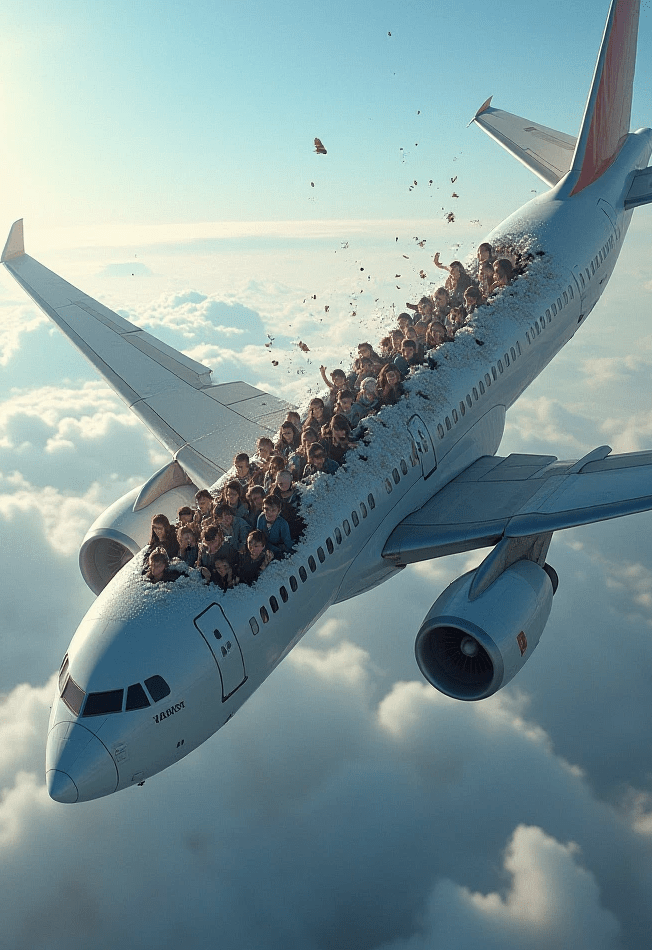
You’re Crashing Into the Ocean – Here’s How Not to Die Like an Amateur
Listen up. You’re 30,000 feet above nowhere, strapped in a glorified soda can, sipping overpriced ginger ale, when BOOM — something goes wrong. Engines flame out. Cabin screams. The pilot starts praying louder than the passengers. That’s when you know: you’re going down. Into the cold, black, unforgiving ocean.
What you do next decides if you live or if your body bloats up and floats ashore for some tourist to find a week later.
This isn’t your average survival blog. This is the real deal. If you’re not ready to move like your life depends on it — because it absolutely does — then close this window and prepare to meet the fish. Otherwise, let’s dive in. Literally.
💥 10 Ocean-Crash Survival Skills Every Passenger Should Know

1. Situational Awareness Before You Even Take Off
Yeah, I know. You want to nap. But if you’re too lazy to count the rows between you and the exits, you deserve what’s coming. Every damn time you fly, you better know where the exits are, where the flotation devices are, and how to manually open the emergency doors.
2. Brace Position That Doesn’t Get You Killed
Forget what they show in the seatback card. In a real crash, you need to protect your head and brace your legs to avoid snapping your spine on impact. Feet flat, knees slightly apart, head down, arms wrapped over your head or seat in front of you. Practice this at home, not when the plane starts rattling.
3. Ditch the Seatbelt at the Right Time
Too early and you fly around like a piñata. Too late and you’re trapped. As soon as the initial impact hits and the plane stops skidding, unbuckle and MOVE. Do NOT freeze. Every second counts.
4. Egress Navigation Underwater
The lights are out. The cabin’s tilting. Water’s rushing in. If you can’t crawl blind toward an exit with your eyes shut, you’re dead. Practice escaping in pools, learn how to hold your breath under stress, and train to follow walls and seats.
5. Inflating Life Vests AFTER Exiting the Aircraft
You inflate inside, you’re a floaty balloon trapped in a sinking coffin. Keep that vest uninflated until you’re outside. If you forget this, you’ll be a buoyed corpse.
6. Identifying and Using Life Rafts
Not all planes have them. Know if yours does. Know where they are. Learn to deploy them and how to board even if you’re exhausted. Also — steal an emergency flashlight. It’ll help signal, and screw the rules. You’re in survival mode now.
7. Cold Water Survival & Hypothermia Prevention
The ocean isn’t your friend. Get out of the water fast. Conserve body heat. Huddle with others. Stay dry, stay moving, and don’t drink seawater unless you’re craving madness.
8. Floating Techniques If You’re Alone
If all you’ve got is a vest and darkness, learn to float without tiring. Back float. Dead man’s float. Anything that keeps your head above water while you catch your breath or wait for rescue.
9. Using the Environment to Signal
Pull mirrors, shiny surfaces, fire-starting tools, even fabric. Signal with smoke, flashlights, or colored clothing. Splash. Yell. Make noise. Draw attention. But save energy when it’s futile.
10. Mental Fortitude Under Terror
You will want to scream, freeze, panic. That’s death. Control your fear. Use adrenaline. Breathe in. Focus. Decide. Act. Don’t wait for orders — think and move like your life depends on you.
🧰 3 DIY Survival Hacks for Escaping a Moving Airplane
1. Improvised Window Breaker
Most plane windows can’t be opened. But sometimes cabin pressure blows out or breaks panels. Keep a solid pen, metal flashlight, or steel water bottle in your carry-on. These can help bust plastic panels or thin interior doors in emergencies.
2. Seat Cushion Raft Hack
Yes, that foam cushion can float. But if you’re smart, you’ll jam two together with your belt or jacket to increase buoyancy. Instant DIY mini-raft. Not comfortable. Not elegant. But it keeps you from sinking.
3. Plastic Bag Floatation Assist

You packed your gear in ziplocks, right? No? Dumb. But if you did — trap air in large bags, seal them, and tie them to your body or under your arms. Not Coast Guard-approved, but better than sinking like a brick.
🛑 Final Word: When That Plane Drops, You’ve Got Seconds
Let me be blunt. Most people freeze. They wait for instructions. They pray. They scream. They forget every drill they saw in that cartoon safety video and then wonder why the hell they’re drowning.
You’re different. Or you better be.

Here’s your checklist:
- Know your exits.
- Brace like you mean it.
- Unbuckle fast.
- Don’t inflate inside.
- Get the hell out.
- Climb onto anything that floats.
- Signal hard.
- Conserve warmth.
- Don’t drink the ocean.
- Fight the fear. Move.

If you think you’re going to wing it when the fuselage starts groaning and smoke pours in — you’re already dead. But if you drill these into your skull and train like your life depends on it (because it does), you’ll punch the reaper in the face and live to tell the story.
Remember: no one’s coming to save you in time. Save your damn self.


 TheDailyChristian