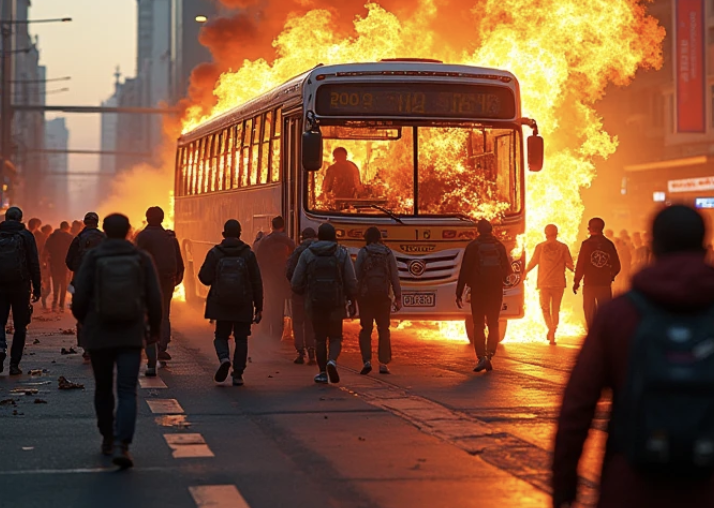
How To Stay Safe and Survive During a Riot in North Dakota

When chaos breaks loose in a quiet state like North Dakota, it catches most folks off guard. But if you’re a survival-minded individual like me, you know complacency is the enemy. Riots don’t give warnings. They flare up fast—often within minutes—and turn peaceful towns into danger zones. Whether it’s Bismarck or Fargo, once tensions boil over, it’s too late to start thinking about a plan. You either have one, or you don’t. Today, I’m laying out a no-BS guide on how to keep yourself and your family safe when the streets go hot.


Understanding the Threat

Riots are unpredictable, often driven by political unrest, economic frustration, or social tension. While North Dakota isn’t known for civil unrest, don’t confuse calm with permanent peace. If you’re reading this, you’re probably not one to bet your life on the odds—and that’s good. Always expect the unexpected.

The key is preparation. That means having gear, knowing your surroundings, mastering self-defense, and—if it comes down to it—having the skills to build what you need to survive.


8 Self-Defense Skills You Must Master

These aren’t movie tricks or TikTok tactics. These are real, actionable skills that can keep you alive.

1. Situational Awareness

The number one tool in your arsenal isn’t a weapon—it’s your mind. Always scan your environment. Look for exits. Watch body language. If the energy in a crowd shifts, you should feel it before you see it. Trust your gut and act early.

2. De-escalation Tactics

You’re not a hero, and this isn’t the time for ego. If someone confronts you, your first goal is to avoid conflict. Use calm tones, non-threatening gestures, and strategic positioning to keep distance. Walk away before fists fly.

3. Basic Striking Techniques

If you’re forced to fight, keep it simple: palm strikes, elbow strikes, and low kicks. These are powerful, easy to execute, and don’t require years of training. Aim for soft targets like the throat, groin, and solar plexus.

4. Escaping Holds and Grabs

Learn how to break free from wrist grabs, bear hugs, and chokeholds. Use leverage, not strength. The goal is not to overpower, but to escape and move to safety.

5. Improvised Weapon Usage

Know how to use what’s around you. A belt with a heavy buckle, a pen, a sturdy flashlight—these can all become defensive tools. Don’t rely on carrying weapons—rely on your adaptability.

6. Weapon Disarming Basics

This is only for dire situations. If you’re unarmed and someone threatens you with a weapon, disarming could be your last shot. Focus on redirecting, controlling, and neutralizing. It’s risky but better than freezing.

7. Ground Defense

If you’re knocked down, your fight isn’t over. Learn to protect your head, use your legs to create space, and stand back up with control. Never stay on the ground in a crowd—it’s where you’ll get stomped.

8. Team Tactics

If you’re with family or a group, work as a unit. Assign roles—one leads, one watches the rear, one carries supplies. Communicate clearly and stay together. Never let panic scatter your team.


3 DIY Survival Weapon Builds
Sometimes, carrying a weapon isn’t an option. But necessity is the mother of invention. These DIY weapons can be made from common materials and pack enough punch to give you an edge.

1. PVC Pipe Baton

Materials: 1″ diameter PVC pipe (2–3 feet), sand or metal nuts, duct tape.

Instructions: Fill the pipe with sand or metal nuts for weight. Seal both ends. Wrap the grip with duct tape or paracord for handling. It’s light, sturdy, and can deliver bone-crushing force when needed.

2. Nail Bat

Materials: Wooden bat or thick branch, nails, hammer.

Instructions: Drive nails through one end of the bat. Wrap the handle with cloth or tape for grip. This is a last-resort weapon—lethal and intimidating. Use only if you’re in extreme danger.

3. Sling Shot Survival Tool

Materials: Y-shaped branch, surgical tubing or bike inner tube, leather pouch.

Instructions: Cut a solid Y-branch and secure tubing to the arms. Attach a leather patch to hold ammo—rocks, bolts, or steel bearings. Silent, light, and powerful at close range.


Best Practices for Riot Survival in North Dakota

Let’s get specific. Here’s how to survive if a riot breaks out in your area:

1. Avoid Hot Zones

If you see smoke or hear sirens—go the opposite direction. Monitor local police scanners or emergency apps like PulsePoint. Avoid downtown areas, government buildings, and protest gathering spots.

2. Shelter in Place if Possible

If your home is secure, don’t go outside. Board up windows, block entrances, and stay quiet. Have a backup power source, drinking water, and a go-bag ready in case you need to leave fast.

3. Blend In

If caught outside, don’t stand out. Ditch any flashy or tactical gear. Neutral colors, no logos. Move like you belong—confident but not confrontational.

4. Know Your Escape Routes

Always have three ways out—on foot, by car, and through side streets or back alleys. Practice these routes with your family. GPS won’t help if networks go down.

5. Communicate Off-Grid

When the grid fails or networks are jammed, use walkie-talkies or ham radios. Texts may still go through when calls won’t. Establish code words with your group ahead of time.


Final Thoughts from a Lifelong Prepper

You don’t rise to the occasion—you fall back on your training. That’s the survivalist creed. During a riot, it’s not about being a hero. It’s about being alive when the dust settles. I’ve seen too many people freeze when the world went sideways, and I’ve made it my life’s work to make sure that never happens to me—or to those who listen.

North Dakota might seem low-risk, but don’t bet your family’s safety on peace lasting forever. Stockpile smart, train harder, and plan like it’s already happening. Because when the streets turn to war zones, it won’t matter who started it—it’ll only matter who walks away.

Stay sharp. Stay prepared. And remember: it’s better to be a year too early than a second too late.


How To Stay Safe and Survive During a Riot in Tennessee

When the streets boil over with chaos and the sirens echo louder than common sense, you’ll quickly learn one brutal truth: you’re either prepared or you’re prey. As a survival prepper with years of training in self-defense and bushcraft, I’ve witnessed the fine line between survival and tragedy. Riots are unpredictable beasts. They erupt fast, spread faster, and leave devastation in their wake. Whether you’re in Nashville, Memphis, Chattanooga, or a small town that rarely makes the news, knowing how to stay safe during a riot isn’t just smart—it’s survival.

Let’s walk through essential knowledge that’ll help you stay alive and protect those you love. This isn’t sugar-coated theory; it’s the kind of practical, field-tested advice forged in fire and reality.


Mindset Before Mayhem: Stay Aware, Stay Ahead

Before we dive into self-defense and survival builds, understand this: survival starts before the first brick is thrown. Situational awareness is your first line of defense. Always be aware of your surroundings. If you see protests forming or tension rising—leave. You don’t want to be a spectator to chaos.

Stay informed through police scanners, local news, and social media, but avoid getting glued to your screen. Have a “go-no-go” bag ready, and a family emergency plan rehearsed.


8 Essential Self-Defense Skills to Survive a Riot

You don’t need to be Bruce Lee. You need to be efficient, decisive, and confident. Here are eight self-defense skills every Tennessean should master to stay alive during a riot:

1. The Fence and Verbal De-escalation

The “fence” is a non-threatening stance with your hands up and open between you and a potential attacker. It’s defensive but looks passive. Combine it with calm, confident verbal de-escalation—your first attempt should always be to defuse, not escalate.

2. Situational Awareness Training

Learn to read a crowd, pick out threats, notice body language, and spot exits. Trust your gut. If it feels wrong, it probably is.

3. Basic Striking Techniques

Master open palm strikes, elbows, and knee strikes. These are devastating in close quarters and don’t injure your hands like punching can. Learn to target the nose, chin, solar plexus, and knees.

4. Escape from Grabs

If someone grabs your wrist, shirt, or backpack, you need fast, instinctive techniques to break free. Use leverage, not strength. Practice wrist breaks, lapel releases, and hair-pull escapes.

5. Ground Defense

In a riot, being on the ground is dangerous. Learn how to break your fall, protect your head, and get up quickly using shrimping and tactical rolls.

6. Improvised Weapon Use

A belt, flashlight, rolled-up magazine, umbrella, or even a backpack can be a weapon. Train with common objects and learn how to use them effectively.

7. Mob Navigation Techniques

Move with the flow of a crowd, not against it. Keep your arms up to protect your chest, and wedge yourself sideways like a swimmer cutting through water. Never get pinned against a wall or fence.

8. Mental Conditioning and Fear Control

Your ability to manage fear is everything. Practice stress inoculation—simulate stressful environments while training. Adrenaline dumps can paralyze or energize; it’s up to your mindset and preparation.


DIY Survival: 3 Ways to Build Weapons for Defense

In Tennessee, you might find yourself miles away from police protection. If looters are breaking into homes or mobs are closing in, having defensive tools—preferably homemade and legal—can save lives.

1. PVC Pipe Baton

Materials: 1-inch PVC pipe (18-24 inches), sand, duct tape.
How: Fill the pipe with sand or small gravel, seal both ends with caps or duct tape, and wrap the outside with grip tape. This baton is strong, heavy, and can be carried discreetly.

2. Slingshot with Ball Bearings

Materials: Y-shaped tree branch, surgical tubing, leather pouch, and steel ball bearings.
How: Carve a strong, symmetrical Y-branch, attach surgical tubing to the ends, and fit a leather pouch in the middle. This DIY slingshot can easily deliver deterrent-level damage and fits in a pocket.

3. Door Brace Spear

Materials: Wooden broom handle, long steel screw, electrical tape.
How: Sharpen one end of the broom handle or insert a long steel screw (tip exposed) into the end, and wrap with electrical tape to secure. You now have a spear you can brace behind a door or use in self-defense if a home invasion occurs.

Note: Always check Tennessee state laws about homemade weapons to avoid legal trouble.


Quick Riot Survival Checklist

When a riot ignites, every second matters. Here’s your fast-response list:

  • Keep your bug-out bag (BOB) packed and in your vehicle or near the exit.
  • Include water, energy bars, first aid, cash, flashlight, local maps, multi-tool, and ID.
  • Wear neutral clothing (no logos, nothing politically charged).
  • Use a mask and goggles for tear gas protection.
  • Have a rally point for your family to meet if separated.
  • Avoid major intersections and commercial zones where looters gather.
  • Park your vehicle nose-out for a quick escape.
  • NEVER try to reason with a riot. Escape is your mission, not confrontation.

Escape & Evasion in Tennessee’s Terrain

If you’re forced to flee urban areas, Tennessee’s wilderness can be your sanctuary. Know how to use the landscape:

  • Wooded Escape Routes: The Smokies, Cumberland Plateau, and local greenways offer excellent cover and mobility.
  • Creekbeds and Rail Lines: Use these to move unseen and avoid roadblocks or mobs.
  • Abandoned Barns and Outbuildings: Many rural areas have old shelters that can be used temporarily if you need to lay low.

Final Word: Preparation Is the Ultimate Equalizer

When law and order break down, your ability to stay calm, defend yourself, and move smart becomes your currency of survival. Tennessee is a proud, resilient state with a deep heritage of independence. Channel that strength, but don’t let pride get you killed. You’re not trying to win a fight—you’re trying to win the right to keep living.

Stay alert. Train hard. Prep smart. And remember: fortune doesn’t favor the bold—it favors the prepared.