

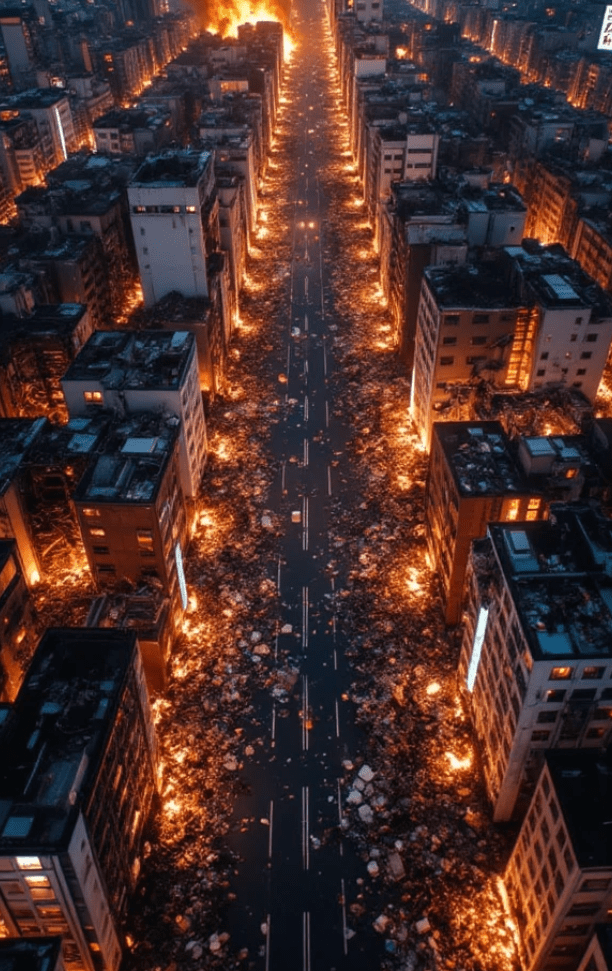
San Francisco, for all its charm and vibrance, has become a hotspot for unpredictable civil unrest. In a world that feels like it’s teetering on the edge of chaos, you can’t rely on luck or law enforcement alone to stay safe. When the city’s filled with the sound of smashing glass, sirens, and screaming protestors, your safety is your own responsibility.
I’ve spent decades preparing for situations just like this—urban collapse, riots, natural disasters, and breakdowns of civil order. My mission now is to pass on what I know, because survival isn’t about paranoia—it’s about readiness. Below, I’ll teach you eight critical self-defense skills, three DIY weapon hacks, and walk you through how to move, think, and react during a riot in San Francisco—or any urban environment under siege.
1. Situational Awareness: The Mindset of Survival

The first line of defense is always your mind. If you’re walking down Market Street with your earbuds in and your eyes on your phone, you’re prey—plain and simple. During a riot, keep your head on a swivel. Observe crowd movements, police positions, exits, and potential threats. Know your surroundings. Watch body language. Who’s escalating? Who’s panicking? This instinct can save your life. Avoid bottlenecks, dead ends, and never follow the crowd blindly.
2. De-escalation Tactics
You don’t always need to fight. Real skill is knowing when not to. De-escalation is the art of redirecting aggression. Lower your voice. Speak calmly. Keep your hands visible and palms out. Don’t challenge anyone directly. Phrases like “I’m just trying to get out of here,” or “I don’t want trouble,” disarm more people than fists ever will. This can buy you precious seconds to exit or disengage.
3. Urban Camouflage
Blend in. If you’re wearing high-vis gear, luxury brands, or tactical clothing during a riot, you become a target. Wear neutral colors—gray, black, navy. Avoid flashy logos. Think like a gray man. A bandana, a hood, and non-reflective sunglasses can protect your identity and shield you from tear gas. In a riot, anonymity is power.
4. Quick Strike Self-Defense (QSSD)
Sometimes, there’s no way to avoid a confrontation. Learn QSSD techniques—targeting the soft tissue: eyes, throat, groin. Use open-hand strikes or short, aggressive punches. You’re not trying to win a fight. You’re trying to create space and escape. One of my favorite tools is the palm-heel strike to the chin or nose. It’s fast, brutal, and can stun an attacker long enough for you to get away.
5. Escape and Evasion Skills
If things go south, don’t stick around to film it. Know your exits. Riot routes shift fast. Side alleys, fire escapes, rooftops, and even underground parking garages become survival pathways. Use Google Maps to pre-mark safe zones and alternate exits. Learn how to break restraints. Keep a mini escape kit on you: handcuff key, paracord, mini flashlight, and a utility blade hidden in your wallet or belt.
6. Weapon Retention
If you carry a defensive weapon—knife, baton, pepper spray—you’d better know how to keep it. Rioters may try to disarm you in a scuffle. Practice retention techniques: tight grip, weapon close to the body, non-dominant hand protecting your centerline. Use your environment to brace or shield while deploying your weapon. Don’t pull unless you’re ready to use it.
7. Improvised Weapons Training
Anything can be a weapon. A steel water bottle, a belt with a heavy buckle, a flashlight, even a rolled-up magazine. Know how to adapt. If you’re cornered, use a key between your fingers for strikes or your backpack as a shield. Train your mind to see tools in everyday objects. This isn’t about aggression—it’s about defense when your back is against the wall.
8. Ground Defense and Breakaway
If you’re knocked to the ground, the fight isn’t over—but you’re at a huge disadvantage. Learn to protect your head and vital organs. Shrimping and break-falls from Brazilian Jiu-Jitsu can save you from injury. A fast kick to the shin or knee from the ground can give you a second to get up. Never stop moving. Your goal is to get back on your feet—fast.
DIY Survival Weapon Skills

When traditional weapons aren’t available, it’s time to get creative. Here are three DIY weapon builds anyone can make with urban materials:
1. PVC Pipe Baton
Grab a piece of PVC pipe, about 18 to 24 inches long. Fill it with sand or small rocks. Cap both ends with duct tape. You’ve now got a solid impact weapon that can easily be carried in a backpack or gym bag. It’s legal-looking, but hits hard.
2. Slingbow Conversion
Take a basic slingshot and modify it with zip ties and paracord to shoot arrows. This won’t stop a riot, but it can protect you from aggressive threats at a distance in the wild or during prolonged civil unrest. Compact and quiet.
3. Tactical Spear from a Mop Handle
Break or saw off a broom or mop handle. Duct-tape a sharpened kitchen knife (or better yet, a survival blade) to the end. Reinforce the joint with paracord or a hose clamp if available. Instant spear—great for holding off threats in confined spaces.
How To Survive a Riot in San Francisco: Step-By-Step

- Avoidance is King – Stay informed. Use police scanners, Twitter, Citizen app, and local Reddit threads. If unrest is growing, stay away from protest zones—especially Civic Center, SoMa, and the Mission District.
- Have a Go-Bag Ready – A small EDC pack with first aid, water, flashlight, gloves, KN95 mask (tear gas protection), and power bank is a must. Lightweight shoes, neutral clothes, and cash are non-negotiables.
- Plan Your Exit Route – Know the side streets and where the riots are migrating. Don’t rely on public transport; buses and trains often shut down.
- Avoid Getting Boxed In – Don’t get caught between protestors and riot police. Both sides will pressure you. Stick to the periphery and keep moving.
- Don’t Film or Broadcast – Not only can this attract attention from hostile actors, but it also paints a target on your back. Be invisible, be mobile.
- Watch for Triggers – Fire, broken glass, fireworks, or gunshots signal escalation. When you see the energy shift, that’s your cue to leave immediately.
- Avoid Confrontation – Even if someone provokes you, walk away. The riot is not the time for ego or moral high ground. Your life matters more than pride.
- Meet-Up Plan – Have a trusted person you check in with. If you get separated or your phone dies, agree on a meetup location beforehand.
- Stay Calm Under Pressure – Fear clouds judgment. Breathe. Think. Then move. Your calm will be your compass when chaos surrounds you.
- Aftercare – Once safe, disinfect any wounds, rest, hydrate, and mentally decompress. PTSD is real—even if you “got out okay.”
Final Thoughts

You don’t need to be a martial arts expert or ex-military to survive a riot in San Francisco. But you do need to train, think ahead, and prepare like your life depends on it—because one day, it might.
Violence is never the goal. But survival is. And in today’s world, there’s no excuse not to be ready. Train your body. Sharpen your mind. Harden your spirit.


 TheDailyChristian