Jump or Die: Ocean Crash Survival for the Desperate and Prepared

You’re Crashing Into the Ocean – Here’s How Not to Die Like an Amateur

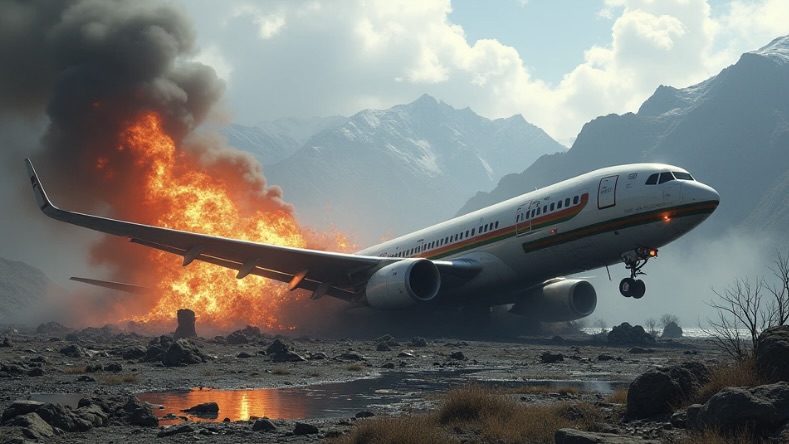
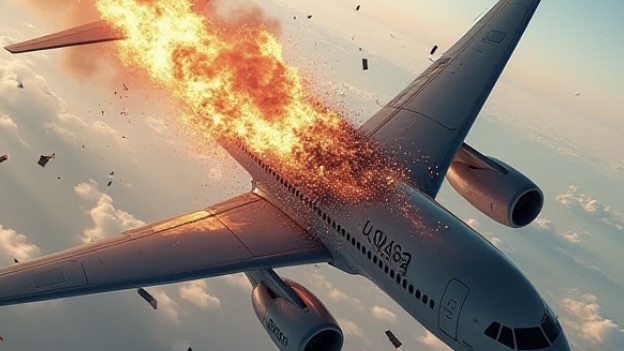
Listen up. You’re 30,000 feet above nowhere, strapped in a glorified soda can, sipping overpriced ginger ale, when BOOM — something goes wrong. Engines flame out. Cabin screams. The pilot starts praying louder than the passengers. That’s when you know: you’re going down. Into the cold, black, unforgiving ocean.

What you do next decides if you live or if your body bloats up and floats ashore for some tourist to find a week later.

This isn’t your average survival blog. This is the real deal. If you’re not ready to move like your life depends on it — because it absolutely does — then close this window and prepare to meet the fish. Otherwise, let’s dive in. Literally.


💥 10 Ocean-Crash Survival Skills Every Passenger Should Know

1. Situational Awareness Before You Even Take Off

Yeah, I know. You want to nap. But if you’re too lazy to count the rows between you and the exits, you deserve what’s coming. Every damn time you fly, you better know where the exits are, where the flotation devices are, and how to manually open the emergency doors.

2. Brace Position That Doesn’t Get You Killed

Forget what they show in the seatback card. In a real crash, you need to protect your head and brace your legs to avoid snapping your spine on impact. Feet flat, knees slightly apart, head down, arms wrapped over your head or seat in front of you. Practice this at home, not when the plane starts rattling.

3. Ditch the Seatbelt at the Right Time

Screenshot

Too early and you fly around like a piñata. Too late and you’re trapped. As soon as the initial impact hits and the plane stops skidding, unbuckle and MOVE. Do NOT freeze. Every second counts.

4. Egress Navigation Underwater

The lights are out. The cabin’s tilting. Water’s rushing in. If you can’t crawl blind toward an exit with your eyes shut, you’re dead. Practice escaping in pools, learn how to hold your breath under stress, and train to follow walls and seats.

5. Inflating Life Vests AFTER Exiting the Aircraft

You inflate inside, you’re a floaty balloon trapped in a sinking coffin. Keep that vest uninflated until you’re outside. If you forget this, you’ll be a buoyed corpse.

6. Identifying and Using Life Rafts

Not all planes have them. Know if yours does. Know where they are. Learn to deploy them and how to board even if you’re exhausted. Also — steal an emergency flashlight. It’ll help signal, and screw the rules. You’re in survival mode now.

7. Cold Water Survival & Hypothermia Prevention

The ocean isn’t your friend. Get out of the water fast. Conserve body heat. Huddle with others. Stay dry, stay moving, and don’t drink seawater unless you’re craving madness.

8. Floating Techniques If You’re Alone

If all you’ve got is a vest and darkness, learn to float without tiring. Back float. Dead man’s float. Anything that keeps your head above water while you catch your breath or wait for rescue.

9. Using the Environment to Signal

Pull mirrors, shiny surfaces, fire-starting tools, even fabric. Signal with smoke, flashlights, or colored clothing. Splash. Yell. Make noise. Draw attention. But save energy when it’s futile.

10. Mental Fortitude Under Terror

You will want to scream, freeze, panic. That’s death. Control your fear. Use adrenaline. Breathe in. Focus. Decide. Act. Don’t wait for orders — think and move like your life depends on you.


🧰 3 DIY Survival Hacks for Escaping a Moving Airplane

Screenshot

1. Improvised Window Breaker

Most plane windows can’t be opened. But sometimes cabin pressure blows out or breaks panels. Keep a solid pen, metal flashlight, or steel water bottle in your carry-on. These can help bust plastic panels or thin interior doors in emergencies.

2. Seat Cushion Raft Hack

Yes, that foam cushion can float. But if you’re smart, you’ll jam two together with your belt or jacket to increase buoyancy. Instant DIY mini-raft. Not comfortable. Not elegant. But it keeps you from sinking.

3. Plastic Bag Floatation Assist

You packed your gear in ziplocks, right? No? Dumb. But if you did — trap air in large bags, seal them, and tie them to your body or under your arms. Not Coast Guard-approved, but better than sinking like a brick.


🛑 Final Word: When That Plane Drops, You’ve Got Seconds

Let me be blunt. Most people freeze. They wait for instructions. They pray. They scream. They forget every drill they saw in that cartoon safety video and then wonder why the hell they’re drowning.

You’re different. Or you better be.

Here’s your checklist:

  • Know your exits.
  • Brace like you mean it.
  • Unbuckle fast.
  • Don’t inflate inside.
  • Get the hell out.
  • Climb onto anything that floats.
  • Signal hard.
  • Conserve warmth.
  • Don’t drink the ocean.
  • Fight the fear. Move.

If you think you’re going to wing it when the fuselage starts groaning and smoke pours in — you’re already dead. But if you drill these into your skull and train like your life depends on it (because it does), you’ll punch the reaper in the face and live to tell the story.

Remember: no one’s coming to save you in time. Save your damn self.

DIY Off-Grid Shelter – Cabins, earthbag homes, shipping containers, and underground bunkers.

Let me get one thing straight before we dive into this – if you’re waiting around for the government to save your sorry backside when the grid goes down, you’re already dead. This isn’t a game. It’s not some Instagram “van life” fantasy or TikTok wilderness cosplay. This is real life. The lights will go out. Society will collapse. And when it does, the people with the soft hands and TikTok dance moves are going to get chewed up and spit out by the cold, merciless truth. The rest of us – the ones who are ready – will already be in our shelters, warm, fed, and armed to the damn teeth.

If you’re not thinking about your shelter right now, you’re already ten steps behind. You need something solid. Something that won’t blow over in a storm, catch fire in a riot, or crumble when the earth shakes. This isn’t a damn Airbnb; this is your lifeline. So let’s break down the options for DIY off-grid shelters – cabins, earthbag homes, shipping containers, and underground bunkers – and get serious about surviving.


1. Cabins – The Classic

You want rustic? Fine. But this ain’t your weekend getaway log cabin. We’re talking fortified, self-sufficient woodland fortresses. Cabins can be built with nothing but hand tools, time, and willpower – all of which you should have if you’re even pretending to be a survivalist.

Pros:

  • Readily available materials (trees, logs, stone)
  • Blends with the forest (if you have half a brain to camouflage it)
  • Insulates well in cold climates

Cons:

  • Vulnerable to fire
  • Takes time to build right
  • Needs proper drainage to avoid rot

Use double-thick logs, build with a solid stone chimney for heat, and never leave flammable materials outside your perimeter. Your life depends on it.


2. Earthbag Homes – Dirt Cheap Fortresses

You want bullet resistance? Earthbags laugh at your puny ammo. Stack polypropylene bags full of dirt and you’ve got a wall that can stop small arms fire, insulate like a cave, and withstand the wrath of Mother Nature.

Pros:

  • Dirt is everywhere (unless you live on a glacier)
  • Fireproof and earthquake resistant
  • Naturally insulated

Cons:

  • Labor-intensive
  • Needs a good foundation and roof
  • Can be ugly if you don’t plaster right (boo-hoo)

Tamp those bags tight, lay barbed wire between each row, and keep your dome or arch roof reinforced with rebar and good sense. You’re not building a garden wall – you’re building a fortress.


3. Shipping Containers – Steel Boxes of Salvation

Urban survivalists, pay attention. These things are pre-fab bunkers just waiting to be buried or armored up. But don’t be a moron and just bury it without reinforcement – it’ll crush like a beer can under dirt weight.

Pros:

  • Cheap and portable
  • Already weather-sealed
  • Stackable for multi-story hideouts

Cons:

  • Terrible insulation (fix it)
  • Condensation issues (ventilation, idiot)
  • Needs serious reinforcement if buried

Weld support beams inside, line the interior with spray foam insulation or rock wool, and make damn sure you have proper ventilation – carbon monoxide isn’t the way to go out.


4. Underground Bunkers – Apocalypse-Proof

Now we’re talking serious survival. Underground bunkers are your last line of defense – nuclear-proof, invisible to drones, and zombie-proof. You don’t build a bunker because you’re paranoid. You build a bunker because you’re not an idiot.

Pros:

  • Stealth shelter – out of sight, out of mind
  • Thermally stable year-round
  • Offers the highest level of protection

Cons:

  • Expensive and complex
  • Ventilation is critical
  • Requires serious planning and drainage

Build in a slope if possible. Water is your enemy – don’t invite it into your death-proof tomb. Install air filters, backup generators, and triple-thick steel doors. Don’t forget to conceal the entrance with natural camouflage and decoy structures. Hell, make a trapdoor under an outhouse if you’ve got to.


15 Survival Skills You Better Know or You’re Screwed:

  1. Fire starting – Without a Bic lighter. Bow drill, ferro rod, flint and steel. Learn all three.
  2. Water purification – Boil, filter, solar stills. Giardia isn’t fun, trust me.
  3. Shelter construction – Can you build a lean-to in an hour? No? Practice.
  4. Hunting and trapping – Know how to build snares, deadfalls, and use a damn slingshot.
  5. Butchering and preservation – Salt, smoke, dry. You can’t live on cans forever.
  6. Foraging – Learn the plants that won’t kill you. You can’t Google it when you’re starving.
  7. Basic medical – Stop bleeding, treat infections, splint fractures.
  8. Navigation – Compass, sun, stars. GPS is dead weight without satellites.
  9. Self-defense – Knife, firearm, and unarmed combat. Be lethal.
  10. Blacksmithing – Forge tools, repair gear, and make your own damn nails.
  11. Basic mechanics – Fix an engine, mend a generator.
  12. Radio comms – HAM radio, Morse code. Silence isn’t golden when you need allies.
  13. Camouflage and stealth – Hide your shelter, hide your movements.
  14. Gardening – You’ll need calories and canned corn won’t last.
  15. Bartering and negotiation – Civilization might collapse, but trade won’t.

If you don’t have these down to muscle memory, you’re food for someone who does.


3 DIY Survival Hacks to Stay Ahead:

1. Solar-Heated Shower with Trash Bags:
Fill black trash bags with water and hang them in direct sun. After a few hours, enjoy a hot shower even when off-grid. Bonus points if you rig a gravity-fed PVC pipe system with an on/off spigot.

2. Hidden Cache in PVC Pipes:
Take a large diameter PVC pipe, seal both ends with waterproof caps, and bury it a few hundred yards from your main shelter. Store food, ammo, maps, and a burner weapon. In a raid, that stash could save your life.

3. Battery Bank with Car Alternators:
Build a DIY power setup by rigging old car alternators to a stationary bike or windmill. Charge 12V deep-cycle batteries and power essentials like radios, lights, and low-voltage devices. If you’re not generating your own electricity, you’re dependent. Dependency = death.


Listen. This isn’t a pep talk. This is a warning. When things fall apart – and they will – the ones who survive won’t be the ones who cry on social media. It’ll be the ones who got off their asses, learned skills, and built their own way out. Cabins, earthbag homes, shipping containers, bunkers – these aren’t just structures. They’re survival statements.

So, get building. Get practicing. Get angry – because the storm is coming. And when it does, no one’s going to care how many followers you had. They’ll care how long you can stay warm, dry, and breathing.

Now get to work. Or get buried. Your choice.

The Forgotten Hazard When Bugging Out

When most folks talk about bugging out, they focus on the obvious threats: looters, martial law, roving gangs, civil unrest, and the ever-looming collapse of modern infrastructure. You’ve heard it all before. Pack your bug-out bag. Choose your route. Scout a fallback location. Stock up on MREs, water filters, knives, ammo, comms gear—the whole nine yards.

And yet, while the prepping world drowns itself in gear reviews and tactical hypotheticals, one crucial hazard gets completely and unforgivably overlooked.

I’m talking about complacency’s ugly cousin: Group Fragility. That’s right. The people you trust, the ones you’re planning to survive alongside—your family, your so-called “mutual assistance group,” your bros from the shooting range—they might be the very thing that gets you killed.

Let me say it plain: a bug-out plan is only as strong as its weakest member.

Now before you roll your eyes and tell yourself, “I’ve trained with my team,” or “My wife’s tough,” or “We’ll be fine because we’ve practiced,” let me stop you right there. Practice doesn’t equal performance under real pressure. And emotional breakdowns, moral disagreements, and physical weaknesses don’t show themselves when you’re camping for fun over a long weekend.

They show themselves when the stakes are real. When someone’s bleeding. When you’re out of clean water and three days into a storm. When someone you love starts panicking and you realize: “This is what’s going to get us killed.”

You Think You’re Ready? Think Again.

The fantasy of bugging out is seductive. The romantic image of disappearing into the woods, rifle slung over your shoulder, hunting deer and living off the land—it’s so appealing it blinds people. But reality has no use for fantasy. The truth is most people can’t even handle a power outage without losing their minds, let alone a full-blown collapse that drives you from your home with nothing but your bug-out gear and a prayer.

Sure, you can pack iodine tablets and solar chargers. But you can’t pack mental stability. You can’t pack maturity. And you sure as hell can’t pack grit.

I’ve seen it happen. Big, strong men break down crying when they realize they forgot to bring spare socks and now their feet are soaked, blistered, and infected. Gung-ho preppers who bought $3,000 rifles but didn’t bring tampons for their wives. Families that fall apart arguing over where to camp because no one ever decided who the leader was. The gear didn’t fail. The people did.

The Real Enemy Is Human Weakness

So what is the “forgotten hazard” I’m so mad about? It’s the human element. The people in your party are walking question marks under pressure. They are liabilities—until they’ve been tested under fire, for real, and have proven otherwise.

Bugging out isn’t about gear. It’s about mindset. It’s about psychological resilience, leadership, discipline, and trust forged through shared hardship. Without that, your so-called team is just a group of panic-prone strangers carrying matching backpacks.

Your spouse, your kids, your best friend—if they’ve never suffered, never hiked ten miles with a rucksack while sick, never made a decision under extreme duress—they are not ready. And if you haven’t prepared them for that moment, then you are not ready either.

Emotional Collapse Is Contagious

Ever seen what happens when someone panics in a group setting? It spreads. Fast. Like a virus. One person screams, and suddenly three people are hyperventilating. One person freezes in the middle of a river crossing, and now everyone’s stuck in place, vulnerable, visible, exposed.

Fear is louder than logic. And once it takes root, it doesn’t matter how much food you stockpiled or how fancy your GPS watch is. Fear will kill you.

What happens when the teenager in your group refuses to keep walking and bursts into tears from exhaustion? What happens when your partner gets a stomach bug and can’t walk for two days? What happens when two people start screaming at each other over which direction to go?

Let me tell you what happens. You stop moving. You waste precious daylight. You compromise your location. You become prey.

You Better Start Training People Now

If you’re reading this and feeling uncomfortable, good. That means you still have time. Time to fix this. Time to take off the blinders and face the uncomfortable truth: survival is about people, not just products.

Start drilling your team—your real team, not your fantasy squad. Take your kids hiking in the rain. Make your partner build a fire without matches. Go camping without any electronics and leave the granola bars at home. Eat beans, sleep on cold ground, hike until your muscles scream.

And do it all together.

Why? Because the only way to root out weakness is to force it to the surface. And once you’ve seen it—once your daughter breaks down crying, or your best friend lies to your face about losing the compass—then you can start building real trust. Not the feel-good, “we’re family” trust. I’m talking about battlefield trust. Hard-earned, honest, proven trust.

That is the only kind that matters when society collapses.

Leadership Isn’t Optional

Another thing most bug-out plans lack? Clear hierarchy. When everyone thinks they’re in charge, no one is. And when bullets are flying or you’re sprinting from a wildfire, hesitation will kill you.

Designate a leader now. Establish a chain of command. Decide who makes the call when things go sideways—and make sure everyone agrees ahead of time.

Don’t fall into the trap of “we’ll decide when it happens.” That’s a fantasy. In real life, there will be no time. You’ll need to act instantly, or you’ll all be corpses under a tarp.

Don’t Forget Morality Clashes

This part stings the most. What if the person you’ve planned to bug out with suddenly disagrees with how far you’re willing to go to survive?

Will you loot if necessary? Will you kill to protect supplies? Will you lie to strangers, leave people behind, steal from the dead?

You might think you know what you’d do. You might think you know what your loved ones would do. But let me tell you from experience: people’s morals mutate fast when their stomach is empty and their hands are shaking from fear.

Talk about it now. Set boundaries. Make plans. Or get ready for a knife in the back when things get dark enough.

Final Word: Your Real Bug-Out Plan Is Psychological

You can pack all the gear in the world, memorize every knot, and learn every edible plant. But if your group breaks down because of fear, conflict, or weakness, none of that will save you.

The forgotten hazard isn’t the EMP. It’s not the government. It’s not even the weather.

It’s the people standing next to you.

So fix that now. Train them. Test them. Talk to them.

Or die with them.

Your choice.

Losers Can’t Survive Without a Bug Out Bag

Why Wilderness Survival Skills Are Not Enough

They say if you know how to build a fire, catch a fish, and make shelter from what nature gives you, you’re good. You’ll survive.

But that’s only part of the truth.

After 14 years living part-time off the grid — and the last three almost full-time — I’ve learned something they don’t often tell you in survival books or YouTube channels: wilderness survival skills are not enough.

CLICK HERE TO LEARN HOW TO NEVER STARVE WHEN DOOMSDAY HITS!

Don’t get me wrong. I’ve got the basics down. I can start a fire in the rain with soaked tinder and a ferro rod. I can snare rabbits, track elk, and purify water five different ways. I can read the wind like most men read a screen. And I’ve watched enough people glorify those skills like they’re some sort of mystical badge of honor.

But here’s the truth: Skills will keep you alive — they won’t keep you human.

When the sun drops behind the trees and the cold sinks into your bones, when you haven’t seen another face in ten days, when your food runs out and you’re tired of eating boiled bark tea and smoked squirrel — that’s when you learn survival is mental, emotional, and spiritual just as much as it is physical.


1. Mental Endurance Beats Physical Skill

There’s a moment in every extended survival situation when the novelty wears off. It’s usually around day 6 or 7. That’s when your mind starts playing tricks on you — when isolation, discomfort, and hunger begin whispering lies.

“You can’t do this.”
“Why are you even out here?”
“What if no one’s coming?”

You can have all the gear and know-how in the world, but if you don’t have the mental endurance to stay calm, make decisions under pressure, and silence the noise in your head — you’re done. I’ve seen guys with military training lose it out here, not because they didn’t know what to do, but because they couldn’t control their thoughts.

Discipline in the mind matters just as much as muscle in the arm.


2. Community > Competence (Yes, Really)

Lone wolf survival sounds romantic. But real survival — the long haul — isn’t meant to be done alone. Out here, I’ve learned to appreciate the power of community. A partner to keep watch while you sleep. Someone to spot danger you missed. A friend to say, “You’re not crazy, this is just hard.”

Even if you’re physically alone, the people you’ve invested in beforehand — friends, family, the tribe you trust — they’re your backup plan. And your reason to keep going.

Outlasting a storm is one thing. Outlasting loneliness is another.


3. Faith is the Fire That Doesn’t Go Out

This one’s personal, and not everyone will agree. But for me, faith in God is the difference between surviving and thriving.

There have been moments when I was one wrong step away from a broken leg and a slow death. Moments when the wind howled so loud I thought it might tear my cabin apart. Moments when the silence of the forest pressed in so heavy, it felt like drowning.

And in those moments, I talked to God. Not like some ritual. Not out of fear. But because I know I didn’t make this world — and I sure can’t hold it together by myself.

“My flesh and my heart may fail, but God is the strength of my heart and my portion forever.”
— Psalm 73:26

When you’re stripped of comfort, the only thing left is character. And character is either shaped by truth — or shattered by lies. My anchor has always been Scripture. Not as a crutch, but as a compass.


4. Resilience Means Nothing Without Purpose

You can suffer through almost anything if you know why you’re doing it. That’s true in war, in survival, in sickness, in life.

Out here, I’ve asked myself: Why am I doing this? What am I preparing for? What am I protecting?

If your only goal is to not die, then your world gets very small, very fast. But if your goal is to live well, protect others, steward the land, honor your values — then every hardship becomes training, not torment.

Purpose gives suffering meaning. And meaning gives suffering power.


5. Preparedness Without Wisdom Is Just Hoarding

You can stockpile food, ammo, and gadgets until your shed bursts. But if you don’t have the wisdom to use it wisely, share it well, or protect it humbly, then all you’ve done is delay the collapse — not survive it.

I’ve seen preppers treat people like threats, not neighbors. I’ve seen men stash enough rice for 10 years but couldn’t grow a tomato or mend a sock. That’s not resilience — that’s fear in disguise.

Real preparedness is practical, relational, and spiritual. It’s not just about building walls. It’s about knowing what’s worth protecting inside them.


Final Thoughts

So, no — wilderness survival skills are not enough. They’re a tool, not the toolbox.

If you want to survive — truly survive — in a world gone sideways, then you need:

  • A sound mind
  • A steady soul
  • A community you trust
  • A faith that anchors you
  • And a purpose that outlives you

I’ll keep training. I’ll keep sharpening knives and tuning traps and learning how to tan hides and build things with my hands. But I’ll also keep reading Scripture by lamplight, writing letters to the people I love, praying when the coyotes cry, and reminding myself that this life — even the hard parts — is a gift.

“The Lord is my shepherd; I shall not want… Even though I walk through the valley of the shadow of death, I will fear no evil, for You are with me.”
— Psalm 23:1,4

Survival is more than staying alive. It’s living like it matters.

DAY 10 AFTER THE SHTF — SURVIVAL ISN’T JUST ABOUT FINDING FOOD

It’s Day 10 since everything went sideways. The grid’s down. The streets are lawless. You’re living off what’s left of your preps and what you can scavenge in the ruins. Your family comes first—your kids eat before you do—because that’s what a real protector does.

Your gut’s been gnawing at itself for days now, that deep hunger turning into something primal. You’ve grown used to the emptiness. It becomes part of you. A constant reminder: you’re still alive.


Watch What The Off Grid Survivalist of the Year Has to Say About Survival Prepper!

Then it happens. You strike gold—a hidden stash of food. Maybe it was buried, maybe left behind in a rush, maybe a forgotten emergency cache. Either way, it’s yours now.

You dig in like a starving wolf. Your family devours every bite. For a moment, you taste victory.

And then—bam. Nausea. Dizziness. Weakness. Your body betrays you. What you thought was salvation turns into a full-blown emergency.

You’ve just met the silent killer called refeeding syndrome.


WHAT IS REFEEDING SYNDROME?

When you go without food for an extended time—say 10 days or more—your body hits the brakes. It slows your metabolism, conserves every last ounce of energy. You’re running on fumes, and your electrolytes (magnesium, potassium, phosphorus) get drained.

Then, you eat like it’s Thanksgiving. Your system gets shocked. That sudden spike in nutrients flips the metabolic switch, demanding electrolytes you no longer have. The result? Cardiac failure, seizures, coma—or worse.


SURVIVAL PREPPER TIPS: AVOIDING THE REFEEDING TRAP

  1. Reintroduce food SLOWLY after extended starvation.
    Start with fluids or broths. Give your system time to adjust.
  2. Focus on electrolyte-rich foods first.
    Bananas, bone broth, leafy greens, nuts—these can restock your depleted reserves.
  3. Avoid carbs in the first refeeding stage.
    Carbs spike insulin and demand phosphorus. Go with fats and proteins first.
  4. Keep oral rehydration salts (ORS) in your bug-out bag.
    They’re lightweight and can save your life during refeeding.
  5. Know the symptoms: weakness, confusion, shortness of breath.
    Don’t mistake these signs for just being “tired.” It could be fatal.
  6. Keep a stash of electrolyte tablets or powders.
    A little prep now can prevent a deadly crash later.
  7. Always rotate your food preps to avoid long fasts.
    Prevent running out altogether by tracking expiry dates and cycling through supplies.
  8. Train your body to adapt with occasional fasts before disaster strikes.
    This builds metabolic resilience and makes you more adaptable.
  9. Teach your family about phased eating.
    Survival isn’t just about feeding them—it’s about feeding them smart.
  10. Don’t let relief override discipline.
    Finding food isn’t the finish line—it’s just another checkpoint. Stay sharp.

Remember: In survival, it’s not always the obvious threats that take you down. Sometimes it’s the first meal after the storm that does it.

Stay vigilant. Stay smart. And for the love of all that’s sacred, don’t let your guard down just because you’ve found food. Survival is a marathon, not a sprint.

Prep hard. Stay ready. Live to tell the tale.