How To Stay Safe and Not Die During a Riot in Arizona

Let me level with you—if you’re living in or traveling through Arizona and the streets erupt into chaos, your survival depends on how well-prepared you are and what you know how to do under stress. Riots aren’t just crowds and chants. They can turn violent, fast. It only takes one spark—one broken window, one thrown rock—for things to spiral.

I’ve trained in multiple survival disciplines, from urban escape tactics to hand-to-hand combat, and I’ve seen what happens when people freeze. If you’re reading this, you already know instinct and information can mean the difference between getting home safe and getting carried away on a stretcher—or worse.

Understand the Threat

In Arizona, you have to factor in more than just the human element. Heat, dehydration, and distance between safe zones can complicate everything. If a riot breaks out in Phoenix, Tucson, or even Flagstaff, you’re looking at blocked roads, limited law enforcement, and a population on edge. Cell service might crash. Water may be scarce. Stores will close. That’s your setting. Now let’s get to what matters—staying alive.


8 Self-Defense Skills That Could Save Your Life

1. Situational Awareness

This is your first weapon. Know your exits. Watch people’s hands, not their mouths. Scan for objects being thrown, vehicles approaching, or mobs changing direction. You want to read a situation five steps ahead before it turns hostile.

2. Verbal De-escalation

Before fists fly, words can buy you time or a safe retreat. Learn how to lower your tone, control your breathing, and not appear aggressive or confrontational. Most people just want to vent, not fight—unless you give them a reason.

3. Palm Heel Strike

Forget Hollywood punches. A palm heel strike to the chin or nose can disorient an attacker instantly. Aim upward, push through the target, and get moving. You want space, not a brawl.

4. Escape from Grabs

If someone grabs your wrist, don’t yank. Rotate your arm toward the attacker’s thumb (weakest part of the grip) and pull free. Then move—don’t try to “win” a street fight.

5. Improvised Weapon Use

A pen, flashlight, or belt can become a defensive tool. Know how to use everyday items for leverage, distraction, or deterrence. A heavy-duty flashlight to the collarbone? That drops anyone.

6. Ground Defense

If you’re taken to the ground, stay calm. Use your legs to create distance—what we call “kicking range.” Protect your head and get to your feet fast. Never let someone pin you during a riot. You’re vulnerable to trampling, looting, and worse.

7. Multiple Attacker Strategy

Don’t try to fight off a group. Prioritize movement. Use obstacles like cars, fences, or trash cans to create bottlenecks. Focus on evasion, not dominance.

8. Weapon Retention (and Use)

If you’re carrying a legal concealed weapon—know how to keep it. If it’s exposed, it becomes a target. Know your state laws, and if you’re forced to use it, make sure it’s a last resort. Understand where to aim, and always assume witnesses are filming.


3 DIY Survival Weapons You Can Build Fast

1. PVC Pipe Baton

What you need:

  • 1.25-inch PVC pipe (2 feet long)
  • Sand or gravel (for weight)
  • Duct tape or paracord (for grip)

Fill the pipe with sand, cap both ends, and wrap the handle with grip tape. This can’t be legally classified as a weapon in most areas—but it’s solid enough to break glass or defend against an attacker.

2. Sling Shot with Surgical Tubing

What you need:

  • Y-shaped tree branch or pre-cut handle
  • Surgical tubing (from medical or hardware store)
  • Leather patch (cut from old glove)

This gives you range defense. You can launch rocks, steel bearings, or marbles. It’s silent, and if you know how to aim, it can stop someone at 20 feet—hard.

3. Tactical Spear (Hiking Staff Mod)

What you need:

  • Hardwood staff or aluminum hiking pole
  • Duct tape
  • Fixed blade knife (full tang preferred)

Secure the knife at one end with duct tape and paracord. You now have a spear for distance defense, animal deterrent, or window breaking. It doubles as a walking stick.


Urban Survival Mindset
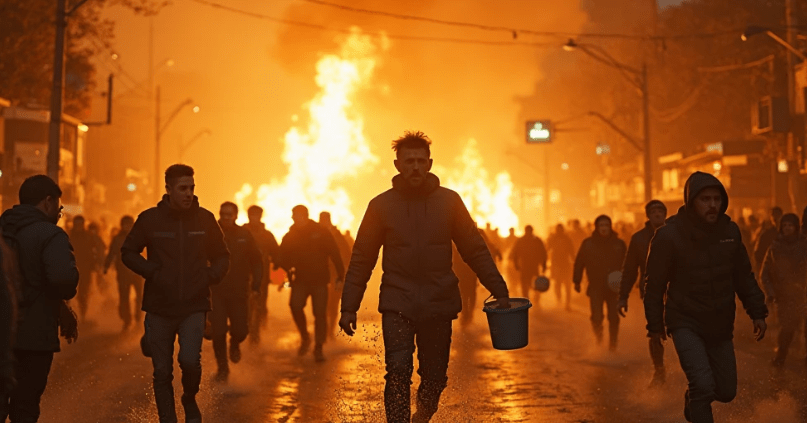
Here’s the thing people forget: a riot isn’t a movie. It’s loud, confusing, and people lose their minds when they feel anonymous. Your best defense is to avoid the fight altogether. But if you can’t, move with confidence. Confidence is disarming.

Dress down—no flashy gear or brands. Wear neutral colors. Tactical gear attracts attention in crowds. Go gray man. That means blending in while being fully prepared to respond.

Carry a get-home bag. Keep:

  • Water (1 liter minimum)
  • Multi-tool
  • Flashlight
  • Spare cash
  • Portable charger
  • Copies of ID and emergency numbers

Always let someone know where you’re going. Plan routes with backup exits. Use alleys, fire escapes, and rooftops if necessary.


Arizona-Specific Tips

Heat is a weapon. You need hydration, even in the winter. Don’t underestimate how fast you can dehydrate during physical exertion in 90+ degree weather.

Terrain awareness is key. Arizona has wide-open roads and large urban sprawl. If riots shut down interstates or key highways (I-10, I-17), you’re walking a long way.

Law enforcement response will vary. Arizona cities have tactical response teams, but they may not prioritize you. In chaos, you’re on your own.

Watch for flashpoints. Areas near government buildings, universities, or police departments are usually the first to blow. Avoid them at all costs.


Final Advice

You don’t need to be a black belt. You don’t need a bug-out bunker. You just need to know what to do, and have the guts to do it when the time comes.

Keep your eyes open. Move smart. Fight only when you have to—and if you fight, finish it fast and get out.

Survival isn’t about macho. It’s about staying quiet, staying sharp, and staying alive.


Survival Behind the Wheel: Conquering Arizona’s Deadliest Roads in a Disaster

I’ve driven everything from a beat-up Tacoma in the Sonoran Desert to an armored Defender through washed-out jungle roads in Central America. Let me tell you, nothing quite prepares you for the unforgiving terrain of Arizona during a natural disaster. Between flash floods, wildfires, dust storms, and heat waves, the roads here turn from useful ribbons of asphalt into potential deathtraps. If you’re caught off-guard, you could find yourself stranded without help for miles.

I’ve made it my mission to study and conquer these threats. Whether you’re trying to get your family out of a wildfire zone or bugging out during a power grid collapse, mastering survival driving is your ticket to staying alive.

Arizona’s Worst Roads in a Disaster

First, let’s talk about the roads you need to be wary of. These stretches can turn catastrophic fast.

  1. I-17 Between Phoenix and Flagstaff – Twisting elevation changes, steep grades, and choke-points make this corridor a nightmare in wildfire evacuations or winter storms.
  2. State Route 88 (Apache Trail) – This scenic byway turns into a crumbling dirt trap with sharp switchbacks. One rainstorm and it becomes impassable.
  3. US-93 Between Wickenburg and Hoover Dam – A hotspot for accidents even in good conditions. In a disaster? Expect total gridlock or worse.
  4. I-10 East of Tucson – Known for dust storms that hit without warning, cutting visibility to zero.
  5. State Route 264 on the Hopi Reservation – Beautiful, but remote. In a grid-down scenario, help could be days away.
  6. US-191 in the White Mountains – Twists, turns, and limited cell service make it dicey in wildfire conditions.

Now that we’ve covered where not to be, let’s talk about how to get out if you are there.


15 Survival Driving Skills That Can Save Your Life

  1. Off-Roading Basics – Learn to read terrain and navigate soft sand, rocks, and washes. A 4WD vehicle won’t help if you don’t know how to use it.
  2. Water Crossing Techniques – Know how to gauge water depth and current before crossing washes or flooded roads. Cross at a 90-degree angle and avoid water over 6 inches deep.
  3. Escape Route Planning – Always have three exits in mind, even if you’re on a freeway. Use topo maps—not just GPS.
  4. Situational Awareness – Scan 360 degrees every few seconds. What’s the wind doing? Where’s the fire line? Any stalled vehicles ahead?
  5. Driving Without GPS – Learn to use a compass and paper map. Solar flares or cyberattacks could render GPS useless.
  6. Driving in Dust Storms – Don’t slam on the brakes. Pull off as far as you can, kill your lights, and wait it out. Visibility can drop to inches.
  7. Fuel Discipline – Top off your tank when you hit half. Never let it drop below a quarter in a crisis zone.
  8. Aggressive Maneuvering – Practice J-turns and quick evasive lane changes on dirt roads—especially if escape requires avoiding crowds or fallen debris.
  9. Vehicle Hardening – Protect your radiator with mesh, keep a second spare tire, and carry extra fluids. Heat kills engines.
  10. Night Navigation – Learn to drive in blackout mode using night vision or low beams taped down. Great for evading attention.
  11. Driving Through Fire Zones – Close all vents, keep windows up, drive with headlights on even during the day. Avoid rubberized road shoulders—they can ignite.
  12. Manual Transmission Recovery – Know how to clutch-start a vehicle with a dead battery. Push-starting can save your life in a grid-down escape.
  13. Downhill Braking Techniques – Use engine braking instead of relying solely on your brakes. Overheated brakes are common on I-17’s steep descents.
  14. Vehicle Recovery – Carry a tow strap, traction boards, and a winch if possible. Getting stuck in Arizona’s backcountry in 115°F is a death sentence.
  15. Emergency Signaling – In case you do get stuck, use mirrors, flares, and even SOS patterns with headlights or rocks to attract attention.

3 DIY Survival Driving Hacks When You Run Out of Gas

If you’re out of fuel in the middle of nowhere, you’re not out of options—yet.

1. Alcohol-Based Fuel Hack

If you’re carrying a bottle of high-proof alcohol (e.g., Everclear), it can work as an emergency fuel in small quantities—especially in older carbureted engines. You won’t get far, and performance will drop, but it might get you a few critical miles. Mix no more than 10–20% alcohol into the tank to avoid engine damage.

2. Solar Still for Water, Not Fuel

While you’re stuck, staying hydrated is top priority. Build a solar still with a plastic tarp, a container, and a few rocks. This won’t get you moving, but it’ll keep you alive long enough to wait for help or hike out.

3. Siphoning Fuel

Carry a length of food-grade tubing. Many stranded cars in a disaster still have fuel. Newer models have anti-siphon tech, but you can still access the fuel tank from underneath with basic tools. Be respectful—do it only in life-or-death scenarios.


Final Thoughts: Drive Like Your Life Depends on It (Because It Does)

You can have all the gear in the world, but if you don’t have the mindset, none of it matters. Driving in a disaster isn’t about speed. It’s about control, awareness, and adaptability. I’ve seen people die on perfectly paved roads because they panicked or didn’t understand how their vehicle worked. I’ve also seen a 20-year-old Subaru Outback make it through floodwaters because the driver kept his cool and stuck to the high ground.

Every year, more people move to Arizona without knowing the risks. If you live near Flagstaff, Sedona, Tucson, or even the outer reaches of Phoenix, you need to prepare. Nature doesn’t give warnings that make sense. One moment you’re fine, the next you’re boxed in by wildfire or stuck in a dry riverbed that suddenly becomes a torrent.

So here’s your assignment: take a weekend. Find a safe trail near you. Load your vehicle like it’s go time. Practice maneuvering. Simulate a dead GPS. Drive with purpose. Then review what went wrong.

Because someday it might not be a drill.

And when that day comes, you’ll be glad you learned to drive like a survivor.