
Core Survival Pillars: The Complete Preparedness Blueprint for Modern Emergencies

Brooke Homestead’s Core Survival Pillars: The Essential Preparedness Guide for When Things Go Wrong

Brooke Homestead often tells her audience that preparedness isn’t about fear — it’s about responsibility.

Modern life is incredibly convenient, but it is also fragile. Supply chains stretch across the globe, power grids connect millions of homes, and digital systems control everything from banking to communication. When those systems fail — even temporarily — the consequences can arrive quickly.

As Brooke often says:

“Preparedness isn’t about expecting the worst every day. It’s about building the kind of life where your family is safe even when things go wrong.”

Through years of sharing preparedness knowledge, Brooke has broken survival planning down into core pillars — essential categories every household should address before worrying about advanced gear or extreme scenarios.

These pillars cover basic survival needs, essential gear, practical skills, and realistic emergency planning.

Below is Brooke Homestead’s framework for core survival preparedness.


1. Core Survival Pillars (The Essentials)

Every preparedness plan begins with the most fundamental human needs.

Without these basics, even the most advanced survival gear becomes useless.

Water

Water is the single most important survival resource. Humans can survive weeks without food but only a few days without water.

Brooke recommends storing at least one gallon of water per person per day as a baseline. This includes both drinking and minimal hygiene needs.

For longer emergencies, households should have multiple water solutions, including:

  • Stored water containers or barrels
  • Water purification tablets
  • Portable filters such as Sawyer-style filters or straw filters
  • Knowledge of nearby water sources like rivers, lakes, or wells

Water purification is critical because untreated water can contain bacteria, parasites, and other contaminants.

Simple methods like boiling, filtering, or chemical treatment can make many water sources safe to drink.

Brooke emphasizes redundancy.

“Never rely on just one water source. Storage, filtration, and purification together create real security.”


Food Storage

Food security is another core pillar of preparedness.

Most households rely on grocery stores that carry only a few days’ worth of inventory. When supply chains break down — whether from storms, strikes, or panic buying — shelves can empty quickly.

Brooke recommends building a 3-month to 1-year food supply gradually over time.

A well-balanced emergency pantry often includes:

  • Rice
  • Beans
  • Lentils
  • Pasta
  • Oats
  • Canned vegetables
  • Canned meats
  • Shelf-stable soups

Many preppers also store freeze-dried meals, which can last 20–30 years when properly sealed.

Beyond stockpiling food, Brooke encourages learning food preservation techniques, including:

  • Canning
  • Dehydrating
  • Fermenting
  • Vacuum sealing

These skills allow families to extend food supplies and reduce dependence on external systems.


First Aid & Hygiene

Medical care becomes much harder to access during major disasters. Hospitals may be overwhelmed, transportation may be limited, and pharmacies could run out of essential medications.

For this reason, Brooke encourages building comprehensive medical kits that go beyond basic bandages.

Prepared households often include:

  • Trauma bandages
  • Gauze and compression wraps
  • Antiseptics
  • Pain relievers
  • Allergy medications
  • Tourniquets
  • Medical gloves
  • Thermometers

Prescription medications are also important. Many preparedness experts recommend keeping extra medication supplies whenever legally possible.

Hygiene is equally critical.

When sanitation systems break down, disease can spread rapidly. Emergency hygiene supplies may include:

  • Portable toilet bags
  • Soap and disinfectant
  • Hand sanitizer
  • Wet wipes
  • Waterless hygiene products

Cleanliness can prevent many illnesses that become dangerous during emergencies.


Shelter & Warmth
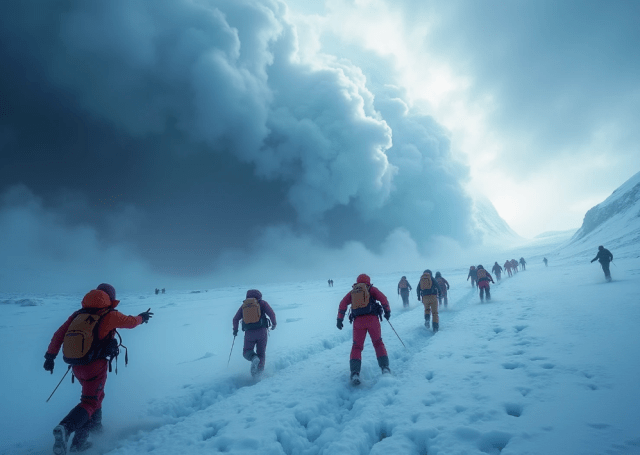
Protection from the elements is another survival priority.

Even mild weather can become dangerous without proper shelter, especially during extended outages or evacuations.

Essential shelter equipment includes:

  • Tents
  • Sleeping bags
  • Tarps
  • Emergency blankets
  • Ground pads

Fire-starting tools are also crucial. Brooke recommends carrying multiple fire-starting methods, including:

  • Ferro rods
  • Stormproof matches
  • Lighters

Fire provides warmth, light, cooking capability, and morale during difficult situations.


2. Gear & Infrastructure

Once the core survival needs are addressed, the next layer of preparedness focuses on mobility, communication, and infrastructure.


Bug-Out Bags (BOB)
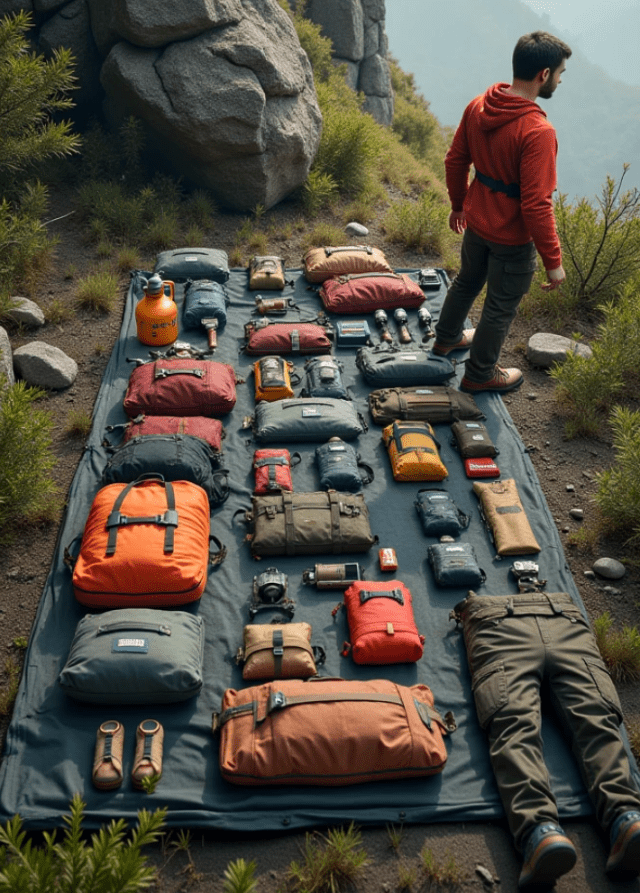
A bug-out bag is a portable emergency kit designed to sustain a person for 72 hours during evacuation.

These bags typically contain:

  • Food and water
  • First aid supplies
  • Flashlights
  • Fire-starting tools
  • Extra clothing
  • Emergency shelter

Every family member should ideally have their own bag prepared in advance.


Everyday Carry (EDC)

Everyday Carry refers to small, practical tools people keep with them daily.

Common EDC items include:

  • Pocket knives
  • Flashlights
  • Multi-tools
  • Lighters
  • Compact first aid supplies

While small, these tools can solve many problems during emergencies.


Power & Light

Electricity powers nearly every part of modern life.

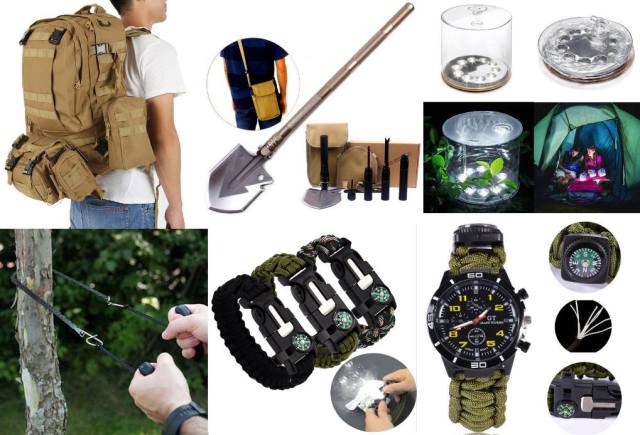
Prepared households often keep backup lighting and power options such as:

  • Solar generators
  • Flashlights
  • Lanterns
  • Spare batteries
  • Candles

Solar charging systems are increasingly popular because they allow renewable power generation during long outages.


Communication

Communication becomes vital during disasters.

Cell networks can fail, making alternative systems important.

Emergency communication tools include:

  • NOAA weather radios
  • HAM radios
  • Two-way radios
  • Satellite messengers

These systems allow people to receive updates and communicate when traditional networks fail.


Security

Emergencies can sometimes create unstable environments.

Prepared households focus on situational awareness and practical home security measures.

This may include:

  • Reinforced doors and locks
  • Outdoor lighting
  • Neighborhood cooperation
  • Personal safety planning

The goal is not confrontation but awareness and protection.


3. Skills & Knowledge
Gear alone does not create preparedness.

Brooke frequently reminds her audience that skills outweigh equipment.


Survival Skills

Basic survival skills can dramatically improve resilience.

Important skills include:

  • Fire-starting
  • Knot-tying
  • Navigation with map and compass
  • Foraging for edible plants

These abilities allow people to function even if equipment is lost or unavailable.


Medical Training

Medical knowledge is especially valuable when professional help is delayed.

Useful training includes:

  • CPR certification
  • Tourniquet application
  • Basic trauma care
  • Wound treatment

Many communities offer emergency medical training classes that can build life-saving skills.


Urban Survival

Preparedness isn’t only for wilderness environments.

Urban areas present their own unique challenges.

Urban survival knowledge may include:

  • Using silcock keys to access exterior water valves
  • Navigating city lockdowns
  • Growing food through urban gardening

Cities contain many hidden resources for those who know where to look.


4. Common Emergency Scenarios
Preparedness planning should focus on realistic events, not just extreme possibilities.

Brooke encourages people to start with the disasters most likely to occur in their region.

Common emergencies include:

Natural Disasters

Events like earthquakes, hurricanes, floods, and wildfires can disrupt communities for weeks.

These disasters often cause:

  • Power outages
  • Road closures
  • Water contamination
  • Supply shortages

Prepared households can remain safe and self-sufficient during recovery periods.


Power Outages and Grid Failures
Large power outages have become increasingly common.

A grid failure can affect:

  • Water systems
  • refrigeration
  • communication networks
  • fuel pumps

Backup lighting, food storage, and alternative power sources help families manage extended outages.


Economic Disruptions

Economic instability can also disrupt supply chains.

Shortages, inflation, and transportation issues can affect food and fuel availability.

Prepared households with stocked pantries and emergency supplies experience far less stress during these events.


5. Specialized Prepping Areas

Once the basic pillars are in place, many preparedness enthusiasts explore additional areas of resilience.


Financial Preparedness

Digital payment systems depend on electricity and internet access.

During outages or cyber disruptions, cash becomes essential.

Brooke recommends keeping small bills stored safely for emergencies.


Emergency Cooking

If power or gas systems fail, cooking becomes difficult.

Prepared households often keep backup cooking options such as:

  • Coleman camping stoves
  • Solar ovens
  • Rocket stoves

These tools allow food preparation even during extended outages.


Vehicle Preparedness

Vehicles can become vital during evacuations.

Many preppers keep a “Get Home Bag” in their car containing:

  • Water
  • Snacks
  • Flashlights
  • First aid supplies
  • Navigation tools

This kit helps people return home safely if transportation systems fail.


DIY Emergency Repairs

Small infrastructure problems can become major issues during disasters.

Basic repair skills can solve many emergencies.

Useful supplies include:

  • Plumber’s epoxy for pipe leaks
  • Specialized repair tapes
  • Multi-tools
  • Spare hardware

Quick fixes can prevent serious damage to homes and vehicles.


Final Thoughts

Brooke Homestead’s preparedness philosophy focuses on layered resilience.

Instead of obsessing over worst-case scenarios, she encourages people to gradually build systems that support their families through disruptions.

Her core survival pillars emphasize:

  • Water
  • Food
  • Medical readiness
  • Shelter
  • Skills
  • Practical tools

As Brooke often reminds her audience:

“Preparedness isn’t about predicting the future. It’s about building the ability to handle whatever the future brings.”

By focusing on these core survival pillars, families can build confidence, security, and peace of mind — no matter what challenges come their way.


When Terror Strikes, Don’t Count on Anyone: How Americans Can Actually Communicate When Attacked

If you’re waiting for the government, the cell towers, or the so-called “resilient infrastructure” of this country to save you during a terrorist attack, then you’ve already lost. And no, I’m not sugarcoating anything—because the world doesn’t sugarcoat disaster. Americans walk around glued to their screens, convinced that the same fragile networks delivering cat videos and grocery coupons are going to hold up the moment a coordinated terrorist attack strikes. Spoiler alert: they won’t. They never do.

Every single major emergency—from 9/11 to hurricanes to localized attacks—shows the same predictable pattern: communication systems fail, and people are left in the dark. Literally and figuratively. The angry part of me isn’t because disaster is unavoidable—it’s because we, as a nation, still refuse to learn. We built our entire society on a digital house of cards, and everyone acts shocked when it collapses.

So here’s the reality check nobody wants but everybody needs: if you don’t have a communication plan BEFORE a terrorist attack, you won’t have one DURING it.

You either prepare, or you gamble your life on luck. And luck doesn’t care about you.


Why Cell Phones Become Useless During a Terrorist Attack

Most Americans cling to their cell phones like life rafts, as if holding the slab of glass in their hands gives them some sort of immunity to chaos. But during a terrorist attack? That device becomes dead weight.

Here’s what actually happens:

1. Networks Get Overloaded

Every terrified human in a radius of miles starts calling everyone they know. Emergency lines get overwhelmed. Non-essential calls clog bandwidth. And soon, even emergency responders lose connection.

It’s not sabotage. It’s not a conspiracy. It’s math. Too many people, not enough capacity.

2. Towers Can Be Taken Offline

A single attack on critical infrastructure—or even a precautionary shutdown—can erase all connectivity in seconds. Terrorists know this. Emergency planners know this. The general public pretends not to.

3. GPS and Apps Become Useless

People think they’ll “just use Google Maps to find safety.” Sure. If satellites cooperate, towers stay online, and your battery doesn’t die in the 45-minute gridlock evacuation.

Good luck.


The Government Will Not Magically Communicate With You

We all love to imagine FEMA sending perfectly timed alerts and instructions. The reality? Emergency systems can—and do—fail. Even when alerts go out, they’re often delayed or inconsistent across regions.

And let’s be honest… even when the alerts work, half the country ignores them because they think everything is a test.

You can trust official alerts to help when possible. But you absolutely cannot rely on them exclusively. That’s not paranoid—that’s practical.


So What CAN Americans Do?

Thankfully, you’re not entirely doomed—unless you stay unprepared. You want communication options during a terrorist attack? Then you need redundancy, self-reliance, and a plan that works even when the entire digital system collapses.

Here’s what actually works, even when the world comes apart:


1. Create a Family Emergency Communication Plan

No, not a vague “text me if something happens.” A real plan. Written. Practiced.

It should include:

  • Two primary contacts
  • Two backup contacts
  • A meeting location
  • An alternate meeting location
  • A designated out-of-state contact (often easier to reach when local lines are jammed)
  • Instructions for what to do if separated

This isn’t overkill. This is responsibility.


2. Learn the Power of SMS Over Calls

Text messages use a fraction of the bandwidth of phone calls. Even when networks are collapsing, SMS might still sneak through. It’s slow, unreliable, and agonizing—but better than screaming into the void.

Use short, clear texts like:

  • “Safe.”
  • “Evacuating.”
  • “Meet at location A.”
  • “Can’t reach you. Will try again in 20 min.”

If you send long essays during a crisis, then maybe the crisis isn’t the biggest problem.


3. Two-Way Radios Are Not Just for Hobbyists

Americans love to mock preppers and their radios—right up until the moment those radios are the ONLY working communication method left.

FRS/GMRS Radios

Inexpensive. Widely available. Great for short-range family communication.

HAM Radio (Amateur Radio)

This is where the real reliability lies. Yes, it takes time to learn. Yes, you need a license. But you gain:

  • Independent communication
  • Long-distance reach
  • Access to emergency frequencies
  • The ability to receive real-time local information

HAM radio operators are often the first and last people communicating during disasters.

If you’re too busy to learn HAM radio, fine—just don’t pretend your phone will save you instead.


4. Keep an Emergency Power Source

Your fancy phone is just a useless brick once the battery dies. And it will die.

You need:

  • Portable battery banks
  • Solar chargers
  • Car chargers
  • A hand-crank emergency radio

If your communication tools can’t stay powered, they may as well not exist.


5. Have Hard Copies of Critical Information

Everyone relies on digital info—until the digital world collapses.

Print:

  • Emergency contacts
  • Maps of your city
  • Evacuation routes
  • Family meeting points
  • Medical info
  • Important addresses

Paper doesn’t lose signal. Paper doesn’t need WiFi. Paper doesn’t die.


6. Neighborhood Communication Networks

Yes, I know the world feels like it’s full of unreliable people. But in a crisis, neighbors can be your lifeline—or you can be theirs.

Organize:

  • A shared radio channel
  • A check-in system
  • A basic alert system (whistles, horns, etc.)

Community resilience matters, even in a world that often feels disappointingly fragile.


7. Stay Informed WITHOUT Internet

You need devices capable of receiving emergency broadcasts when cellular and internet systems go offline:

  • NOAA weather radios
  • Emergency alert radios
  • Battery-powered AM/FM radios

When terrorists strike, ignorance is deadly. Information is survival.


Final Thought: Communication Isn’t a Gadget—It’s a Mindset

Americans love easy solutions. But communication during a terrorist attack isn’t about apps, phones, or gadgets. It’s about preparation. The bitter truth is that most Americans simply aren’t prepared—and their complacency will cost them.

You don’t have to become a bunker-dwelling hermit (though some people could benefit from less screen time and more survival time). You just need to accept reality: no system is guaranteed to protect you. You must protect yourself.

Prepare now, or panic later. And panic never communicates anything worth hearing.

EMP-Proof Your Life: 10 Must-Haves for Your Faraday Cage

Let me be real blunt—most people aren’t ready for the coming storm. I’m not talking about a power outage or a snowstorm. I’m talking about a full-blown electromagnetic pulse (EMP)—natural or man-made—that will knock us right back into the 1800s in the blink of an eye. You think your phone, your car, or your precious smart fridge is going to survive that blast? Think again, cupcake.

A single EMP could fry every unprotected circuit, every wire, every device you depend on. No power. No communication. No transportation. Civilization as you know it—gone. And 99% of folks will sit there crying because they didn’t take five minutes to prepare. Well, not me. And not you, if you’ve got the guts to listen.

The Faraday cage—your best line of defense. It’s not a damn sci-fi gimmick. It’s a grounded, shielded container that protects electronics from high-frequency electromagnetic radiation. If you don’t have one yet, make one. A galvanized metal trash can with a tight-fitting lid and insulation inside works fine. But that’s only step one.

Step two? Knowing what the hell to put in it. So let’s break down the 10 must-have items you need to EMP-proof your life. Skip these, and you’re toast.


1. Two-Way Radios (with Extra Batteries)

When the cell towers fry, and the internet goes black, you’ll want to communicate with your group. That cheap Motorola walkie-talkie in the kids’ toy chest ain’t gonna cut it. Get a reliable set of long-range two-way radios, and for the love of common sense, store the batteries separately in the Faraday cage. Wrap them in plastic or cardboard first. Don’t be an idiot—don’t short them out by cramming them next to metal.


2. Solar Charger

You can’t just store electronics and expect them to last forever. Eventually, you’ll need to power them. Grid’s gone, remember? No plugging into the wall. A solar charger is your best bet. EMP won’t touch it if it’s shielded right, and it’ll give you the juice you need for radios, lights, and other small gear. Make sure it’s compact and has a wide compatibility range—USB, 12V, all of it.


3. Emergency Radio (Hand-Crank + Solar)

This one’s a no-brainer. When the world goes quiet, radio broadcasts might be the only info coming out of the chaos. Get a hand-crank and solar combo emergency radio with AM/FM/NOAA capability. It might be the only way to hear emergency updates, weather patterns, or any sign that order still exists. Don’t store your fragile ego in the Faraday cage—store the damn radio.


4. Back-Up Flash Drives (With Important Documents)

You ever tried rebuilding your life from scratch with no ID, no records, and no proof of who you are? That’s what it’ll feel like if you lose your digital footprint. Toss in a few encrypted flash drives with PDFs of your ID, passport, insurance, medical records, survival manuals, and offline maps. This isn’t paranoia—it’s insurance.


5. Prepaid Cell Phone (Burner + Extra SIMs)

Yeah, yeah, I hear you. “What’s the point of a phone if the grid’s down?” Listen, not every EMP takes out every satellite or cell tower permanently. And there’s always a chance of recovery—if not tomorrow, maybe in a few months. When service does come back, you’ll want to be ready. A cheap burner phone, stored dead and clean, might be your ticket to early communication. Load it with key contacts now.


6. Old-School GPS Unit

Your smartphone GPS? Forget it. It’ll be dead or fried. But an old-fashioned handheld GPS unit, especially a ruggedized hiking model, can still pull satellite signals and help you navigate. Don’t count on paper maps alone unless you’ve got a damn good sense of direction and a death wish. Store the GPS, plus batteries or solar charger, and learn how to use it BEFORE disaster hits.


7. Spare Car Key Fob / Vehicle Electronics

Newer vehicles rely on electronic control modules—ECUs—to function. If your vehicle gets fried, it’s useless. But some vehicles can survive, especially older ones, and some can be salvaged with backup electronics. If you’ve got a bug-out vehicle, store a spare key fob, a copy of the onboard computer (if swappable), or critical modules. Hell, store a whole spare ignition system if you can.


8. Mini Laptop or Tablet (With Offline Data)

I’m not talking about streaming Netflix while the world burns. I’m talking about storing offline survival manuals, maps, communication protocols, encryption tools, HAM radio guides, plant identification databases—knowledge. Knowledge is power when the lights go out. A small, rugged tablet or netbook with long battery life, stored and updated quarterly, could be your lifeline.


9. HAM Radio Equipment

I cannot stress this enough: HAM radio is the backbone of post-collapse communication. When everything else goes dark, the HAM community will still be transmitting. Get licensed, learn the protocols, and stash a basic transceiver, antenna, cables, and manuals in the cage. This isn’t some prepper fad. It’s what the military, emergency responders, and hardcore survivalists rely on when the SHTF.


10. Digital Multimeter

It’s not sexy, but it’s damn useful. A digital multimeter lets you check batteries, circuits, and power output. Want to know if your solar panel is producing? Want to troubleshoot a jury-rigged circuit? This tool is your friend. Stick a manual in there too, unless you’re an electrical engineer or like gambling with smoke and sparks.


Final Rant: Don’t Be a Clueless Sheep

Now let me end with this: if you think this list is overkill, you’re part of the problem. The government isn’t coming to save you. Your neighbors will turn desperate. Your bank won’t be reachable. The rule of law? It’ll be written in blood, not on paper.

An EMP attack or solar flare isn’t fiction—it’s science. It’s history. And it’s coming. I don’t prep because I’m afraid—I prep because I want to live. If that makes me angry, it’s because I see too many people laughing at survival while they scroll TikTok and pretend they’re safe.

Well, guess what?

When the sky lights up and the grid dies, I’ll be ready.
Will you?

Build the cage. Pack it smart. Protect what matters.

Because once it hits, it’s too damn late.