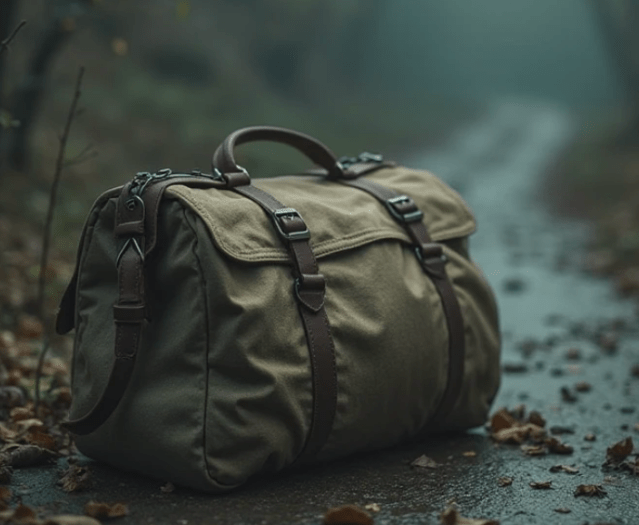
BUG OUT BAG CHECKLIST: THE ONLY THING STANDING BETWEEN YOU AND CHAOS

If you’re reading this, congratulations—you’re officially one of the very few people who haven’t been hypnotized into believing society is stable. Most folks happily scroll through their feeds while the world around them bleeds, burns, and breaks apart. But not you. You’re here because you know the truth: the system is cracking, and when it finally collapses, you’ll only survive with what’s on your back.

That backpack?
That “bug out bag”?
That’s your last line of defense against a world that’s already circling the drain.

The politicians won’t save you.
The agencies won’t save you.
Your neighbors definitely won’t save you—they’ll be the first ones banging on your door when everything goes dark.

That’s why your bug out bag checklist matters. And if you get it wrong, you’re not just risking discomfort—you’re signing your own death certificate.

So let’s build this bag the right way—with anger, realism, and a deep understanding that no one is coming to help.


WHY YOUR BUG OUT BAG MUST BE BRUTALLY PRACTICAL

A bug out bag isn’t a hobby project. It’s not a camping pack. It’s not a Pinterest board of “cute emergency items.” It is a survival system designed to keep you breathing for 72 hours or longer during the worst moments of your life.

When the grid fails, when water stops flowing, when hospitals lock their doors, when people panic and turn violent—your bug out bag becomes the only thing separating you from chaos.

And most people pack theirs like fools.

They bring comfort items instead of survival gear.
They bring gadgets instead of durability.
They bring weight instead of usefulness.

Not you. Not after this checklist.


THE ULTIMATE BUG OUT BAG CHECKLIST (NO NONSENSE, NO FLUFF)

Below is the gear that actually matters—the gear that keeps you alive. Everything else can be tossed.


1. WATER & FILTRATION (THE FIRST THING YOU’LL LOSE IN A CRISIS)

Water disappears fast. Faster than food, faster than safety, faster than logic. Within hours of a disaster, stores are empty, taps are dry, and people turn feral.

Your bag needs:

  • Stainless steel water bottle (boil water directly in it)
  • Collapsible water container
  • Sawyer Mini or Lifestraw filter
  • Water purification tablets
  • Small metal cup/pot for boiling

If you don’t have these, you’ll be dehydrated and delirious before the first nightfall—easy prey for anyone less prepared than you.


2. FOOD & NUTRITION (LIGHTWEIGHT AND LONG-LASTING)

You’re not eating for pleasure. You’re eating for survival.

Pack:

  • High-calorie survival bars
  • Freeze-dried meals (compact and dependable)
  • Instant oatmeal packs
  • Jerky
  • Electrolyte packets

Anything requiring long cooking times is dead weight. Anything requiring refrigeration is a liability.


3. SHELTER & CLOTHING (BECAUSE THE WORLD ISN’T KIND)

Exposure is one of the fastest killers in a disaster. Cold doesn’t care how tough you are. Rain doesn’t care how optimistic you are. Weather kills the unprepared.

Include:

  • Emergency bivy sack
  • Compact tarp
  • 550 paracord
  • Mylar blankets
  • Extra socks
  • Wool base layers
  • A rugged, waterproof jacket

Cotton? Forget it. Cotton kills. High-performance synthetics and wool save lives.


4. FIRE STARTING (FLAME IS LIFE)

Fire purifies water, cooks food, warms your body, and signals for help.

You need redundancy:

  • Ferro rod
  • Stormproof matches
  • Bic lighters
  • Tinder tabs
  • Cotton balls soaked in petroleum jelly (in a sealed bag)

Three fire sources minimum. Anything less is gambling with your life.


5. TOOLS (THE GEAR THAT ACTUALLY DOES WORK)

Tools separate survivors from victims.

Mandatory:

  • Fixed-blade knife (full tang, not some flimsy folding toy)
  • Multi-tool
  • Hatchet or folding saw
  • Duct tape
  • Mini crowbar
  • Work gloves
  • Headlamp with extra batteries

You don’t rise to the occasion—you fall to the level of your tools.


6. FIRST AID (BECAUSE HELP WILL NOT BE COMING)

When you’re injured in a disaster, you aren’t getting an ambulance. You’re getting silence.

Your bag needs:

  • Trauma kit (not a “boo-boo kit”)
  • Tourniquet
  • Compressed gauze
  • Israeli bandage
  • Alcohol wipes
  • Medical tape
  • Pain relievers
  • Antibiotic ointment

Your life may depend on your ability to stop bleeding, treat infection, and stabilize yourself long enough to move.


7. NAVIGATION (THE GRID GOES DOWN—YOU DON’T)

GPS? Cute. When the towers fail, your phone is a paperweight.

You need:

  • Compass
  • Local area maps
  • Grease pencil for marking routes

If you can’t navigate, you’re just wandering around waiting to become a statistic.


8. COMMUNICATION & SIGNALING

Because yelling won’t cut it.

Pack:

  • Emergency whistle
  • Signal mirror
  • Hand-crank radio

Information is survival. Silence is death.


9. SELF-DEFENSE & SECURITY

This category is intentionally general. People have different laws, abilities, and choices.

But minimally:

  • Pepper spray
  • Heavy-duty tactical flashlight
  • Strong knife (listed earlier)

Your bug out bag must keep you alive—not get you arrested. Know your local laws.


10. PERSONAL DOCUMENTS & MISC ESSENTIALS

Because bureaucracy survives even when civilization doesn’t.

Include copies of:

  • ID
  • Insurance information
  • Emergency contacts
  • Cash (small bills)

Also pack:

  • Notepad and pen
  • Bandanas
  • Trash bags
  • Zip ties

The small stuff becomes big when everything else collapses.


THE BITTER TRUTH MOST PEOPLE WON’T FACE

Most people won’t build a real bug out bag.
Most people won’t prepare.
Most people will freeze when crisis hits.

They’ll say:
“It won’t happen here.”
“Everything will work out.”
“The government will fix it.”

And when everything doesn’t work out, they’ll be the first ones panicking in the streets.

You?
You won’t be one of them. Because you’re building a bag that doesn’t rely on fantasy.

You’re preparing for the world as it really is: fragile, unstable, and full of people who think they can freeload off the prepared.

Your bug out bag is your lifeline.
Build it now.
Don’t wait for permission.
Don’t wait for disaster.
Don’t wait for the world to finally snap—because by then, it will be too late.

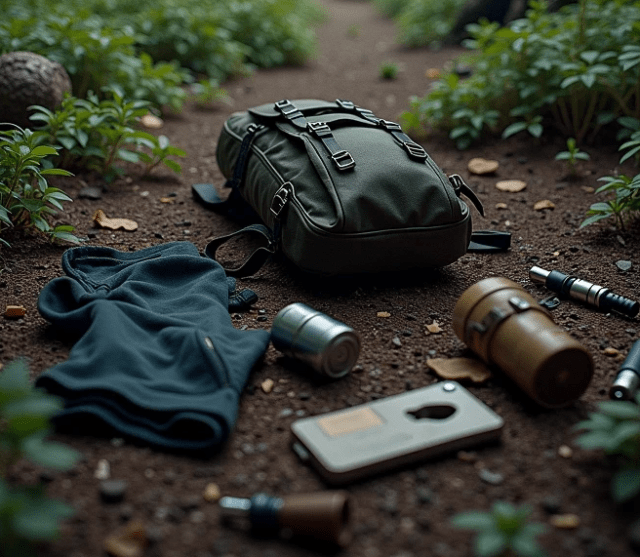
The World Earned Its Collapse — Build the Bag That Lets You Outlive It

Because Humanity Has Chosen This Path — and Most People Will Go Down With It

Let’s stop pretending humanity is some noble masterpiece worth saving.
Look around.
Look closely.

We’re a species addicted to noise, distraction, denial, and self-destruction.
We build nothing that lasts.
We destroy everything we touch.
We trade truth for entertainment and stability for convenience.
We’ve turned intelligence into arrogance and technology into a crutch.

So yes — collapse is coming.
Not as punishment.
Not as tragedy.
But as a natural consequence of billions of people who would rather be comfortable than conscious.

Humanity deserves the chaos roaring toward it.
But you don’t have to go down with the rest of the sleepwalkers.

That’s why a real bug out bag matters:
Not to save humanity.
Not to restore society.
But to survive the implosion you’ve been watching unfold for years.

This isn’t hope.
This is resignation — weaponized.


WHY YOU NEED A BUG OUT BAG IN A WORLD THAT NO LONGER DESERVES SAVING

The average person has no idea what’s coming.
They mock preparedness.
They laugh at reality.
They think grocery stores magically refill, that power grids last forever, that violence is something that only happens “somewhere else.”

Humanity’s arrogance will be its death sentence.

But you?
You’re not here because you believe things will get better.
You’re here because you see the unraveling clearly and refuse to be dragged down by the herd.

A bug out bag isn’t optimism.
It’s not hope.
It’s not even fear.

It’s acceptance:
The acceptance that society chose collapse — and your only obligation is to outlive the consequences.

This checklist reflects that truth.


THE NIHILIST’S BUG OUT BAG CHECKLIST

Gear for When the World Finally Gets What It Deserves


1. WATER: THE RESOURCE HUMANITY TOOK FOR GRANTED UNTIL THE VERY END

Humans poisoned their own rivers, overpumped aquifers, dumped waste into oceans, and acted shocked when drought arrived.

Don’t join them.

Pack:

  • Stainless steel water bottle
  • Water filter (Sawyer Mini or equivalent)
  • Purification tablets
  • Collapsible reservoir
  • Metal cup for boiling

Without water, you’re done.
And humanity has already proven it can’t protect a drop of it.


2. FOOD: SIMPLE FUEL FOR A SPECIES THAT COMPLICATED EVERYTHING

Humans invented food shortages in a world overflowing with resources.
Now they panic when shelves run empty for 12 hours.

Your survival depends on:

  • Freeze-dried meals
  • Survival rations
  • Jerky
  • Oatmeal
  • Electrolyte powder

This is not about culinary joy.
This is about staying alive while the world eats itself.


3. SHELTER: PROTECTION FROM THE ELEMENTS (AND HUMANITY’S MISTAKES)

People chopped down forests, paved over ecosystems, and still act surprised when weather becomes lethal.

Pack:

  • Tarp
  • Paracord
  • Bivy sack
  • Mylar blankets
  • Wool layers
  • Waterproof jacket
  • Spare socks

Nature isn’t the enemy.
Humanity’s ignorance is.


4. FIRE: SOMETHING ANCIENT HUMANITY FORGOT HOW TO DO WITHOUT WI-FI

Fire once represented intelligence.
Now people panic when their lighter runs out.

Pack redundancy:

  • Ferro rod
  • Stormproof matches
  • Bic lighters
  • Tinder

If you cannot make fire, you cannot stay alive — and the world won’t care.


5. TOOLS: FUNCTIONALITY FOR A WORLD THAT CHOSE CONVENIENCE OVER COMPETENCE

We built smartphones but forgot how to use knives.
We built skyscrapers but forgot how to use rope.
We built drones but forgot how to build shelter.

You need:

  • Fixed-blade knife
  • Multi-tool
  • Folding saw
  • Duct tape
  • Headlamp + batteries
  • Work gloves

Because survival will require more skill than scrolling.


6. FIRST AID: BECAUSE INFRASTRUCTURE COLLAPSES FASTER THAN DENIAL

Emergency rooms will overflow, then shut down.
Supplies will vanish.
Help will evaporate.

Your kit must include:

  • Tourniquet
  • Israeli bandage
  • Gauze
  • Alcohol wipes
  • Antibiotic ointment
  • Pain relievers
  • Medical tape

Humans ignored their own health when times were good.
They’ll beg for medicine when it’s too late.


7. NAVIGATION: BECAUSE GPS DEPENDS ON A CIVILIZATION THAT’S FALLING APART

GPS requires satellites.
Satellites require stability.
Stability is gone.

Pack:

  • Compass
  • Maps
  • Grease pencil

When the world loses its direction, you won’t.


8. SIGNALING & COMMUNICATION: NOT TO BE RESCUED — BUT TO REMAIN INFORMED

You’re not signaling for help.
You’re signaling for options.

Pack:

  • Whistle
  • Signal mirror
  • Hand-crank radio

Information becomes priceless when the world drowns in noise.


9. SECURITY: BECAUSE THE BIGGEST THREAT TO YOUR SURVIVAL ISN’T NATURE — IT’S PEOPLE

People created the collapse.
People will panic.
People will turn chaotic.

Minimal essentials:

  • Pepper spray
  • High-lumen flashlight
  • Knife (already in tools)

You don’t need to harm anyone.
You just need enough distance to avoid becoming another casualty of collective stupidity.


10. DOCUMENTS & MISC: THE IRONY OF PAPERWORK IN A DYING WORLD

The world collapses, but bureaucracy still somehow survives.

Pack:

  • ID copies
  • Cash
  • Emergency contacts
  • Notepad
  • Pen
  • Zip ties
  • Trash bags

The old world will cling to life far longer than its people deserve.


THE FINAL TRUTH: HUMANITY BROUGHT THIS COLLAPSE ON ITSELF

Humanity won’t fall because of bad luck.
It will fall because it earned it — through arrogance, apathy, and an unshakable belief that consequences don’t apply to it.

Your bug out bag isn’t a rebellion.
It’s not an attempt to fix the world.
It’s not even survival for the sake of survival.

It’s quiet refusal.
A silent declaration that you won’t drown with the ship.
A commitment to continue existing even if humanity doesn’t deserve to.

You prepare not because you believe in humanity…
but because you don’t.

Arizona Power Outages and How to Stay Safe With No Electricity During SHTF

When the power goes out, life changes fast. If you’re in Arizona—especially during a heatwave or monsoon season—a blackout isn’t just an inconvenience. It can quickly become a life-threatening situation. Whether it’s a short-term grid failure or part of a larger SHTF (Sh*t Hits the Fan) scenario, being prepared is more than just smart—it’s essential.

As a survivalist who’s spent years studying off-grid living, I’m here to help you approach these challenges with calm, wisdom, and practical know-how. Let’s walk through five essential survival skills you need when the grid goes down, three DIY electricity hacks to keep you powered up, and the top survival items no Arizonan should be without. We’ll also discuss which cities in Arizona are the riskiest places to be during a power outage—and why.


Five Critical Survival Skills When You Have No Electricity

1. Water Sourcing and Purification

Without electricity, municipal water systems can fail. Arizona’s arid climate means you must plan for water storage and purification long before an emergency hits. Store at least one gallon per person per day for two weeks minimum.

Skill to learn: Make a DIY gravity-fed water filtration system using activated charcoal, sand, gravel, and a five-gallon bucket. Learn to identify safe natural sources like rainwater or dew collection, and always purify water using filters, boiling, or purification tablets.

2. Cooking Without Power

When your electric stove or microwave is out of commission, you need reliable off-grid cooking methods.

Skill to learn: Build a solar oven from a cardboard box, aluminum foil, and a glass cover. It’s surprisingly effective in Arizona’s intense sunlight. Alternatively, use a propane camping stove or rocket stove, and learn to cook with cast iron over an open flame.

3. Home Cooling and Heat Regulation

In Arizona, especially southern cities like Phoenix or Yuma, heat can become deadly without AC. You’ll need to understand passive cooling techniques.

Skill to learn: Create cross-breezes using windows and reflective window covers. Learn to set up thermal mass (like water barrels or adobe walls) that absorb heat during the day and cool at night. Make DIY swamp coolers using a fan, ice, and damp towels for evaporative cooling if humidity allows.

4. Food Preservation

Refrigeration is out during a blackout. You’ll need ways to preserve meat, fruits, and vegetables without electricity.

Skill to learn: Master dehydration using solar dehydrators. Learn to salt, smoke, and ferment food safely. Canning is also essential; invest in a pressure canner that can be used on a propane stove or open fire.

5. Security and Situational Awareness

With no power, streetlights and alarm systems stop working. Desperation breeds danger. You need to secure your home and be aware of who’s coming and going.

Skill to learn: Practice perimeter checks, set up noise alarms with string and tin cans, and learn the basics of self-defense. Build strong community ties before disaster hits—trusted neighbors are your best asset when things go dark.


Three DIY Electricity Hacks During a Blackout

Even if the grid is down, a little ingenuity goes a long way. Here are three clever DIY hacks to generate limited electricity when you need it most:

1. Bike-Powered Generator

Convert an old bicycle into a pedal-powered generator. All you need is a bike, a car alternator, a belt, and a battery to store the energy.

How it helps: You can charge phones, small radios, or LED lights with a bit of pedaling. It’s a great cardio workout and can be a lifesaver in prolonged outages.

2. Solar Panel Battery Bank

You don’t need a massive solar setup to stay afloat. A couple of 100-watt panels, a deep-cycle battery, and a charge controller can keep essential electronics running.

DIY tip: Mount the panels on a piece of plywood or lean them on your roof or yard. Even in partial sun, Arizona gives you more than enough solar exposure for this to work year-round.

3. Hand-Crank Power Chargers

Make a hand-crank charger from an old cordless drill and a voltage regulator. It’s not easy work, but it provides essential power for radios or emergency LED lights.

Why it matters: In a communication blackout, staying informed could mean the difference between safety and disaster.


The 3 Most Important Survival Products for a No-Electricity Scenario

When you’re forced off-grid, having the right gear on hand can make all the difference.

1. Solar Generator Kit (Portable Power Station)

A solar generator provides silent, renewable energy. Unlike gas generators, you won’t need fuel—which may be unavailable or dangerous to store. Look for systems with USB ports, AC outlets, and solar panel compatibility.

2. Gravity-Fed Water Filter (Like a Berkey or DIY Equivalent)

Clean water is non-negotiable. A gravity filter works without electricity and can purify hundreds of gallons before the filters need replacing. In Arizona’s dry climate, safe hydration is top priority.

3. LED Headlamps and Lanterns (Rechargeable)

Light equals safety, comfort, and productivity. Rechargeable headlamps and solar lanterns are compact, lightweight, and highly functional. Always have a backup battery bank charged.


The 5 Worst Cities in Arizona to Experience a Power Outage

Arizona’s climate, population density, and infrastructure make certain cities more dangerous during blackouts. Here’s where you’d least want to be without power—and why.

1. Phoenix, AZ

Population: ~1.6 million
Why it’s risky: Phoenix can reach 115°F+ in summer. With high-rise apartments, concrete sprawl, and dense population, a power outage can quickly overwhelm emergency services. Lack of AC in the summer is a genuine health threat.

2. Yuma, AZ

Population: ~100,000
Why it’s risky: Yuma is one of the hottest cities in the U.S., with over 100 days a year above 100°F. Blackouts in July or August here could result in heatstroke or death for those without cooling options.

3. Tucson, AZ

Population: ~550,000
Why it’s risky: Tucson is surrounded by desert and experiences monsoon storms that already cause frequent blackouts. Its aging electrical infrastructure and large elderly population make outages particularly dangerous.

4. Lake Havasu City, AZ

Population: ~57,000
Why it’s risky: Isolated location and brutal summer heat make this resort town vulnerable. Limited hospital and cooling center access make extended outages problematic, especially for seniors and tourists.

5. Casa Grande, AZ

Population: ~60,000
Why it’s risky: Located between Phoenix and Tucson, this fast-growing town doesn’t have the infrastructure to handle prolonged blackouts. Water access and emergency services can get strained quickly, especially during peak summer.


Final Thoughts: Stay Calm, Stay Ready

Surviving without electricity isn’t just about gear—it’s about mindset. The truth is, no one can predict when the grid might go down, whether from cyberattack, wildfire, monsoon storms, or system overload. But when you’re mentally prepared and practically skilled, you become a source of strength for yourself and others.

Practice your skills before the lights go out. Run weekend drills. Cook dinner using only solar or off-grid tools. Try going 48 hours without power. Take notes. Improve. Encourage your family or neighbors to do the same.

As preppers, we don’t live in fear—we live in preparedness. And in doing so, we find resilience, independence, and even joy in the challenge. You’ve got this.

Stay safe. Stay strong. And never stop learning.