Having Fish available is one of the best ways of getting your daily protein intake during an apocalyptic situation. There’s plenty of water around, but only a few have the skills to fish for their survival. Having a distinct advantage sets you apart from others and might come in handy down the line.
If it comes to fishing for your survival, there are a couple of different options. Like many non-preppers, you can take the more common approach and use rods and reels, but then there’s the storage issue, replacing broken equipment, and let’s not forget the cost of maintaining them. Or you can do what many other preppers prefer, which is a more raw yet simple method for survival fishing.
We’ll talk about both.
Your Fishing Gear
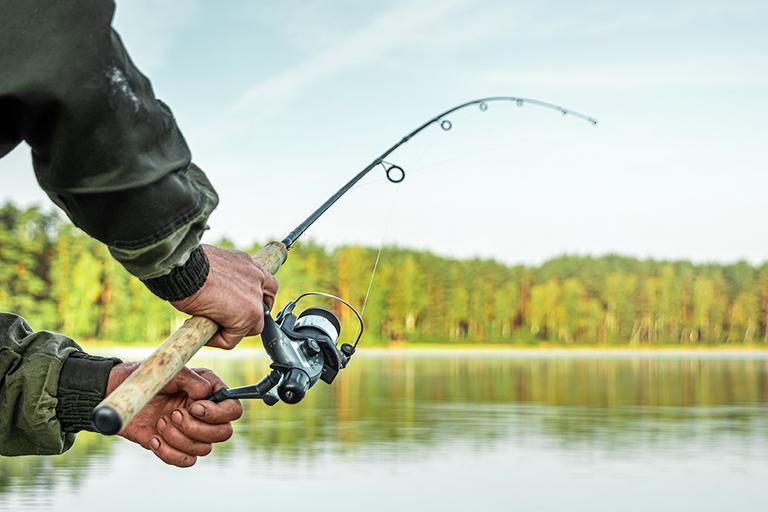
Start by collecting the gear you need to catch fish, this will make it more budget-friendly to stockpile the items needed over time. For your first purchase, I would go with a survival fishing pole. They are easy to store and lightweight, but not the most effective for catching fish.
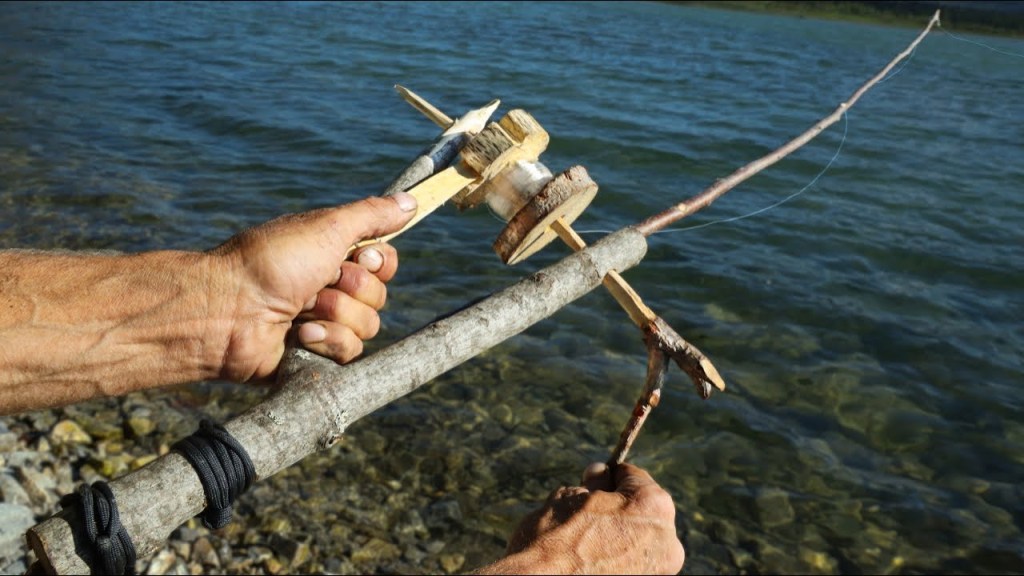
I can tell you this though, they’re way better than a stick, rope, and hook.
As for your reel, go with whatever you can afford. In a survival situation, it’s not going to matter what brand your reel is or where you got it from. You just need to make sure it gets the job done.
Live Bait Vs. Artificial Lures
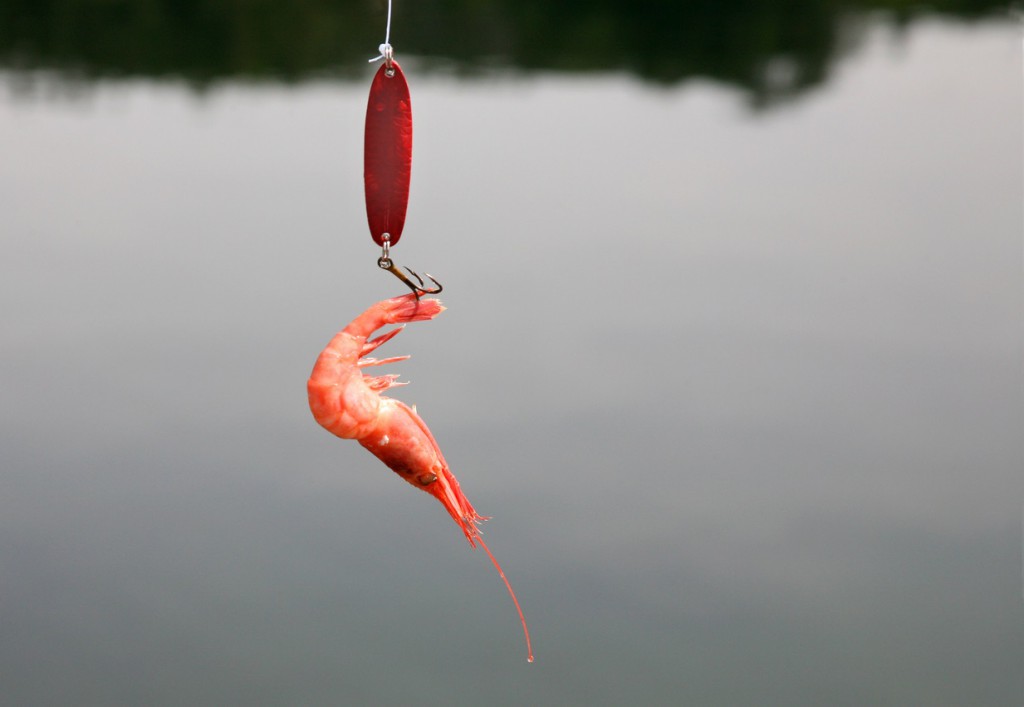
Honestly, you want to go with the most basic option possible if you’re choosing artificial lures. All that matters is you being able to catch fish, and it needs to be quick and efficient. Also, make sure you have a variety of sizes in lures anywhere from 1.5 inches – 6 inches in length. If you come across a small stream, the small lure would be perfect to catch something quick to eat. Regardless of if you’re trying to feed an entire family or just yourself, your focus needs to be on quantity over quality and on finding ways to make the fish last.
Netting
If want to take a more simple approach, there are plenty of options. Netting or trapping for one, and there are a number of different nets you can use. This is a passive form of fishing which is preferred because it allows you to do something else while you’re fishing in most cases.
Here are some options for netting:
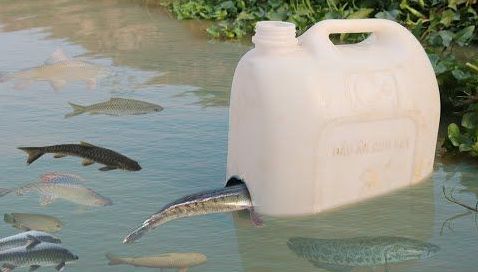
Trotlines – One of the most primitive and passive ways of survival fishing. You attach a mainline on both sides of the river or pond and then hang secondary lines down into the water with bait on them. The secondary lines get weights, so they rest near the bottom of the water, and the baited hooks will stay in place until you return to see if you caught anything.
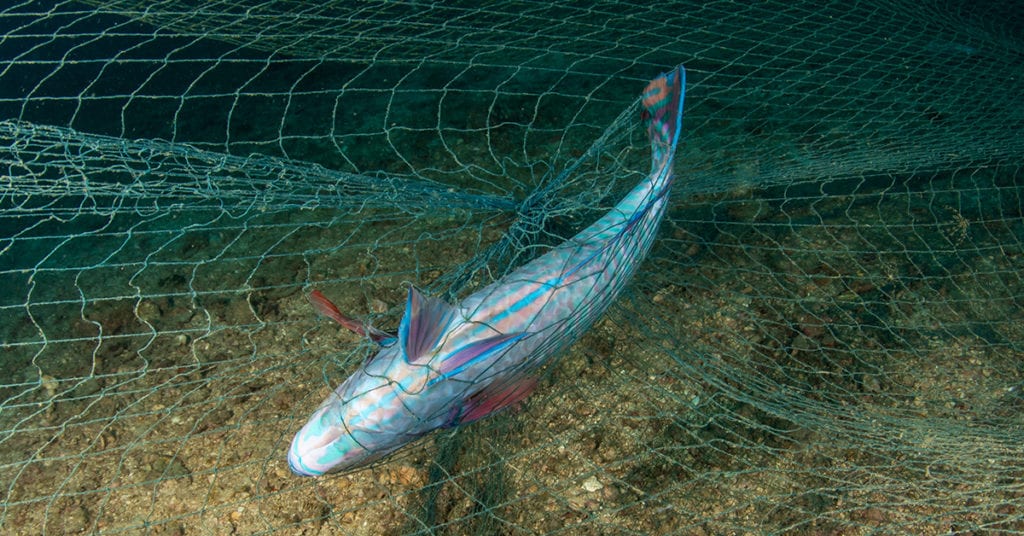
Gill nets – A nylon net with large enough openings for the fish to swim through until they reach the gills. Making it the perfect passive fishing strategy because while you’re getting other things set up, you can check on the net at any time. This important method is great when you need to provide food for more than one person.
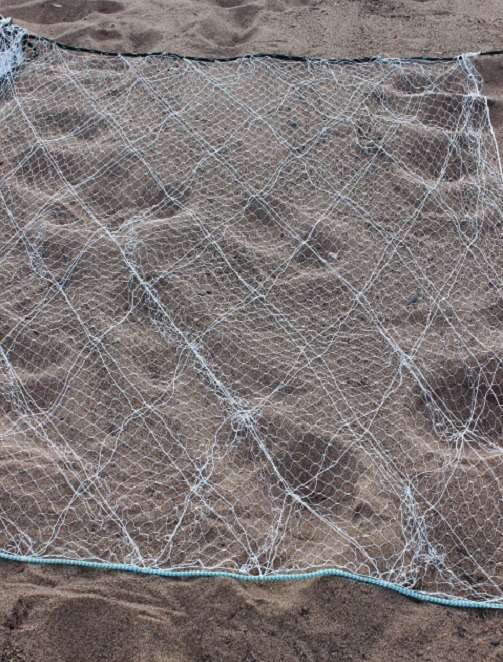
Drift nets – A drift net functions in a similar way but requires you to have a vessel to pull the net. The net is moving through the water, it will also grab anything that passes through it. Using this method, you’ll want to bug out near a popular river or stream system.
Killing and cleaning your catch
As a part of the “circle of life”, we need to appreciate and respect our catch, especially for situations where our survival depends on it. Here is a simple way of cleaning your fish if you don’t have any other way:
Find a rock with sharp edges.
Put the fish on a hard flat surface
Use one hand to secure it in place
Use the rock to strike it right above the eye with a large amount of force
This will stun the fish but not kill it, be sure to repeat this a few times
Fishing during a survival crisis is a great way to source rich in protein foods in the event of a food shortage or power grid failure. Learning skills that we can rely on is essential during emergency situations.
Always remember, it’s always better to prep in advance rather than wait until it’s a SHTF situation.
Tying knots is one of the most essential skills everyone should know, prepper or not. This skill comes in handy in your day-to-day life and emergency situations, even saving a life.
Since one of the best ways we can prepare for future survival scenarios is to learn how to tie a few different knots. I’ll also cover the essential tools for knot tying, the different parts of knots, and everything in between.
Let’s get knotty.
Do you know how to tie a knot if it meant your survival? How about a specific knot that you would need in a sudden survival scenario?
Knowing how to tie a climbing knot sounds more pleasant than learning how to fall safely, doesn’t it? You don’t need to learn and try to perfect all the hitches, but developing your skills with the knots, will be useful and practical for everyday use.
If you haven’t learned the essential knots to be able to tie yet, not a problem. Tying a specific survival or fishing Knot can mean the difference between surviving and knot surviving. There are thousands of different Knots for each kind of scenario. From doomsday situations to fishing for dinner.
Some knots are essential to learning more than others. Most of the time you’ll only have to be able to tie a few knots. Other knots are only needed in rare or special circumstances. So depending on your activities, some knot categories would be more essential for you than others. There are knots just for fisherman use and knots that are more common when camping. Learn the ones that you are going to use the most first.
Know The Knot
The importance of knowing how to tie knots, when, and where to use them are more than useful—they could be life-saving.
Of course, depending on your situation, every knot has its special place and is used for specific purposes. It’s best to learn ahead of time before you find yourself in an emergency learning how to tie a knot.
Rope Construction
The construction of the rope tells you important details about what can and should be done with the rope. Certain materials should be used for certain purposes and knots, while other types of construction are for other uses and types of knots.
Materials
There are two kinds of cordage materials. Natural and Synthetic. You can even make your cordage on your own.
Natural Materials
cotton
sisal
manila
Synthetic Materials
polypropylene
polyester
nylon
Useful Tools
Choosing to use tools when handling ropes and knots; will easily make you 50% more efficient than not using them.
Here is a list of some essential tools.
Sailmakers Palm and Needle
Adhesive Tape
Sharp Knife
Netting Needle
Marlinspike
Swedish Fid
Terms & Tips
When first starting, most of us watch tutorial videos and try to follow them. However, the terms and phrases used by these experts can sometimes be confusing. It’s best to try and learn a few basic terms to follow along while working with cordage and viewing the videos.
Types of Knots
Focus on mastering just one survival knot at a time. Once you can pull off tying and untying the knot with your eyes closed and can teach someone else how to do it, move on to another knot.
Knots can be broken down into different fields they’re primarily used in, such as survival knots or sailing knots. Another way to break them into is by specific types, such as hitches and bend knots.
Types:
Coils
Hitches
Bends
Loops
Binding
Stopper
Splices & Whippings
Decorative
Three-Strand- the simplest braid
The three-strand knot is also known as a plait or braid. If you are familiar with braiding hair, then this should be very easy for you. The first step is usually easy; it usually involves making the three ropes become one. You can do this by holding the three ropes together and making a knot on one end of the rope.
Double Sheet Bend
The double sheet bend, or weaver’s knot, is used to connect two pieces of cordage together. If you must join two ropes together during a survival situation, time will likely be of the essence. The double sheet bend knot will help you accomplish the task quickly without sacrificing sturdiness.
Weaver’s knots are not prone to jamming or locking up while being used and can be untied rapidly. This type of knot is often used when creating a guideline across a waterway, hanging food high up in a tree, increasing the length of cordage when constructing a shelter, using non-traditional and short types of material as cordage, and tying down large loads.
THREADED FIGURE-EIGHT
The threaded figure-eight knot is an essential climbing knot. The way it’s tied allows it to jam under strain. The best part about this knot is it’s easy to recognize, so you can easily check a buddy to make sure they’re safely knotted before the climb.
Where to use it:
Tying a rope onto an anchor
Attaching a rope to a climber’s harness
Creating a “stopper”
Square Knot
The reef knot, or square knot, is an ancient and simple binding knot used to secure a rope or line around an object. In addition to being used by sailors for reefing and furling sails, it is also one of the key knots of decorative macrame textiles. The knot lies flat when made with cloth and has been historically used for tying bandages.
To tie this knot, take one end of the rope in your left hand and a length of rope in your right hand. Cross the left over the right, forming an X so that your rope ends are in the opposite hand. Then, put the right over left, forming an X, and pull tight.
Butterfly knot
Need a secure loop in a rope? There are many ways of doing this, but the butterfly knot is one of the best. Often used by climbers, it’s handy if you can get some slack in the rope and need a loop that won’t slip under a heavy load.
Gather in some slack and form an 8-shaped loop in the rope. Fold the upper loop down, pass it around the rope then thread it through the lower loop and pull it tight. That’s all it takes.
Are these all the knots you can use to help you survive? Nowhere near! There are hundreds of knots, some of them very specialized. The more you can learn, the better equipped you’ll be to survive. These four will cover most things, though. Get some bits of rope and practice until you can tie them confidently, and you’ll have a big advantage when modern fasteners aren’t available anymore.
Conclusion
Knot tying in survival and in everyday use can be very important. If you struggle with the important and essential knots, I would encourage you to get a nice thick piece of rope and start learning knots with a much larger rope. This can make a world of difference. Thicker rope holds its shape better while you tie and it is also much easier to handle.
We used thick rope to teach shoelace tying in our house. If it can help 4-year-old fingers get more dexterous and effective then it will work for you.
If you feel pretty proficient with knots then spend some time bashing up natural materials and making cordage from nature.








 TheDailyChristian