

Mississippi’s Worst Roads to Drive on During a Disaster

Mississippi’s Worst Roads to Drive on During a Disaster: A Survivalist’s Field Guide

I’ve spent a fair share of my life behind the wheel—traversing deserts, dodging floods in the Amazon basin, crawling over icy switchbacks in the Alps, and even navigating war-torn backroads in Eastern Europe. But if there’s one place that surprises you when disaster strikes, it’s Mississippi. She might wear a calm, slow-moving Southern charm on the surface, but when nature loses her temper, the Magnolia State’s roads turn into a web of pitfalls, traps, and survival puzzles that test your grit behind the wheel.

In disaster scenarios—be it hurricanes, floods, tornados, or civil unrest—your vehicle becomes more than transportation. It becomes your mobile shelter, your escape route, your lifeline. And you better believe the roads you choose can either carry you to safety or trap you in a nightmare. So let’s dig into it—what roads to avoid, how to drive like a survivor, and what to do when your tank runs dry in the middle of nowhere.


The Roads That Turn Against You: Mississippi’s Worst During a Disaster

1. U.S. Highway 90 – Gulf Coast
U.S. 90 hugs the Mississippi coastline—a region notorious for storm surges. During hurricanes like Katrina, this road was swallowed whole by the Gulf. Bridges collapse, lanes disappear under waves, and escape becomes impossible once the water rises. Avoid it during any coastal evacuation.

2. I-10 and the Bay St. Louis Bridge
When evacuating westward, folks hit I-10. But the bridge over Bay St. Louis? It’s a choke point. One lane closure or flood surge, and you’re stuck for hours, maybe days. If disaster’s looming, skip it.

3. Highway 49 – Hattiesburg to Gulfport
This is the main evacuation route from inland to the coast. That means in a disaster, everyone uses it. It clogs faster than a sink in a sandstorm. Plus, it’s flood-prone and riddled with low shoulders.

4. U.S. Route 61 – The Blues Highway
Stretching from Natchez to Memphis, U.S. 61 cuts through the Delta. Beautiful country—until it rains. The Delta’s flatlands mean floodwaters spread fast and wide. Visibility drops, hydroplaning increases, and shoulder pull-offs are rare.

5. Mississippi Highway 16 – Between Canton and Carthage
This road’s notorious for rural isolation. Cell signal’s weak, and it floods like clockwork every rainy season. When you’re alone out there with no signal and rising water, you’re not escaping—you’re surviving.

6. Natchez Trace Parkway
Scenic? Yes. Safe during a disaster? No. This two-lane parkway has limited exits, minimal lighting, and no commercial services. Once you’re on it, you’re committed.

7. I-55 – North-South Lifeline or Bottleneck?
It’s the primary artery between Jackson and Memphis. But with a major evacuation, it turns into a parking lot. Add a fuel shortage or a traffic incident, and it quickly becomes a metal graveyard.

8. MS Highway 24 – Between Liberty and McComb
Winding, poorly maintained, and flood-prone. When it rains, it’s a mudslide waiting to happen. Not ideal when you need speed and clarity of direction.

9. County Road 513 – Clarke County
Barely paved in sections. Full of switchbacks, logging trucks, and culverts that overflow with the slightest drizzle. Locals call it “Snakeback.” Avoid unless you’re desperate.

10. Any Backroad in the Delta During Tornado Season
Mississippi’s backroads in the Delta look quaint—until you’re racing against a twister. No cover, no exits, and crumbling asphalt. Trust me, I’ve driven those roads during storms, and it’s like rolling the dice with your life.


15 Survival Driving Skills for Disaster Scenarios

  1. Fuel Load Planning – Always start every trip with a full tank, and top off at half.
  2. Route Reconnaissance – Learn three exit routes: major road, secondary road, backroad.
  3. Night Driving without Headlights – Practice using low-beams or parking lights to stay unseen during civil unrest.
  4. Driving Through Flooded Roads – Know the depth limit (6 inches can stall most cars), and never cross moving water.
  5. Using Mirrors for Perimeter Checks – Keep aware of your six. Situational awareness prevents ambushes.
  6. Brake Fade Management – Pump brakes if descending long hills after heavy use—don’t ride them.
  7. Driving in Reverse Under Pressure – Practice reversing fast and straight in an open field or lot.
  8. Precision Steering Over Debris – Learn to aim between tire-puncturing debris in tight spaces.
  9. Push-Start (Manual Transmission) – Learn how to roll and jump-start a dead manual car.
  10. Window Exit Techniques – Know how to break glass underwater or jammed—keep a spring-loaded punch in your console.
  11. Camouflage Your Vehicle – Mud and branches can break up your silhouette from aerial drones.
  12. Off-Road Tire Pressure Adjustment – Lowering PSI gives traction in sand or mud.
  13. Roadblock Bypass – Practice turning around quickly or taking medians without damaging your undercarriage.
  14. Driving with a Blown Tire – Keep control, slow down, and ride the rim to safety if needed.
  15. Trailer Hitch Defense – Use hitches and reinforced bumpers to nudge through obstacles or abandoned vehicles.

3 DIY Survival Driving Hacks When You Run Out of Gas

  1. Gravity-Fed Fuel Siphon from Abandoned Vehicles
    Keep a length of clear tubing and a small gas can. Use gravity and suction to siphon gas from vehicles lower than yours. Be quick, be quiet, and avoid breathing fumes.
  2. Turn Your Car into a Solar Shelter
    Out of gas and sun’s beating down? Use Mylar blankets in your emergency kit to reflect sunlight away from the windows. Set up shade, insulate with clothes or mats, and use water strategically.
  3. Bike Conversion Emergency Rig
    If you’re packing minimalist, mount a folding bike on your rig. When gas runs out, detach and ride out with your bug-out bag. You can even strap small trailers to bikes to haul essentials.

Final Thoughts from the Road

Mississippi is a beautiful, complicated place. Her roads tell stories—some long and slow, others sudden and tragic. When disaster strikes, it’s not just about escape. It’s about staying sharp, planning ahead, and being willing to do what others can’t or won’t.

I’ve seen families make it out because they chose the unpaved road while others sat idling in gridlock. I’ve met men who used a siphoned quart of gas to jump two cars and carry a diabetic neighbor to safety. You don’t need to be a superhero. You just need to be prepared.

So keep your tank full, your eyes wide, and your hands steady. And when Mississippi turns mean, you’ll be the one who gets through—not because of luck, but because you drove like a survivor.
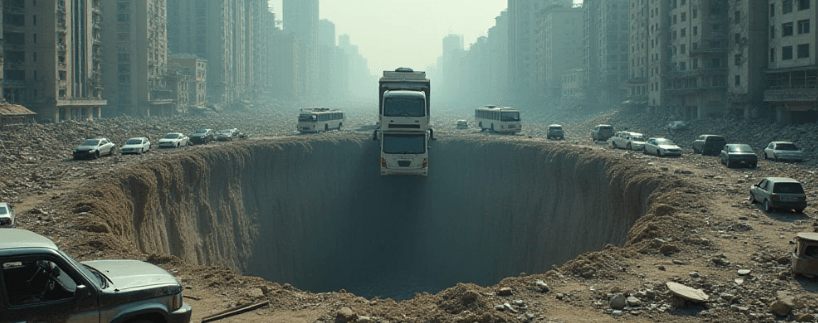
New Jersey’s Worst Roads to Drive on During a Disaster

New Jersey’s Worst Roads to Drive on During a Disaster: A Survivalist’s Guide

I’ve spent decades traversing harsh terrains, navigating everything from dense forests to urban jungles during emergencies. Nothing sharpens your survival instincts like being behind the wheel when disaster strikes. New Jersey, a state known for its bustling highways and scenic byways, has some of the trickiest roads to maneuver in crisis scenarios. Whether it’s a hurricane, flood, blackout, or a sudden evacuation, knowing which roads to avoid and how to drive like your life depends on it can mean the difference between safety and catastrophe.

Here’s my survivalist’s breakdown of New Jersey’s worst roads to drive on during a disaster, essential survival driving skills, and a few DIY hacks when your fuel runs dry. Listen close, because when the grid goes dark, and chaos rules, your driving skills are your survival kit on wheels.


The Worst Roads in New Jersey During Disaster Scenarios

1. Garden State Parkway (GSP) Southbound from Exit 105 to 63
This stretch is notorious for bottlenecks during evacuations. It snakes through dense suburban and coastal areas, making it vulnerable to flooding, especially during hurricanes. The road’s proximity to barrier islands means that floodwaters can trap cars in seconds.

2. Route 80 through Morris and Passaic Counties
While Route 80 is a major artery, in disaster situations, it quickly becomes a parking lot. Flooding and traffic collisions on steep, winding sections turn this road into a nightmare.

3. Route 46 in Bergen County
Route 46 serves as a critical evacuation route but is littered with intersections and traffic lights that become chokepoints. Heavy rain or snow turns it slick and hazardous.

4. Route 9 through Monmouth County
This road runs close to the coast and marshlands. Flooding and poor drainage can render it impassable, and it’s lined with commercial areas that trap stranded motorists.

5. The Pulaski Skyway (U.S. Routes 1 and 9)
An elevated roadway over the industrial waterfront, the Skyway is prone to accidents and closures during high winds or flooding, making detours complicated.

6. Route 287 near Morristown
Route 287 is a vital interstate connector but is subject to steep grades and sharp curves. During snow or ice, this stretch becomes treacherous.

7. Route 35 through Ocean County
A low-lying route through marshes and barrier islands, Route 35 floods easily during storms, often leaving drivers stranded.

8. Route 70 through Camden County
Known for heavy suburban traffic, Route 70’s multiple traffic signals and intersections cause gridlock in emergencies.

9. Route 18 in Middlesex County
Route 18 is a busy commuter road with frequent congestion, complicated by bridges and tunnels prone to closure.

10. Atlantic City Expressway near Atlantic County
Often used for evacuations, the Expressway can clog quickly, and limited exits increase the risk of getting stuck.


15 Survival Driving Skills to Drive Your Way Out of Disaster

Disaster driving is not your average commute. You need razor-sharp reflexes, awareness, and unconventional techniques. Here are 15 survival driving skills I swear by:

  1. Situational Awareness — Constantly scan your surroundings: other vehicles, road conditions, and possible escape routes. Disasters can create unpredictable hazards.
  2. Anticipate Hazards — Spot puddles, debris, or stalled cars early. Knowing when to slow down or maneuver can prevent accidents.
  3. Maintain a Safe Distance — In emergencies, tailgating equals disaster. Leave twice the normal distance between you and the car ahead.
  4. Smooth, Controlled Inputs — Jerk-free steering, braking, and accelerating prevent skids, especially on wet or icy roads.
  5. Master Off-Road Maneuvering — Many disaster routes force you off paved roads. Practice handling uneven terrain, mud, and sand.
  6. Hill Management — Use low gears going uphill or downhill to maintain control. Don’t ride your brakes downhill to avoid overheating.
  7. Reverse Driving Under Pressure — Sometimes you’ll need to backtrack or escape tight spots. Practice backing up quickly yet safely.
  8. Emergency Braking — Learn threshold braking to stop as quickly as possible without locking your wheels.
  9. Controlled Skid Recovery — If you lose traction, steer into the skid to regain control.
  10. Use of Engine Braking — When descending slopes, downshift to slow the vehicle and preserve brake integrity.
  11. Avoiding Hydroplaning — Slow down in standing water, avoid puddles, and don’t use cruise control.
  12. Navigating Debris — Learn to identify safe paths around fallen branches, rocks, or stranded vehicles.
  13. Using Alternate Routes — Know how to quickly evaluate side roads and lesser-used paths.
  14. Fuel Management — Drive efficiently to conserve fuel, especially when gas stations are scarce.
  15. Vehicle Communication — Use horn and headlights to signal other drivers or call for help.

3 DIY Survival Driving Hacks When You Run Out of Gas

Running out of gas in a disaster can feel like a death sentence, but with some resourcefulness, you can keep your wheels turning:

Hack 1: Emergency Gravity Feed Fuel Transfer
Carry a clean, flexible hose (about 3-4 feet). Place one end in your nearly empty gas tank’s filler neck and the other end into a spare container filled with fuel. Use gravity by elevating the container to slowly siphon fuel back into your tank. This can buy you enough distance to reach a gas station or safer location.

Hack 2: Use Alternative Fuels
If you’re desperate, some older gasoline engines can run briefly on a mixture of motor oil and gasoline in emergencies (NOT recommended for long-term use). Another option is a small container of camp stove fuel (like white gas or Coleman fuel) in an extreme pinch, but only if you know your engine can tolerate it.

Hack 3: Improvised Pedal Power
If stranded with no gas and no help nearby, consider temporarily using your vehicle as a sled. Attach a sturdy rope or tow strap to your car’s bumper and have someone pull it manually or with a secondary vehicle to a safe place. This is more feasible with smaller vehicles and should be a last resort.


Navigating New Jersey’s Disaster Roads: Final Tips

  • Know Your Vehicle: Familiarize yourself with your car’s four-wheel-drive or all-wheel-drive modes. Engage them as soon as conditions worsen.
  • Pre-Plan Your Route: Always have a backup evacuation plan. GPS can fail, so carry printed maps.
  • Prepare Your Car Kit: Include a tire repair kit, jumper cables, emergency flares, a basic toolset, extra fuel cans, and a first aid kit.
  • Stay Calm and Focused: Panic causes mistakes. Take deep breaths, focus on your driving, and don’t rush.
  • Communication is Key: Keep your phone charged and have a car charger or power bank ready.
  • Avoid Rush Hour: If possible, time your evacuation to avoid the busiest hours.

Driving through disaster zones demands respect for the power of nature and a readiness to adapt. New Jersey’s roads can be treacherous, but armed with these survival skills and knowledge of which routes to avoid, you can increase your chances of getting through safely.