New Jersey Crime Survival Report 2026: The Most Dangerous City Over 50,000 — And the Safest Urban Stronghold in the Garden State
New Jersey has a reputation problem.
Mention the state and people think of crowded highways, dense cities, and crime headlines bleeding over from New York and Philadelphia. But reputation and reality are two different case files.
As a professional survival prepper who studies crime data like an undercover investigator mapping a network, I don’t rely on stereotypes. I rely on numbers, patterns, and structural indicators.
Today we’re examining New Jersey cities with populations over 50,000 to identify:
- The most dangerous and criminally active city
- The safest large city in the state
No exaggeration. No denial. Just data — analyzed through a preparedness lens.
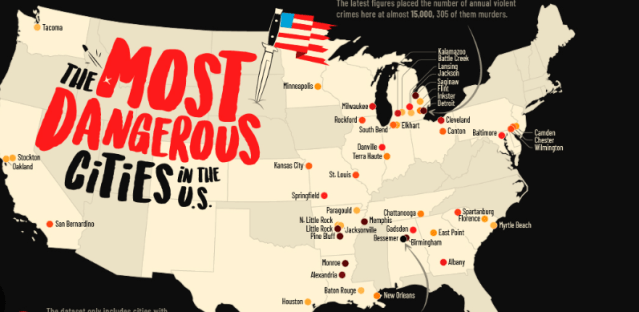
The Most Dangerous Large City in New Jersey: Camden

With a population hovering around 70,000 residents, Camden has long been associated with high crime rates. While the city has made measurable improvements over the past decade, it still ranks as the most crime-impacted city in New Jersey among those over 50,000 residents.
Let’s look at the numbers.
Crime Statistics (Recent FBI & State Reporting Trends)
- Violent crime rate: Approximately 1,200–1,600 incidents per 100,000 residents
- Aggravated assault: Often exceeding 900 per 100,000
- Robbery: Roughly 250–350 per 100,000
- Homicide rate: Historically elevated, though significantly reduced from peak years
- Property crime rate: Around 2,500–3,500 per 100,000
Camden once ranked among the most dangerous cities in America. Reforms, including restructuring of the police department, have reduced homicides and overall violent crime substantially compared to the early 2010s.
But per-capita violent crime remains among the highest in the state.
What Makes Camden High-Risk?
When I evaluate a city, I look beyond totals and into structural stress.
1. Concentrated Poverty
Camden struggles with long-term economic hardship. High unemployment and limited economic mobility create fertile ground for underground economies.
Crime doesn’t appear randomly. It clusters where opportunity disappears.
2. Density & Proximity
Camden sits directly across the river from Philadelphia, increasing regional mobility and cross-city criminal activity patterns.
Major transit corridors increase both legitimate commerce and criminal opportunity.
3. Drug Market Activity
Drug trafficking and related disputes historically contributed to violent crime levels. While enforcement and reform have improved trends, narcotics-related incidents remain a factor.
Where illicit markets operate, violence follows.
4. Legacy of Violence
Even as crime drops, reputation lingers. That reputation influences economic investment, housing patterns, and community development — all of which affect long-term safety.
Survival Prepper Risk Assessment: Camden
If you live in Camden:
- Harden home entry points.
- Maintain layered security (cameras, lighting, alarms).
- Avoid predictable routines.
- Stay aware of neighborhood-specific crime maps.
- Build trusted local networks — intelligence reduces vulnerability.
Camden is not the chaos it once was. But it requires vigilance.
The Safest Large City in New Jersey: Edison

With a population exceeding 100,000 residents, Edison consistently ranks among the safest large cities in the state.
Yes, there are small suburban towns with lower crime rates — but among cities over 50,000, Edison stands out.
Crime Statistics (Recent Trends)
- Violent crime rate: Approximately 100–200 incidents per 100,000 residents
- Aggravated assault: Typically under 100 per 100,000
- Robbery: Often below 40 per 100,000
- Homicide: Extremely rare annually
- Property crime rate: Around 1,000–1,500 per 100,000
Compared to Camden, Edison’s violent crime rate is dramatically lower — often a fraction per capita.
Why Is Edison So Safe?
From an investigator’s standpoint, several stabilizing factors stand out.
1. Strong Median Household Income
Higher median income correlates with lower violent crime. Economic stability reduces desperation-driven offenses.
2. Suburban Infrastructure
Edison’s layout is primarily suburban, with lower density housing and strong zoning separation between commercial and residential areas.
Reduced density often means fewer opportunity crimes.
3. Education & Workforce Stability
Edison benefits from high education attainment and proximity to corporate employment hubs.
Stable careers reduce crime volatility.
4. Community Engagement
Active neighborhood associations, well-funded public services, and consistent policing contribute to low violent crime levels.
Survival Prepper Risk Assessment: Edison

Edison is statistically safe.
But preparedness doesn’t disappear just because the numbers are low.
Recommendations:
- Basic home security remains essential.
- Secure packages (porch theft exists everywhere).
- Prepare more for severe weather events than violent crime.
- Maintain emergency supplies for coastal storm impacts.
In Edison, natural disasters may pose a greater risk than violent crime.
New Jersey’s Crime Landscape: The Larger Pattern
New Jersey consistently ranks among the safer states for violent crime nationally.
But here’s what most people miss:
Crime in New Jersey is highly localized.
Urban pockets — like Camden — experience elevated rates. Meanwhile, suburban cities like Edison maintain exceptionally low violent crime levels.
The key differences:
- Income distribution
- Population density
- Drug market concentration
- Regional transit flow
- Historic investment patterns
As a prepper, I don’t see New Jersey as “dangerous.”
I see it as stratified.
Some neighborhoods demand hardened awareness.
Others demand routine preparedness.