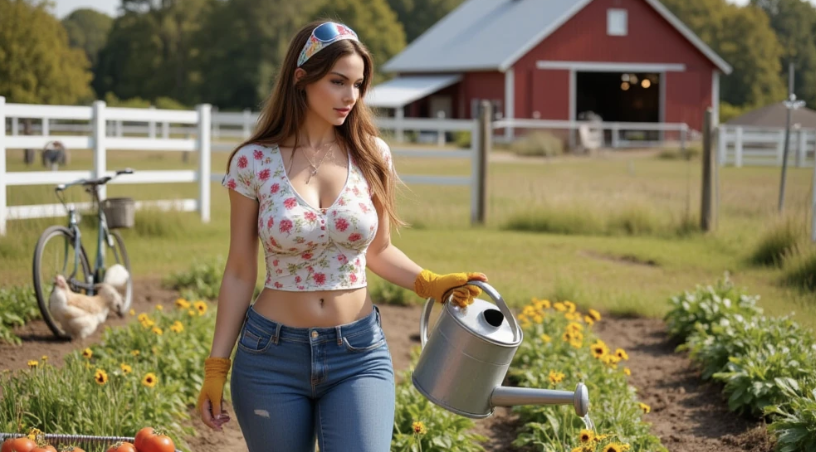
Kentucky Homestead Lifestyle

Let me tell y’all something right now: if one more person tells me homesteading is “just a cute hobby,” I might just throw a cast iron skillet through the wall of my root cellar. This ain’t a trend. This ain’t some TikTok fantasy where you frolic in wildflowers and collect eggs in a gingham dress while sipping kombucha. This is real life, and here in Kentucky, it’s blood, sweat, blisters, frostbite, and the kind of grit most folks wouldn’t recognize if it slapped them upside the head with a bag of feed.

Homesteading is not for the faint of heart. It’s for the tough, the tired, the stubborn-as-hell, and the people who understand that freedom comes from getting your hands in the dirt—not just talkin’ about it online.

I’ve built this Kentucky homestead from the red clay up with nothing but calloused hands, hard lessons, and a whole lot of failures. If you’re gonna live this life, you’d better be ready to learn skills they sure as hell don’t teach in schools anymore. And if you think it’s just about mason jars and chicken coops, think again.

Let me break it down for you. Here are 15 non-negotiable skills every Kentucky homesteader better damn well learn, or else they’ll be up a creek without a paddle, a chicken, or a crop.


🛠 15 Hard-Earned Kentucky Homesteading Skills

  1. Seed Starting & Soil Blocking – If you’re buying starts from Tractor Supply every spring, you’re doing it wrong. Learn to start your own with soil blocks, save your heirloom seeds, and get ahead of the late frosts that love to sneak up in March.
  2. Basic Carpentry – From chicken tractors to compost bins to cold frames, you have to know how to use a saw and a drill. Or go broke paying someone else.
  3. Canning & Preservation – Canning ain’t just some Depression-era nonsense. It’s how you survive the winter with dignity. Water bath, pressure canning, pickling—it’s not optional.
  4. Butchering Livestock – Don’t raise meat birds if you can’t bring yourself to butcher ’em. It’s part of the cycle. Learn to do it quick, clean, and with respect.
  5. Composting – You can’t buy your way into good soil. Compost is black gold, and anyone who thinks it’s “gross” ain’t never grown a real tomato.
  6. Beekeeping – Our Kentucky springs are sweet and wild—perfect for bees. Keep ‘em happy and healthy, and they’ll reward you with pollination and honey money.
  7. Soap Making – Store-bought soap is full of junk. Lard, lye, and lavender oil can keep you cleaner and more independent than any overpriced organic nonsense.
  8. Fermentation – Sauerkraut, sourdough, kefir—your gut will thank you and so will your pantry.
  9. Rainwater Harvesting – We get plenty of rain, but that don’t mean it’s always where you need it. Save it, store it, and never take a storm for granted.
  10. Fence Building – If you can’t build a fence, don’t even think about owning animals. Period.
  11. Animal Husbandry – Chickens, goats, rabbits, pigs. Know what they eat, how they behave, when they’re sick, and how to birth and butcher. Don’t romanticize it.
  12. Chainsaw Use & Safety – You live in Kentucky. You’ll need firewood. Trees will fall. Limbs will break. Learn to use a chainsaw or end up crushed or cold.
  13. Food Forest & Perennial Planting – Don’t replant every damn year. Elderberries, asparagus, comfrey, and pawpaws—put in the work once and reap the rewards for decades.
  14. First Aid & Herbal Remedies – Nearest hospital’s 45 minutes away, and that’s if the holler’s dry. Know your herbs. Know how to splint a break or stitch a cut.
  15. Mechanical Maintenance – Your tractor, tiller, and generator will break—usually in the rain, in the mud, and on a Sunday. Know how to fix them or freeze trying.

🔧 3 DIY Homestead Hacks That’ll Save Your Sanity

Now let’s get down to business with three DIY hacks I swear by—tried, tested, and perfected in the bluegrass backwoods.


1. Insulated Root Cellar from an Old Freezer

Don’t toss that busted chest freezer—bury it instead.

  • Dig a pit in a shaded, north-facing slope.
  • Drop that freezer in, lid up.
  • Cover the top with a few bales of straw and a pallet for weight.
  • Boom: instant root cellar for potatoes, carrots, apples, or squash. Keeps cool year-round.

You’ll save energy, money, and space—and you won’t be running up your electric bill just to keep some carrots crisp.


2. Gravity-Fed Chicken Watering System

Tired of your poultry knocking over their waterers or freezing ‘em solid? Build a gravity-fed watering system with:

  • A 5-gallon bucket with a lid.
  • A length of clear tubing.
  • Some poultry nipples or cups.
  • Mount it slightly uphill and use gravity to keep water flowing.

Add a black hose coiled in the sun to help keep it thawed in the colder months. You’ll spend way less time hauling water and more time watching healthy, hydrated hens.


3. Solar Dryer Made from Old Windows

Those antique windows collecting dust in your barn? Don’t trash ‘em—turn ’em into a solar dehydrator.

  • Build a simple wooden box frame.
  • Line it with mesh racks.
  • Mount the window on top, angled toward the sun.
  • Vent holes on the bottom and top (with bug screen!).

Perfect for drying herbs, mushrooms, apples, and jerky—without depending on the grid or a noisy dehydrator.


Now listen—Kentucky is a special kind of place. We’ve got unpredictable weather, stubborn soil, and more ticks than I care to count. But we’ve also got resilience, community, and a long legacy of self-sufficiency. You can’t fake this lifestyle. You live it, or you don’t. You respect the land, or it eats you alive.

I don’t want to hear about how “hard” it is to find raw milk or how your zucchini didn’t grow because you forgot to mulch. You want it? Then earn it. Show up every day, even when it’s 95 degrees and the goats got out again. Even when the canner breaks and your rooster tries to kill you. Even when no one understands why you live like this.

You live like this because you believe in something deeper: independence, stewardship, legacy.

So no, homesteading ain’t cute. It’s not easy. It’s not always fun.

But damn if it isn’t worth every drop of sweat, blood, and rain-soaked effort.

Iowa Homestead Lifestyle: Where Grit Meets Gut and No One’s Got Time for BS

Listen here, city slickers and wannabe farmers: homesteading in Iowa ain’t no stroll through a cornfield in spring. It’s blood, sweat, and damn near everything in between — and if you don’t come prepared with grit and a backbone, you’re gonna fail. Fast. I’m sick of hearing how easy this all looks on those pretty YouTube channels or in some “simple living” blog. No. Just no.

Iowa’s rich soil might be a blessing, but don’t let that fool you. The weather here will whip your ass — freezing winters, scorching summers, and storms that’ll tear up your whole damn place if you ain’t ready. If you want to live this lifestyle right, you better learn the skills and hacks that make survival and success possible. So buckle up, because I’m about to lay down the truth on 15 essential homestead skills every Iowa homesteader needs, plus three DIY hacks to keep you rolling when the world’s trying to screw you over.


15 Essential Homestead Skills for Iowa Homesteaders

  1. Soil Testing & Amendment
    Don’t just plant and pray. If you want crops to grow in this dirt, you need to test the soil for pH and nutrients, then add lime, compost, or manure accordingly. Lazy gardeners get no harvest here.
  2. Crop Rotation & Companion Planting
    Iowa’s soil gets tired if you don’t rotate your crops year to year. Plus, planting the right combos like beans with corn keeps pests at bay without chemicals.
  3. Seed Saving
    Stop buying seeds every damn season. Learn to save and store your own seeds. It’s survival insurance and money saved — and you’ll be thanking yourself when that seed company jacks prices up.
  4. Chicken Raising
    If you think chickens just roam and lay eggs, think again. You’ve gotta know how to build secure coops, manage feed, fend off predators, and handle sickness. This ain’t a petting zoo.
  5. Butchering & Meat Processing
    If you raise animals, you better know how to process them yourself. No one’s coming to hold your hand or do it for you. It’s bloody work but necessary if you want real food freedom.
  6. Preserving Food
    Canning, drying, fermenting — if you’re not preserving your harvest, you’re wasting it. Iowa’s growing season’s short; you gotta eat well all winter.
  7. Firewood Gathering & Splitting
    Heating a homestead in Iowa’s winter ain’t cheap. Learn to cut, split, and stack firewood properly — or freeze your ass off.
  8. Basic Plumbing Repair
    I’ve seen too many folks call a plumber for every drip or clogged pipe. Learn to fix leaks and maintain your water system. It’ll save you money and headaches.
  9. Fence Building & Maintenance
    Whether you’re keeping critters in or pests out, a solid fence is a must. Know how to build and repair fences fast because Iowa’s wildlife will test your defenses daily.
  10. Tractor & Equipment Maintenance
    If you’re running a tractor, mower, or tiller, you better know how to keep it running. No mechanic on call for you when you’re 20 miles from town.
  11. Rainwater Harvesting
    Iowa gets its share of droughts despite all the rain. Catch and store water for irrigation and chores — it’s a lifesaver.
  12. Soap Making
    Yeah, soap. Making your own is cheaper, chemical-free, and a step toward true self-reliance. Plus, nothing beats homemade soap for hard-working hands.
  13. Basic Carpentry
    Fix your roof, build your coop, repair your porch — you need carpentry skills or you’ll be stuck waiting on contractors who’ll charge you an arm and a leg.
  14. Herbal Medicine & First Aid
    When the nearest clinic is miles away, knowing which herbs soothe a fever or stop bleeding is worth more than gold.
  15. Composting
    Iowa’s dirt can be good but it ain’t perfect. Building and maintaining a compost pile recycles waste and builds rich soil. No compost, no crops — simple as that.

3 DIY Homestead Hacks That’ll Save Your Ass on an Iowa Homestead

Hack #1: DIY Chicken Coop Predator Proofing
Raccoons, foxes, coyotes — they’re relentless here. Wrap the bottom of your coop with hardware cloth buried at least a foot underground in an L shape outwards. No digging under, no tearing through. Cheap, simple, and keeps your hens alive.

Hack #2: DIY Worm Compost Bin
Don’t buy expensive worm bins. Take an old plastic storage container, drill some holes for airflow and drainage, add bedding like shredded paper and kitchen scraps, then throw in worms. You get black gold compost for your garden without spending a dime.

Hack #3: Plastic Bottle Drip Irrigation
Iowa’s summer heat can fry your crops if you’re not watering right. Take empty plastic bottles, poke small holes in the cap, bury them neck-down near plant roots, and fill them with water. Slow, deep watering that saves time and water.


Why Iowa Homesteading Is Not for the Faint of Heart

Look, I don’t sugarcoat this shit. Iowa homesteading means getting your hands dirty and not complaining when the weather wrecks your garden, or the tractor breaks down, or your chickens go missing overnight. It’s not a weekend hobby — it’s a lifestyle that will chew you up if you’re half-assed.

But here’s the damn truth — when you learn these skills and get those hacks down, you gain a freedom that no city life can offer. You grow your own food, raise your own meat, build your own shelter, and survive off the land on your own terms. There’s nothing more satisfying.


A Day in the Life on an Iowa Homestead

You wake up before dawn, pull on your boots, and head outside. First task: check the chickens. That coop better be intact, eggs collected, feed topped off. Then it’s out to the garden, pulling weeds, inspecting for pests. Your compost pile needs turning today, so grab the pitchfork. You check the rain barrels; water’s running low — maybe time to move the irrigation system to that patch of corn.

Midday means fixing the fence that the deer crashed through last night. You patch holes, hammer new posts, and secure the wire tight. You’re exhausted but no time to rest. Next up is the soap batch you started last night — time to mold and set it. Then you haul firewood inside for the coming cold.

At sunset, you sit on your porch, the smell of fresh-turned earth and woodsmoke heavy in the air, knowing that every drop of sweat is a brick in the foundation of your independence. You may be tired, but dammit, you’re alive and you’re doing it your way.


Final Words for the Iowa Homesteader

If you’re thinking about homesteading here, know this: You’re signing up for hard work, stubborn lessons, and days when everything breaks at once. But with the right skills, the right attitude, and a few clever hacks, Iowa homesteading can be the most rewarding, grounding, and life-changing thing you ever do.

So get your hands dirty, learn every damn skill you can, and build your homestead like your life depends on it — because it does.

New Mexico Homestead Lifestyle: No Excuses, Just Grit

Listen here, city slickers and armchair farmers—homesteading in New Mexico isn’t some cute weekend hobby or Instagram aesthetic. It’s a full-throttle, dirt-under-your-nails, sweat-in-your-eyeballs way of life. The high desert isn’t a playground, and if you don’t have the backbone for it, you might as well pack up and go back to your cushy apartment with the air conditioning on max.

This land is dry, it’s hot, and it’ll test you every single day. But if you’re stubborn enough to stick with it, you’ll build a life that no Starbucks latte-sipping city dweller will ever understand. Here’s the raw truth: homesteading in New Mexico requires skills, guts, and a no-bullshit attitude.


15 Gritty Homestead Skills You Better Learn

  1. Water Harvesting and Management — This is New Mexico, for crying out loud! You don’t have a river flowing through your backyard; you’ve got dust and drought. If you’re not catching every drop of rain you can, storing greywater, and knowing how to find or dig wells, you’re doomed.
  2. Drought-Resistant Gardening — Forget your high-maintenance lettuce and tomatoes. You need to know how to grow chiles, beans, squash, and corn the way the indigenous people did—using techniques like dry farming and mulching to keep your soil from turning to dust.
  3. Composting — You’re not throwing away scraps; you’re turning them into gold. Composting isn’t optional; it’s survival. It feeds your soil, and good soil means crops.
  4. Livestock Management — Chickens, goats, rabbits—they all need water, feed, and protection from predators. And don’t get me started on butchering. You better be ready to handle it yourself, no squeamishness allowed.
  5. Solar Power Setup and Maintenance — The sun blazes down here, so solar is a no-brainer. But setting it up, wiring it correctly, and maintaining the system? That takes skill and know-how.
  6. Preserving Food — Canning, drying, freezing, fermenting—these aren’t just fancy foodie words. They’re the difference between eating or starving when the harvest dries up or the power goes out.
  7. Basic Carpentry — You want to build a shed, fence, or chicken coop? Learn to use a saw, hammer, and drill properly, or keep paying someone else while your place falls apart.
  8. Blacksmithing and Tool Repair — When your tools break, you can’t just run to Home Depot. You fix ‘em or make new ones. Basic metalworking skills keep you going.
  9. Herbal Medicine and First Aid — The nearest hospital is miles away. You need to know which plants heal wounds, ease pain, and treat illnesses, because waiting for an ambulance isn’t always an option.
  10. Fire Prevention and Control — Wildfires are a real threat here. Clearing brush, maintaining defensible space, and knowing how to fight fire with what you have around you is crucial.
  11. Irrigation System Installation — Drip lines, soaker hoses, gravity-fed systems—any water you waste is water you’ll regret. You need to know how to set these up and maintain them.
  12. Seed Saving — If you buy seeds every year, you’re bleeding money and making yourself dependent. Save and store your own seeds like your life depends on it—because it does.
  13. Animal Husbandry — Knowing how to breed, raise, and care for your livestock will save you money and make your homestead sustainable.
  14. Root Cellaring and Cool Storage — New Mexico’s heat means you can’t just leave your veggies in a basket on the porch. Root cellars or underground storage coolers are a must to keep your harvest fresh longer.
  15. Fence Building and Maintenance — Coyotes, javelinas, and stray dogs will eat your chickens and goats if your fence isn’t tight. Build it right or lose everything.

Now, If You Want To Survive Out Here, Try These 3 DIY Hacks

1. DIY Earthbag Raised Beds
Forget fancy raised beds that rot or need constant watering. Use sandbags or earthbags filled with native soil to build raised beds that hold moisture better, insulate roots from the harsh sun, and resist erosion. They’re cheap, sustainable, and tougher than anything you can buy at the garden store.

2. Solar Water Pump From an Old Car Radiator Fan
Need to get water from your well or cistern but don’t want to blow a fortune on solar pumps? Scavenge a 12-volt car radiator fan and attach it to a small water pump. Use a solar panel to power the fan and pump combo. It’s low-cost, uses recycled parts, and runs on pure desert sun power.

3. Chicken Tractor From Recycled Pallets
Chickens are great for pest control and fertilizing your soil, but free-ranging them can be dangerous and destructive. Build a movable chicken tractor with recycled pallets and wire mesh. It protects your flock, moves with them to fresh grass, and keeps your yard neat—plus, it costs next to nothing.


The No-BS Reality of New Mexico Homesteading

Don’t come out here expecting handouts or some picturesque lifestyle where you drink margaritas on a porch swing while your garden grows itself. Out here, you’re fighting against the sun, the wind, the wildlife, and sometimes even your own body. But damn it, if you push through, you’ll create a life that’s honest, raw, and real.

The land teaches you respect—respect for water, for the seasons, for the animals, and for yourself. You’ll wake up sore, dusty, and sometimes hungry. You’ll lose crops, you’ll lose livestock, and you’ll curse the day you thought homesteading was a “cute” idea.

But you’ll also see your first sprouts crack through the dusty earth, watch your chickens thrive, and taste vegetables so fresh they slap you awake better than any coffee. You’ll build skills your grandparents dreamed of passing down but never had the guts to do.

If you’re ready to quit whining and start working, New Mexico’s homestead lifestyle will make a badass homesteader out of you yet.


So, stop dreaming, start digging, and learn to thrive or get out of the way. This ain’t for the faint-hearted. It’s for the angry, the stubborn, and those who refuse to be owned by the modern world.

The New York Homestead Lifestyle: No Excuses, Just Grit and Grind

Listen here, city slickers and wannabe homesteaders who think this is some romantic, Instagram-worthy fairy tale. New York is NOT just the Big Apple and flashy skyline. For those of us who’ve dragged our sorry selves out of the rat race and planted roots deep in the dirt of this unforgiving state, homesteading is a fight. A daily battle against weather, regulations, and sometimes even our own stubborn selves. This lifestyle isn’t about pretty farmhouse Pinterest boards — it’s about raw grit, hard work, and skills earned in sweat and bruises.

And if you want to make it here, you better learn quick and work harder.


Homestead Skills Every New York Homesteader Should Master — Or Prepare to Fail

  1. Soil Testing and Amendment – New York soils can be tricky; rocky and acidic in some parts, clay-heavy in others. If you don’t know your soil pH and how to amend it, you’ll grow nothing but weeds and frustration.
  2. Raised Bed Gardening – Because some New York soil is just that bad. Raised beds let you control your dirt, drain water properly, and stretch your growing season.
  3. Season Extension Techniques – Frost hits early and late here. Learn to build cold frames, hoop houses, or use row covers to protect your crops.
  4. Composting – If you’re not turning kitchen scraps and yard waste into black gold, you’re wasting money on fertilizers you don’t need.
  5. Rainwater Harvesting – New York gets plenty of rain, but the city water bills and droughts in summer make collecting rain a no-brainer.
  6. Basic Carpentry – From fixing fences to building coops and sheds, if you can’t swing a hammer and saw, you’re hiring yourself out of your own homestead.
  7. Animal Husbandry – Chickens, goats, bees — New York zoning might limit you, but where you’re allowed, you better know how to care for them or they’ll die on you fast.
  8. Preserving and Canning – Summer crops don’t last forever. If you can’t can, ferment, or dry your produce, you’re wasting your harvest.
  9. Firewood Splitting and Stacking – Heat in winter doesn’t come cheap. Firewood is life, and splitting it is a brutal workout you either love or hate.
  10. Basic Plumbing Repairs – When your pipes freeze or your septic clogs in the middle of winter, waiting for a plumber ain’t an option.
  11. Trap and Pest Control – New York is crawling with critters. You’ll need to protect your garden and livestock from deer, raccoons, groundhogs, and those ever-nasty mice.
  12. Seasonal Crop Rotation – Keep your garden healthy and your soil from dying by knowing what to plant where and when.
  13. Basic Welding – From repairing metal tools to building gates, welding saves you money and headaches.
  14. Seed Saving – Don’t be a slave to the seed companies. Save your own seeds to maintain hardier, adapted plants year after year.
  15. Foraging and Wildcrafting – New York’s forests and fields have wild edibles, and if you know your plants, you can supplement your pantry for free.

Why I’m Mad: The Grit Behind Every Good Homestead

New York is a state of contradictions. Sure, you’ve got the Hudson Valley, the Adirondacks, and the Catskills, all gorgeous and rich with resources. But you’ve also got frost that will bite your seedlings in May and September, zoning laws that make raising a pig a bureaucratic nightmare, and neighbors who don’t understand why you’re raising chickens instead of dogs.

I’m mad because homesteading here means double the work and half the support. There’s no sugarcoating it: this is a place where you either toughen the hell up or pack it in.

But for those of us who stay, who fight through every problem and every bad weather day, the reward is a self-sufficient, sustainable lifestyle that the city slickers will never understand.


3 DIY Homestead Hacks to Save Your Sanity in New York

1. DIY Cold Frame from Old Windows
Don’t spend a fortune on fancy hoop houses or greenhouses. Raid your local Habitat for Humanity ReStore or thrift stores for old windows. Build a simple cold frame box and prop the windows at an angle. This baby extends your growing season by protecting your seedlings from late frost without sucking up your wallet.

2. Chicken Waterer from a Buckets and PVC Pipe
Chickens need clean water, especially when it freezes overnight. Take a 5-gallon bucket, drill a small hole at the bottom, and attach a length of PVC pipe to create a gravity-fed waterer. Add a simple float valve system (or improvise with weights) to keep water flowing without spilling. It saves you from freezing your fingers off every morning scraping ice off the coop waterer.

3. Pallet Compost Bin with Layers
Grab 3 old pallets, stand them up in a square, and fasten together to create a cheap compost bin. Layer green yard waste, kitchen scraps, and brown leaves, turning often to speed decomposition. The pallets allow for airflow and make managing your compost easier. Bonus: if you stain or paint it, it lasts longer against New York’s wet weather.


The Reality Check: No Sugar-Coating This New York Homestead Life

Forget the cute stories about waking up to chickens clucking and drinking fresh milk at dawn. Here, the chicken might have a broken leg from a fox attack, the milk goat might be sick, the snow might be piled six feet high blocking your access to your root cellar, and your well might freeze solid.

If you want to succeed on a New York homestead, you need:

  • Patience to wait out the seasons
  • Knowledge to prevent and fix disaster
  • Grit to keep working even when it all goes sideways

We’ve got short growing seasons, fierce winters, and a state bureaucracy that will frustrate the hell out of you.

But if you tough it out, you’ll grow food you can trust, create a sustainable life for your family, and maybe—just maybe—build something worth passing down.


The Homestead Life: Not for the Faint of Heart

So, to all the dreamers who think New York homesteading is just about planting heirloom tomatoes and making artisanal goat cheese—wake up. It’s about fighting nature and neighbors, learning hard skills like firewood splitting and carpentry, and improvising like hell when the tractor breaks down on a freezing April morning.

If you’re not ready to get your hands dirty, sweat, and sometimes curse, this life will chew you up and spit you out.

But if you are? Welcome to the wild, stubborn, sometimes maddening New York homestead lifestyle. It’s brutal, but it’s ours. And nothing tastes better than food you grew with your own damn hands.

Heat Is the Enemy: How to Defend Your Survival Garden from the Summer Onslaught

When you’re living with a prepper mindset, your garden isn’t just a hobby—it’s a lifeline. It’s your food, your medicine, and your independence. But come the dog days of summer, the very source of life—sunlight—turns into a slow-burning threat.

Make no mistake: extreme heat is a silent killer, and your crops are often the first to suffer. If you’re not prepared, weeks or months of hard work can vanish in a matter of days. We’re talking dry, cracked soil, wilting greens, and ruined yields.

But this isn’t just about gardening—it’s about survival.

So here’s how we fight back. These aren’t luxury tips for weekend hobbyists. These are battle-tested, prepper-grade tactics to protect your food supply when the heat tries to take it from you.

CLICK HERE TO LEARN HOW TO NEVER STARVE WHEN DOOMSDAY HITS!


1. Watering at the Right Time: Dawn and Dusk Are Your Allies

Prepper Tip #1: Water early in the morning or at dusk—not in the heat of the day.

It might seem like a good idea to douse your garden at high noon, but don’t fall for it. Watering when the sun is overhead leads to rapid evaporation. Worse, droplets can magnify sunlight and scorch leaves.

Instead, water at first light or just after sundown. This gives the moisture time to soak deep into the soil, reaching the roots where it matters most. Use a slow drip or soaker hose if possible—conservation is key.


2. Mulch: Your Garden’s First Line of Defense

Prepper Tip #2: Use mulch to trap moisture and insulate the soil.

A thick layer of mulch helps block the sun’s rays, keeps your soil cooler, and dramatically reduces water loss. Think of it as armor for your garden. Go for organic mulch like straw, grass clippings, shredded bark, or even dried leaves. Not only do they hold in water—they break down and enrich the soil.

Apply it two to four inches deep around your plants. Don’t skimp.


3. Shade Strategically

Prepper Tip #3: Use shade cloths or makeshift barriers to shield vulnerable crops.

Not every plant handles direct, relentless sunlight the same way. Leafy greens like lettuce, spinach, and herbs will bolt and die off if exposed too long. Use shade cloth (30–50% density) or repurpose tarps, bed sheets, or burlap sacks.

You can even plant tall crops (like corn or sunflowers) to serve as natural shade barriers for smaller ones. Be smart. Be tactical.


4. Prioritize Deep Watering Over Frequent Sprinkling

Prepper Tip #4: Train your plants to develop deep roots by watering less often but more deeply.

Shallow, frequent watering trains roots to stay near the surface, where they’re vulnerable to heat and evaporation. Instead, give your plants a good, deep soak a couple of times a week. This encourages roots to go deeper and tap into cooler, moist soil layers.

Think long-term survival, not just short-term fixes.


5. Move and Cluster Potted Plants

Prepper Tip #5: Group containers together and relocate them to shade zones.

Potted plants are more prone to heat stress—they dry out faster and have no insulation from surrounding soil. In extreme heat, cluster them together to create a humid microclimate. Better yet, move them under trees, porches, or makeshift shade shelters.

Containers? Use light-colored pots if possible—they absorb less heat.


6. Harvest Early and Often

Prepper Tip #6: Don’t let your food rot in the field—harvest as soon as it’s ready.

Fruit left on the vine too long in extreme heat is a target for sunscald, rot, or pest damage. Check your plants daily and harvest early in the morning when fruits are plump and hydrated.

Preserve immediately—can it, dehydrate it, or root cellar it. This is about food security.


7. Build Windbreaks and Heat Shields

Prepper Tip #7: Create simple windbreaks or reflective barriers for added protection.

High winds combined with heat can strip moisture from soil and plants. Use fencing, stacked straw bales, or even old pallets to build a windbreak. To reflect harsh sun from your crops, lean old metal roofing or foil-covered boards on the sun-facing side.

Your garden deserves cover fire—so give it some.


8. Monitor Soil Conditions Daily

Prepper Tip #8: Stick your finger 2–3 inches into the soil—every day.

Soil may look fine on the surface and be bone-dry underneath. This is where hands-on awareness beats any weather app. Check your moisture levels and inspect the leaves. Curled or limp leaves are signs you need to act fast.

Don’t wait for visible damage—anticipate it.


9. Rotate and Rest Crops as Needed

Prepper Tip #9: In severe heat, it’s OK to let parts of your garden rest.

If you’re experiencing prolonged drought and limited water access, scale back. Focus on high-yield, high-value crops and let less important sections go fallow. This conserves energy, water, and resources.

Remember—tactical retreat is not failure. It’s long-term survival.


10. Keep a Summer Heat Garden Log

Prepper Tip #10: Track what works and what fails every summer.

Prepping is about learning and adapting. Keep a notebook or digital log of heatwaves, water usage, plant stress signals, shade tactics, and what crops performed best. Each season is a test—pass or fail depends on your ability to adapt.


Final Word: Fight Like Your Food Depends On It—Because It Does

Your survival garden isn’t just dirt and plants. It’s your independence. It’s what separates you from relying on empty grocery shelves or FEMA handouts when SHTF. And summer? Summer is the battleground where you prove whether your garden is a fortress—or a failure.

So water wisely. Shade strategically. Use every tool, trick, and tactic at your disposal. Because come July and August, there are no second chances.

Your food security depends on what you do now.

Stay sharp. Stay ready. Stay growing.