Starting From Nothing: My Painful Journey Into Basic Food Storage Prepping After Losing It All

I’m not proud of the man I became after everything fell apart.
When people talk about SHTF scenarios, they do it with a strange mix of fear and fascination. Some even romanticize it—imagining themselves as rugged lone wolves, capable of thriving when society collapses. I used to be one of them. I thought surviving would be instinctive, automatic, part of some primal ability buried deep inside. But instincts mean nothing when reality is colder, harsher, and hungrier than your imagination ever prepared you for.

I lost everything because I thought I was smarter than the disaster that came for me. I believed I had “enough” without really knowing what enough meant. I confused optimism for readiness, and that failure cost me more than possessions—it cost me people, comfort, security, and a sense of worth I still struggle to regain.

So now I write these words not as an expert, not as a brave prepper, but as someone who learned every lesson in the most painful way possible. If you are just getting started with basic food storage preps for an SHTF moment, I hope my failures will keep you from repeating them.


Why Food Storage Matters More Than You Think

When the world is still intact, food feels like an afterthought. Grocery stores glow on every corner. Restaurants hum with life. Delivery apps bring meals to your doorstep in minutes. It all feels so permanent—until the day it isn’t.

When SHTF hit my area, the grocery stores were empty within hours. Not days. Hours.
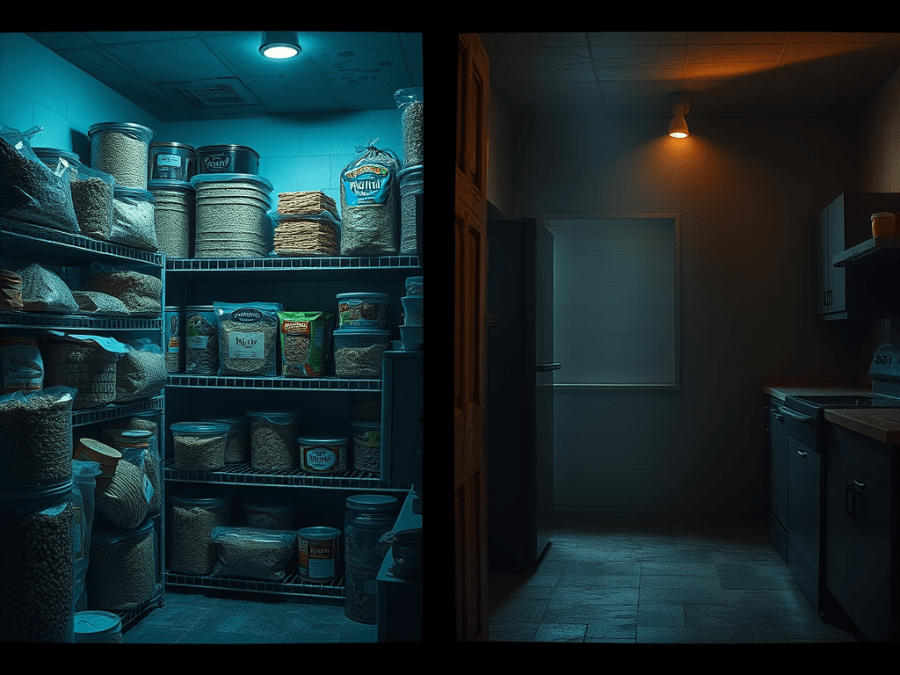
I remember walking down an aisle stripped bare, my footsteps echoing off metal shelves like the sound of a coffin lid closing. I had canned beans at home, maybe a bag of rice that I’d been ignoring in the pantry, and some stale cereal that I had forgotten to throw out. It wasn’t enough. Not even close.

If you think you have time to prepare later, you don’t. If you think you can improvise, you can’t. When everyone is scrambling, desperation destroys creativity. People who never stole a thing in their lives will fight over a dented can of tomatoes. People you trusted will become strangers. And you—if you’re like I was—will learn the meaning of regret in its rawest form.

That’s why food storage isn’t optional. It’s the foundation of survival.


Start Small—Because Small Is Still Better Than Nothing

Before everything fell apart, I always imagined prepping as something huge—stockpiling bunkers full of supplies, shelves fortified with military rations, huge five-gallon buckets lining the basement. I never started because it always felt overwhelming.

What I should have done—and what you should do—was start small. Even a single week of food stored properly can make the difference between panic and calm.

Here’s what I wish someone had told me:

1. Begin With a 7-Day Supply

A solid first step is simply making sure you can feed yourself (and your family, if you have one) for seven days without outside help.
This baseline prep includes:

  • Rice (cheap, long-lasting, filling)
  • Beans (dried or canned)
  • Canned meat like tuna or chicken
  • Pasta
  • Tomato sauce or canned vegetables
  • Oatmeal
  • Peanut butter
  • A few comfort foods (your sanity will thank you later)

This isn’t glamorous. It doesn’t look like the prepper fantasy you see online. But this humble supply can hold you steady when the world begins to tilt.

2. Build Up to 30 Days

Once you have a week, build toward a month.
At 30 days of food, something changes inside you. You begin to feel a kind of quiet strength. A stability. Not the loud confidence of someone bragging about their gear, but the soft, steady reassurance that you won’t starve tomorrow.


Keep Your Food Simple and Shelf-Stable

One of my big mistakes was buying “prepper food” without understanding my needs. I bought freeze-dried meals that required more water than I had available. I bought bulk grains without storing them correctly. Mice had a better feast than I did.

Focus on what lasts and what you’ll actually eat. Survival isn’t a diet—it’s nourishment.

Food Items That Last

  • White rice
  • Pasta
  • Rolled oats
  • Peanut butter
  • Canned tuna, chicken, and sardines
  • Canned vegetables
  • Canned soups
  • Honey (never spoils)
  • Salt and spices
  • Instant potatoes
  • Powdered drink mixes (helps fight taste fatigue)

Store It Right

This is where my downfall truly began: poor storage.
No matter how much food you gather, it’s worthless if ruined by:

  • Moisture
  • Heat
  • Pests
  • Light
  • Poor containers

Store food in cool, dry areas. Use airtight containers for grains. Label everything with dates. Don’t let your efforts rot away in silence the way mine did.


Rotate—Or Watch Your Supplies Die in the Dark

I used to think storing food meant sealing it away and forgetting it until disaster struck. That’s how I lost half my supplies: expiration dates quietly creeping past, cans rusting behind clutter, bags of rice turning to inedible bricks.

The rule you need to tattoo onto your mind is:

“Store what you eat. Eat what you store.”

Rotation keeps your stock fresh. It keeps you used to the foods you rely on. And it stops your prepping investment from becoming a graveyard of wasted money and ruined nourishment.


Water: The Part Everyone Ignores Until It’s Too Late

I had food. Not enough—but some. But water?
I had barely any. When the taps ran dry, reality hit harder than hunger ever did.

For every person, you need one gallon of water per day—minimum. Drinking, cooking, cleaning, sanitation—it all drains your supply faster than you think.

Start with:

  • A few cases of bottled water
  • Larger jugs or water bricks
  • A reliable filtration method (LifeStraw, Sawyer Mini, etc.)

Food will keep you alive.
Water will keep you human.


Don’t Learn the Hard Way Like I Did

Prepping isn’t paranoia.
It isn’t fearmongering.
It isn’t overreacting.

It’s the quiet, painful understanding that no one is coming to save you when everything falls apart.

I learned too late.
I lost too much.
I live every day with the weight of those failures.

But you can learn from me.
You can start now, with something small, something humble, something that grows over time.

And when the next disaster comes—and it will—you won’t feel that crushing panic I felt standing in an empty store staring at empty shelves. Instead, you’ll feel a sense of calm strength, knowing you took your future seriously.

I hope you prepare.
I hope you start today.
And I hope you never have to feel the kind of regret that still keeps me awake at night.
Super Duper Important Food Storage Organization: The Harsh Reality Preppers Keep Ignoring

If there’s one thing I’ve learned after years of watching society march itself off a cliff with a smile, it’s this: most people can barely keep their sock drawer organized, let alone their food storage. Everyone loves to talk big about “stocking up” and “being prepared,” but when it comes down to actually doing the unglamorous grunt work—taking inventory, rotating supplies, labeling containers—suddenly everyone becomes lazy, distracted, or “too busy.”

The truth, whether anyone wants to face it or not, is that food storage isn’t some Instagram-friendly pantry makeover. It’s not an aesthetic hobby. It’s a survival system, and if you treat it like anything less, you might as well hand your supplies to the nearest looter and call it a day.

So let’s get something straight: organization and inventory aren’t optional. They are the backbone of any real survival food plan. If you can’t track what you have, where it is, how long it will last, and what you need to replenish, then your entire so-called “prepping” is nothing more than a pile of false confidence waiting to collapse at the worst possible moment.

And moments like that are coming. Don’t kid yourself.


Why Food Storage Matters Even More Than You Think

Every year the world gets a little more chaotic, a little more unstable, and a lot more unpredictable. Supply chains break, crops fail, fuel prices spike, storms hit, and cities melt down—yet somehow the average person still believes grocery stores magically refill themselves overnight.

Maybe they think there’s a fairy in the back room restocking the shelves. Who knows.

But the reality is simple: the more unstable society becomes, the more critical your food storage system is. Not just the amount of food you have—though that matters too—but the management of that food.

Preppers often brag about having “months of supplies.” But when you ask them for specifics, like how many pounds of rice they have, the expiration dates on their canned goods, or how many calories their stash actually provides per day, they suddenly turn into philosophers—lots of vague answers and no actual numbers.

That’s not prepping. That’s denial.


Inventory Is the One Thing Lazy Preppers Refuse to Take Seriously

Let’s talk inventory. Most people hate it. It’s tedious. It requires writing things down. It forces you to face the fact that maybe you’re not as prepared as you thought.

And that’s exactly why it’s essential.

You cannot build a functional food storage system without knowing:

  • What you currently have
  • What’s expiring soon
  • What you need to rotate
  • What you need to replenish
  • How much you actually use over time
  • Where each item is stored
  • Your total caloric reserves
  • How long those reserves will last for each person in your household

If you’re rolling your eyes right now, maybe prepping isn’t actually your thing. Because survival is math, whether you like it or not.

Imagine waking up during a grid-down scenario, digging through your pantry, and realizing half your supplies expired last year because you never bothered to check them. Or discovering you bought 40 cans of soup… but all the same flavor your family hates. Or worse, realizing you stocked up on rice but didn’t buy a single pound of salt, seasonings, or oil to actually cook with it.

Inventory prevents disasters before they become disasters.


Organization: Because Chaos Won’t Save You

Some preppers treat their pantry like a junk drawer. Bags of beans shoved behind flour, cans stacked wherever they happen to fit, random Mylar bags tossed onto shelves “for later,” and half-empty containers leaning sideways like they’re begging to spill.

Do you know what that creates?

Chaos. Confusion. Waste. And vulnerability.

If you ever experience a real emergency, you won’t have time to “dig around and see what’s here.” You need to be able to access what you need immediately—and you need to know it’s still good, sealed, and edible.

Here are the harsh truths:

1. If it isn’t labeled, it doesn’t exist.

Write dates on EVERYTHING—every bucket, every can, every jar, every Mylar bag. If you’re too lazy to label, you’re too lazy to survive.

2. If you can’t see it, you won’t use it.

Deep shelves and unlit storage rooms are silent killers of supplies. Install lighting, use clear containers, and never bury critical food behind junk.

3. If it isn’t rotated, it WILL expire.

FIFO (First In, First Out) isn’t a suggestion. It’s the law of food storage. Treat it like one.

4. If it’s not grouped, it’s not organized.

Cans with cans. Grains with grains. Snacks with snacks. Stop mixing categories like a chaotic raccoon scavenging a dumpster.

5. If your storage isn’t protected, rodents and moisture will destroy it.

You’d be shocked how many preppers lose food to conditions they should have controlled.


People Who Don’t Organize Always Pay the Price Later

Most people assume they’ll be calm and rational when trouble comes. They won’t. Stress shuts down logical thinking. Panic makes people sloppy. Chaos fuels mistakes.

And when your brain is foggy with fear, trying to organize your pantry will be a disaster.

Do it NOW, when your hands aren’t shaking, when lighting still works, and when society hasn’t descended into noise and confusion.

Because here’s the ugly truth:

If you can’t manage your supplies during peace, you won’t magically become competent during crisis.


Building a Real Food Storage System

Here’s what actually works—tested, proven, and reliable:

1. Create a master inventory sheet
Digital or paper—doesn’t matter. Update it weekly.

2. Categorize everything
Grains, canned meats, canned vegetables, freeze-dried meals, spices, oils, comfort foods, etc.

3. Track calories, not just volume
Who cares how many jars you have if they don’t add up to enough daily fuel?

4. Use storage zones
Pantry, basement, long-term storage, emergency bug-out supply.

5. Keep a running “use and replace” list
If you take one item out, write it down immediately. No excuses.

6. Do monthly expiration checks
Yes, monthly. Not yearly like the optimistic amateurs.

7. Overprotect everything
Oxygen absorbers, Mylar, buckets, vacuum sealing—treat food like treasure because soon it might be.


Final Thoughts: Don’t Be Another Unprepared Statistic

The world isn’t getting kinder. It’s not getting more stable. And it sure isn’t getting more self-reliant. Every year, more people depend on fragile systems that can barely handle normal demand, let alone crisis.

You don’t have to be one of them.

But only if you stop pretending that buying food is the same as storing food. Only if you stop believing that survival is about “having stuff” instead of managing it.

Inventory and organization will either save you—or expose you.

It all depends on whether you take them seriously now, while you still have the chance.

Because once things go bad—and they will eventually—there’s no do-over.

You’re Already Dead If You Haven’t Started Prepping Your Food Supply

Let’s get something straight right out of the gate: society isn’t stable, the system isn’t secure, and the people running the world couldn’t keep a chicken coop alive, much less an entire civilization. Every time you turn on the news, some new catastrophe is unfolding—food shortages, transportation shutdowns, political meltdowns, economic collapses, cyberattacks, contaminated water supplies, natural disasters. Pick your poison. The writing isn’t just on the wall; it’s spray-painted in neon letters. And yet most people walk around like clueless livestock, grazing blindly toward the slaughterhouse.

But you? You’re here because you know better. You understand what the herd refuses to admit: the only person responsible for keeping you alive is you, and that starts with long-term food storage that can actually withstand the chaos barreling straight toward us.

I’m not here to coddle you. I’m here to shake you awake. If that makes me “too pessimistic,” fine. If being angry is what it takes to survive in a world full of people who think Uber Eats will magically appear after the grid collapses, then I’ll stay angry.

Let’s talk long-term food storage. Not the fantasy version. The real stuff. The supplies that keep you alive when the world finally face-plants into the dirt.


Why Long-Term Food Storage Is Non-Negotiable

Most people hear “long-term food storage” and think it means grabbing a few extra cans of soup during a supermarket sale. Cute. If your plan is to survive a weekend power outage, that might work. If your plan is to survive actual societal collapse, supply chain failure, or an extended emergency, you’re going to need far more than a pantry full of canned ravioli.

Ask yourself this:
If grocery stores closed tomorrow—not next year, not next month, tomorrow—how long would you last?

A week?
Three days?
A few miserable hours?

Let’s be brutally honest: most people would starve faster than they could comprehend what was happening. If you refuse to be one of them, you need a real food storage strategy—something resilient, diverse, nutrient-dense, and built to last decades.


1. Freeze-Dried Foods: The Prepper’s Crown Jewel

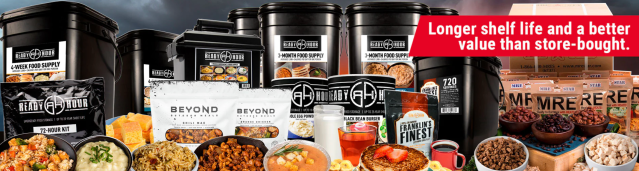
If you want food that lasts longer than today’s political promises, freeze-dried meals are your safest bet. Shelf lives of 25–30 years are typical, assuming you store them correctly in cool, dry environments. The texture is weird, sure. The taste can be hit or miss. But none of that matters when you’re staring down a long-term collapse and everyone else is bartering shoelaces for scraps of moldy bread.

Why freeze-dried works:

  • Insanely long shelf life
  • Lightweight
  • Nutrient retention remains high
  • Easy to prepare (just add water, assuming you’ve prepped that too)

They’re expensive upfront, but so is dying. Choose wisely.


2. Bulk Staples: The Backbone of Real Food Storage

While freeze-dried meals are your convenience stock, bulk staples are your survival workhorses. These are the foods humans have relied on for centuries—foods that fed armies, settlers, and every generation before modern society made everyone soft and useless.

Your Bulk Storage Must Include:

  • Rice (white rice lasts decades; brown does not—don’t get sloppy)
  • Dry beans (the humble protein source that won’t betray you)
  • Wheat berries (if you can grind your own flour, you’re already ahead of 99% of people)
  • Oats
  • Pasta
  • Sugar
  • Salt
  • Honey (this stuff lasts basically forever)

Stored properly in mylar bags + oxygen absorbers + food-grade buckets, these staples can outlive political careers, social media trends, and most human attention spans.


3. Canned Goods: Heavy but Reliable

Canned foods aren’t glamorous. They’re heavy, clunky, and sometimes questionable in taste. But you know what? They work. And in a world where shipping systems fail and electricity doesn’t exist, reliability matters more than whatever fancy diet trend is popular this week.

Ideal canned essentials:

  • Vegetables
  • Fruits
  • Meats (tuna, chicken, Spam, beef, sardines)
  • Beans
  • Tomato products
  • Soups and stews

Canned goods give you instant calories without fuel or prep. And in a crisis, convenience is survival.


4. Fats and Oils: The Most Overlooked (and Essential) Food Group

Calories keep you alive. Fat gives you calories. A lot of preppers focus on grains and protein while forgetting that fat is necessary for both energy and health. Good luck rebuilding a collapsed society while running on low-fat starvation rations like some malnourished dieter.

Store these:

  • Ghee (15+ year shelf life)
  • Coconut oil (long-lasting and stable)
  • Olive oil (shorter shelf life but valuable)
  • Shortening
  • Peanut butter (rotate frequently)

Without fats, your long-term plans turn into long-term suffering.


5. Comfort Foods: Don’t Be a Martyr

Listen, the world might collapse, but you don’t need to collapse emotionally with it. Morale matters. A spoonful of sugar might not fix civilization, but it can fix your mood long enough to keep you focused.

Stock:

  • Chocolate
  • Coffee
  • Tea
  • Hard candies
  • Shelf-stable baking ingredients

Call it luxury if you want — but it’s actually psychology.


6. Water Storage & Food Prep Compatibility

What good is freeze-dried food if you don’t have water? None. It’s as useless as trusting the government to save you.

Your food storage MUST align with your water storage and purification systems. If you’re relying on foods that require boiling water, make sure you actually have:

  • Stored water
  • Filtration
  • Fire source
  • Fuel
  • Backup methods if those fail

Prepping isn’t about hope. It’s about redundancy.


7. Rotation, Organization & Storage Discipline

Your food storage will only work if you maintain it. I know — personal responsibility is unpopular today, but that’s exactly why society is cracking apart.

Rules to live by:

  • Label everything
  • Track expiration dates
  • Rotate regularly
  • Store in cool, dry darkness
  • Use airtight containers
  • Don’t store where pests can ruin your future

Being sloppy now means being hungry later.


Final Thoughts: The World Isn’t Going to Get Better — But You Can Be Ready

People love to accuse preppers of fear-mongering. But the truth is, the world is doing a fine job fear-mongering itself. We’re not paranoid — we just pay attention. And long-term food storage isn’t a hobby, a trend, or some quirky personality trait. It’s survival. Pure and simple.

While everyone else is arguing about nonsense online, ignoring warning signs, and trusting fragile systems and incompetent leaders, you’re building something real: security, independence, and the power to survive what others won’t.

The world may be broken beyond repair — but with the right long-term food storage, you don’t have to fall with it.


THE CRUEL REALITY OF LONG-TERM FOOD STORAGE: Your Family Will Pay the Price for Your Laziness

Let’s rip the bandage off immediately:
If you don’t have long-term food storage, your family isn’t just “at risk” — they’re already doomed.

When the shelves go empty and the trucks stop rolling, you won’t be the one who suffers first. It’ll be the people you love — the ones counting on you to be prepared instead of distracted, careless, or complacent.

You think the world is stable?
You think “it won’t happen here”?
Then you’re living in the same fantasy land as the rest of the pacified, screen-addicted herd.

The hard truth is this:

Civilization is hanging on by a thread, and that thread is fraying.
When it breaks, families won’t just go hungry — they will face choices no human being should ever face.

Starvation doesn’t care about your feelings.
Reality doesn’t soften itself for your comfort.
And collapse won’t politely ask whether you’re ready.


WHEN THE FOOD STOPS, SO DOES HUMANITY

Starvation changes people.
It strips away morals, empathy, compassion, and sanity the way fire strips paint.

And you better believe it happens fast.

After the first week without food, people become desperate.
After the second, they become unrecognizable.
After the third, they become dangerous — even to the people they love.

Families fracture.
Communities turn hostile.
The neighbor you waved at for ten years will bash your door in for a bag of rice.

And the worst part?
Most households don’t even have enough food to last 72 hours.

Three days.
That’s all it takes for society to slip into madness.

If you have nothing stored, if your pantry is a joke, if your “preps” consist of a few expired cans and denial, then you’re not planning to survive.

You’re planning a front-row seat to the most savage side of humanity.


**THE HARSH TRUTH:

Your Family Will Look to YOU — and You’ll Have Nothing to Give**

Imagine being the person your spouse, your parents, your children, your siblings turn to as hunger sets in.
Imagine the hollow eyes, the trembling hands, the fear that builds when every cupboard is empty.

And imagine having no plan, no supplies, no backup — nothing to offer except excuses.

You’ll watch the people who depend on you grow weaker, angrier, and more desperate by the day.

Pretend all you want.
Rationalize all you want.
Call it “fearmongering” or “overreacting.”

But when collapse comes — whether it’s a grid failure, an economic breakdown, a cyberattack, a drought, a strike, or something far worse — the unprepared will descend into panic long before the prepared even break a sweat.


WHY LONG-TERM FOOD STORAGE ISN’T OPTIONAL — IT’S THE DIFFERENCE BETWEEN SANITY AND SAVAGERY

Let’s stop pretending this is optional.

You need:

  • Bulk staples (rice, beans, oats, pasta)
  • Freeze-dried foods (25–30 years shelf life)
  • Shelf-stable proteins
  • High-calorie fats
  • Complete meal kits
  • Cooking fuels
  • Water storage & purification
  • Backup systems for when everything fails

You need months, ideally years, of food security — not because it’s “cool,” not because it makes you a prepper, but because society is a rickety circus tent held up by corrupt clowns and broken poles.

The second the music stops, the whole thing collapses.

And the people without food?
They won’t think.
They won’t negotiate.
They won’t stay rational.

Hungry humans become predators — and unprepared families become victims.


IF YOU THINK THIS IS OVERKILL, YOU’RE NOT PAYING ATTENTION

Look around.

Crop failures.
Supply chain chaos.
Inflation.
Climbing food prices.
Global conflict.
Utility failures.
Governments that can’t even keep their own operations functioning.
Society ripping itself apart from the inside.

And every time chaos hits, the shelves empty instantly.

Now imagine an event that doesn’t get fixed.
Imagine a system that doesn’t restart.
Imagine emergency services that don’t show up.
Imagine a grocery industry that doesn’t recover.

What then?

The answer is simple:
Those who prepared will live.
Those who didn’t will face horrors that never had to happen.


THE FUTURE BELONGs TO THE PREPARED — OR NOT AT ALL

This isn’t “oh cool, prepping is a hobby.”
This is life and death.
This is civilization versus collapse.
This is security versus desperation.
This is preparation versus regret.

Every pound of rice you store is a shield.
Every can of meat is a safety net.
Every bucket of staples is another day your family doesn’t have to suffer.
Every freeze-dried meal is one more piece of sanity in a world gone feral.

You don’t prep because you’re afraid.
You prep because reality is unforgiving — and you refuse to let your family face that reality unprotected.

Those who fail to prepare will face desperation.
Those who prepare will face inconvenience.

Which future are you choosing?

Because when everything collapses, the window to choose closes forever.