How To Stay Alive During a New York Riot

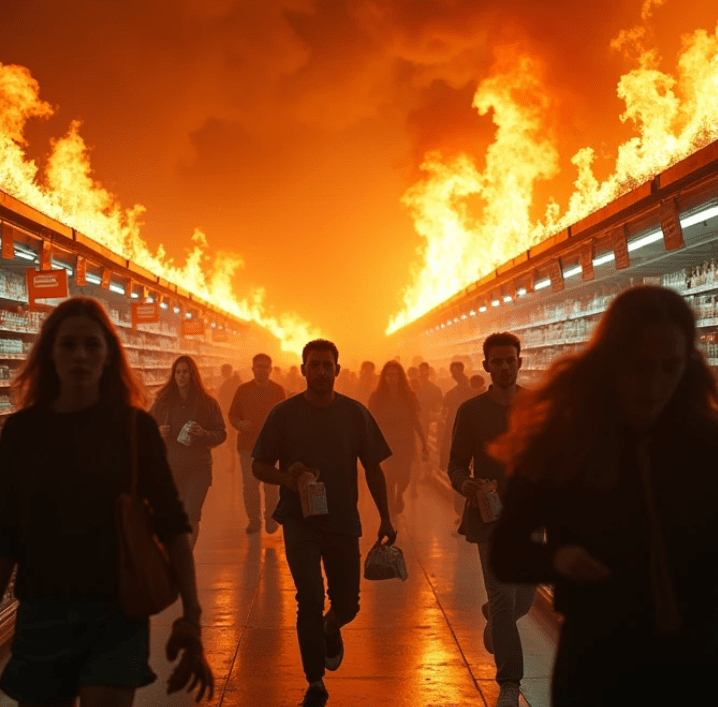
Let’s be real — when chaos strikes in a place like New York City, it happens fast, and it hits hard. I’ve lived through enough urban unrest and trained others on how to navigate it without freezing up or making deadly mistakes. Riots are unpredictable, and the average person doesn’t have a plan. But you’re not average — not if you’re reading this. So let me give it to you straight, skill for skill, tool for tool, mindset for mindset. Here’s how to stay safe and survive during a riot in New York.

First Rule of Survival: Know the Terrain

New York is dense. That’s both your greatest challenge and greatest advantage. High population means riots escalate quickly, but it also means there are more exits, more cover, and more places to hide. If you live here, walk your neighborhood weekly. Know alternate exits in every subway station. Know where alleyways connect, which buildings have open lobbies, and where construction zones give access to makeshift cover.

A prepper doesn’t wait for things to go sideways to start learning the streets.

8 Self-Defense Skills You Need to Master
1. Situational Awareness (SA)
This isn’t just “looking around.” SA means understanding what people are doing and why. If you see crowds forming, tension rising, and aggressive energy building — that’s your signal to exit. Notice patterns. Stay off your phone. Constant scanning of exits, people’s hands, and body language can give you a 30-second advantage. That’s life or death.

2. Verbal De-Escalation
It’s not cowardly to avoid a fight — it’s smart. Learn how to lower your voice, use non-threatening body posture, and speak in a way that calms aggressors. You want to give off the vibe: “I’m not your enemy, and I don’t want trouble.” That buys you time.

3. Close Quarters Elbow Strikes
In a crowd, you don’t have space for wide punches. Your elbows are devastating and fast. Strike to the jaw, neck, or ribs. Your goal isn’t to fight — it’s to escape. Learn how to use your elbows like daggers.

4. Knife Defense
If someone pulls a blade on you in a riot, distance is king. But if you’re trapped, you need to know how to redirect, trap, and disable. Look into techniques like the “Pak Sao” (slap-and-trap) used in Filipino martial arts and Krav Maga. Practice with a training knife at home.

5. Escape from Holds and Grabs
Get someone trained to help you drill escapes from wrist grabs, shirt grabs, and rear chokes. You’re more likely to be grabbed in a riot than punched. Your escape moves need to be muscle memory. There’s no time to think.

6. Improvised Weapons
Turn what you have into a tool. A pen in your hand is a stabber. A heavy keychain is a flail. Your belt buckle? A swing weapon. Everything around you can become a defense mechanism when you’re trained to see it.

7. Mobility Training
Learn how to jump fences, scale small walls, and squeeze through tight spaces. If you’re boxed in, mobility is your freedom. Practice parkour basics — vaulting, rolling, and wall climbs — in safe environments.

8. Striking for Distraction, Not Domination
You don’t need to knock someone out. A quick jab to the throat, kick to the knee, or rake across the eyes gives you a chance to run. That’s your win condition.

3 DIY Survival Weapons You Can Make at Home
1. Tactical Baton from a Flashlight
Get a heavy-duty flashlight like a Maglite. Wrap the handle in paracord for grip and stability. It’s legal, useful, and when used right, it’s a powerful blunt-force tool. Bonus: you’ve still got a working light source.

2. PVC Pipe Blow Dart Launcher
You’d be surprised how easy this is. Use a 1/2” PVC pipe, 2 feet long. Carve darts from wooden skewers or nails. Fletch with duct tape. Add a mouthpiece from rubber tubing. Can be used for distraction, pest control, or quiet defense if you train with it.

3. Slingshot with Steel Ball Bearings
Use surgical tubing and a forked branch or 3D-printed frame. Aim for temple, throat, or knee shots if you’re forced to defend. It’s silent, powerful, and easy to hide. Practice precision at 15–25 feet.

Remember: weapon legality in New York is strict. Keep these tools for survival, not aggression. And always know the law.

Shelter In or Bug Out?

If a riot breaks out while you’re home — shelter in. Secure your doors with a bar lock or wedge. Turn off lights, stay silent, and stay away from windows. Keep water and canned food in a blackout kit. Have a backup escape route — like a fire escape or rear hallway — if the building gets compromised.

If you’re caught outside, get out of the crowd. Head perpendicular to the mob’s direction. Avoid getting funneled into alleys or dead ends. Blend in — don’t make yourself stand out. Drop flashy gear and logos. A gray hoodie and jeans go unnoticed.

Survival Gear Checklist for Riot Conditions

  • N95 mask (for smoke, dust, pepper spray)
  • Impact-resistant goggles
  • Compact first aid kit (with clotting agent and bandages)
  • Sturdy gloves (for climbing, protection)
  • Water bottle with filter
  • Tactical flashlight (doubles as weapon)
  • Multi-tool
  • Bandana or shemagh (disguise or filter air)
  • Cash (small bills)
  • Burner phone or power bank

Everything fits in a small, inconspicuous backpack. This is your Riot Go-Bag. Always ready, never flashy.

Mental Fortitude

A lot of survival is mindset. Fear makes people freeze or panic. You’ve got to stay calm, assess, act. Practice stress inoculation: train under pressure, simulate chaos, learn how your body reacts. Breathe slow. Focus your senses. Move with purpose.

You aren’t a hero in a riot. Your goal is survival. You save yourself, your family, your gear. Anyone looking to play vigilante ends up in jail — or worse.

Team Up and Have a Plan

If you’ve got family or close friends in the city, establish a rendezvous point. Make a signal — a phrase or emoji — that means “Meet now.” Text is better than voice. Don’t rely on GPS or phone service. Have an offline map.

Train together. If someone panics, it drags the whole group down. Practice drills. Role-play. Even one hour a month of coordinated prep makes a difference.

Final Word

Riots are like wildfires — unpredictable and destructive. But they’re survivable if you’re trained, aware, and prepared. Whether you’re in Queens, the Bronx, or downtown Manhattan, the same rules apply: stay calm, be smart, and use what you’ve got.

You don’t need to be a Navy SEAL to survive. You need street sense, grit, and the will to keep moving when others freeze. I’ve trained a lot of people, and the ones who make it through the chaos are the ones who prepared when it was calm.

This city tests you. But you’ve got the tools now. So prep smart — and walk safe.
How To Stay Safe and Survive During a Riot in Louisiana (Especially New Orleans)

If you’re reading this, there’s a good chance you’re worried about the growing tension, unrest, and chaos spreading across cities—including right here in Louisiana. Whether it’s New Orleans, Baton Rouge, Lafayette, or a smaller parish town, no place is truly off-limits when society boils over.

I’ve been in this game for over 20 years. Former Marine, lifelong prepper, and self-defense instructor. I don’t sugarcoat things: when a riot kicks off, you’ve got two choices—be prepared or be prey. The goal isn’t to fight every battle—it’s to survive and protect what matters most: your life, your family, and your home.

Let’s get into the nitty-gritty. Below, I’ll lay out the top 8 self-defense skills you need to survive a riot, along with 3 DIY survival weapons you can build fast using what you’ve already got. But before that, I want you to understand the mindset: don’t panic—prepare.


First, Know the Nature of a Riot

Riots move fast and unpredictably. What begins as a peaceful protest can escalate in minutes with one bad actor. Fires, looting, and armed aggression can erupt out of nowhere. And in Louisiana, where gun laws are loose and tempers are fiery, things escalate fast.

You won’t have time to think in the moment. You’ll only have time to react. That’s why training and preparation save lives.


8 Self-Defense Skills You MUST Know Before a Riot

1. Situational Awareness

This is your #1 weapon—awareness beats strength. Always know your exits, keep an eye on crowd behavior, and trust your gut. If people start pushing, shouting, or moving aggressively, leave immediately. Watch hands, not faces—that’s where the danger comes from.

2. De-escalation Techniques

Sometimes your mouth can save your life. Know how to use calm, confident speech to avoid confrontation. Back away slowly, speak clearly, and avoid threatening posture. Your tone should be firm, not fearful.

3. Escape and Evasion Tactics

Move like a ghost. Stick to the edges of crowds, never the middle. Learn how to use alleyways, stairwells, parking garages, and even rooftops as exit routes. Blend in—don’t draw attention. Carry a hoodie, change your appearance quickly if needed.

4. Striking Vital Points

If it comes to a fight, go for the vitals: eyes, throat, knees, and groin. A good palm strike to the nose or throat can end a fight before it starts. This isn’t MMA—it’s survival. You’re buying time to escape, not win a trophy.

5. Improvised Weapons Training

You don’t need a gun to defend yourself. A flashlight, tactical pen, belt buckle, or even a steel water bottle can become a devastating weapon in the right hands. Train with what you carry every day.

6. Ground Defense

If you get knocked down, fight like hell to get up. Protect your head and vital organs, and know how to shrimp (escape from underneath) and post (create space). Learn basic BJJ escapes—they save lives.

7. Knife Defense & Use

Know both how to defend against a blade and how to use one. A fixed-blade knife is easier to deploy than a folding one in high-stress situations. Aim for disabling—not killing. Slash tendons, stab center mass, and get out.

8. Firearm Handling (If Legal and Trained)

Louisiana allows open and concealed carry, but only carry a gun during a riot if you’re fully trained. Understand escalation of force, legal consequences, and keep your finger off the trigger until you’re ready to shoot. Never brandish unless you intend to use it.


3 DIY Survival Weapons You Can Make at Home

When supply chains shut down or stores are looted, you’ll need to rely on your own resourcefulness. Here are three quick, brutal DIY weapons anyone can make.

1. The Pipe Baton

Find a metal or PVC pipe, about 1.5 to 2 feet long. Wrap the handle with paracord or duct tape for grip. Fill it with sand or small metal nuts to increase the weight. This is a blunt force tool that can break bones and end a confrontation fast.

2. The Slingbow (Modified Slingshot)

Take a high-tension slingshot and modify it to shoot arrows. Use surgical tubing for stronger draw, and fashion simple arrows from carbon rods or wooden dowels. It’s silent, reusable, and surprisingly accurate at short range.

3. The Weighted Sap Cap

Take a ball cap and sew lead fishing weights or metal washers into the rim of the hat. Looks normal—but swing it in a pinch, and it hits like a blackjack. Easy to carry, quick to use.


Additional Riot Survival Tips (Specific to Louisiana)

  1. Know Your Exits – Downtown New Orleans or Baton Rouge? Know where the bridges, tunnels, and back roads are. Avoid interstates during riots—they get jammed fast.
  2. Keep Your Vehicle Riot-Ready – Full tank of gas, bug-out bag in the trunk, and always park facing out for a quick escape.
  3. Stay Off Main Streets – Rioters gravitate toward popular streets, government buildings, and shopping centers. Avoid these areas at the first sign of unrest.
  4. Use Police Scanners or Local Apps – Get real-time updates. Apps like Scanner Radio, Citizen, or local Facebook groups can tell you where the chaos is happening.
  5. Avoid Confrontation – Your ego can get you killed. If someone challenges you, ignore and exit. Pride is the luxury of peace—not war.

Mental Toughness: Your Greatest Asset

In a survival scenario like a riot, your mindset is 80% of your success. You have to stay calm under chaos, make quick decisions, and protect your own. That includes understanding when to fight and when to flee.

Train regularly. Not just physically, but mentally. Simulate what you’d do in a riot. Go through “what-if” scenarios. Practice bugging out from your home. Rehearse using your DIY weapons.

Train like your life depends on it—because it might.


Final Words

I don’t write this to scare you—I write it to prepare you. I’ve seen what happens when good people get caught in bad situations. And I’ve seen how quickly the rule of law disappears when the fire starts spreading.

Louisiana is a beautiful state—but she’s wild, proud, and unpredictable. That means you can’t rely on the government, the police, or your neighbors when the lights go out and the crowd turns angry. You’ve got to rely on yourself.

Survival isn’t luck—it’s training.

How Your Children Can Protect Themselves From Stalkers

The world can be a dangerous place folks.

I was just watching a video on the television the other day that showed a grown man following a little girl.

Who knows what his motives where

But thankfully, the little girl managed to escape him.

My blood boiled as I watched that video.

What if my kids were in that place?

Would they also be able to escape that creep?

CLICK HERE TO LEARN HOW TO NEVER STARVE WHEN DOOMSDAY HITS!

I started thinking about what our children should do if they ever feel they are being followed.

I know. It’s a chilling thought. But let’s dive into this together.

First, it’s important we educate our children about this possibility.

We don’t want to scare them. We want to empower them. Equip them with the knowledge they need to stay safe.

Teach your kids that their intuition is one of the greatest tools they possess.

If something or someone is making them feel uneasy, there’s likely a good reason why.

Trusting this gut feeling can be a lifesaver.

Once they’ve identified this feeling, they should respond to it.

How?

Well, there are four simple steps they can follow.

  1. Confirm

If they feel someone is following them, tell them to cross the street or shift directions.

If the person does the same, it’s a clear signal that something might be amiss.

  1. Be Visible

Teach them to stay in well-lit, populated areas.

Encourage them to steer away from alleyways, wooded areas, or secluded streets.

There is safety in numbers.

  1. Reach Out

Have them memorize your cellphone number and the numbers of a few trusted adults.

If they feel unsafe, they should reach out to someone quickly.

In addition, teach them to make a noticeable commotion or yell if necessary. Drawing attention to the situation can often deter potential threats.

  1. Report

Once they’re safe, they should report the incident to you or a trusted adult, who can then inform the authorities.

I understand that this topic might feel a bit heavy. The last thing we want to do is instill fear into our children.

However, by empowering them with this knowledge, we give them the tools they need to navigate the world more safely.

My hope is that they will not have to use this knowledge.

But if the time comes, they’ll be ready.

Our job is to equip them for the world out there, and I can’t think of a more important task.

So let’s empower our young ones and make them more resilient.

Why Wilderness Survival Skills Are Not Enough

They say if you know how to build a fire, catch a fish, and make shelter from what nature gives you, you’re good. You’ll survive.

But that’s only part of the truth.

After 14 years living part-time off the grid — and the last three almost full-time — I’ve learned something they don’t often tell you in survival books or YouTube channels: wilderness survival skills are not enough.

CLICK HERE TO LEARN HOW TO NEVER STARVE WHEN DOOMSDAY HITS!

Don’t get me wrong. I’ve got the basics down. I can start a fire in the rain with soaked tinder and a ferro rod. I can snare rabbits, track elk, and purify water five different ways. I can read the wind like most men read a screen. And I’ve watched enough people glorify those skills like they’re some sort of mystical badge of honor.

But here’s the truth: Skills will keep you alive — they won’t keep you human.

When the sun drops behind the trees and the cold sinks into your bones, when you haven’t seen another face in ten days, when your food runs out and you’re tired of eating boiled bark tea and smoked squirrel — that’s when you learn survival is mental, emotional, and spiritual just as much as it is physical.


1. Mental Endurance Beats Physical Skill

There’s a moment in every extended survival situation when the novelty wears off. It’s usually around day 6 or 7. That’s when your mind starts playing tricks on you — when isolation, discomfort, and hunger begin whispering lies.

“You can’t do this.”
“Why are you even out here?”
“What if no one’s coming?”

You can have all the gear and know-how in the world, but if you don’t have the mental endurance to stay calm, make decisions under pressure, and silence the noise in your head — you’re done. I’ve seen guys with military training lose it out here, not because they didn’t know what to do, but because they couldn’t control their thoughts.

Discipline in the mind matters just as much as muscle in the arm.


2. Community > Competence (Yes, Really)

Lone wolf survival sounds romantic. But real survival — the long haul — isn’t meant to be done alone. Out here, I’ve learned to appreciate the power of community. A partner to keep watch while you sleep. Someone to spot danger you missed. A friend to say, “You’re not crazy, this is just hard.”

Even if you’re physically alone, the people you’ve invested in beforehand — friends, family, the tribe you trust — they’re your backup plan. And your reason to keep going.

Outlasting a storm is one thing. Outlasting loneliness is another.


3. Faith is the Fire That Doesn’t Go Out

This one’s personal, and not everyone will agree. But for me, faith in God is the difference between surviving and thriving.

There have been moments when I was one wrong step away from a broken leg and a slow death. Moments when the wind howled so loud I thought it might tear my cabin apart. Moments when the silence of the forest pressed in so heavy, it felt like drowning.

And in those moments, I talked to God. Not like some ritual. Not out of fear. But because I know I didn’t make this world — and I sure can’t hold it together by myself.

“My flesh and my heart may fail, but God is the strength of my heart and my portion forever.”
— Psalm 73:26

When you’re stripped of comfort, the only thing left is character. And character is either shaped by truth — or shattered by lies. My anchor has always been Scripture. Not as a crutch, but as a compass.


4. Resilience Means Nothing Without Purpose

You can suffer through almost anything if you know why you’re doing it. That’s true in war, in survival, in sickness, in life.

Out here, I’ve asked myself: Why am I doing this? What am I preparing for? What am I protecting?

If your only goal is to not die, then your world gets very small, very fast. But if your goal is to live well, protect others, steward the land, honor your values — then every hardship becomes training, not torment.

Purpose gives suffering meaning. And meaning gives suffering power.


5. Preparedness Without Wisdom Is Just Hoarding

You can stockpile food, ammo, and gadgets until your shed bursts. But if you don’t have the wisdom to use it wisely, share it well, or protect it humbly, then all you’ve done is delay the collapse — not survive it.

I’ve seen preppers treat people like threats, not neighbors. I’ve seen men stash enough rice for 10 years but couldn’t grow a tomato or mend a sock. That’s not resilience — that’s fear in disguise.

Real preparedness is practical, relational, and spiritual. It’s not just about building walls. It’s about knowing what’s worth protecting inside them.


Final Thoughts

So, no — wilderness survival skills are not enough. They’re a tool, not the toolbox.

If you want to survive — truly survive — in a world gone sideways, then you need:

  • A sound mind
  • A steady soul
  • A community you trust
  • A faith that anchors you
  • And a purpose that outlives you

I’ll keep training. I’ll keep sharpening knives and tuning traps and learning how to tan hides and build things with my hands. But I’ll also keep reading Scripture by lamplight, writing letters to the people I love, praying when the coyotes cry, and reminding myself that this life — even the hard parts — is a gift.

“The Lord is my shepherd; I shall not want… Even though I walk through the valley of the shadow of death, I will fear no evil, for You are with me.”
— Psalm 23:1,4

Survival is more than staying alive. It’s living like it matters.