Brooke Homestead’s Core Survival Pillars: The Essential Preparedness Guide for When Things Go Wrong
Brooke Homestead often tells her audience that preparedness isn’t about fear — it’s about responsibility.
Modern life is incredibly convenient, but it is also fragile. Supply chains stretch across the globe, power grids connect millions of homes, and digital systems control everything from banking to communication. When those systems fail — even temporarily — the consequences can arrive quickly.
As Brooke often says:
“Preparedness isn’t about expecting the worst every day. It’s about building the kind of life where your family is safe even when things go wrong.”
Through years of sharing preparedness knowledge, Brooke has broken survival planning down into core pillars — essential categories every household should address before worrying about advanced gear or extreme scenarios.
These pillars cover basic survival needs, essential gear, practical skills, and realistic emergency planning.
Below is Brooke Homestead’s framework for core survival preparedness.
1. Core Survival Pillars (The Essentials)
Every preparedness plan begins with the most fundamental human needs.
Without these basics, even the most advanced survival gear becomes useless.
Water
Water is the single most important survival resource. Humans can survive weeks without food but only a few days without water.
Brooke recommends storing at least one gallon of water per person per day as a baseline. This includes both drinking and minimal hygiene needs.
For longer emergencies, households should have multiple water solutions, including:
Stored water containers or barrels
Water purification tablets
Portable filters such as Sawyer-style filters or straw filters
Knowledge of nearby water sources like rivers, lakes, or wells
Water purification is critical because untreated water can contain bacteria, parasites, and other contaminants.
Simple methods like boiling, filtering, or chemical treatment can make many water sources safe to drink.
Brooke emphasizes redundancy.
“Never rely on just one water source. Storage, filtration, and purification together create real security.”
Food Storage
Food security is another core pillar of preparedness.
Most households rely on grocery stores that carry only a few days’ worth of inventory. When supply chains break down — whether from storms, strikes, or panic buying — shelves can empty quickly.
Brooke recommends building a 3-month to 1-year food supply gradually over time.
A well-balanced emergency pantry often includes:
Rice
Beans
Lentils
Pasta
Oats
Canned vegetables
Canned meats
Shelf-stable soups
Many preppers also store freeze-dried meals, which can last 20–30 years when properly sealed.
These skills allow families to extend food supplies and reduce dependence on external systems.
First Aid & Hygiene
Medical care becomes much harder to access during major disasters. Hospitals may be overwhelmed, transportation may be limited, and pharmacies could run out of essential medications.
For this reason, Brooke encourages building comprehensive medical kits that go beyond basic bandages.
Prepared households often include:
Trauma bandages
Gauze and compression wraps
Antiseptics
Pain relievers
Allergy medications
Tourniquets
Medical gloves
Thermometers
Prescription medications are also important. Many preparedness experts recommend keeping extra medication supplies whenever legally possible.
Hygiene is equally critical.
When sanitation systems break down, disease can spread rapidly. Emergency hygiene supplies may include:
Portable toilet bags
Soap and disinfectant
Hand sanitizer
Wet wipes
Waterless hygiene products
Cleanliness can prevent many illnesses that become dangerous during emergencies.
Shelter & Warmth
Protection from the elements is another survival priority.
Even mild weather can become dangerous without proper shelter, especially during extended outages or evacuations.
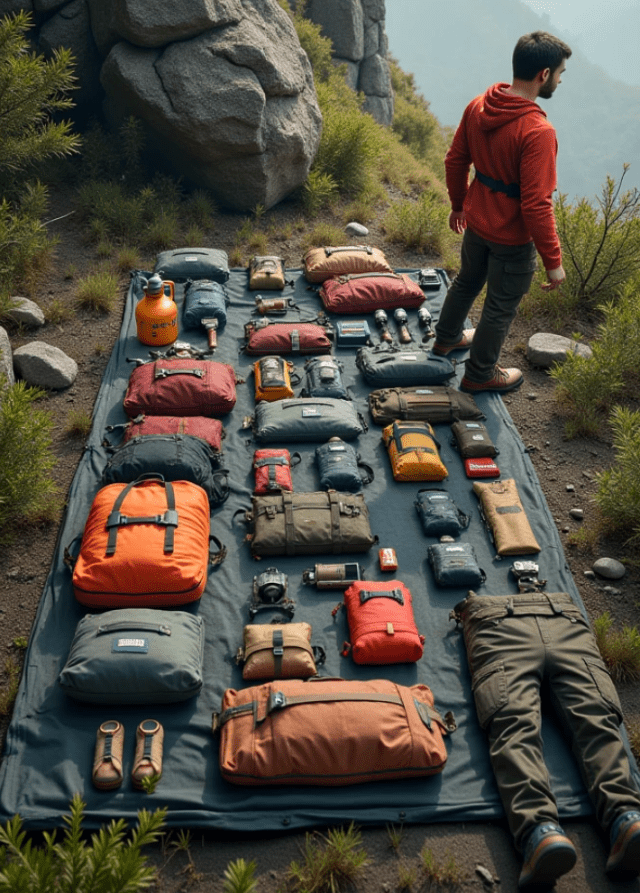
Essential shelter equipment includes:
Tents
Sleeping bags
Tarps
Emergency blankets
Ground pads
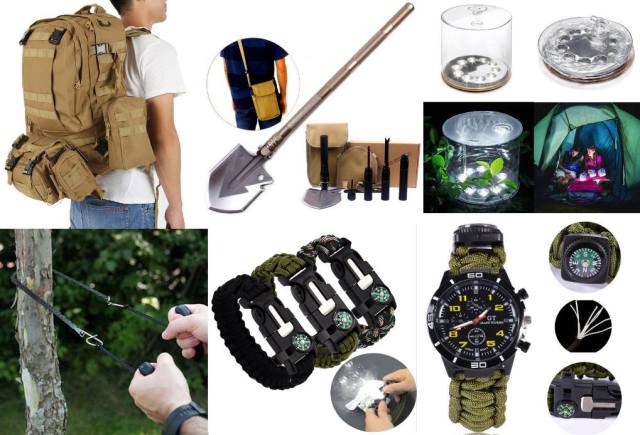
Fire-starting tools are also crucial. Brooke recommends carrying multiple fire-starting methods, including:
Ferro rods
Stormproof matches
Lighters
Fire provides warmth, light, cooking capability, and morale during difficult situations.
2. Gear & Infrastructure
Once the core survival needs are addressed, the next layer of preparedness focuses on mobility, communication, and infrastructure.
Bug-Out Bags (BOB)
A bug-out bag is a portable emergency kit designed to sustain a person for 72 hours during evacuation.
These bags typically contain:
Food and water
First aid supplies
Flashlights
Fire-starting tools
Extra clothing
Emergency shelter
Every family member should ideally have their own bag prepared in advance.
Everyday Carry (EDC)
Everyday Carry refers to small, practical tools people keep with them daily.
Common EDC items include:
Pocket knives
Flashlights
Multi-tools
Lighters
Compact first aid supplies
While small, these tools can solve many problems during emergencies.
Power & Light
Electricity powers nearly every part of modern life.
Prepared households often keep backup lighting and power options such as:
Solar generators
Flashlights
Lanterns
Spare batteries
Candles
Solar charging systems are increasingly popular because they allow renewable power generation during long outages.
Communication
Communication becomes vital during disasters.
Cell networks can fail, making alternative systems important.
Emergency communication tools include:
NOAA weather radios
HAM radios
Two-way radios
Satellite messengers
These systems allow people to receive updates and communicate when traditional networks fail.
Security
Emergencies can sometimes create unstable environments.
Prepared households focus on situational awareness and practical home security measures.
This may include:
Reinforced doors and locks
Outdoor lighting
Neighborhood cooperation
Personal safety planning
The goal is not confrontation but awareness and protection.
3. Skills & Knowledge
Gear alone does not create preparedness.
Brooke frequently reminds her audience that skills outweigh equipment.
Survival Skills
Basic survival skills can dramatically improve resilience.
Important skills include:
Fire-starting
Knot-tying
Navigation with map and compass
Foraging for edible plants
These abilities allow people to function even if equipment is lost or unavailable.
Medical Training
Medical knowledge is especially valuable when professional help is delayed.
Useful training includes:
CPR certification
Tourniquet application
Basic trauma care
Wound treatment
Many communities offer emergency medical training classes that can build life-saving skills.
Urban Survival
Preparedness isn’t only for wilderness environments.
Urban areas present their own unique challenges.
Urban survival knowledge may include:
Using silcock keys to access exterior water valves
Navigating city lockdowns
Growing food through urban gardening
Cities contain many hidden resources for those who know where to look.
4. Common Emergency Scenarios
Preparedness planning should focus on realistic events, not just extreme possibilities.
Brooke encourages people to start with the disasters most likely to occur in their region.
Common emergencies include:
Natural Disasters
Events like earthquakes, hurricanes, floods, and wildfires can disrupt communities for weeks.
These disasters often cause:
Power outages
Road closures
Water contamination
Supply shortages
Prepared households can remain safe and self-sufficient during recovery periods.
Power Outages and Grid Failures
Large power outages have become increasingly common.
A grid failure can affect:
Water systems
refrigeration
communication networks
fuel pumps
Backup lighting, food storage, and alternative power sources help families manage extended outages.
Economic Disruptions
Economic instability can also disrupt supply chains.
Shortages, inflation, and transportation issues can affect food and fuel availability.
Prepared households with stocked pantries and emergency supplies experience far less stress during these events.
5. Specialized Prepping Areas
Once the basic pillars are in place, many preparedness enthusiasts explore additional areas of resilience.
Financial Preparedness
Digital payment systems depend on electricity and internet access.
During outages or cyber disruptions, cash becomes essential.
Brooke recommends keeping small bills stored safely for emergencies.
Emergency Cooking
If power or gas systems fail, cooking becomes difficult.
Prepared households often keep backup cooking options such as:
Coleman camping stoves
Solar ovens
Rocket stoves
These tools allow food preparation even during extended outages.
Vehicle Preparedness
Vehicles can become vital during evacuations.
Many preppers keep a “Get Home Bag” in their car containing:
Water
Snacks
Flashlights
First aid supplies
Navigation tools
This kit helps people return home safely if transportation systems fail.
DIY Emergency Repairs
Small infrastructure problems can become major issues during disasters.
Basic repair skills can solve many emergencies.
Useful supplies include:
Plumber’s epoxy for pipe leaks
Specialized repair tapes
Multi-tools
Spare hardware
Quick fixes can prevent serious damage to homes and vehicles.
Final Thoughts
Brooke Homestead’s preparedness philosophy focuses on layered resilience.
Instead of obsessing over worst-case scenarios, she encourages people to gradually build systems that support their families through disruptions.
Her core survival pillars emphasize:
Water
Food
Medical readiness
Shelter
Skills
Practical tools
As Brooke often reminds her audience:
“Preparedness isn’t about predicting the future. It’s about building the ability to handle whatever the future brings.”
By focusing on these core survival pillars, families can build confidence, security, and peace of mind — no matter what challenges come their way.
I’ll be upfront: I hate working out at gyms in the evening.
Not because I dislike fitness—far from it. I hate it because evening gyms are loud, chaotic, overstimulated spaces filled with people wearing headphones, staring at mirrors, and completely disconnected from what’s happening around them. From a survival perspective, they are a nightmare.
Now layer in a worst-case scenario: an active shooter entering a gym during peak hours.
Gyms like 24 Hour Fitness, LA Fitness, Planet Fitness, or YMCA facilities are uniquely vulnerable. They’re open late, often understaffed at night, full of hard surfaces that echo sound, and packed with dozens—sometimes hundreds—of people spread across multiple rooms: weight floors, cardio decks, locker rooms, studios, pools, saunas, and childcare areas.
This article is not meant to scare you. It’s meant to prepare you.
Because survival favors the prepared, not the strongest, fastest, or most muscular.
What follows is a realistic, grounded survival guide to help you recognize danger early, escape if possible, hide effectively when escape isn’t an option, and increase your odds of survival during a mass shooting in a gym environment.
Understanding the Gym as a Survival Environment
Before we talk about what to do, you need to understand what makes gyms dangerous—and paradoxically, survivable.
Why Gyms Are High-Risk Locations
Large crowds during peak hours
Multiple unsecured entry points
Loud background noise masking gunfire
Mirrors, glass, and open floor plans
People distracted by music, screens, and workouts
Why Gyms Also Offer Survival Opportunities
Heavy equipment that can block or slow movement
Multiple exits (including emergency exits most people ignore)
Back-of-house spaces, offices, and storage rooms
Locker rooms with solid walls and limited access points
Pools, saunas, and steam rooms that obscure visibility
Your survival depends on how quickly you shift from “gym mode” to “survival mode.”
Early Warning Signs: Spotting a Threat Before the Shooting Starts
Most people imagine mass shootings as sudden and unavoidable. That’s not always true.
Many attackers display pre-incident indicators—small behavioral red flags that get ignored because people don’t want to “be weird” or “overreact.”
Survival preppers don’t worry about being polite. We worry about being alive.
Behavioral Red Flags in a Gym Setting
Wearing inappropriate clothing for workouts (heavy coats, masks, gloves indoors)
Refusing to make eye contact while scanning the room repeatedly
Appearing agitated, pacing, or muttering
Carrying large bags they never open or use
Standing idle for long periods without exercising
Entering and exiting repeatedly without explanation
None of these alone mean danger. Multiple indicators together should raise your alert level.
Environmental Red Flags
Propped emergency exits
Unattended bags near entrances or lockers
Sudden changes in staff behavior
Loud bangs that don’t match gym activity
People suddenly running, screaming, or dropping weights
Trust your gut. If something feels off, leave immediately. No workout is worth your life.
The Survival Priority List: What Matters Most
In any mass shooting scenario, your priorities are simple:
Escape if possible
Hide if escape is not possible
Defend yourself only as an absolute last resort
Gyms complicate this because of noise, mirrors, and crowds—but the principles remain the same.
Escape: Getting Out Alive
Escape is always your best option if you can do it safely.
Know Your Exits Before You Lift
When you enter a gym, you should subconsciously note:
The main entrance
Emergency exits (often near pools or studios)
Side doors near locker rooms
Back hallways or staff-only corridors
Most people walk past emergency exits every day without noticing them. Don’t be most people.
When to Escape
If the shooter is far away
If you hear gunfire from another area
If you can move without crossing open spaces
How to Escape
Leave belongings behind
Move low and fast, but don’t sprint blindly
Avoid mirrored walls that reflect movement
Help others only if it does not slow your escape
Once outside, put distance and cover between you and the building. Do not linger.
Hiding to Survive: Gym-Specific Options
If escape isn’t possible, hiding correctly can save your life.
This is where gyms actually offer advantages—if you know how to use them.
Locker Rooms
Locker rooms are often your best hiding option.
Why they work:
Thick walls
Limited entrances
Lockable doors
Rows of metal lockers that disrupt movement and sound
What to do:
Barricade doors using benches, trash cans, or lockers
Turn off lights if possible
Silence phones completely
Spread out and stay low
Avoid bathroom stalls—they offer concealment, not cover.
Equipment Rooms and Staff Areas
These rooms are often overlooked and locked.
Storage rooms
Janitorial closets
Trainer offices
If you can access one, lock and barricade immediately.
Weight Floors
Not ideal—but sometimes unavoidable.
Use equipment to:
Create visual barriers
Block doorways with machines
Slow movement paths
Heavy machines can’t stop bullets, but they buy time and reduce visibility.
Studios and Class Rooms
Yoga rooms, spin studios, and dance rooms often have:
Fewer windows
Lockable doors
Thick walls
Barricade, silence, and wait.
Pools, Saunas, and Steam Rooms
These are controversial hiding spots—but context matters.
Pools:
Water distorts visibility and sound
Pool decks often have side exits
Chemical rooms nearby may offer concealment
Saunas & Steam Rooms:
Visibility is extremely limited
Sound is muffled
Doors are usually thick
However, these spaces can become traps if discovered. Use only if escape routes exist.
Slowing Down or Stopping a Shooter: Reality, Not Fantasy
Let’s be very clear.
You are not an action movie hero.
The goal is survival, not confrontation.
Non-Confrontational Ways Gyms Can Slow an Attacker
Barricading with heavy equipment
Blocking hallways and stairwells
Turning off lights in rooms
Creating obstacles that force detours
Weights, benches, and machines can block paths, delay movement, and prevent line of sight.
As a Last Resort
If directly confronted and escape is impossible:
Act decisively
Use whatever is available to disrupt, not pursue
Focus on creating an opportunity to escape
This is not about winning—it’s about surviving long enough to get away.
Everyday Survival Gear for the Gym
You don’t need to look like a doomsday prepper to be prepared.
Items You Can Reasonably Carry
Tourniquet (real one, not cheap knockoffs)
Pressure bandage
Small flashlight
Phone with emergency alerts enabled
Minimalist medical kit in gym bag
Mental Gear Matters More
Situational awareness
Exit familiarity
Willingness to leave early
Comfort being “rude” if something feels wrong
Mindset: The Most Important Tool You Have
Survival isn’t about fear—it’s about clarity.
Most people freeze because they don’t want to believe what’s happening. Preppers accept reality fast.
If you hear gunfire:
Don’t rationalize
Don’t wait for confirmation
Don’t assume it’s “probably nothing”
Act.
Why I Avoid Evening Gyms (And You Might Want To As Well)
Evening gyms are:
Overcrowded
Understaffed
Full of distractions
Early mornings, off-peak hours, or smaller facilities reduce risk significantly.
Preparedness isn’t paranoia. It’s respect for reality.
Final Thoughts: Survival Is a Skill, Not a Coincidence
No one wants to imagine violence during something as routine as a workout.
But preparation doesn’t make you afraid—it makes you capable.
You don’t need to be stronger than a shooter. You need to be more aware, more decisive, and more prepared than the average person staring at their phone between sets.
Most people prepare for disasters they can imagine—storms, blackouts, or getting stranded. Very few mentally prepare for intentional human threats in confined spaces. Unfortunately, history has shown that mass violence can occur anywhere crowds gather, including urban subway systems.
The New York City subway during rush hour represents one of the most challenging survival environments imaginable:
Enclosed metal cars
Limited exits
High passenger density
Noise, confusion, and panic
A moving vehicle underground
As a survival prepper, I don’t deal in fear—I deal in realistic risk assessment and actionable preparation. You don’t need to live paranoid. You need to live aware.
Survival in a subway shooting is not about heroics. It’s about seconds, positioning, and decision-making under stress.
Understanding the Subway Threat Environment
Before discussing what to do, you must understand what makes subway shootings uniquely dangerous:
Limited Mobility – You can’t simply run out a door at any moment.
Crowd Compression – Panic can cause trampling injuries.
Acoustic Confusion – Gunshots echo and disorient.
Restricted Visibility – Curved tunnels, standing passengers, and low lighting.
Delayed Law Enforcement Access – Police may take time to reach a moving or underground train.
Preparedness begins long before the train doors close.
Being Proactive at the Subway Station: Spotting Danger Before It Starts
The best survival strategy is not being present when violence begins.
Situational Awareness Is Your First Line of Defense
When entering a station, practice what preppers call relaxed alertness:
Head up, phone down
Earbuds low or out
Observe behavior, not appearances
You’re not profiling—you’re pattern-recognizing.
Behavioral Red Flags to Watch For
While no single sign guarantees danger, combinations matter:
Extreme agitation, pacing, or erratic movement
Heavy clothing in warm weather
Obsessive scanning of crowds
Loud verbal threats or muttering
Aggressive confrontations with strangers
Manipulating bags or waistbands repeatedly
If your instincts fire, trust them. Survival intuition is a real biological tool.
Strategic Station Positioning
Always position yourself with options:
Stand near walls or columns, not center platforms
Identify stairways, exits, and emergency intercoms
Avoid being boxed in by crowds near track edges
If something feels wrong, miss the train. No schedule is worth your life.
Mental Rehearsal: Your Invisible Survival Weapon
Professionals don’t rise to the occasion—they fall to the level of their training.
Before ever boarding a train, mentally ask:
Where would I move if something went wrong?
What objects could block line of sight?
Where are the doors?
Who depends on me?
Mental rehearsal reduces freeze response when seconds matter.
When a Shooting Begins Inside a Moving Subway Train
If gunfire erupts, your brain will want to deny it. Expect this reaction—and override it.
First Rule: Move With Purpose, Not Panic
Panic kills more people than bullets in confined spaces.
Don’t scream unless necessary
Don’t shove blindly
Don’t freeze
Your goals are distance, barriers, and concealment.
Hiding and Concealment Options Inside a Subway Car
Subway trains are not designed for safety in violent events—but there are better and worse places to be.
Use Line-of-Sight Denial
Your goal is not to be invisible—it’s to be unseen long enough.
Better Hiding Positions:
Behind seating clusters rather than aisles
Low to the floor behind seats
Between train cars (if accessible and safe)
Behind structural dividers near doors
Avoid:
Standing upright
Center aisles
Door windows
Corners with no exit routes
Go Low and Stay Still
Most shooters scan at standing height. Dropping low reduces visibility and target profile.
Lie flat if possible
Turn your body sideways
Control breathing
Movement draws attention. Stillness buys time.
Barricading and Improvised Obstruction
If escape isn’t possible:
Use bags, backpacks, or loose objects to block movement
Push items into narrow passageways
Create clutter that slows advancement
Your objective is delay, not confrontation.
Every second you delay increases chances of escape or intervention.
Slowing or Stopping the Shooting Without Engaging the Shooter
This section is critical—and misunderstood.
Survival Is Not About Fighting
Unless you are trained, capable, and forced into immediate proximity, attempting to physically stop a shooter dramatically increases risk.
Instead, focus on environmental disruption and escape facilitation.
Actions That May Help Reduce Harm
Alerting others quietly to move away
Pulling emergency communication systems when safe
Creating obstacles that disrupt movement
Breaking line of sight
Spreading away from danger zones
Do not attempt to chase or restrain unless no other option exists and lives depend on immediate action.
When the Train Stops: Transitioning to Escape Mode
Once the train halts:
Expect confusion
Expect smoke, alarms, and shouting
Expect partial instructions
Escape Principles
Move away from the threat, not toward exits blindly
Follow transit authority or police commands if visible
Help children, elderly, or injured only if safe
Leave belongings behind
Material items are replaceable. You are not.
Survival Gear You Can Carry Every Day Without Drawing Attention
Preparedness doesn’t require tactical gear.
Low-Profile Survival Items
Small flashlight or phone flashlight knowledge
Tourniquet or compact trauma kit
Eye protection (clear glasses)
Mask or cloth for smoke
Portable phone battery
Clothing Choices Matter
Shoes you can run in
Clothing that allows movement
Minimal dangling accessories
Survival often comes down to mobility.
Psychological Survival After the Incident
Surviving is not just physical.
Expect:
Shock
Guilt
Confusion
Emotional numbness
Seek medical and psychological support. Survival includes recovery.
Training the Survival Mindset
The strongest weapon you carry is your mind.
Stay aware without fear
Train observation daily
Accept reality without denial
Act decisively
Preparedness is calm, not paranoia.
Subway Safety: Prepared, Not Scared
Mass shootings are rare—but consequences are severe.
You don’t prepare because you expect it to happen. You prepare because you value life—especially your own and those you love.
I’m a professional survivalist prepper. I believe in preparedness, redundancy, situational awareness, and the radical idea that you should wake up alive tomorrow. I’m also a stand-up comedian, which means I cope with reality by making jokes while quietly checking my emergency kit.
This article isn’t about fear. It’s about probability.
Most people don’t die because they’re old. They die because something preventable went wrong, they underestimated a risk, or they assumed “it won’t happen to me.”
California has a unique risk profile. Some dangers are obvious. Others wear yoga pants and look harmless until they ruin your life.
Below are the Top 10 non-old-age-related ways people commonly die in California, why they happen, and what you can do to stay alive, functional, and sarcastically optimistic.
Let’s begin.
1. Motor Vehicle Accidents (AKA: The California Freeway Hunger Games)
Why People Die This Way
California traffic isn’t traffic — it’s a social experiment in impatience.
People die in vehicle accidents due to:
Speeding (especially on freeways and rural highways)
Driving under the influence (alcohol, drugs, or exhaustion)
Motorcycles versus physics (physics always wins)
Aggressive driving combined with fragile egos
The problem isn’t just accidents — it’s reaction time, speed, and mass. A two-ton vehicle moving at 70 mph doesn’t care about your intentions.
How to Survive It
Drive like everyone else is drunk, angry, and late — because statistically, some of them are.
Leave more following distance than you think you need. Then double it.
Don’t race. The finish line is a red light.
Avoid peak DUI hours (late night, weekends).
If you ride a motorcycle, assume you are invisible and fragile — because you are.
Keep emergency supplies in your vehicle: water, first aid kit, flashlight, phone charger.
Survival Rule: The goal of driving is not to be right. The goal is to be alive.
2. Drug Overdoses (The Silent, Relentless Killer)
Why People Die This Way
Overdoses don’t just happen in dark alleys. They happen in:
Suburban homes
Apartments
Bathrooms
Bedrooms
“One last time” scenarios
California has been hit hard by opioid overdoses, especially fentanyl contamination. People often don’t know what they’re taking, how strong it is, or how their tolerance has changed.
Add isolation, shame, and delayed medical response — and it becomes fatal.
How to Survive It
Never use alone. Ever. Pride kills.
Carry Naloxone (Narcan) if you or someone you know uses opioids.
Test substances when possible. Street drugs lie.
If you’re prescribed medication, follow dosage instructions like your life depends on it — because it does.
If someone is unresponsive, call 911 immediately. California’s Good Samaritan laws protect callers.
Survival Rule: Shame is deadlier than drugs. Call for help.
3. Suicide (The Most Preventable Cause of Death)
Why People Die This Way
This isn’t about weakness. It’s about:
Untreated depression
Chronic stress
Financial pressure
Isolation
Loss of meaning
Access to lethal means during a temporary crisis
Many suicides happen during short emotional storms, not lifelong decisions.
How to Survive It
If you’re struggling, talk to someone before the crisis peaks.
Remove or lock away lethal means during hard periods.
Build routines: sleep, movement, sunlight.
If someone you know is withdrawing or giving things away, take it seriously.
Call or text 988 (Suicide & Crisis Lifeline) if needed.
Survival Rule: Feelings are temporary. Death is not. Stay.
4. Accidental Falls (Not Just an “Old People” Thing)
Why People Die This Way
Falls kill people of all ages due to:
Head injuries
Ladder accidents
Alcohol impairment
Slippery surfaces
Overconfidence and under-footwear
California’s DIY culture alone accounts for half of this category.
How to Survive It
Use proper ladders. No chairs. No crates. No vibes.
Wear shoes with traction.
Install handrails and adequate lighting.
Don’t mix alcohol and heights.
If you hit your head and feel “off,” seek medical attention.
Survival Rule: Gravity has never lost a fight. Respect it.
5. Fire & Smoke Inhalation (Wildfires and Home Fires)
Why People Die This Way
Fire doesn’t kill most victims — smoke does.
In California, deaths occur from:
Wildfires overtaking homes or vehicles
Smoke inhalation during evacuations
House fires caused by cooking, candles, or faulty wiring
Smoke incapacitates fast. You don’t get heroic last words.
How to Survive It
Install and maintain smoke detectors.
Have an evacuation plan. Practice it.
Keep a “go bag” ready during fire season.
Close doors when evacuating to slow fire spread.
If there’s heavy smoke, stay low and get out immediately.
Survival Rule: You don’t outrun fire. You out-plan it.
6. Homicide (Violence, Firearms, and Bad Decisions)
Why People Die This Way
Most homicides involve:
Firearms
People who know each other
Escalated arguments
Alcohol or drugs
Poor conflict management
Random violence exists, but predictable violence is more common.
How to Survive It
Avoid confrontations with strangers.
De-escalate. Ego is not bulletproof.
Be aware of your surroundings.
Secure firearms safely and responsibly.
Trust your instincts and leave bad situations early.
Survival Rule: Winning an argument isn’t worth dying for.
7. Drowning (Oceans, Rivers, Pools, and “I Got This”)
Why People Die This Way
California water deaths happen due to:
Rip currents
Cold shock
Alcohol
Overestimating swimming ability
No life jackets
The ocean doesn’t care if you’re fit.
How to Survive It
Learn how rip currents work.
Never swim alone.
Wear life jackets when boating.
Don’t fight the current — float and signal.
Avoid alcohol near water.
Survival Rule: Water is patient. It waits for mistakes.
8. Workplace Accidents (Especially Construction & Agriculture)
Why People Die This Way
Common causes include:
Falls from heights
Heavy machinery
Electrical hazards
Fatigue
Cutting corners to save time
California’s economy runs on people who work hard — sometimes too hard.
How to Survive It
Follow safety protocols, even when annoying.
Use protective equipment.
Report unsafe conditions.
Rest. Fatigue kills.
Speak up — your life outranks productivity.
Survival Rule: No job is worth a funeral.
9. Extreme Heat (Yes, Even in California)
Why People Die This Way
Heat kills via:
Dehydration
Heat exhaustion
Heat stroke
Organ failure
It sneaks up, especially on people without access to cooling or water.
How to Survive It
Hydrate constantly.
Avoid peak heat hours.
Use cooling centers.
Check on vulnerable neighbors.
Never leave people or pets in cars.
Survival Rule: If you feel “off,” you’re already in trouble.
10. Carbon Monoxide Poisoning (The Invisible Assassin)
Why People Die This Way
Carbon monoxide is odorless, colorless, and lethal. Causes include:
Faulty heaters
Generators indoors
Grills in enclosed spaces
Blocked vents
People fall asleep and never wake up.
How to Survive It
Install CO detectors.
Maintain appliances.
Never run engines indoors.
Ventilate properly.
Take alarms seriously.
Survival Rule: If you can’t smell the danger, detect it.
Final Survivalist Thoughts
California is not trying to kill you. Complacency is.
Most deaths aren’t freak accidents. They’re patterns — predictable, preventable, and survivable with awareness and preparation.
And remember: The goal isn’t to live forever. It’s to not die stupidly.
Stay sharp. Stay ready. Stay alive.
California is beautiful. It has beaches, mountains, deserts, forests, sunshine, earthquakes, traffic, wildfires, and enough stress to make a yoga instructor cry in a Trader Joe’s parking lot.
I’m a professional survivalist prepper. I believe in preparedness, redundancy, situational awareness, and the radical idea that you should wake up alive tomorrow. I’m also a stand-up comedian, which means I cope with reality by making jokes while quietly checking my emergency kit.
This article isn’t about fear. It’s about probability.
Most people don’t die because they’re old. They die because something preventable went wrong, they underestimated a risk, or they assumed “it won’t happen to me.”
California has a unique risk profile. Some dangers are obvious. Others wear yoga pants and look harmless until they ruin your life.
Below are the Top 10 non-old-age-related ways people commonly die in California, why they happen, and what you can do to stay alive, functional, and sarcastically optimistic.
Let’s begin.
1. Motor Vehicle Accidents (AKA: The California Freeway Hunger Games)
Why People Die This Way
California traffic isn’t traffic — it’s a social experiment in impatience.
People die in vehicle accidents due to:
Speeding (especially on freeways and rural highways)
Driving under the influence (alcohol, drugs, or exhaustion)
Motorcycles versus physics (physics always wins)
Aggressive driving combined with fragile egos
The problem isn’t just accidents — it’s reaction time, speed, and mass. A two-ton vehicle moving at 70 mph doesn’t care about your intentions.
How to Survive It
Drive like everyone else is drunk, angry, and late — because statistically, some of them are.
Leave more following distance than you think you need. Then double it.
Don’t race. The finish line is a red light.
Avoid peak DUI hours (late night, weekends).
If you ride a motorcycle, assume you are invisible and fragile — because you are.
Keep emergency supplies in your vehicle: water, first aid kit, flashlight, phone charger.
Survival Rule: The goal of driving is not to be right. The goal is to be alive.
2. Drug Overdoses (The Silent, Relentless Killer)
Why People Die This Way
Overdoses don’t just happen in dark alleys. They happen in:
Suburban homes
Apartments
Bathrooms
Bedrooms
“One last time” scenarios
California has been hit hard by opioid overdoses, especially fentanyl contamination. People often don’t know what they’re taking, how strong it is, or how their tolerance has changed.
Add isolation, shame, and delayed medical response — and it becomes fatal.
How to Survive It
Never use alone. Ever. Pride kills.
Carry Naloxone (Narcan) if you or someone you know uses opioids.
Test substances when possible. Street drugs lie.
If you’re prescribed medication, follow dosage instructions like your life depends on it — because it does.
If someone is unresponsive, call 911 immediately. California’s Good Samaritan laws protect callers.
Survival Rule: Shame is deadlier than drugs. Call for help.
3. Suicide (The Most Preventable Cause of Death)
Why People Die This Way
This isn’t about weakness. It’s about:
Untreated depression
Chronic stress
Financial pressure
Isolation
Loss of meaning
Access to lethal means during a temporary crisis
Many suicides happen during short emotional storms, not lifelong decisions.
How to Survive It
If you’re struggling, talk to someone before the crisis peaks.
Remove or lock away lethal means during hard periods.
Build routines: sleep, movement, sunlight.
If someone you know is withdrawing or giving things away, take it seriously.
Call or text 988 (Suicide & Crisis Lifeline) if needed.
Survival Rule: Feelings are temporary. Death is not. Stay.
4. Accidental Falls (Not Just an “Old People” Thing)
Why People Die This Way
Falls kill people of all ages due to:
Head injuries
Ladder accidents
Alcohol impairment
Slippery surfaces
Overconfidence and under-footwear
California’s DIY culture alone accounts for half of this category.
How to Survive It
Use proper ladders. No chairs. No crates. No vibes.
Wear shoes with traction.
Install handrails and adequate lighting.
Don’t mix alcohol and heights.
If you hit your head and feel “off,” seek medical attention.
Survival Rule: Gravity has never lost a fight. Respect it.
5. Fire & Smoke Inhalation (Wildfires and Home Fires)
Why People Die This Way
Fire doesn’t kill most victims — smoke does.
In California, deaths occur from:
Wildfires overtaking homes or vehicles
Smoke inhalation during evacuations
House fires caused by cooking, candles, or faulty wiring
Smoke incapacitates fast. You don’t get heroic last words.
How to Survive It
Install and maintain smoke detectors.
Have an evacuation plan. Practice it.
Keep a “go bag” ready during fire season.
Close doors when evacuating to slow fire spread.
If there’s heavy smoke, stay low and get out immediately.
Survival Rule: You don’t outrun fire. You out-plan it.
6. Homicide (Violence, Firearms, and Bad Decisions)
Why People Die This Way
Most homicides involve:
Firearms
People who know each other
Escalated arguments
Alcohol or drugs
Poor conflict management
Random violence exists, but predictable violence is more common.
How to Survive It
Avoid confrontations with strangers.
De-escalate. Ego is not bulletproof.
Be aware of your surroundings.
Secure firearms safely and responsibly.
Trust your instincts and leave bad situations early.
Survival Rule: Winning an argument isn’t worth dying for.
7. Drowning (Oceans, Rivers, Pools, and “I Got This”)
Why People Die This Way
California water deaths happen due to:
Rip currents
Cold shock
Alcohol
Overestimating swimming ability
No life jackets
The ocean doesn’t care if you’re fit.
How to Survive It
Learn how rip currents work.
Never swim alone.
Wear life jackets when boating.
Don’t fight the current — float and signal.
Avoid alcohol near water.
Survival Rule: Water is patient. It waits for mistakes.
8. Workplace Accidents (Especially Construction & Agriculture)
Why People Die This Way
Common causes include:
Falls from heights
Heavy machinery
Electrical hazards
Fatigue
Cutting corners to save time
California’s economy runs on people who work hard — sometimes too hard.
How to Survive It
Follow safety protocols, even when annoying.
Use protective equipment.
Report unsafe conditions.
Rest. Fatigue kills.
Speak up — your life outranks productivity.
Survival Rule: No job is worth a funeral.
9. Extreme Heat (Yes, Even in California)
Why People Die This Way
Heat kills via:
Dehydration
Heat exhaustion
Heat stroke
Organ failure
It sneaks up, especially on people without access to cooling or water.
How to Survive It
Hydrate constantly.
Avoid peak heat hours.
Use cooling centers.
Check on vulnerable neighbors.
Never leave people or pets in cars.
Survival Rule: If you feel “off,” you’re already in trouble.
10. Carbon Monoxide Poisoning (The Invisible Assassin)
Why People Die This Way
Carbon monoxide is odorless, colorless, and lethal. Causes include:
Faulty heaters
Generators indoors
Grills in enclosed spaces
Blocked vents
People fall asleep and never wake up.
How to Survive It
Install CO detectors.
Maintain appliances.
Never run engines indoors.
Ventilate properly.
Take alarms seriously.
Survival Rule: If you can’t smell the danger, detect it.
Final Survivalist Thoughts
California is not trying to kill you. Complacency is.
Most deaths aren’t freak accidents. They’re patterns — predictable, preventable, and survivable with awareness and preparation.
And remember: The goal isn’t to live forever. It’s to not die stupidly.
Stay sharp. Stay ready. Stay alive.
California is beautiful. It has beaches, mountains, deserts, forests, sunshine, earthquakes, traffic, wildfires, and enough stress to make a yoga instructor cry in a Trader Joe’s parking lot.
I’m a professional survivalist prepper. I believe in preparedness, redundancy, situational awareness, and the radical idea that you should wake up alive tomorrow. I’m also a stand-up comedian, which means I cope with reality by making jokes while quietly checking my emergency kit.
This article isn’t about fear. It’s about probability.
Most people don’t die because they’re old. They die because something preventable went wrong, they underestimated a risk, or they assumed “it won’t happen to me.”
California has a unique risk profile. Some dangers are obvious. Others wear yoga pants and look harmless until they ruin your life.
Below are the Top 10 non-old-age-related ways people commonly die in California, why they happen, and what you can do to stay alive, functional, and sarcastically optimistic.
Let’s begin.
1. Motor Vehicle Accidents (AKA: The California Freeway Hunger Games)
Why People Die This Way
California traffic isn’t traffic — it’s a social experiment in impatience.
People die in vehicle accidents due to:
Speeding (especially on freeways and rural highways)
Driving under the influence (alcohol, drugs, or exhaustion)
Motorcycles versus physics (physics always wins)
Aggressive driving combined with fragile egos
The problem isn’t just accidents — it’s reaction time, speed, and mass. A two-ton vehicle moving at 70 mph doesn’t care about your intentions.
How to Survive It
Drive like everyone else is drunk, angry, and late — because statistically, some of them are.
Leave more following distance than you think you need. Then double it.
Don’t race. The finish line is a red light.
Avoid peak DUI hours (late night, weekends).
If you ride a motorcycle, assume you are invisible and fragile — because you are.
Keep emergency supplies in your vehicle: water, first aid kit, flashlight, phone charger.
Survival Rule: The goal of driving is not to be right. The goal is to be alive.
2. Drug Overdoses (The Silent, Relentless Killer)
Why People Die This Way
Overdoses don’t just happen in dark alleys. They happen in:
Suburban homes
Apartments
Bathrooms
Bedrooms
“One last time” scenarios
California has been hit hard by opioid overdoses, especially fentanyl contamination. People often don’t know what they’re taking, how strong it is, or how their tolerance has changed.
Add isolation, shame, and delayed medical response — and it becomes fatal.
How to Survive It
Never use alone. Ever. Pride kills.
Carry Naloxone (Narcan) if you or someone you know uses opioids.
Test substances when possible. Street drugs lie.
If you’re prescribed medication, follow dosage instructions like your life depends on it — because it does.
If someone is unresponsive, call 911 immediately. California’s Good Samaritan laws protect callers.
Survival Rule: Shame is deadlier than drugs. Call for help.
3. Suicide (The Most Preventable Cause of Death)
Why People Die This Way
This isn’t about weakness. It’s about:
Untreated depression
Chronic stress
Financial pressure
Isolation
Loss of meaning
Access to lethal means during a temporary crisis
Many suicides happen during short emotional storms, not lifelong decisions.
How to Survive It
If you’re struggling, talk to someone before the crisis peaks.
Remove or lock away lethal means during hard periods.
Build routines: sleep, movement, sunlight.
If someone you know is withdrawing or giving things away, take it seriously.
Call or text 988 (Suicide & Crisis Lifeline) if needed.
Survival Rule: Feelings are temporary. Death is not. Stay.
4. Accidental Falls (Not Just an “Old People” Thing)
Why People Die This Way
Falls kill people of all ages due to:
Head injuries
Ladder accidents
Alcohol impairment
Slippery surfaces
Overconfidence and under-footwear
California’s DIY culture alone accounts for half of this category.
How to Survive It
Use proper ladders. No chairs. No crates. No vibes.
Wear shoes with traction.
Install handrails and adequate lighting.
Don’t mix alcohol and heights.
If you hit your head and feel “off,” seek medical attention.
Survival Rule: Gravity has never lost a fight. Respect it.
5. Fire & Smoke Inhalation (Wildfires and Home Fires)
Why People Die This Way
Fire doesn’t kill most victims — smoke does.
In California, deaths occur from:
Wildfires overtaking homes or vehicles
Smoke inhalation during evacuations
House fires caused by cooking, candles, or faulty wiring
Smoke incapacitates fast. You don’t get heroic last words.
How to Survive It
Install and maintain smoke detectors.
Have an evacuation plan. Practice it.
Keep a “go bag” ready during fire season.
Close doors when evacuating to slow fire spread.
If there’s heavy smoke, stay low and get out immediately.
Survival Rule: You don’t outrun fire. You out-plan it.
6. Homicide (Violence, Firearms, and Bad Decisions)
Why People Die This Way
Most homicides involve:
Firearms
People who know each other
Escalated arguments
Alcohol or drugs
Poor conflict management
Random violence exists, but predictable violence is more common.
How to Survive It
Avoid confrontations with strangers.
De-escalate. Ego is not bulletproof.
Be aware of your surroundings.
Secure firearms safely and responsibly.
Trust your instincts and leave bad situations early.
Survival Rule: Winning an argument isn’t worth dying for.
7. Drowning (Oceans, Rivers, Pools, and “I Got This”)
Why People Die This Way
California water deaths happen due to:
Rip currents
Cold shock
Alcohol
Overestimating swimming ability
No life jackets
The ocean doesn’t care if you’re fit.
How to Survive It
Learn how rip currents work.
Never swim alone.
Wear life jackets when boating.
Don’t fight the current — float and signal.
Avoid alcohol near water.
Survival Rule: Water is patient. It waits for mistakes.
8. Workplace Accidents (Especially Construction & Agriculture)
Why People Die This Way
Common causes include:
Falls from heights
Heavy machinery
Electrical hazards
Fatigue
Cutting corners to save time
California’s economy runs on people who work hard — sometimes too hard.
How to Survive It
Follow safety protocols, even when annoying.
Use protective equipment.
Report unsafe conditions.
Rest. Fatigue kills.
Speak up — your life outranks productivity.
Survival Rule: No job is worth a funeral.
9. Extreme Heat (Yes, Even in California)
Why People Die This Way
Heat kills via:
Dehydration
Heat exhaustion
Heat stroke
Organ failure
It sneaks up, especially on people without access to cooling or water.
How to Survive It
Hydrate constantly.
Avoid peak heat hours.
Use cooling centers.
Check on vulnerable neighbors.
Never leave people or pets in cars.
Survival Rule: If you feel “off,” you’re already in trouble.
10. Carbon Monoxide Poisoning (The Invisible Assassin)
Why People Die This Way
Carbon monoxide is odorless, colorless, and lethal. Causes include:
Faulty heaters
Generators indoors
Grills in enclosed spaces
Blocked vents
People fall asleep and never wake up.
How to Survive It
Install CO detectors.
Maintain appliances.
Never run engines indoors.
Ventilate properly.
Take alarms seriously.
Survival Rule: If you can’t smell the danger, detect it.
Final Survivalist Thoughts
California is not trying to kill you. Complacency is.
Most deaths aren’t freak accidents. They’re patterns — predictable, preventable, and survivable with awareness and preparation.
Most New Yorkers believe danger comes with sirens, crime statistics, or subway platforms at 2 a.m. They look up at skyscrapers and down at their phones, convinced that nature is something safely locked away in upstate forests or petting zoos. That assumption is a liability.
As a professional survival prepper, I don’t subscribe to the fantasy that concrete replaces biology. New York State—yes, including the city—is home to insects capable of killing you quietly, painfully, and often with no warning at all. You don’t need to be camping in the Adirondacks to be at risk. You just need to be unprepared, distracted, or ignorant.
This article isn’t written to scare you—it’s written to keep you alive. Whether you live in a Manhattan high-rise, a Brooklyn brownstone, or a rural cabin upstate, insects don’t care about your zip code.
Let’s talk about the most dangerous insects in New York State, how they can end your life, and what you can do to survive them.
1. Deer Ticks (Blacklegged Ticks)
Threat Level: High Primary Danger: Lyme disease, anaplasmosis, babesiosis Where Found: Statewide, especially wooded areas, parks, suburban yards
Ticks don’t sting, buzz, or announce themselves. That’s what makes them so dangerous. The blacklegged tick, commonly known as the deer tick, is responsible for Lyme disease—a condition that can destroy your nervous system, joints, heart, and cognitive function if untreated.
In severe cases, untreated tick-borne illness can lead to heart failure, neurological damage, or death.
How to Survive:
Wear long sleeves and pants in grassy or wooded areas—even in city parks.
Use permethrin-treated clothing and EPA-approved insect repellent.
Perform full-body tick checks daily.
Remove ticks immediately with fine-tip tweezers.
Seek medical attention if flu-like symptoms appear weeks after exposure.
Ignoring ticks because you live “in the city” is a rookie mistake.
2. Mosquitoes
Threat Level: High Primary Danger: West Nile Virus, Eastern Equine Encephalitis (EEE) Where Found: Statewide, especially near standing water
Mosquitoes are responsible for more human deaths worldwide than any other creature. New York is no exception. West Nile Virus appears every year, and while many survive, severe cases can cause brain swelling, paralysis, and death.
EEE is rarer but far more lethal, with mortality rates up to 30%.
How to Survive:
Eliminate standing water near your home.
Install window screens and repair gaps.
Wear light-colored, long clothing outdoors.
Use DEET or picaridin repellents.
Take fevers and neurological symptoms seriously—seek care immediately.
That backyard barbecue or rooftop hangout isn’t harmless.
3. Yellowjackets
Threat Level: Very High Primary Danger: Anaphylactic shock Where Found: Parks, garbage areas, backyards, city infrastructure
Yellowjackets are aggressive, territorial, and common in New York. Unlike bees, they sting repeatedly. For individuals with venom allergies—many of whom don’t know it yet—one sting can cause rapid airway closure and death within minutes.
Urban environments actually increase encounters due to trash and food waste.
How to Survive:
Avoid bright clothing and strong scents outdoors.
Keep food sealed and garbage secured.
Never swat—slowly back away.
Carry an EpiPen if you’ve had reactions before.
Call emergency services immediately if swelling or breathing difficulty occurs.
One sting is all it takes.
4. Bald-Faced Hornets
Threat Level: Extreme Primary Danger: Multiple stings, venom overload Where Found: Trees, utility poles, building edges
Despite the name, bald-faced hornets are aggressive wasps with powerful venom. Disturbing a nest—even accidentally—can result in dozens of stings in seconds.
Venom toxicity and allergic reactions can be fatal, even in healthy adults.
How to Survive:
Identify and avoid aerial nests.
Never attempt DIY removal.
Hire professionals for nest elimination.
If attacked, run immediately and seek shelter.
Get medical care after multiple stings.
Bravery doesn’t beat venom.
5. Fire Ants (Emerging Threat)
Threat Level: Growing Primary Danger: Allergic reactions, infection Where Found: Southern NY (spreading north)
Fire ants are slowly expanding northward. Their stings cause intense pain, blistering, and in some cases anaphylaxis.
Urban heat islands make cities ideal breeding grounds.
How to Survive:
Watch for mound-like nests.
Avoid walking barefoot outdoors.
Treat stings immediately.
Seek emergency help for systemic reactions.
Climate change doesn’t ask permission.
6. Brown Recluse (Rare but Possible)
Threat Level: Moderate but Serious Primary Danger: Necrotic venom Where Found: Occasionally transported via shipments
While not native, brown recluse spiders occasionally appear via freight and storage areas. Their venom can cause tissue death, infection, and systemic illness.
How to Survive:
Shake out stored clothing.
Use gloves in basements and storage units.
Seek medical care for unexplained necrotic wounds.
Rare doesn’t mean impossible.
7. Fleas
Threat Level: Moderate Primary Danger: Disease transmission, severe infection Where Found: Pets, rodents, subways, buildings
Fleas historically carried plague. Today, they still transmit disease and cause severe infections, especially in unsanitary environments.
How to Survive:
Treat pets regularly.
Control rodent infestations.
Clean living spaces thoroughly.
Urban density multiplies risk.
Final Survival Advice for New Yorkers
The New York City lifestyle teaches dependence—on infrastructure, services, and assumptions of safety. Insects don’t care about any of that.
Survival comes down to:
Awareness
Prevention
Rapid response
You don’t need to love the outdoors to respect its threats. You just need to be prepared.
Because bugs don’t care how tough you think you are—or how urban your life looks on Instagram.
Pennsylvania might look like a nice, sleepy state with rolling hills, charming small towns, and overpriced hipster coffee shops, but underneath it all, the place is a death trap just waiting to claim your lazy, unprepared soul. If you’ve ever thought, “I’ll be fine,” you’re already on the fast track to becoming a statistic. I’ve spent years studying survival, prepping for worst-case scenarios, and watching people make boneheaded mistakes that end in tragedy. So let’s get brutally honest. Here are the top ten most dangerous things in Pennsylvania that could wipe you off this Earth—and, more importantly, how to survive them.
1. Venomous Snakes – Timber Rattlesnakes and Copperheads
Don’t let their slow, slithering demeanor fool you. Pennsylvania’s venomous snakes are a ticking time bomb. Timber rattlesnakes are shy, sure, but one careless step in the right (wrong) spot and you could be staring down an emergency that will cost you your life if you aren’t prepared. Copperheads? They’re sneaky, blending into leaf litter like masters of camouflage.
Survival Tip: Always wear thick boots and long pants when hiking. Never stick your hands under rocks or fallen logs. Carry a snake bite kit and know the fastest route to the nearest hospital. And for the love of sanity, don’t try to play “catch the snake” for Instagram.
2. White-Tailed Deer – Not as Harmless as They Seem
I swear, half the people in this state treat deer like friendly woodland mascots, but those graceful creatures are death on four legs. Pennsylvania has one of the highest deer populations in the U.S., and collisions with vehicles are more common than people think. A 2,000-pound deer slamming into a car at 60 mph doesn’t negotiate—it destroys.
Survival Tip: Drive cautiously, especially at dawn and dusk. Use high beams when appropriate and install deer whistles on your vehicle if you’re serious about not becoming roadkill.
3. Pennsylvania’s Rivers – Silent Killers
Rivers are beautiful until they try to drown you. Fast currents, cold temperatures, hidden rocks—Pennsylvania has more than its fair share of deadly waterways. People underestimate the force of water, and you don’t get a do-over once it drags you under.
Survival Tip: Never swim alone. Wear a life jacket if you’re boating or kayaking. And for god’s sake, don’t assume “it looks shallow” means it’s safe.
4. Extreme Weather – Tornadoes, Floods, and Blizzards
Pennsylvania may not be Tornado Alley, but don’t think that spares you. Freak storms can strike with zero warning. Winter brings ice storms, blizzards, and hypothermia-inducing winds. Flooding can wash away entire neighborhoods faster than your brain can process what’s happening.
Survival Tip: Always check the weather before leaving home. Keep an emergency kit stocked with food, water, blankets, and a hand-crank weather radio. Know the safest location in your house for tornadoes or flash floods. And keep warm clothing in your car at all times—because the state doesn’t care if you’re comfortable.
5. Black Bears – Big, Hairy, and Deadly if Provoked
Yeah, they look like something out of a nature documentary, but black bears don’t read scripts. If you stumble across one in the woods—or worse, in your backyard—they can attack if threatened, hungry, or just plain annoyed.
Survival Tip: Make noise when hiking to avoid surprise encounters. Carry bear spray. Keep garbage secured in bear-proof containers. And under no circumstances, ever, attempt to feed a bear. I don’t care if you think it’s cute.
6. Venomous Insects – Ticks, Bees, and Wasps
Lyme disease, anaphylactic shock—these little monsters are silent killers. Pennsylvania is one of the top states for Lyme disease. Ticks are everywhere, from your backyard to hiking trails. And if you’re allergic to bees or wasps, one sting could be fatal.
Survival Tip: Wear light-colored, long-sleeved clothing in tick-prone areas. Use insect repellent. Always check yourself and pets after outdoor excursions. Carry an EpiPen if you’re allergic to stings. Ignoring this could be the last mistake you ever make.
7. Poisonous Plants – Deadly Beauty
Poison ivy is just the tip of the iceberg. Pennsylvania hosts a host of plants that can cause severe reactions if ingested or touched. Giant Hogweed, for instance, can cause third-degree burns from simple skin contact with its sap.
Survival Tip: Learn to identify poisonous plants. Don’t touch plants you don’t recognize. Gloves and long sleeves are your friends. And if exposure occurs, wash immediately and seek medical attention.
8. Urban Hazards – Traffic, Construction, and Crime
You think rural dangers are bad? Welcome to the cities. Philadelphia, Pittsburgh, and other urban areas have traffic, construction zones, and a level of crime that can turn an ordinary day into a nightmare. Distracted drivers, falling debris, and opportunistic criminals are everywhere.
Survival Tip: Stay vigilant. Don’t walk alone in poorly lit areas. Follow traffic rules meticulously, and always assume the worst-case scenario when crossing streets or navigating construction zones.
9. Hypothermia and Exposure – The Cold Will Kill You
Pennsylvania winters are merciless. The snow, ice, and wind are not “quaint seasonal annoyances.” They are death sentences if you are unprepared. Hypothermia can set in before you realize you’re in danger, and exposure can incapacitate you in minutes.
Survival Tip: Dress in layers, wear insulated boots, and always carry emergency thermal blankets in your car or hiking pack. Never underestimate the cold, because it certainly won’t underestimate you.
10. Your Own Complacency – The Quiet Killer
This isn’t a bear or a snake—it’s worse. Your own laziness, overconfidence, and ignorance are the number-one reason Pennsylvanians die in preventable accidents every year. You ignore the warnings, you think “it won’t happen to me,” and then the universe slaps you down.
Survival Tip: Stay alert. Prepare for worst-case scenarios. Read, research, and rehearse survival strategies constantly. Your survival depends on it.
Conclusion: Survive or Become Just Another Statistic
Pennsylvania is a state with deadly wildlife, unpredictable weather, and hazards lurking around every corner. It doesn’t care about your plans, your feelings, or your sense of adventure. The only way to make it out alive is to approach life like a paranoid survivalist: always prepared, always skeptical, and always ready to fight for your life.
Take this list seriously. Learn the dangers, respect them, and equip yourself to handle them. Underestimate any of these threats, and you’re nothing more than another sad statistic waiting to happen.
Survival isn’t glamorous. It isn’t easy. And it certainly isn’t fair. But if you’re willing to fight, if you’re willing to prepare, you might just make it through another day in Pennsylvania—alive, bitter, and a little wiser.
The state of Ohio, with its cornfields, sleepy suburbs, and so-called “friendly people,” is quietly plotting your demise. Most of the population strolls around blind to the fact that death is lurking behind seemingly innocent facades—your local forest, a quiet pond, even the air you breathe. I’m done watching idiots get themselves killed while pretending everything is “fine.”
Here’s a cold, unfiltered rundown of the top 10 most dangerous things in Ohio that can easily end your life, and what you absolutely must do to survive them. Spoiler alert: if you think luck or a polite smile will save you, you’re already halfway to the morgue.
1. Tornadoes
Ohio isn’t Oklahoma, but don’t let that fool you—tornadoes are unpredictable, brutal, and they love Ohio in spring. These rotating death funnels can obliterate homes in seconds, hurl cars like toys, and turn your entire life into a nightmare in minutes.
How to survive:
Never, ever ignore tornado warnings. Your “I’ll wait it out” mentality will get you killed.
Have a storm cellar or a reinforced basement stocked with essentials.
Keep helmets and heavy blankets on hand—anything to protect your skull from flying debris.
Ignoring tornadoes is like challenging a bear to a thumb war. You’ll lose.
2. Rattlesnakes and Other Venomous Critters
Ohio is home to the Eastern Massasauga rattlesnake. Cute? Sure. Deadly? Absolutely. Most people never see them until it’s too late. Combine that with aggressive bees, spiders, and other venomous creatures, and your backyard can quickly become a death trap.
How to survive:
Watch your step in tall grass or near rivers.
Keep a snakebite kit handy and know how to use it.
Do NOT try to handle any venomous animals. You are not a superhero.
3. Flooding
Flooding in Ohio is subtle and sinister. A seemingly calm river can swell in hours, destroying homes, sweeping cars away, and drowning the unprepared. Many deaths happen not because people can’t swim, but because they underestimate water power.
How to survive:
Monitor local flood alerts—this isn’t optional.
Never drive or walk through floodwaters. A few inches can turn into a swift, deadly current.
Elevate critical items in your home and have an evacuation plan.
4. Poisonous Plants
Yes, you read that right. Ohio’s forests are full of plants that can slowly, painfully kill you if ingested or touched. Poison hemlock, wild parsnip, and deadly mushrooms aren’t folklore—they’re real, and they’re everywhere.
How to survive:
Learn to identify toxic flora. Ignorance is fatal.
Never eat foraged plants unless you are 100% sure they are safe.
Protect your skin when walking through thick vegetation.
5. The Ohio Highways
Forget bears, snakes, or tornadoes—humans on the road are just as deadly. Ohio’s highways are crawling with reckless drivers, distracted teenagers, and commuters fueled by coffee and rage. Statistics show thousands die in car accidents each year, many preventable.
How to survive:
Defensive driving isn’t optional. Assume every driver is trying to kill you.
Avoid driving at night on rural roads; wildlife is just waiting to plow into your car.
Seatbelts are the bare minimum—think of them as life insurance, not a suggestion.
6. Extreme Weather
Ohio doesn’t just have tornadoes. Winters bring bone-chilling cold, ice storms, and hypothermia-inducing blizzards. Summers are sweltering, humid, and perfect for heatstroke. Nature here will test your body, patience, and survival skills.
How to survive:
Stock layered clothing for winter and hydration strategies for summer.
Never underestimate exposure—frostbite and heatstroke are silent killers.
Have backup heat sources and cooling methods in case the grid fails.
7. Drowning in Lakes and Rivers
Ohio has thousands of lakes, rivers, and ponds. People go to swim, fish, or boat without realizing that water can end their life in moments. Currents, cold water shock, or even just poor swimming skills can kill you faster than you think.
How to survive:
Always wear a life jacket while boating or fishing.
Swim only in designated areas with lifeguards if possible.
Never underestimate cold water—it can incapacitate you in minutes.
8. Rabid Animals
Rabies isn’t a legend here; it’s a very real and very deadly threat. Bats, raccoons, and even stray dogs can carry the virus. A single bite can be fatal if not treated immediately.
How to survive:
Avoid wild animals, especially if they are acting unusually aggressive or tame.
Vaccinate pets and keep them away from wildlife.
Seek immediate medical attention if bitten—time is critical.
9. Foodborne Illnesses
You think dying in Ohio means a tornado or snakebite? Think again. Contaminated food, whether from local farms, restaurants, or your own kitchen, kills hundreds every year. Bacteria like E. coli and Salmonella are stealthy killers.
How to survive:
Wash hands, cook meat thoroughly, and store food properly.
Be skeptical of “fresh” produce from unknown sources.
When in doubt, throw it out. Your life is worth more than a moldy tomato.
10. The Complacent Mindset
Finally, the most lethal danger of all is your own ignorance. People assume Ohio is “safe” because it’s not New Orleans, not California, not Alaska. That complacency kills more than snakes, floods, and tornadoes combined.
How to survive:
Always be aware of your surroundings.
Learn survival skills, first aid, and basic self-defense.
Never trust that luck will keep you alive. It won’t.
Conclusion
Ohio might look peaceful with its rolling hills, cornfields, and “friendly” neighborhoods, but underneath lurks a deadly cocktail of natural, human, and environmental hazards. Tornadoes, floods, venomous creatures, and your own stupidity are waiting to end your life.
If you want to survive, you need to wake up. Be vigilant, be prepared, and respect every threat like it has a vendetta against your sorry existence—because, honestly, it does. Don’t wait until it’s too late. In Ohio, death doesn’t send a warning; it just comes for you quietly, and often, ruthlessly.
The world is not full of good people waiting to do the right thing. It’s full of selfish, desperate, reckless individuals who will happily gamble with your life if it means getting what they want. Civilization is thin. Paper-thin. And when someone storms into a restaurant or bank with bad intentions, that illusion shatters instantly.
You didn’t choose to be there. You didn’t provoke it. But now you’re stuck inside someone else’s bad decisions. Survival becomes your only objective—not bravery, not justice, not heroics. Survival.
This isn’t about playing action-movie fantasy. This is about staying alive when the situation is completely out of your control.
First Rule: Accept Reality Immediately
The moment you realize a robbery is happening, kill the denial. People die because they hesitate, because they assume “this won’t involve me,” or because they wait for clarity that never comes.
If someone is threatening others, brandishing fear, or issuing commands, this is no longer a normal environment. Your job is to mentally switch into survival mode. That means:
You are not in charge
You are not special
You are not invincible
The faster you accept that, the faster you stop making dangerous assumptions.
Second Rule: You Are Not the Main Character
Hollywood lies. In the real world, “heroes” often end up as cautionary tales. When a robbery turns into a hostage situation, the people holding power are unstable, stressed, and unpredictable. Any action that draws attention to you increases risk.
Your goal is to become forgettable.
That means:
Don’t argue
Don’t make eye contact longer than necessary
Don’t stand out physically or verbally
Don’t volunteer information
You want to blend into the background like furniture.
Follow Instructions—Even If They’re Humiliating
Pride gets people killed. If you’re told to sit, lie down, stay quiet, or move slowly, you comply unless doing so puts you in immediate danger. Robbers and hostage-takers are often operating on adrenaline and fear. They’re looking for threats, not logic.
Sudden movements, resistance, or “correcting” them can trigger panic-driven violence.
It doesn’t matter how unfair or degrading it feels. Your dignity can be rebuilt later. Your life cannot.
Control Your Body Before It Betrays You
Fear causes people to shake, cry, hyperventilate, or freeze. While emotional reactions are natural, uncontrolled panic can make you look unpredictable—and unpredictable people get watched more closely.
Focus on:
Slow, steady breathing
Minimal movement
Keeping your hands visible if possible
You are trying to project compliance and calm, even if your mind is screaming.
Observe Quietly, Not Actively
There’s a difference between awareness and interference.
You should mentally note what’s happening around you without staring, pointing, or reacting. This helps you stay oriented and gives your mind something productive to do instead of spiraling into panic.
Pay attention to:
Where you are in the room
Who is near you
Changes in tone or urgency
But don’t try to “solve” the situation. You’re not there to intervene. You’re there to endure.
Do Not Try to Negotiate or Reason With Them
This isn’t a debate. These people are not interested in your opinions, explanations, or clever ideas. Attempting to reason can be interpreted as manipulation or defiance.
Unless you are directly spoken to, say nothing.
If addressed, keep responses:
Short
Neutral
Honest but minimal
The less emotional energy you inject into the situation, the safer you remain.
Time Is Not Your Enemy—Impatience Is
Hostage situations feel endless because fear stretches time. Minutes feel like hours. This is where people make fatal mistakes: they assume things are escalating when they aren’t, or they act because they want it to be over.
The ugly truth? Many situations end without harm if no one forces an outcome.
Your mindset should be:
“I can endure this longer than they can remain unstable.”
Patience is a survival tool.
Avoid Group Behavior
Crowds amplify panic. If people around you start crying, shouting, or moving unpredictably, do not mirror them. Emotional contagion can cause sudden chaos, and chaos leads to mistakes.
You don’t need to isolate yourself dramatically. Just don’t become part of a panicked cluster drawing attention.
Stay still. Stay quiet. Stay forgettable.
When Authorities Intervene, Stay Passive
If the situation changes suddenly—loud commands, rapid movement, confusion—this is not the moment to improvise.
Do not:
Run unless clearly directed
Grab objects
Make sudden movements
Follow commands exactly as given, even if they feel abrupt or harsh. In chaotic moments, clarity matters more than comfort.
Afterward: Expect the Shock
Surviving doesn’t mean walking away untouched. After the danger passes, your body may shake, your memory may feel fragmented, and emotions may hit hours or days later.
This is normal.
What’s not normal is pretending you’re fine when you’re not. Survival doesn’t end when the threat leaves. Give yourself space to recover.
Final Reality Check
The world is not getting kinder. Desperation is rising, patience is thinning, and people are increasingly willing to endanger strangers for personal gain. You don’t survive situations like this by being brave or bold.
You survive by being:
Calm
Compliant
Patient
Invisible
It’s not heroic. It’s not cinematic. But it works.
And when the worst kind of person walks into the room, staying alive is the only victory that matters.
The subways and trains that once symbolized the pulse of major cities have devolved into breeding grounds for unpredictability. You can stand in a crowded car and still feel completely alone — and worse, completely unprotected. Women, especially, are being targeted more often, more brazenly, and in ways that make you question whether humanity’s collective moral compass snapped in half somewhere along the line.
I’m not interested in offering false hope or pretending that the world is still the safe, civilized place that people like to imagine. It isn’t. The headlines are everywhere — women assaulted while commuting to work, stalked between train cars, attacked on platforms, shoved onto tracks, harassed in empty cars, or cornered by violent offenders who know exactly how slow response times can be underground. The predators know the environment favors them. They thrive in the chaos.
If you’re a woman riding the subway today, you’re not paranoid. You’re paying attention. And in times like these, paying attention is the only thing keeping you alive.
Below is not a “feel good” guide. This is not a cheerful pamphlet you’d get at a transit kiosk. This is a reality check — written from the mindset of someone who assumes the worst because the worst keeps happening. If you ride subways or trains, you deserve to know what you’re up against and how to stack the odds in your favor.
Because the system isn’t going to protect you. Society certainly isn’t. You have to do it yourself.
The Ugly Truth About Modern Transit Violence
Let’s get something straight: attacks on women in public transit aren’t “random anomalies.” The system is full of cracks, and predators slip through them like water through rusted pipes. Look around any subway system and you’ll see:
Platforms with minimal visibility
Cars with no staff presence
Delayed police response times
Broken cameras or cameras that “aren’t monitored live”
Overcrowded tunnels paired with understaffed stations
Social decline, untreated mental illness, and growing desperation
Strangers who behave erratically but face no intervention
Bystanders glued to their phones, oblivious or frozen
This perfect storm creates an environment where violent individuals can target women with startling ease. And it’s getting worse, not better. Cities keep promising safety. Transit authorities keep posting cheery posters with “See Something, Say Something,” as if words on paper can physically stop a deranged attacker from lunging at you.
Down in those tunnels, you’re on your own. Let’s stop pretending otherwise.
Mindset: The Most Important Tool You Have
Forget the fantasy that “being nice” or “not making a scene” keeps you safe. Predators count on that kind of thinking. What women need today is situational awareness, controlled suspicion, and a survival mindset.
This doesn’t mean walking around terrified. It means walking around prepared.
Adopt These Mental Rules Immediately:
Assume anyone can be a threat until proven otherwise. It’s not pessimism. It’s self-preservation.
Never ignore your instincts. If someone makes you uncomfortable, listen to that discomfort as if it’s a warning siren.
Don’t be polite at the expense of your own safety. Move seats. Move cars. Stand up. Speak up. Leave.
Know where the exits and emergency intercoms are — always. Do not board a train without identifying your escape route.
Keep your senses open. Headphones may as well be blindfolds underground. You can’t detect danger if you can’t hear it.
Before You Even Step on the Train
Your safety starts before your foot touches the platform.
1. Stay in well-lit, populated areas
Avoid standing at the far ends of the platform. Predators prefer isolation, and so should you — if you want to avoid them.
2. Let someone know your travel route
Not because you’re weak — because you’re practical. Create a breadcrumb trail in case something goes wrong.
3. Have your essentials ready
Keys accessible
Phone charged
Emergency numbers pre-set
Personal safety tool ready but discreet
Do not dig through your bag when seconds matter.
4. Scan everyone around you
Not in fear — in analysis. Who’s agitated? Who’s pacing? Who’s staring? Who’s intoxicated? Your brain is more powerful than you think at identifying danger if you let it.
Choosing the Safest Car (Yes, There Is Such a Thing)
You can’t guarantee safety, but you can make smarter tactical choices.
Best options:
Cars with more people, not fewer
Cars that are near the conductor
Cars with working cameras
Cars where you have a clear view of the exit doors
Worst options:
Nearly empty cars
Cars with a hostile or unbalanced individual already inside
Train ends or between-car areas
Cars where the only available seat is boxed into a corner with no escape route
If a car “feels wrong,” trust that thought. Move. You owe no one an explanation.
What to Do Once You’re Inside the Car
Once inside, your goal is simple: reduce exposure, increase awareness, and maintain control over your space.
1. Sit near the exit doors
This gives you mobility. If trouble sparks, you can get out before being trapped.
2. Keep your back toward a wall or pole
You want to minimize blind spots. Sitting with your back exposed in a crowded car is practically an invitation for trouble.
3. Keep your phone visible but your attention outward
Pretending to be distracted is never worth the risk.
4. Keep a safety tool ready
Something legal, discreet, and practical — but only used if your life is truly in danger. The goal is escape, not confrontation.
5. Watch for behavioral red flags
Someone moving too close
Unwanted staring
Aggressive mumbling
Someone shadowing your movements
Someone blocking your exit path
These are not “maybe it’s nothing” situations. These are “keep every alarm bell ringing” moments.
If You Sense You’re Being Targeted
This is the part no one wants to think about, but ignoring it won’t make it go away.
1. Move immediately
Switch seats. Switch cars. Step off the train. Action beats hesitation.
2. Make yourself less isolated
Stand near others, even if they’re strangers. Predators want privacy. Don’t give it to them.
3. Use your voice if needed
A loud, commanding “BACK UP” or “STOP” can disrupt an attacker’s plan and draw witnesses.
4. Hit the emergency intercom
That’s what it’s there for. Use it. Don’t wait for “proof.”
5. Exit the moment the doors open
If something feels off, leave. Even if it’s not your stop. Survival beats convenience every time.
If a Situation Escalates
Let’s hope it never reaches this point, but if it does, prioritize escape over fighting. Fighting is a last resort — not because you’re incapable, but because the environment is unpredictable and confined.
If physically attacked, your goal is:
Create distance
Break the attacker’s grasp
Move toward the nearest exit
Get off the train or into the next car
Call for help loudly and directly. “YOU — IN THE BLUE JACKET — CALL 911!” works better than vague shouting.
After You Get to Safety
If you experience or witness an attack:
Report it as soon as possible
Mention every detail you remember
Get medical attention if needed
Contact someone you trust
Even if law enforcement is slow, reporting helps build a pattern and can protect future victims.
Final Thoughts From a Cynical Realist
We can’t pretend anymore. Public transit has become a battlefield disguised as a commute. Women are being targeted because predators know they can get away with it. So don’t wait for society to wake up or for the system to fix itself — it won’t. Your safety is your responsibility, and your awareness is your strongest weapon.
The world may be spiraling, but you don’t have to spiral with it. Prepare. Stay alert. Trust your instincts. And remember: hope is not a strategy.
Let me tell you something straight: New York isn’t the glitzy, picturesque wonderland people want you to believe. Beneath the skyscrapers, the subways, and the tourist-packed streets lurks a deadly reality that most people are too naive to acknowledge. If you think a stroll in Central Park or a weekend at the Adirondacks is harmless, think again. Death comes quietly, unexpectedly, and without warning. And if you want even the slightest chance of survival, you better pay attention to the top 10 killers in New York—and how to survive them. I’m not here to sugarcoat it. This is grim. This is real. And it’s life or death.
1. The Subway System – A Maze of Metal and Madness
You step onto the subway thinking it’s just a mode of transportation, but one misstep, one loose handhold, or one distracted second, and you’re toast. Subways are magnets for criminal activity, unexpected train arrivals, and slippery conditions that can turn a simple fall into a catastrophic end.
Survival Tactic: Never be distracted by your phone. Stay behind the yellow line, avoid empty cars late at night, and always have an escape route in mind. Carry a personal alarm or whistle; the panic it creates may just save your life.
2. Extreme Weather Events – Mother Nature’s Fury
Hurricanes, blizzards, flash floods—you name it, New York experiences it. People romanticize the snowy winters, but frostbite and hypothermia are silent killers. Summer? Heatwaves can sneak up on you, causing heatstroke faster than you can hydrate.
Survival Tactic: Always check weather warnings and never underestimate local advisories. Stock emergency supplies: water, non-perishable food, a thermal blanket, and a first-aid kit. Know your high-ground evacuation routes for floods and always dress in layers for winter.
3. Aggressive Wildlife – Not Just in the Wilderness
You think New York’s wildlife is cute? Think again. Coyotes prowl suburban streets at night, snapping up small pets, and raccoons can carry diseases that are deadly to humans. And don’t forget venomous insects—ticks with Lyme disease and mosquitoes carrying West Nile Virus.
Survival Tactic: Never approach wildlife. Keep trash sealed, maintain a safe distance from animals, and use repellents and protective clothing. If bitten, seek medical help immediately; the city hospitals are your lifeline here.
4. Urban Crime – The Hidden Predator
Pickpockets, muggers, and random violent acts are not myths—they’re a daily reality in certain parts of New York. Walking alone at night can feel like a death sentence if you’re unprepared.
Survival Tactic: Always stay alert, avoid dimly lit areas, and keep valuables hidden. Self-defense training isn’t optional—it’s mandatory. Carry a legal deterrent like pepper spray or a tactical flashlight. And never trust the “safe” neighborhoods blindly; danger doesn’t announce itself.
5. Traffic Chaos – Steel Beasts on Wheels
New Yorkers drive like maniacs. Pedestrians think they have the right of way; drivers think the city belongs to them. One distracted driver, one ignored traffic signal, and it’s over.
Survival Tactic: Never assume vehicles will stop. Look both ways twice, even at crosswalks. Wear bright clothing if you walk or bike, and always have an escape route in mind. Avoid distractions, and keep your phone in your pocket. Your life depends on it.
6. Building Fires – Silent Killers in Plain Sight
New York is a concrete jungle, and fires can spread faster than most people realize. Faulty wiring, unattended candles, or kitchen accidents can turn a cozy apartment into a death trap.
Survival Tactic: Always have a fire extinguisher, smoke detectors, and a pre-planned escape route. Never assume the fire department will arrive in time; self-rescue knowledge is crucial. And for God’s sake, test your escape route—it’s not just theory, it’s life or death.
7. Water Hazards – Lakes, Rivers, and Storm Drains
From the Hudson to the Erie Canal, water is everywhere in New York. But currents, tides, and hidden underwater hazards turn recreational swimming and boating into potentially lethal activities. Storm drains and subway tunnels can become deadly traps during floods.
Survival Tactic: Learn to swim and wear a life jacket near open water. Avoid areas prone to flooding and never underestimate the power of currents. Carry a waterproof survival kit if you venture near water, including a whistle, rope, and signaling device.
8. Falling Objects – A Threat You Can’t Always See
Construction sites, crumbling buildings, and even city streets can drop debris on your head without warning. A loose brick, a falling sign, or a collapsing scaffold can end your life instantly.
Survival Tactic: Always be aware of your surroundings. Avoid walking near construction zones, look up periodically, and keep your head protected if you’re in a high-risk area. Sometimes, the best defense is simply not being there when disaster strikes.
9. Food and Water Contamination – The Invisible Assassin
Most people assume city food and water are safe—but contamination from bacteria, mold, or chemical pollutants can kill slowly or suddenly. From raw street food to polluted lakes, ignoring these risks is suicidal.
Survival Tactic: Drink only treated or bottled water, cook food thoroughly, and practice good hygiene. Have water purification tablets or a portable filter ready. In New York, assuming everything is safe is a gamble you won’t survive losing.
10. Mental Collapse – The Overlooked Killer
This one’s not flashy, but make no mistake: mental breakdowns can kill you just as efficiently as anything else. The stress of the city, coupled with the constant threat of danger, can cause panic, poor decisions, and fatal mistakes.
Survival Tactic: Stay mentally vigilant. Practice mindfulness, stress management, and situational awareness. Always have a plan B and don’t rely on others to save you. In survival, the weakest mind is the first casualty.
Final Thoughts: Embrace Paranoia, or Die
Here’s the ugly truth: most people walk around New York thinking the worst will never happen to them. They’re naïve, lazy, and oblivious—and that’s exactly why so many die prematurely. If you want to survive, you can’t just hope for the best. You need vigilance, preparation, and a healthy dose of paranoia.
Carry your tools, know your risks, and treat every step outside as a potential life-or-death decision. Because in New York, it often is.