

The exchange unfolds in a way that feels less like a sharp confrontation and more like a slow-moving cable news segment that didn’t quite get its footing, as a reporter presses President Donald Trump about his repeated use of the nickname “Pocahontas” when referring to Senator Elizabeth Warren, a term that has long drawn criticism for being dismissive and offensive to Native Americans. Trump, standing at the podium with the familiar confidence of someone who believes repetition eventually turns controversy into routine, appears unfazed by the question, offering a response that seems designed less to clarify than to deflect, leaning on his usual argument that the nickname is political shorthand rather than a personal insult. The moment takes on added tension when another reporter suddenly shouts, “YOU’RE OFFENSIVE,” cutting through the air with a bluntness that disrupts the rhythm of the press conference.
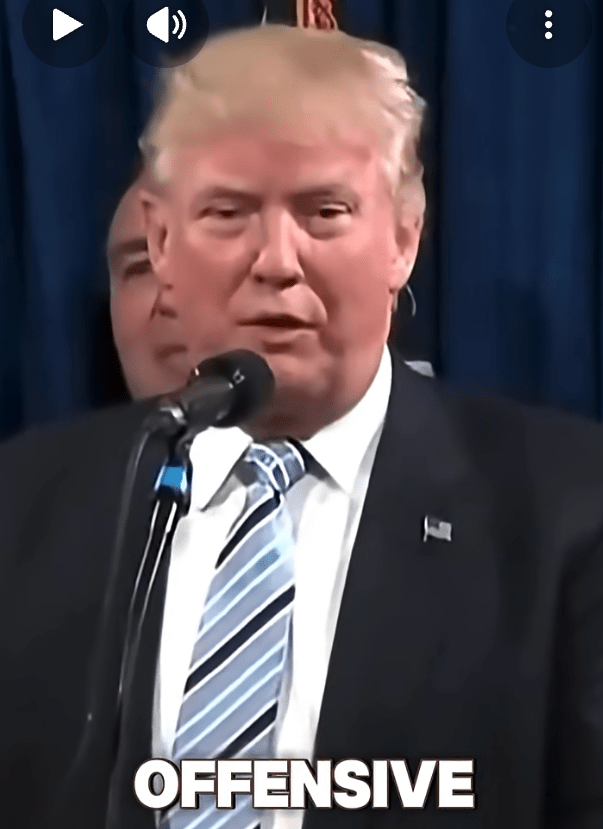
It’s the kind of interruption that briefly startles everyone involved, including the first reporter, who pauses just long enough to let the remark hang there, unanswered, like an awkward commercial break that came too early. From a professional standpoint, the scene reflects a familiar pattern in modern political media: a question about rhetoric, a response that reframes criticism as political correctness, and an unscripted outburst that becomes the headline. Trump’s reaction is measured in his own way—he neither apologizes nor escalates dramatically, instead opting to maintain his posture as someone being unfairly attacked, a stance that has served him well with his supporters over the years.
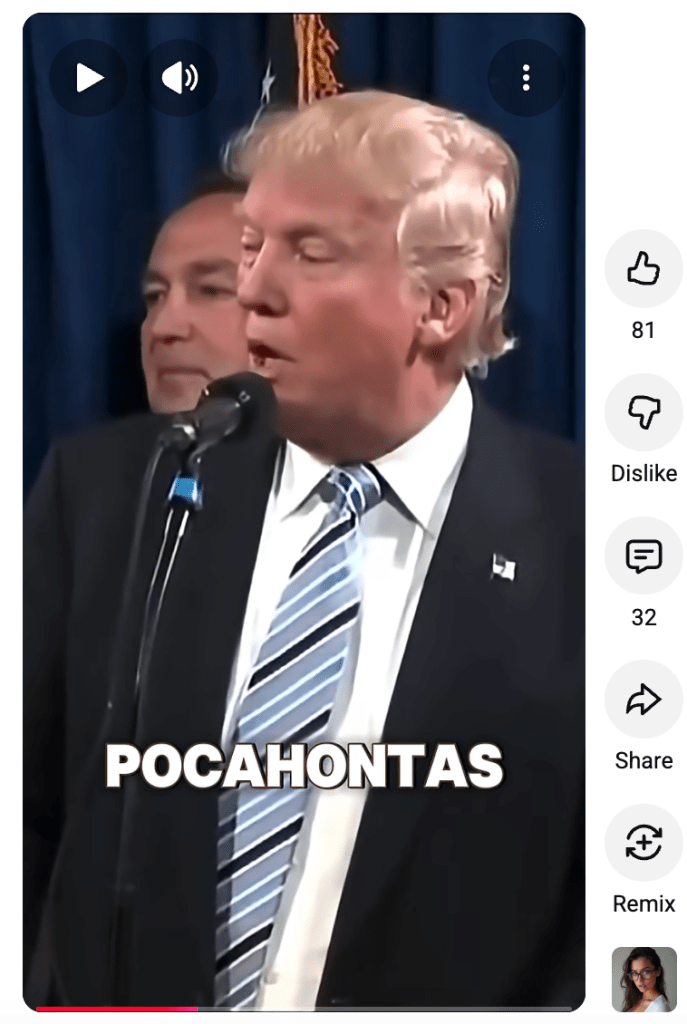
The reporters, meanwhile, appear caught between doing their jobs and reacting emotionally to language that many view as crossing a line, resulting in a moment that feels more reactive than analytical. Watching it play out, there’s a sense that the exchange never quite reaches a clear conclusion; no policy is discussed, no resolution is offered, and viewers are left instead with another example of how political discourse often stalls at the level of tone and terminology. The shouted accusation of “offensive” becomes less a decisive turning point and more a symptom of a larger frustration, one shared by critics who see such language as corrosive and by supporters who view the criticism itself as overblown. In the end, the clip captures a snapshot of a media environment where confrontations are brief, emotions flare quickly, and clarity sometimes takes a back seat to volume, leaving audiences to sort out for themselves whether the moment was an important stand or just another familiar chapter in an ongoing rhetorical battle.
 TheDailyChristian