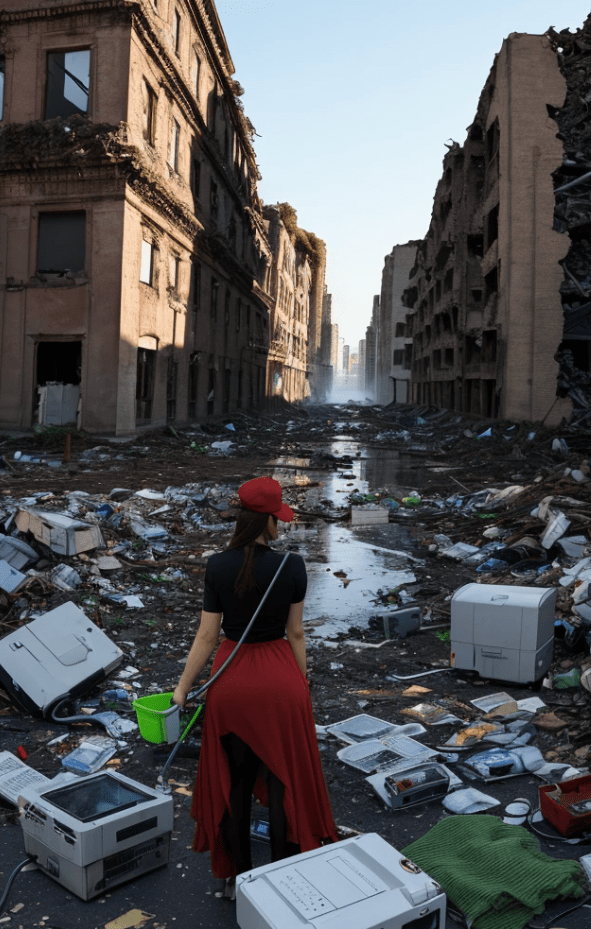
Off-Grid Survival for Women: The Harsh Truths No One Wants to Tell You

hen society collapses, women will be targeted first. Not because it’s fair or just—because predators exploit vulnerability. And if you think everyone magically becomes honorable comrades during a disaster, I have news for you: they don’t. They become worse versions of themselves. The masks come off. The desperation comes out. And the rules evaporate faster than your last remaining battery.

I’ve watched people fight over bottled water in broad daylight with police present. So imagine how bad it gets when there’s no law, no witnesses, no functioning system, and no consequences. Women, especially those living off-grid or traveling alone, will be seen as easy targets by the opportunists, cowards, and degenerates who crawl out of the shadows when things fall apart.

But here’s the good news—not happy news, not comforting news, but useful news: you can prepare now. Not by learning movie-style ninja flips or Hollywood fight scenes that only work on stuntmen. I’m talking about realistic, practical, survival-focused self-defense skills that actually help you escape, avoid danger, and protect yourself.

This isn’t about turning you into some mythical warrior. This is about giving you a fighting chance when the world shows its worst face.


The First Skill: Ruthless Awareness (The One Most People Ignore)

Every self-defense course should start with this, but most skip right to flashy moves. Awareness isn’t glamorous, but it’s the skill that keeps you alive.

In SHTF conditions, threats don’t politely announce themselves. They don’t wait for you to be “ready.” They strike when you’re distracted, tired, or optimistic. So your first weapon is situational awareness:

  • Always scan your surroundings before stopping or setting camp.
  • Know who’s around you and what direction they’re moving.
  • Never let strangers get close enough to invade your personal space.
  • Trust your instincts—if someone feels wrong, don’t negotiate with that feeling.

People call this “paranoia.” Fine. Let them call it what they want. You call it survival.


The Second Skill: Boundaries That Are Loud, Clear, and Unshakable

Most predators don’t start with violence. They start with testing boundaries—small intrusions, off comments, forced friendliness, subtle probing. They’re looking for someone who won’t push back.

So practice firm, unwavering verbal boundaries:

  • “Stop.”
  • “Back up.”
  • “Do not come closer.”
  • “I don’t want help.”

Say it with your chest, even if your voice shakes. The goal is to stop a situation early before it becomes physical. And if someone ignores a clear boundary, congratulations—you’ve just identified a threat long before the situation explodes.


The Third Skill: Escape Over Ego—Always

Here’s something the movies won’t tell you: the goal of self-defense is escape, not fighting. You’re not out to “win.” You’re out to get away with as few injuries as possible. Fighting back is only to create a window to run.

If you’re off-grid and alone, injuries become exponentially more dangerous. A sprained wrist can compromise your ability to build shelter or carry water. A broken finger can make it impossible to defend yourself next time. So don’t fight unless absolutely necessary—and when you do, fight to break contact and flee.

Survival is not about pride. It’s about making it home alive.


The Fourth Skill: Body Positioning That Makes You Harder to Grab

You don’t need martial arts mastery. You just need practical techniques anyone can learn, like:

  • Keeping your hands up and ready, not buried in pockets or bags.
  • Standing with one foot slightly back for stability.
  • Blading your body to reduce target size.
  • Maintaining distance—your best friend in any confrontation.

Predators want easy control. Don’t give them that luxury.


The Fifth Skill: Using Your Voice as a Weapon

A strong, loud voice shocks aggressors, attracts attention (if any is nearby), and signals that you are not quietly compliant prey. Practice yelling in a way that’s commanding, not panicked.

Phrases like:

  • “NO!”
  • “STOP!”
  • “GET BACK!”

Your voice communicates confidence—even when you don’t feel it. Confidence alone deters a huge percentage of opportunistic threats.


The Sixth Skill: Carrying Tools You Know How to Use

I’m not talking about encouraging harm or vigilante fantasies. I’m talking about legal, appropriate personal safety tools—things designed to help you create space and escape.

These could include:

  • A loud personal alarm
  • A tactical flashlight (blinding bright, for disorientation)
  • A sturdy walking stick
  • A whistle
  • A safety spray if legal in your area

But let me be clear: a tool you never trained with is useless. Don’t carry anything you haven’t practiced using under stress. Otherwise it becomes an extra burden—or worse, something an attacker can use against you.


The Seventh Skill: Learning to Break Holds and Get Free

You don’t need violent moves. You need leverage-based escapes that utilize momentum, not strength. These techniques focus on freeing yourself from:

  • Wrist grabs
  • Arm holds
  • Clothing grabs
  • Being pinned against a wall
  • Being pulled toward someone

The goal is not to overpower someone. The goal is to free your body and run. Good self-defense instructors teach these escapes with emphasis on using your natural strengths—your speed, your center of gravity, your instincts.


The Eighth Skill: Never Showing Predictable Patterns

Predictability is vulnerability. You should vary:

  • Your daily routes
  • Your camp locations
  • Your routines
  • Your start times
  • Your rest stops

Don’t move like a character in a video game with one fixed path. Move like someone who knows people could be watching.


The Ninth Skill: Mental Conditioning for Worst-Case Scenarios

This is the part nobody wants to talk about. Most people freeze in danger because their mind rejects what’s happening. They weren’t mentally prepared for the possibility of someone targeting them.

So do the uncomfortable work now:

  • Accept that danger is real.
  • Accept that some people are predators.
  • Accept that your safety is your responsibility when society collapses.

Once you accept these truths, your reactions become faster, cleaner, and more decisive.


The Truth You’re Not Supposed to Say Out Loud

When SHTF, the world won’t magically become equal, fair, respectful, or civilized. It will become primal. And in primal conditions, women are at heightened risk.

Not acknowledging that doesn’t make it less true. It just makes you unprepared.

But learning awareness, boundaries, escapes, tools, and strong personal presence shifts the balance. You’re not helpless. You’re not doomed. You’re not prey. You’re a survivor in training.

Prepare now, before the world forces preparation on you.
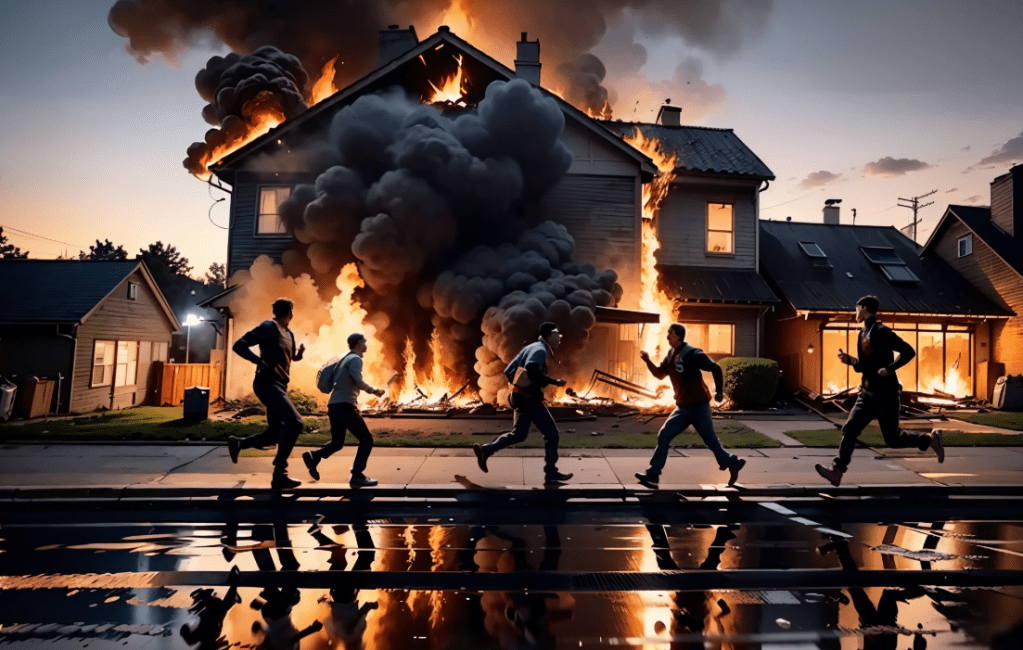
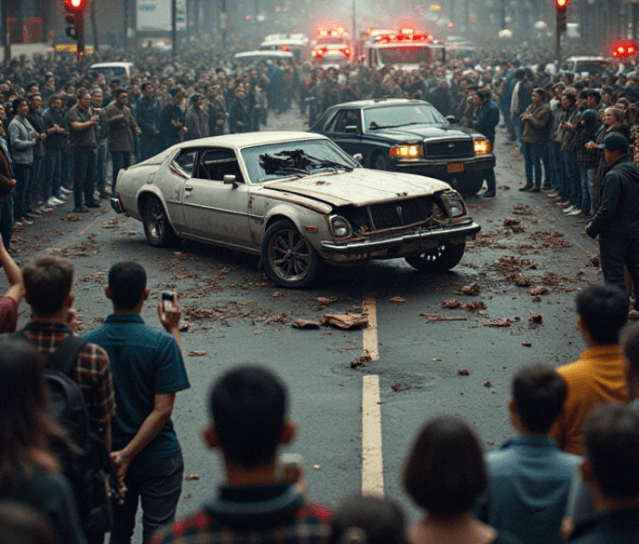
When the Crowd Turns Deadly: How to Survive a Human Stampede

Humans are unpredictable, emotional herd animals, and most people walk around like the world magically keeps itself in order. They stare at their phones, wander into crowds without a second thought, and assume that because a venue has security guards, everything is “under control.”

The rest of us—those who actually pay attention—know that control is an illusion. And a fragile one at that.

Human stampedes aren’t rare freak accidents. They’re a natural outcome of packing too many people into too small a space, mixing in fear, noise, confusion, bad planning, and—my personal favorite—sheer stupidity. If you think that sounds harsh, you haven’t seen people trample each other for a Black Friday discount. Trust me, humans don’t need an emergency to act like panicked cattle.

So let’s talk about how to survive a human stampede, because clearly nobody else is going to protect you. If anything, the average person will push you down without blinking if it means they get three inches forward in the chaos.


Welcome to the Reality Nobody Wants to Admit

Crowd crushes and stampedes happen at concerts, sporting events, religious gatherings, parades, protests, and anywhere else humans gather in numbers large enough to overwhelm their own sense of reason. Most people don’t prepare for things like this because they think:
“It won’t happen to me.”

Yeah—tell that to the countless victims who thought the same before they were knocked over and swept away by a five-ton wave of panicked humanity. If you’re reading this, congratulations—you’re at least thinking about it. That’s step one in surviving anything: awareness.

This article won’t sugarcoat things. If you want a cheerful “stay safe!” pamphlet, go read something printed by an events committee. This is the real version—the version that tells you what to do when the crowd turns into a living bulldozer and you’re stuck in the middle of it.


Step 1: Actually Pay Attention to Your Surroundings

Revolutionary, I know.
But you’d be astonished how many people walk into crowds without even scanning their environment. Before you enter any dense crowd, do what a responsible person should always do:

  • Identify exits, plural. If you only know one way out, congratulations—you’re already a liability to yourself.
  • Note barriers like fences, railings, walls, and stages—these become death traps if the crowd surges.
  • Observe the density. If you can’t raise your arms without hitting someone, you’re in the danger zone.
  • Listen for changes in energy—shouting, pushing, sudden movement, or panic.

If you’re thinking, “Wow, that sounds paranoid,” good. Paranoia is just foresight that hasn’t been appreciated yet.


Step 2: When a Crowd Starts Moving, You Move With It—Or You Die

Remember this: you cannot fight a crowd surge head-on. When thousands of pounds of pressure push in one direction, you’re not going to out-muscle it. You move with the flow, gradually and strategically angling toward the side or an exit.

If you plant your feet thinking you can hold your ground like some heroic movie character, the crowd will crush your ribs into your spine. Don’t be a martyr. Be efficient.

Move diagonally, like a fish cutting through a current. You’re not trying to sprint—you’re trying to escape the pressure zone without falling.


Step 3: Protect Your Chest—It’s the Difference Between Living and Suffocating

Most stampede deaths happen due to compressive asphyxiation, not trampling. That means people get squeezed so hard they literally can’t breathe.

The fix?
Create a protective “box” around your chest using your arms.
Put your forearms horizontally in front of your ribcage, fists near your shoulders, making space for your lungs to expand even when the pressure tightens.

If the crowd squeezes in, this posture could buy you the oxygen you need to stay conscious. Consciousness is what keeps you moving. And movement is what keeps you alive.


Step 4: If You Fall, You Don’t Stay Down

This is the nightmare scenario, but it’s survivable if you act fast. Do not curl into a ball like some brochure will tell you. You’re not a turtle and you will not get “protected.” That advice comes from people who have clearly never experienced a crowd crush.

Instead:

  1. Turn onto your side.
  2. Pull your knees toward your chest.
  3. Use your arms and legs to crawl or roll toward open space.
  4. The second you’re on your feet, don’t celebrate—keep moving.

If people fall on top of you, keep your head protected with one arm and use the other to create space to breathe. Survival is ugly. It’s not graceful. It’s not cinematic. It’s pure determination.


Step 5: Don’t Follow the Crowd—Think Past It

People are lemmings. They follow the person in front of them even when it leads them straight into a bottleneck or a dead-end barrier. You have to think faster than the herd.

Look for:

  • Side exits
  • Gaps in barriers
  • Staff-only doors that open toward safety
  • Open spaces where pressure decreases

People cram themselves into the nearest exit because they’re overwhelmed and scared. You, however, have the advantage of thinking before panic hits. Use it.


Step 6: Know the Early Signs of a Stampede Before It Happens

This is where pessimism is your best friend. You assume things can go wrong so you notice when they start going wrong.

Watch for:

  • People pushing but the crowd can’t move forward (classic crush pattern)
  • A sudden wave-like sway through the crowd
  • Security personnel looking tense or rushing
  • Changes in sound: screaming, shouting, or sudden silence
  • A surge from the back (people trying to move before those in front can)

If you sense any of these, leave.
Don’t wait for instructions. Don’t wait for confirmation. By the time officials announce anything, you’re already behind.


Step 7: Don’t Bring Anything You Aren’t Willing to Lose

This is blunt, but you need both hands free. If you’re weighed down with drinks, merch bags, souvenirs, or your tote full of “essentials,” you’re risking your life.

Your priorities in a crowd emergency are:

  1. Breathing
  2. Balance
  3. Mobility

Everything else is clutter. If something becomes a hazard, drop it. Your phone is replaceable. Your spine is not.


Step 8: Mentally Prepare Before You Ever Step Into a Crowd

This is the part people hate hearing because it requires actual effort. If you want to survive the worst situations, you need to train your mindset ahead of time.

Tell yourself:

  • “If something goes wrong, I will move, not freeze.”
  • “My safety is my responsibility.”
  • “I will not rely on others to think for me.”

Being mentally ready makes you react faster than the crowd. In survival situations, seconds matter. Sometimes they’re all you get.


Final Thoughts from a Pessimistic Prepper

Human stampedes aren’t accidents—they’re the result of human behavior amplified by chaos. People panic. People follow blindly. People shove without thinking. And people assume someone else has a plan.

You’re smarter than that.
You’re reading this because you know the world is unpredictable and that most people sleepwalk through danger.

Survival isn’t luck.
Survival is awareness, preparation, and refusing to be one of the oblivious masses who trust the crowd more than their own instincts.

The world may be messy, reckless, and irresponsible—but you don’t have to be.

Stay alert. Stay sharp. Stay alive.

The Brutal Truth About Surviving a Long-Term SHTF

If you’re even thinking about how to survive a long-term SHTF (S**t Hits The Fan) event, congratulations—you’re already ahead of 90% of the population. And you know what? Most of them don’t deserve saving anyway. They’ve spent their lives glued to screens, worshiping convenience, and depending on systems that were rotting from the inside decades ago. They laughed at preppers. Mocked anyone who stocked a few extra cans of food. Called us paranoid, delusional, fanatics.

But when the lights finally go out—when the trucks stop rolling, the stores go empty, and the illusion of stability cracks into dust—we’ll see who’s laughing then.

This article isn’t here to sugarcoat anything. Long-term SHTF survival isn’t glamorous. It isn’t the fantasy land the movies sell. It’s brutal, exhausting, unforgiving, and—let’s be honest—not everyone is cut out for it. But if you’re reading this, you might be one of the rare few who actually has a chance.

So let’s get into the harsh, ugly truth of long-term SHTF survival, because the world isn’t getting any better out there—and hope sure as hell isn’t going to save you.


1. Accept That No One Is Coming to Save You

If you’re still clinging to the idea that some government agency, humanitarian organization, or magical cavalry is going to swoop in and rescue you during a long-term collapse… let go of that fantasy right now.

In a true SHTF situation:

  • Emergency services collapse first.
  • Law enforcement becomes overwhelmed or disappears entirely.
  • Governments prioritize their own continuity—not yours.
  • Utilities, supply chains, and hospitals crumble almost immediately.

You are on your own. Your family is on their own. Survival becomes entirely your responsibility. Once you fully accept this, you’re finally starting at the right mindset level.


2. Food: The Number One Problem Nobody Takes Seriously

People love to pretend they’ll “just hunt” or “live off the land” during a collapse. Sure—because nothing says “long-term survival strategy” like fighting the entire desperate population over the same dwindling wildlife and edible plants.

In reality:

  • Hunting will be depleted fast.
  • Fishing will become competitive and unsustainable.
  • Farming takes time, land, knowledge, and luck.
  • Foraging can’t sustain you long-term unless you live in an untouched wilderness.

So what’s the real solution?

Stockpile like the world is ending—because someday it very well might.

Long-term SHTF survival requires:

  • Shelf-stable foods (rice, beans, oats, canned meats, dehydrated goods)
  • Long-term storage buckets with oxygen absorbers
  • Seeds—lots of them—for future growing
  • Knowledge of food preservation (canning, smoking, dehydrating)

And don’t kid yourself—food will be the new gold. It will be the most fought-over resource on the planet. If you can secure it, you have power. If you can’t, you’re a future cautionary tale.


3. Water: The Resource Everyone Takes for Granted

The average clueless person assumes clean water will “somehow” still be available in a disaster. Wrong.

Municipal water systems depend on:

  • Electricity
  • Chemical treatment
  • Staff
  • Functioning infrastructure
    …all of which evaporate quickly during a long-term collapse.

You need:

  • A reliable water source (well, spring, river, captured rainwater)
  • Multiple purification methods (filters, boiling, tablets)
  • Redundancy—because filters break, boil times increase, supplies run out

If you don’t have water or a way to purify it, you’re dead within days. It’s that simple.


4. Security: Because Desperation Turns Good People Into Monsters

Everyone pretends humanity is inherently good—right up until the shelves empty. Then morality evaporates, and survival instincts take over.

Long-term SHTF means:

  • Looting won’t last days—it will last months.
  • People will not “ask nicely.”
  • Neighbors turn into threats.
  • Desperation turns ordinary citizens into violent opportunists.

You don’t have to be a soldier, but you damn well better understand:

  • Defensive positioning
  • Hardening your home or retreat
  • Situational awareness
  • Strength in numbers
  • Avoiding confrontation whenever possible

Survival is about staying alive—not playing hero.


5. Community: Because Lone Wolves Die Fast

Despite the rugged lone-wolf fantasies people love to cling to, real long-term survival requires community. Not a massive group—just a small, trustworthy circle.

Why?

  • One person cannot guard, garden, gather, cook, repair, and watch for threats 24/7.
  • Group labor multiplies your capabilities.
  • Shared resources strengthen security and sustainability.

But here’s the catch:
Don’t wait until after SHTF to assemble your tribe. That’s how you end up trusting the wrong people and paying the price.

Vet people now. Build networks now. Discuss expectations now.

In a long-term collapse, your community is your greatest asset—and your greatest liability if chosen poorly.


6. Skill Over Stuff: Your Gear Can Be Stolen, but Knowledge Stays With You

Everyone loves shiny gear. Gadgets. Tactical toys. Tools that look cool but mean nothing if you don’t know how to use them. But in a long-term SHTF?

Skills outrank gear every single time.

Learn:

  • Gardening and seed saving
  • Water filtration
  • Basic medical care
  • Food preservation
  • Navigation
  • Bartering
  • Repair and maintenance
  • Situational awareness and basic defensive tactics

Gear breaks. Batteries die. Tools rust.
Knowledge and skill don’t.


7. Mental Fortitude: The Most Overlooked Survival Skill

Most people aren’t mentally strong enough to survive a long-term collapse. They crumble under pressure. They panic. They freeze. They wallow in denial.

Long-term SHTF survival demands:

  • Mental resilience
  • Adaptability
  • Grit
  • The ability to push through discomfort
  • Control over fear and despair

Survival isn’t about being fearless—it’s about moving forward in spite of fear.

If you can’t manage your mind, you won’t manage your survival.


8. The Harsh Reality: Survival Won’t Be Pretty, Easy, or Fair

Here’s the ugly truth that no one wants to say out loud:

A real long-term SHTF situation will be miserable. It will be grinding, exhausting, and emotionally punishing. You’ll lose people. You’ll face scarcity. You’ll question your decisions. You’ll wonder if the old world—broken as it was—wasn’t so bad after all.

But if you prepare now, while everyone else is asleep at the wheel, you give yourself a fighting chance.

Most people won’t make it.

But maybe you will.

If you’re angry at the world, good. Use that anger. Turn it into preparation. Turn it into discipline. Turn it into the fuel that keeps you alive while society’s fragile shell finally shatters.

The world is already unraveling.
You can’t stop it.
But you can survive it.
If you’re willing to accept the truth—and act on it.

End-Times Childbirth: Why Most Won’t Survive Without Real Prepper Skills

Let’s not sugarcoat it: childbirth is dangerous even in the modern world. Hospitals, trained medical teams, surgical rooms, sterile equipment, and instant access to emergency intervention—that’s the only reason most births today feel “safe.” But when the world collapses, when the power grid fails, supply chains crumble, and professional healthcare becomes a memory, childbirth becomes what it always was throughout most of human history: deadly.

People don’t want to hear that. They think “natural birth” means “easy birth,” as if the human body cares about our romanticized fantasies of self-reliance. But if society actually crashes, and a woman goes into labor without proper support, training, and preparation, the harsh truth is this:

Mother and baby survival is no guarantee.

And the worst part? Most people have no clue how unprepared they really are.

In the end times, or any long-term collapse scenario, childbirth becomes one of the most dangerous events a family can face. And unless someone involved—preferably the prepper whose job it is to foresee these threats—has the right skills, things can go downhill fast.

If you want to survive childbirth during societal collapse, here’s the ugly truth: you need preparation, knowledge, calm under pressure, and the ability to adapt in situations where the margin of error is practically zero.

No fantasy. No Hollywood drama. No “just breathe.”
Real survival or real consequences.


Why Childbirth Becomes Deadly When Society Ends

Let’s break down why childbirth becomes so dangerous in a collapse scenario—because people keep pretending nature is kind.

Spoiler: she’s not.

1. Modern Medical Assistance Disappears

No hospitals.
No midwives unless you already know one.
No emergency C-sections.
No ultrasound warnings.
No fetal monitoring.
No antibiotics on demand.
No neonatal care.

Think about the number of modern births that require medical intervention just to prevent tragedy. Remove that safety net, and you can imagine the outcome.

2. Infection Becomes a Major Threat

Without sterile environments and proper supplies, infection becomes a killer. It’s not a minor problem—it’s a leading historical cause of maternal death.

3. Complications Don’t Pause Just Because You’re Unprepared

Breech births, prolonged labor, hemorrhage, exhaustion—these problems don’t care that the world has collapsed. They still happen. And without trained assistance, they can still kill.

4. Stress and Trauma Increase Risks

In end-times conditions, everyone is stressed. Everyone is malnourished, dehydrated, exhausted, or unsafe. Those conditions make childbirth harder, riskier, and more unpredictable.

But let’s not pretend the world is going to get any better. So if childbirth is happening during collapse, the only solution is to prepare now—and stop assuming everything will magically work out.


Essential Prepper Skills for End-Times Childbirth

(High-level survival concepts only — NOT medical instructions)

I’m not giving you step-by-step medical procedures. That would be irresponsible and unsafe. But I am going to tell you what general areas of knowledge a prepper needs to even have a fighting chance of helping during childbirth without modern systems.

Think of these as categories you need to be trained or educated in—before the world falls apart.

1. Basic Understanding of the Birth Process

You don’t have to become a doctor, but you should know what childbirth generally looks like—stages, timing, and what is considered normal versus what signals danger.

Too many people think birth happens like in movies—three minutes of screaming and then a baby magically appears. Wrong. Labor can take hours. Sometimes days.

Understanding the rhythm of childbirth helps prevent panic decisions that put mother and baby at risk.

2. Cleanliness and Sanitation Principles

This isn’t “use a sterile kit” because you won’t have one.
This is understanding how to minimize contamination.

Knowing how to create a cleaner environment, handle materials safely, and reduce infection risk can literally save lives.

Few people know the difference between “looks clean” and “actually safe.”

3. Emergency Assessment Skills

You need to know how to recognize signs that something is wrong—in general terms.

Not diagnose.
Not treat.
Just recognize danger.

Being able to tell when labor is stalled, when the mother is in distress, or when the situation is beyond your capacity is critical.

4. Emotional Stability Under Extreme Pressure

You know what happens to untrained people during high-stakes emergencies? They panic. They freeze. They break.

But childbirth in collapse conditions doesn’t leave room for breakdowns.
The person assisting must stay calm and alert, even when things take a bad turn.

5. Resource Management and Preparation

Birth requires supplies—clean water, cloths, safe cutting tools (if necessary), warmth, lighting, hydration, and a safe location.

This is where preppers have the advantage:
They’re used to thinking ahead.
They know how to gather, store, and ration supplies.

Even if you can’t replicate a hospital, you can still prepare an environment that keeps danger manageable.

6. Postpartum Care Awareness

Again—no medical procedures here. Just the concept: birth doesn’t end when the baby arrives.

Mother and baby both need monitoring, warmth, hydration, nourishment, and rest.
Infections, complications, or stress-related issues can appear after birth—sometimes hours or days later.

Too many preppers forget that survival doesn’t stop at delivery.


Why Most People Will Fail

(And why you shouldn’t be one of them)

People today are soft. They’re dependent. They think “Google it” is a skill. They think the government will swoop in during emergencies.

And worst of all, they think childbirth is some kind of guaranteed biological process that will always work out fine.

History disagrees.
Reality disagrees.
Collapse scenarios REALLY disagree.

You cannot rely on luck.
You cannot rely on assumptions.
You cannot rely on wishful thinking.

If you expect to bring a child into a fallen world and keep both mother and baby alive, you must prepare before the crisis.

Because once the world falls apart, it’s too late.


A Prepper’s Final Warning

I’m angry because people don’t take this seriously. They hoard ammunition, stockpile canned food, buy tactical gear… and then completely ignore one of the most dangerous survival events humanity knows: childbirth.

You want to survive the apocalypse?
You want to raise a child in a collapsed world?
You want to protect your family when society fails?

Then start respecting childbirth as the survival challenge it is.

Not a miracle.
Not a movie moment.
A life-or-death situation.

Prepare. Train. Learn.
Or you’re gambling with two lives at once.

And if that sounds harsh, good.
Reality is harsh.
Especially in the end times.

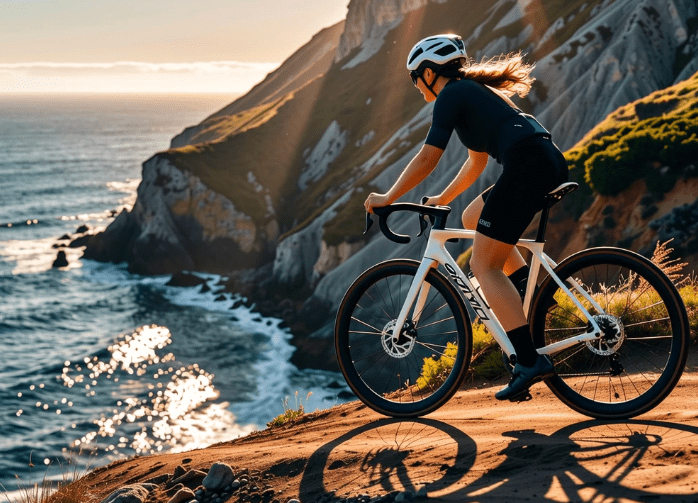
Pedaling Toward Peril: The Most Popular Yet Deadliest Bike Trails in America

Let’s get one thing straight: America’s obsession with “adventure” has turned into a parade of poorly prepared thrill-seekers marching straight into danger. Every summer, millions of people flock to the most popular bike trails in the United States, convinced that a little cardio and a fancy helmet will somehow protect them from everything nature—and their own stupidity—throws at them.

But as any realistic survival-minded person knows, the great outdoors is not your friend. It’s not a playground. It’s a gauntlet of cliffs, weather extremes, unpredictable terrain, wildlife, and human error. Yet people keep treating these dangerous trails like they’re amusement park rides with guaranteed safety bars.

And I’m here to tell you: if you underestimate these trails, they’ll chew you up and spit out what’s left.

These are the most popular—and most dangerous—bike trails in the United States. And if you insist on riding them, you’d better prepare like the world is out to get you… because it is.


1. The Whole Enchilada – Moab, Utah

Everyone loves to brag about conquering The Whole Enchilada, but most riders can barely digest the appetizer. This 30+ mile trail drops from alpine forest to red-rock desert, and every section is packed with hazards.

Riders underestimate the altitude, the temperature swings, the jagged ledges, and the sheer brutality of Moab’s terrain. The trail’s popularity has skyrocketed, which means more crowds, more accidents, and more people who think posting a GoPro video counts as survival training.

If you don’t know how to handle rock shelves, brutal downhill segments, and unpredictable weather, The Whole Enchilada will serve you a full course of misery—no refunds.


2. Slickrock Bike Trail – Moab, Utah (Again)

Yes, Moab shows up twice—because it’s a magnet for “outdoor warriors” who overestimate themselves. Slickrock looks smooth and harmless in photos, but anyone who has tried pedaling up those sandstone slopes knows they’re basically riding on a tilted cheese grater.

The summer heat cooks unprepared riders. The trail drains water faster than a desert sinkhole. And worse, tourists arrive with rental bikes, no conditioning, and the false belief that “slickrock” means “easy.”

That’s how people get stranded, dehydrated, injured, or rescued—if they’re lucky.


3. Downieville Downhill – Downieville, California

This famous downhill trail is a fan favorite for riders hungry for adrenaline, but it’s also one of the most dangerous. A 15-mile descent doesn’t mean a gentle coast; it means long, technical stretches that don’t forgive mistakes.

Loose rock, blind corners, narrow cliffside lines—pick your poison. The remoteness doesn’t help either. If you crash here, you’d better hope your group can drag you back, because help isn’t appearing out of thin air.

But sure, keep telling yourself that your weekend gym routine prepared you for it.


4. McKenzie River Trail – Oregon

Beautiful? Yes. Popular? Absolutely. Safe? Not even close.

This trail lures riders with its waterfalls, emerald pools, and lush forest—only to betray them with slippery lava rock, sudden drops, and narrow, technical sections.

Mother Nature doesn’t care how many Instagram followers you have. If you lose focus for a split second, that picturesque landscape becomes your personal obstacle course of broken bones.


5. Porcupine Rim Trail – Utah

Yet another Utah trail—because apparently the region exists to punish overconfident cyclists. Porcupine Rim is legendary for its views and notorious for its lethal fall potential. The exposure along the rim is no joke, and the descending rock slabs require more skill than most riders actually have.

One wrong move and the trail will remind you that gravity always wins. Newsflash: your expensive bike won’t save you from a 50-foot fall.


6. The Colorado Trail (Segments 1–28)

This massive trail system draws in countless riders who think they’re ready for the Rockies. The truth? They’re usually not.

Extreme elevation changes, violent weather shifts, lightning risk, wildlife, and long stretches without help make this trail as dangerous as it is breathtaking. But people still take it on with one bottle of water and a “let’s wing it” attitude.

Congrats—you’re winging your way straight into hypothermia or heatstroke.


7. The Captain Ahab Trail – Moab, Utah (Of Course)

If Moab had a motto, it would be: “Come for the scenery, stay because you broke your leg.”

Captain Ahab is technical, fast, and full of features that intimidate anyone who isn’t in peak riding shape. The drop-offs don’t care about your ego. The switchbacks don’t care about your fancy suspension system. And the rocks certainly don’t care about your skill level.

This trail is the perfect storm of popularity and danger—a disaster recipe for the unprepared.


8. Kingdom Trails – East Burke, Vermont

Unlike the rocky deserts out west, Vermont’s challenges come in the form of slick roots, mud, dense forests, and surprise obstacles. Riders flock here believing it’s “East Coast easy.” Spoiler: it’s not.

Fatigue hits quickly, visibility dips, and tight tree gaps send over-confident riders straight into bark at high speed. The terrain seems soft until you hit it face-first.


9. Bentonville Trails – Arkansas

Bentonville markets itself as the “Mountain Biking Capital of the World.” And yes, these trails are wildly popular. But with popularity comes injuries—lots of them.

The jump lines, wooden features, and fast-flow sections turn the overconfident into statistics. Riders ignore signage, push limits they’re not ready for, and treat technical lines like roller coasters. Gravity disagrees.


10. Angel Fire Bike Park – New Mexico

Downhill parks are a different beast entirely. Angel Fire is fast, steep, and designed for riders who know what they’re doing. Unfortunately, not everyone who visits fits that description.

Lift-access riding encourages overestimating your abilities. Riders go faster, push harder, and forget that speed amplifies every mistake. Add in unpredictable weather and rocky terrain, and you’ve got a recipe for disaster.


Why These Trails Are So Dangerous (And Why People Ignore the Warnings)

People get hurt on these trails for the same reasons they fail in any survival scenario:

1. Overconfidence

Everyone thinks they’re an expert until they’re bleeding.

2. Lack of preparation

People bring tiny water bottles as if they’re going on a casual walk.

3. Weather ignorance

Mountains and deserts don’t care about your forecast app.

4. Equipment failure

Cheap bikes—and poorly maintained ones—fail where it matters most.

5. Crowds

More people equals more chaos. And chaos equals danger.

Off-road trails reward experience, humility, and preparation. But today’s riders want thrill without skill, adventure without awareness, and danger without consequences. Bad combination.


A Prepper’s Final Warning

Biking can be exhilarating. It can also be fatal. These trails aren’t inherently evil—they’re just brutally honest. They expose every weakness, every unprepared rider, every lapse in judgment.

So if you insist on tackling these “bucket list” trails, do it like a survivalist, not a tourist:

  • Carry proper gear
  • Bring real water, not a sip
  • Know first aid
  • Ride in teams
  • Respect terrain
  • Respect weather
  • And above all, respect your limits

Because nature doesn’t care how popular the trail is.
It cares how prepared you are.
And most people? They’re not prepared at all.

Best Food Storage: Canned or Freeze Dried? The Harsh Truth You Don’t Want to Hear

If you’re still sitting around scratching your head about whether canned food or freeze-dried food is the better option for survival storage, then you’re already behind. Way behind. In a collapsing world full of soft minds, false comforts, and people who think “preparedness” means having extra granola bars in the glove compartment, you’d better start thinking harder and stocking smarter. Because when the lights go out and the shelves go empty, you won’t have time to debate the finer points of canned chili versus freeze-dried stroganoff—you’ll be too busy wishing you had listened to someone who wasn’t afraid to tell you the truth unfiltered.

So buckle up. I’m not here to coddle you. I’m here to explain what actually keeps you alive when the world stops playing nice.


The Cold Reality of Canned Food

Canned food is the old reliable workhorse of survival storage. It’s been around forever, and it’s not going anywhere. And there’s a reason for that—it works.

Pros of Canned Food

1. Ready to Eat
When you’re cold, tired, and fed up with your surroundings—and trust me, you will be—there’s nothing better than cracking open a can of something edible and shoveling it down without needing water, fuel, or time.

2. Cheap and Available
You don’t need to sell your soul or your kidney to build a decent canned food stash. Hit sales, buy in bulk, toss the cans on a shelf, and you’re in business.

3. Naturally Calorie-Dense
Let’s be real: calories matter more than flavor when survival is on the line. Canned meats, soups, beans—they’re heavy, but they pack real nutrition, not lightweight fluff.

Cons of Canned Food

1. Heavy as Sin
If you think you’re bugging out with 100 pounds of canned stew strapped to your back, good luck. Make sure you leave a map so the rest of us can find your body later.

2. Shorter Shelf Life Than You Think
Yes, canned food lasts a while—years, even. But not decades. The clock is ticking, and eventually those cans will rust, swell, or turn into biological experiments you don’t want to open.

3. Bulky Storage
Canned food eats shelf space like a starving wolf. Living in an apartment? Good luck stacking 300 cans without your place looking like a doomsday bunker crossed with a metal scrapyard.


Freeze-Dried Food: Lightweight Hope or Overpriced Hype?

Freeze-dried food is the glamorous newcomer in the preparedness world. Shiny bags, fancy marketing, and pictures of smiling backpackers pretending their rehydrated lasagna is gourmet cuisine.

But don’t be fooled by the packaging. There’s real power here—if you know what you’re doing.

Pros of Freeze-Dried Food

1. Shelf Life That Laughs at Time
Twenty-five years. Sometimes more. If that doesn’t make your inner survivalist grin like a maniac, nothing will.

2. Zero Weight, High Convenience
If you need to move—fast—you’re not taking canned goods. Freeze-dried wins every mobile scenario. You can pack a week’s worth of meals and barely feel the weight.

3. Nutrient Retention
Compared to canned food, freeze-dried meals preserve vitamins, texture, color, and flavor. Not that you’ll care when you’re starving, but hey—it’s a nice bonus.

Cons of Freeze-Dried Food

1. Water Required
And I don’t mean a few drops. Some meals need two cups or more. If you don’t have water or the ability to boil it, good luck chewing on powder like a desperate ferret.

2. Cost
Freeze-dried food can burn through your wallet faster than the world falls apart. One #10 can might cost what you would normally spend on a week’s worth of regular groceries.

3. Meal Fatigue Is Real
After your tenth freeze-dried “breakfast skillet,” your soul might start leaving your body.


So Which One Actually Wins?

Here’s the part where you expect me to pick a winner. But survival isn’t a game show. There’s no trophy ceremony, no confetti raining down, no cheering crowd. The only prize is staying alive, and the only way to do that is through redundancy and diversity.

Anyone telling you to pick only canned or only freeze-dried foods has clearly never lived through anything harder than a short power outage. The world is unpredictable, unstable, and unforgiving. Your food storage should be the same—rugged, layered, and ready for anything.


The Brutal, Honest Recommendation

1. Stock Canned Food for Short to Mid-Term Survival

This is what you eat first during a disaster. Heavy? Yes. But it requires no extra resources, no preparation, no hope—just a can opener and a bad attitude.

2. Build Freeze-Dried Food for Long-Term Security

When the dust settles and your canned stash starts to run low, freeze-dried is your lifeline. Lightweight, space-efficient, and designed to outlive your optimism.

3. Mix, Match, and Layer

A serious survival pantry includes:

  • Canned meats
  • Canned vegetables
  • Canned soups and stews
  • Freeze-dried meals
  • Freeze-dried ingredients
  • Bulk staples (rice, beans, oats)
  • Water storage and filtration

If that sounds like a lot, that’s because it is. Survival isn’t convenient. It’s not cute. It’s not trendy. It’s messy, heavy, expensive, and absolutely worth every ounce of effort.


Final Thoughts (If You Can Handle Them)

Canned food keeps you alive today. Freeze-dried food keeps you alive years from today. Anyone who thinks the choice is “either/or” is already halfway to being a liability when things go bad.

Do yourself—and everyone stuck with you—a favor: stop hesitating, stop overthinking, and start building a food storage plan that actually stands a chance when the world stops pretending everything is fine.

Because it won’t be fine. And when that day comes, the only thing worse than being unprepared…
is realizing you had every chance to prepare and chose not to.

Top Survival Foods You Better Have Before Everything Goes Wrong (And It Will)

If you’re reading this, congratulations—you’ve at least realized that the world is one minor disaster away from going completely off the rails. Most people wander through life thinking the grocery store shelves magically refill themselves, or that disasters only happen on TV. Spoiler alert: they don’t. And when things inevitably go sideways, those same people will be crying in parking lots looking for bottled water. Meanwhile, you—if you actually follow through—might stand a fighting chance. But only if you stock the right survival food in your kit. And please, for your own sake, don’t pack the usual garbage people think qualifies as “emergency food.”

So let’s go through the best survival food items for your survival kit—the ones that won’t get you killed. I’ll even break down why they matter, though frankly, it’s the kind of common sense people should already know.


Why Survival Food Matters (If That Isn’t Obvious Already)

Look, survival isn’t a cooking show. You’re not going to be flambéing anything when the power’s out or when you’re trekking through debris and broken glass. Survival food has one job: keep you alive. That means it has to meet a few basic criteria that too many people ignore:

  • Long shelf life – Because you’re not rotating your stock like a grocery store.
  • High-calorie density – Starving is a terrible hobby.
  • Low preparation requirement – You may not even have clean water, let alone a working stove.
  • Portability – If your kit weighs as much as your regrets, you won’t make it far.

If a food item doesn’t meet those requirements, it doesn’t belong in your survival kit. Period.


1. Peanut Butter: The Undisputed Champion of Not Dying

Peanut butter is cheap, dense, portable, shelf-stable, and calorie-loaded. It’s basically the perfect survival food. Unless you’re allergic—in which case, well, you’ve got a different set of problems.

One jar can pack over 2,500 calories, tons of fat (which you need when you’re burning energy like a madman), and protein. You don’t need to heat it, cook it, or refrigerate it. You don’t even need to like it—survival isn’t a gourmet experience.


2. Energy Bars: Because You Won’t Be Sitting Down for a Meal

Forget your fancy protein bars with quinoa sprinkles and “forest berry drizzle.” I’m talking about high-calorie, dense energy bars—the type hikers choke down because they’re too useful to ignore.

These bars take up almost no space and deliver a hit of carbs, fats, and sugars that can keep your body from shutting down while you’re slogging through a disaster zone.

Just keep in mind that some bars pretend to be healthy and barely hit 150 calories. If you want to survive, not starve, pick bars in the 300–400 calorie range. And no, you don’t get bonus points for organic.


3. Canned Meat: The Not-So-Glamorous Lifesaver

A lot of people gag at the idea of canned meat, which tells me they’ve never been hungry enough. Tuna, chicken, spam, salmon—pick your protein. These cans last forever, they’re packed with nutrients, and they can be eaten straight from the can if you don’t mind looking like a character from a post-apocalyptic movie.

To make it even better, canned meats don’t need refrigeration until they’re opened. Just remember to pack a can opener unless you plan on bashing the cans open with a rock like a caveman.


4. Rice and Beans: The Classic Combo That Refuses to Die

If civilization ends tomorrow, rice and beans will probably still be around in some dusty pantry. And for good reason:

  • Together, they form a complete protein.
  • They’re cheap.
  • They store forever—especially if you repackage them with oxygen absorbers.

Yes, they require cooking and water, which isn’t ideal. That’s why these belong in your home stash or long-term survival bag, not your small emergency kit or bug-out bag. Still, they’re worth mentioning because few foods give you more nutrition per dollar.


5. Freeze-Dried Meals: The Fancy Option (But Actually Smart)

Freeze-dried meals get mocked by people who think survival food should taste like cardboard. But here’s the reality: these meals are lightweight, last 20–30 years, and only require hot water. That’s a pretty sweet deal when the alternative is gnawing on dry pasta.

Get meals that have at least 500 calories per pouch, not those pathetic backpacking meals made for people pretending to “rough it.” Go for brands known for high calorie counts and decent macros.

And don’t forget: freeze-dried isn’t the same as dehydrated. Freeze-dried lasts much longer and keeps more nutrients intact. Your future half-starved self will thank you—though you might not deserve it.


6. Instant Oatmeal: Low Glamour, High Payoff

Instant oats are a survival staple. They’re cheap, flexible, lightweight, and ridiculously easy to prepare. In worst-case scenarios, you can even “cold soak” them in water if you have to. Sure, the texture will be awful, but again, this is survival—not brunch.

Pick plain oats, not the sugary varieties. You need calories, not cavities.


7. Trail Mix: Because You’ll Need Fuel, Not Motivation

Trail mix is what happens when nuts, dried fruit, and chocolate decide to form a survival alliance. It’s loaded with fats, carbs, and sugar—all things your doomsday body will burn through in minutes.

Make sure your trail mix includes:

  • Nuts (fat and protein)
  • Dried fruit (quick carbs)
  • Chocolate or M&Ms (morale and calories)

Skip the trendy stuff with kale chips or yogurt drops. The goal is survival, not pretending to be healthy during the apocalypse.


8. Hardtack or Survival Rations: The Food Brick You’ll Hate but Depend On

Hardtack is basically the bread equivalent of a brick—hard, tasteless, and nearly indestructible. But it lasts decades if kept dry and can keep you alive when everything else runs out.

Modern emergency rations (like 2,400–3,600 calorie bars) are much more efficient. Yes, they taste like slightly sweet cardboard, but they’re designed to survive heat, cold, moisture, and probably nuclear winter. And you only need a few bars to survive a couple of days.


9. Shelf-Stable Ready-to-Eat Meals (MREs)

If you want the convenience of a full meal without any preparation, MREs are the way to go. They come with heaters, so you can eat hot food even if everything around you is on fire—literally or metaphorically.

They’re heavy, so don’t pack too many in a go-bag, but having one or two can make a miserable situation slightly less unbearable.


Final Thoughts: If You Don’t Prepare Now, Don’t Complain Later

Most people wait until disaster hits before realizing they should’ve prepared. Don’t be one of them. A survival kit without proper food is just a fancy bag of regrets. Start with the basics above and pack enough calories to sustain you for at least 72 hours. More if you actually want a fighting chance.

Because when things fall apart—and they will—your survival kit is the only thing standing between you and becoming another cautionary tale that people pretend they learned something from.

Surviving the Endless Blackout: Hard Lessons for the Unprepared World

Let’s stop pretending the world is going to hold itself together forever. Every year the power grid becomes more fragile, the people become more dependent, and the illusion that “somebody else will fix it” grows more laughable. You want survival prepper advice for long-term power outages? Fine. But understand this: if you’re asking now, you’re already behind. For years, the writing has been on the wall in big, blinking red letters—the grid is dying, and almost no one cares enough to prepare.

People act like the power going out for a few hours is an inconvenience. They whine that their streaming service paused or the AC cut off. But a real long-term power outage? A true grid failure that stretches into weeks, months, maybe longer? That isn’t an “inconvenience.” It’s the unraveling of modern civilization—fast, brutal, unforgiving. And most of the population will panic, consume everything in sight, and turn on each other the moment their comforts disappear.

If you want to survive what’s coming, you need to prepare like the world won’t help you—because it won’t.


The Moment the Grid Goes Down, Your Old Life Ends

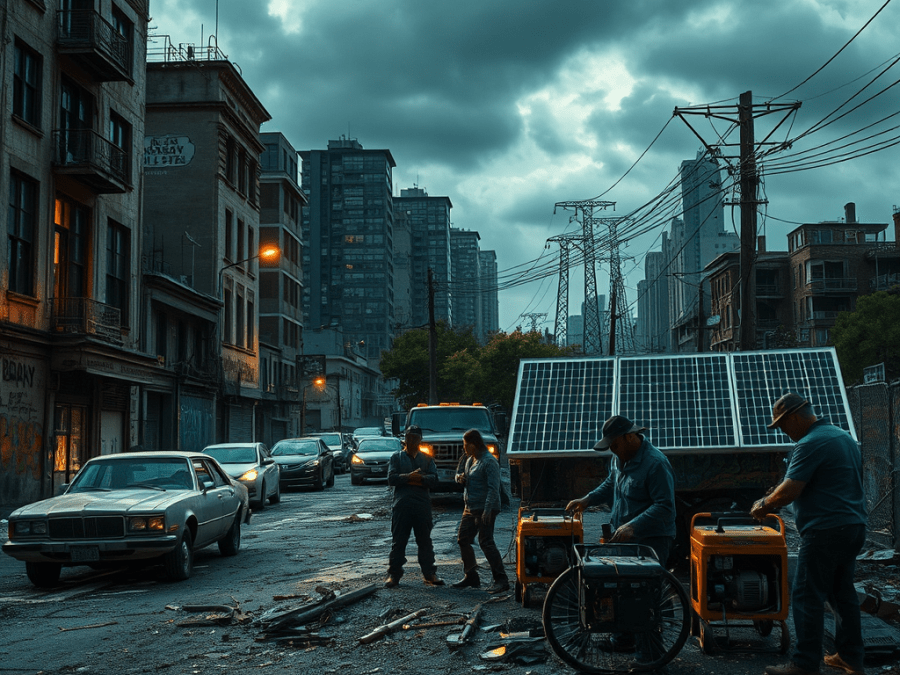
People have no idea how many things they rely on daily that require power. It’s not just lights. It’s not just entertainment. It’s water treatment, sewage management, supply chains, hospitals, refrigeration, communication, and transportation systems. When the grid collapses, everything else collapses with it.

The very moment the power stays off longer than 24 hours, the fragile illusion begins to crack. Grocery stores lose refrigeration. Gas stations stop pumping. ATMs go dead. Electronic payments die instantly. After 72 hours, the shelves are empty, the water pressure drops, and the desperation kicks in.

And here’s the truth: your neighbors won’t stay neighborly.
When their kids are hungry and they realize the government isn’t coming to save them, they will do whatever it takes—whatever it takes—to survive.

If you’re not ready, you become the resource they want.
If you are ready, you become the target they need.

Either way, power outages change people. And not for the better.


Your Long-Term Survival Depends on Energy Independence—Not Hope

Hope is useless.

Backup generators? Sure, they’re great—until they burn through fuel. And when the grid is down for months, good luck refilling those tanks. Fuel becomes liquid gold, guarded, fought over, and nearly impossible to acquire.

Solar? Better. But the average person buys a cheap solar generator thinking they’re set for life. They forget clouds exist. They forget batteries degrade. They forget that a single system can’t run a modern household.

Here’s the harsh truth:
If you want power long-term, you need redundancy—layers of energy options, not one toy you bought online.

Serious preppers follow this rule:

1. Solar Power (Primary)

Not a single panel. Not a cute portable kit.
A real setup: roof panels, ground arrays, battery banks, and proper inverters. Preferably something EMP-hardened or at least protected.

2. Fuel-Based Generators (Short-term and emergency)

Propane stores longer than gasoline. Diesel is stable. Gasoline is garbage after a few months unless treated and rotated.
Have multiple fuel sources, not one.

3. Manual Tools and Non-Electric Alternatives

Because eventually, everything breaks. And when it does, you’d better know how to live like electricity never existed.


Water: The First Resource to Disappear—and the Last You Can Live Without

People love stockpiling flashlights and candles while ignoring the most obvious issue: without power, water stops moving.

If you’re on a well? No electricity, no pump.
If you’re on city water? Once their backup generators fail, so does your faucet.

You need:

  • Multiple water storage systems
  • Gravity-fed solutions
  • Water filters that don’t rely on electricity
  • Backup manual well pumps
  • Rainwater collection systems

And believe me, when people get thirsty, they’ll become unpredictable fast. A dehydrated population is a violent population.


Food Storage: Because Grocery Stores Won’t Save You

Everyone projects their fantasy onto collapse: “Oh, I’ll just hunt.”
Right. So will every other desperate person. Wildlife won’t last a month near populated areas.

Your real food sources must be:

  • Bulk dry goods: rice, beans, oats, wheat berries, lentils
  • Freeze-dried emergency meals
  • Canned proteins: tuna, chicken, beef
  • Gardens and greenhouses capable of long-term production
  • Seed banks—heirloom only
  • Livestock (if possible)

But you know what people never plan for?
The part where they get robbed.

If you store food, others will eventually want that food. So add this to your list:

  • Hidden caches
  • Decoy storage
  • Defensive systems and training
  • Community alliances (even if you hate people, you’ll need them)

Yeah, community. Even angry pessimistic preppers like me know one truth: you can’t defend anything alone forever.


Heat, Cooling, and the Harsh Truth About Weather

When the grid collapses, people forget how unforgiving nature can be.

Winter becomes deadly for the unprepared.
Summer becomes lethal for the weak.

You need non-electric heating systems:

  • Wood stoves
  • Pellet stoves (with manual lighting options)
  • Thermal blankets
  • Insulated emergency shelters

Cooling? That’s harder. But methods exist:

  • Earth-sheltered structures
  • Cross-ventilation
  • Solar-powered fans
  • Underground storage for perishables
  • Heat-reflective materials

The wealthy think their backup generators will keep the AC going.
They won’t—not for long.
And when the heat becomes unbearable, they’ll be the first ones to panic.


Security: Because When the Lights Go Out, the Wolves Come Out

You can have all the supplies in the world, but if you can’t defend them, you’re just stockpiling for someone stronger.

Arm yourself. Train. Know your land.
Set up motion sensors, dogs, tripwires, perimeter alarms—systems that don’t need electricity.

And don’t fool yourself:
Morality is a luxury of stable societies.

When the grid dies, survival becomes the only rule.


Mental Fortitude: The One Prep No One Talks About

People break mentally long before they run out of food.
Isolation, fear, and the crushing realization that the world you knew is gone—that’s what destroys the unprepared.

You need hobbies, routines, skills, and discipline.
And you need to accept this now: life will never be easy again.


Final Thought: Prepare Like No One Is Coming—Because No One Is

Governments can barely handle a snowstorm.
You think they’ll manage a nationwide power collapse?

Look around. Society is soft, weak, and addicted to convenience.
They won’t survive long-term outages.

But you can—if you start now, prepare honestly, and stop trusting the world to keep the lights on.

Because once the switch flips for good, everything changes.
And only the prepared will make it through the darkness.

The Last Grocery Store Run Before the Grid Goes Dark: A Prepper’s Final Warning

You can feel a collapse long before you can prove it. The air thickens, conversations shorten, and people move with a jittery uncertainty they pretend isn’t fear. For weeks now, every expert with a tie and a microphone has insisted the power grid is “stable” or “only experiencing minor vulnerabilities.” But those of us who still use our eyes—and not the spoon-fed comfort pumped out of screens—know the truth: the grid is held together with duct tape, denial, and a hope that ran out sometime last decade.

So this morning, when the news quietly mentioned “regional instability” and “rolling disruptions,” I knew exactly what that meant: this was it. My last chance to top off supplies before the grid sputters out for good. And despite everything I’ve stockpiled over the years, despite the shelves I’ve meticulously filled and the gallons of fuel I’ve tucked away, there’s always one last run. One more pass through the grocery store to grab the things that might mean the difference between grinding through the collapse or becoming another body buried under its weight.

And of course, like clockwork, people waited until the last possible second to panic.

I threw my gear in the truck and headed into town for what I knew would be a hostile, frantic, anger-soaked sprint through a grocery store full of clueless, late-to-the-party consumers who spent years mocking preppers and are now shocked—shocked—that modern life doesn’t come with guarantees.

Walking Into the Chaos

The parking lot told the whole story before I even got inside. Cars abandoned at crooked angles. Carts left as barricades. People shouting into phones that weren’t even connected because the networks were already starting to choke. And there it was—that glazed-over look in their eyes: the realization that no one is coming to save them.

I walked through the automatic doors (thankfully still powered), and the assault hit instantly: the stench of panic sweat, the squeal of wheels pushing overloaded carts, and the sound of ten different conversations about “how this can’t really be happening” coming from people who have spent their entire lives outsourcing responsibility to systems they never bothered to understand.

Every aisle was a battlefield. Every shelf was a shrinking island of hope.

But I wasn’t there to feel sorry for them. I wasn’t there to help them wake up. I was there to finish the job—secure what I needed before the lights blinked out forever.

Item 1: Shelf-Stable Calories

The first stop was obvious: dry goods. Rice, beans, pasta—anything that stores for years and keeps a body alive. I grabbed what was left, even as two grown adults argued over the last bag of lentils like toddlers fighting over a toy. They didn’t notice I slipped behind them and pulled three bags of white rice they’d overlooked. I didn’t feel bad; their ignorance wasn’t my responsibility.

When you’ve been preparing for years, you learn to see what others don’t.

Item 2: Canned Proteins

Next was canned meat—tuna, chicken, spam, whatever hadn’t yet been ravaged by the first wave of panic shoppers. Protein will be gold when the grid dies, and hunting won’t be an option for half the people who think they’ll suddenly become wilderness experts.

Most of the shelves were stripped clean, but I managed to get a dozen cans of chili and several cans of chicken that were shoved behind fancy organic soups no one wanted. Funny how people become less picky right before the world goes dark.

Item 3: Water and Purification Supplies

Water is life, but bottled water was already gone—the shelves empty except for the plastic price tags. No surprise. People always go for the obvious.

But I knew the real score: grab bleach, grab filters, grab anything that makes questionable water drinkable.

Saw three teenage boys laughing as they tossed the last cases of bottled water into their cart, mocking the panic. I’d love to see how much laughing they’ll do once they realize one case of water lasts a family about two days, maybe three if rationed.

Meanwhile, I slipped down the cleaning aisle and filled my basket with purification essentials they didn’t even think about.

Item 4: High-Calorie “Morale Foods”

In a collapse, calories keep you alive—but morale keeps you human.

I grabbed chocolate, instant coffee, peanut butter, and the last few boxes of granola bars. These aren’t comforts—they’re psychological stabilizers. When your world shrinks to survival, a spoonful of peanut butter becomes strength, and a cup of coffee becomes hope.

People think prepping is all about ammo and generators. They forget the human mind collapses long before the body does.

Item 5: Quick-Use Foods

Anyone who’s lived through an outage knows the first few days are the worst. You need quick, no-cook food to get through the transition. I grabbed crackers, canned fruit, ready-made soups, and instant meals.

By now, the lights had started to flicker. The store manager shouted something unintelligible over the intercom, but nobody cared. The panic had gone from simmer to full boil.

The Desperation Was Palpable

I saw people crying in the aisles. Some were shouting into phones, begging family members to “get home now.” Others were staring at empty shelves as if they were staring at their own future—void, stark, unforgiving.

What infuriated me, though, was this: they had every chance to prepare. Every warning sign. Every news report hinting at instability. Every outage over the last decade, every expert saying the grid was aging, overstressed, and under-maintained.

But they ignored it all.

Because denial is a warm blanket in a cold world—right up until the blanket catches fire.

Checking Out

I got into the shortest line I could find—not that it mattered. People were frantic, dropping items, yelling, shoving. The card machines were already stalling. Someone screamed when their payment declined; someone else tried to argue their expired coupons should still apply “because this is an emergency.”

Pathetic.

I paid with cash—something else people have forgotten still has value when systems break.

As I walked back out into the parking lot, the first substation alarm in town began to wail. A low, mechanical howl rolling over the rooftops like a warning siren for the damned.

People looked around, confused. I wasn’t. I knew exactly what it meant.

Heading Home Before the Lights Go Out

The grid wasn’t collapsing.
It was collapsed. We were simply watching the echoes.

I tossed the last-gasp items into the truck, turned the engine over, and headed out of the mess before the roads clogged with panicked civilians who still believed someone would come fix this.

Because they don’t understand the truth we preppers have known for years:

When the grid goes down, it’s not just the lights that disappear.
It’s the illusion of stability.
It’s the myth of progress.
It’s the lie that society will always keep humming along politely.

And when that illusion dies, the world gets real—fast.

I didn’t make that last grocery store run because I was unprepared.
I made it because I understand something the rest of the world refuses to accept:

There is no cavalry. Only consequences.

And I intend to face those consequences with a stocked pantry, a clear head, and the grim satisfaction of knowing that while the world slept, I stayed awake.

Let the grid burn.
I’ll survive the night.

How Women Survive When Civilization Finally Snaps

Let’s get something straight from the start: when the world falls apart, all those smiling neighbors waving over their fences won’t be offering help, bread, or a generator. Some of them might be the first ones trying to take what you have—or worse. Women have always had to stay alert, even in so-called “civilized” times, so imagine how much worse it’ll get when society finally coughs up its last breath and collapses. And trust me, it will. The cracks are already showing—people losing their minds over gas prices, fighting in supermarkets over chicken, looting during power outages. Now picture all of that amplified by a thousand. That’s the End Times scenario we’re looking at.

I’m not here to sugarcoat anything. The world has lost its collective mind, and when the lights go out for good, the mask comes off. If you think anyone—ANYONE—is coming to save you, think again. Preparedness is no longer a hobby; it’s survival. And for women, the rules are even harsher.

This isn’t about living in fear. It’s about staying alive when the people around you stop pretending to be decent.


1. Stop Trusting Familiar Faces

If you haven’t learned this by now, learn it fast: the neighbor who lends you sugar today might show up at your doorstep tomorrow demanding everything in your pantry. Desperate people get dangerous, and desperate people are exactly what you get in a collapse.

Women, especially, must stop assuming familiarity equals safety. It doesn’t—not now, and definitely not when society implodes.

When the grid dies, you need a mental shift:
Your home is no longer part of a “community.” It is a fortress. You are its commander.

That’s the mindset required to survive.


2. Build a Barrier of Self-Reliance

During an end-times scenario, women cannot depend on “someone else” to provide security. The police won’t show up. 911 won’t answer. And no, your neighbor who “seems nice” is not your personal rescue squad.

Here’s what self-reliance means in collapse conditions:

• Know how to secure your space

Reinforce your doors. Reinforce your windows. Make noise traps with cans or glass around entry points. This isn’t paranoia; it’s preparation.

• Know basic defensive tools

I’m not here to tell you what to carry—that’s your choice. But whatever tool you choose—pepper spray, tactical flashlight, alarm devices—you must know how to use it without hesitation. Tool knowledge is worthless if fear freezes your hand.

• Know how to disappear if you must

That means blackout curtains, low lighting, minimal noise, and learning how to move around your own home without announcing your presence like a marching band.

Because when the world ends, invisibility becomes power.


3. Build a Survival Network—but Carefully

You’ll hear survival gurus preach “GROUPS, GROUPS, GROUPS.” And yeah, teamwork is useful—but only when you trust the people you’re working with. During an end-times event, blind trust is a death sentence.

But isolation has risks too.

The solution? Vetted alliances.
Not your random neighbors. Not acquaintances who panic over minor inconveniences. You need people proven through time, not convenience.

What qualifies someone?

• They keep their word
• They handle stress without becoming unhinged
• They respect boundaries
• They value cooperation over dominance

If someone fails ANY of these, they should never be in your circle—especially if you’re a woman in a high-risk environment.


4. Hide Your Supplies—Even From Those Who “Love” You

When hunger hits, love becomes an afterthought. People justify anything when they’re starving. Don’t assume affection equals security.

You need hidden caches:

One visible decoy stash.
One real stash.
One emergency stash.

If someone breaks into your home demanding food, give them the decoy supplies. You protect the real ones. It sounds cold—because it has to be. Survival requires strategy, not sentiment.


5. Master Situational Awareness Like Your Life Depends On It—Because It Will

Situational awareness isn’t just for action movies. It’s what keeps you alive when every stranger becomes a potential threat.

Women especially must sharpen these instincts:

• Monitor who comes and goes around your area

Who’s watching? Who’s pacing? Who’s suddenly appearing at odd hours? Patterns matter.

• Trust your instincts

If someone gives you a bad feeling now, they’ll be ten times worse during a collapse.

• Never let anyone know you’re alone

Silence is protection. Mystery is a shield.

• Always have a way out

Every room. Every situation. Every encounter.

Your safety plan should always be three steps ahead of everyone else’s desperation.


6. Learn the Skills No One Wants to Admit Women NEED in Collapse

People don’t like hearing this part, but too bad: women face unique threats in disaster scenarios. You can pretend otherwise, but pretending never saved anyone.

Here’s what you MUST know:

• How to create barriers that slow intruders

Simple household items can be turned into physical deterrents.

• How to negotiate or de-escalate

Sometimes talking your way out is the smartest move—IF you know how.

• How to read dangerous people

This isn’t Hollywood; there’s no music cue before someone turns bad. You have to recognize the signs yourself.

• How to fight—smart, not heroic

Survival is not about winning.
It’s about escaping.


7. Accept the Harsh Reality: No One Is Innocent When Hunger Sets In

It’s easy to believe the “lovely neighbor” would never hurt you—or that the friendly guy down the block would never turn predatory. But survival pressure changes people at the cellular level.

When the world collapses:

• The weak become desperate
• The desperate become dangerous
• The dangerous become predators

And predators always look for targets they perceive as easier to overpower.

Women are often placed in that category—unless they make it absolutely clear they are NOT the easy target.

This is your warning.
This is your wake-up call.
This is your chance to be prepared before it’s too late.


8. Become the Person No One Wants to Test

Survival, at its core, is psychological. If someone thinks you’re weak, you become a target. If someone believes you’re alert, prepared, and capable, they move along.

Your goal is not to be liked.
Your goal is not to be friendly.
Your goal is not to be approachable.

Your goal is to stay alive.

In the end-times, women must be:

• Harder to fool
• Harder to manipulate
• Harder to intimidate
• Harder to corner

Strength isn’t a feeling—it’s a stance.


Conclusion: The World Already Showed Us What It’s Capable Of

Look around. Society is already fraying, and people are becoming unrecognizable. When the full collapse hits, the transformation will be instant and brutal. Women cannot afford wishful thinking or fairytale expectations of safety.

The truth is simple:
You survive by being prepared, distrustful, trained, equipped, and vigilant.

Not hopeful.
Not naïve.
Not trusting.

Because when the end comes—and it will—survival will belong to the women who saw it coming and prepared for the worst version of everyone around them.