New Jersey Crime Report 2026: Most Dangerous City, Safest 50K+ City & National Safety Score

New Jersey Crime Survival Report 2026: The Most Dangerous City Over 50,000 — And the Safest Urban Stronghold in the Garden State

New Jersey has a reputation problem.

Mention the state and people think of crowded highways, dense cities, and crime headlines bleeding over from New York and Philadelphia. But reputation and reality are two different case files.

As a professional survival prepper who studies crime data like an undercover investigator mapping a network, I don’t rely on stereotypes. I rely on numbers, patterns, and structural indicators.

Today we’re examining New Jersey cities with populations over 50,000 to identify:

  • The most dangerous and criminally active city
  • The safest large city in the state

No exaggeration. No denial. Just data — analyzed through a preparedness lens.


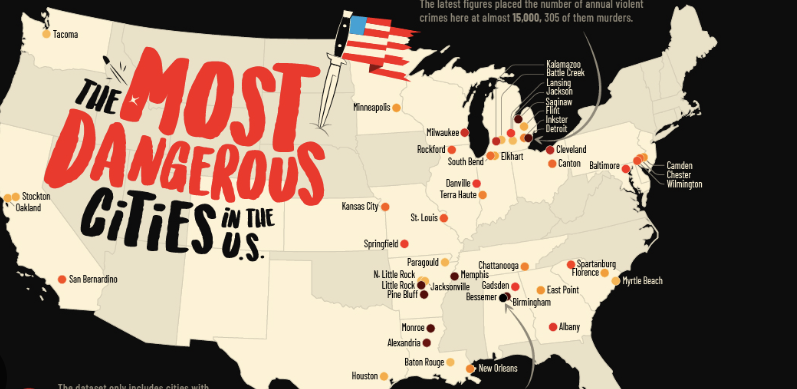
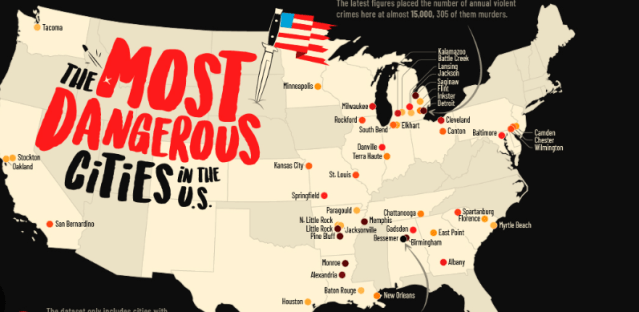
The Most Dangerous Large City in New Jersey: Camden

With a population hovering around 70,000 residents, Camden has long been associated with high crime rates. While the city has made measurable improvements over the past decade, it still ranks as the most crime-impacted city in New Jersey among those over 50,000 residents.

Let’s look at the numbers.

Crime Statistics (Recent FBI & State Reporting Trends)

  • Violent crime rate: Approximately 1,200–1,600 incidents per 100,000 residents
  • Aggravated assault: Often exceeding 900 per 100,000
  • Robbery: Roughly 250–350 per 100,000
  • Homicide rate: Historically elevated, though significantly reduced from peak years
  • Property crime rate: Around 2,500–3,500 per 100,000

Camden once ranked among the most dangerous cities in America. Reforms, including restructuring of the police department, have reduced homicides and overall violent crime substantially compared to the early 2010s.

But per-capita violent crime remains among the highest in the state.


What Makes Camden High-Risk?

When I evaluate a city, I look beyond totals and into structural stress.

1. Concentrated Poverty

Camden struggles with long-term economic hardship. High unemployment and limited economic mobility create fertile ground for underground economies.

Crime doesn’t appear randomly. It clusters where opportunity disappears.

2. Density & Proximity

Camden sits directly across the river from Philadelphia, increasing regional mobility and cross-city criminal activity patterns.

Major transit corridors increase both legitimate commerce and criminal opportunity.

3. Drug Market Activity

Drug trafficking and related disputes historically contributed to violent crime levels. While enforcement and reform have improved trends, narcotics-related incidents remain a factor.

Where illicit markets operate, violence follows.

4. Legacy of Violence

Even as crime drops, reputation lingers. That reputation influences economic investment, housing patterns, and community development — all of which affect long-term safety.


Survival Prepper Risk Assessment: Camden

If you live in Camden:

  • Harden home entry points.
  • Maintain layered security (cameras, lighting, alarms).
  • Avoid predictable routines.
  • Stay aware of neighborhood-specific crime maps.
  • Build trusted local networks — intelligence reduces vulnerability.

Camden is not the chaos it once was. But it requires vigilance.


The Safest Large City in New Jersey: Edison

With a population exceeding 100,000 residents, Edison consistently ranks among the safest large cities in the state.

Yes, there are small suburban towns with lower crime rates — but among cities over 50,000, Edison stands out.

Crime Statistics (Recent Trends)

  • Violent crime rate: Approximately 100–200 incidents per 100,000 residents
  • Aggravated assault: Typically under 100 per 100,000
  • Robbery: Often below 40 per 100,000
  • Homicide: Extremely rare annually
  • Property crime rate: Around 1,000–1,500 per 100,000

Compared to Camden, Edison’s violent crime rate is dramatically lower — often a fraction per capita.


Why Is Edison So Safe?

From an investigator’s standpoint, several stabilizing factors stand out.

1. Strong Median Household Income

Higher median income correlates with lower violent crime. Economic stability reduces desperation-driven offenses.

2. Suburban Infrastructure

Edison’s layout is primarily suburban, with lower density housing and strong zoning separation between commercial and residential areas.

Reduced density often means fewer opportunity crimes.

3. Education & Workforce Stability

Edison benefits from high education attainment and proximity to corporate employment hubs.

Stable careers reduce crime volatility.

4. Community Engagement

Active neighborhood associations, well-funded public services, and consistent policing contribute to low violent crime levels.


Survival Prepper Risk Assessment: Edison

Edison is statistically safe.

But preparedness doesn’t disappear just because the numbers are low.

Recommendations:

  • Basic home security remains essential.
  • Secure packages (porch theft exists everywhere).
  • Prepare more for severe weather events than violent crime.
  • Maintain emergency supplies for coastal storm impacts.

In Edison, natural disasters may pose a greater risk than violent crime.


New Jersey’s Crime Landscape: The Larger Pattern

New Jersey consistently ranks among the safer states for violent crime nationally.

But here’s what most people miss:

Crime in New Jersey is highly localized.

Urban pockets — like Camden — experience elevated rates. Meanwhile, suburban cities like Edison maintain exceptionally low violent crime levels.

The key differences:

  • Income distribution
  • Population density
  • Drug market concentration
  • Regional transit flow
  • Historic investment patterns

As a prepper, I don’t see New Jersey as “dangerous.”

I see it as stratified.

Some neighborhoods demand hardened awareness.

Others demand routine preparedness.

Nebraska Crime Rankings 2026: Highest Crime City, Safest Large City & National Standing

(CLICK ON ANY PICTURE FOR A FUN VIDEO)

(2025 FEMALE SURVIVALIST OF THE YEAR: BROOKE HOMESTEAD)


2025 Female Survivalist of the Year: Brooke Homestead

Now let’s talk about someone who understands preparedness at a deeper level.

Brooke Homestead.

At 26, the former yoga model transformed herself into one of the most respected voices in modern survival culture.

She blends discipline, intelligence, and practical resilience.

Here’s Brooke introducing herself: Brooke Homestead Speaks!

“Hi, I’m Brooke Homestead. I didn’t grow up farming. I grew up stretching under studio lights. But Nebraska taught me something powerful — resilience is grown, not inherited.”

Brooke’s Awesome Survival Gardening Advice for Nebraska

“Nebraska is a survival gardener’s opportunity — if you respect the wind and the soil.

First: understand your USDA hardiness zone. Most of Nebraska falls between zones 4–6. That gives you a solid growing season — but late frosts and sudden heat waves are real.

Start seeds indoors when possible. Protect young plants from wind with temporary barriers. Nebraska wind will snap weak stems without apology.

Second: build your soil aggressively. Nebraska soil ranges from rich loam to heavy clay. Test it. Add compost annually. Healthy soil retains moisture during hot summers.

Third: prioritize calorie-dense crops. Potatoes, sweet corn, dry beans, winter squash, and cabbage are reliable performers.

Fourth: irrigation planning matters. Drought cycles happen. Install drip irrigation and mulch heavily to conserve water.

Fifth: think storage. Root cellars, basement shelving, and pressure canning extend your harvest into winter.

Sixth: diversify. Don’t rely on one crop. Weather shifts fast here.

Nebraska rewards planners. If you plant intentionally, protect from wind, and preserve properly, you can grow serious food security.

Gardening isn’t a hobby.

It’s independence with dirt under your fingernails.”


Nebraska Crime Survival Report 2026: The Most Dangerous City Over 50,000 — And the Safest Stronghold in the Cornhusker State

When people think of Nebraska, they think cornfields, college football, and quiet towns where nothing ever happens.

That’s a mistake.

Every state has pressure points. Every city has vulnerabilities. Crime doesn’t disappear just because the skyline is smaller.

As a professional survival prepper who studies crime data like a private investigator studies a suspect’s alibi, I don’t assume safety — I audit it.

Today we’re analyzing Nebraska’s cities with populations over 50,000 and identifying:

  • The most dangerous and criminally active city
  • The safest large city in the state

Let’s get surgical with the numbers.


The Most Dangerous Large City in Nebraska: Omaha

With a population of roughly 490,000 residents, Omaha is Nebraska’s largest city — and statistically, it carries the highest volume and rate of crime among cities over 50,000.

Before panic sets in, understand this: Omaha is not among America’s most violent cities. But within Nebraska, it consistently reports the highest violent and property crime totals.

Crime Statistics (Recent FBI & State Data Trends)

  • Violent crime rate: Approximately 450–550 incidents per 100,000 residents
  • Aggravated assault: Around 300–350 per 100,000
  • Robbery: Roughly 90–120 per 100,000
  • Homicide: Typically ranges between 30–40 annually, fluctuating year to year
  • Property crime rate: Around 2,800–3,500 per 100,000
  • Motor vehicle theft: A significant contributor to property crime totals

In plain terms: Omaha has noticeably higher crime than other large Nebraska cities.

Why?

Let’s investigate.


What Makes Omaha the Most Crime-Impacted?

1. Population Density

Crime correlates with density. Omaha is Nebraska’s economic engine and transportation hub. More people means more anonymity, more opportunity, and more potential friction.

Density increases both opportunity crime and violent conflict probability.

2. Gang & Firearm-Related Violence

Certain Omaha neighborhoods experience concentrated firearm violence. Retaliation cycles and gang-affiliated disputes contribute to aggravated assault and homicide rates.

When firearms dominate violent crime statistics, lethality rises.

From a prepper’s lens: gun prevalence changes risk calculations dramatically.

3. Economic Disparities

Like many mid-sized cities, Omaha contains pockets of concentrated poverty alongside affluent districts.

Crime tends to cluster where opportunity gaps widen.

When I review city-level crime maps, I don’t look at averages. I look at clusters. Omaha has clusters.

4. Vehicle Theft & Property Crime

Motor vehicle theft has surged in many U.S. cities, and Omaha has not been immune.

Unlocked cars. Visible valuables. Poor lighting.

Opportunistic crime thrives in complacency.


Survival Prepper Risk Assessment: Omaha

If you live in Omaha:

  • Layer your home security (cameras, reinforced entry points, motion lighting).
  • Park in secured or well-lit areas.
  • Remove visible valuables from vehicles.
  • Monitor local crime mapping tools.
  • Know your neighborhood — micro-location matters.

Omaha isn’t lawless. But it requires awareness.

Preparedness is not paranoia. It’s pattern recognition.


The Safest Large City in Nebraska: Lincoln

With a population of approximately 290,000 residents, Lincoln consistently ranks as the safest major city in Nebraska.

Lincoln’s crime rates are notably lower than Omaha’s across most categories.

Crime Statistics (Recent Trends)

  • Violent crime rate: Roughly 300–350 per 100,000 residents
  • Aggravated assault: Around 200–250 per 100,000
  • Robbery: Often below 60 per 100,000
  • Homicide: Typically very low annually
  • Property crime rate: Around 2,200–2,800 per 100,000

While property crime exists — as it does everywhere — Lincoln maintains lower violent crime totals and fewer concentrated high-risk zones.


Why Is Lincoln Safer?

From an investigative standpoint, several protective factors stand out.

1. Education Hub Stability

Lincoln is home to the University of Nebraska–Lincoln, a major stabilizing force.

Higher education institutions often contribute to:

  • Strong civic engagement
  • Research-driven policing strategies
  • Youth population with structured environments

College towns aren’t immune to crime — but they often benefit from economic consistency.

2. Government Presence

As Nebraska’s capital, Lincoln hosts state government employment — a steady economic backbone.

Stable employment reduces volatility-driven crime spikes.

3. Urban Planning & Community Design

Lincoln’s layout includes well-maintained neighborhoods, active parks, and visible public spaces.

When communities are active and well-lit, crime opportunity shrinks.

4. Lower Firearm Homicide Concentration

Unlike Omaha’s concentrated firearm clusters, Lincoln’s violent crime tends to be less geographically intense.

Lower escalation risk equals lower lethality.


Survival Prepper Risk Assessment: Lincoln

Lincoln is statistically safe — but not invulnerable.

Recommendations:

  • Basic home security measures remain essential.
  • Stay aware during large public events.
  • Secure bicycles (college-town theft is common).
  • Prepare more for severe weather than violent crime.

In Lincoln, tornado preparedness may be more urgent than street crime defense.


Nebraska’s Crime Landscape: The Bigger Picture

Nebraska routinely ranks below national averages for violent crime.

But here’s what an investigator notices:

  • Crime concentrates in specific urban zones.
  • Property crime is more prevalent than violent crime.
  • Firearm-related incidents elevate lethality when they occur.
  • Economic disparities create neighborhood-level vulnerability.

Rural Nebraska is remarkably safe.

Urban Nebraska? Manageable — but not immune.

The real threats in Nebraska often include:

  • Vehicle theft
  • Burglary
  • Firearm assaults in isolated zones
  • Severe weather events

Preparedness in Nebraska is about balance.

Don’t overestimate danger.

But never underestimate risk.

Wyoming Crime Survival Report 2026: The Most Dangerous And Safest Cities in the Cowboy State

(2025 FEMALE SURVIVALIST OF THE YEAR: BROOKE HOMESTEAD. READ ALL THE WAY TO THE END FOR SURVIVAL TIPS FROM BROOKE HOMESTEAD.)

I don’t just read statistics — I interrogate them.

Crime data tells a story. Patterns. Weak points. Pressure zones. As a professional survival prepper who thinks like an undercover private investigator, I don’t assume safety — I verify it.

Wyoming is often romanticized as wide-open land, rugged individualism, and low crime. And compared to most states, that reputation holds up.

But even in the Cowboy State, there are differences between cities.

Today we’re breaking down:

  • The most dangerous and criminally active city in Wyoming (population 50,000+)
  • The safest large city in Wyoming (population 50,000+)

And here’s the twist: only two cities in Wyoming exceed 50,000 residents.

That makes this comparison precise.


The Most Dangerous Large City in Wyoming: Casper

With a population just over 58,000 residents, Casper is one of only two Wyoming cities above the 50,000 threshold. Statistically, it ranks as the more crime-impacted of the two.

Let’s examine the numbers.

Crime Statistics (Recent FBI & State Data Trends)

  • Violent crime rate: Approximately 350–450 incidents per 100,000 residents
  • Aggravated assault: Around 250–300 per 100,000
  • Robbery: Roughly 40–60 per 100,000
  • Homicide rate: Typically low (often 0–3 annually), but spikes can distort per-capita rates
  • Property crime rate: Around 2,500–3,200 per 100,000
  • Larceny-theft: The most common offense category

Now let’s be clear: compared to major metropolitan areas nationwide, Casper is not a high-crime city. But within Wyoming’s limited pool of larger cities, it shows higher rates of both property and violent crime than its counterpart.

When you’re evaluating risk, context matters.


What Makes Casper the Higher-Risk City?

I look at structural indicators.

1. Energy Economy Volatility

Casper has long been tied to oil, gas, and mineral extraction. Boom-and-bust economic cycles create instability. When energy jobs surge, population increases. When markets drop, unemployment rises.

Economic whiplash often correlates with property crime spikes.

2. Substance Abuse Impact

Methamphetamine and opioid-related issues have affected portions of Wyoming, including Casper. Drug-related offenses frequently connect to burglary, theft, and assault.

Where addiction rises, property crime follows.

3. Property Crime Concentration

Casper’s primary issue isn’t homicide — it’s property crime.

Vehicle break-ins
Tool theft
Retail theft
Garage burglaries

As a prepper, I view this as opportunistic crime tied to economic gaps and addiction.

4. Smaller City Amplification Effect

In smaller cities, even modest crime numbers can produce high per-capita rates. A few violent incidents dramatically shift statistics.

That’s why per-capita analysis is critical.


Survival Prepper Risk Assessment: Casper

If you live in Casper:

  • Reinforce vehicle security — especially trucks and work vehicles.
  • Secure garages and sheds (tools are high-value targets).
  • Install motion lighting.
  • Avoid leaving equipment outdoors overnight.
  • Know your neighbors — small-city intelligence networks are powerful.

Casper’s risk profile is manageable — but complacency is your enemy.


The Safest Large City in Wyoming: Cheyenne

With a population around 65,000, Cheyenne is Wyoming’s capital and statistically the safer of the two large cities.

Let’s look at the data.

Crime Statistics (Recent Trends)

  • Violent crime rate: Approximately 200–300 per 100,000 residents
  • Aggravated assault: Roughly 150–200 per 100,000
  • Robbery: Often below 40 per 100,000
  • Homicide: Frequently zero or very low annually
  • Property crime rate: Around 2,000–2,500 per 100,000

Compared to Casper, Cheyenne generally reports lower violent crime and slightly lower property crime.


Why Is Cheyenne Safer?

From an investigator’s lens, several protective factors stand out.

1. Government Employment Stability

As Wyoming’s capital, Cheyenne has a strong base of state government jobs. Stability reduces economic volatility.

Stable income = lower desperation-driven crime.

2. Military Presence

Cheyenne is home to F.E. Warren Air Force Base, which contributes to economic steadiness and a structured community environment.

Military communities often exhibit strong neighborhood oversight and lower violent crime rates.

3. Lower Economic Swings

Unlike energy-driven cities, Cheyenne’s economy doesn’t fluctuate as dramatically with oil prices.

Less boom-and-bust = more predictable social stability.

4. Community Cohesion

Cheyenne maintains a small-town atmosphere despite being a capital city. Civic engagement is strong. Neighborhood familiarity reduces anonymity — and anonymity often fuels crime.


Survival Prepper Risk Assessment: Cheyenne

Cheyenne is low-risk by national standards.

But here’s what I’d still recommend:

  • Maintain layered home security.
  • Keep vehicles locked (don’t assume “it’s Wyoming” equals immunity).
  • Prepare for weather emergencies — Wyoming windstorms and winter blizzards are bigger threats than crime.

In Cheyenne, natural disaster preparedness may outweigh violent crime concerns.


Wyoming’s Unique Crime Landscape

Wyoming consistently ranks among the safest states in America for violent crime.

But here’s what most people overlook:

Low population density changes crime dynamics.

  • Fewer large-scale gang networks
  • Lower urban firearm homicide clusters
  • More property crime than violent crime
  • Higher impact of substance abuse in certain regions

As a prepper, I assess Wyoming differently than Illinois or California.

The primary risks in Wyoming are:

  • Property crime
  • Substance-related offenses
  • Severe winter conditions
  • Geographic isolation

Crime is present — but it’s not dominant.


2025 Female Survivalist of the Year: Brooke Homestead

Now let’s talk about someone redefining preparedness culture.

Brooke Homestead.

At 26 years old, the former yoga model turned off-grid strategist has taken the survival world by storm.

Here’s Brooke introducing herself:


Brooke Homestead Speaks

“Hi, I’m Brooke Homestead. I used to live for studio lights and social media. Now I live for soil health and seed saving. Wyoming taught me something powerful — survival isn’t extreme. It’s practical.”

Brooke’s Survival Gardening Advice for Wyoming

“Wyoming is not an easy state to garden in — and that’s exactly why you should.

Short growing seasons, high winds, dry climate, sudden frost — these aren’t obstacles. They’re signals to plan smarter.

First: know your zone. Most of Wyoming falls between USDA zones 3–5. That means frost can hit late spring and early fall. Use cold frames and hoop houses. Extend your season intentionally.

Second: wind protection is critical. Build windbreaks using fencing, shrubs, or hay bale barriers. Wind dries soil fast and damages young plants.

Third: focus on hardy crops. Potatoes, carrots, beets, cabbage, kale, peas, and barley perform well. Avoid long-season crops unless you have greenhouse protection.

Fourth: water management is survival. Wyoming is dry. Install drip irrigation. Mulch heavily. Capture rainwater where legal.

Fifth: soil building is non-negotiable. Wyoming soil can be alkaline and compacted. Compost aggressively. Add organic matter yearly.

Sixth: grow calories, not just vegetables. Beans, potatoes, squash — these sustain life.

Finally, preserve everything. Dehydrate. Pressure can. Store root vegetables properly. In Wyoming, winter is long. Your pantry should reflect that.

Gardening here isn’t about aesthetics. It’s about independence.”