
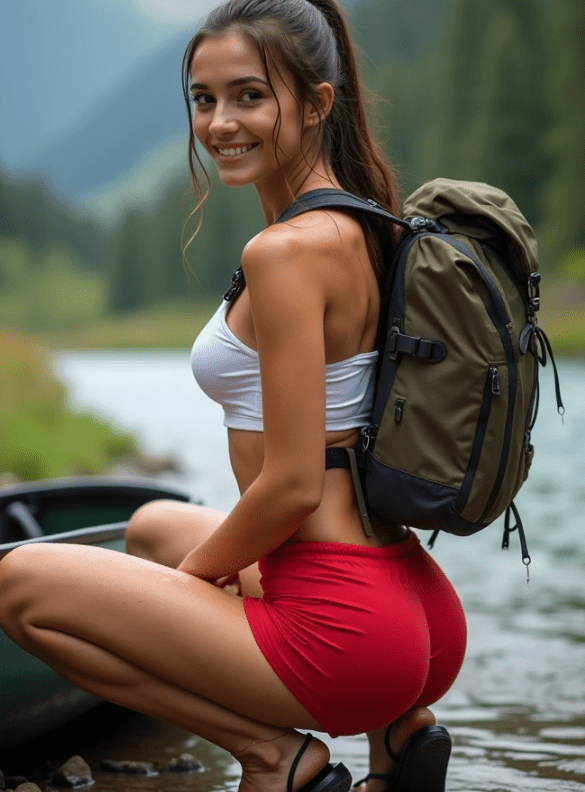
Georgia Hiking Trails have a way of calling to your soul. Towering Appalachian peaks, moss-covered hollows, waterfalls crashing like ancient drums—this state was carved by nature’s raw hand, and if you’ve ever set foot on the Benton MacKaye or tackled a slice of the Appalachian Trail here, you know the magic. But too many folks forget: what’s beautiful can also be brutal. These mountains don’t care how many Instagram followers you’ve got. They don’t care if you’ve read Wild or watched Into the Wild. They’ll chew you up and spit you out if you walk in unprepared.
Best Hiking Gear and Tools to Keep You Safe at All Times – Click Here
🥾 Top 20 Best Hiking Trails in Georgia
1. Blood Mountain via Byron Reece Trail (Appalachian Trail Section) – Blairsville
- Length: 4.3 miles round trip
- Difficulty: Moderate to strenuous
- Highlights: Highest peak on the Georgia section of the Appalachian Trail, epic views, rugged terrain.
2. Amicalola Falls Loop Trail – Dawsonville
- Length: 2.1 miles
- Difficulty: Moderate
- Highlights: 729-foot waterfall (tallest in Georgia), stair climb, forested paths.
3. Raven Cliff Falls Trail – Helen
- Length: 5.9 miles round trip
- Difficulty: Moderate
- Highlights: Scenic waterfall emerging from a cliff face, lush forest, river crossings.
4. Tallulah Gorge North & South Rim Trails – Tallulah Falls
- Length: Varies by route (2–3 miles)
- Difficulty: Moderate to strenuous
- Highlights: Jaw-dropping gorge views, suspension bridge, waterfalls.
5. Preacher’s Rock via Appalachian Trail – Near Dahlonega

- Length: 2 miles round trip
- Difficulty: Easy to moderate
- Highlights: Short hike with a big payoff—amazing mountain vistas.
6. Panther Creek Falls Trail – Near Clarkesville
- Length: 7 miles round trip
- Difficulty: Moderate
- Highlights: Large cascading falls, swimming holes, scenic creek trail.
7. Brasstown Bald Summit Trail – Hiawassee
- Length: 1.1 miles round trip (or longer options)
- Difficulty: Moderate (steep but paved)
- Highlights: Highest point in Georgia (4,784 ft), observation deck views.
8. Cloudland Canyon West Rim Loop – Rising Fawn
- Length: 5 miles
- Difficulty: Moderate
- Highlights: Canyon views, waterfalls, forest paths, great for photography.
9. Springer Mountain via Appalachian Approach Trail – Amicalola
- Length: 8.5 miles one way
- Difficulty: Strenuous
- Highlights: Southern terminus of the Appalachian Trail, wilderness solitude.
10. East Palisades Trail (Chattahoochee River NRA) – Atlanta
- Length: 4.5 miles
- Difficulty: Moderate
- Highlights: River views, bamboo forest, wildlife sightings.
11. Yonah Mountain Trail – Cleveland
- Length: 4.4 miles round trip
- Difficulty: Strenuous
- Highlights: Rock scrambles, panoramic views, popular with military training groups.
12. Emery Creek Falls Trail – Chatsworth
- Length: 5.9 miles round trip
- Difficulty: Moderate
- Highlights: Multiple creek crossings, waterfalls, wildflowers.
13. Indian Seats Trail at Sawnee Mountain – Cumming
- Length: 3.2 miles
- Difficulty: Moderate
- Highlights: Forest trail, historical quartz mining pits, mountain views.
14. Sope Creek Trail – Marietta
- Length: 3 miles
- Difficulty: Easy to moderate
- Highlights: Civil War-era ruins, creek views, family-friendly.
15. Dukes Creek Falls Trail – Near Helen
- Length: 2 miles round trip
- Difficulty: Easy
- Highlights: Large cascading waterfall, wheelchair-accessible portions.
16. Lake Trahlyta Trail (Vogel State Park) – Blairsville
- Length: 1 mile loop
- Difficulty: Easy
- Highlights: Lake views, Trahlyta Falls, ideal for beginners or families.
17. Coosa Backcountry Trail – Vogel State Park
- Length: 12.9 miles
- Difficulty: Strenuous
- Highlights: Tough loop with serious elevation gain, great for seasoned hikers.
18. Helton Creek Falls Trail – Blairsville

- Length: 0.3 miles
- Difficulty: Easy
- Highlights: Twin waterfalls, quick scenic stop, great for kids.
19. Jacks River Falls Trail (via Beech Bottom) – Cohutta Wilderness
- Length: 9 miles round trip
- Difficulty: Moderate to strenuous
- Highlights: Wilderness experience, waterfalls, river crossings (boots required).
20. Arabia Mountain Trail – Lithonia
- Length: Varies (up to 30+ miles total paved network)
- Difficulty: Easy to moderate
- Highlights: Moon-like granite outcrops, wildflowers, lakes, historic ruins.
I’ve hiked Georgia’s trails for over 30 years. I’ve bushwhacked where the map says “trail ends,” and I’ve taught survival classes in the Blue Ridge backcountry. I love this land. But let me tell you something straight: danger lives in these woods. If you don’t respect it, you might not come back.
1. The Siren Song of Blood Mountain

Blood Mountain—just the name should raise the hair on your neck. It’s the highest peak on Georgia’s portion of the Appalachian Trail, and it lures thousands of day hikers every year. The view from the summit is breathtaking, sure. But too many folks don’t realize what they’re walking into.
Weather up there turns on a dime. You can start in warm sunshine and be in freezing fog two hours later. I’ve seen it happen. I’ve rescued folks it’s happened to. Hypothermia can set in fast, especially when you’re wet and the wind picks up. One guy I met on the trail last year was wearing a cotton hoodie and mesh sneakers… in November. He thought it was just a “little hike.” That “little hike” could’ve cost him his toes if I hadn’t handed him dry socks and a Mylar blanket.
Preppers like me always hike with layers, a poncho, and an emergency bivvy. You should too.
2. Wild Animals: Not Your Disney Friends
We’ve got bears here, sure. Black bears mostly. But bears aren’t even the top concern if you ask me. It’s the feral hogs that’ll mess you up if you’re not watching. These suckers are smart, aggressive, and fast. I had a close call down near Cohutta Wilderness one dusk when a pack—yeah, a pack—came charging through the underbrush. You don’t outrun hogs in thick woods. You don’t reason with them either. I had to climb a pine and wait ‘em out.
Rattlesnakes too. Copperheads. Cottonmouths if you’re low enough. I wear snake gaiters every summer and carry a suction kit—not because I’m paranoid, but because I’ve seen the aftermath. One bite and you’re three hours from help, minimum. If you’re lucky, you’ll get cell service. If not? You’d better know how to improvise a splint and start hiking.
People ask me if I carry a gun. Damn right I do. Not for people. For wild things that don’t blink when they charge. Know the law, get your license, and carry responsibly.
3. Flash Floods and Deadly Streams

You’d think water is life. Out here, it can be death. Georgia gets some heavy rain, and when it comes fast, it doesn’t seep—it runs. I’ve seen creeks turn to rivers in an hour flat. Once, deep in the Tallulah Gorge area, I watched a gentle stream rise four feet while we broke camp. A couple hikers upstream tried crossing, lost their footing, and one of them almost didn’t make it.
Rule of thumb: never cross moving water above your knees. And don’t trust every “ford” on a trail map. I keep a paracord line and a compact throw bag in my pack for exactly this reason.
Also, water purification is non-negotiable. I don’t care if the spring looks crystal clear—it could be carrying giardia or cryptosporidium. Every prepper should carry a Sawyer filter or at least iodine tablets. Diarrhea in the woods is more than unpleasant—it’s dangerous.
4. Navigation Nightmares
“Just follow the trail,” people say. Yeah, until a storm knocks down blazes, or fog rolls in and you can’t see five feet in front of you. Georgia trails are notoriously rugged and sometimes poorly marked, especially in the wilderness areas where maintenance is spotty at best.
I always hike with a physical topo map and compass in addition to GPS. Electronics fail. Batteries die. Phones lose signal. The number of people who wander off the trail and end up miles in the wrong direction would shock you. Some are never found. Look up the case of Meredith Emerson, God rest her soul. She went missing on Blood Mountain. That trail isn’t a city park—it’s remote and isolated. Evil can hide in paradise.
5. People Problems: The Real Monsters
Nature can be brutal, but let’s not kid ourselves—humans can be worse. I hate to say it, but remote trails attract more than just outdoorsmen. Over the years I’ve crossed paths with some shady characters, especially when hiking solo or in the off-season.
Illegal hunters, drug runners, paranoid squatters—you name it. One time, I stumbled on what looked like an abandoned grow site way off the Benton MacKaye. Booby traps were still set up. You think you’re out there alone? Think again. I always advise hikers to let someone know your route and expected return. Better yet, carry a Garmin inReach or satellite messenger. One press of a button and you’ve got a lifeline.
6. Overconfidence Will Kill You
I’ve seen it too many times—young hikers, trail runners, or overconfident backpackers charging into Georgia’s backcountry without a clue. They underestimate the elevation gain, the terrain, and how fast the weather turns. By the time they realize they’re in trouble, it’s already too late.
It’s not about fear—it’s about respect. Respect for the land. Respect for what can go wrong. That’s what separates survivalists from statistics.
Here’s a bare-bones list every hiker should carry, no exceptions:
- Fire starter (ferro rod + waterproof matches)
- Water filter + backup purification tablets
- Mylar emergency bivvy
- Map, compass, GPS
- Headlamp (with spare batteries)
- Trauma kit (not just a few Band-Aids)
- Knife or multitool
- Extra food (calorie dense, non-perishable)
- Signaling tools (whistle, mirror, flashlight)
- Paracord
- Pepper spray or sidearm (if trained)
10 Hiking Trail Wilderness Skills for the State of Georgia
Essential Know-How for Surviving and Thriving in the Peach State’s Backcountry
Georgia’s wilderness is stunning—lush with hardwood forests, rolling mountains, rocky outcrops, and countless miles of trails weaving through it all. But if you plan to explore trails like the Appalachian Trail, Raven Cliffs, or the Cohutta Wilderness, you need more than sturdy boots and a water bottle. Georgia’s backcountry can be as unforgiving as it is beautiful, and having the right wilderness skills could make the difference between a great hike and a dangerous situation.
Here are 10 must-have hiking trail wilderness skills every Georgia hiker should master:
1. Navigation with Map and Compass
Trails in Georgia’s wilderness areas aren’t always clearly marked. Learn to read topographic maps and use a compass—without relying solely on GPS—especially in remote areas like Tray Mountain or the Cohutta backcountry.
2. Water Purification
Creeks and springs are plentiful, but drinking untreated water can lead to serious illness. Carry a filtration system and chemical backup like iodine tablets.
3. Shelter Building
Weather can change fast, especially in the mountains. Know how to build an emergency shelter using a tarp, paracord, or even natural materials in case you’re forced to hunker down.
4. Fire Starting
Always carry waterproof matches, a lighter, and a ferro rod. Practice building fires safely, even with damp wood. Fire provides warmth, a signal, and psychological comfort.
5. First Aid Basics
From snake bites to blisters, injuries can escalate quickly. Learn basic wound care, how to splint limbs, and carry a trauma-ready first aid kit.
6. Wildlife Awareness
Georgia is home to black bears, rattlesnakes, feral hogs, and more. Know how to store food, react to encounters, and avoid surprising animals on the trail.
7. Weather Reading
Thunderstorms can roll in fast, especially in the summer. Learn to read clouds, watch barometric pressure, and recognize lightning danger zones.
8. Route Planning and Time Management
Know your pace, trail conditions, and daylight hours. Many rescues in Georgia happen because hikers misjudge how long a trail will take.
9. Leave No Trace Ethics
Georgia’s natural beauty relies on responsible hikers. Know the seven Leave No Trace principles to protect the land for future generations.
10. Emergency Signaling
A whistle, mirror, or flashlight can help you be found if you’re lost. Three sharp whistle blasts is the universal distress signal.
Closing Thoughts from the Trail
I love these trails. I love Georgia’s wild, unpredictable, often unforgiving terrain. But I’ve learned the hard way, and I’ve taught others so they don’t have to. Every scar I carry tells a story—and every story holds a lesson.
So the next time you lace up your boots and head toward that breathtaking ridge or secluded waterfall, remember: beauty hides danger. But if you prep like your life depends on it—because it just might—you’ll come back stronger, wiser, and with a deeper connection to the wild heart of Georgia.
Now get out there… but don’t forget your headlamp. The woods don’t care if you make it back by sundown.


 TheDailyChristian