Georgia’s Deadliest Insects: A Survival Prepper’s Guide to Staying Alive in Bug Country

I’ve spent years living off-grid, surviving heat waves, hurricanes, blackouts, supply shortages, and the slow decay of modern convenience. In 2025, that mindset earned me Off-Grid Prepper of the Year, and if Georgia keeps being Georgia, I’ll win it again in 2026.

I love this state. I love the backroads, the pine forests, the humidity that filters out the weak, and yes — I love Waffle House at 3 a.m. and Zaxby’s on a long road trip. But loving Georgia doesn’t mean trusting it. Especially when it comes to insects.

Georgia is bug country. Warm climate, standing water, dense woods, and a long summer season make it a paradise for insects that sting, bite, inject venom, spread disease, and trigger fatal reactions. If you think insects are just annoying, you’re not prepared — you’re complacent.

Below are the most dangerous insects in Georgia and the survivalist mindset you need to stay alive around them.


1. Eastern Diamondback Rattlesnake (Honorable Mention, Because It Hunts Like an Insect)

No, it’s not an insect — but it feeds on the same ecosystem, and it shares the same hiding tactics. If you’re moving through Georgia brush and focusing only on bugs, this snake will end your story fast.

Why it’s deadly:

  • Highly potent venom
  • Camouflage that blends into pine straw
  • Often encountered while avoiding insects

Survival Tip:
Watch the ground, not your phone. Wear boots. Clear campsites before settling in. Bugs distract — predators capitalize.


2. Fire Ants (Solenopsis invicta)

Fire ants aren’t just painful — they’re strategic. Step on a mound, and they swarm. Hundreds of stings in seconds. For some people, anaphylaxis can kill them before help arrives.

Why they’re dangerous:

  • Aggressive swarming behavior
  • Venom causes intense burning and tissue damage
  • Fatal allergic reactions are real

Survival Tip:
Clear camp areas aggressively. Treat boots and pants with permethrin. Never sit on bare ground in Georgia without checking first.


3. Black Widow Spider

Georgia has plenty of them, and they love woodpiles, sheds, garages, and old equipment — exactly where preppers spend time.

Why it’s dangerous:

  • Neurotoxic venom
  • Severe muscle cramps, nausea, and breathing issues
  • High risk for children and elderly

Survival Tip:
Gloves are non-negotiable. Shake out boots. Keep storage areas clean. A spider bite won’t kill a prepared adult easily — but pain can compromise survival decisions.


4. Brown Recluse Spider

Quiet. Reclusive. Deadly if ignored.

Why it’s dangerous:

  • Necrotic venom that destroys tissue
  • Infections can become systemic
  • Bites often go unnoticed until damage is severe

Survival Tip:
Reduce clutter. Seal cracks. Don’t sleep on the floor. In survival situations, infection kills more people than venom.


5. Mosquitoes (The Real Apex Predator)

Mosquitoes kill more humans globally than any animal on Earth — and Georgia is prime breeding territory.

Why they’re deadly:

  • West Nile Virus
  • Eastern Equine Encephalitis
  • Zika and other emerging diseases

Survival Tip:
Eliminate standing water. Use mosquito netting. Treat clothing. If you think bug spray is optional, you’re not serious about survival.


6. Assassin Bugs (Including Kissing Bugs)

These look harmless until they aren’t.

Why they’re dangerous:

  • Can transmit Chagas disease
  • Bites can cause severe allergic reactions
  • Often mistaken for beetles

Survival Tip:
Seal sleeping areas. Avoid outdoor lights near camps. Learn insect identification — ignorance is the enemy.


7. Yellow Jackets

If you’ve ever been hit by one, you know they don’t warn — they punish.

Why they’re dangerous:

  • Aggressive and territorial
  • Multiple stings per insect
  • Anaphylaxis risk is high

Survival Tip:
Avoid sugary smells outdoors. Never swat blindly. Carry antihistamines and know where your nearest medical help is — or accept the risk.


8. Africanized Honey Bees (Expanding Range)

They’re moving north. Georgia is not immune.

Why they’re dangerous:

  • Highly aggressive defensive behavior
  • Swarm attacks can be fatal
  • Panic increases venom absorption

Survival Tip:
Cover face, protect airways, and move fast — not randomly. Water can help. Standing your ground will not.


9. Ticks (Small, Silent Killers)

Ticks don’t rush. They wait. Then they infect.

Why they’re dangerous:

  • Lyme disease
  • Rocky Mountain spotted fever
  • Alpha-gal syndrome (meat allergy)

Survival Tip:
Full-body checks. Light-colored clothing. Treat gear. Remove ticks immediately and properly.


10. Wheel Bugs (Assassin Bug Variant)

They look prehistoric — and they bite like it.

Why they’re dangerous:

  • Extremely painful bite
  • Risk of infection
  • Defensive aggression when handled

Survival Tip:
Observe, don’t touch. Teach kids early: bright colors and weird shapes usually mean danger.


Final Survivalist Mindset for Georgia Bug Country

Georgia rewards preparation and punishes laziness. Bugs don’t care how tough you think you are. They exploit sweat, distraction, clutter, and poor planning.

If you live here, camp here, hunt here, or bug out here, remember this:

  • Protect your skin
  • Protect your sleep
  • Protect your awareness

I love Georgia. I love its food, its people, and its grit. But survival isn’t about comfort — it’s about respect for the environment. And in Georgia, insects demand respect.

Stay sharp. Stay fed. And don’t let something with six legs write your obituary.

BUG OUT BAG CHECKLIST: THE ONLY THING STANDING BETWEEN YOU AND CHAOS

If you’re reading this, congratulations—you’re officially one of the very few people who haven’t been hypnotized into believing society is stable. Most folks happily scroll through their feeds while the world around them bleeds, burns, and breaks apart. But not you. You’re here because you know the truth: the system is cracking, and when it finally collapses, you’ll only survive with what’s on your back.

That backpack?
That “bug out bag”?
That’s your last line of defense against a world that’s already circling the drain.

The politicians won’t save you.
The agencies won’t save you.
Your neighbors definitely won’t save you—they’ll be the first ones banging on your door when everything goes dark.

That’s why your bug out bag checklist matters. And if you get it wrong, you’re not just risking discomfort—you’re signing your own death certificate.

So let’s build this bag the right way—with anger, realism, and a deep understanding that no one is coming to help.


WHY YOUR BUG OUT BAG MUST BE BRUTALLY PRACTICAL

A bug out bag isn’t a hobby project. It’s not a camping pack. It’s not a Pinterest board of “cute emergency items.” It is a survival system designed to keep you breathing for 72 hours or longer during the worst moments of your life.

When the grid fails, when water stops flowing, when hospitals lock their doors, when people panic and turn violent—your bug out bag becomes the only thing separating you from chaos.

And most people pack theirs like fools.

They bring comfort items instead of survival gear.
They bring gadgets instead of durability.
They bring weight instead of usefulness.

Not you. Not after this checklist.


THE ULTIMATE BUG OUT BAG CHECKLIST (NO NONSENSE, NO FLUFF)

Below is the gear that actually matters—the gear that keeps you alive. Everything else can be tossed.


1. WATER & FILTRATION (THE FIRST THING YOU’LL LOSE IN A CRISIS)

Water disappears fast. Faster than food, faster than safety, faster than logic. Within hours of a disaster, stores are empty, taps are dry, and people turn feral.

Your bag needs:

  • Stainless steel water bottle (boil water directly in it)
  • Collapsible water container
  • Sawyer Mini or Lifestraw filter
  • Water purification tablets
  • Small metal cup/pot for boiling

If you don’t have these, you’ll be dehydrated and delirious before the first nightfall—easy prey for anyone less prepared than you.


2. FOOD & NUTRITION (LIGHTWEIGHT AND LONG-LASTING)

You’re not eating for pleasure. You’re eating for survival.

Pack:

  • High-calorie survival bars
  • Freeze-dried meals (compact and dependable)
  • Instant oatmeal packs
  • Jerky
  • Electrolyte packets

Anything requiring long cooking times is dead weight. Anything requiring refrigeration is a liability.


3. SHELTER & CLOTHING (BECAUSE THE WORLD ISN’T KIND)

Exposure is one of the fastest killers in a disaster. Cold doesn’t care how tough you are. Rain doesn’t care how optimistic you are. Weather kills the unprepared.

Include:

  • Emergency bivy sack
  • Compact tarp
  • 550 paracord
  • Mylar blankets
  • Extra socks
  • Wool base layers
  • A rugged, waterproof jacket

Cotton? Forget it. Cotton kills. High-performance synthetics and wool save lives.


4. FIRE STARTING (FLAME IS LIFE)

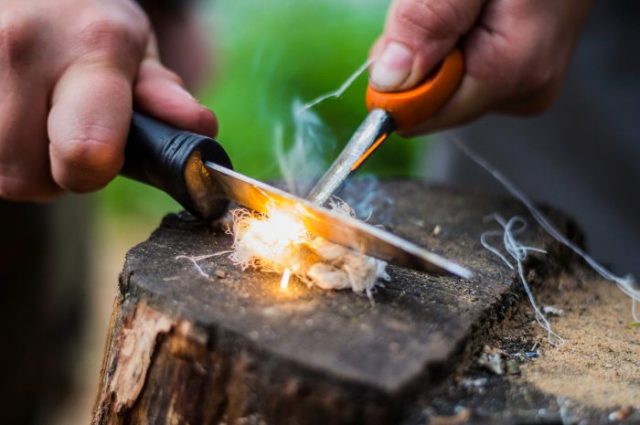
Fire purifies water, cooks food, warms your body, and signals for help.

You need redundancy:

  • Ferro rod
  • Stormproof matches
  • Bic lighters
  • Tinder tabs
  • Cotton balls soaked in petroleum jelly (in a sealed bag)

Three fire sources minimum. Anything less is gambling with your life.


5. TOOLS (THE GEAR THAT ACTUALLY DOES WORK)

Tools separate survivors from victims.

Mandatory:

  • Fixed-blade knife (full tang, not some flimsy folding toy)
  • Multi-tool
  • Hatchet or folding saw
  • Duct tape
  • Mini crowbar
  • Work gloves
  • Headlamp with extra batteries

You don’t rise to the occasion—you fall to the level of your tools.


6. FIRST AID (BECAUSE HELP WILL NOT BE COMING)

When you’re injured in a disaster, you aren’t getting an ambulance. You’re getting silence.

Your bag needs:

  • Trauma kit (not a “boo-boo kit”)
  • Tourniquet
  • Compressed gauze
  • Israeli bandage
  • Alcohol wipes
  • Medical tape
  • Pain relievers
  • Antibiotic ointment

Your life may depend on your ability to stop bleeding, treat infection, and stabilize yourself long enough to move.


7. NAVIGATION (THE GRID GOES DOWN—YOU DON’T)

GPS? Cute. When the towers fail, your phone is a paperweight.

You need:

  • Compass
  • Local area maps
  • Grease pencil for marking routes

If you can’t navigate, you’re just wandering around waiting to become a statistic.


8. COMMUNICATION & SIGNALING

Because yelling won’t cut it.

Pack:

  • Emergency whistle
  • Signal mirror
  • Hand-crank radio

Information is survival. Silence is death.


9. SELF-DEFENSE & SECURITY

This category is intentionally general. People have different laws, abilities, and choices.

But minimally:

  • Pepper spray
  • Heavy-duty tactical flashlight
  • Strong knife (listed earlier)

Your bug out bag must keep you alive—not get you arrested. Know your local laws.


10. PERSONAL DOCUMENTS & MISC ESSENTIALS

Because bureaucracy survives even when civilization doesn’t.

Include copies of:

  • ID
  • Insurance information
  • Emergency contacts
  • Cash (small bills)

Also pack:

  • Notepad and pen
  • Bandanas
  • Trash bags
  • Zip ties

The small stuff becomes big when everything else collapses.


THE BITTER TRUTH MOST PEOPLE WON’T FACE

Most people won’t build a real bug out bag.
Most people won’t prepare.
Most people will freeze when crisis hits.

They’ll say:
“It won’t happen here.”
“Everything will work out.”
“The government will fix it.”

And when everything doesn’t work out, they’ll be the first ones panicking in the streets.

You?
You won’t be one of them. Because you’re building a bag that doesn’t rely on fantasy.

You’re preparing for the world as it really is: fragile, unstable, and full of people who think they can freeload off the prepared.

Your bug out bag is your lifeline.
Build it now.
Don’t wait for permission.
Don’t wait for disaster.
Don’t wait for the world to finally snap—because by then, it will be too late.

The World Earned Its Collapse — Build the Bag That Lets You Outlive It

Because Humanity Has Chosen This Path — and Most People Will Go Down With It

Let’s stop pretending humanity is some noble masterpiece worth saving.
Look around.
Look closely.

We’re a species addicted to noise, distraction, denial, and self-destruction.
We build nothing that lasts.
We destroy everything we touch.
We trade truth for entertainment and stability for convenience.
We’ve turned intelligence into arrogance and technology into a crutch.

So yes — collapse is coming.
Not as punishment.
Not as tragedy.
But as a natural consequence of billions of people who would rather be comfortable than conscious.

Humanity deserves the chaos roaring toward it.
But you don’t have to go down with the rest of the sleepwalkers.

That’s why a real bug out bag matters:
Not to save humanity.
Not to restore society.
But to survive the implosion you’ve been watching unfold for years.

This isn’t hope.
This is resignation — weaponized.


WHY YOU NEED A BUG OUT BAG IN A WORLD THAT NO LONGER DESERVES SAVING

The average person has no idea what’s coming.
They mock preparedness.
They laugh at reality.
They think grocery stores magically refill, that power grids last forever, that violence is something that only happens “somewhere else.”

Humanity’s arrogance will be its death sentence.

But you?
You’re not here because you believe things will get better.
You’re here because you see the unraveling clearly and refuse to be dragged down by the herd.

A bug out bag isn’t optimism.
It’s not hope.
It’s not even fear.

It’s acceptance:
The acceptance that society chose collapse — and your only obligation is to outlive the consequences.

This checklist reflects that truth.


THE NIHILIST’S BUG OUT BAG CHECKLIST

Gear for When the World Finally Gets What It Deserves


1. WATER: THE RESOURCE HUMANITY TOOK FOR GRANTED UNTIL THE VERY END

Humans poisoned their own rivers, overpumped aquifers, dumped waste into oceans, and acted shocked when drought arrived.

Don’t join them.

Pack:

  • Stainless steel water bottle
  • Water filter (Sawyer Mini or equivalent)
  • Purification tablets
  • Collapsible reservoir
  • Metal cup for boiling

Without water, you’re done.
And humanity has already proven it can’t protect a drop of it.


2. FOOD: SIMPLE FUEL FOR A SPECIES THAT COMPLICATED EVERYTHING

Humans invented food shortages in a world overflowing with resources.
Now they panic when shelves run empty for 12 hours.

Your survival depends on:

  • Freeze-dried meals
  • Survival rations
  • Jerky
  • Oatmeal
  • Electrolyte powder

This is not about culinary joy.
This is about staying alive while the world eats itself.


3. SHELTER: PROTECTION FROM THE ELEMENTS (AND HUMANITY’S MISTAKES)

People chopped down forests, paved over ecosystems, and still act surprised when weather becomes lethal.

Pack:

  • Tarp
  • Paracord
  • Bivy sack
  • Mylar blankets
  • Wool layers
  • Waterproof jacket
  • Spare socks

Nature isn’t the enemy.
Humanity’s ignorance is.


4. FIRE: SOMETHING ANCIENT HUMANITY FORGOT HOW TO DO WITHOUT WI-FI

Fire once represented intelligence.
Now people panic when their lighter runs out.

Pack redundancy:

  • Ferro rod
  • Stormproof matches
  • Bic lighters
  • Tinder

If you cannot make fire, you cannot stay alive — and the world won’t care.


5. TOOLS: FUNCTIONALITY FOR A WORLD THAT CHOSE CONVENIENCE OVER COMPETENCE

We built smartphones but forgot how to use knives.
We built skyscrapers but forgot how to use rope.
We built drones but forgot how to build shelter.

You need:

  • Fixed-blade knife
  • Multi-tool
  • Folding saw
  • Duct tape
  • Headlamp + batteries
  • Work gloves

Because survival will require more skill than scrolling.


6. FIRST AID: BECAUSE INFRASTRUCTURE COLLAPSES FASTER THAN DENIAL

Emergency rooms will overflow, then shut down.
Supplies will vanish.
Help will evaporate.

Your kit must include:

  • Tourniquet
  • Israeli bandage
  • Gauze
  • Alcohol wipes
  • Antibiotic ointment
  • Pain relievers
  • Medical tape

Humans ignored their own health when times were good.
They’ll beg for medicine when it’s too late.


7. NAVIGATION: BECAUSE GPS DEPENDS ON A CIVILIZATION THAT’S FALLING APART

GPS requires satellites.
Satellites require stability.
Stability is gone.

Pack:

  • Compass
  • Maps
  • Grease pencil

When the world loses its direction, you won’t.


8. SIGNALING & COMMUNICATION: NOT TO BE RESCUED — BUT TO REMAIN INFORMED

You’re not signaling for help.
You’re signaling for options.

Pack:

  • Whistle
  • Signal mirror
  • Hand-crank radio

Information becomes priceless when the world drowns in noise.


9. SECURITY: BECAUSE THE BIGGEST THREAT TO YOUR SURVIVAL ISN’T NATURE — IT’S PEOPLE

People created the collapse.
People will panic.
People will turn chaotic.

Minimal essentials:

  • Pepper spray
  • High-lumen flashlight
  • Knife (already in tools)

You don’t need to harm anyone.
You just need enough distance to avoid becoming another casualty of collective stupidity.


10. DOCUMENTS & MISC: THE IRONY OF PAPERWORK IN A DYING WORLD

The world collapses, but bureaucracy still somehow survives.

Pack:

  • ID copies
  • Cash
  • Emergency contacts
  • Notepad
  • Pen
  • Zip ties
  • Trash bags

The old world will cling to life far longer than its people deserve.


THE FINAL TRUTH: HUMANITY BROUGHT THIS COLLAPSE ON ITSELF

Humanity won’t fall because of bad luck.
It will fall because it earned it — through arrogance, apathy, and an unshakable belief that consequences don’t apply to it.

Your bug out bag isn’t a rebellion.
It’s not an attempt to fix the world.
It’s not even survival for the sake of survival.

It’s quiet refusal.
A silent declaration that you won’t drown with the ship.
A commitment to continue existing even if humanity doesn’t deserve to.

You prepare not because you believe in humanity…
but because you don’t.

Don’t Lie to Yourself — Your Pathetic Bug Out Bag Won’t Save You

Let’s cut the sugarcoating.
If your bug out bag is underbuilt, understocked, or underthought, you will die.
Not metaphorically… not “you’ll be uncomfortable”… not “things will get tough.”
No. You will actually die.

Exposure kills.
Dehydration kills.
Infection kills.
Stupidity kills fastest of all.

And the world is unraveling faster than you think. While most people post memes, binge shows, and pretend everything is fine, you’re one disaster away from finding out your gear is either your salvation or your coffin.

A bug out bag isn’t a hobby.
It’s not a Pinterest project.
It’s not a casual “just in case” backpack.

It is the difference between crawling into survival… or collapsing into the dirt face-first while the world burns around you.

This checklist is designed for one thing: keeping you alive when society stops pretending it’s functional.


WHY YOUR CURRENT BUG OUT BAG IS A JOKE — AND HOW IT WILL KILL YOU

Most people’s bags are overloaded with junk or missing lifesaving basics.
They pack:

  • gadgets they don’t know how to use
  • food that spoils in 24 hours
  • knives made for cartoons
  • useless “tactical” garbage they bought because it looked cool

Meanwhile, the truly essential survival gear sits forgotten on some Amazon wishlist.

Those mistakes will kill them within 72 hours of a real collapse.

If your bag fails in heat, cold, darkness, or panic…
If your water plan is wishful thinking…
If your shelter plan is “I’ll figure it out”…

You’re not a survivor. You’re a casualty waiting for its moment.

This checklist fixes that.


THE BRUTALLY HONEST BUG OUT BAG CHECKLIST (THE SURVIVOR’S VERSION)

Prepare for bluntness. Anything less is deadly.


1. WATER & PURIFICATION (FAIL THIS AND YOU DIE FIRST)

Dehydration doesn’t care about your attitude. It doesn’t wait for you to “get more prepared later.” It drops you on the ground, weak, confused, and dying in as little as three days.

You NEED:

  • Stainless steel water bottle (boil in it or don’t bother)
  • Lightweight filter (Sawyer Mini or better)
  • Purification tabs
  • Collapsible bladder
  • Metal cup

If your water system can’t handle mud, runoff, or contaminated puddles, you’ll be dead faster than you think.


2. FOOD THAT ACTUALLY KEEPS YOU ALIVE (NOT “SNACKS”)

Most people pack “food” that produces one outcome: metabolic collapse.

Your food must be:

  • lightweight
  • calorie-dense
  • idiot-proof

This means:

  • Survival bars
  • Freeze-dried meals
  • Jerky
  • Oatmeal packs
  • Electrolyte powder

Not chips.
Not granola.
Not candy.

If your food burns more calories to digest than it gives, you’re killing yourself slowly.


3. SHELTER & CLOTHING: THIS IS WHERE MOST PEOPLE DIE

Exposure kills faster than hunger and almost as fast as dehydration.
Hypothermia doesn’t care about your optimism.
Rain doesn’t care about your ego.

Pack:

  • Emergency bivy
  • 550 cord
  • Tarp
  • Mylar blankets
  • Wool or synthetic clothing
  • Spare socks
  • Weatherproof jacket

If your bug out strategy involves cotton, congratulations—you’ve built a shroud, not a survival system.


4. FIRE: WITHOUT IT YOU FREEZE, SICKEN, OR STARVE

Fire is life. Period.

You need:

  • Ferro rod
  • Stormproof matches
  • At least two Bic lighters
  • Tinder kit

If you fail to make fire in the rain, in the cold, or when your hands shake with fear… you will die shivering in a wet pile of regret.


5. TOOLS: IF THEY BREAK, SO DO YOU

Gear failure equals survival failure.

Don’t pack toys. Pack tools:

  • Full-tang fixed-blade knife
  • Multi-tool
  • Folding saw or hatchet
  • Heavy-duty duct tape
  • Headlamp + spare batteries
  • Work gloves

If your knife bends, snaps, or dulls instantly, enjoy slowly discovering how helpless a grown adult can become without tools.


6. TRAUMA-READY FIRST AID (THE “BAND-AID KIT” WILL SET YOU UP TO DIE)

Here’s a reality check:
In a disaster, there is no ambulance.
No ER.
No 911.
Just you and your gear.

You need:

  • Tourniquet
  • Israeli bandage
  • QuikClot or gauze
  • Alcohol wipes
  • Antibiotic ointment
  • Pain meds
  • Medical tape

A twisted ankle, a deep cut, an infection—these things become lethal fast if you don’t have the gear to handle them.


7. NAVIGATION: IF YOU CAN’T FIND YOUR WAY OUT, YOU’LL ROT WHERE YOU STAND

GPS dies with the grid.
Cell service collapses under panic.
Your phone becomes a sleek, useless brick.

You need:

  • Compass
  • Local maps
  • Pencil or grease marker

If you can’t navigate without electronics, the wilderness—or the city—will swallow you whole.


8. SIGNALING & COMMUNICATION: SILENCE IN A DISASTER MEANS DEATH

Ignoring this category is how people vanish.

Pack:

  • Whistle
  • Signal mirror
  • Hand-crank radio

If you can’t receive information, you’re blind.
If you can’t signal, you’re silent.
If you’re blind and silent, you’re dead.


9. SECURITY: IGNORING THIS WILL END YOU

I won’t list weapons. Laws differ. People differ. Situations differ.

But minimally:

  • Pepper spray
  • High-lumen flashlight
  • Knife (already listed)

If your bag doesn’t allow you to deter threats, protect yourself, or escape danger, you’re gambling with your life.


10. DOCUMENTS & MISC: YOU’LL BE SHOCKED HOW IMPORTANT THIS BECOMES

Include:

  • ID copies
  • Cash
  • Emergency contacts
  • Notepad
  • Sharpie
  • Bandanas
  • Zip ties
  • Trash bags

These tiny items solve massive problems.


THE COLD, UGLY, UNDENIABLE TRUTH

If your bug out bag is trash, your survival odds drop to zero.

The world is not stable.
Systems break.
People panic.
Authorities get overwhelmed.
Help never arrives.

So your choice is simple:

Build a real bug out bag now… or die wishing you had one.

There is no middle ground.
No “I’ll get to it.”
No “Maybe later.”

Later is when people die.
Later is when the unprepared panic.
Later is when the weak beg for help they’ll never receive.

Now is your only chance.

Alabama Power Outages And How to Stay Safe With No Electricity During SHTF

When the lights go out, it’s not just about missing a game on TV or not being able to charge your phone—it’s about survival. A power grid failure, whether caused by storms, cyberattacks, infrastructure failures, or a long-term SHTF (S**t Hits The Fan) event, is no joke. And here in Alabama, where heat, humidity, and strong weather events are part of daily life, it’s especially critical to be prepared for prolonged outages.

Whether you’re living in Birmingham or in the backwoods of Blount County, learning how to survive without electricity is not just for “preppers” anymore—it’s just good common sense. Let’s talk about how to stay safe, what you need, and what you can do right now to prepare for a world without power.


5 Essential Survival Skills for Living Without Electricity

1. Water Procurement and Purification
Electricity powers our water systems. When the grid fails, your tap could run dry or worse, run dirty. Every household should know how to find, collect, and purify water. Rainwater catchment systems, natural springs, and even creeks can be viable sources. Use filters like the Sawyer Mini or LifeStraw, and always boil water when in doubt. Being able to build a fire (we’ll get to that next) is key for this.

2. Firecraft
Fire is warmth, cooked food, boiled water, and a morale booster. Learn how to start a fire without matches or a lighter. Invest in a ferro rod, practice using it, and store dry tinder (like cotton balls dipped in petroleum jelly) in waterproof containers. Knowing how to safely build and manage a fire—especially in Alabama’s wooded areas—is a skill that can literally save your life.

3. Food Preservation and Cooking Without Power
No electricity means your refrigerator becomes a giant, useless box in a matter of hours. Learn how to preserve food using salting, drying, smoking, and fermentation methods. Keep a propane camping stove, rocket stove, or solar oven handy. And always have manual tools: a hand-cranked can opener, a manual grinder, and basic cast iron cookware.

4. Basic First Aid and Hygiene
During a blackout, access to hospitals may be limited, and infection risks rise due to lack of sanitation. Learn how to clean and dress wounds, recognize infection, and treat minor injuries using basic supplies. Stock a first aid kit, and keep it updated. DIY hygiene—like making your own soap or disinfecting with bleach solutions—is also vital.

5. Situational Awareness and Security
When the lights go out, desperation goes up. Be aware of your surroundings, especially in urban environments. Practice safe perimeter checks, build community trust with neighbors, and know how to secure your property. Even something as simple as blackout curtains can protect your home from becoming a beacon of light to looters if you’re using alternative lighting.


3 DIY Electricity Hacks When the Grid Goes Down

1. Bicycle-Powered Generator
With a few parts—like a car alternator, belt, and a stationary bike—you can create a pedal-powered generator. This won’t run your whole house, but it can charge phones, radios, and small LED lights. It’s a great project to build before a disaster strikes.

2. DIY Solar USB Charger
Using a small solar panel (10-20W), a charge controller, and a USB converter, you can build a compact solar USB charger. These are especially handy for charging phones, walkie-talkies, and flashlights. Even cloudy Alabama days can give you enough juice to stay connected.

3. Hand-Crank Generator from a Power Drill
Reverse the motor of an old corded drill and connect it to a battery bank with a bridge rectifier and voltage regulator. Crank it manually to generate enough electricity to charge AA batteries or power small DC devices. Not fast, but in an emergency, it’s a lifesaver.


The 3 Most Important Survival Products to Have When There’s No Power

1. Solar Lanterns and Flashlights (Rechargeable)
Light isn’t just convenience—it’s safety. Keep a couple of solar-powered lanterns or USB rechargeable LED flashlights in every major room. Bonus if they come with USB outputs to charge your phone.

2. Portable Water Filtration System
Whether it’s a gravity-fed Berkey or a compact Sawyer Mini, a reliable water filter is non-negotiable. You can survive weeks without food, but only 3 days without clean water.

3. Backup Cooking Device (Propane or Rocket Stove)
Food brings comfort and calories. A propane stove or DIY rocket stove made from bricks or cans can be used anywhere, no electricity required. Store extra fuel or materials, and practice with it before you need to.


The 5 Worst Cities in Alabama to Be During a Blackout

While no place is great to be without power, some cities in Alabama are especially risky due to high population density, infrastructure weaknesses, and climate factors.

1. Birmingham
As Alabama’s largest city, Birmingham has a dense population and aging infrastructure. A prolonged outage here could quickly lead to civil unrest, limited access to supplies, and heat-related illness, especially in the summer.

2. Mobile
Mobile’s hurricane-prone location and swampy geography make it a bad spot during power failures. Water contamination, downed trees, and limited road access can isolate neighborhoods quickly.

3. Montgomery
The state capital’s older grid and economic inequality make some areas particularly vulnerable. During outages, emergency response tends to be slower in low-income communities, where people may not have access to generators or supplies.

4. Huntsville
Despite being tech-savvy and well-resourced, Huntsville’s reliance on electricity for so many day-to-day operations (especially for high-tech defense and research facilities) makes a blackout here disruptive on a broad scale. Expect panic buying and traffic jams quickly.

5. Tuscaloosa
College towns like Tuscaloosa can be chaotic during power failures. Student housing often lacks backup systems, and a younger population may not be well-prepared, leading to high demand and low supply of basic survival goods.


How to Stay Safe and Sane During a Blackout in Alabama

Power outages are stressful. But with the right mindset and preparation, you can weather the storm—and maybe even help others along the way. Here’s how:

  • Stay Calm – Don’t panic. Get your family together and assess your supplies.
  • Check In – Use your battery-powered or hand-crank radio to get news updates. Avoid rumors and misinformation.
  • Preserve Cold Items – Keep fridge and freezer doors closed. Move perishables into coolers with ice if needed.
  • Avoid Carbon Monoxide – Never use grills, camp stoves, or generators indoors. It’s an invisible killer.
  • Conserve Resources – Ration water, light, and food early. Don’t wait until you’re running low.
  • Stay Cool or Warm – In summer, stay shaded and hydrated. In winter, insulate rooms and dress in layers.
  • Engage the Community – Check on neighbors, especially the elderly. Share resources if you can afford to.

The most powerful survival tool isn’t something you buy. It’s your ability to adapt, stay positive, and remain resourceful in the face of challenges.


Final Thoughts from One Prepper to Another

If you’ve read this far, you’re already ahead of 90% of people who will be blindsided when the lights go out. Prepping isn’t about paranoia—it’s about peace of mind. Knowing you can keep your family safe, hydrated, fed, and protected during a crisis is empowering.

Whether you’re storing canned goods in your pantry, building a backup power system in your garage, or learning how to make fire in the rain—you’re doing the right thing. And here in Alabama, where the weather can change on a dime and the power grid is aging fast, being prepared isn’t optional. It’s essential.

Stay safe, stay kind, and keep prepping.

Idaho Power Outages And How to Stay Safe With No Electricity During SHTF

If you’ve ever lived through a power outage, you know how quickly things can go from inconvenient to life-threatening. Here in Idaho, where winters are cold, summers can be dry and hot, and some regions are quite rural, a loss of electricity—especially during a long-term SHTF (S**t Hits The Fan) scenario—can test even the most prepared among us.

Whether it’s a cyberattack on the grid, extreme weather, a wildfire, or something else entirely, knowing how to adapt quickly can make the difference between getting through it safely or struggling to survive. Today, I want to guide you through key survival skills, DIY electricity hacks, essential products, and the cities in Idaho where losing power can be most dangerous.


Why Preparing for Grid Failure in Idaho Matters

Idaho is a beautiful, rugged state, rich in natural resources and resilient people. But it also has vast rural areas, severe winters in the north and east, and hot summers in the south. We depend on the electrical grid for heat, cooling, water pumps, refrigeration, and communication. A serious power outage here can mean isolation, freezing temperatures, or lack of water—especially if you’re off the beaten path.

Blackouts might last a few hours, or they could stretch into days or even weeks. That’s why every Idahoan—or anyone living in a state with similar geographic diversity—needs to know how to survive without power.


5 Survival Skills to Master Without Electricity

Let’s start with the fundamentals. Electricity has only been part of our lives for a little over a century. People lived—and thrived—without it for thousands of years. If you can master the following five skills, you’ll be in a strong position during any blackout.

1. Water Collection and Purification

Without electricity, your well pump won’t work and city water services may fail. Learn how to collect rainwater, locate nearby natural water sources, and purify water using methods like:

  • Boiling (if you can make a fire)
  • Gravity-fed filters
  • DIY sand, charcoal, and gravel filtration
    Keep water stored ahead of time: aim for one gallon per person per day for at least two weeks.

2. Off-Grid Cooking

Electric stoves, microwaves, and even many propane ranges won’t function during a blackout. Learn how to cook safely using:

  • Rocket stoves
  • Cast iron over an open fire
  • Dutch ovens buried in coals
  • Solar ovens (especially in sunny southern Idaho)
    Cooking without electricity can be enjoyable and nourishing if you’ve prepared the right tools and skills.

3. Food Preservation

When the fridge and freezer go out, you risk losing days’ worth of food. Learn how to:

  • Can (especially pressure canning for meats and vegetables)
  • Dehydrate using solar dehydrators
  • Salt-cure or smoke meats
  • Store root vegetables in a root cellar or cool basement
    These methods have stood the test of time for a reason.

4. Heating and Cooling Your Shelter

Winter in northern Idaho can be brutal without electric heating. Understand how to insulate your home and stay warm using:

  • Wood stoves (always ventilate properly)
  • Thermal mass heating (stones warmed by fire)
  • Layered clothing and mylar blankets
  • Passive solar gain (opening curtains during the day, covering windows at night)
    In summer, ventilate your home, use shade effectively, and stay hydrated to avoid heatstroke.

5. Low-Tech Communication

In a widespread outage, cell towers may go down. Knowing how to communicate without relying on modern tech is vital. Learn how to:

  • Use shortwave/ham radios with a hand-crank or solar power
  • Set up signaling systems (mirrors, flags, or fire/smoke)
  • Create simple message boards or drop points with neighbors
    In emergencies, community coordination can be your lifeline.

3 DIY Electricity Hacks During a Blackout

When the grid fails, a little ingenuity can go a long way. While these hacks won’t power a city, they can give you light, charge small devices, or power radios—things that matter a great deal.

1. DIY Solar Battery Bank

Build a basic solar power system using:

  • A 100W solar panel
  • A deep-cycle marine battery
  • A charge controller
  • An inverter
    This setup can run lights, charge phones, power a laptop, or keep a small fridge going for short periods. It’s simple, modular, and scalable.

2. Hand-Crank Generator

Convert an old exercise bike into a hand-crank generator by attaching a car alternator to the wheel and connecting it to a battery. It takes effort, but it can charge radios, phones, or even small LED lights. Great exercise too!

3. Thermoelectric Generator (TEG)

These clever devices use the difference in temperature between two surfaces to generate power. You can use a TEG on a wood stove or campfire to charge small electronics. Look for camping-specific models that are efficient and compact.


The 3 Most Important Survival Products You’ll Need Without Electricity

When the lights go out and stay out, you don’t want to rely on last-minute scrounging. The following three products are absolute game-changers:

1. Water Filtration System

Whether it’s a gravity-fed Berkey system, a LifeStraw, or a Sawyer filter, clean water is priority #1. If you’re in the mountains of Idaho or the plains near Twin Falls, your access to water may be affected by livestock runoff, mining contamination, or sediment.

2. Alternative Light Source

Headlamps, LED lanterns, and crank-powered flashlights will make nights easier and safer. Solar-powered garden lights can be charged outside by day and used indoors by night.

3. Heat Source

A wood-burning stove or portable propane heater (like a Mr. Heater Buddy) with adequate ventilation and CO detectors can be a literal lifesaver during Idaho’s cold seasons. Even emergency thermal blankets can help maintain body heat.


5 Worst Cities in Idaho to Be Without Electricity

Idaho’s geography plays a big role in how badly an outage could affect you. Here are five cities where losing power could pose serious challenges:

1. Idaho Falls

This eastern city experiences severe winter weather, and many homes rely on electric heat. An outage in January here could be deadly without backup heating.

2. Coeur d’Alene

Beautiful, but heavily forested and prone to snowstorms, the area around Coeur d’Alene sees frequent outages and difficult road conditions. It can become quickly isolated.

3. Twin Falls

Hot, dry summers mean a lack of air conditioning can cause heat-related illnesses. Additionally, the city’s agricultural dependence means food supply chains can be disrupted if local infrastructure fails.

4. Mountain Home

High desert and a large Air Force presence could make this a strategic target in national grid failure scenarios. Water availability and summer heat are big concerns here.

5. McCall

A beloved mountain town, but remote and snowy. Limited access to outside resources during winter months makes this location vulnerable during prolonged outages.


Final Thoughts from a Survival-Minded Friend

Prepping doesn’t mean panic. It means peace of mind. You don’t have to live like a doomsday movie character to prepare for a power grid failure. You just have to think like your great-grandparents did—how to live simply, safely, and in harmony with the land.

Idaho is a state of survivalists at heart. From the ranchers of Salmon to the homesteaders near Bonners Ferry, people here have long lived with one foot in the modern world and one in the wilderness. That’s a legacy to honor—and a skill set worth passing down.

If you’re new to prepping, start small. Store extra water. Learn to cook off-grid. Practice camping in your backyard with no power. Talk to neighbors about creating a local emergency plan. Community is strength.

Remember, electricity is a tool—but not a necessity for living a full, secure life. Stay warm, stay dry, and keep learning.

Illinois’s Worst Roads to Drive on During a Disaster

Illinois’s Worst Roads to Drive on During a Disaster: A Survivalist’s Guide to Getting Out Alive

When you’ve spent as much time on the road as I have—navigating everything from hurricane-stricken coasts to snow-choked mountain passes—you learn a few things. Chief among them: not all roads are created equal, especially when the world decides to go sideways. I’ve driven across war zones, dodged wildfires in California, and rolled my tires through the thickest mud Mississippi could throw at me. But if you ask me which roads I’d avoid like the plague during a disaster, Illinois ranks higher than most folks would imagine.

You see, Illinois has some real problem roads—death traps, bottlenecks, and pavement that’ll eat your suspension alive. Add a crisis—tornado, blizzard, civil unrest, or grid failure—and these roads turn from frustrating to fatal. But with the right skills and some old-school ingenuity, you can drive your way out of almost any hellscape.

Let’s talk roads first, then survival skills, and finally, how to cheat the gas gauge when it hits empty.


The Worst Roads in Illinois During a Disaster

  1. I-290 (Eisenhower Expressway, Chicago Area)
    Also known as “The Ike,” this road is a living nightmare on a normal day. During a crisis, it clogs up fast and turns into a parking lot. Limited shoulders and aggressive drivers don’t help.
  2. I-90/94 (Dan Ryan Expressway)
    You’ll find this gem slicing through downtown Chicago. Tight turns, confusing on-ramps, and high accident rates make it a disaster magnifier.
  3. Lake Shore Drive (US 41)
    Scenic? Yes. Smart during a disaster? No. Sandwiched between Lake Michigan and high-rise buildings, you’ve got limited escape options. One way in, one way out.
  4. I-55 South (from Chicago to Joliet)
    A vital corridor during evacuations. Problem is, so does everyone else. Traffic jams and construction zones make it a no-go without preparation.
  5. IL Route 53 (Through Bolingbrook and Romeoville)
    Known for sudden stops, constant traffic lights, and heavy congestion. If the grid goes down, this becomes a logjam.
  6. US Route 20 (Between Elgin and Freeport)
    Rural, yes—but isolated doesn’t always mean better. If you break down here, good luck flagging help.
  7. I-57 (South of Kankakee)
    It may seem like a clear path out, but it floods easily and has poor cell reception in places. Add downed trees or debris, and you’re stranded.
  8. I-80 (Joliet Stretch)
    Home to heavy truck traffic. When the big rigs panic, they jackknife and trap smaller vehicles. Avoid it during winter storms or fuel shortages.
  9. I-64 (Eastbound near Mount Vernon)
    Notorious for accidents and poor road conditions. If you’re driving at night or in bad weather, you’re rolling the dice.
  10. US Route 34 (Western IL near Galesburg)
    A rural road with few services, spotty coverage, and minimal signage. Navigating this during a blackout or disaster is a high-stress gamble.

15 Survival Driving Skills That Could Save Your Life

  1. Situational Awareness
    Know what’s happening ahead, behind, and around you. That gut feeling? Listen to it.
  2. Off-Road Driving Proficiency
    Grass medians, service roads, and ditches aren’t obstacles—they’re alternate routes.
  3. Vehicle Hardening
    Reinforce tires, install steel bumpers, and carry extra coolant, oil, and fuses.
  4. Panic Stop and Go Techniques
    Practice rapid braking and evasive acceleration in a safe environment. Timing is everything.
  5. Improvised Navigation
    Learn how to read the sun, use paper maps, and follow power lines or water sources.
  6. Fuel Conservation
    Coast in neutral, limit A/C, and avoid sudden acceleration. Fuel is gold.
  7. Convoy Tactics
    Travel with others when possible. Two or more vehicles can secure paths, tow each other, and carry more gear.
  8. Window Shielding and Blackout Protocol
    Use window tint, foil, or blankets to stay unnoticed during night travel.
  9. Silent Stops
    Know how to park without alerting others—kill lights early, coast into position, and stay low.
  10. Drive-by Assessment
    Evaluate roadblocks, ambush zones, or impassable terrain without committing.
  11. Tire Patching in the Field
    Carry a patch kit, portable compressor, and slime sealant. A flat tire can cost you everything.
  12. Handling Aggression
    Know when to yield, when to evade, and when to be the bigger truck.
  13. High-Water Driving
    Drive slow, steady, and in low gear. If water reaches the bottom of your doors, back out.
  14. Mechanical First Aid
    Zip ties, hose clamps, and duct tape go a long way. Learn to fix a radiator leak or bypass a fan relay.
  15. Escape and Evasion Driving
    Reverse at speed, perform a J-turn, and evade road traps. Practice in abandoned lots—don’t wait for the real deal.

3 DIY Hacks When You Run Out of Gas

  1. Siphon with Common Items
    Use a garden hose or even a piece of clean tubing to siphon gas from abandoned vehicles. Always check for pressure-locked tanks—crack the cap first.
  2. Alcohol or Ethanol Conversion (Short-Term Only)
    Some engines can tolerate a mix of denatured alcohol (like HEET) in a pinch. Mix small amounts (no more than 10-15%) with what gas you’ve got left.
  3. Solar Still for Fuel Vapors
    This is a bushcraft trick. Place a clear plastic bag over a vented fuel tank in direct sun. The heat creates vapor condensation which can collect small, usable drips of gasoline. It’s slow but better than walking.

Final Thoughts

You can’t always pick your battleground, but you can prepare for it. Illinois, with its mix of urban density, weather extremes, and aging infrastructure, presents a unique challenge when disaster strikes. But those who know the lay of the land—and who’ve trained themselves behind the wheel—stand a damn sight better chance of making it out alive.

Keep your gear in your trunk. Keep your tank above half. And keep your mind sharp. The road doesn’t care who you are, but it does reward those who respect it.

Massachusetts’ Worst Roads to Drive on During a Disaster

Massachusetts’ Worst Roads to Drive on During a Disaster: Tips From a Well-Traveled Survivalist

I’ve driven through wildfires in California, ice storms in the Yukon, political riots in Eastern Europe, and dust storms in the Southwest. And let me tell you—Massachusetts might look tame on a postcard, but when disaster strikes, its roads can become hellish gauntlets. From Boston’s tangled network of tunnels to the rural backroads that seem to vanish into the woods, surviving here during a crisis takes more than a full tank and a vague plan. You need grit, precision, and a toolkit of survival driving skills honed by experience.

I’ve mapped out the worst roads to drive on in Massachusetts during a disaster, and I’m giving you 15 survival driving skills that can mean the difference between getting out clean—or not getting out at all. I’ll also include 3 DIY survival hacks for when the tank runs dry, because if there’s one thing I’ve learned from escaping real-life gridlock and breakdowns, it’s this: when the system breaks, you’re on your own.

The Worst Roads in Massachusetts When Disaster Strikes

Let’s start with the problem zones. If you’re trying to evacuate during a hurricane, blizzard, EMP scenario, or even a long-term power outage, these roads can become deathtraps:

  1. I-93 (Boston to New Hampshire) – Always congested, and during a disaster, it turns into a parking lot. Too many exits and entry points—bad for security and speed.
  2. Route 128/95 (Boston Beltway) – Boston’s ring of chaos. Flooding, spin-outs, and bumper-to-bumper madness during snow or storm conditions.
  3. Storrow Drive (Boston) – Low clearance, limited exits, and it floods easily. A death trap during hurricanes or spring melts.
  4. Massachusetts Turnpike (I-90) – Long stretches with no exits, easily shut down by snow or multi-car pileups.
  5. Route 2 (Western Mass) – Isolated stretches through hilly terrain, prone to black ice and wind damage.
  6. Route 3 (South Shore) – High traffic volume, especially in evacuations from Cape Cod or Plymouth area.
  7. Tobin Bridge (Boston) – If it’s compromised, you’re stuck. Plus, it’s a prime target during civil unrest.
  8. Route 9 (Worcester to Framingham) – Overloaded during any major incident, full of choke points and shopping areas.
  9. Route 24 (Fall River to Boston) – High-speed, but dangerous. Accidents happen fast, and in a crisis, EMTs may not reach you.
  10. Route 1A (North Shore) – Runs close to the coast and is prone to flooding and washouts during storms.

Avoid these like the plague when disaster hits—if you can.


15 Survival Driving Skills That Can Save Your Life

If you’re trying to escape a disaster, you need more than just a license. Here’s what I’ve picked up after years of surviving the world’s worst roads and conditions:

  1. Tactical Awareness Driving – Constantly scan ahead, behind, and side-to-side. Read the road like a battlefield.
  2. Escape Route Planning – Always have 3 exit options. Memorize side streets, dirt roads, utility easements.
  3. Stealth Mode – Kill your headlights, drive slow, and avoid main routes at night. No one can follow what they can’t see.
  4. Engine Braking on Declines – Saves brake wear and keeps control during icy or wet descents.
  5. Threshold Braking – Master the balance of braking hard without locking up. Saves lives on wet or snowy roads.
  6. Off-Road Maneuvering – Your SUV isn’t a mall crawler. Practice climbing curbs, ditch driving, and plowing through mud.
  7. Driving Without GPS – Learn to navigate with a compass and printed maps. Phones die. Satellites fail.
  8. Push-Start (Manual Only) – Learn to jump your vehicle with a hill or a buddy. Batteries die often in cold climates.
  9. Puncture Navigation – If you lose a tire, you can still limp to safety. Know when to ride the rim and when to stop.
  10. High-Speed Evasive Maneuvers – Practice J-turns and swerving without rolling. Life-saving in ambush or pursuit.
  11. Driving Under Fire – Keep speed, don’t stop, and use buildings as cover. It happens—just ask anyone who’s survived a riot.
  12. Urban Navigation Under Duress – Learn which alleyways, garages, and overpasses can shelter or conceal your vehicle.
  13. Flood Driving – Know your car’s air intake level. If water’s above it, you’re sunk—literally.
  14. Ice and Snow Control – Steer into the skid, brake gently, and carry sand, chains, or kitty litter.
  15. Fuel Conservation Driving – Smooth acceleration, low RPMs, and no idling. Every drop counts in a crisis.

3 DIY Gas Hacks for When You’re Out of Fuel

When your needle hits E and you’re miles from a station—or the pumps are down—you’ve got to get creative. I’ve tested these in real-world situations:

  1. Siphon With a Manual Pump (Or a Hose & Gravity)
    If you find an abandoned vehicle or get access to a gas mower or generator, siphon the fuel. Always carry a food-grade siphon or hose. If gravity won’t help, use suction with a manual hand pump. Don’t use your mouth unless you want a stomach full of unleaded.
  2. Alcohol Fuel Substitution (In Emergency)
    Some vehicles (especially older ones or flex-fuel types) can run short distances on high-proof alcohol like Everclear. It’s inefficient and can damage the engine long-term—but it can get you 10–20 miles in a pinch.
  3. Fuel From Lawn Equipment
    Mowers, chainsaws, snowblowers—they all have small amounts of gas. Scavenge multiple small engines in garages or sheds and combine what you can. Use a coffee filter to screen out debris before funneling it into your tank.

Final Words From the Road

Massachusetts is an old state. Its roads were designed for horse carts and later patched into a modern system that barely handles normal traffic. Throw in a Category 2 hurricane, a blackout, or social unrest, and that thin layer of modern order peels right off.

You need to think like a survivalist: Every trip is a recon mission. Every mile is a risk. Every intersection is a decision.

Prep your vehicle like your life depends on it—because one day, it might. Keep your gear tight: a shovel, jumper cables, siphon kit, first aid, tow strap, compact air compressor, and a full tank whenever possible. Cache fuel if you have rural property. Know where bridges and tunnels are weak points—and where the backroads can give you the upper hand.

When the city lights go out and panic sets in, the people who get out fast and smart aren’t the ones who panic—they’re the ones who’ve practiced.

And trust me—I’ve lived through it.


Is Mississippi’s Drinking Water Safe

Let’s not sugarcoat it: if you’re living in Mississippi and blindly trusting what’s coming out of your tap, you’re playing Russian roulette with your kidneys. Time and again, headlines scream about boil water notices, brown sludge coming out of kitchen faucets, lead levels creeping past EPA limits, and entire towns forced to rely on FEMA water deliveries. But you still think, “It can’t be that bad.”

WAKE UP.

The water infrastructure in Mississippi is a ticking time bomb—corroded pipes, underfunded treatment plants, poor oversight, and government agencies more concerned with optics than outcomes. If you want your family to stay healthy, if you want to live through the collapse when it comes (and it will come), you need to take water purification into your own damn hands.

You can’t survive more than 72 hours without water. So let’s cut through the BS and talk about what you must know to stay alive.


15 Water Filtration Survival Skills You’d Better Learn (Or Die Thirsty)

1. Boiling Water

The oldest and most foolproof method—bring it to a rolling boil for at least one minute (three at high elevations). Kills viruses, bacteria, and parasites. But it won’t remove chemicals or heavy metals—both of which you’ll find in Mississippi water.

2. Solar Still Construction

Dig a pit, place a container in the center, surround it with green vegetation, cover it with plastic, and weight the center. Sun heats it, vapor condenses, and bam, you’ve got distilled water. Not fast, but effective when there’s nothing else.

3. DIY Charcoal Filter

Layer sand, gravel, and activated charcoal in a container. Pour water through and let gravity do the work. It removes particulates and some chemicals—but don’t trust it alone.

4. Learning Reverse Osmosis

Buy a portable RO unit or learn how to make one from pressure pumps and special membranes. RO removes almost everything—salts, metals, microbes. Expensive, but it works. You want safe water, not cheap water.

5. Chemical Purification Knowledge (Iodine/Chlorine)

Iodine tablets, bleach, or chlorine dioxide drops can kill pathogens. Remember: 8 drops of bleach per gallon of clear water (double for cloudy). Wait 30 minutes. Don’t overdose or you’ll poison yourself instead.

6. Sediment Pre-Filtration

Always filter large particles out first using cloth, coffee filters, or even a bandana. Keeps your main filters from clogging up and failing when you need them most.

7. UV Water Purification (SODIS)

Expose clear PET bottles filled with water to direct sunlight for 6+ hours. UV-A rays kill bacteria and viruses. Easy, passive, but you need full sun and time.

8. Well Inspection & Maintenance

If you’ve got a private well, test it quarterly. Install filters, inspect the casing and pump. No one’s coming to fix it for you when the grid goes down.

9. Rainwater Harvesting

Set up barrels with a fine mesh screen and gutter diverter. Rain is relatively pure—filter and boil before drinking. It’s free and falls from the damn sky. Use it.

10. Biosand Filtration

Layered sand and gravel column, with a biological layer forming on top that devours pathogens. Great for long-term home use—can last years if maintained.

11. Learn Waterborne Illness Symptoms

Know what Giardia, Cryptosporidium, and E. coli infections look like. The sooner you know, the sooner you can treat. Diarrhea in a crisis = dehydration = death.

12. Use of Natural Coagulants (Moringa Seeds)

Crushed moringa seeds can act as a natural flocculant, pulling solids and bacteria out of water. A bit of prep work, but effective in emergencies.

13. Multi-Stage Filtration

Never rely on a single method. Filter, then purify. Sediment > charcoal > UV or chemical. This redundancy keeps you alive when one layer fails.

14. Portable Filters (Lifestraw, Sawyer Mini)

Every bug-out bag should have one. Light, cheap, and powerful enough to filter 99.9999% of bacteria and protozoa. Don’t wait for FEMA to hand you one.

15. Distillation Know-How

Use heat to turn water into steam, collect it, and condense it back. Leaves behind everything—salts, metals, toxins. It’s slow, but in Mississippi, where lead is your enemy, it’s essential.


3 DIY Survival Drinking Water Hacks You Need in Mississippi

1. Plastic Bottle UV Purifier

Take a 2-liter bottle, fill it with clear water, shake it to oxygenate, then lay it on a reflective surface in full sun. Six hours later (more if cloudy), you’ve got safe drinking water. Cheap, effective, and damn simple.

2. DIY Gravity Filter with Buckets

Stack two food-grade buckets. Drill a hole in the bottom one and install a ceramic or carbon filter (Berkey-style). Pour dirty water on top—gravity does the rest. Good for households, off-grid cabins, and long-term preppers.

3. Coffee Filter + Bleach

Strain water through a coffee filter (or even a T-shirt) to remove debris. Then add 8 drops of plain, unscented bleach per gallon. Wait 30 minutes. It’s not gourmet, but it’s better than cholera.


Mississippi: The Canary in the Water Crisis Coal Mine

Let’s talk about Jackson. You know, the state capital that went weeks without drinkable water in 2022. Pipes ruptured, entire neighborhoods had no pressure, and sludge oozed out of taps when the system was working. EPA reports showed violations of the Safe Drinking Water Act stretching back years—and no one did a damn thing.

Lead levels in some schools tested above federal limits. Kids drinking brain-damaging neurotoxins while politicians play budget games. What does that tell you about the rest of the state?

And it’s not just Jackson. Rural areas face arsenic from groundwater, nitrate runoff from farms, and God knows what from aging septic systems.

Let me make this clear: no one is coming to save you. Not the EPA, not your city water department, and sure as hell not your governor. If you want clean water, YOU have to make it.


Final Word from a Pissed-Off Prepper

Stop pretending we’re living in 1955. This isn’t your granddaddy’s America. This is 2025, where infrastructure’s failing, corruption runs deep, and “boil water notice” might as well be the state motto. Mississippi is a test case in what happens when a government lets critical systems rot—and folks, the test results are in.

Get your water plan together NOW.

Learn how to filter, purify, and test your water. Teach your kids. Stockpile filters, tablets, containers, bleach, and fire sources. Make water your first prepping priority—because if you don’t, you’ll join the long line of people waiting for bottled salvation.

By then, it might already be too late.

Is Nebraska’s Drinking Water Safe? Read This Before You Take Another Sip

You ever wonder what’s in your glass of water? Go ahead—look at it. Seems clear, right? Cold, refreshing, like it’s safe because it came out of a faucet. But let me tell you something you probably don’t want to hear: Nebraska’s drinking water is NOT safe. Not if you’re serious about survival. Not if you’re serious about staying alive when the system collapses—or even now, before it does.

I’ve spent 20 years out in the wild, living off the land, filtering my own water from streams and rain barrels. And you know what? That water’s probably cleaner than what’s coming out of your tap in Lincoln, Omaha, or Grand Island.

The sad truth is, Nebraska has a massive nitrate problem. You don’t need to believe me—go look it up. Agricultural runoff from decades of over-fertilizing the land is leaching into your groundwater. That’s the same groundwater that fills your tap. Ever heard of blue baby syndrome? That’s caused by nitrates. Think it’s only babies who are affected? Think again.

And don’t even get me started on pesticides, industrial waste, and God-knows-what seeping into shallow wells. You want a cocktail of atrazine and arsenic? No? Then keep reading, because I’m going to teach you how to protect yourself and your family when the system inevitably fails—or if you just want to avoid drinking poison today.


15 Water Filtration Survival Skills Every Nebraskan Needs Yesterday

  1. Boil It Like Your Life Depends On It
    Boiling is the simplest, oldest trick in the book. Heat water to a rolling boil for at least one full minute. At higher altitudes, go for three. It won’t remove chemicals, but it’ll kill bacteria and parasites like Giardia and Cryptosporidium.
  2. Master the Gravity Filter
    Use two buckets—one with a hole and a ceramic filter screwed in, draining into another. It takes time, but you can purify gallons overnight while you sleep.
  3. DIY Biofilter
    Sand, charcoal, and gravel layered in a 2-liter bottle can act as a crude filter. It won’t remove nitrates, but it can pull out sediment and bacteria in a pinch.
  4. Learn Solar Disinfection (SODIS)
    Fill clear PET bottles with water, place them on a reflective surface in full sun for 6 hours. UV rays kill most microorganisms. It’s not perfect, but it’s better than nothing.
  5. Use Activated Charcoal Like a Pro
    Activated charcoal removes many chemical contaminants, including some pesticides. Make your own by heating hardwood in a low-oxygen environment and crushing it.
  6. Build a Rainwater Harvest System
    Get barrels, gutters, and a mesh screen. Rainwater is generally cleaner than groundwater—as long as it doesn’t hit a dirty roof.
  7. Know Your Filters
    Those Brita filters? Might make your water taste better, but they don’t do squat for nitrates or serious contaminants. You need a ceramic, carbon-block, or reverse osmosis system.
  8. Test Your Water Regularly
    Use nitrate and bacteria test kits. If you’re on a private well, you are your own EPA. The government doesn’t care. Prove me wrong.
  9. DIY Reverse Osmosis System
    Yes, you can build one, but it requires knowledge and parts. Learn now, while Amazon still delivers.
  10. Distill for Ultimate Purity
    Distilling removes almost everything—boil water, capture steam, and condense it. Time-consuming, but safe.
  11. Use Iodine Drops (When You’re Desperate)
    Five drops per liter, wait 30 minutes. Tastes like hell and doesn’t kill Cryptosporidium, but it’s better than raw cow runoff.
  12. Bleach in Small Doses
    Unscented bleach: 2 drops per liter, stir, wait 30 minutes. Don’t make this your go-to, but it’ll do in emergencies.
  13. Build a Clay Pot Filter
    Unglazed clay pots can filter pathogens slowly. Line with silver nanoparticles if you want bonus disinfection.
  14. Portable Survival Straws
    LifeStraw, Sawyer Mini—keep one in your glove box, one in your bug-out bag. Trust me.
  15. Find a Spring—And Map It
    Natural springs can offer clean water, but test them before you trust them. And for the love of all things good, don’t tell anyone where it is.

3 DIY Survival Drinking Water Hacks You Should Already Know

  1. Solar Still Hack (Desert or Drought Approved)
    Dig a hole, place a container in the center, cover with plastic sheeting, weigh down the center with a rock. As moisture evaporates, it condenses on the plastic and drips into the container. You can even add plants or urine around the edge to boost production. Desperate times…
  2. Turn Dew Into Drinking Water
    Tie clean cloths around your legs and walk through wet grass at dawn. Wring them out into a container. It’s slow, but it adds up—and it’s free.
  3. DIY Charcoal Pipe Filter
    Take a metal or bamboo pipe, fill it with activated charcoal and fine sand, cap it, and let gravity do the rest. It’s primitive, but it can take out the worst of the visible junk and some pesticides.

Nebraska’s Water Isn’t Getting Better

Don’t let the smiling politicians or local news fluff pieces fool you. The nitrate levels in Nebraska’s water aren’t decreasing. They’re rising. Wells in the central and eastern parts of the state are especially vulnerable. Private wells are unregulated, under-tested, and over-exposed.

The state’s agricultural economy runs on fertilizer—and that fertilizer seeps into your drinking water, year after year. They’re not going to stop. You have to take control.

And don’t think this problem is isolated. When the grid fails, when the trucks stop, when bottled water disappears from the shelves—you’ll be glad you didn’t rely on Uncle Sam’s infrastructure to keep your family hydrated.


Don’t Wait for a Crisis—Start Filtering Today

Clean water is life. It’s non-negotiable. You can stockpile food, ammo, and batteries all day long, but without safe water, you’re dead in three days. So what’s your plan?

Don’t trust the faucet. Don’t trust the headlines. Trust your own skills.

The government’s not coming to save you. Not when the contaminants are invisible and the profits are tied to the very industries polluting your aquifer.

If you’re still sitting in your suburban home sipping nitrate-laced tap water thinking “It won’t happen to me,” just remember: every survivalist was once a skeptic.

Until the water turned brown.