Please click or tap on the above, or below image to watch this cringeworthy moment in political history!
The clip starts at minute 1:11, with Jessica Alba stepping up to the podium looking like she accidentally wandered into a political event on the way to a movie premiere, delivering a gracious introduction of former President Joe Biden with the calm confidence of someone who has never had to introduce a man who once confused directions on a staircase. The crowd is polite, attentive, and ready for the usual handoff—celebrity smiles, politician waves, everyone goes home—but then Biden reaches the microphone and suddenly decides this is less of a speech and more of a networking opportunity.
Instead of launching into policy or gratitude, he locks onto Alba like a LinkedIn connection he forgot to message back, and with the earnestness of a man who’s already updated his résumé, he starts half-joking, half-pleading about how she should “give him a job.” And that’s when the moment crosses from standard political fare into full stand-up territory, because there is something deeply funny about a former president of the United States, a man who once commanded nuclear codes, now casually pitching himself like an uncle asking for work at Thanksgiving. You can almost hear the internal monologue: “Sure, I ran the free world, but have you seen the benefits package at Honest Company?”
Alba laughs, the crowd laughs, and Biden keeps going just long enough for everyone to wonder if he’s kidding, or if he’s genuinely open to an entry-level position that involves team meetings and casual Fridays. The humor isn’t mean; it’s situational, like watching someone overshoot a joke and then decide to unpack their bags there. He praises her success, her business acumen, her acting career, and you get the sense that if there were a clipboard nearby, he’d be ready to sign up for onboarding. It’s the kind of moment that no one planned but everyone will remember, because it flips the power dynamic in the most unexpected way: Hollywood star introduces politician, politician immediately tries to pivot into Hollywood intern.
Alba handles it like a pro, smiling through the awkward charm, while the audience enjoys the rare sight of a political figure abandoning the script in favor of pure, unfiltered dad energy. By the time the clip ends, it’s less about the event itself and more about the reminder that politics, at its strangest, can feel like open mic night—where even a former president might shoot his shot, miss slightly, and still get a round of applause just for trying.
George Stephanopoulos presses President Joe Biden on what he calls a “bad night” during the 2024 presidential debate against Donald Trump—a night that, in hindsight, became a turning point not just for the campaign but for the entire election. Biden appears reflective, slower in cadence, choosing his words carefully as he acknowledges that the debate performance rattled supporters, donors, and party leaders who had already been anxious about optics, stamina, and the unforgiving spotlight of a televised showdown. Stephanopoulos, maintaining the restrained but pointed tone of a seasoned interviewer, circles back repeatedly to the same underlying question: whether this was merely one off night or a revealing moment that accelerated a decision already forming behind closed doors.
Biden doesn’t fully concede the latter, but his answers suggest an awareness that modern campaigns are less forgiving than they once were, especially when moments are clipped, looped, and dissected in real time across social media and cable news. He frames his eventual exit from the race as an act of responsibility rather than defeat, emphasizing party unity, electoral math, and what he describes as the broader stakes of preventing another Trump presidency. The conversation carries a sense of inevitability, as if both men understand that the interview is less about relitigating the debate and more about documenting a political transition. When Biden speaks about stepping aside so that Vice President Kamala Harris could take the mantle, his tone shifts toward reassurance, underscoring confidence in her ability to prosecute the case against Trump more aggressively and energize voters who had begun to drift. Stephanopoulos doesn’t push theatrics; instead, he lets the weight of the moment sit, allowing pauses to do as much work as the questions themselves.
The interview ultimately plays less like damage control and more like a coda to a long political chapter—one in which a single night, fair or not, became symbolic of broader concerns and faster-moving political realities. For viewers, the clip offers a rare look at a sitting president publicly processing the end of a campaign, acknowledging vulnerability without fully embracing regret, and attempting to shape how history will remember the moment when the race changed hands, the strategy shifted, and the 2024 election entered a new and uncertain phase.
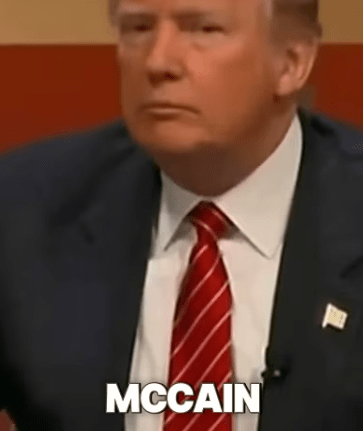
Picture a reporter stepping up to the mic like they’re about to ask a normal, polite, journalist question, and instead they basically go, “Sir, did you really call John McCain a ‘dummy’ for getting captured in war?” and suddenly the whole room feels like when someone brings up politics at Thanksgiving and the gravy stops moving.
Trump’s standing there with that look like he just got accused of stealing office pens—half offended, half impressed anyone noticed—and the joke writes itself because only in America can a man dodge the draft, build a gold elevator, and still decide the real idiot in the story is the guy who got shot down while flying a jet in Vietnam.
That’s like calling a firefighter dumb for being inside a burning building, or calling a lifeguard stupid for getting wet—no, my guy, that’s literally the job description. And the reporter, bless them, is doing that thing comedians love, where they don’t even need to be funny because reality is already doing cartwheels in clown shoes, just calmly pointing out that John McCain spent years as a POW being tortured, while Trump spent those same years bravely battling hair spray and finding new ways to avoid sunlight. The absurdity hits harder when you remember McCain wasn’t captured because he took a wrong turn on Google Maps—he was flying a combat mission, got shot down, and refused early release, which is hero behavior so intense it makes action movies look like yoga tutorials. Meanwhile Trump’s critique sounds like the kind of trash talk you hear from a guy who lost a game of Monopoly and flips the board because he landed on Baltic Avenue.
The humor really peaks when you imagine the logic: “I like people who weren’t captured,” which is such a wild standard that by that metric, every unlucky hiker, every shipwreck survivor, and anyone who’s ever been stuck in an elevator is officially a loser. And the reporter pressing him on it is like a stand-up comic with perfect timing, just letting Trump talk long enough to hang himself with his own punchlines, because nothing beats the comedy of confidence without self-awareness. It’s the kind of moment where the audience isn’t laughing because it’s a joke, they’re laughing because they can’t believe a grown man with nuclear codes is beefing with a dead war hero like it’s a middle school lunch table. You almost expect a rimshot when the reporter asks the follow-up, because this isn’t politics anymore, it’s sketch comedy, it’s satire with a budget, it’s America’s longest-running improv show where the host keeps insisting he’s the smartest person in the room while proving, minute by minute, that history, irony, and basic human decency have all been labeled “dummy” and shoved into the corner.
Watch the Short Clip Below of Ivana Trump Explaining That Donald Trump Didn’t Want His Son Being a Loser
Ivana Trump telling that story about Donald Trump not wanting to name his son Donald Trump Jr. because he was worried the kid might grow up to be a “loser” is one of those anecdotes that feels less like an interview and more like the tightest stand-up bit you’ve ever heard delivered completely by accident. Because think about that logic for a second.
Most parents worry about diapers, college, maybe whether their kid will need braces. Donald Trump is sitting there like, “I don’t know, Ivana… what if this baby ruins the brand?” That’s not a father talking, that’s a Fortune 500 board meeting happening in a maternity ward. And the word choice—“loser”—is doing a lot of heavy lifting. Not “unhappy,” not “unfulfilled,” not “struggling.” Just straight to the Trump family diagnostic test: winner or loser, no middle category, no mercy.
It’s almost impressive how early the pressure starts. The kid isn’t even born yet and already he’s under a performance review. Imagine being Donald Trump Jr. hearing this later in life. Like, “Oh, cool, Dad wasn’t sure I deserved my name because I might’ve ended up normal.”
And the irony is delicious, because Junior grows up, takes the name, leans all the way into it, and makes it his whole personality. The thing Trump was afraid of happening—the name being attached to someone imperfect—turns out to be unavoidable, because that’s how humans work. Ivana telling the story so casually is what makes it comedy gold.
No dramatic pause, no apology, just, “Yeah, he didn’t want to name him that in case he was a loser,” like she’s talking about returning a sweater that might pill. It’s dark, it’s absurd, and it perfectly captures a worldview where love is conditional, success is mandatory, and even newborns are expected to protect the family brand. Honestly, forget DNA tests—this story alone proves that kid was definitely a Trump.
Larry David’s 2016 Saturday Night Live moment in which he called Donald Trump a “racist” can also be read less as brave comedy and more as an example of how late-night satire abandoned nuance in favor of applause-seeking moral grandstanding.
Rather than letting humor expose contradictions or absurdities, the skit reduced a deeply divisive political figure to a single incendiary label, effectively turning comedy into a blunt political weapon. From this perspective, David wasn’t a truth-teller breaking silence, but a wealthy celebrity using a friendly cultural platform to scold half the country without consequence.
The accusation landed not as satire but as a declaration, one that bypassed comedy’s traditional role of inviting reflection and instead told viewers what to think. For critics, this moment symbolized SNL’s growing comfort with preaching to its own ideological choir, prioritizing cheers from a live studio audience over genuine wit or balance. Larry David’s established persona—often praised for its brutal honesty—here risked crossing into smugness, where provocation replaced insight. The laughter and applause that followed felt less organic and more ritualistic, reinforcing the idea that the show was no longer poking fun at power so much as aligning itself with it. In that sense,
David became a “bad guy” not because of the word itself, but because of how casually and safely it was deployed, stripped of comedic tension or risk. The moment arguably deepened cultural divisions by validating outrage rather than challenging assumptions on either side. Instead of comedy serving as a bridge or mirror, it became a hammer, flattening complexity into a single moral verdict. Seen this way, the skit didn’t age as fearless satire, but as a snapshot of an entertainment culture increasingly comfortable substituting political signaling for humor, with Larry David—intentionally or not—standing as a symbol of that shift.
The beginning of a nuclear war will not look like the movies. There won’t be heroic music, clear villains, or a neat countdown clock. What you’ll get instead is confusion, panic, misinformation, and millions of scared, selfish people who suddenly realize the system they trusted is gone. The blast is terrifying, sure. The radiation is deadly. But people? People will be the real danger from minute one.
I’ve spent years preparing for disasters because I don’t trust society to hold itself together when things get ugly. And nuclear war is the ugliest scenario humanity has ever engineered. When it starts, the rules you think exist—laws, politeness, morality—will evaporate faster than common sense in a crowded city. If you want to survive the opening phase, you need to stop thinking like a citizen and start thinking like a survivor.
The First Hours: Panic Is Contagious
When the first alerts hit—whether it’s sirens, phone warnings, or social media exploding—you’ll see mass panic almost immediately. People will rush to gas stations, grocery stores, pharmacies, and highways. Not because it’s logical, but because panic spreads faster than radiation.
Your biggest mistake would be joining the herd. Crowds are dangerous in normal times. In a nuclear crisis, they’re lethal. People will fight over fuel, trample each other for food, and pull weapons they barely know how to use. All it takes is one loud noise or rumor to turn a crowd into a riot.
If you are not already in a safe location when the news breaks, your priority is simple: get away from people, not toward supplies. The supplies will still be there later—assuming anyone survives to use them. Crowds, on the other hand, will get violent fast.
Shelter Is About Distance From People, Not Comfort
Everyone talks about bunkers, basements, and fallout shelters. What they don’t talk about is who else wants to use them. Public shelters will be chaos. Shared shelters will become power struggles. The more people involved, the faster cooperation turns into conflict.
Your shelter doesn’t need to be perfect. It needs to be discreet. A quiet, low-profile location away from main roads and population centers is worth more than the most well-stocked shelter surrounded by desperate neighbors. The less visible you are, the less likely someone will decide you have something worth taking.
Noise discipline matters. Light discipline matters. Smoke, generators, and loud conversations will advertise your location to people who are already on edge. In the early days of nuclear war, attention is a liability.
Trust No One—Especially at the Beginning
This is the part that makes people uncomfortable, but comfort died the moment the missiles launched. At the beginning of a nuclear war, trust is a luxury you cannot afford.
People you’ve known for years may turn on you if they think you have food, water, or shelter. Strangers will lie without hesitation. Some will cry, beg, or tell convincing stories because desperation strips away shame.
That doesn’t mean you become a monster. It means you become cautious. Help can wait. Survival cannot. If you give away your supplies or expose your shelter in the first wave of chaos, you’re signing your own death warrant.
Later—much later—small, trusted groups may form. But in the opening phase, when fear is at its peak and information is nonexistent, isolation is often safer than cooperation.
Information Will Be Weaponized
During the early stages of nuclear conflict, information will be wrong, delayed, or deliberately misleading. Governments will downplay damage. Social media will amplify rumors. People will repeat anything that gives them hope or justifies their panic.
Following bad information can get you killed. Evacuation orders may send you straight into fallout zones. “Safe routes” may be clogged with abandoned vehicles and armed opportunists.
Your best strategy is to assume that official information is incomplete and public chatter is useless. Make decisions based on preparation and observation, not headlines. If you prepared in advance, now is the time to follow your plan—not improvise based on someone else’s fear.
Resources Turn People Into Predators
Food, water, medical supplies, and shelter will instantly become currency. And where currency exists, so do predators. Some people will organize quickly—not to help, but to take.
Looting will start almost immediately. At first it will target stores. Then it will move to homes. Anyone who looks prepared becomes a target. If you look calm, organized, or well-supplied, someone will notice.
This is why blending in matters early on. Do not advertise preparedness. Do not show off gear. Do not talk about what you have. Scarcity turns envy into violence.
Movement Is Risky—Staying Put Is Usually Safer
In the early phase of nuclear war, movement exposes you to people, fallout, and bad decisions. Every mile traveled increases the chance of confrontation. Roadblocks—official or otherwise—will appear. Some will be manned by authorities. Others will be manned by people with guns and no rules.
If you have shelter and supplies, staying put is often the best option. Let the initial wave of chaos burn itself out. People will exhaust themselves panicking, fighting, and fleeing. Those who survive will slow down eventually.
Moving later, when desperation has thinned the population and patterns have emerged, is safer than moving immediately into the storm.
Self-Defense Is About Deterrence, Not Heroics
If you think the beginning of nuclear war is the time to play hero, you won’t last long. Self-defense is not about winning fights—it’s about avoiding them.
A visible ability to defend yourself can deter some threats, but it can also attract others. The goal is to look uninteresting, not intimidating. You want to be the house people pass by, not the one they think is worth the risk.
If confrontation is unavoidable, end it quickly and decisively. Hesitation invites escalation. But understand this: every conflict increases your visibility and your risk. Violence is sometimes necessary, but it always has consequences.
Psychological Survival Matters
Anger will keep you alert, but despair will get you killed. The beginning of nuclear war will crush illusions—about safety, about society, about human goodness. That realization hits people hard.
You need to accept the reality quickly: the world you knew is gone, and no one is coming to save you. Once you accept that, you can focus on what actually matters—staying alive, staying hidden, and staying disciplined.
Routines help. Silence helps. Purpose helps. Panic is the enemy.
The Hard Truth No One Likes to Admit
Most people are not prepared. Most people are not mentally equipped for collapse. When nuclear war begins, those people will do irrational, dangerous things. Not because they’re evil, but because they’re scared.
Your job is not to fix society. Your job is to survive it.
The beginning of nuclear war is not about rebuilding or community or hope. That comes later, if it comes at all. The beginning is about enduring the worst behavior humanity has to offer while the fallout settles—both literal and psychological.
If you can stay out of sight, out of crowds, and out of other people’s plans, your odds improve dramatically. The bombs may fall without warning, but human behavior is predictable. Panic. Greed. Violence.
If you’re waiting for the government, the cell towers, or the so-called “resilient infrastructure” of this country to save you during a terrorist attack, then you’ve already lost. And no, I’m not sugarcoating anything—because the world doesn’t sugarcoat disaster. Americans walk around glued to their screens, convinced that the same fragile networks delivering cat videos and grocery coupons are going to hold up the moment a coordinated terrorist attack strikes. Spoiler alert: they won’t. They never do.
Every single major emergency—from 9/11 to hurricanes to localized attacks—shows the same predictable pattern: communication systems fail, and people are left in the dark. Literally and figuratively. The angry part of me isn’t because disaster is unavoidable—it’s because we, as a nation, still refuse to learn. We built our entire society on a digital house of cards, and everyone acts shocked when it collapses.
So here’s the reality check nobody wants but everybody needs: if you don’t have a communication plan BEFORE a terrorist attack, you won’t have one DURING it.
You either prepare, or you gamble your life on luck. And luck doesn’t care about you.
Why Cell Phones Become Useless During a Terrorist Attack
Most Americans cling to their cell phones like life rafts, as if holding the slab of glass in their hands gives them some sort of immunity to chaos. But during a terrorist attack? That device becomes dead weight.
Here’s what actually happens:
1. Networks Get Overloaded
Every terrified human in a radius of miles starts calling everyone they know. Emergency lines get overwhelmed. Non-essential calls clog bandwidth. And soon, even emergency responders lose connection.
It’s not sabotage. It’s not a conspiracy. It’s math. Too many people, not enough capacity.
2. Towers Can Be Taken Offline
A single attack on critical infrastructure—or even a precautionary shutdown—can erase all connectivity in seconds. Terrorists know this. Emergency planners know this. The general public pretends not to.
3. GPS and Apps Become Useless
People think they’ll “just use Google Maps to find safety.” Sure. If satellites cooperate, towers stay online, and your battery doesn’t die in the 45-minute gridlock evacuation.
Good luck.
The Government Will Not Magically Communicate With You
We all love to imagine FEMA sending perfectly timed alerts and instructions. The reality? Emergency systems can—and do—fail. Even when alerts go out, they’re often delayed or inconsistent across regions.
And let’s be honest… even when the alerts work, half the country ignores them because they think everything is a test.
You can trust official alerts to help when possible. But you absolutely cannot rely on them exclusively. That’s not paranoid—that’s practical.
So What CAN Americans Do?
Thankfully, you’re not entirely doomed—unless you stay unprepared. You want communication options during a terrorist attack? Then you need redundancy, self-reliance, and a plan that works even when the entire digital system collapses.
Here’s what actually works, even when the world comes apart:
1. Create a Family Emergency Communication Plan
No, not a vague “text me if something happens.” A real plan. Written. Practiced.
It should include:
Two primary contacts
Two backup contacts
A meeting location
An alternate meeting location
A designated out-of-state contact (often easier to reach when local lines are jammed)
Instructions for what to do if separated
This isn’t overkill. This is responsibility.
2. Learn the Power of SMS Over Calls
Text messages use a fraction of the bandwidth of phone calls. Even when networks are collapsing, SMS might still sneak through. It’s slow, unreliable, and agonizing—but better than screaming into the void.
Use short, clear texts like:
“Safe.”
“Evacuating.”
“Meet at location A.”
“Can’t reach you. Will try again in 20 min.”
If you send long essays during a crisis, then maybe the crisis isn’t the biggest problem.
3. Two-Way Radios Are Not Just for Hobbyists
Americans love to mock preppers and their radios—right up until the moment those radios are the ONLY working communication method left.
FRS/GMRS Radios
Inexpensive. Widely available. Great for short-range family communication.
HAM Radio (Amateur Radio)
This is where the real reliability lies. Yes, it takes time to learn. Yes, you need a license. But you gain:
Independent communication
Long-distance reach
Access to emergency frequencies
The ability to receive real-time local information
HAM radio operators are often the first and last people communicating during disasters.
If you’re too busy to learn HAM radio, fine—just don’t pretend your phone will save you instead.
4. Keep an Emergency Power Source
Your fancy phone is just a useless brick once the battery dies. And it will die.
You need:
Portable battery banks
Solar chargers
Car chargers
A hand-crank emergency radio
If your communication tools can’t stay powered, they may as well not exist.
5. Have Hard Copies of Critical Information
Everyone relies on digital info—until the digital world collapses.
Print:
Emergency contacts
Maps of your city
Evacuation routes
Family meeting points
Medical info
Important addresses
Paper doesn’t lose signal. Paper doesn’t need WiFi. Paper doesn’t die.
6. Neighborhood Communication Networks
Yes, I know the world feels like it’s full of unreliable people. But in a crisis, neighbors can be your lifeline—or you can be theirs.
Organize:
A shared radio channel
A check-in system
A basic alert system (whistles, horns, etc.)
Community resilience matters, even in a world that often feels disappointingly fragile.
7. Stay Informed WITHOUT Internet
You need devices capable of receiving emergency broadcasts when cellular and internet systems go offline:
NOAA weather radios
Emergency alert radios
Battery-powered AM/FM radios
When terrorists strike, ignorance is deadly. Information is survival.
Final Thought: Communication Isn’t a Gadget—It’s a Mindset
Americans love easy solutions. But communication during a terrorist attack isn’t about apps, phones, or gadgets. It’s about preparation. The bitter truth is that most Americans simply aren’t prepared—and their complacency will cost them.
You don’t have to become a bunker-dwelling hermit (though some people could benefit from less screen time and more survival time). You just need to accept reality: no system is guaranteed to protect you. You must protect yourself.
Prepare now, or panic later. And panic never communicates anything worth hearing.
How To Stay Safe and Survive During a Riot in Massachusetts
Massachusetts might not be the first state you think of when the word riot comes to mind, but the reality is that chaos can erupt anywhere, anytime. Whether you’re in downtown Boston, Springfield, Worcester, or a small town off I-90, being caught unprepared in a civil disturbance could cost you everything. I’ve spent the better part of my life training in survival, self-defense, and situational awareness. I’m not writing this to scare you — I’m writing it to prepare you.
In this guide, you’ll learn the exact methods I use to survive and stay safe when riots break out — especially in urban or semi-urban environments like many found across Massachusetts. We’ll dive into 8 practical self-defense skills, 3 DIY ways to create survival weapons, and top-level situational awareness tips you won’t find in your average survival manual.
Understanding the Threat: What Happens During a Riot?
A riot isn’t just a loud protest. When things get violent, you’ve got looters, arsonists, aggressive crowds, and people who don’t care about laws or your safety. Police may be overwhelmed or slow to respond. Roads get blocked. Cell towers may become overloaded. You’re on your own — at least for a while.
Your goal isn’t to win a fight. Your goal is to get home safe or secure a shelter where you can wait things out. That said, if you have to defend yourself or others, you better know how to do it right.
8 Self-Defense Skills Every Prepper Should Master During Civil Unrest
1. Situational Awareness (The Gray Man Principle)
This isn’t a fight skill — it’s a survival skill. Always scan your surroundings. Identify exits, crowd behavior, and choke points. Dress inconspicuously. Don’t wear tactical gear or expensive clothes. Blend in and don’t draw attention — become the gray man. People ignore what doesn’t stand out.
2. Verbal De-escalation
If someone’s targeting you in the chaos, use a calm, assertive tone. Many aggressors back off when they don’t get an emotional reaction. Learn how to control your body language. Keep your hands open, voice steady, and tone neutral.
3. Palm Heel Strike
If you’re forced to strike, use your palm, not your fist. It’s harder to injure yourself and delivers massive force. Aim for the chin, nose, or throat. This can buy you a few seconds to escape.
4. Elbow Strike
In close quarters (and riots are all about close contact), your elbows are devastating. Use them if someone grabs you or tries to push you to the ground. Horizontal or downward strikes can incapacitate a threat instantly.
5. Escape From Wrist Grabs
Whether it’s law enforcement pulling you into a crowd or a rioter trying to drag you, break their grip by rotating your wrist toward the weakest part of their grip (usually between thumb and fingers) and pulling away sharply.
6. Use of Barriers
A trash can lid, backpack, or even a car door can be a makeshift shield. Always look for something to place between you and a threat — don’t just rely on your fists.
7. Ground Defense Tactics
If you’re taken to the ground, cover your head, curl slightly to protect internal organs, and kick outward to create space. Get back on your feet quickly — the ground is a bad place to be during a riot.
8. Improvised Self-Defense Tools
Keys between fingers, a tactical flashlight, or even a rolled-up magazine can be defensive weapons. You don’t need to carry a weapon — you need to think like a weapon. Train with what’s around you.
3 DIY Survival Weapon Skills You Can Learn Today
Note: These weapons are strictly for emergency defense during extreme situations. Know your local laws.
1. PVC Pipe Baton
A 1-inch PVC pipe cut to 18–24 inches and filled with sand or nails makes a powerful non-lethal impact tool. Wrap it with duct tape for grip. It’s light, concealable, and effective.
How to make:
Cut PVC to length
Seal one end with a glued-on cap
Fill with sand or nails
Cap the other end and wrap it
2. Sling Weapon (Rock or Metal Projectile)
A braided paracord sling or even a basic one made with shoe laces and cloth can launch small projectiles at serious speed. It’s not just for hunting — it can be used to break windows, distract threats, or provide cover.
Tip: Practice your aim. This takes skill.
3. Improvised Spear or Pike
Take a broom handle or mop stick, whittle down the tip to a point or duct-tape a kitchen knife securely to the end. This gives you reach and keeps threats at a distance. It’s crude but effective when barricaded indoors or defending narrow hallways.
How to React When a Riot Breaks Out Near You
Don’t Investigate – If you hear noise, shouting, or sirens, do not go check it out. Gather intel from a safe distance (police scanners, local radio, citizen apps like Citizen or PulsePoint).
Get Off the Street – Riots move fast. Within minutes, peaceful demonstrations can turn violent. Get inside, lock doors, and barricade if needed. Stay away from windows.
Secure Water and Food – Grocery stores are the first to get looted. You should already have at least a 72-hour supply. If not, now is not the time to be shopping. Use what you have.
Have a Bug-Out Route – Know multiple exit routes from your location. Avoid highways. Take side roads. Avoid public transportation — it’s a magnet for angry crowds.
Use Comms Wisely – Keep your phone charged, but turn off Wi-Fi and Bluetooth to avoid tracking. Text rather than call to preserve battery. Consider a handheld radio or walkie-talkies with friends/family.
Final Tips for Massachusetts Residents
Urban Dwellers: Boston, Cambridge, Lowell — your biggest threat is large, condensed crowds and mass transit gridlock. Know your building’s exits and nearby safe zones like parking garages or office lobbies.
Suburban Areas: Riots may spill over if police get overwhelmed. Fortify windows, keep cars fueled, and avoid main roads. Trust your neighbors? Coordinate now.
Rural Preppers: You’re less likely to see riot spillover, but keep your property secure and be ready to help urban family or friends bug out if needed.
Remember, Massachusetts has strict weapons laws. That’s why the key here is improvisation. Defense isn’t about going on offense — it’s about smart strategy, awareness, and speed.
Final Word From a Lifelong Prepper
You don’t have to be an ex-Marine, a martial arts expert, or a survival show contestant to get through a riot. But you do need to be prepared to move, think, and act decisively when others are panicking. The time to build your skills isn’t when you hear glass breaking — it’s now.
Start small. Learn the techniques. Train your family. Build that DIY baton. Run escape drills. Because when the time comes, your best weapon is the one you already know how to use.
Let’s be clear — if you’re waiting until a riot breaks out in Illinois to figure out how to stay alive, you’re already behind. I’ve spent over a decade training in survival tactics, martial arts, tactical weapons, and real-world defense scenarios. Riots are chaotic, fast-moving, and unforgiving. Whether it’s Chicago, Springfield, or a rural town seeing unexpected unrest, your preparation and mindset will determine if you make it out in one piece. This guide is for those who take survival seriously.
Understand the Environment: Illinois in Crisis
Illinois has diverse terrain — from crowded urban centers to isolated farmland. Riots can erupt over political unrest, police action, economic crashes, or even sports events gone sideways. In cities like Chicago, the density means escape routes are limited. In more rural areas, law enforcement can be slow to respond. No matter where you are, the principles of riot survival remain the same: stay informed, stay mobile, stay armed (legally and effectively), and stay smart.
8 Critical Self-Defense Skills You Need to Master
You don’t need to be a black belt to survive, but you damn well need to know how to protect yourself when things go sideways. Here are the eight skills every survival-minded person should have locked down:
1. Situational Awareness
This isn’t just “keeping your head on a swivel.” It’s about reading a crowd, spotting tension, locating exits, and identifying threats before they become problems. Train your eyes and ears to work together.
2. Escape and Evasion Tactics
If a riot breaks out, your first goal should always be to get out of the area. Learn how to move through crowds, blend in, use alleys, avoid bottlenecks, and even climb fences or navigate rooftops if necessary.
3. Verbal De-escalation
Sometimes, you don’t need to fight. You need to calm someone down or talk your way out of a bad spot. Practice using a calm, assertive voice and body language that shows you’re not prey, but also not a threat.
4. Krav Maga Basics
Krav Maga was built for real-world violence. Learn basic strikes (palm heel, elbow, knee), how to disarm an attacker, and how to neutralize threats quickly.
5. Improvised Weapon Use
In a riot, your fancy self-defense weapon might be confiscated. A belt buckle, pen, tactical flashlight, or even your keys can be used to protect yourself. Practice turning everyday objects into tools of survival.
6. Knife Defense and Offense
Know how to use and defend against a blade. Learn grip techniques, slashing and stabbing targets, and how to block or deflect a knife attack. Blades are common in street fights — train accordingly.
7. Ground Fighting
You might get taken to the ground. Brazilian Jiu-Jitsu (BJJ) or basic wrestling moves can save your life when you’re pinned or overwhelmed. Learn to break guard, choke escapes, and how to use leverage.
8. Firearm Handling Under Stress (Legally)
If you’re in Illinois and legally carry, you must train with your firearm under simulated stress. Shooting paper at the range is not the same as drawing your weapon while under attack. Learn trigger discipline, aiming under pressure, and when to shoot — or when not to.
3 DIY Survival Weapons You Can Build at Home
These weapons are for last-resort defense. They’re legal to possess in most places if built properly and used only in self-defense. But check Illinois laws before creating or carrying any of these.
1. PVC Pipe Baton
Materials: 1.5″ PVC pipe, steel rods or sand, duct tape
How to Build: Fill the PVC with steel rods or sand for weight, cap both ends, and wrap in duct tape for grip. It’s light, concealable, and hits hard — perfect for keeping attackers at bay.
2. Tactical Sling Weapon
Materials: Paracord, nuts or ball bearings, sturdy pouch
How to Build: Create a basic sling with a paracord pouch that holds heavy ball bearings. With practice, this becomes a silent, ranged weapon. Aim for knees, elbows, or the face to incapacitate.
3. Nail and Board Trap (Home Defense)
Materials: Wooden board, 3” nails, hammer
How to Build: Drive nails through the board, spacing them out about 1” apart. Hide it under a welcome mat or near entry points to slow down intruders. Simple deterrent when you’re stuck in place.
Urban Survival Tactics: Illinois-Specific Tips
Here’s where things get tactical. Riots aren’t just about physical fights — it’s psychological, logistical, and geographical.
1. Know Your Urban Escape Routes
In downtown Chicago, avoid major arteries during civil unrest. Stick to side streets, alleyways, and pedestrian bridges. Learn which parking garages connect via underground tunnels. In Springfield or Peoria, use railways or canal paths as quick exits.
2. Blend In or Go Ghost
Wearing tactical gear may make you a target. Dress like the locals, move with the crowd, and don’t draw attention. If needed, stash a change of clothes in a bug-out bag. Ditch bright colors, logos, or military patterns.
3. Build a Bug-Out Bag for Riot Scenarios
Include:
Gas mask or N95 respirator (tear gas/pepper spray)
Compact crowbar or Halligan tool (for barriers)
Energy bars, water, lighter, gloves, and first aid
Let’s not play Hollywood hero. If you can leave, do it. If you’re trapped and cornered, you defend your life with everything you’ve got. Remember this rule: Don’t die on the sidewalk over someone else’s cause. Live to fight another day, preferably somewhere safe.
If you’re protecting your family or property and cannot flee:
Fortify entrances with furniture, cords, and makeshift barriers
Cut power and silence electronics to avoid detection
Arm yourself with legally allowed weapons and know how to use them effectively
Keep lights off, stay silent, and use shadows to your advantage
Psychological Warfare: Controlling Your Fear
Fear is natural — but panic is fatal. Train your body through stress drills. Run with a weighted bag. Do pushups after holding your breath. Learn to control adrenaline. If your heart’s pounding and hands are shaking, your survival chances drop fast.
Practice staying calm by rehearsing “what if” scenarios. The more your brain runs simulations, the less it freaks out under pressure. Mindset isn’t fluff — it’s your most powerful weapon.
Final Thoughts from a Prepared Mind
Surviving a riot in Illinois isn’t about being paranoid — it’s about being prepared. You don’t get a second chance when chaos comes to your door. Know the law, train your body, sharpen your mind, and keep your gear ready.
You can’t stop a riot. But you can survive one. And for those of us who live by the code of self-reliance, that’s what matters most.
If you’re reading this, there’s a good chance you’re worried about the growing tension, unrest, and chaos spreading across cities—including right here in Louisiana. Whether it’s New Orleans, Baton Rouge, Lafayette, or a smaller parish town, no place is truly off-limits when society boils over.
I’ve been in this game for over 20 years. Former Marine, lifelong prepper, and self-defense instructor. I don’t sugarcoat things: when a riot kicks off, you’ve got two choices—be prepared or be prey. The goal isn’t to fight every battle—it’s to survive and protect what matters most: your life, your family, and your home.
Let’s get into the nitty-gritty. Below, I’ll lay out the top 8 self-defense skills you need to survive a riot, along with 3 DIY survival weapons you can build fast using what you’ve already got. But before that, I want you to understand the mindset: don’t panic—prepare.
First, Know the Nature of a Riot
Riots move fast and unpredictably. What begins as a peaceful protest can escalate in minutes with one bad actor. Fires, looting, and armed aggression can erupt out of nowhere. And in Louisiana, where gun laws are loose and tempers are fiery, things escalate fast.
You won’t have time to think in the moment. You’ll only have time to react. That’s why training and preparation save lives.
8 Self-Defense Skills You MUST Know Before a Riot
1. Situational Awareness
This is your #1 weapon—awareness beats strength. Always know your exits, keep an eye on crowd behavior, and trust your gut. If people start pushing, shouting, or moving aggressively, leave immediately. Watch hands, not faces—that’s where the danger comes from.
2. De-escalation Techniques
Sometimes your mouth can save your life. Know how to use calm, confident speech to avoid confrontation. Back away slowly, speak clearly, and avoid threatening posture. Your tone should be firm, not fearful.
3. Escape and Evasion Tactics
Move like a ghost. Stick to the edges of crowds, never the middle. Learn how to use alleyways, stairwells, parking garages, and even rooftops as exit routes. Blend in—don’t draw attention. Carry a hoodie, change your appearance quickly if needed.
4. Striking Vital Points
If it comes to a fight, go for the vitals: eyes, throat, knees, and groin. A good palm strike to the nose or throat can end a fight before it starts. This isn’t MMA—it’s survival. You’re buying time to escape, not win a trophy.
5. Improvised Weapons Training
You don’t need a gun to defend yourself. A flashlight, tactical pen, belt buckle, or even a steel water bottle can become a devastating weapon in the right hands. Train with what you carry every day.
6. Ground Defense
If you get knocked down, fight like hell to get up. Protect your head and vital organs, and know how to shrimp (escape from underneath) and post (create space). Learn basic BJJ escapes—they save lives.
7. Knife Defense & Use
Know both how to defend against a blade and how to use one. A fixed-blade knife is easier to deploy than a folding one in high-stress situations. Aim for disabling—not killing. Slash tendons, stab center mass, and get out.
8. Firearm Handling (If Legal and Trained)
Louisiana allows open and concealed carry, but only carry a gun during a riot if you’re fully trained. Understand escalation of force, legal consequences, and keep your finger off the trigger until you’re ready to shoot. Never brandish unless you intend to use it.
3 DIY Survival Weapons You Can Make at Home
When supply chains shut down or stores are looted, you’ll need to rely on your own resourcefulness. Here are three quick, brutal DIY weapons anyone can make.
1. The Pipe Baton
Find a metal or PVC pipe, about 1.5 to 2 feet long. Wrap the handle with paracord or duct tape for grip. Fill it with sand or small metal nuts to increase the weight. This is a blunt force tool that can break bones and end a confrontation fast.
2. The Slingbow (Modified Slingshot)
Take a high-tension slingshot and modify it to shoot arrows. Use surgical tubing for stronger draw, and fashion simple arrows from carbon rods or wooden dowels. It’s silent, reusable, and surprisingly accurate at short range.
3. The Weighted Sap Cap
Take a ball cap and sew lead fishing weights or metal washers into the rim of the hat. Looks normal—but swing it in a pinch, and it hits like a blackjack. Easy to carry, quick to use.
Additional Riot Survival Tips (Specific to Louisiana)
Know Your Exits – Downtown New Orleans or Baton Rouge? Know where the bridges, tunnels, and back roads are. Avoid interstates during riots—they get jammed fast.
Keep Your Vehicle Riot-Ready – Full tank of gas, bug-out bag in the trunk, and always park facing out for a quick escape.
Stay Off Main Streets – Rioters gravitate toward popular streets, government buildings, and shopping centers. Avoid these areas at the first sign of unrest.
Use Police Scanners or Local Apps – Get real-time updates. Apps like Scanner Radio, Citizen, or local Facebook groups can tell you where the chaos is happening.
Avoid Confrontation – Your ego can get you killed. If someone challenges you, ignore and exit. Pride is the luxury of peace—not war.
Mental Toughness: Your Greatest Asset
In a survival scenario like a riot, your mindset is 80% of your success. You have to stay calm under chaos, make quick decisions, and protect your own. That includes understanding when to fight and when to flee.
Train regularly. Not just physically, but mentally. Simulate what you’d do in a riot. Go through “what-if” scenarios. Practice bugging out from your home. Rehearse using your DIY weapons.
Train like your life depends on it—because it might.
Final Words
I don’t write this to scare you—I write it to prepare you. I’ve seen what happens when good people get caught in bad situations. And I’ve seen how quickly the rule of law disappears when the fire starts spreading.
Louisiana is a beautiful state—but she’s wild, proud, and unpredictable. That means you can’t rely on the government, the police, or your neighbors when the lights go out and the crowd turns angry. You’ve got to rely on yourself.
























 TheDailyChristian