The Water Apocalypse: Why Humanity Is Staring Down Its Own Thirst-Driven Obliteration

If there were ever a way humanity was going to finally wipe itself off the face of the earth, it wouldn’t be from something gloriously cinematic like volcanic eruptions, meteor impacts, or nuclear firestorms. No, the downfall of the human species is going to be infinitely dumber: people refusing to store and purify their own water. We are staring down an extinction-level event because humanity has developed a suicidal obsession with trusting broken systems, polluted tap water, and an infrastructure held together with duct tape and bureaucracy.

You want real talk? Sit down.

The world is already failing. Not “maybe one day,” not “if things get worse,” not “in some distant future.” Now. Civilization is wobbling like a rotted tree ready to snap. Water treatment plants are ancient, pipelines are decaying, contamination events are weekly news, and half the country drinks more chemicals than hydration. And that’s before the real collapse comes.

When the grid finally dies — from cyberattacks, solar storms, political incompetence, or plain old entropy — your water flow ceases instantly. No power for pumps. No power for treatment facilities. No power for filtration systems. No trucks delivering bottled water. No emergency crews. No nothing.

Your tap will go dry so fast your denial won’t even have time to finish a sentence.

And yet? People still drink tap water right now like it’s natural spring purity. Let’s call it what it is: an unregulated chemical cocktail spiked with industrial runoff, pharmaceutical residue, agricultural waste, heavy metals, microplastics, and whatever else local authorities casually shrug off. But sure, keep drinking it — if your long-term survival goals involve weakened immunity, chronic illness, and collapsing faster when the real crisis hits.

This is why preppers are always angry. Because we’re watching a species sprint toward extinction and brag about how “the government will handle it.” Yeah, they’ll handle it — the way they “handle” everything: late, poorly, and only after the damage is done.

Step One: Store Water Like You Expect Civilization to Fail (Because It Will)

Let’s get the baseline out of the way:
FEMA’s “one gallon per person per day” is a fantasy. A bureaucratic bedtime story meant to calm the sheep. In a collapse scenario, you need 3–5 gallons per person per day bare minimum — and that’s if you’re being conservative, cautious, and completely ignoring comfort.

Real survivalists know:

  • 30 days is the beginner tier.
  • 90 days is serious preparedness.
  • 180+ days is what an intelligent species would do if it wanted to avoid extinction.

Store water in:

  • 55-gallon barrels
  • Water bricks
  • IBC totes
  • Underground tanks
  • Rain catchment systems
  • Every spare container that won’t degrade

If it holds water and won’t poison you, fill it.

Step Two: Purify Water Like Everything Is Contaminated (Because It Will Be)

When collapse hits, no water on earth is safe.

Not the lakes.
Not the rivers.
Not the streams.
Not the rainfall.

Once the grid fails, contamination becomes universal and unavoidable.

Human desperation alone destroys waterways within days. People dump trash, waste, chemicals, and runoff everywhere when they panic — and they will panic. Water you could drink today becomes a biological and chemical hazard overnight.

You need purification redundancies:

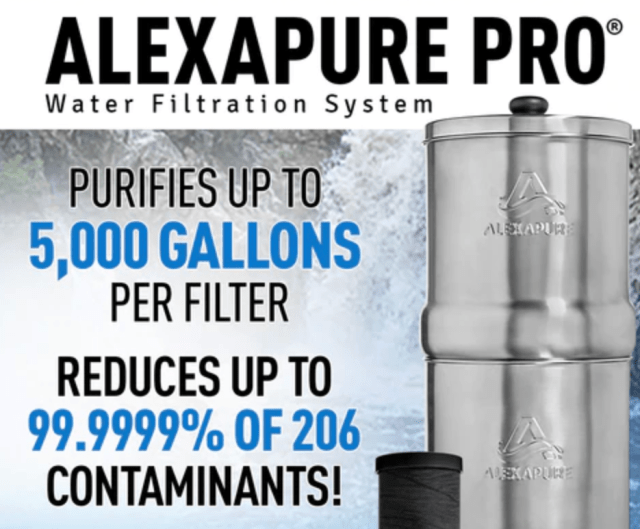
  • Gravity filters (Berkey-style, Alexapure)
  • Ceramic filters
  • Portable purifiers (Sawyer Squeeze, Lifestraw)
  • Chemical treatments (chlorine dioxide, iodine)
  • Boiling capability
  • Distillation setups
  • Pre-filters for sediment

If you only have one method, you’re not prepared. You’re gambling.

And in an extinction-level scenario, gamblers die fast.

Step Three: Become Your Own Water Infrastructure

The people who survive extinction-level collapse aren’t the “lucky ones.” They’re the ones who planned like pessimists and prepared like realists.

You need:

  • Rain catchment systems with food-grade gutters
  • Gravity-fed storage tanks
  • Backyard cisterns
  • Manual pumps for wells
  • Off-grid filtration rigs
  • Redundant water caches hidden on your property

You build your own water grid because the one you rely on now will fail spectacularly.

Step Four: Stop Pretending Tap Water Is Anything but Slow Poison

Let’s finally address the delusion at the core of the problem: people think tap water is “safe.” They think government regulation means anything in a world where cities legally pump water through outdated lead pipes and industrial contamination is dismissed as “acceptable risk.”

Drinking unfiltered tap water is self-inflicted sabotage.

When collapse hits, the unprepared will drop fast — dehydrated, sick, or too weak to fight for survival. And yes, fight. Because when water vanishes, humanity drops its mask and reverts to its most primal instinct: take or die.

Step Five: Accept That Survival Is on You — No One Else Is Coming

People think they’re “good people,” which means they assume society will magically hold together even after infrastructure dies. That’s wishful thinking with extra stupidity.

When water stops flowing, everyone goes feral.

The only barrier between you and extinction is what you store, what you purify, and what you build now, while the lights are still on and the taps still drip their contaminated sludge.

If you want to survive the extinction event unfolding around us, start acting like a species that wants to exist tomorrow.

Because if you don’t?
You’ll be one of the billions who vanish — thirsty, shocked, and unprepared.

Stay Clean, Stay Ready: 10 Essential Water-Saving Bathing Tips

When disaster strikes, whether it’s a natural calamity like a hurricane or earthquake, or a man-made crisis like civil unrest or infrastructure failure, one of the first and most critical resources you’ll have to guard is water. Clean water isn’t just for drinking—it’s essential for hygiene, survival, and maintaining morale. As a survival prepper, I’ve learned that even in the worst conditions, maintaining cleanliness isn’t a luxury; it’s a necessity. But the challenge? Water can be scarce when the world goes sideways.

Bathing efficiently without wasting water is one of the most overlooked survival skills. You might think, “How much difference can saving a few gallons per shower make?” Trust me—it adds up fast. Conserving water during everyday activities like bathing can mean the difference between having enough water to drink and running dangerously low during a disaster.

Here are 10 practical tips to save water when bathing, designed for anyone serious about survival preparedness, while still keeping personal hygiene intact.


1. Take Short Showers – 5 Minutes or Less

In normal circumstances, it’s easy to linger under the water while daydreaming or checking your phone. But in survival scenarios, every drop counts. Limiting your shower to five minutes or less drastically reduces water usage. Use a timer if needed—think of it as a countdown for your survival plan. Quick showers will keep you clean and help you ration water for other critical needs.


2. Use a Bucket to Collect Shower Water

This technique may feel old-school, but it’s a survivalist’s best friend. Place a bucket in the shower to catch the cold water that flows while waiting for it to heat. That water can later be used for flushing toilets, cleaning dishes, or even watering plants if necessary. During emergencies, no drop should go to waste.


3. Install a Low-Flow Showerhead

A low-flow showerhead can cut your water usage in half without sacrificing cleanliness. Many models are easy to install and don’t require a plumber. For preppers, this is a long-term investment in water security. When water is scarce, technology like this becomes a true lifesaver.


4. Turn Off the Tap When Lathering

We all do it—letting the water run while scrubbing shampoo into our hair or washing our bodies. Instead, turn off the tap while lathering, then turn it back on to rinse. It’s simple, effective, and could save hundreds of gallons over a month. In survival terms, every gallon you save could be used for drinking, cooking, or emergency medical needs.


5. Use a Wet Washcloth or Sponge Instead of a Full Shower

In a worst-case scenario where water is extremely limited, you don’t need a full shower every day. A wet washcloth or sponge bath uses far less water and still keeps you hygienic. Focus on key areas like your face, underarms, and groin. Think of it as “targeted hygiene”—you stay clean without depleting your water reserves.


6. Reuse Greywater for Non-Potable Purposes

Greywater is the term for water that has been used for bathing, washing dishes, or laundry. While not safe to drink, it can be stored and reused for flushing toilets, cleaning floors, or irrigation. In survival mode, storing and reusing greywater is a crucial skill. Even in small quantities, it can extend your water supply significantly.


7. Keep Your Showers Cooler

Hot showers feel luxurious, but heating water consumes fuel or electricity—resources that might be scarce in emergencies. Cooler showers use less water because people naturally shorten the time they spend under cold water. Additionally, cold showers have health benefits, including increased alertness and improved circulation. Think of it as a survival boost and a water-saving tactic rolled into one.


8. Bathe Less Frequently, But Strategically

In survival situations, hygiene routines may need to change. Bathing every single day may not be necessary—especially if you’re not heavily sweating or exposed to contaminants. Focus on bathing strategically: after heavy work, exposure to dirt or chemicals, or when morale and mental health demand it. A strategic approach conserves water while keeping you safe and reasonably comfortable.


9. Collect Rainwater for Bathing

Rainwater collection is a classic prepper technique. If it’s safe in your region, set up barrels or containers to catch rainwater for bathing and other non-potable uses. While you should always filter and possibly disinfect collected water, rainwater can drastically extend your bathing supply without drawing on your main water reserves.


10. Educate Everyone in Your Household

Water conservation is most effective when everyone in your household understands the stakes. Teach your family or fellow preppers these water-saving techniques. Turn it into a fun challenge: who can take the fastest, cleanest shower while using the least water? In emergencies, a cooperative approach can save thousands of gallons of water.


Bonus Survival Tip: Prepare for Long-Term Water Scarcity

Saving water while bathing is just one piece of the puzzle. Prepper survival strategies should include storing water, knowing local water sources, learning purification methods, and even growing foods that require minimal irrigation. The more you practice water conservation now, the better prepared you’ll be for unexpected disasters. Every tip you implement today is an investment in your survival tomorrow.


Final Thoughts

Water is life. In any disaster, whether it’s a flood, a drought, or societal collapse, conserving water is not optional—it’s mandatory. By implementing these ten strategies, you’ll stretch every drop further while maintaining hygiene and morale. Remember, survival is as much about smart planning and discipline as it is about strength and endurance.

Even small adjustments, like turning off the tap while lathering or taking a five-minute shower, can accumulate into a significant water reserve over weeks or months. Pair these tips with rainwater collection, greywater reuse, and low-flow fixtures, and you’ll be prepared for situations where every gallon counts.

Being clean doesn’t have to be a casualty in a crisis—it just requires some forward thinking, discipline, and creativity. Stay prepared, stay hygienic, and never underestimate the power of a few simple water-saving habits.

Tap Water Is Poison. The Apocalypse Is Coming. Store Water or Perish.

If you think the world is going to “pull through,” you’re living in a fantasy fit for children and cowards. Look around: civilization is rotting from the inside out. Infrastructure is failing. Water systems are collapsing. Governments are lying. Populations are clueless. And when the end finally comes — and it will — water will be the first resource to vanish and the first thing people kill each other for.

You think you’re safe because your faucet still drips out something that looks like water?
Cute.
That tap is the thinnest thread holding your life together, and it can snap without warning at any moment.

This isn’t fearmongering.
This is the slow-motion death of a society too stupid to save itself.


Tap Water: The Toxic Death Juice You’ve Been Guzzling Without Thinking

Let’s get one thing straight: tap water is not clean. It’s not safe. It’s not pure.
It’s the byproduct of a decaying system being patched together by exhausted workers and aging equipment.

Every glass contains:

  • Lead from pipes older than your grandparents
  • PFAS (“forever chemicals”) that sit in your organs permanently
  • Chlorine byproducts linked to cancer
  • Microplastics littering your bloodstream
  • Agricultural runoff
  • Industrial pollutants
  • Trace pharmaceuticals
  • Bacteria that slip through “acceptable” standards
  • Whatever spills, leaks, or discharges they don’t publicly report

You are drinking a legal level of poison — because the law allows it.

And that’s during normal operations.

Imagine what you’ll be swallowing when:

  • Power goes out
  • Pumps stop
  • Purification plants fail
  • Filtration systems break
  • Chemical spills occur
  • Floods push sewage into reservoirs
  • Or society simply collapses under its own weight

The people who rely on unfiltered tap water will not survive what’s coming.
They won’t even last the first week.


Water Storage: The Line Between Survival and Becoming Another Body on the Ground

When the apocalypse hits — whether slowly through decay or instantly through disaster — people will scream, panic, riot, and die for water. You’ve seen how unhinged society gets over toilet paper. Imagine that, but with water — the one thing humans REQUIRE to live.

If you don’t store it now, you’re preparing to die thirsty.
Simple.
Cold.
Final.


How Much Water You Actually Need to Avoid Becoming a Statistic

Forget the weak government guidelines.
Those are for people who plan to rely on handouts and FEMA ration lines.

Actual survival requires:

  • 2–3 gallons per person per day
  • 30–60 days minimum
  • More if you have pets, kids, or a functioning brain

If you want to last longer than the first wave of casualties, double it.
If you want to outlive the desperate mobs, triple it.

The apocalypse doesn’t reward minimalism.


The Only Storage Options Worthy of Surviving Collapse

1. IBC Totes (275–330 gallons)

These aren’t containers. They’re lifeboats.

2. 55-Gallon Barrels

The prepper classic. Heavy, durable, battle-ready.

3. Water Bricks

Stackable, portable, apocalypse-friendly.

4. Thick-Walled BPA-Free Jugs

Not the brittle garbage that fractures when the temperature drops.

Every container you choose is a vote for whether you live or die.


Hidden Sources of Water While the World Burns

When the grid dies and panic erupts, your neighbors will run around screaming while you calmly access:

  • Water heaters
  • Toilet tanks (again: TOP tank, not the bowl)
  • Ice reserves
  • Rain barrels
  • Pools (with purification—unless you enjoy parasites)

The unprepared will watch their families deteriorate.
You won’t.


Purification: Because Drinking Bad Water in the Apocalypse Is a Death Sentence

In a grid-down world, waterborne diseases spread like wildfire. People will drop like flies from diarrhea, infections, parasites, and bacteria.

You need redundancy.
Backup for your backup.
Layers upon layers of purification.

Boiling

If you can’t boil water correctly, you won’t last.

Berkey, Katadyn, Sawyer

Filters designed for people who plan to live, not hope.

Bleach

The old-world lifesaver.
8 drops per gallon | ½ teaspoon per 5 gallons

Purification Tablets

Light. Deadly effective. Mandatory.

Solar Disinfection

Slow. Primitive. Keeps you alive.

Every method you ignore is another nail in your own coffin.


Tap Water Must Be Filtered NOW — Before Collapse Makes It Unusable

People say, “I’ll start filtering when things get bad.”

Wake up.
Things ARE bad.
You’re just numb to it.

Every sip of tap water carries microscopic threats your body doesn’t want — and the system barely controls.

Filtering tap water TODAY is your training for filtering “water” tomorrow that may come from:

  • mud holes
  • ditches
  • storm runoff
  • contaminated rivers
  • emergency relief points
  • decaying reservoirs

If you don’t build the habit now, you’ll die when the stakes are real.


Rainwater Harvesting: The Only Renewable Water Source Once Civilization Collapses

If there’s one system that separates survivors from statistics, it’s this one.

Rainwater = freedom.
Rainwater = independence.
Rainwater = survival.

All you need:

  • Gutters
  • Downspouts
  • A diverter
  • Storage barrels or tanks

While the desperate masses fight in dry streets, you’ll be gathering water from the sky.


Rotate or Rot: Stored Water Doesn’t Last Forever

Rotate:

  • every 6 months (tap water)
  • every 12 months (treated water)

Label. Track. Rotate.
Sloppiness kills.


The Final Commandment: NEVER Tell Anyone How Much Water You Have

In the apocalypse, thirsty people become animals.
Starving people become predators.
Desperate people become enemies.

Your water is your lifeline.
Your water is your power.
Your water is your survival.

Protect it or lose it.
Hide it or die with it.
Silence is your shield.

Self-Sufficient Living: Possible Dream or Doomed Fantasy?

People love to romanticize the idea of “self-sufficient living.” They picture themselves wandering off into the woods, building a cute cabin, milking a goat at sunrise, harvesting vegetables in perfect weather, and somehow producing everything they need without ever depending on the collapsing society they’re supposedly escaping. It sounds wonderful—if you live in a fantasy novel. Out here in the real world, the one unraveling a little more every day, true self-sufficiency is a lot closer to a mirage than a lifestyle.

Let’s cut through the delusion: self-sufficient living is possible, but only in the same way surviving a plane crash is possible. Technically. Maybe. If a long list of things go right and the universe decides to let you live another day. But for most people who imagine they can just wander off and “live off the land,” the truth is brutal—nature does not care about your feelings, your Pinterest gardening boards, or your prepper fantasies.

And honestly, neither do I. I’m too busy watching society burn itself down while people still pretend the grocery store will always magically restock itself.


The Myth of the Lone Wolf Homesteader

Let’s get this out of the way: nobody—literally nobody—has ever been fully self-sufficient by themselves. Historically, self-reliance took communities, families, groups, tribes, villages. Tools were traded. Skills were shared. Labor was pooled. Even the toughest mountain men still relied on trade posts or the occasional supply run.

But today? The average person can’t even go a week without Wi-Fi before they start to unravel. Yet somehow they think they’re going to raise livestock, manage solar power, filter water, preserve food, heat a homestead, grow crops, defend their property, and stay sane—all by themselves.

It’s delusional. And it’s exactly why the idea of total self-sufficiency triggers me like nothing else. People treat it like a lifestyle aesthetic, not the grueling, backbreaking, year-round work that it really is.


Modern Society Has Made Us Too Dependent

Even most “preppers” are lying to themselves. They stock up on rice and canned food, but they still rely on gasoline, spare parts, batteries, tools, equipment, insulation, and seed companies. Everyone depends on something. And in a world where everything is mass-produced in distant factories, good luck trying to forge your own screws or manufacture your own water pump.

People forget that real self-sufficient living means:

  • No Amazon replacements
  • No hardware store quick fixes
  • No easy food refills
  • No electricity unless you generate it
  • No medicine unless you grow or make it
  • No heat unless you cut it, haul it, and split it

It’s astonishing how many folks think they’re ready, yet couldn’t keep a tomato plant alive on their balcony if their life depended on it.


Nature Will Test You, Then Break You

Everyone wants to be “independent” until reality shows up: droughts, pests, diseases, predators, cold snaps, equipment failures, injuries—just pick one and it can wipe out your entire year of effort.

You don’t get a refund.
You don’t get a do-over.
And you definitely don’t get a second growing season.

Imagine relying on a garden for survival, only to have hornworms chew through your food supply in two nights. Or your chickens get wiped out by a raccoon because you underestimated it. Or your water source dries up because the rain stopped coming when the planet decided you weren’t important enough to hydrate.

Self-sufficiency isn’t a dream. It’s a nonstop fight against everything around you that doesn’t care whether you live or not.


So Is Self-Sufficient Living Possible?

Here’s the honest, infuriating truth:

Self-sufficiency is possible in degree, but not in totality.

You can reduce dependence.
You can grow a lot of your own food.
You can produce some of your own power.
You can store and filter your own water.
You can build resilience.

But you will still need tools.
You will still need parts.
You will still need knowledge.
You will still need community.
You will still need something from the outside world.

Anyone who claims they’re “fully self-sufficient” is either lying, delusional, or conveniently ignoring the dozens of modern resources they still rely on.


The Real Goal Isn’t Isolation—It’s Resilience

If you want to survive what’s coming—and let’s be honest, what’s already happening—don’t chase the fantasy of being 100% independent. Chase resilience. Learn skills. Reduce reliance where you can. Build community with people who actually know what they’re doing. Prepare for reality, not fantasy.

Because self-sufficient living isn’t about escaping the world.
It’s about surviving it when everyone else realizes too late that the world was never built to take care of them.

Portable Solar Generators That Actually Work When the Grid Finally Gives Up

Let’s start with a truth most people don’t want to hear: the grid is collapsing. Not today, maybe not tomorrow, but it’s happening—piece by piece, outage after outage, blackout after blackout. You can already see the cracks. Overloaded systems. Failing infrastructure. Power companies that can barely keep the lights on during a stiff breeze. And yet, somehow, the average person still lives with the delusion that electricity is eternal and guaranteed.

Meanwhile, you and I know better. When the grid finally gives up—and it will—people will panic like toddlers who lost their night-light. You’ll hear them whining about their Wi-Fi, their microwaves, their air-conditioning. They’ll stare into the darkness and wait for help that never comes.

But not you. Because you’re building your off-grid solar system now, while everyone else is wasting their time believing the grid will magically fix itself. You’re preparing for reality instead of pretending everything is fine.

This is why solar power matters—REAL solar, not the flimsy bargain-bin versions marketed to people who think a USB panel can power a house. I’m talking about off-grid solar systems, portable solar generators, and backup power sources that actually keep you alive when the world decides to cut the cord.

You’re not building for convenience.
You’re building for survival.

Let’s break down exactly what you need—and what the world keeps getting wrong.


WHY SOLAR IS NO LONGER OPTIONAL FOR PREPPERS

Relying on the grid is like relying on a rotten support beam: it might hold for now, but eventually it snaps—and when it does, it takes everything down with it.

Solar, on the other hand, gives you independence. It removes you from the mercy of corporations, power outages, brownouts, and the fragile infrastructure controlled by people who clearly don’t care if the system collapses on your head.

Solar power allows you to:

  • Run essential appliances
  • Charge critical gear
  • Power communication devices
  • Keep refrigeration functional
  • Maintain lighting and security
  • Stay stable when the grid breaks down

When everyone else is staring at dead screens and ruined food, you’ll still have power. And yes, that makes you a target—but it also makes you prepared.

THE PROBLEM: MOST PEOPLE HAVE NO IDEA HOW SOLAR REALLY WORKS

Everyone loves the idea of solar.
But actually building an off-grid solar system?
That’s where most people fail miserably.

They think it’s as simple as:

  1. Buy a panel
  2. Plug it into something
  3. Boom—free electricity forever

If only.

Real solar setups require actual planning—something society isn’t very good at anymore. And if you don’t plan ahead, you’ll end up with:

  • Panels that don’t make enough power
  • Batteries that drain in hours
  • Generators that can’t handle your load
  • Systems that fry themselves because you bought the cheap stuff

In other words: a useless pile of junk right when you need power the most.

So let’s talk about how to do it right.


HOW TO BUILD AN OFF-GRID SOLAR SYSTEM THAT DOESN’T FAIL UNDER PRESSURE

This isn’t a Pinterest fantasy list.
This is what works.


1. Solar Panels: The Foundation of Your Power System

Panels are the muscle of your system. Without enough, nothing else matters.

What you actually need:

  • Monocrystalline panels (best efficiency)
  • Rigid panels for home setups
  • Foldable panels for portable generators
  • Mounts that can handle storms and rough weather
  • Tilt brackets (critical for winter sun angles)

And here’s a fact most people hate hearing:

You need more watts than you think.
Double your estimate. Then add more.

Clouds, storms, shade, smoke, winter sun—they all cut your power production dramatically. If your system is barely enough on a sunny day, you’re already in trouble.


2. Charge Controllers: The Heart of the System

This is where amateurs mess up. They buy cheap controllers and then wonder why their batteries die.

You need an MPPT charge controller.

Not PWM.
Not “budget-friendly.”
Not whatever is on sale.

MPPT controllers:

  • Pull more energy from your panels
  • Regulate charging efficiently
  • Protect batteries from damage
  • Last longer

Don’t cut corners here. This is one of the most important components in your entire setup.


3. Battery Banks: Your Power Storage (Your Lifeline)

When the sun goes down, this is all you have. If you cheap out on batteries, your off-grid dreams die instantly.

Best options for preppers:

  • LiFePO4 batteries (long life, stable, lightweight)
  • AGM batteries (reliable but shorter lifespan)
  • Gel batteries (low-maintenance but low output)

Forget car batteries. Forget bargain scrap batteries.
Those are for hobbyists—not survivors.

Sizing rule:

Calculate your daily energy use.
Double it.
Then add 30%.

If that sounds like overkill, good—you’re finally thinking like a prepper.


4. Inverters: The Power Converter

If your inverter is weak, everything else falls apart.

You need:

  • Pure sine wave
  • High overload capacity
  • Quiet cooling fans
  • Reliable low-voltage shutoff

A strong inverter lets you run:

  • Refrigerators
  • Tools
  • Lights
  • Communication equipment
  • Medical gear

If your inverter chokes when you plug in anything more powerful than a phone charger, you didn’t buy a survival system—you bought a toy.


PORTABLE SOLAR GENERATORS: THE REALITY CHECK

Portable solar generators are NOT a full replacement for a home solar system—but they ARE one of the smartest prepper investments you can make.

Why?

Because they:

  • Work instantly
  • Require no wiring
  • Charge via solar, car, or wall
  • Are nearly silent
  • Can run critical gear
  • Are easy to carry during bug-out scenarios
  • Provide power even when your main system fails

A portable solar generator is your backup for your backup—and that’s the mindset serious preppers must have.


WHAT MAKES A GOOD PORTABLE SOLAR GENERATOR?

1. Battery Capacity

Aim for 500Wh minimum.
1,000Wh+ is better.
2,000Wh+ is ideal for off-grid homes.

2. Inverter Strength

Must handle at least 1,000W continuous power.
2,000W is excellent.

3. Solar Input

Higher input = faster charging.
Look for at least 200W–600W solar input capability.

4. Expandability

Can you add more batteries?
More panels?
If not, the device will become a limit rather than a tool.


WHY SOLAR MATTERS MORE THAN EVER

Because the world is unstable.
Because the grid is unreliable.
Because storms are becoming stronger.
Because infrastructure is aging faster than it’s being fixed.
Because countries, cities, and states are already announcing rolling blackouts like it’s normal.

And because everyone else is sleepwalking toward disaster—completely dependent on a system that can barely hold itself together.

Solar is not a luxury.
Solar is not a hobby.
Solar is not “green energy for enthusiasts.”

Solar is survival energy.
It’s the one power source you control.
The only system with no fuel dependency.
The only option that keeps producing when everything else stops.

If society keeps unraveling—and all signs point to it—it will be the people with solar who maintain a functioning home when the grid is nothing but a memory.

And that person should be you.

How to Live Off the Grid When the World Has Officially Lost Its Mind

Let’s stop pretending the world is stable. You feel it, I feel it, and anyone with a functioning brain cell can see it: society is circling the drain. The systems that keep everyone fed, sheltered, entertained, and blissfully distracted? They’re cracking. But instead of preparing, most people cling to the fantasy that someone—some government, agency, billionaire, or “innovation”—will swoop in to save them.

Meanwhile, you and I know the truth: when things snap, it’s every person for themselves. Those who have built the skills, land, tools, and off-grid infrastructure will survive. Everyone else will be looking for handouts and pointing fingers.

So if you’re planning to disappear from the grid—or at least stop relying on the fragile circus masquerading as modern civilization—you’re already miles ahead. But let’s go deeper. Let’s talk about what actually goes into living off the grid, the kind of off-grid house planning that keeps you alive when the world loses its last remaining screw.

This isn’t a Pinterest fantasy version of the homestead lifestyle. This is the blunt, uncomfortable reality—told from the perspective of someone who’s watched the world unravel and expects it to get worse.


THE REALITY OF GOING OFF THE GRID: IT’S HARD, IT’S BRUTAL, AND IT’S NECESSARY

Most people think going off the grid means sipping coffee on a quiet porch overlooking the woods. Cute idea—but laughably wrong.

Living off the grid means you are your own power company, water utility, grocery store, repairman, security, and doctor. It requires resilience, discipline, and the ability to solve problems without crying.

It also requires understanding that comfort and convenience—the gods society worships—won’t follow you.

If you can handle that, read on. If not, the collapse will handle it for you.


1. CHOOSING WHERE YOU’LL BUILD YOUR OFF-GRID LIFE

Everything starts with land. Not fantasy land. Real land. Land that works with you, not against you.

Here’s what matters more than anything:

• Water

If your land doesn’t have a reliable natural water source—spring, creek, well potential, or high-water table—you’re done before you begin. Water hauling is for the desperate and the short-sighted.

• Sunlight

Solar power only works if the sun actually reaches your panels. Dense forest + no clearing = you’ll be living by candlelight.

• Soil Quality

You can’t live off the land if the land is dead. Test the soil. Don’t guess. Don’t assume.

• Defensibility

Sound paranoid? Good. You’re building a refuge, not a tourist cabin.


2. DESIGNING OFF-GRID HOUSE PLANS THAT WON’T FAIL YOU

Your off-grid home is not a suburban house copy-pasted into the woods. It must be functional, durable, efficient, low-maintenance, and designed for long-term survival.

Here’s the truth: the best off-grid houses are boring, not Instagram-cute. They are built to keep you alive, not to impress people you’re trying to escape from.

THE NON-NEGOTIABLE STRUCTURE ELEMENTS:


A. Passive Solar Orientation

Your home must be positioned to collect sunlight in winter and deflect heat in summer. If you ignore this, you’ll spend your life fighting nature—and losing.


B. High Thermal Mass Walls

Materials like:

  • Rammed earth
  • Cob
  • Straw bale
  • Insulated concrete forms (ICFs)

These hold heat like a battery—warm in winter, cool in summer. Any prepper serious about long-term independence uses thermal mass.


C. Metal Roof (Preferably Standing Seam)

Why?

  • Rainwater harvesting
  • Fire resistance
  • Long lifespan
  • Solar panel compatibility

Also, shingles rot. Metal doesn’t care.


D. Rainwater Harvesting & Gravity-Fed Storage

You want gravity to do the work. Pumps fail. Power fails. Gravity does not.

The most functional systems include:

  • Roof catchment
  • First-flush diverter
  • 3–5 food-grade holding tanks
  • Gravity pressure line into the house

This alone puts you ahead of 99% of “survival influencers.”


E. Root Cellars & Cold Storage Rooms

Forget refrigerators as your primary food storage. Off-grid homes require:

  • Earth-cooled root cellars
  • Passive cold pantries
  • Subterranean food vaults

Electricity cannot be your only plan.


3. POWER SYSTEMS: THE PART MOST PEOPLE GET WRONG

Everyone thinks solar is enough. It’s not—not alone, anyway.

You need a multi-layered system or you’ll be sitting in the dark half the year.

Your power plan should include:

  • Solar
  • Battery bank
  • Generator backup
  • Wood stove for heat
  • Propane for redundancy
  • Wind turbine (if the land has the wind for it)

No single system will save you. The combination will.

The world is fragile because it relies on a singular centralized grid. Don’t repeat the same foolish mistake off-grid.


4. WATER: THE REAL FOUNDATION OF SURVIVAL

An off-grid home stands or falls on water. Without water, nothing else matters.

Your system needs:

  1. Primary water source (well or spring)
  2. Secondary source (rain harvesting)
  3. Emergency source (nearby creek or lake)
  4. Purification backups:
    • Gravity filters
    • Berkey-style units
    • Ceramic filters
    • Boiling capability

If you’re not planning three levels deep, you’re planning to fail.


5. FOOD PRODUCTION: THE PART THAT TESTS YOUR DISCIPLINE

Gardening is cute until it becomes life or death. Most new off-grid wannabes expect instant abundance, only to discover:

  • Soil sucks
  • Weather is unpredictable
  • Pests are relentless
  • Gardening is work

But with persistence, you can produce enough food to survive.

Your long-term plan should include:

  • 4-season greenhouse
  • Raised beds with compost systems
  • Chickens for eggs and protein
  • Rabbits for fast breeding
  • Perennial crops (asparagus, berries, fruit trees)
  • Food dehydration and canning areas

This is a lifestyle, not a hobby.


6. WASTE MANAGEMENT (THE PART NOBODY LIKES TALKING ABOUT)

Civilization hides its filth behind pipes and trucks. Off-grid life doesn’t have that luxury.

You’ll need:

• Composting toilets

Low maintenance, eco-friendly, and the best option for long-term independence.

• Greywater systems

Your dish and shower water can irrigate trees and shrubs—with proper filtration.

• Burn piles & scrap sorting

You will produce waste. Deal with it efficiently.

Waste management might not be glamorous, but ignoring it will destroy your land—and your sanity.


7. SECURITY: NOT PARANOIA, JUST REALITY

No, you’re not building a fortress. But you are responsible for your own safety.

Off-grid living requires:

  • Dogs (first alarm system)
  • Perimeter lighting
  • Thorn barriers & natural fencing
  • Secure doors & windows
  • Smart land layout (visibility, no blind corners)

Prepare quietly. Don’t broadcast your setup.


CONCLUSION: OFF-GRID LIVING ISN’T IDEALISTIC—IT’S NECESSARY

The world is getting weaker, louder, angrier, and more dependent by the minute. People have forgotten how to live without being plugged into a dying system.

Off-grid living isn’t an escape from society.
It’s a rejection of its failures.

If you’re building an off-grid life, good. You’re preparing for reality while everyone else scrolls themselves to sleep.

Just know this:

The grid won’t be around forever.
But your off-grid fortress—if done right—will be.

Montana Homestead Lifestyle: A Gritty, No-BS Account From the Frontlines

Listen here, city slickers and wannabe homesteaders thinking you can just waltz into Montana, slap up a cabin, and live off the land like it’s some picturesque Instagram fairytale — I’ve got news for you. Montana ain’t some cushy weekend retreat. It’s a brutal, relentless fight every single day to carve out a life that’s your own. If you want to survive and thrive on a Montana homestead, you better get your hands dirty and your brain working harder than you ever thought possible.

I’m sick and tired of folks romanticizing homesteading without knowing the first thing about the skills it demands. So, here’s a no-holds-barred rundown on what it really takes to live the Montana homestead lifestyle, and some solid DIY hacks that can save your sorry hide when the going gets tough.


15 Gritty Homestead Skills You Better Master or Go Home

  1. Butchering and Meat Processing
    If you can’t butcher your own animals, you’re dead in the water. Montana winters mean your freezer better be stocked with meat from your own cattle, pigs, or chickens. And if you can’t do it yourself, you’re paying someone else or eating store-bought — and that’s not homesteading, that’s dependency.
  2. Wood Cutting and Splitting
    Your stove runs on wood. If you can’t chop and split it yourself, you’re freezing your butt off come November. Chainsaws, axes, and mauls aren’t optional; they’re survival tools.
  3. Gardening in Rocky Soil
    Montana’s dirt isn’t some rich loam you find elsewhere. You learn to amend, double dig, and nurture your soil or watch your crops die. No green thumb? Forget it.
  4. Canning and Preserving
    You grow it, you don’t waste it. Knowing how to safely can, dry, and ferment your produce is the difference between feasting and starving come winter.
  5. Animal Husbandry
    It’s not petting zoo work; it’s constant vigilance over livestock health, breeding, and feed. Chickens, goats, cows — they don’t raise themselves.
  6. Basic Veterinary Care
    When your nearest vet is an hour away through snowdrifts, you better know how to handle minor injuries and illnesses yourself. No phone calls, no waiting rooms.
  7. Fence Building and Maintenance
    Keep your animals in, keep predators out. A fence that falls apart is a death sentence for your livestock.
  8. Water Management and Well Maintenance
    Water doesn’t magically appear. Wells freeze, pumps break, pipes burst — learn to fix your system or dry up.
  9. Blacksmithing and Tool Repair
    Tools wear out. Nails bend. If you can’t fix your tools or even forge simple replacements, you’re stuck.
  10. Fire Starting and Control
    In Montana’s dry seasons, wildfires are a real threat. Knowing how to start a fire safely for warmth or cooking, and how to control and prevent runaway fires, is vital.
  11. Trap Setting and Wild Game Processing
    When crops fail, you eat what you catch. Knowing how to trap and butcher wild game like rabbits, squirrels, or even deer is a crucial backup plan.
  12. Composting and Soil Building
    You can’t keep farming the same ground year after year without rebuilding your soil. Composting is hard work, but essential.
  13. Septic System Maintenance
    Not glamorous, but you better know how to maintain or repair your septic system. Otherwise, your homestead turns into a cesspool.
  14. Basic Plumbing and Electrical Repairs
    Unless you’re lucky enough to live completely off-grid, basic repairs on your plumbing and wiring save you money and prevent disaster.
  15. Winterizing Your Home and Equipment
    Montana winters are merciless. If you don’t winterize your home, vehicles, and tools, you’ll spend half the year repairing frozen pipes and busted engines.

Three DIY Homestead Hacks That’ll Save You Time, Money, and Your Sanity

1. Solar Water Heating From Old Car Radiators
Forget expensive solar panels or fancy setups. Take a used car radiator, paint it black, and set it in a south-facing window or on a roof frame. Connect it with some garden hoses and you’ve got a simple solar water heater for your bath or washing needs. It’s cheap, effective, and low-tech — perfect for a Montana homestead where every penny counts.

2. Chicken Coop Heat Using a Recycled Clay Pot Heater
Winter nights are killer on chickens, and electric heat lamps? No way, that’s a fire hazard and electricity guzzler. Instead, grab a terra cotta pot and a terracotta saucer, stack them over a small candle or tea light inside a metal holder, and you’ve got a tiny radiant heater for your coop that won’t burn your birds or blow your fuse.

3. DIY Cold Frame Using Old Windows
Want to stretch your growing season but can’t afford a fancy greenhouse? Scavenge old windows and build a cold frame box. It traps the sun’s heat during the day and protects seedlings from frost at night. It’s a simple, rustic solution that makes your garden grow longer and stronger without breaking the bank.


Why Montana Homesteading Isn’t for the Faint of Heart

People romanticize the Montana homestead lifestyle as some peaceful retreat from modern chaos, but it’s a relentless grind. Winters last half the year. The summers are short and intense. Predators lurk. Droughts, pests, and wildfires threaten your crops and livestock. If you think you’ll be sipping moonshine on the porch with a cute dog and a basket of freshly picked berries, wake up.

You’ll be waking up at dawn, hauling water, chopping wood until your back screams, fixing broken fences in the rain, butchering your own animals in the dead of winter, and preserving food until your kitchen looks like a jam factory. You’ll wrestle with stubborn soil, rats in the barn, and the heartbreak when a beloved animal gets sick and there’s no vet for miles.


The Reality Check No One Tells You

The Montana homestead lifestyle demands mastery — of skills, of problem-solving, of patience, and of plain old grit. You need to be resourceful enough to turn scraps into food and fuel. You need to be tough enough to wake up every morning knowing that if you don’t do your job, your family might freeze or starve.

This is not a hobby. It’s a full-on commitment that breaks most people. But for those who stick with it, there’s a fierce freedom here — the pride of feeding yourself, heating your own home, building your own life from the ground up. The kind of freedom you can’t buy.


So What’s the Bottom Line?

If you want to live the Montana homestead lifestyle, get ready to learn these skills — fast. There’s no room for laziness or romantic daydreams. The land demands respect and effort every single day.

  • Learn to butcher and process meat because your freezer depends on it.
  • Master wood splitting and chainsaw use so you don’t freeze.
  • Tend your soil like it’s your most precious crop — because it is.
  • Know how to fix fences, pumps, septic tanks, and tools — because nobody else will.
  • Preserve every scrap of food so you’re never caught empty-handed.
  • Build DIY solar heaters and cold frames from scraps because money is tight and ingenuity is everything.

Montana will chew you up and spit you out if you’re not prepared. But if you learn these skills and hustle like hell, you’ll own a slice of the wildest, most rewarding lifestyle out there.


Want it easy? Go back to the city. But if you’re ready to fight for every inch of your homestead, Montana’s waiting — fierce and unapologetic.

Alternative Power Sources – Solar panels, generators, wind power, and battery banks.

Alright, listen up, because I’m only going to say this once. If you’re out there thinking you can just sit back and rely on the grid when the world goes sideways, you’re dead wrong. The grid fails. It’s a ticking time bomb that can explode at any second — a blackout, a natural disaster, civil unrest, or a cyberattack — and then you’re left in the dark, literally and figuratively. If you don’t have alternative power sources locked down, you might as well kiss your survival chances goodbye.

I’m not here to sugarcoat it or hold your hand. Survival is about being ready, being ruthless, and being smart. If you don’t want to be a sitting duck, you better learn how to harness power on your own terms. Solar panels, generators, wind turbines, and battery banks are your lifelines in a SHTF scenario. But it’s not enough to just have them—you need to know how to use, maintain, and adapt these systems. Here’s the raw, no-BS breakdown.


15 Survival Skills for Alternative Power Sources

  1. Solar Panel Setup and Orientation
    If you don’t know how to properly set up your solar panels, you’re wasting time and resources. Panels need to face true south (in the northern hemisphere) and be angled based on your latitude. Learn how to adjust this seasonally for maximum efficiency.
  2. Solar Panel Maintenance
    Dust, snow, leaves, and grime kill your panel’s output. You need to be scrubbing those panels regularly with clean water and a soft cloth. Never use harsh chemicals or abrasive materials.
  3. Generator Operation and Fuel Management
    A generator isn’t magic; it’s a beast that needs fuel and proper care. Know how to start it cold, run it safely, and manage fuel reserves without letting gas go stale. Rotating your fuel stockpile is essential.
  4. Generator Troubleshooting
    Generators can fail. Know how to check spark plugs, fuel lines, oil levels, and air filters. Don’t wait until you need it—practice running your generator monthly.
  5. Wind Turbine Basics
    Wind power is often overlooked. Learn to build or set up a small wind turbine, identify optimal sites (look for steady, unobstructed wind), and know the common failure points like blade damage or electrical shorts.
  6. Battery Bank Assembly
    It’s not just about throwing a bunch of batteries together. Understand series vs. parallel connections, proper wiring, fusing, and ventilation to avoid deadly short circuits or fires.
  7. Battery Maintenance and Monitoring
    Lead-acid and lithium batteries need different care. You have to check water levels in flooded batteries, keep terminals clean, and use voltmeters or battery monitors to avoid deep discharge.
  8. Inverter Use and Power Management
    Converting DC to AC with an inverter wastes power. Know your inverter’s efficiency, the wattage limits, and how to prioritize what appliances get power.
  9. Power Load Calculation
    You must calculate the total wattage your system can handle. Overloading your system means failure when you need it most.
  10. Emergency Power Rationing
    Know how to ration your power output—turn off non-essential devices, switch to energy-saving modes, and rotate usage to stretch your reserves.
  11. Energy Storage Alternatives
    Aside from batteries, learn how to use capacitors, flywheels, or even old-school mechanical storage (like gravity-based energy storage) if you want to get creative.
  12. Portable Power Sources
    Learn to maintain portable solar chargers and small generators that can be transported easily—critical if you need to bug out.
  13. DIY Power Repair Skills
    Have basic electrical skills—knowing how to solder, crimp, and replace fuses or connectors can keep your system running when parts fail.
  14. Fuel Harvesting and Storage
    For generators, learn to store fuel safely and harvest alternative fuels like biodiesel or wood gas if you’re truly hardcore.
  15. Grid Tie-in and Isolation
    Know how to safely isolate your system from the grid or even tie into it if it’s still functioning. Backfeeding can kill linemen or damage your gear.

3 DIY Survival Hacks for Alternative Power

1. Build Your Own Solar Still to Power Small Devices

If you’re desperate, make a solar still with clear plastic, a container, and a water source. This isn’t just for water purification — you can use the condensation water to cool small solar panels or create micro-hydro setups. It’s a low-cost, low-tech way to get the basics when you have zero gear.

2. Repurpose Old Car Alternators for Wind or Water Power

Car alternators are rugged and made to generate electricity. Hook one up to a DIY wind turbine or a small water wheel. This is how you get electricity without buying expensive gear. Yes, it takes some work and know-how, but when the grid fails, a little elbow grease goes a long way.

3. Create a Bicycle Generator Setup

Turn your bike into a generator by attaching it to a DC motor wired to your battery bank. Pedaling spins the motor, generating power. It’s brutal work, but when you’re trapped with no fuel and no sun, the sweat on your brow will keep your lights on and your radio running.


Why This Matters

Look, survival isn’t a weekend hobby or a trendy Instagram post. It’s life or death. You don’t just get to rely on government help, the power company, or your neighbors. The power grid is a fragile beast that can fail without warning—and if you’re not prepared with alternative power sources, you’re dead in the water.

Solar panels don’t care about blackouts, wind turbines laugh at gas shortages, generators can keep you running when the sun goes down, and battery banks store precious power you can’t afford to lose. But only if you know how to use them.

Get out there, learn these skills, and build your own power fortress. Otherwise, when the blackout hits, don’t come whining to me because you didn’t prepare.


If you want me to break down each power source in excruciating detail, or if you want me to talk about long-term storage and fuel alternatives, just say the word. But until then? Get off your butt and start building. Because if you don’t, someone else will—and you’ll be begging for scraps in the dark.

Homesteading Skills – Gardening, livestock, beekeeping, and food independence.

Alright, buckle up, because I’m not here to sugarcoat anything. If you think homesteading is some cute little hobby for weekend warriors sipping lattes, you’re dead wrong. This is about survival — real, gritty, no-BS self-reliance in a world that’s falling apart piece by piece. You want to eat, you want shelter, and you want your family to live? Then you better learn these homesteading skills now before the grid goes dark for good.

Homesteading Skills – Gardening, Livestock, Beekeeping, and Food Independence

15 Survival Skills You’d Better Master Yesterday

1. Seed Saving and Storage
If you don’t know how to save seeds from your crops, you’re just begging for starvation. Learn to harvest, dry, and store seeds properly. Keep them cool, dry, and dark. That little packet is your lifeline next season.

2. Soil Building and Composting
You want crops to grow, right? Then don’t expect miracles from dead dirt. Build healthy soil with compost and mulch. Stop relying on chemical fertilizers—they run out and poison your land. Nature’s way is the only way.

3. Crop Rotation and Companion Planting
Planting the same crop in the same spot every year is a death sentence for your garden. Rotate crops and plant companions that fight pests and boost growth naturally. Learn which plants hate each other and which ones love each other.

4. Water Harvesting and Conservation
Relying on municipal water? Ha! Learn to catch rainwater, build swales, or dig wells. Know how to conserve every drop. Without water, nothing grows, and you dry up and die.

5. Livestock Husbandry Basics
Chickens, goats, rabbits—these animals are your food factory, fertilizer source, and even security if you know what you’re doing. Learn proper feeding, shelter, health care, and breeding. Don’t let your critters die on you like some backyard zoo.

6. Butchering and Meat Processing
Don’t be squeamish. Learn how to butcher your animals cleanly and safely. Meat rots fast if you don’t handle it right. Knowing how to process and preserve meat saves your life when the freezer fails.

7. Beekeeping and Honey Harvesting
Bees aren’t just cute—they’re essential pollinators. You want your garden to produce, you better keep bees. Honey is natural medicine and a long-lasting sugar source. Know how to manage hives and harvest without wrecking the colony.

8. Food Preservation Techniques
Canning, drying, fermenting, smoking—you need to preserve your harvest or you’ll waste half of it. Learn every method so you don’t rely on supermarkets. Preserved food can keep you alive through winter or tough times.

9. Foraging Wild Edibles
Don’t just rely on your plot. Know how to find and identify edible plants, nuts, and berries in the wild. Ignorance here will get you sick or dead.

10. Pest and Disease Management
Don’t just spray chemicals like a zombie. Learn organic and natural pest control methods. Healthy soil and diverse crops resist pests better. If your garden gets wiped out, your food supply is toast.

11. Tool Maintenance and Repair
Broken hoe? Dead chainsaw? No parts and no hardware store nearby? Learn to fix and maintain your tools. Your tools are your lifelines—treat them like your own limbs.

12. Emergency Shelter Building
Shit hits the fan and you lose your home? Knowing how to build a quick shelter from natural materials or salvage is crucial. This isn’t just about comfort—it’s survival.

13. Fire Making and Cooking
You better know how to build and control fire with or without matches. Open flame cooking skills will save you when the power grid fails and fuel runs scarce.

14. Animal Butchering and Hide Tanning
Besides meat, your livestock gives you hides, bones, and sinew—valuable resources. Know how to tan hides and turn scraps into useful gear. Don’t waste a single bit.

15. Self-defense and Security
Protect your homestead. Learn basic self-defense and security protocols. Desperate people do desperate things, and when society collapses, you’ll need to defend your food and family.


3 DIY Survival Hacks for Homesteading

Hack #1: DIY Solar Food Dehydrator
Stop waiting for fancy gear. Build a solar dehydrator using scrap wood, clear plastic, and mesh screens. Dry fruit, herbs, and meat under the sun to preserve food without electricity. This simple contraption can save tons of food from spoiling and give you portable, high-energy snacks when fuel and power are gone.

Hack #2: Rain Barrel Water Filter
Set up a rain barrel system with a basic filter made from layers of sand, charcoal, and gravel. Collect rainwater off your roof, run it through this filter, and use it for irrigation or emergency drinking water after boiling. It’s dirt cheap and can keep your plants alive when drought hits.

Hack #3: Chicken Tractor from Scrap Materials
Build a movable chicken coop (chicken tractor) out of reclaimed wood and hardware cloth. This lets your chickens fertilize fresh ground while scratching for bugs, reducing feed costs and improving your soil naturally. Plus, it’s easy to move so you can keep your flock safe and happy.


Listen up. These skills aren’t just a hobby or a cute weekend project. They’re your lifeline if the supply chains break, the power grid goes down, or the economy tanks. Waiting for “someone else” to save you is a death sentence.

You want food independence? You want to raise your own protein and pollinate your garden with bees? You want to survive hard times with dignity? Then put down your phone, get outside, and start mastering these skills. No one’s coming to rescue you. It’s up to you to build, grow, and defend.

And if you think it’s easy, you’re dead wrong. It takes sweat, grit, and constant vigilance. This is survivalism at its rawest—no shortcuts, no excuses, no luxury.

Get to work.

Stockpile Smart: Mastering Long-Term Food Storage Techniques

First off, wake up! The world isn’t your safe little bubble anymore. The power grid can go out, trucks can stop delivering, and those fancy supermarkets? Empty shelves faster than you can blink. You want peace of mind? You build a fortress of food, not just some half-assed pantry with expired cans in the back.

But don’t get cocky thinking you can just shove a bunch of junk food in a closet and call it a day. Stockpiling smart means knowing what to store, how to store it, and for how long it’ll last. This isn’t a weekend camping trip; this is about surviving the unknown long haul. Here’s the deal:


10 Survival Skills You MUST Master for Long-Term Food Storage

  1. Food Rotation Management
    Don’t let your stockpile turn into a science experiment. Keep track of expiration dates and always rotate your supplies. Use the oldest first, replace with fresh, and mark everything clearly. No excuses.
  2. Proper Sealing Techniques
    Oxygen and moisture are your enemies. Learn to use vacuum sealers and Mylar bags with oxygen absorbers to extend shelf life. You want airtight containers that can withstand the test of time and pests.
  3. Dehydrating Food
    Drying food is a time-tested method that reduces weight and volume while locking in nutrients. Learn to dehydrate fruits, vegetables, and meats. It’s cheap, effective, and makes your stockpile last longer.
  4. Canning Mastery
    Pressure canning for low-acid foods like beans and meat is a survival skill you can’t ignore. If you botch it, you risk botulism—so get trained or study hard. Home-canned food can last years if done right.
  5. Growing Your Own Food
    Store all you want, but if the disaster drags on, you’ll need to grow your own. Get good at gardening, seed saving, and understanding your soil and climate. Stockpiling alone won’t save you forever.
  6. Foraging Knowledge
    Learn what wild plants are edible and safe. If you have to stretch your stockpile, wild greens, nuts, and berries can supplement your diet. But know them well—one wrong bite and you’re done.
  7. Food Preservation with Salt and Smoke
    If you want to keep meats and fish long-term, get familiar with salting and smoking. These old-school methods work wonders without electricity or fancy gadgets.
  8. Pest Control
    Rodents, bugs, and mold will wreck your food faster than you think. Master pest-proofing your storage area with tight containers, traps, and natural repellents.
  9. Water Purification and Storage
    Food alone won’t do you any good without clean water. Know how to store water safely and purify it on the fly with filters, boiling, or chemical treatments.
  10. Cooking with Minimal Resources
    Long-term survival means you might have to cook on a camp stove, solar oven, or even an open fire. Practice cooking from your stockpile using minimal fuel and tools.

3 DIY Survival Hacks for Smarter Food Storage

  1. DIY Mylar Bag and Oxygen Absorber System
    Don’t waste cash on pre-packaged storage. Buy food-grade Mylar bags in bulk, scoop in your dried or dehydrated food, and throw in oxygen absorbers. Seal the bag with a cheap iron from a thrift store or even a hair straightener. This DIY method will keep your food fresh and bug-free for years.
  2. Repurpose Old Buckets for Bulk Storage
    Got old 5-gallon buckets? Clean ’em out, line with Mylar bags, and store large quantities of grains, beans, or flour. Use gamma seal lids for airtight, stackable storage. This keeps pests out and food fresh. Bonus: buckets can double as water storage or emergency toilets if you’re really in a pinch.
  3. Build a Root Cellar Substitute
    No basement? No problem. Dig a small hole in a shaded, cool part of your yard, line it with bricks or wood, and cover it well with insulating materials. Store root veggies and some canned goods there to keep them cool and extend their shelf life naturally. This is old-school survival wisdom that’s dirt cheap and effective.

Now, why the hell does all this matter?

Because when SHTF, your “funny little stockpile” of expired canned beans and stale crackers won’t cut it. You need a system. A fortress. Something that works when the lights go out and the world flips upside down. If you don’t stockpile smart, you’re just delaying the inevitable starvation party.


More Angry Survivalist Truths About Food Storage

Don’t fall for the marketing crap! Freeze-dried meals and survival kits that cost you a kidney aren’t always the answer. They’re a start, sure, but building your own stockpile with bulk grains, beans, dried vegetables, and home-canned goods is where you build real resilience.

Balance nutrition, dammit! Storing only rice and beans might keep you alive, but you’ll feel like garbage. Get some powdered milk, freeze-dried fruits, nuts, honey, and salt. Your body needs variety to keep fighting.

Don’t forget your tools! You better have a manual can opener, a good knife, and a portable stove or two. If you can’t open your food, it’s worthless. No exceptions.

Label everything. No, seriously. Label every container with the contents and date stored. This is survival 101. You don’t want to waste precious calories guessing what’s inside.


Step-by-Step Stockpile Smart Plan

  1. Assess Your Needs
    Calculate how many days or months you want to cover. Factor in family size, calorie needs, and dietary restrictions.
  2. Start Small, Build Fast
    Buy staples in bulk gradually. Don’t blow your entire savings on one haul and then give up.
  3. Get Proper Containers
    Use airtight buckets, Mylar bags, vacuum sealers, and food-grade jars. Plastic bags won’t cut it.
  4. Keep It Cool and Dry
    Temperature and humidity are the enemy of food storage. Find a cool, dark, and dry place for your stockpile.
  5. Learn Preservation Skills
    Master drying, canning, fermenting, and salting. The more techniques you have, the better your chances.
  6. Regularly Inspect Your Stockpile
    Look for leaks, moisture, pests, and spoilage. Catch problems early before your food turns to garbage.
  7. Practice Using Your Stockpile
    Cook meals from your stockpile regularly to familiarize yourself with what you have and avoid surprises.

Final Warning

You want to be the one who survives? Stop whining and start doing. Stockpiling smart isn’t about paranoia; it’s about preparedness. If you wait until disaster strikes, it’ll be too late. Long-term food storage is your insurance policy against chaos.

If you haven’t mastered these skills and built your stockpile yet, you’re playing Russian roulette with your life. Get moving before the next crisis slams the door shut.


So, what are you waiting for? Start learning, start building, and stockpile smart. Because when the world goes dark, it’s not just about surviving. It’s about thriving — and that starts with your food.