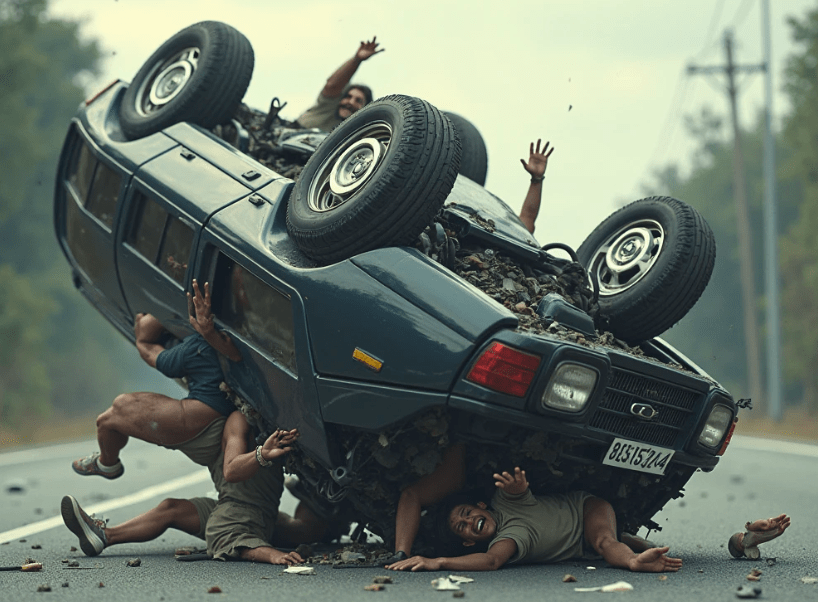
Kentucky’s Worst Roads to Drive on During a Disaster

Kentucky’s Worst Roads to Drive on During a Disaster – A Survivalist’s Guide Behind the Wheel

When you’re out there chasing the horizon or trying to outrun a storm, road knowledge can mean the difference between getting home and getting stuck. I’ve driven through hurricanes in Louisiana, blizzards in Montana, and flash floods in Arizona—but Kentucky’s terrain? It’s a whole different beast when disaster strikes. Steep hollers, crumbling coal roads, dense forest routes, and low-lying flood zones make for a recipe that’ll test the mettle of even the most seasoned driver.

If you’re reading this, you’re likely someone who doesn’t want to wait for FEMA or the county sheriff to come save your hide. You want to know how to drive your way out of the fire—literally and figuratively. And I’m here to make sure you can.

Let’s start with the roads you should know to avoid—or at the very least, approach with extreme caution when the world goes sideways.


Kentucky’s Worst Roads to Drive on During a Disaster

1. KY-66 (Bell County): Twists tighter than a coiled copperhead and flanked by rockslide-prone hills. In a storm, it’s just a serpentine death trap.

2. US-119 (Harlan to Pikeville): A coal country mainline that turns treacherous with even a light rain. Landslides, black ice, and fog make this a no-go during emergencies.

3. KY-15 (Breathitt and Perry Counties): If flooding is the game, this road plays it better than most. Overflow from nearby rivers submerges it faster than a flat-bottom boat can float.

4. KY-192 (Daniel Boone National Forest): Deep woods, no cell signal, and slick as owl snot when it rains. You break down here? You’re your own cavalry.

5. KY-80 (Pulaski County): A high-traffic stretch with poor drainage and deadly curves. In a crisis, it becomes a metal graveyard.

6. The Mountain Parkway (Slade to Salyersville): When the wind kicks up or snow sets in, this becomes a chute to nowhere. I once saw six vehicles slide off in one mile—ice like glass.

7. KY-899 (Floyd County): Steep grades, narrow shoulders, and patchy maintenance mean you’re one wrong move from a thousand-foot roll.

8. US-421 (Jackson County): Earthquakes might not be common in Kentucky, but landslides and flooding sure are. 421 is vulnerable to both.

9. KY-30 (Owsley and Jackson Counties): This road loves to crack and crumble under pressure. I’ve seen potholes swallow axles after a flood.

10. The Hal Rogers Parkway: Also known as the “Hal Ditch Parkway” among old-timers. Washouts, rockfalls, and poor visibility make it more trap than trail during a disaster.


15 Survival Driving Skills That Could Save Your Life

  1. Driving Without GPS: Learn to read paper maps. Don’t rely on satellites when the grid goes down.
  2. Situational Awareness: Keep your head on a swivel. Watch the sky, the road, the terrain—and always have two escape routes in mind.
  3. Reading Terrain: Knowing when the land is about to slide, flood, or freeze gives you a head start no app can offer.
  4. Driving Without Headlights: In some cases, stealth matters. Practice moving low-speed and quiet using parking lights or none at all when needed.
  5. Water Crossing Techniques: Never cross fast-moving floodwaters. For shallow, slow-moving water, stay in the center of the road where it’s highest.
  6. Rockfall Avoidance: In mountainous areas, if you see small rocks, expect big ones. Don’t stop near slopes—move past quickly and watch uphill.
  7. Brake Feathering: Learn to keep traction on ice or gravel by lightly pumping the brakes instead of slamming them.
  8. Manual Car Push-Start (if applicable): If you drive a manual transmission, knowing how to roll-start your car is crucial when the battery dies.
  9. Using Momentum Wisely: Going up muddy or snowy hills requires momentum. Don’t stop halfway or you’re sunk.
  10. Defensive Aggression: Be calm but assertive. Disaster traffic brings out the worst in people—know when to stand your ground and when to yield.
  11. Using the Shoulder: Sometimes, the shoulder is the road. Know how to safely use it, especially if you need to bypass stalled traffic.
  12. Emergency U-turns and Reversing Under Pressure: Practice three-point and J-turns. You may need to back out fast with no margin for error.
  13. Night Navigation Without Lights: Learn how to move discreetly and navigate by moonlight or ambient light if stealth or safety requires it.
  14. Overcoming Off-Road Obstacles: Fallen trees, rocks, or even small washouts—know how to build ramps, stack traction, or use winches and tow straps.
  15. Car as Shelter: Your vehicle can be a temporary safe zone. Insulate windows, block wind, and conserve battery for warmth or signals.

3 DIY Survival Driving Hacks When You Run Out of Gas

1. Siphoning Fuel Safely
Old-school but effective. Carry a clear plastic hose, about 6 feet long, and a small container. Find an abandoned vehicle, insert the hose into the fuel tank (modern ones have anti-siphon devices, but some can be bypassed), create suction, and let gravity do the work. Warning: Avoid diesel if your engine runs on gas—unless you enjoy walking.

2. Homemade Fuel Additive Boost
If you’ve got just a cup or two of gas left, mix in a bit of rubbing alcohol or ethanol (not more than 10-15%) to stretch your supply. This is risky on modern engines, but in a pinch, it’ll get you another couple miles down the road.

3. Fire-for-Signal
If you’re truly stranded, don’t waste your last phone charge. Light a smoky fire using oil or rubber from an old tire to signal rescuers or passing vehicles. A thick black column of smoke still says “I need help” better than anything short of flares.


Final Words From the Road

Here’s the truth—most folks don’t make it because they froze when the time came to move. They hesitated, trusted a GPS or waited for help that never came. Kentucky’s got hills that fall, rivers that rise, and a winter wind that cuts bone-deep. If you’re planning to survive a disaster here, you need to know your vehicle, know your roads, and most of all—know yourself.

I always say: “Don’t drive faster than your guardian angel can fly—but don’t you dare stop when hell’s on your heels.” Keep your tank full, your gear packed, and your wits sharp.

This ain’t just driving—it’s survival.


Arkansas’s Worst Roads to Drive on During a Disaster

Arkansas’s Worst Roads to Drive on During a Disaster — and How to Survive Them Behind the Wheel

Let me tell you something straight: if you’re driving through Arkansas during a full-blown disaster and you don’t know what you’re doing, you’re not just putting your life at risk—you’re endangering everyone you pass on that broken stretch of asphalt. I’ve spent years roaming every type of terrain from deserts to frozen tundras, and there’s one truth that always holds: your vehicle is either your salvation or your coffin. It all depends on how you drive it—and where.

Arkansas, beautiful and rugged as it is, isn’t exactly known for pristine highway conditions. But throw in a disaster—tornado, flood, winter storm, grid-down blackout, or civil unrest—and those narrow backroads and twisting mountain passes turn into traps. Let’s take a look at the worst places to drive through in Arkansas during a disaster, followed by survival driving skills and DIY hacks that might just save your life.


Arkansas’s Worst Roads During a Disaster

1. Highway 7 (Between Harrison and Russellville)
Picturesque? Absolutely. Safe during a flood or ice storm? Not a chance. Landslides, falling trees, and zero visibility curves make this a deathtrap when the weather turns.

2. Interstate 30 (Little Rock to Texarkana)
This corridor gets clogged fast in any kind of mass evacuation. Throw in overturned trucks, panic drivers, or a fuel shortage, and you’ve got a parking lot with a panic problem.

3. Highway 10 (Near Perryville)
Flooding hits this area hard. The road might still look “passable,” but underneath the water? Washed out culverts and crumbling pavement.

4. Interstate 40 (Especially near the White River crossing)
This stretch turns into a swampy mess when the river floods. Combine that with heavy 18-wheeler traffic and frantic evacuees, and you’re playing roulette with every mile.

5. Scenic Highway 23 – “The Pig Trail”
Don’t let the charming name fool you. During a disaster, those hairpin turns, narrow lanes, and zero guardrails can quickly become lethal.

6. Highway 71 (Between Fayetteville and Fort Smith)
Rockslides, sharp inclines, and over-confident flatlanders trying to “make good time” can clog this route in the worst way.

7. Highway 270 (Hot Springs to Mt. Ida)
Beautiful country, but limited visibility, heavy trees, and zero alternate escape routes. If something blocks your way, you’re boxed in.

8. Highway 67/167 Corridor
One of the busiest roads during evacuations. Potholes, debris, and desperate drivers weaving in and out make it a gauntlet.

9. Highway 49 (Especially near Helena-West Helena)
Low-lying areas flood fast, and that Delta wind can rip through with little warning. If the levees are stressed, it’s game over.

10. County Roads in the Ozarks
These are gravel, often unsigned, and nearly impassable with heavy rain or snow. Don’t depend on GPS—it’ll lead you right into the woods and leave you there.


15 Survival Driving Skills to Get You Out Alive

When it hits the fan, knowing how to actually drive in crisis conditions separates survivors from statistics. Here’s what I’ve learned over three decades of road-running in war zones, wilderness, and wipeouts:

  1. Threshold Braking – Learn to brake without locking your wheels. Keeps control even on wet or icy roads.
  2. Handbrake Turns – When you’ve got to spin the vehicle on a dime in tight quarters (say, boxed in a riot), this old rally trick can be a lifesaver.
  3. Low Gear Hill Descent – Keeps you from skidding downhill like a boulder. Especially critical in the Ozarks.
  4. Off-Road Tire Placement – Know how to straddle ruts and avoid tire-poppers like branches and nails.
  5. Driving Without Power Steering – If your engine dies or belt snaps, you’d better be able to muscle that wheel.
  6. Escape Driving in Reverse – You might need to back out of a tight spot fast. Practice controlled reversing at speed.
  7. Ramming Basics – If you must break through a barricade, hit low and center with controlled speed—not full throttle.
  8. Water Fording Technique – Don’t guess. Know your vehicle’s wading depth, and never cross fast-moving water.
  9. Driving by Compass – When GPS dies and you’re in the woods, compass navigation from map-to-ground is critical.
  10. Driving with Blown Tires – Maintain control, keep speed low, and don’t brake hard. Get to a flat zone fast.
  11. Tire Plugging in the Field – Carry a repair kit and know how to use it. Don’t wait until you’re leaking air 40 miles from help.
  12. Situational Awareness – You need 360° mental coverage at all times. Watch mirrors, scan shoulders, anticipate threats.
  13. Stealth Driving – Kill lights, coast in neutral, and keep RPMs low if you’re avoiding detection.
  14. Fuel Efficiency Driving – Coast where you can, drive 45-55 MPH, and avoid sudden acceleration to extend your fuel range.
  15. Mental Control Under Pressure – Might not seem like a “skill,” but it’s what separates panic from execution. Breathe, focus, adapt.

3 DIY Survival Driving Hacks When You Run Out of Gas

Sometimes, despite your planning, you’ll run dry. Maybe fuel’s gone, maybe your tank’s been siphoned while you slept. Here are three field hacks that can help you squeeze a few more miles—or at least survive the walk.

1. Alcohol Stove Siphon Burner (Emergency Siphon Booster)
If you’ve got denatured alcohol, Everclear, or even high-proof liquor, you can rig a small burner under your intake pipe (carefully) to vaporize trace gasoline and create enough vapor pressure to nudge the engine over. Crude? Absolutely. But I’ve seen it work.

2. Campfire Carb Heat Trick
If you’re stuck and the engine’s too cold to vaporize remaining fuel (especially in old carb models), build a small fire nearby and redirect heat with a metal plate toward the engine block. Don’t overdo it—you want warmth, not ignition.

3. Gravity Feed from Spare Canister
Bypassing the fuel pump entirely with a gravity-feed line can give older vehicles a few extra miles. Hang the spare can higher than the fuel intake, use a clear hose and basic valve to control flow. Works best on low-pressure systems.


Final Thoughts from the Road

You don’t need to be a Navy SEAL or a Mad Max road warrior to survive behind the wheel during a disaster. What you do need is planning, experience, and the will to stay calm under fire. Don’t depend on luck. Don’t rely on rescue. When the road disappears, the GPS dies, and the fuel gauge hits E—you’ll wish you knew every one of these tips by heart.

Arkansas is a land of beauty, but beauty doesn’t mean mercy. The roads here can be cruel, especially when nature—or society—turns hostile. Keep your tank full, your eyes sharp, and your instincts sharper. Out here, survival favors the prepared.


Survival Behind the Wheel: Conquering Arizona’s Deadliest Roads in a Disaster

I’ve driven everything from a beat-up Tacoma in the Sonoran Desert to an armored Defender through washed-out jungle roads in Central America. Let me tell you, nothing quite prepares you for the unforgiving terrain of Arizona during a natural disaster. Between flash floods, wildfires, dust storms, and heat waves, the roads here turn from useful ribbons of asphalt into potential deathtraps. If you’re caught off-guard, you could find yourself stranded without help for miles.

I’ve made it my mission to study and conquer these threats. Whether you’re trying to get your family out of a wildfire zone or bugging out during a power grid collapse, mastering survival driving is your ticket to staying alive.

Arizona’s Worst Roads in a Disaster

First, let’s talk about the roads you need to be wary of. These stretches can turn catastrophic fast.

  1. I-17 Between Phoenix and Flagstaff – Twisting elevation changes, steep grades, and choke-points make this corridor a nightmare in wildfire evacuations or winter storms.
  2. State Route 88 (Apache Trail) – This scenic byway turns into a crumbling dirt trap with sharp switchbacks. One rainstorm and it becomes impassable.
  3. US-93 Between Wickenburg and Hoover Dam – A hotspot for accidents even in good conditions. In a disaster? Expect total gridlock or worse.
  4. I-10 East of Tucson – Known for dust storms that hit without warning, cutting visibility to zero.
  5. State Route 264 on the Hopi Reservation – Beautiful, but remote. In a grid-down scenario, help could be days away.
  6. US-191 in the White Mountains – Twists, turns, and limited cell service make it dicey in wildfire conditions.

Now that we’ve covered where not to be, let’s talk about how to get out if you are there.


15 Survival Driving Skills That Can Save Your Life

  1. Off-Roading Basics – Learn to read terrain and navigate soft sand, rocks, and washes. A 4WD vehicle won’t help if you don’t know how to use it.
  2. Water Crossing Techniques – Know how to gauge water depth and current before crossing washes or flooded roads. Cross at a 90-degree angle and avoid water over 6 inches deep.
  3. Escape Route Planning – Always have three exits in mind, even if you’re on a freeway. Use topo maps—not just GPS.
  4. Situational Awareness – Scan 360 degrees every few seconds. What’s the wind doing? Where’s the fire line? Any stalled vehicles ahead?
  5. Driving Without GPS – Learn to use a compass and paper map. Solar flares or cyberattacks could render GPS useless.
  6. Driving in Dust Storms – Don’t slam on the brakes. Pull off as far as you can, kill your lights, and wait it out. Visibility can drop to inches.
  7. Fuel Discipline – Top off your tank when you hit half. Never let it drop below a quarter in a crisis zone.
  8. Aggressive Maneuvering – Practice J-turns and quick evasive lane changes on dirt roads—especially if escape requires avoiding crowds or fallen debris.
  9. Vehicle Hardening – Protect your radiator with mesh, keep a second spare tire, and carry extra fluids. Heat kills engines.
  10. Night Navigation – Learn to drive in blackout mode using night vision or low beams taped down. Great for evading attention.
  11. Driving Through Fire Zones – Close all vents, keep windows up, drive with headlights on even during the day. Avoid rubberized road shoulders—they can ignite.
  12. Manual Transmission Recovery – Know how to clutch-start a vehicle with a dead battery. Push-starting can save your life in a grid-down escape.
  13. Downhill Braking Techniques – Use engine braking instead of relying solely on your brakes. Overheated brakes are common on I-17’s steep descents.
  14. Vehicle Recovery – Carry a tow strap, traction boards, and a winch if possible. Getting stuck in Arizona’s backcountry in 115°F is a death sentence.
  15. Emergency Signaling – In case you do get stuck, use mirrors, flares, and even SOS patterns with headlights or rocks to attract attention.

3 DIY Survival Driving Hacks When You Run Out of Gas

If you’re out of fuel in the middle of nowhere, you’re not out of options—yet.

1. Alcohol-Based Fuel Hack

If you’re carrying a bottle of high-proof alcohol (e.g., Everclear), it can work as an emergency fuel in small quantities—especially in older carbureted engines. You won’t get far, and performance will drop, but it might get you a few critical miles. Mix no more than 10–20% alcohol into the tank to avoid engine damage.

2. Solar Still for Water, Not Fuel

While you’re stuck, staying hydrated is top priority. Build a solar still with a plastic tarp, a container, and a few rocks. This won’t get you moving, but it’ll keep you alive long enough to wait for help or hike out.

3. Siphoning Fuel

Carry a length of food-grade tubing. Many stranded cars in a disaster still have fuel. Newer models have anti-siphon tech, but you can still access the fuel tank from underneath with basic tools. Be respectful—do it only in life-or-death scenarios.


Final Thoughts: Drive Like Your Life Depends on It (Because It Does)

You can have all the gear in the world, but if you don’t have the mindset, none of it matters. Driving in a disaster isn’t about speed. It’s about control, awareness, and adaptability. I’ve seen people die on perfectly paved roads because they panicked or didn’t understand how their vehicle worked. I’ve also seen a 20-year-old Subaru Outback make it through floodwaters because the driver kept his cool and stuck to the high ground.

Every year, more people move to Arizona without knowing the risks. If you live near Flagstaff, Sedona, Tucson, or even the outer reaches of Phoenix, you need to prepare. Nature doesn’t give warnings that make sense. One moment you’re fine, the next you’re boxed in by wildfire or stuck in a dry riverbed that suddenly becomes a torrent.

So here’s your assignment: take a weekend. Find a safe trail near you. Load your vehicle like it’s go time. Practice maneuvering. Simulate a dead GPS. Drive with purpose. Then review what went wrong.

Because someday it might not be a drill.

And when that day comes, you’ll be glad you learned to drive like a survivor.