Let’s stop pretending the world is stable. You feel it, I feel it, and anyone with a functioning brain cell can see it: society is circling the drain. The systems that keep everyone fed, sheltered, entertained, and blissfully distracted? They’re cracking. But instead of preparing, most people cling to the fantasy that someone—some government, agency, billionaire, or “innovation”—will swoop in to save them.
Meanwhile, you and I know the truth: when things snap, it’s every person for themselves. Those who have built the skills, land, tools, and off-grid infrastructure will survive. Everyone else will be looking for handouts and pointing fingers.
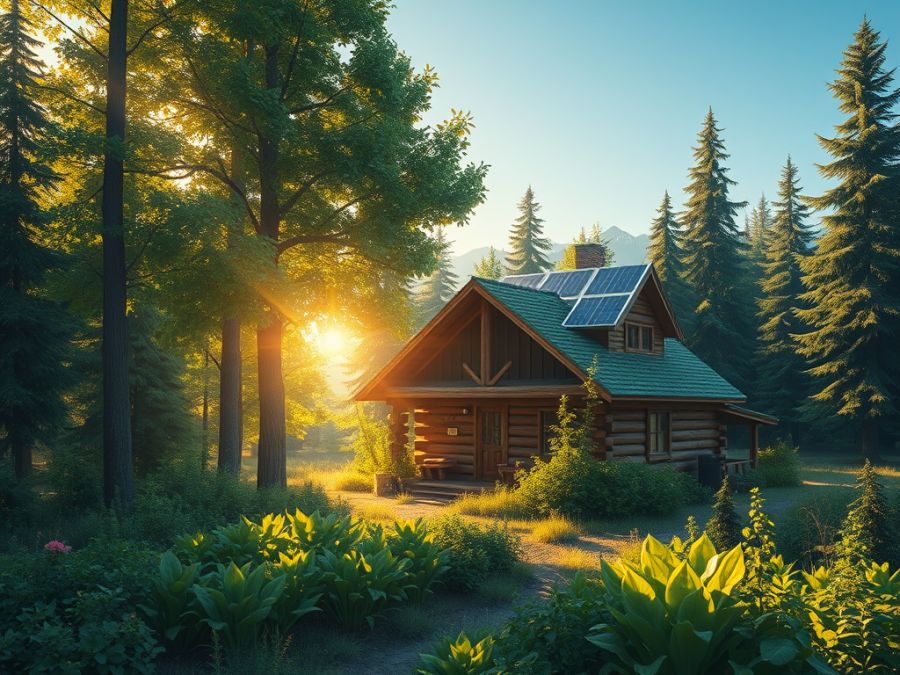
So if you’re planning to disappear from the grid—or at least stop relying on the fragile circus masquerading as modern civilization—you’re already miles ahead. But let’s go deeper. Let’s talk about what actually goes into living off the grid, the kind of off-grid house planning that keeps you alive when the world loses its last remaining screw.
This isn’t a Pinterest fantasy version of the homestead lifestyle. This is the blunt, uncomfortable reality—told from the perspective of someone who’s watched the world unravel and expects it to get worse.
THE REALITY OF GOING OFF THE GRID: IT’S HARD, IT’S BRUTAL, AND IT’S NECESSARY

Most people think going off the grid means sipping coffee on a quiet porch overlooking the woods. Cute idea—but laughably wrong.
Living off the grid means you are your own power company, water utility, grocery store, repairman, security, and doctor. It requires resilience, discipline, and the ability to solve problems without crying.
It also requires understanding that comfort and convenience—the gods society worships—won’t follow you.
If you can handle that, read on. If not, the collapse will handle it for you.
1. CHOOSING WHERE YOU’LL BUILD YOUR OFF-GRID LIFE
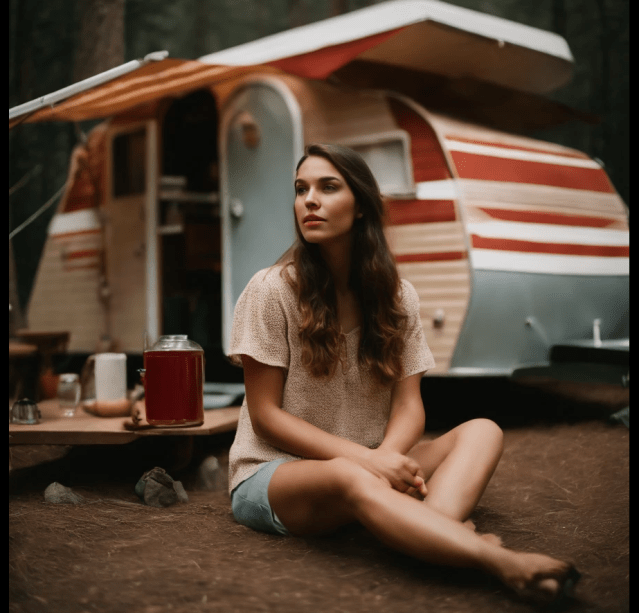
Everything starts with land. Not fantasy land. Real land. Land that works with you, not against you.
Here’s what matters more than anything:
• Water
If your land doesn’t have a reliable natural water source—spring, creek, well potential, or high-water table—you’re done before you begin. Water hauling is for the desperate and the short-sighted.
• Sunlight
Solar power only works if the sun actually reaches your panels. Dense forest + no clearing = you’ll be living by candlelight.
• Soil Quality
You can’t live off the land if the land is dead. Test the soil. Don’t guess. Don’t assume.
• Defensibility
Sound paranoid? Good. You’re building a refuge, not a tourist cabin.
2. DESIGNING OFF-GRID HOUSE PLANS THAT WON’T FAIL YOU
Your off-grid home is not a suburban house copy-pasted into the woods. It must be functional, durable, efficient, low-maintenance, and designed for long-term survival.
Here’s the truth: the best off-grid houses are boring, not Instagram-cute. They are built to keep you alive, not to impress people you’re trying to escape from.
THE NON-NEGOTIABLE STRUCTURE ELEMENTS:
A. Passive Solar Orientation
Your home must be positioned to collect sunlight in winter and deflect heat in summer. If you ignore this, you’ll spend your life fighting nature—and losing.
B. High Thermal Mass Walls
Materials like:
- Rammed earth
- Cob
- Straw bale
- Insulated concrete forms (ICFs)
These hold heat like a battery—warm in winter, cool in summer. Any prepper serious about long-term independence uses thermal mass.
C. Metal Roof (Preferably Standing Seam)
Why?
- Rainwater harvesting
- Fire resistance
- Long lifespan
- Solar panel compatibility
Also, shingles rot. Metal doesn’t care.
D. Rainwater Harvesting & Gravity-Fed Storage

You want gravity to do the work. Pumps fail. Power fails. Gravity does not.
The most functional systems include:
- Roof catchment
- First-flush diverter
- 3–5 food-grade holding tanks
- Gravity pressure line into the house
This alone puts you ahead of 99% of “survival influencers.”
E. Root Cellars & Cold Storage Rooms
Forget refrigerators as your primary food storage. Off-grid homes require:
- Earth-cooled root cellars
- Passive cold pantries
- Subterranean food vaults
Electricity cannot be your only plan.
3. POWER SYSTEMS: THE PART MOST PEOPLE GET WRONG

Everyone thinks solar is enough. It’s not—not alone, anyway.
You need a multi-layered system or you’ll be sitting in the dark half the year.
Your power plan should include:
- Solar
- Battery bank
- Generator backup
- Wood stove for heat
- Propane for redundancy
- Wind turbine (if the land has the wind for it)
No single system will save you. The combination will.
The world is fragile because it relies on a singular centralized grid. Don’t repeat the same foolish mistake off-grid.
4. WATER: THE REAL FOUNDATION OF SURVIVAL

An off-grid home stands or falls on water. Without water, nothing else matters.
Your system needs:
- Primary water source (well or spring)
- Secondary source (rain harvesting)
- Emergency source (nearby creek or lake)
- Purification backups:
- Gravity filters
- Berkey-style units
- Ceramic filters
- Boiling capability
If you’re not planning three levels deep, you’re planning to fail.
5. FOOD PRODUCTION: THE PART THAT TESTS YOUR DISCIPLINE

Gardening is cute until it becomes life or death. Most new off-grid wannabes expect instant abundance, only to discover:
- Soil sucks
- Weather is unpredictable
- Pests are relentless
- Gardening is work
But with persistence, you can produce enough food to survive.
Your long-term plan should include:
- 4-season greenhouse
- Raised beds with compost systems
- Chickens for eggs and protein
- Rabbits for fast breeding
- Perennial crops (asparagus, berries, fruit trees)
- Food dehydration and canning areas
This is a lifestyle, not a hobby.
6. WASTE MANAGEMENT (THE PART NOBODY LIKES TALKING ABOUT)
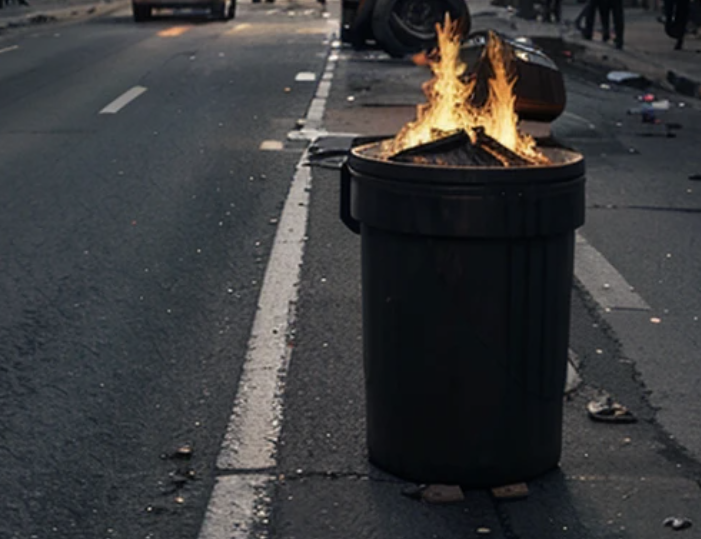
Civilization hides its filth behind pipes and trucks. Off-grid life doesn’t have that luxury.
You’ll need:
• Composting toilets
Low maintenance, eco-friendly, and the best option for long-term independence.
• Greywater systems
Your dish and shower water can irrigate trees and shrubs—with proper filtration.
• Burn piles & scrap sorting
You will produce waste. Deal with it efficiently.
Waste management might not be glamorous, but ignoring it will destroy your land—and your sanity.
7. SECURITY: NOT PARANOIA, JUST REALITY

No, you’re not building a fortress. But you are responsible for your own safety.
Off-grid living requires:
- Dogs (first alarm system)
- Perimeter lighting
- Thorn barriers & natural fencing
- Secure doors & windows
- Smart land layout (visibility, no blind corners)
Prepare quietly. Don’t broadcast your setup.
CONCLUSION: OFF-GRID LIVING ISN’T IDEALISTIC—IT’S NECESSARY

The world is getting weaker, louder, angrier, and more dependent by the minute. People have forgotten how to live without being plugged into a dying system.
Off-grid living isn’t an escape from society.
It’s a rejection of its failures.
If you’re building an off-grid life, good. You’re preparing for reality while everyone else scrolls themselves to sleep.
Just know this:
The grid won’t be around forever.
But your off-grid fortress—if done right—will be.
 TheDailyChristian