

Humans are unpredictable, emotional herd animals, and most people walk around like the world magically keeps itself in order. They stare at their phones, wander into crowds without a second thought, and assume that because a venue has security guards, everything is “under control.”
The rest of us—those who actually pay attention—know that control is an illusion. And a fragile one at that.
Human stampedes aren’t rare freak accidents. They’re a natural outcome of packing too many people into too small a space, mixing in fear, noise, confusion, bad planning, and—my personal favorite—sheer stupidity. If you think that sounds harsh, you haven’t seen people trample each other for a Black Friday discount. Trust me, humans don’t need an emergency to act like panicked cattle.
So let’s talk about how to survive a human stampede, because clearly nobody else is going to protect you. If anything, the average person will push you down without blinking if it means they get three inches forward in the chaos.
Welcome to the Reality Nobody Wants to Admit

Crowd crushes and stampedes happen at concerts, sporting events, religious gatherings, parades, protests, and anywhere else humans gather in numbers large enough to overwhelm their own sense of reason. Most people don’t prepare for things like this because they think:
“It won’t happen to me.”
Yeah—tell that to the countless victims who thought the same before they were knocked over and swept away by a five-ton wave of panicked humanity. If you’re reading this, congratulations—you’re at least thinking about it. That’s step one in surviving anything: awareness.
This article won’t sugarcoat things. If you want a cheerful “stay safe!” pamphlet, go read something printed by an events committee. This is the real version—the version that tells you what to do when the crowd turns into a living bulldozer and you’re stuck in the middle of it.
Step 1: Actually Pay Attention to Your Surroundings
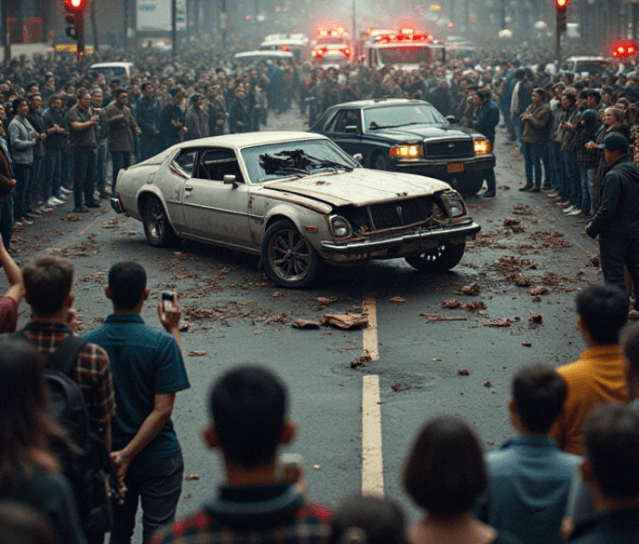
Revolutionary, I know.
But you’d be astonished how many people walk into crowds without even scanning their environment. Before you enter any dense crowd, do what a responsible person should always do:
- Identify exits, plural. If you only know one way out, congratulations—you’re already a liability to yourself.
- Note barriers like fences, railings, walls, and stages—these become death traps if the crowd surges.
- Observe the density. If you can’t raise your arms without hitting someone, you’re in the danger zone.
- Listen for changes in energy—shouting, pushing, sudden movement, or panic.
If you’re thinking, “Wow, that sounds paranoid,” good. Paranoia is just foresight that hasn’t been appreciated yet.
Step 2: When a Crowd Starts Moving, You Move With It—Or You Die

Remember this: you cannot fight a crowd surge head-on. When thousands of pounds of pressure push in one direction, you’re not going to out-muscle it. You move with the flow, gradually and strategically angling toward the side or an exit.
If you plant your feet thinking you can hold your ground like some heroic movie character, the crowd will crush your ribs into your spine. Don’t be a martyr. Be efficient.
Move diagonally, like a fish cutting through a current. You’re not trying to sprint—you’re trying to escape the pressure zone without falling.
Step 3: Protect Your Chest—It’s the Difference Between Living and Suffocating
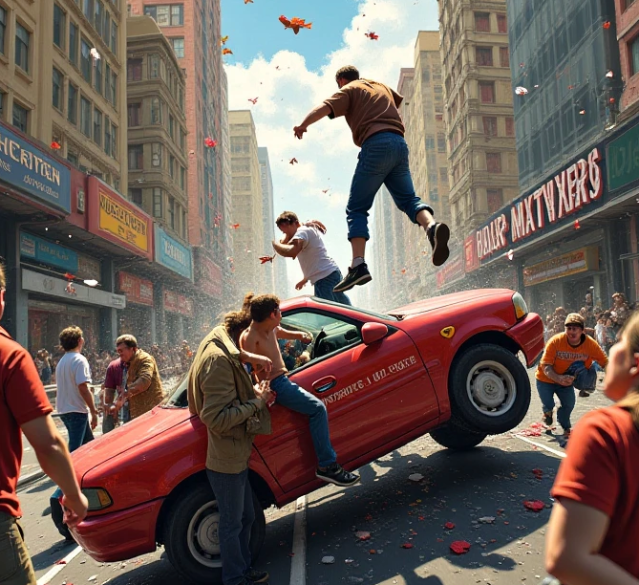
Most stampede deaths happen due to compressive asphyxiation, not trampling. That means people get squeezed so hard they literally can’t breathe.
The fix?
Create a protective “box” around your chest using your arms.
Put your forearms horizontally in front of your ribcage, fists near your shoulders, making space for your lungs to expand even when the pressure tightens.
If the crowd squeezes in, this posture could buy you the oxygen you need to stay conscious. Consciousness is what keeps you moving. And movement is what keeps you alive.
Step 4: If You Fall, You Don’t Stay Down
This is the nightmare scenario, but it’s survivable if you act fast. Do not curl into a ball like some brochure will tell you. You’re not a turtle and you will not get “protected.” That advice comes from people who have clearly never experienced a crowd crush.
Instead:
- Turn onto your side.
- Pull your knees toward your chest.
- Use your arms and legs to crawl or roll toward open space.
- The second you’re on your feet, don’t celebrate—keep moving.
If people fall on top of you, keep your head protected with one arm and use the other to create space to breathe. Survival is ugly. It’s not graceful. It’s not cinematic. It’s pure determination.
Step 5: Don’t Follow the Crowd—Think Past It
People are lemmings. They follow the person in front of them even when it leads them straight into a bottleneck or a dead-end barrier. You have to think faster than the herd.
Look for:
- Side exits
- Gaps in barriers
- Staff-only doors that open toward safety
- Open spaces where pressure decreases
People cram themselves into the nearest exit because they’re overwhelmed and scared. You, however, have the advantage of thinking before panic hits. Use it.
Step 6: Know the Early Signs of a Stampede Before It Happens
This is where pessimism is your best friend. You assume things can go wrong so you notice when they start going wrong.
Watch for:
- People pushing but the crowd can’t move forward (classic crush pattern)
- A sudden wave-like sway through the crowd
- Security personnel looking tense or rushing
- Changes in sound: screaming, shouting, or sudden silence
- A surge from the back (people trying to move before those in front can)
If you sense any of these, leave.
Don’t wait for instructions. Don’t wait for confirmation. By the time officials announce anything, you’re already behind.
Step 7: Don’t Bring Anything You Aren’t Willing to Lose
This is blunt, but you need both hands free. If you’re weighed down with drinks, merch bags, souvenirs, or your tote full of “essentials,” you’re risking your life.
Your priorities in a crowd emergency are:
- Breathing
- Balance
- Mobility
Everything else is clutter. If something becomes a hazard, drop it. Your phone is replaceable. Your spine is not.
Step 8: Mentally Prepare Before You Ever Step Into a Crowd
This is the part people hate hearing because it requires actual effort. If you want to survive the worst situations, you need to train your mindset ahead of time.
Tell yourself:
- “If something goes wrong, I will move, not freeze.”
- “My safety is my responsibility.”
- “I will not rely on others to think for me.”
Being mentally ready makes you react faster than the crowd. In survival situations, seconds matter. Sometimes they’re all you get.
Final Thoughts from a Pessimistic Prepper

Human stampedes aren’t accidents—they’re the result of human behavior amplified by chaos. People panic. People follow blindly. People shove without thinking. And people assume someone else has a plan.
You’re smarter than that.
You’re reading this because you know the world is unpredictable and that most people sleepwalk through danger.
Survival isn’t luck.
Survival is awareness, preparation, and refusing to be one of the oblivious masses who trust the crowd more than their own instincts.
The world may be messy, reckless, and irresponsible—but you don’t have to be.
Stay alert. Stay sharp. Stay alive.
 TheDailyChristian