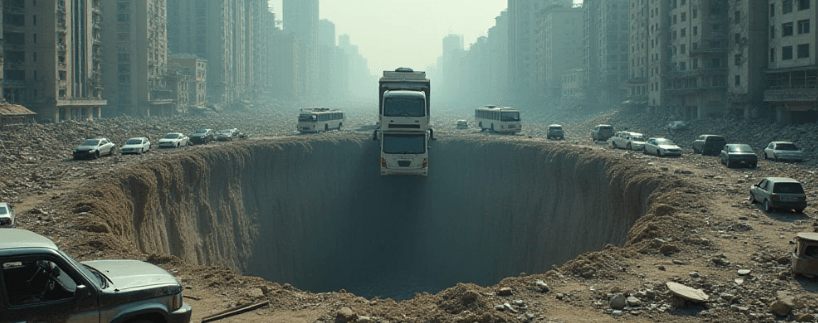
North Dakota’s Worst Roads to Drive on During a Disaster

North Dakota’s Worst Roads to Drive on During a Disaster: Survival Driving Skills & DIY Hacks

Having logged thousands of miles in some of the most unforgiving terrains on the planet—from the slick mountain passes of the Rockies to the endless sand dunes of the Sahara—I’ve learned that no matter where you are, the roads you travel can make or break your chances in a disaster scenario. North Dakota, with its sprawling plains and unpredictable weather, offers a unique challenge that many overlook until they’re caught in the thick of it.

When disaster strikes—whether it’s a blizzard, flash flood, or wildfire—some roads become downright deadly. The sparse population and vast stretches of rural landscape in North Dakota can quickly turn familiar routes into traps. This is a survival guide for those who find themselves behind the wheel on North Dakota’s worst roads during a crisis, and it’s peppered with practical survival driving skills and hacks you can rely on when you’re running on empty—literally.

North Dakota’s Worst Roads to Drive on During a Disaster

1. Highway 85 through the Badlands
This stretch cuts through rough, eroded terrain with narrow lanes and sharp turns. In a disaster, it’s a nightmare—rockslides, sudden flooding, and poor cell reception make it a last-resort route.

2. County Road 6 near Devils Lake
Prone to flooding and ice during winter storms, this road can vanish under water or ice in hours. It’s a trap for the unwary and easy to get stuck on.

3. US-2 between Minot and Grand Forks
This main artery often faces winter whiteouts and heavy ice. The long stretches without rest stops or safe pull-offs make it dangerous during disasters.

4. ND-22 near the Missouri River
The proximity to the river means flood risks are high, and the road can get cut off quickly. Mud and debris wash onto the pavement during storms, hiding potholes and sinkholes.

5. ND-50 in the southwestern counties
This rural route is lightly maintained and often dotted with deep ruts and washouts after heavy rains or snowmelt.

Survival Driving Skills for North Dakota’s Worst Roads

I’ve distilled my experience into 15 survival driving skills that can help you navigate these treacherous paths safely.

1. Pre-Trip Recon
Always research your route before heading out. Use satellite maps and local weather reports to avoid roads prone to flooding or landslides.

2. Adjust Speed for Conditions
Speed kills, especially on icy or muddy roads. Slow down to maintain control and increase your stopping distance.

3. Use Low Gear on Slopes
On steep hills or slippery descents, use a low gear to control your speed without over-relying on brakes, which can cause skidding.

4. Avoid Sudden Movements
Steer and brake gently. Sudden jerks can cause loss of traction on ice or loose gravel.

5. Understand Traction Zones
Know which tires have the best grip depending on your vehicle type. For 4WD, front tires often steer, so keep them clean and clear of snow or mud.

6. Look for Alternative Routes
If a road looks unsafe, backtrack or take a detour—even if it means driving an extra 30 minutes. It’s better than getting stranded.

7. Maintain Tire Pressure
Underinflated tires are a liability in mud and snow. Check tire pressure frequently, especially before driving on rough roads.

8. Use Sand or Gravel for Traction
Carry a small bag of sand or gravel to pour under tires if you get stuck.

9. Know How to Rock Your Vehicle Free
If stuck in mud or snow, gently rock the vehicle back and forth by shifting between drive and reverse to gain traction.

10. Keep Momentum on Slippery Roads
Don’t stop suddenly on ice or snow. Maintain a steady pace to avoid losing traction.

11. Use Engine Braking on Descents
Let the engine slow the vehicle on downhill stretches instead of brakes to avoid skidding.

12. Keep Headlights and Taillights Clean
Visibility is everything during storms and dust clouds. Clean your lights regularly to be seen and see better.

13. Always Wear a Seatbelt
Simple, but often overlooked in emergency driving. It could save your life if you hit an obstacle.

14. Know How to Handle Hydroplaning
If you hydroplane, don’t slam on brakes. Ease off the accelerator and steer gently into the skid.

15. Communicate Your Location
Use a CB radio, GPS tracker, or satellite messenger to keep someone updated on your route and location.

DIY Survival Driving Hacks for Running Out of Gas

Now, what if disaster hits and you run out of fuel on these unforgiving roads? Here are three DIY survival driving hacks that have saved my skin more than once.

Hack #1: Use a Gravity-Fed Fuel Transfer
If you’re stuck near another vehicle or a fuel container, create a siphon with a clean hose or sturdy tubing. Start a slow flow of gas by sucking gently on the end until fuel begins to move through the tube, then place the hose end in your tank. Gravity will do the rest. Always be careful with fumes and avoid swallowing fuel.

Hack #2: Convert Your Vehicle to Run on Alternative Fuels (Temporary Measures)
Many vehicles can run on a mixture of gasoline and certain alcohol-based fuels (like ethanol or methanol) if gasoline runs out. If you can find small amounts of these alternative fuels at farms or remote stations, mixing them carefully can keep you moving. Research your vehicle’s tolerance ahead of time.

Hack #3: Use a Makeshift Hand-Push Starter
If your battery dies or you have no fuel to start the engine, you can sometimes push-start your vehicle. Get help from others to push the car uphill or on a flat surface, and then quickly engage second gear while releasing the clutch to start the engine. This works best on manual transmissions.


The Final Word

Driving North Dakota’s worst roads during a disaster demands respect, preparation, and calm nerves. The endless skies and wide-open spaces can lull you into a false sense of security—until a blizzard or flash flood changes the landscape overnight.

Survival on these roads means more than just brute driving skill. It’s about knowing the terrain, anticipating nature’s fury, and having the right survival driving skills up your sleeve. You have to be ready to switch gears—literally and figuratively—and keep a survival mindset through every mile.

Remember: If you don’t need to drive, don’t. Sometimes the best survival tactic is to stay put and wait out the storm. But when the road calls, let these tips guide you safely through North Dakota’s wildest roads.

Stay sharp, stay prepared, and above all—keep the rubber on the road.

South Dakota’s Worst Roads to Drive on During a Disaster

South Dakota’s Worst Roads to Drive on During a Disaster: A Survivalist’s Guide to Driving Your Way Out

I’ve spent decades on the road—across continents, through unforgiving terrain, and in every imaginable disaster scenario. Whether navigating flooded highways, treacherous mountain passes, or icy backroads, one truth stands firm: your vehicle can be your lifeline—or your coffin. South Dakota is no exception. Its wide-open prairies hide some dangerous choke points and stretches that become death traps when disaster strikes.

If you ever find yourself needing to bug out or escape a disaster in South Dakota, knowing which roads to avoid—and how to drive like your life depends on it—is crucial. I’ve mapped out some of the worst roads for disaster driving here, along with survival driving skills you need to master, and a few DIY hacks for when you run out of fuel. Buckle up; this is not a ride for the faint of heart.


The Worst Roads in South Dakota to Avoid in Disaster Scenarios

South Dakota’s terrain may look gentle, but disaster turns it into a death zone quickly. These roads are notoriously difficult during floods, ice storms, or structural failures:

  1. Highway 34 through the Badlands
    Narrow, winding, and often exposed to high winds and sudden rockslides, this highway can become a nightmare when disaster strikes. The Badlands are known for unpredictable weather and limited cell service, meaning if you get stuck here, help could be days away.
  2. Interstate 90 near the Missouri River Bridges
    During floods, these bridges can be compromised or closed without warning. Traffic congestion becomes a death trap in disaster evacuations, and the surrounding lowlands flood fast, trapping vehicles.
  3. Highway 79 south of Belle Fourche
    This stretch is exposed prairie with few alternative routes and is prone to heavy snow drifts in winter storms. In a disaster, this road can quickly become impassable, with limited places to pull over safely.
  4. State Route 34 between Huron and Mitchell
    Flood plains dominate this region, making it vulnerable to flash floods. The flat terrain means water pools quickly, and drainage systems can be overwhelmed.
  5. County Roads near the Black Hills National Forest
    Rugged, poorly maintained, and winding through dense forest, these roads are prone to landslides and fallen trees during storms or wildfires.

Survival Driving Skills for Disaster Scenarios in South Dakota

When the stakes are life or death, normal driving techniques won’t cut it. Here are 15 survival driving skills I swear by when navigating disaster zones on South Dakota’s worst roads:

  1. Controlled Skid Recovery
    When ice or mud takes the wheel from you, don’t slam the brakes. Steer into the skid and gently ease off the accelerator until control is regained.
  2. Throttle Modulation
    Smooth throttle application prevents wheel spin on slippery surfaces like ice or loose gravel.
  3. Defensive Scanning
    Constantly scan the horizon and roadside for obstacles, fallen trees, animals, or sudden drops. This also helps you anticipate road collapses or flood zones.
  4. Weight Transfer Management
    Understanding how your vehicle’s weight shifts during turns and braking helps prevent rollovers on narrow roads like Highway 34 through the Badlands.
  5. Emergency Braking Without ABS
    If your vehicle doesn’t have ABS, pump the brakes to avoid skidding. ABS systems behave differently; learn your vehicle’s braking response before disaster hits.
  6. High-Centering Avoidance
    When driving on uneven gravel roads or flood debris, know how to navigate to avoid your vehicle getting stuck high on an obstacle.
  7. Low-Speed Manoeuvring
    Master slow, precise steering to navigate tight, damaged, or obstructed roads.
  8. Hill Start Control
    On steep, icy inclines, use clutch control or the parking brake to prevent rollback.
  9. Use of Engine Braking
    On steep descents, downshift instead of relying solely on brakes to avoid overheating.
  10. Crosswind Stability
    South Dakota’s open plains expose vehicles to fierce crosswinds; keep a firm grip and slight steering correction to maintain lane control.
  11. Night Driving Preparedness
    Disasters often strike without warning; keep your night vision sharp and drive with minimal light pollution—use high beams only when safe.
  12. Water Fording Judgement
    Know the depth and current of floodwaters before crossing. Water above the axle is almost always a no-go.
  13. Tire Pressure Adjustments
    Lowering tire pressure can increase traction on soft surfaces like mud or sand, but be ready to reinflate as soon as possible.
  14. Vehicle Positioning for Escape Routes
    Always park or stop your vehicle so you can drive out quickly in any direction, especially on roads prone to sudden closures or blockages.
  15. Emergency Communication Readiness
    Keep a charged radio or satellite communicator to receive updates on road closures or hazards.

DIY Survival Driving Hacks When You Run Out of Gas

Running out of fuel during a disaster is a nightmare, but being a survivalist means preparing for the worst and improvising solutions. Here are three hacks that can keep you moving—or at least help you escape:

  1. Create a Gravity-Fed Fuel Transfer System
    If you find a fuel source in a nearby container (a damaged vehicle, storage tank, or jerrycan), use a clean hose or even a sturdy, flexible tube to siphon fuel. Gravity-fed siphoning is safer and more effective than mouth suction. Remember: always filter fuel through a clean cloth to avoid clogging your fuel lines.
  2. Use Dry Wood or Charcoal Briquettes to Generate Heat and Signal
    If you can’t move your vehicle, use dry wood or charcoal to create a controlled fire nearby. This can serve multiple purposes: keeping you warm, signaling rescuers, and deterring predators. Don’t leave your vehicle unguarded while you gather materials.
  3. Build a Makeshift Pulley or Tow System
    If your vehicle is stuck and fuel is low, rig a pulley system from sturdy branches or vehicle parts. Use your tow straps, rope, or even seat belts to leverage moving your vehicle to safer ground or toward a known fuel source. This requires some muscle and ingenuity but can save hours waiting for rescue.

Putting It All Together: Preparing for South Dakota’s Roads in Disaster

In my travels, I’ve learned that knowledge combined with preparation is survival’s foundation. South Dakota may seem calm, but when disaster hits, these roads become high-risk zones. Always:

  • Scout your route beforehand.
  • Pack extra fuel, emergency repair kits, and communication devices.
  • Know your vehicle’s limits.
  • Practice the survival driving skills until they become second nature.

When roads narrow or floodwaters rise, your mindset will determine if you’re just another statistic—or the one who makes it through.


Final Thoughts

South Dakota’s rural and sometimes wild landscape tests every driver, but especially in disaster scenarios. Your vehicle is a tool—one that requires skill, respect, and constant readiness. Learn the terrain, anticipate hazards, and never rely solely on modern conveniences like GPS or mobile networks. These will fail when you need them most.

Remember: disaster driving isn’t about speed; it’s about control, patience, and survival instincts honed by experience. If you master these 15 survival driving skills and know the worst roads to avoid, you’ll dramatically increase your chances of bugging out safely.

And if you do run out of gas, those three DIY hacks might just be the difference between staying stranded and making it home.

Stay sharp, stay ready, and drive smart.

Maryland’s Worst Roads to Drive on During a Disaster

Maryland’s Worst Roads to Drive on During a Disaster (And How to Survive Them)
By a Well-Traveled Survivalist Who’s Seen More Than One Apocalypse Coming Over the Horizon

Disasters don’t wait for the weather to clear, the traffic to thin, or your gas tank to fill up. Whether it’s a hurricane bearing down on the Chesapeake, a Nor’easter crashing across the Appalachians, or a cascade of man-made chaos clogging the I-95 corridor, Maryland has more than its fair share of roads that’ll turn a bad day into a nightmare.

I’ve driven the swampy logging routes of the Deep South, carved wheel paths through the deserts of New Mexico, and braved snow-walled passes in the Rockies. But few places test your mettle like Maryland in a full-blown disaster. It’s a mix of suburban sprawl, tight mountain roads, waterfront lowlands, and decades-old infrastructure built for a population half its current size.

Here’s my take on Maryland’s worst roads during a disaster—and more importantly, how to survive them.


The Roads You Should Avoid Unless You’re Desperate—or Skilled

1. I-95 Through Baltimore
This beast is always congested. In a disaster, it’s the first to jam up with panicked drivers. Bridges, tunnels, and limited exits make it a trap if you don’t know your detours.

2. Route 50 Eastbound to the Bay Bridge
On a holiday weekend, this stretch looks like a parking lot. Add a hurricane evacuation and you’ve got a recipe for gridlock from Annapolis to Queenstown.

3. I-270 Corridor Between Frederick and the D.C. Beltway
A death funnel of commuter traffic. During an emergency, the already-bottlenecked lanes become impassable. Back roads may be your only option.

4. Route 1 Through College Park
Choked with lights, pedestrians, and poor drainage. Avoid it when the rain starts falling—flooding is a real problem here.

5. I-70 Near Ellicott City
Heavy truck traffic and tight turns combine with steep elevation. Add snow or flooding and it’s game over.

6. Route 2 (Ritchie Hwy) Through Glen Burnie
Urban sprawl, constant commercial traffic, and confusing side streets make this a slow death in any emergency scenario.

7. MD-140 Between Westminster and Reisterstown
Hilly terrain and a lack of shoulder space turn minor accidents into massive pileups.

8. MD-32 Between Columbia and Annapolis
Known for fast-moving traffic and sudden slowdowns. In a bug-out scenario, the margin for error disappears.

9. I-83 Jones Falls Expressway
A concrete chute through Baltimore prone to accidents and flooding. No shoulders mean no mercy.

10. US-301 South of Waldorf
A long, flat corridor that bottlenecks at every town along the way. One wreck and you’re stuck behind miles of brake lights.


15 Survival Driving Skills That’ll Keep You Alive

You don’t need to be a stunt driver to survive a disaster—but you do need to think like one. Here are 15 hard-earned skills every survivalist driver should master:

  1. Reverse Driving at Speed – Learn to back up quickly and in control. Sometimes there’s no room to turn around.
  2. Tactical U-Turns – Not all U-turns are legal or easy. Know how to execute a quick 3-point or bootleg turn under pressure.
  3. Driving Without Headlights – Essential for stealth at night. Learn to use peripheral lighting and ambient glow to see without being seen.
  4. Engine Braking – In rough terrain, using gears to slow the vehicle prevents brake failure and loss of control.
  5. Emergency Lane Changes – Quick, controlled swerves to avoid obstacles or evade threats.
  6. Skid Recovery on Ice or Wet Pavement – Practice counter-steering and throttle control until it’s instinct.
  7. Off-Road Navigation Without GPS – Know how to read terrain and follow utility lines, ridgelines, or watercourses.
  8. Water Crossing Techniques – Know your vehicle’s wading depth and never cross fast-moving water. Walk it first if unsure.
  9. Driving with Damaged Tires – A tire plug kit, compressor, and knowing how to drive on a flat can keep you moving.
  10. Spotting Ambush Points – Pay attention to chokepoints, overpasses, or blind curves—classic ambush zones.
  11. Using Vehicles as Cover – In active threat situations, park at angles to create visual and ballistic cover.
  12. Silent Parking & Idling – Practice arriving undetected: lights off, coast in, engine kill, brake gently.
  13. Urban Evacuation Tactics – Don’t follow traffic. Use alleys, sidewalks, and parking structures if needed.
  14. Fuel Rationing While Driving – Maintain constant speed, limit acceleration, and coast when possible.
  15. Using a Manual Transmission When Power Fails – Know how to clutch start a manual if your battery’s dead.

3 DIY Survival Driving Hacks When You Run Out of Gas

Even the best-prepared can run dry. Here’s how to cheat the system when the pumps are down:

1. Siphon from Lawn Equipment and Abandoned Vehicles
Keep a siphon pump or tubing in your emergency kit. Don’t forget to check boats, motorcycles, RVs—anything with a tank.

2. Emergency Fuel from Alcohol-Based Products
Gasoline engines can sometimes run short-term on denatured alcohol or ethanol-heavy fuels (like E85), though it’s hard on the engine. Use only in desperation. Make sure to filter first.

3. Gravity-Feed Jerry Can Setup
If your fuel pump dies, rig a gravity feed system using a jerry can strapped above the engine line. Run a fuel-safe hose directly to the carburetor or intake line.


Tactical Advice: Maryland Edition

Now let’s bring it home to Maryland. The Chesapeake region is a hotbed of natural and manmade threats: hurricanes, coastal flooding, chemical spills, even cyberattacks disrupting traffic signals. If you’re caught in a disaster, every second counts. Don’t follow the herd. Most evac plans will funnel everyone onto a few major arteries, and those are the first to fail.

Instead:

  • Know your county’s emergency routes. Memorize them—not just the map, but the feel of the road at night, in rain, under stress.
  • Use railroad access roads, utility trails, and undeveloped fire lanes. They often run parallel to major roads but are less traveled.
  • Scout in advance. Take day trips to explore backwoods passes across Harford, Carroll, and Garrett Counties—places where traffic can’t follow.
  • Keep a bug-out vehicle that isn’t flashy. Something with 4WD, good clearance, and preferably without fancy electronics that can fail under EMP or flood conditions.

Parting Thoughts from the Driver’s Seat

I’ve spent nights under the stars in a Humvee outside Kandahar, and I’ve crawled through DC traffic with a Geiger counter on the dash during a drill that got way too real. If there’s one truth that crosses all terrain and all threat levels, it’s this:

The road to survival isn’t the fastest. It’s the one only a few know.

Don’t wait until the sky turns green or the sirens wail. Know your routes, tune your ride, and drive like your life depends on it—because one day, it just might.


New Jersey’s Worst Roads to Drive on During a Disaster

New Jersey’s Worst Roads to Drive on During a Disaster: A Survivalist’s Guide

I’ve spent decades traversing harsh terrains, navigating everything from dense forests to urban jungles during emergencies. Nothing sharpens your survival instincts like being behind the wheel when disaster strikes. New Jersey, a state known for its bustling highways and scenic byways, has some of the trickiest roads to maneuver in crisis scenarios. Whether it’s a hurricane, flood, blackout, or a sudden evacuation, knowing which roads to avoid and how to drive like your life depends on it can mean the difference between safety and catastrophe.

Here’s my survivalist’s breakdown of New Jersey’s worst roads to drive on during a disaster, essential survival driving skills, and a few DIY hacks when your fuel runs dry. Listen close, because when the grid goes dark, and chaos rules, your driving skills are your survival kit on wheels.


The Worst Roads in New Jersey During Disaster Scenarios

1. Garden State Parkway (GSP) Southbound from Exit 105 to 63
This stretch is notorious for bottlenecks during evacuations. It snakes through dense suburban and coastal areas, making it vulnerable to flooding, especially during hurricanes. The road’s proximity to barrier islands means that floodwaters can trap cars in seconds.

2. Route 80 through Morris and Passaic Counties
While Route 80 is a major artery, in disaster situations, it quickly becomes a parking lot. Flooding and traffic collisions on steep, winding sections turn this road into a nightmare.

3. Route 46 in Bergen County
Route 46 serves as a critical evacuation route but is littered with intersections and traffic lights that become chokepoints. Heavy rain or snow turns it slick and hazardous.

4. Route 9 through Monmouth County
This road runs close to the coast and marshlands. Flooding and poor drainage can render it impassable, and it’s lined with commercial areas that trap stranded motorists.

5. The Pulaski Skyway (U.S. Routes 1 and 9)
An elevated roadway over the industrial waterfront, the Skyway is prone to accidents and closures during high winds or flooding, making detours complicated.

6. Route 287 near Morristown
Route 287 is a vital interstate connector but is subject to steep grades and sharp curves. During snow or ice, this stretch becomes treacherous.

7. Route 35 through Ocean County
A low-lying route through marshes and barrier islands, Route 35 floods easily during storms, often leaving drivers stranded.

8. Route 70 through Camden County
Known for heavy suburban traffic, Route 70’s multiple traffic signals and intersections cause gridlock in emergencies.

9. Route 18 in Middlesex County
Route 18 is a busy commuter road with frequent congestion, complicated by bridges and tunnels prone to closure.

10. Atlantic City Expressway near Atlantic County
Often used for evacuations, the Expressway can clog quickly, and limited exits increase the risk of getting stuck.


15 Survival Driving Skills to Drive Your Way Out of Disaster

Disaster driving is not your average commute. You need razor-sharp reflexes, awareness, and unconventional techniques. Here are 15 survival driving skills I swear by:

  1. Situational Awareness — Constantly scan your surroundings: other vehicles, road conditions, and possible escape routes. Disasters can create unpredictable hazards.
  2. Anticipate Hazards — Spot puddles, debris, or stalled cars early. Knowing when to slow down or maneuver can prevent accidents.
  3. Maintain a Safe Distance — In emergencies, tailgating equals disaster. Leave twice the normal distance between you and the car ahead.
  4. Smooth, Controlled Inputs — Jerk-free steering, braking, and accelerating prevent skids, especially on wet or icy roads.
  5. Master Off-Road Maneuvering — Many disaster routes force you off paved roads. Practice handling uneven terrain, mud, and sand.
  6. Hill Management — Use low gears going uphill or downhill to maintain control. Don’t ride your brakes downhill to avoid overheating.
  7. Reverse Driving Under Pressure — Sometimes you’ll need to backtrack or escape tight spots. Practice backing up quickly yet safely.
  8. Emergency Braking — Learn threshold braking to stop as quickly as possible without locking your wheels.
  9. Controlled Skid Recovery — If you lose traction, steer into the skid to regain control.
  10. Use of Engine Braking — When descending slopes, downshift to slow the vehicle and preserve brake integrity.
  11. Avoiding Hydroplaning — Slow down in standing water, avoid puddles, and don’t use cruise control.
  12. Navigating Debris — Learn to identify safe paths around fallen branches, rocks, or stranded vehicles.
  13. Using Alternate Routes — Know how to quickly evaluate side roads and lesser-used paths.
  14. Fuel Management — Drive efficiently to conserve fuel, especially when gas stations are scarce.
  15. Vehicle Communication — Use horn and headlights to signal other drivers or call for help.

3 DIY Survival Driving Hacks When You Run Out of Gas

Running out of gas in a disaster can feel like a death sentence, but with some resourcefulness, you can keep your wheels turning:

Hack 1: Emergency Gravity Feed Fuel Transfer
Carry a clean, flexible hose (about 3-4 feet). Place one end in your nearly empty gas tank’s filler neck and the other end into a spare container filled with fuel. Use gravity by elevating the container to slowly siphon fuel back into your tank. This can buy you enough distance to reach a gas station or safer location.

Hack 2: Use Alternative Fuels
If you’re desperate, some older gasoline engines can run briefly on a mixture of motor oil and gasoline in emergencies (NOT recommended for long-term use). Another option is a small container of camp stove fuel (like white gas or Coleman fuel) in an extreme pinch, but only if you know your engine can tolerate it.

Hack 3: Improvised Pedal Power
If stranded with no gas and no help nearby, consider temporarily using your vehicle as a sled. Attach a sturdy rope or tow strap to your car’s bumper and have someone pull it manually or with a secondary vehicle to a safe place. This is more feasible with smaller vehicles and should be a last resort.


Navigating New Jersey’s Disaster Roads: Final Tips

  • Know Your Vehicle: Familiarize yourself with your car’s four-wheel-drive or all-wheel-drive modes. Engage them as soon as conditions worsen.
  • Pre-Plan Your Route: Always have a backup evacuation plan. GPS can fail, so carry printed maps.
  • Prepare Your Car Kit: Include a tire repair kit, jumper cables, emergency flares, a basic toolset, extra fuel cans, and a first aid kit.
  • Stay Calm and Focused: Panic causes mistakes. Take deep breaths, focus on your driving, and don’t rush.
  • Communication is Key: Keep your phone charged and have a car charger or power bank ready.
  • Avoid Rush Hour: If possible, time your evacuation to avoid the busiest hours.

Driving through disaster zones demands respect for the power of nature and a readiness to adapt. New Jersey’s roads can be treacherous, but armed with these survival skills and knowledge of which routes to avoid, you can increase your chances of getting through safely.

New York’s Worst Roads to Drive on During a Disaster

New York’s Worst Roads to Drive on During a Disaster—and How to Survive Them Behind the Wheel
By a Well-Traveled Survivalist

I’ve driven across deserts on three gallons of diesel, crawled through hurricane-flooded streets in Louisiana, and pushed a rusted-out pickup across half of Bolivia. But nothing quite tests your nerve like driving through New York during a full-blown disaster—be it a blackout, blizzard, flash flood, or something worse. The Empire State has beauty and bite in equal measure, and if you’re not prepared when things go sideways, you’re either stuck or someone else’s burden.

Let’s talk survival. Specifically, survival behind the wheel.

The Most Treacherous Roads in New York During a Disaster

Before I get into the skills and hacks that’ll keep your rig moving, you need to know which roads are a deathtrap when crisis hits.

1. BQE (Brooklyn-Queens Expressway)

This is a tight, crumbling mess in the best of times. During a disaster? It turns into a concrete coffin. It floods easily, has limited exits, and the elevated portions make for slow and exposed travel.

2. Major Deegan Expressway (I-87)

Running through the Bronx, this stretch clogs up with the smallest incident. Add an evacuation order or a flash flood, and you’re locked in.

3. Cross Bronx Expressway

I call this one “the artery of misery.” In gridlock, there’s no escape—bridges, overpasses, and concrete all around. It’s the first to freeze and the last to be cleared.

4. FDR Drive

Scenic, sure, but sandwiched between the East River and Manhattan’s east side, you’ve got water on one side, high-rises on the other. When the storm surge hits, it’s underwater faster than you can turn around.

5. I-278 Staten Island

A critical connector that’s exposed, easily bottlenecked, and prone to wind damage. If the bridges shut down, you’re stranded on the island.

6. Route 17 in the Catskills

Beautiful drive—until snow buries it or a landslide turns it into a hiking trail. Cell service is spotty and help is hours away.

7. Taconic State Parkway

This one’s narrow, winding, and has overpasses too low for trucks. Come winter, it’s a slippery chute lined with trees and ditches.

8. I-84

Heavy truck traffic, frequent fog, and icy hills. It’s a freight artery that jams fast in bad weather.

9. Southern State Parkway

Winding, fast, and crowded with commuters—when panic hits, this becomes a NASCAR track full of amateurs.

10. The Thruway (I-90) between Buffalo and Rochester

Snow, wind, and whiteout conditions make this stretch notorious in winter. If you’re not driving something with clearance and chains, you’re a hood ornament.

Now, just because you’re on one of these roads doesn’t mean you’re doomed. You’ve got the advantage of knowledge, and if you can master a few critical survival driving skills, you’ll do more than survive—you’ll thrive.


15 Survival Driving Skills for Disaster Scenarios

  1. Situational Awareness
    Always know what’s ahead, behind, and around you. Scan exits, spot alternative routes, and watch people—crowds give away danger.
  2. Off-Road Navigation
    Know how to steer a 2WD sedan through mud, fields, or gravel. In an emergency, the shoulder or forest trail might be your only option.
  3. Flood Water Judgment
    Six inches of water can stall a sedan. A foot can carry off a car. Learn to judge depth by fixed objects like mailboxes or tires on other vehicles.
  4. Manual Transmission Mastery
    If you ever have to steal—I mean, “borrow”—a vehicle in a crisis, it might be stick. Learn it.
  5. Driving Without Headlights
    Use parking lights or no lights at all during nighttime evasion. Stay unseen, avoid attracting trouble.
  6. Engine Cooling Tricks
    If you’re overheating and there’s no coolant? Crank the heater to full blast. It’ll draw heat off the engine enough to limp another mile or two.
  7. Tire Patch & Plug on the Go
    Learn to plug a tire with a kit—no jack needed. Saved me from spending the night in a ditch outside Syracuse.
  8. Hotwiring Basics
    I’m not saying break the law. But if it’s between you and freezing to death in a blizzard, a basic understanding of ignition wiring might save you.
  9. Driving in Reverse
    Some exits are only back the way you came. Practice controlled, confident reverse driving.
  10. Braking Without ABS
    If the system fails or you’re in an older vehicle, pump those brakes on ice or water. Learn cadence braking.
  11. Evading Roadblocks
    Know how to U-turn on narrow roads, cut across medians, or drive through soft barriers like fences or ditches.
  12. Fuel Efficiency Driving
    Learn hypermiling techniques. Coast in neutral. Minimize braking. Every drop counts in a gas-dead world.
  13. Reading Smoke and Sky
    Dark plumes mean fires. Yellow-gray? Chemical. Learn to read clouds, smoke direction, and wind. It’ll inform your next move.
  14. Quick Vehicle Concealment
    Know where to stash a vehicle: under tree canopy, behind structures, or under bridges. Visibility is vulnerability.
  15. Portable GPS with Topo Maps
    Cell towers die fast. GPS units with offline topographic maps are gold. Know how to use grid coordinates, not just “turn left at Starbucks.”

3 DIY Hacks When You Run Out of Gas

If you’re out of gas, you’re not out of options. I’ve used all three of these in the wild. They’re field-tested and road-worn.

1. Siphon from Abandoned Vehicles

Carry clear vinyl tubing, at least 6 feet. Push it into the tank of a vehicle parked nose-up. If you can’t get suction, use a squeeze bulb or create a siphon starter with a plastic bottle. Works best with older cars that don’t have anti-siphon filters.

2. DIY Ethanol Boost

If you can find pure grain alcohol or even high-proof vodka, you can mix it with your fuel in emergencies. Small engines will tolerate it in a pinch. Ratio? Start low—10% max.

3. Scavenge Small Engine Fuel

Lawnmowers, chainsaws, and generators often sit untouched. Their gas may be old, but if it’s not varnished or contaminated, it’ll burn. Filter through a T-shirt or coffee filter. Desperate? It’ll run.


Final Thoughts from the Road

Look, survival isn’t about gadgets and gear—it’s about grit, knowledge, and the will to move when others freeze. New York’s worst roads will chew up the unprepared. But you? You’ll see the jam and take the field. You’ll smell floodwater on the wind and know when to cut and run.

There’s no cavalry coming in a gridlocked city or a frozen mountain pass. You’re the cavalry. Your tires are your boots. Your car? It’s your last shelter, your battering ram, your ride-or-die.

Know your vehicle. Pack it like your life depends on it—because one day, it just might.


Montana’s Worst Roads to Drive on During a Disaster

Montana’s Worst Roads to Drive on During a Disaster: Lessons from a Well-Traveled Survivalist

I’ve driven through nearly every rugged corner of the continental United States, from Arizona’s sunbaked deserts to Alaska’s icebound highways. But when it comes to raw, untamed terrain—and unpredictable weather—Montana takes a special kind of grit. Under normal conditions, Big Sky Country already challenges most drivers. Add a disaster scenario, and you’ve got yourself a real test of survival skills.

Whether it’s a wildfire racing down a valley, a blizzard burying entire routes, or infrastructure collapse from earthquakes or floods, your vehicle becomes your lifeline. Knowing how—and where—to drive during a crisis in Montana is the kind of knowledge that can mean the difference between escape and entrapment.

Let me take you through Montana’s worst roads during a disaster, then arm you with 15 critical survival driving skills and 3 DIY hacks for when you’ve run out of gas, but not out of options.


The Worst Montana Roads to Drive on During a Disaster

  1. Beartooth Highway (US-212)
    Beautiful? Yes. Deadly in a disaster? Absolutely. This high-altitude road climbs over 10,000 feet, with steep switchbacks and few guardrails. In a snowstorm or wildfire, it’s a death trap. Rockslides and zero visibility make it one of the first roads to avoid.
  2. Going-to-the-Sun Road (Glacier National Park)
    Spectacular views, but it hugs cliff edges like a drunken mountain goat. It’s often closed by landslides or snow, and it’s far too narrow for panicked evacuations. In any kind of emergency, steer clear.
  3. Montana Highway 200
    This is the state’s longest road, stretching over 700 miles through isolated terrain. Flooding, forest fires, or infrastructure failure out here could strand you hours from help. Not a place to get caught without a backup plan.
  4. I-90 Through Homestake Pass
    One of the busiest and most mountainous sections of I-90, this pass near Butte is treacherous in winter. Pileups, black ice, and poor visibility are common. During a mass evacuation, this would quickly bottleneck.
  5. MT-38 (Skalkaho Highway)
    This dirt-and-gravel back road over the Sapphire Mountains is gorgeous in summer but closed in winter. In an emergency, it can easily become impassable from downed trees or mudslides.
  6. US-93 Through the Bitterroot Valley
    Often the only north-south option in western Montana. In a regional disaster, this could become a traffic-clogged artery with few alternative routes.
  7. US-191 in the Gallatin Canyon
    Between Bozeman and West Yellowstone, this road runs alongside a river and between cliffs. Avalanches, falling rocks, and flooding are all hazards, especially in spring.
  8. Montana Highway 35 Around Flathead Lake
    This narrow, curvy route hugs the eastern edge of Flathead Lake. Accidents and landslides are common, and there are few escape routes.
  9. US-287 Between Three Forks and Helena
    Wind-swept plains and long, empty stretches. In a fuel shortage or snowstorm, you’re very exposed here.
  10. Pintler Scenic Route (MT-1)
    This detour from I-90 between Anaconda and Drummond winds through thick forests—prime wildfire country. It’s beautiful but risky in fire season with limited cell coverage and few exits.

15 Survival Driving Skills That Could Save Your Life in Montana

  1. Off-Road Navigation
    Know how to read a topographic map and drive without GPS. Trust me, satellites fail in disasters.
  2. Manual Transmission Mastery
    Stick-shift vehicles offer more control on slick, steep, or icy terrain.
  3. Engine Braking
    On Montana’s mountain roads, knowing how to downshift to slow down saves brakes and control.
  4. Water Crossing Techniques
    Learn how to assess depth and current before attempting to drive through floodwaters. Most vehicles float—and stall—after just 6 inches of water.
  5. Tire Patching on the Fly
    Sharp shale, debris, or fire-damaged roads can chew tires. Know how to plug a leak quickly.
  6. Understanding Your Drive System
    Know if you’ve got AWD, 4WD, or 2WD. Use it properly—or risk getting stuck.
  7. Fuel Efficiency Driving
    In a crisis, every drop counts. Ease off the gas, coast downhill, and avoid idling.
  8. Driving Without Headlights
    In certain disaster zones, stealth is key. Practice low-visibility or night-vision-compatible driving.
  9. Quick Egress Techniques
    Practice getting your vehicle turned around fast—without a 3-point turn.
  10. Emergency Repairs
    Jury-rigging a fan belt with paracord, fixing a coolant leak with epoxy—small tricks, big payoff.
  11. High-Centered Recovery
    Know how to get unstuck when you bottom out in deep ruts or snow.
  12. Defensive Maneuvering
    Avoid panicked drivers, animals, or debris. Quick reflexes and awareness save lives.
  13. Winch and Tow Strap Use
    Even a compact SUV can haul itself free with the right gear and technique.
  14. Driving in Whiteout Conditions
    Slow, steady, and watch for snowbanks. Follow reflective markers or natural road edges.
  15. Reading the Road Ahead
    From flash flood signs to frost heaves, learn to scan for danger like a hawk.

3 DIY Survival Driving Hacks When You’re Out of Gas

1. The Alcohol Trick
If you’ve stored isopropyl alcohol (91% or higher) or even certain spirits like Everclear in your survival kit, a small amount can be mixed with gas or used in portable alcohol-burning stoves for cooking—and very carefully, even to heat an engine block in winter. Don’t run your engine on it, but it can help warm components or clear fuel lines frozen in deep winter.

2. Gravity Siphon from Abandoned Vehicles
Carry a siphon pump and hose in your kit. In a grid-down disaster, siphoning fuel from other vehicles might be your only option. Choose trucks, RVs, or old farm vehicles—they’re less likely to be tamper-proof.

3. DIY Solar Still for Emergency Fuel
If you have small amounts of contaminated gas, a makeshift solar still using clear plastic sheeting, a container, and sunlight can help you distill usable vapors back into liquid. It’s slow, but when you’re desperate, it’s better than hoofing it 50 miles.


Final Word From the Road

Montana doesn’t mess around. Its breathtaking beauty hides real danger, and the state’s remoteness can turn minor problems into life-threatening crises fast. You can’t count on cell towers, gas stations, or AAA. What you can count on is your preparedness, your skills, and your attitude.

The old-timers and ranchers out here know the truth: if you don’t bring it, you won’t have it. If you don’t learn it, you can’t use it. Every time I set out into Montana’s backcountry—whether it’s for a weekend or to test a new bug-out route—I remind myself: Plan like everything will go wrong. Drive like your life depends on it. Because one day, it just might.