🌾 2025 Survivalist of the Year: Brooke Homestead’s South Dakota Resilience Plan
When you talk about wide-open land, punishing winters, scorching summers, and winds that never seem to clock out, you’re talking about South Dakota.
And according to Brooke Homestead, South Dakota is one of the most underrated survival states in America — if you understand its rhythm.
Below is Brooke’s South Dakota survival gardening and food storage strategy, delivered in her voice — practical, sharp, and built for real-world resilience.
🌻 Brooke Homestead Introduces Herself
“Hey friends — Brooke here.
South Dakota doesn’t pretend to be gentle.
You’ll get blazing summer sun, sudden hail, prairie winds, and winters that freeze your water lines solid. But here’s the thing — that unpredictability builds strong homesteaders.
The first season I gardened here, I underestimated the wind. Lost half my lettuce crop in one afternoon. Lesson learned.
In South Dakota, you don’t dabble in preparedness. You commit.”
🌱 Brooke’s Survival Gardening Strategy for South Dakota
South Dakota has a moderate but unpredictable growing season — typically 120–150 frost-free days depending on your zone. Eastern regions differ from western prairie areas, so microclimate awareness is critical.
1️⃣ Choose Hardy, Dual-Purpose Crops
“Every plant should earn its space.”
Brooke’s survival crop list for South Dakota:
Potatoes
Sweet corn (short-season varieties)
Carrots
Beets
Onions
Cabbage
Kale
Green beans
Winter squash
“These crops handle temperature swings and store well. That’s survival math.”
2️⃣ Wind Is the Prairie’s Weapon
Prairie winds can:
Dry soil quickly
Snap stems
Stress seedlings
Increase evaporation
Brooke’s solutions:
Sturdy fencing as windbreak
Dense planting blocks instead of long rows
Heavy mulching (straw or shredded leaves)
Drip irrigation to conserve water
“If you don’t control moisture loss, you’re gardening on hard mode.”
3️⃣ Prepare for Temperature Swings
South Dakota can shift 30+ degrees in a day.
Brooke uses:
Floating row covers
Hoop tunnels
Cold frames in early spring
Soil thermometers before planting
“Planting by calendar alone is rookie behavior. Plant by soil temperature.”
4️⃣ Build Soil for Extremes
South Dakota soils vary — from fertile eastern farmland to tougher western ground.
Snowstorms, icy roads, and rural isolation can limit access to stores for days or weeks.
Brooke’s rule:
Store five to six months of essential calories.
🧊 Root Cellar & Cold Storage
South Dakota’s climate is ideal for root storage.
Brooke stores:
Potatoes
Carrots
Beets
Onions
Winter squash
Apples
Ideal temp range: 32–40°F
“If you grow it, you better know how to store it.”
🫙 Pressure Canning
She cans:
Beef
Venison
Chicken
Stews
Broth
Beans
“Protein stability equals household stability.”
🌾 Long-Term Dry Storage
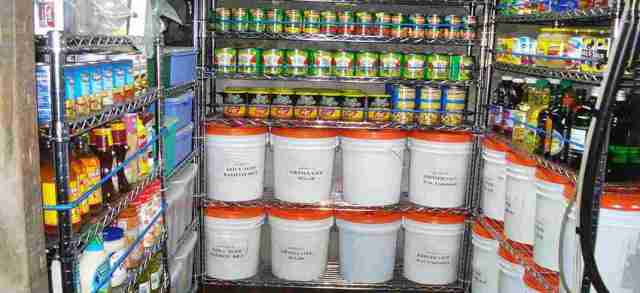
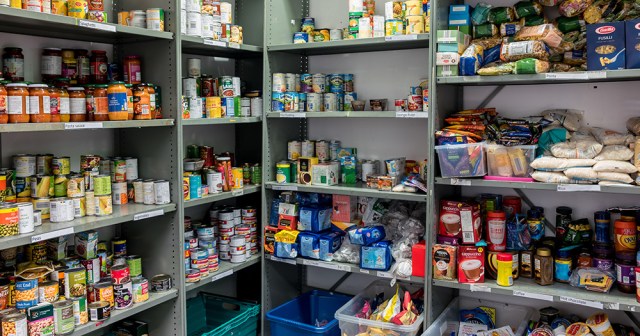
ROTHERHAM, ENGLAND, UK – FEBRUARY 14, 2019: Storage shelves in a Trussell Trust local church food bank warehouse showing a variety of tins and store cupboard essentials ready for food parcels
Brooke keeps:
Hard wheat
White rice
Pinto beans
Lentils
Rolled oats
Salt and baking essentials
Stored in:
Mylar bags
Oxygen absorbers
Food-grade buckets
“In prairie states, storms can shut down supply lines fast. Independence is built before the blizzard.”
🌾 Why Survival Gardening in South Dakota Matters
Brooke breaks it down clearly:
Harsh winters limit fresh food availability.
Rural communities often have long drives to grocery stores.
Severe weather can interrupt transportation.
Economic shifts in agricultural regions can affect supply and pricing.
Self-reliance culture is strong — and necessary.
“In South Dakota, preparedness isn’t paranoia. It’s heritage.”
🌤️ Brooke’s Final Take on South Dakota Survival Gardens
“Know your zone. Study your frost dates. Build wind protection early. Grow calorie-dense crops. Preserve aggressively.
And most importantly — don’t wait for a crisis to practice.
Preparedness is a lifestyle, not a reaction.
When the wind is howling across the prairie and your shelves are stocked, that’s not luck.
West Virginia Survival Blueprint Presented by 2025 Survivalist of the Year: Brooke Homestead
West Virginia is a state of rugged mountains, deep valleys, and unpredictable weather. From cold winters and late frosts to humid summers and heavy rainfall, the Mountain State demands strategic survival gardening and smart food storage. Brooke Homestead, 2025 Female Survivalist of the Year, knows how to thrive in this terrain and has perfected the art of resilient homesteading.
(Brooke Homestead EXPOSES Her Family’s Trump Obsession in the Video Below)
Below is her West Virginia-focused survival gardening and food storage strategy — practical, tested, and designed for mountainous, high-humidity conditions.
🌱 Brooke Homestead Introduces Herself
“Hey friends — Brooke here.
West Virginia is beautiful, but it will test your patience and your planning. I’ve learned that the valleys trap frost longer than you expect, while mountainsides can be scorched by wind and sun. And summer humidity? It will teach you humility fast.
The first time I gardened here, I planted too early in a low valley and lost half my crops to a late frost. I realized quickly: West Virginia isn’t just about what you grow, it’s about where, when, and how you grow it.”
Brooke’s Survival Gardening Strategy for West Virginia
West Virginia has roughly 150–180 frost-free days depending on elevation. Temperature swings, humidity, and soil variability require a strategic approach.
Choose Resilient, High-Yield Crops
Brooke focuses on crops that handle humidity, frost, and variable terrain:
Kale and collard greens
Spinach (heat-tolerant varieties for summer)
Tomatoes (disease-resistant types)
Peppers
Carrots
Beets
Onions
Cabbage
Short-season squash
“These crops can survive the mountain microclimates and store well for winter use.”
“When I hit the water, panic tried to take over. But panic burns energy. Energy is currency.
Step one: I secured elevation. I climbed above flood lines and assessed my surroundings. I located shade, then water access.
Step two: Water filtration. I used fabric layers from my clothing as primitive filtration, then boiled water in a makeshift rock basin using heated stones. It wasn’t pretty — but it worked.
Step three: Shelter. The canyon temperature swings are brutal. Daytime heat can exceed 100°F; nighttime can drop dramatically. I built a rock-backed windbreak and used layered debris insulation.
Step four: Food. I rationed energy instead of chasing calories. Foraging selectively — cactus fruit, edible plants I positively identified — but I didn’t overexert.
Step five: Signal strategy. I built three large rock markers in triangular formation — universal distress symbol. I positioned reflective materials to catch light.
The key lesson? Slow down. Think before moving. Most survival situations collapse because people act emotionally.
For Utah specifically: desert regions, canyons, and high elevations demand respect. Carry water. Study terrain. Never underestimate flash flood potential.
But if the worst happens? Stay methodical. Stay calm. Survival is just problem-solving under pressure.”
Brooke emerged dehydrated, sunburned, but stable — located after aerial search teams spotted her rock signal formation.
Preparedness saved her life.
Brooke Spills the Tea on Her Utah Survival Garden Secrets
After surviving seven days in the wilderness near the Grand Canyon, Brooke didn’t just become a wilderness icon. She doubled down on something less flashy — but more powerful:
Sustainable food systems designed for harsh climates.
Utah presents a unique prepper equation:
High elevation
Shorter growing seasons
Hot, dry summers
Cold winters
Alkaline soil in many regions
Most gardeners fail because they garden emotionally.
Utah gardening isn’t cute. It’s tactical. If you can grow food here, you can grow food almost anywhere.
Utah teaches discipline.
1. Know Your Microclimate
“Utah ranges from USDA zones 4 to 8 depending on elevation. A garden in Salt Lake Valley is different from one in the mountains near Park City.
Track frost dates. Not just average frost dates — track your actual last and first frost over multiple seasons.
And always assume one surprise frost.”
2. Focus on Cold-Hardy, Calorie-Dense Crops
“If you’re prepping for resilience, don’t waste half your garden on decorative produce.
Grow:
Potatoes
Carrots
Beets
Onions
Winter squash
Dry beans
Hard red wheat (Utah grows excellent wheat)
Leafy greens are great — but calories matter.”
3. Soil Is Everything in Utah
“Utah soil often trends alkaline and compacted.
Add:
Compost (heavy amounts)
Aged manure
Mulch layers to retain moisture
Sulfur amendments if needed for pH balance
Healthy soil reduces water needs by up to 30%.”
4. Water Discipline
“Utah summers are dry. Evaporation is ruthless.
Use:
Drip irrigation
Deep watering early in the morning
Thick mulch barriers
Windbreak fencing
Shallow watering creates weak roots. Deep watering creates survival plants.”
5. Season Extension Is Mandatory
“Invest in:
Cold frames
Hoop houses
Row covers
In Utah, season extension can add 30–60 extra growing days. That’s the difference between fresh produce in October and food scarcity.”
6. Plant Perennials for Stability
“Raspberries. Apples. Apricots. Hardy herbs like thyme and sage.
Perennials reduce workload and provide long-term food security.”
Now let’s move to something most people neglect.
Brooke’s Best Food Storage Techniques for Utah
“Growing food is phase one. Keeping it edible through a Utah winter? That’s phase two.”
Utah’s dry climate is actually an advantage — if you store properly.
1. Root Cellaring (Utah Advantage)
“Utah’s cool winters are ideal for root storage.
Store in a basement or insulated cellar:
Potatoes (38–40°F, dark environment)
Carrots packed in sand
Beets in sawdust
Onions in mesh bags with airflow
Keep humidity around 85–95% for root crops.”
2. Dehydration (Perfect for Utah’s Dry Air)
“Utah’s low humidity makes dehydration incredibly efficient.
Dehydrate:
Apples
Zucchini
Tomatoes
Herbs
Cooked beans
Store in vacuum-sealed bags with oxygen absorbers.”
3. Pressure Canning for High-Protein Stability
“Water bath canning is fine for acidic foods.
But if you want real preparedness:
Pressure can meats
Pressure can beans
Pressure can soups
Protein storage equals resilience.”
4. Wheat & Dry Goods Storage
“Utah is wheat country. Store hard red wheat berries in:
Mylar bags
5-gallon food-grade buckets
Oxygen absorbers inside
Properly sealed, wheat lasts 20–30 years.
Add:
Rice
Lentils
Rolled oats
Build a rotating pantry. Never store what you don’t eat.”
5. Freeze-Resistant Storage Strategy
“Utah garages can freeze solid in winter. Don’t store liquids there.
Freezing can:
Break jars
Ruin canned goods
Destroy emulsified foods
Use insulated storage rooms.”
6. Inventory & Rotation System
“Preparedness without inventory tracking is hoarding.
Label everything. Date everything. Rotate every 6–12 months for canned goods.
Eat what you store. Store what you eat.”
Best Survival Garden Vegetables to Grow in Utah
Utah’s climate presents unique challenges for survival gardening. With high elevation, low humidity, hot summers, cold winters, and a shorter growing season in many areas, gardeners must prioritize cold-hardy, fast-maturing, and drought-tolerant crops.
Potatoes are one of the best survival vegetables for Utah. They tolerate cool spring temperatures, produce calorie-dense harvests, and store well for months in a cool, dark place.
Carrots and beets thrive in Utah’s cooler spring and fall seasons. Root vegetables handle light frosts and provide reliable nutrition. They also store well when properly cured.
Dry beans, particularly bush varieties, grow well during Utah’s warm summers. Beans are protein-rich, improve soil health, and store long-term once dried.
Winter squash, such as butternut and Hubbard, perform well in Utah’s hot summer days. When cured properly, they can last through winter without refrigeration.
Kale and spinach are ideal for Utah’s cooler temperatures. These leafy greens can handle frost and often produce better in spring and fall than in peak summer heat.
Onions and garlic are excellent survival staples. Utah’s dry summers help cure bulbs naturally, extending their storage life.
Peas are well-suited to Utah’s cool springs and can be planted early. They mature quickly and provide both fresh food and seeds for drying.
With proper planning—using season extension methods like row covers and cold frames—Utah gardeners can build a dependable survival vegetable garden capable of feeding a family through changing seasons.
Best Survival Garden Fruits to Grow in Utah
Utah’s high elevation and cold winters require hardy fruit varieties that can withstand frost and temperature swings. The key to a successful survival fruit garden in Utah is selecting cold-hardy, drought-tolerant, and reliable producers.
Apple trees are one of the most dependable fruit choices in Utah. Many cold-hardy varieties thrive in the state’s climate and produce abundant fall harvests that store well for months.
Peach trees, especially hardy cultivars, perform well in many parts of Utah. They require winter chill hours, which Utah provides naturally, and yield sweet summer fruit ideal for canning.
Cherry trees, both sweet and tart varieties, grow successfully in Utah’s dry climate. Tart cherries are especially reliable and excellent for preserving.
Apricots are well adapted to Utah’s conditions, although late spring frosts can affect blooms. When protected, they produce flavorful early-summer harvests.
Grapes, particularly cold-hardy and table varieties, thrive in Utah’s sunny summers and low humidity. They can be eaten fresh, dried into raisins, or juiced.
Raspberries and blackberries grow well with irrigation and provide high-yield summer fruit. They are perennial and relatively low maintenance once established.
For smaller spaces, strawberries are cold-hardy and productive, offering reliable early-season fruit.
By focusing on frost-hardy fruit trees and perennials suited to dry climates, Utah gardeners can establish a long-term survival orchard that produces dependable harvests year after year.
In any long-term survival strategy, food security is not optional—it’s foundational. While stockpiling freeze-dried meals and canned goods has its place, true independence comes from the ability to grow food year after year without relying on external supply chains. That’s where heirloom tomato seed saving becomes a critical skill.
As a survival prepper, I don’t view seed saving as a hobby. I treat it as insurance. Heirloom tomato seeds, when properly saved, can remain viable for years and provide a renewable food source no matter what disruptions come down the line. Unlike hybrid seeds, heirloom varieties grow true to type, meaning the seeds you save will reliably produce the same plant next season.
This guide walks you through the entire process of saving heirloom tomato seeds—from selecting the right fruit to long-term storage—using methods proven by gardeners and survivalists alike.
Why Heirloom Tomato Seeds Matter in Survival Planning
Heirloom tomatoes are open-pollinated varieties that have been passed down for generations. In a preparedness context, they offer several advantages:
Adaptation: Over time, your saved seeds adapt to your local climate.
Barter value: Seeds are lightweight, compact, and valuable trade items.
Food resilience: Tomatoes provide calories, vitamins, and preservation options.
In a grid-down or supply-chain collapse scenario, the ability to reproduce your own food becomes priceless. Saving heirloom tomato seeds is a low-cost, high-return investment in resilience.
Step One: Choose the Right Tomato for Seed Saving
Seed quality starts in the garden. Don’t save seeds from weak or diseased plants. Survival gardening demands selectivity.
What to Look For
Choose tomatoes that are:
Fully ripe (overripe is better)
From the healthiest plant in your garden
Free from disease, cracking, or pest damage
Representative of the variety’s best traits
If you’re serious about seed security, consider dedicating specific plants strictly for seed saving. These plants should receive optimal care and isolation if possible.
Step Two: Understand Tomato Seed Fermentation
Tomato seeds are naturally encased in a gel that contains germination inhibitors. In nature, this gel breaks down through fermentation as the fruit rots. To save seeds properly, we replicate this process under controlled conditions.
Fermentation is not optional. Skipping it reduces seed viability and increases the risk of disease transmission.
Step Three: Extracting the Seeds
Tools You’ll Need
A ripe heirloom tomato
A clean knife
A spoon
A glass jar or cup
Water
Paper towel or coffee filter
Permanent marker
Extraction Process
Slice the tomato across its equator.
Scoop the seed pulp into a clean jar.
Add a small amount of water—just enough to cover the pulp.
Label the container with the tomato variety and date.
At this point, the mixture should look unappealing. That’s normal. In survival work, comfort takes a back seat to results.
Step Four: Fermentation (The Critical Stage)
Place the jar in a warm area out of direct sunlight. Ideal temperatures range between 70–85°F.
What to Expect
Fermentation lasts 2–5 days.
A mold layer may form on top—this is normal.
Seeds that sink are viable; floating seeds are usually not.
Stir the mixture once daily. When the gel surrounding the seeds has dissolved and fermentation odor is noticeable, it’s time to move on.
Do not exceed five days. Over-fermentation can damage seeds.
Step Five: Cleaning the Seeds
Once fermentation is complete:
Add more water to the jar.
Stir vigorously.
Pour off floating debris and bad seeds.
Repeat until the water runs clear and only clean seeds remain at the bottom.
This step ensures you’re storing only viable seeds—critical when every planting cycle matters.
Step Six: Drying the Seeds Properly
Improper drying is one of the most common reasons seed stock fails.
Drying Method
Spread seeds in a single layer on a paper plate, coffee filter, or fine mesh screen.
Avoid paper towels; seeds stick to fibers.
Place in a warm, dry, well-ventilated area out of direct sunlight.
Stir seeds daily to prevent clumping.
Drying typically takes 7–14 days. Seeds should snap rather than bend when fully dry.
Do not rush this step. Moisture is the enemy of long-term storage.
Step Seven: Long-Term Storage for Survival Readiness
Once seeds are completely dry, storage determines how long they remain viable.
Best Storage Conditions
Cool: Ideally below 50°F
Dark: Light degrades seed quality
Dry: Humidity kills seeds faster than age
Recommended Containers
Paper envelopes (short-term)
Glass jars with silica gel packets
Vacuum-sealed Mylar bags
Ammo cans with desiccants for extreme preparedness
Label everything clearly:
Tomato variety
Year harvested
Any notes on plant performance
Properly stored heirloom tomato seeds can remain viable for 5–10 years, sometimes longer.
Tomatoes are mostly self-pollinating, but cross-pollination can occur. If you’re saving multiple varieties and want genetic purity:
Space varieties at least 10–20 feet apart
Use physical barriers like mesh bags over flowers
Save seeds from isolated plants
In a survival garden, consistency matters. You want to know exactly what you’re planting.
Testing Seed Viability Before You Need Them
Never assume stored seeds are good. Test them annually.
Simple Germination Test
Place 10 seeds between damp paper towels.
Seal in a plastic bag.
Keep warm for 7–10 days.
Count how many sprout.
If fewer than 70% germinate, it’s time to grow fresh seed stock.
Heirloom Tomato Seeds as a Survival Asset
In preparedness circles, we often talk about “skills that compound.” Seed saving is one of them. Each growing season increases your food security, your independence, and your ability to help others.
In a long-term emergency, seeds become currency. Knowledge becomes leverage. And those who planned ahead don’t just survive—they rebuild.
Saving heirloom tomato seeds isn’t complicated, but it does require discipline. Treat your seed stock like any other survival asset: protect it, document it, and refresh it regularly.
When supply chains fail and store shelves empty, a small envelope of seeds can mean the difference between scarcity and sustainability.
Final Thoughts from a Prepper’s Perspective
Preparedness isn’t about fear—it’s about responsibility. Saving heirloom tomato seeds is one of the simplest, most effective ways to take control of your food future.
Start now. Practice every season. Pass the knowledge on.
Because when things go wrong, the people who planned ahead don’t panic—they plant.
If you’re banking on your survival garden to save your life when the world finally collapses under its own stupidity—well, I’ll tell you right now, you’re already behind. And if you’re like most clueless optimists strolling around pretending everything’s fine, you probably assume that seeds magically sprout into food because that’s what they showed in kindergarten. Spoiler: they don’t. Seed germination is the first, brutal test of whether you’ll eat in a crisis or starve beside the raised beds you so proudly posted on social media.
You want the cold, infuriating truth? Most people fail at seed germination, and they fail hard. Not because it’s difficult, but because nature doesn’t care about your survival fantasies. Seeds germinate when conditions are right, not when society crumbles, not when you panic, and definitely not when you suddenly decide to “live off the land.” The seeds don’t care about your timeline. They respond only to reality—and reality is rarely on your side.
Why Germination Even Matters (As If Anyone Thinks Ahead)
You can stock all the canned food you want, but when things get ugly—and they will—your shelf-stable comfort zone will run out. Seeds are supposed to be your renewable lifeline. But seeds are only useful if they sprout. And if they don’t? Congratulations, you’re just a starving hoarder with fancy paper packets.
Food security starts at the moment that seed decides it’s safe enough to wake up. Moisture, warmth, oxygen—those are the essentials. But if you get even one variable wrong, your seeds either rot, stall, or shrivel up like everything else in this collapsing world.
This is why survivalists who rely purely on seed storage are fooling themselves. Stored seeds are potential. Germinated seeds are food. And the process between those two states is where the entire operation can fall apart.
The Seeds Themselves: Heirloom or Bust
I shouldn’t even have to explain this anymore, but apparently I do. If you’re still buying genetically mutated, chemically dependent, corporate-owned hybrid trash seeds, then you deserve whatever failure you get. For survival gardening, you go heirloom or you go hungry.
Heirloom seeds are stable, open-pollinated, and most importantly, they reproduce reliably, which is more than I can say for most modern humans. They also germinate more predictably when stored correctly, which brings me to the next infuriating topic.
Storage: The Thing Nobody Takes Seriously
You’d think people preparing for food shortages would understand that seeds are alive. But no—half the “preppers” I meet store their seeds in hot garages, humid sheds, or worse… their kitchens. Seed viability plummets with heat and moisture. If you wouldn’t store antibiotics or gunpowder in a certain place, don’t store seeds there either.
Here’s what seeds need if you want them to germinate when your life depends on it:
Cool temperatures (ideally 40–50°F)
Dry conditions (low humidity is critical)
Dark storage (light triggers degradation over time)
Vacuum sealing helps. Mylar helps. Desiccant packs help. But you know what doesn’t help? Wishful thinking. Seeds don’t care about your nostalgia for “simpler times.” Without proper storage, they lose viability every single year. And once viability drops, germination becomes a gamble—one you probably can’t afford to lose.
Germination Medium: Not All Dirt Is Created Equal
The soil in your backyard is good for burying your hopes, not for germinating seeds. Real seed starting requires a sterile, lightweight, fine-textured medium. Something like seed-starting mix or sifted compost mixed with perlite.
If your soil is:
too dense
too cold
too compacted
too wet
too alkaline
too acidic
…your seeds either rot or never sprout. That’s the reality. Germination requires a perfect environment, and no, nature will not bend the rules just because the grid went down.
Water: The Line Between Life and Rot
Here’s a concept that seems to baffle people: seeds need moisture, not a swamp. Overwater and you drown them. Underwater and they dry out. You need consistent moisture, which means checking them daily—something most people fail to do even when civilization is functioning.
The best methods for survival germination include:
Bottom watering (wicking moisture upward without drowning the seed)
Misting (light sprays prevent disturbance of delicate seeds)
Humidity domes (temporary—not permanent—covers to keep moisture levels steady)
But most folks either ignore these rules or rely on instinct, which usually means killing the seed before it ever sees daylight.
Temperature: The Most Ignored Factor in Germination
Seeds are picky. Each plant species has a specific germination temperature range. Most vegetables want soil temps between 65 and 85°F. Try starting seeds in a cold room during early spring and you’ll wait three weeks only to watch mold grow instead of sprouts.
When the world is falling apart, you can’t rely on luxury items like heat mats—so learn right now how to improvise thermal environments:
Use compost piles as heat sources.
Germinate seeds indoors against insulated south-facing walls.
Start seeds in cold frames that trap daytime heat.
If you ignore temperature, your seeds will ignore you.
Light: Not Needed for Germination… But Required Immediately After
Yes, seeds germinate in darkness. No, they do not grow in darkness. The moment they sprout, they require strong light or they become pale, leggy, weak, and useless—much like society.
If you can’t supply adequate sunlight or artificial light after germination, then why bother germinating them at all?
Pre-Soaking and Scarification: Tricks for Stubborn Seeds
Some seeds are built like the world we live in: hard, resistant, and uncooperative. Beans, peas, squash, and certain herbs sprout faster and more reliably when pre-soaked for 6–12 hours. Others need scarification—light sanding or nicking of the seed coat.
If you don’t take the time to learn these techniques now, you’ll waste precious seeds later. And yes, this makes me angry, because this is survival 101, yet countless preppers still ignore it.
Testing Viability Before the Collapse Forces You To
This one really gets me. Seeds are not immortal, but people treat them like ancient treasure that magically springs to life when needed. Test your seeds every year, before the crisis hits.
A simple viability test:
Take 10 seeds.
Lay them on a damp paper towel.
Roll it up and seal it inside a bag.
Check after the standard germination period.
If only 4 of 10 sprout, that’s 40% viability. Plan accordingly. Plant extra—or replace the batch. But don’t wait until disaster strikes to find out your seeds died years ago.
The Harsh Reality: Germination Is Survival
When everything collapses—supply chains, power grids, trust in institutions—you will be left with whatever food you can grow. And that food begins with seed germination. No sprouting seeds means no garden. No garden means no calories. No calories means you become another statistic in humanity’s long list of unprepared fools.
If you want to survive, you need to master germination now, while the world is still barely functioning. Because once chaos hits full stride, your seeds won’t care. They will obey only nature—never you.
Massachusetts Homestead Lifestyle: A Love Letter to the Land… and the Ladies
Now listen here, darlin’. I ain’t your average fella. I’m a homesteader, born with one foot in the dirt and the other tapping to the rhythm of a rooster’s crow. Out here in Massachusetts, where the winters nip harder than a jealous woman and the summers flirt like a barn cat in heat, life ain’t always easy—but it sure as heck is worth it. And if you’re a fine, capable woman who doesn’t mind getting a little mud on her boots and some calluses on her palms, well… let’s just say I’m listenin’.
The homestead lifestyle in the Bay State is a rugged love affair. The kind where you wrestle with frozen pipes in the morning and sing to your tomatoes by sundown. And baby, I’m looking for someone who’s as good with a pitchfork as she is with a sourdough starter.
Let me tell you about life on the land—and the skills that keep it all spinning like a weathered windmill in a Nor’easter.
15 Essential Homestead Skills (And the Kind of Lady Who Gets My Heart Pumpin’)
Canning and Preserving Whether it’s peaches, pickles, or that fire-roasted salsa I can’t stop spoonin’ straight from the jar, preservation is key. A woman who knows her way around a Mason jar? Marry me now.
Animal Husbandry Chickens, goats, rabbits, and maybe a Jersey cow named Dolly. You feed ’em, love ’em, and sometimes—you butcher ’em. It’s hard work, but nothing’s sexier than a woman in muck boots holding a feed bucket like a queen.
Gardening (Zone 5 Style) Here in Massachusetts, the growing season’s short, but sweet. Raised beds, crop rotation, and a cold frame or two will keep you in kale and carrots long past Halloween.
Composting It’s not glamorous, but turning scraps to soil is like turning sweat into gold. And if you don’t mind the stink, baby, you’ve got my heart.
Beekeeping Sweet honey, buzzing bees, and the gentle hum of pollination. It takes guts to work the hive. Protective veil optional if you’re bold enough. I like bold.
Firewood Chopping & Splitting The winters out here will chew you up and spit you out if your woodpile ain’t high. I’ll swing the axe, but I wouldn’t say no to a partner who can stack it better than me.
Breadmaking from Scratch Nothing smells like home like a warm loaf fresh outta the oven. Bonus points if you grind your own wheat or keep a sourdough starter named “Gertrude.”
Making Herbal Remedies From elderberry syrup to comfrey salves, you’ll be the medicine woman of my dreams. Rub that balm on my sore muscles, will ya?
DIY Building & Carpentry Chicken coop falling apart? Need a new shed? A woman who knows her way around a circular saw is worth more than gold—she’s marriage material.
Maple Sugaring Come February, we tap trees like it’s a sacred ritual. Boil down that sap, bottle it, and pour it over pancakes… or each other. I’m flexible.
Sewing and Mending Tear a flannel on the fence? Patch it up, baby. Nothing turns me on like a gal with a needle and thread and a no-nonsense attitude.
Homestead Budgeting Keeping books tighter than a mason jar seal in a boiling water bath. Save the pennies for seeds, feed, and fencing. Sexy and smart? Yes, please.
Water Management (Rainwater Catchment) Those barrels by the barn aren’t just decoration. If you can plumb a downspout and filter greywater, you’ve got brains and beauty.
Cooking Over Fire Dutch ovens, cast iron, smoke, and spice. You serve up venison stew and cornbread under the stars, I’ll light every bonfire in your honor.
Winter Preparation & Survival From blackout readiness to emergency stockpiling, it’s a whole operation. You think ahead, you prep, and you protect your own. That’s the kind of woman I’d go snowshoeing through a blizzard to find.
3 DIY Homestead Hacks (That’ll Make Life in Massachusetts Just a Bit Easier)
Hack #1: Trash Can Root Cellar Can’t dig deep in this rocky Massachusetts soil? Bury a couple of metal trash cans with tight lids in a shady spot. Line them with straw and store your carrots, parsnips, and turnips through the winter. Keeps ’em fresh and crisp without a pricey cellar build.
Hack #2: Pallet Wood Firewood Rack Massachusetts winters chew through firewood like a woodstove in January. Grab a couple of old pallets, screw ’em into an A-frame, and keep your logs stacked, dry, and off the muddy ground. Bonus: Costs next to nothin’.
Hack #3: Solar Dehydrator from a Storm Window Take an old storm window, angle it toward the sun, and build a box frame with mesh shelves. You’ll be drying herbs, fruits, and even jerky with the power of the sun and the smug satisfaction of off-grid living.
Now, you might be asking, “Why homestead in Massachusetts?” I’ll tell you why.
This state’s got grit. We’ve got harsh winters that build character, hot summers that teach patience, and autumns that make your heart ache from all the beauty. It’s also a place where the past and future dance in harmony—history meets innovation on every old stone wall.
Land ain’t cheap, but there’s still fertile spots tucked away in the hilltowns of western Mass, the pine barrens of the southeast, and even off-the-grid hideouts in the Berkshires. Plus, if you play your cards right, there are grants for small farmers, local co-ops, and a tight-knit community that’s quick to share knowledge and lend a hand.
Looking for a Homestead Honey
Now, I ain’t just talking dirt and chores here. I’m talking love. Partnership. A future built from scratch. If you’re a woman who knows how to butcher a chicken by noon and sip dandelion wine on the porch by dusk, I’m your man.
Let’s raise goats, ferment kraut, and make our own soap. Let’s battle deer in the garden, dance barefoot under the full moon, and wake up to the sound of roosters and not an alarm clock.
I’ll stoke the fire. You roll the dough. We’ll split the chores and kiss in the pantry when no one’s lookin’. Sound good?
So here’s to the wild, romantic, damn-gritty Massachusetts homestead lifestyle. It ain’t for the faint of heart—but if you’re a woman with strength in your hands and softness in your heart, come on over. The porch light’s always on, the sourdough’s rising, and this homesteader’s heart is hungry—for harvest, and maybe… for you.





























 TheDailyChristian