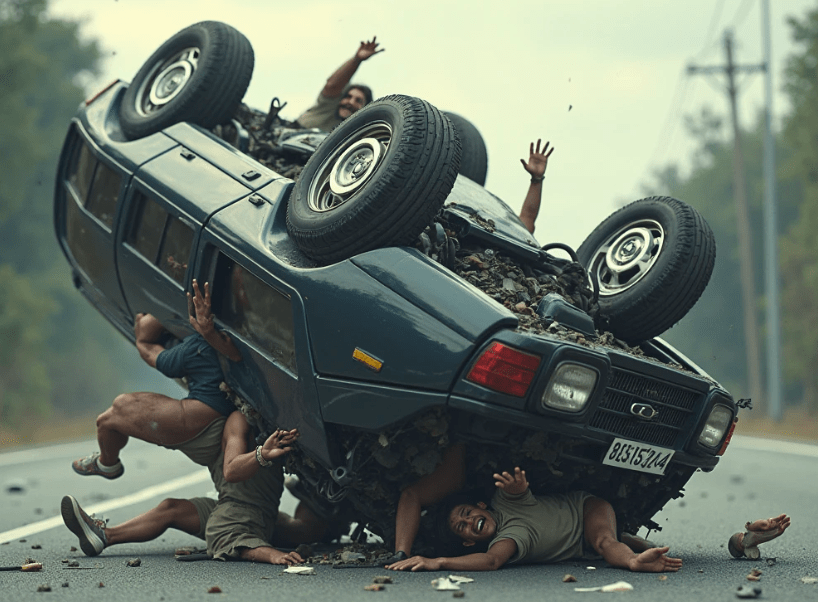
Kentucky’s Worst Roads to Drive on During a Disaster

Kentucky’s Worst Roads to Drive on During a Disaster – A Survivalist’s Guide Behind the Wheel

When you’re out there chasing the horizon or trying to outrun a storm, road knowledge can mean the difference between getting home and getting stuck. I’ve driven through hurricanes in Louisiana, blizzards in Montana, and flash floods in Arizona—but Kentucky’s terrain? It’s a whole different beast when disaster strikes. Steep hollers, crumbling coal roads, dense forest routes, and low-lying flood zones make for a recipe that’ll test the mettle of even the most seasoned driver.

If you’re reading this, you’re likely someone who doesn’t want to wait for FEMA or the county sheriff to come save your hide. You want to know how to drive your way out of the fire—literally and figuratively. And I’m here to make sure you can.

Let’s start with the roads you should know to avoid—or at the very least, approach with extreme caution when the world goes sideways.


Kentucky’s Worst Roads to Drive on During a Disaster

1. KY-66 (Bell County): Twists tighter than a coiled copperhead and flanked by rockslide-prone hills. In a storm, it’s just a serpentine death trap.

2. US-119 (Harlan to Pikeville): A coal country mainline that turns treacherous with even a light rain. Landslides, black ice, and fog make this a no-go during emergencies.

3. KY-15 (Breathitt and Perry Counties): If flooding is the game, this road plays it better than most. Overflow from nearby rivers submerges it faster than a flat-bottom boat can float.

4. KY-192 (Daniel Boone National Forest): Deep woods, no cell signal, and slick as owl snot when it rains. You break down here? You’re your own cavalry.

5. KY-80 (Pulaski County): A high-traffic stretch with poor drainage and deadly curves. In a crisis, it becomes a metal graveyard.

6. The Mountain Parkway (Slade to Salyersville): When the wind kicks up or snow sets in, this becomes a chute to nowhere. I once saw six vehicles slide off in one mile—ice like glass.

7. KY-899 (Floyd County): Steep grades, narrow shoulders, and patchy maintenance mean you’re one wrong move from a thousand-foot roll.

8. US-421 (Jackson County): Earthquakes might not be common in Kentucky, but landslides and flooding sure are. 421 is vulnerable to both.

9. KY-30 (Owsley and Jackson Counties): This road loves to crack and crumble under pressure. I’ve seen potholes swallow axles after a flood.

10. The Hal Rogers Parkway: Also known as the “Hal Ditch Parkway” among old-timers. Washouts, rockfalls, and poor visibility make it more trap than trail during a disaster.


15 Survival Driving Skills That Could Save Your Life

  1. Driving Without GPS: Learn to read paper maps. Don’t rely on satellites when the grid goes down.
  2. Situational Awareness: Keep your head on a swivel. Watch the sky, the road, the terrain—and always have two escape routes in mind.
  3. Reading Terrain: Knowing when the land is about to slide, flood, or freeze gives you a head start no app can offer.
  4. Driving Without Headlights: In some cases, stealth matters. Practice moving low-speed and quiet using parking lights or none at all when needed.
  5. Water Crossing Techniques: Never cross fast-moving floodwaters. For shallow, slow-moving water, stay in the center of the road where it’s highest.
  6. Rockfall Avoidance: In mountainous areas, if you see small rocks, expect big ones. Don’t stop near slopes—move past quickly and watch uphill.
  7. Brake Feathering: Learn to keep traction on ice or gravel by lightly pumping the brakes instead of slamming them.
  8. Manual Car Push-Start (if applicable): If you drive a manual transmission, knowing how to roll-start your car is crucial when the battery dies.
  9. Using Momentum Wisely: Going up muddy or snowy hills requires momentum. Don’t stop halfway or you’re sunk.
  10. Defensive Aggression: Be calm but assertive. Disaster traffic brings out the worst in people—know when to stand your ground and when to yield.
  11. Using the Shoulder: Sometimes, the shoulder is the road. Know how to safely use it, especially if you need to bypass stalled traffic.
  12. Emergency U-turns and Reversing Under Pressure: Practice three-point and J-turns. You may need to back out fast with no margin for error.
  13. Night Navigation Without Lights: Learn how to move discreetly and navigate by moonlight or ambient light if stealth or safety requires it.
  14. Overcoming Off-Road Obstacles: Fallen trees, rocks, or even small washouts—know how to build ramps, stack traction, or use winches and tow straps.
  15. Car as Shelter: Your vehicle can be a temporary safe zone. Insulate windows, block wind, and conserve battery for warmth or signals.

3 DIY Survival Driving Hacks When You Run Out of Gas

1. Siphoning Fuel Safely
Old-school but effective. Carry a clear plastic hose, about 6 feet long, and a small container. Find an abandoned vehicle, insert the hose into the fuel tank (modern ones have anti-siphon devices, but some can be bypassed), create suction, and let gravity do the work. Warning: Avoid diesel if your engine runs on gas—unless you enjoy walking.

2. Homemade Fuel Additive Boost
If you’ve got just a cup or two of gas left, mix in a bit of rubbing alcohol or ethanol (not more than 10-15%) to stretch your supply. This is risky on modern engines, but in a pinch, it’ll get you another couple miles down the road.

3. Fire-for-Signal
If you’re truly stranded, don’t waste your last phone charge. Light a smoky fire using oil or rubber from an old tire to signal rescuers or passing vehicles. A thick black column of smoke still says “I need help” better than anything short of flares.


Final Words From the Road

Here’s the truth—most folks don’t make it because they froze when the time came to move. They hesitated, trusted a GPS or waited for help that never came. Kentucky’s got hills that fall, rivers that rise, and a winter wind that cuts bone-deep. If you’re planning to survive a disaster here, you need to know your vehicle, know your roads, and most of all—know yourself.

I always say: “Don’t drive faster than your guardian angel can fly—but don’t you dare stop when hell’s on your heels.” Keep your tank full, your gear packed, and your wits sharp.

This ain’t just driving—it’s survival.


Montana’s Worst Roads to Drive on During a Disaster

Montana’s Worst Roads to Drive on During a Disaster: Lessons from a Well-Traveled Survivalist

I’ve driven through nearly every rugged corner of the continental United States, from Arizona’s sunbaked deserts to Alaska’s icebound highways. But when it comes to raw, untamed terrain—and unpredictable weather—Montana takes a special kind of grit. Under normal conditions, Big Sky Country already challenges most drivers. Add a disaster scenario, and you’ve got yourself a real test of survival skills.

Whether it’s a wildfire racing down a valley, a blizzard burying entire routes, or infrastructure collapse from earthquakes or floods, your vehicle becomes your lifeline. Knowing how—and where—to drive during a crisis in Montana is the kind of knowledge that can mean the difference between escape and entrapment.

Let me take you through Montana’s worst roads during a disaster, then arm you with 15 critical survival driving skills and 3 DIY hacks for when you’ve run out of gas, but not out of options.


The Worst Montana Roads to Drive on During a Disaster

  1. Beartooth Highway (US-212)
    Beautiful? Yes. Deadly in a disaster? Absolutely. This high-altitude road climbs over 10,000 feet, with steep switchbacks and few guardrails. In a snowstorm or wildfire, it’s a death trap. Rockslides and zero visibility make it one of the first roads to avoid.
  2. Going-to-the-Sun Road (Glacier National Park)
    Spectacular views, but it hugs cliff edges like a drunken mountain goat. It’s often closed by landslides or snow, and it’s far too narrow for panicked evacuations. In any kind of emergency, steer clear.
  3. Montana Highway 200
    This is the state’s longest road, stretching over 700 miles through isolated terrain. Flooding, forest fires, or infrastructure failure out here could strand you hours from help. Not a place to get caught without a backup plan.
  4. I-90 Through Homestake Pass
    One of the busiest and most mountainous sections of I-90, this pass near Butte is treacherous in winter. Pileups, black ice, and poor visibility are common. During a mass evacuation, this would quickly bottleneck.
  5. MT-38 (Skalkaho Highway)
    This dirt-and-gravel back road over the Sapphire Mountains is gorgeous in summer but closed in winter. In an emergency, it can easily become impassable from downed trees or mudslides.
  6. US-93 Through the Bitterroot Valley
    Often the only north-south option in western Montana. In a regional disaster, this could become a traffic-clogged artery with few alternative routes.
  7. US-191 in the Gallatin Canyon
    Between Bozeman and West Yellowstone, this road runs alongside a river and between cliffs. Avalanches, falling rocks, and flooding are all hazards, especially in spring.
  8. Montana Highway 35 Around Flathead Lake
    This narrow, curvy route hugs the eastern edge of Flathead Lake. Accidents and landslides are common, and there are few escape routes.
  9. US-287 Between Three Forks and Helena
    Wind-swept plains and long, empty stretches. In a fuel shortage or snowstorm, you’re very exposed here.
  10. Pintler Scenic Route (MT-1)
    This detour from I-90 between Anaconda and Drummond winds through thick forests—prime wildfire country. It’s beautiful but risky in fire season with limited cell coverage and few exits.

15 Survival Driving Skills That Could Save Your Life in Montana

  1. Off-Road Navigation
    Know how to read a topographic map and drive without GPS. Trust me, satellites fail in disasters.
  2. Manual Transmission Mastery
    Stick-shift vehicles offer more control on slick, steep, or icy terrain.
  3. Engine Braking
    On Montana’s mountain roads, knowing how to downshift to slow down saves brakes and control.
  4. Water Crossing Techniques
    Learn how to assess depth and current before attempting to drive through floodwaters. Most vehicles float—and stall—after just 6 inches of water.
  5. Tire Patching on the Fly
    Sharp shale, debris, or fire-damaged roads can chew tires. Know how to plug a leak quickly.
  6. Understanding Your Drive System
    Know if you’ve got AWD, 4WD, or 2WD. Use it properly—or risk getting stuck.
  7. Fuel Efficiency Driving
    In a crisis, every drop counts. Ease off the gas, coast downhill, and avoid idling.
  8. Driving Without Headlights
    In certain disaster zones, stealth is key. Practice low-visibility or night-vision-compatible driving.
  9. Quick Egress Techniques
    Practice getting your vehicle turned around fast—without a 3-point turn.
  10. Emergency Repairs
    Jury-rigging a fan belt with paracord, fixing a coolant leak with epoxy—small tricks, big payoff.
  11. High-Centered Recovery
    Know how to get unstuck when you bottom out in deep ruts or snow.
  12. Defensive Maneuvering
    Avoid panicked drivers, animals, or debris. Quick reflexes and awareness save lives.
  13. Winch and Tow Strap Use
    Even a compact SUV can haul itself free with the right gear and technique.
  14. Driving in Whiteout Conditions
    Slow, steady, and watch for snowbanks. Follow reflective markers or natural road edges.
  15. Reading the Road Ahead
    From flash flood signs to frost heaves, learn to scan for danger like a hawk.

3 DIY Survival Driving Hacks When You’re Out of Gas

1. The Alcohol Trick
If you’ve stored isopropyl alcohol (91% or higher) or even certain spirits like Everclear in your survival kit, a small amount can be mixed with gas or used in portable alcohol-burning stoves for cooking—and very carefully, even to heat an engine block in winter. Don’t run your engine on it, but it can help warm components or clear fuel lines frozen in deep winter.

2. Gravity Siphon from Abandoned Vehicles
Carry a siphon pump and hose in your kit. In a grid-down disaster, siphoning fuel from other vehicles might be your only option. Choose trucks, RVs, or old farm vehicles—they’re less likely to be tamper-proof.

3. DIY Solar Still for Emergency Fuel
If you have small amounts of contaminated gas, a makeshift solar still using clear plastic sheeting, a container, and sunlight can help you distill usable vapors back into liquid. It’s slow, but when you’re desperate, it’s better than hoofing it 50 miles.


Final Word From the Road

Montana doesn’t mess around. Its breathtaking beauty hides real danger, and the state’s remoteness can turn minor problems into life-threatening crises fast. You can’t count on cell towers, gas stations, or AAA. What you can count on is your preparedness, your skills, and your attitude.

The old-timers and ranchers out here know the truth: if you don’t bring it, you won’t have it. If you don’t learn it, you can’t use it. Every time I set out into Montana’s backcountry—whether it’s for a weekend or to test a new bug-out route—I remind myself: Plan like everything will go wrong. Drive like your life depends on it. Because one day, it just might.

New Mexico’s Worst Roads to Drive on During a Disaster

New Mexico’s Worst Roads to Drive on During a Disaster – A Survivalist’s Guide

I’ve driven through hell and back—flood zones, wildfire-razed highways, sand-covered backroads, and snow-packed mountain passes that eat city sedans for breakfast. But no state has tested my survival driving like New Mexico. When disaster strikes—be it wildfire, blizzard, flash flood, or civil unrest—the Land of Enchantment can quickly turn into the Land of Entrapment if you don’t know how to drive your way out.

I’ve scouted, survived, and charted the most dangerous routes in New Mexico under pressure. If you find yourself behind the wheel during a crisis, these roads can become deathtraps—unless you’ve got the skill, grit, and the know-how to adapt on the fly.

Let’s break it down.


The 5 Worst Roads in New Mexico to Drive on During a Disaster

  1. U.S. Route 550 (Between Bernalillo and Bloomfield)
    Nicknamed “The Death Highway,” this stretch turns deadly during rain. Flash floods from surrounding mesas can submerge sections within minutes. Its isolated layout and sparse cell coverage make it a nightmare for evac routes.
  2. NM-152 (Emory Pass through the Black Range)
    During a wildfire or snowstorm, this winding mountain road becomes a gauntlet. With sheer drop-offs and narrow switchbacks, a single wrong move means a plunge into oblivion.
  3. I-40 Eastbound near Moriarty during Winter Storms
    Black ice is the hidden enemy here. In whiteout conditions, this wide interstate turns into a twisted wreckage pile-up waiting to happen.
  4. NM-128 (Jal to Carlsbad)
    Oil truck traffic dominates this narrow, two-lane highway. Add a chemical spill or sandstorm, and you’ve got one of the most claustrophobic and hostile drives in the state.
  5. NM-4 through Jemez Mountains
    Gorgeous during fall—lethal during forest fires. One road in, one road out. Get caught here with fire behind you, and you’re boxed in.

15 Survival Driving Skills for Disaster Scenarios

You can’t rely on GPS, cell towers, or good luck out here. What you need is practiced skill. Here are 15 survival driving techniques I’ve used more than once to keep rubber on road and soul intact:

  1. Throttle Control on Loose Terrain – Sand, snow, and mud all demand delicate gas pedal handling. Slam it, and you spin. Ease in, and you crawl your way to freedom.
  2. Handbrake Steering – Learn to use your e-brake to make sharp, controlled turns in tight quarters—like mountain passes or urban chaos.
  3. Situational Awareness Scanning – Always look beyond the car ahead. Watch terrain, smoke columns, animal behavior. Everything tells a story.
  4. Brake Feathering Downhill – Avoid overheating brakes on steep slopes. Pulse them instead of constant pressure.
  5. Reverse Navigation – Practice driving backwards in a straight line and around curves. Might save your life in a blocked canyon road.
  6. Underbody Clearance Assessment – Learn to eyeball what your car can straddle versus what’ll rip your oil pan off.
  7. Off-Road Tire Pressure Adjustment – Lower PSI to 18–22 for sand or snow traction. Bring a portable compressor to re-inflate later.
  8. Driving Without Headlights – Use parking lights or fogs if stealth is needed. Don’t silhouette yourself at night.
  9. River Crossing Techniques – Walk it first if you can’t see the bottom. Enter downstream at an angle and don’t stop moving.
  10. Using a Tow Strap Alone – Learn how to anchor and ratchet yourself out with trees, rocks, or even fence posts.
  11. Quick U-Turn Maneuvering – Know your car’s minimum turn radius in crisis—especially useful when you’re boxed in.
  12. Driving with Broken Windshield Visibility – Keep a squeegee and water bottle with vinegar. In sandstorms, it’s a godsend.
  13. Dealing with Road Rage or Looters – Never engage. Keep calm, move methodically. Use evasive turns into alleys, service roads, or dry washes.
  14. Mapping Your Exit Without Tech – Keep a paper topo map in your rig. Fold it. Annotate it. Love it. GPS dies, paper doesn’t.
  15. One-Handed Drive + Weapon Readiness – If you’re in a truly bad spot, practice steering with one hand while the other is…let’s just say, busy managing security.

3 DIY Survival Driving Hacks When You Run Out of Gas

So you’re in the middle of NM-128, out of gas, and the next station is 70 miles behind you—burnt down in the last wildfire. Here’s how to get creative:

1. Alcohol-based Emergency Fuel Substitute

If you’ve got access to high-proof spirits (think 151+ proof or denatured alcohol), you can use small amounts mixed with gas in carbureted engines (not modern fuel-injected). It’s dirty, short-term, and hard on the engine—but it’ll buy you a few desperate miles.

2. Siphon with a Paracord Tube

Most vehicles are siphon-proof now—but not all. Use paracord tubing (inner strands removed) to siphon fuel from abandoned ATVs, generators, or lawn equipment. Practice the siphon technique beforehand, because if you mess it up in the field, you’ll drink gas.

3. Solar Heat Vapor Trick (Emergency Only)

In blazing sun, fuel vapors build up in tanks. Create a pressure system using black tubing and a heat chamber (a black bag filled with water). Use it to push vapors into a sealed container and then directly into a small engine. This is very experimental and dangerous. Use at your own risk and only when every other option’s gone.


Final Thoughts from the Road

New Mexico’s beauty is raw, powerful, and absolutely unforgiving. I’ve seen RVs melt into the desert floor, pickups swept away in bone-dry riverbeds that turned to whitewater in ten minutes, and motorists freeze to death just outside Taos when their apps said “mostly cloudy.”

When disaster hits, the roads don’t care about your comfort—they care about your competence. The terrain will test your instincts, and the silence will test your mental game. But with skill, calm nerves, and a vehicle prepped for the fight, you can turn the tide.

Don’t be the person who trusted traffic apps during a solar flare, or the one who believed a rental sedan could “handle it just fine.” Be the one who drives out when others stall. Be the one who lives.

Now, pack extra fuel, top off your water, and learn your roads—not when you need them, but before.

Idaho’s Worst Roads to Drive on During a Disaster

Idaho’s Worst Roads to Drive on During a Disaster – And How to Survive Them

By: A Well-Traveled Survivalist

I’ve spent the better part of three decades navigating the world’s toughest terrains, from the Andes to the Australian Outback. But I’ll tell you what—Idaho can be just as brutal when things go south. Between its mountainous topography, narrow two-lanes that snake through canyons, and high desert dust bowls, the Gem State becomes downright hostile in a disaster. If you’re unprepared, these roads won’t just delay you—they’ll swallow you whole.

In a natural disaster—whether it’s a wildfire roaring through the Sawtooths, a sudden snowstorm dumping three feet overnight, or a 6.5-magnitude earthquake cracking the highways—the road becomes your greatest adversary. Knowing which roads to avoid and how to survive the drive out can make all the difference.

The Five Worst Roads in Idaho During a Disaster

1. Highway 75 (Sawtooth Scenic Byway)
This picturesque road turns deadly fast. Rockslides, falling trees, and limited escape routes through Stanley and over Galena Summit make this a nightmare in a wildfire or earthquake.

2. U.S. Route 95 through the Salmon River Canyon
This stretch north of Riggins hugs cliffs, with only a guardrail between you and a sheer drop to the river below. In winter or during a landslide, it’s impassable.

3. Idaho State Highway 21 (Ponderosa Pine Scenic Byway)
Beautiful? Yes. Reliable? Never. Known for avalanches and being cut off by snowstorms. In a disaster, this road becomes a one-way ticket to isolation.

4. Lolo Pass (U.S. 12)
Twisting through the Bitterroots, this route can be snowed in or blocked by fallen trees for days. Poor cell reception and little traffic means if you’re stranded, you’re on your own.

5. Interstate 84 near the Snake River Canyon
You’d think an interstate would be safe, but I-84 floods, suffers from black ice, and backs up quickly near Twin Falls. Gridlock here during a mass evacuation is guaranteed.


15 Survival Driving Skills That Can Save Your Life

Now, if you’re caught out on one of these hellish stretches when disaster strikes, you need more than just a full tank and good intentions. You need driving skills that’ll get you out alive.

1. Situational Awareness
Scan constantly—rearview, sides, road conditions, skies. Don’t focus on what’s directly in front of you alone.

2. Low-Visibility Driving
Dust storm? Blizzard? Learn to follow road edge lines, use fog lights (not high beams), and drive by feel—not speed.

3. Reverse Navigation
Sometimes, going backward is safer. Learn to backtrack efficiently through narrow paths or trails using your mirrors.

4. Braking Without Skidding
Practice controlled braking on loose gravel, snow, or wet pavement. ABS helps, but know how to pump manually if it fails.

5. Off-Road Handling
Get off the pavement and know how to drive through mud, sand, and rocky terrain without getting stuck or damaging your undercarriage.

6. Steep Incline Control
Climbing a mountain pass in bad weather requires gear control and throttle modulation. Don’t burn out your engine—or your nerves.

7. Controlled Descent
Descending steep grades with cargo or passengers? Use engine braking, low gears, and avoid riding your brakes.

8. Escape Turn Maneuvers
Practice J-turns, three-point turns in tight spaces, and u-turns on steep inclines. Sometimes the road ahead isn’t worth taking.

9. Tire Repair Under Pressure
Know how to plug a tire, swap a flat, or re-inflate using a portable air compressor. Keep a can of Fix-a-Flat for emergencies.

10. Engine Cooling Tricks
In a jam, turn on your heater to siphon heat from your engine. Puddle nearby? Splash water on the radiator grill.

11. Fuel Conservation Driving
Ease off the pedal. Use the highest gear possible at the lowest RPM to extend mileage. Coast downhill when safe.

12. Battery Smart Starts
If your car’s battery dies, know how to bump start a manual, or use solar chargers or power banks on an automatic.

13. Makeshift Winching
Strap + tree + physics. If stuck, use tow straps, tree trunks, and basic pulleys (even a jack) to free your ride.

14. Urban Evac Driving
Navigate traffic jams, shoulder lanes, sidewalks—whatever gets you out. Practice map reading when GPS fails.

15. Situational Vehicle Abandonment
Know when to walk. If your vehicle becomes a liability, stash gear, mark your location, and hoof it out.


3 DIY Survival Driving Hacks When You Run Out of Gas

Even seasoned preppers get caught empty. If you run out of gas miles from nowhere, here are three hacks that might just save your hide.

1. Alcohol-Based Fuel Substitute
If you’re carrying high-proof liquor or hand sanitizer (must be at least 70% alcohol), some small engines can be coaxed to run off diluted ethanol. It’s not good for your engine long-term, but in a disaster? It’ll get you a few miles.

2. Fuel Scavenging from Abandoned Vehicles
Always carry a siphon hose. Pop the gas cap off any disabled car or truck—especially older ones without anti-siphon mesh. Be discreet, and remember: desperation isn’t theft during collapse.

3. Solar-Powered Vehicle Charging
For hybrids and EVs, a solar panel array (foldable mats or a rooftop rig) paired with a battery bank can recharge you just enough for short-range escapes. Keep this in your bug-out kit if you’re relying on electric.


Final Thoughts

Disaster doesn’t come with a warning label. It sneaks in on ash clouds, hidden fault lines, and sudden cloudbursts. And Idaho’s geography doesn’t care if you’ve got kids in the back or groceries in the trunk.

Survival on the road starts long before you turn the key. It begins with understanding the terrain, mastering your vehicle, and preparing for failure. Your ride can be a lifeline—or a coffin—depending on your mindset.

Pack like it’s the last time you’ll see a gas station. Drive like every second counts. And for the love of grit, respect the road. Because out here, nature always plays for keeps.


Colorado’s Worst Roads to Drive on During a Disaster

Colorado’s Worst Roads to Drive on During a Disaster — and How to Survive Them

By someone who’s lived more out of a bug-out bag than most folks live in their own homes…

I’ve driven everything from the salt flats of Bolivia to the frozen mud tracks in Siberia. But there’s something uniquely challenging about Colorado’s roads—especially when the sky turns black, the cell towers go down, and panic is in the air. Beautiful as this state is, it’s got some of the worst roads to navigate in a crisis. Whether you’re dealing with wildfire, blizzard, flood, or mass evacuation, knowing which roads to avoid—and how to drive like your life depends on it—can make all the difference.

Let’s start with Colorado’s danger zones.


Top Colorado Roads to Avoid During a Disaster

  1. I-70 Through the Rockies (especially near Vail Pass and Eisenhower Tunnel)
    When the weather shifts, this artery becomes an icy death trap. Avalanches, blinding snow, or even mass pileups can shut it down within minutes. It’s steep, curvy, and often jammed.
  2. US-550 (The Million Dollar Highway)
    This stretch from Ouray to Silverton offers breathtaking views and terrifying cliff-edge driving. Zero guardrails. One mistake in snow, rain, or panic traffic, and you’re tumbling hundreds of feet.
  3. CO-93 Between Boulder and Golden
    Wind-prone and narrow, this road gets overwhelmed during wildfires or evacuations. The winds here can blow cars sideways.
  4. I-25 Between Colorado Springs and Denver
    Flat, yes—but completely paralyzed during emergencies. One disabled car and you’re gridlocked for hours. It’s also prime territory for sudden hailstorms and tornado threats.
  5. Trail Ridge Road in Rocky Mountain National Park
    When open, it’s the highest paved road in the U.S. But during a disaster, altitude sickness, unpredictable weather, and exposure make it a gamble not worth taking.
  6. CO-14 Through Poudre Canyon
    Flash floods love this area. Roads erode quickly, and landslides are common. Once blocked, help is miles away.
  7. Highway 36 to Estes Park
    Heavily trafficked by tourists, with limited escape routes. Wildfire or road collapse here turns the whole area into a trap.
  8. Wolf Creek Pass on US-160
    Fog, black ice, and steep grades make this one of the most lethal mountain passes. Tractor-trailers tip here regularly, even on good days.
  9. US-24 Near Leadville
    High elevation means thinner air, unpredictable storms, and increased vehicle stress. Don’t count on your engine loving this one under pressure.
  10. County Roads Near Durango and Telluride
    Scenic but narrow, many are unpaved with sheer drops and no shoulders. GPS often gets it wrong, too.

15 Survival Driving Skills That Could Save Your Life

When disaster hits and you’re behind the wheel, raw experience matters. Here are 15 survival driving skills that have kept me breathing:

  1. Off-Road Recovery
    Know how to rock your vehicle out of mud or snow without digging yourself deeper. Lower tire pressure, dig out clearance, and use floor mats for traction.
  2. Engine Braking on Steep Descents
    Don’t ride your brakes. Use low gear to control speed on declines, especially with heavy loads or towing.
  3. Driving Without GPS
    Memorize the terrain. Print maps. In a disaster, cell service and navigation apps will likely fail.
  4. Navigating Smoke or Fog
    Use low beams, avoid high beams which reflect back, and crack windows to listen for vehicles or danger.
  5. River and Flood Navigation
    Never cross a flooded road you can’t see the bottom of—but if you must, unbuckle, roll windows down, and go slow in low gear to avoid water entering your exhaust.
  6. Driving in Whiteout Conditions
    Stay within tire tracks if visible. Keep eyes on road edges. Slow down. No sudden moves.
  7. Pushing a Disabled Vehicle Alone
    Learn how to use gravity, terrain, or leverage tools like a Hi-Lift jack to move your car when solo.
  8. Handling Panic Traffic
    Avoid main arteries. Know side streets and utility roads. Timing is everything—leave early or don’t leave at all.
  9. Night Driving Without Headlights
    Practice it. Keep a red-light flashlight to preserve night vision. It’s sometimes needed in stealth scenarios.
  10. Hotwiring Older Vehicles (pre-2000s)
    Not for criminal use—but when SHTF, and your car dies, knowing how to jumpstart an old truck can save lives.
  11. Manual Navigation Using Topography
    Read the land. Ridges, valleys, river systems—all help you reorient when your compass is shot or you’re lost.
  12. Fuel Scavenging Etiquette
    Always keep a siphon kit. Know which vehicles have anti-siphon valves and how to work around them.
  13. Reading Vehicle Temp and Warning Signs
    Know when to stop. An overheating engine or failing brakes in the mountains = death sentence.
  14. Driving with One Tire Flat or Busted
    Yes, it’s ugly. But you can limp 2–5 miles if you have to. Cut speed, balance load.
  15. DIY Traction Mods
    Carry sand, kitty litter, or traction boards. Also, you can chain up with rope or even zip ties in a pinch (short-term only).

3 DIY Survival Driving Hacks When You’re Out of Gas

Out of fuel in the Colorado high country? Here’s what I’ve done when my tank hit E in the worst places imaginable:

  1. Alcohol-Based Fire Starter Fuel
    If you’ve got high-proof alcohol or even some antiseptic (over 70% isopropyl), you can mix it with fuel residue in the tank and get just enough volatility to sputter down a hill or to safety. Only use in emergencies. It’s hard on the engine—but better than freezing to death.
  2. Gravity Glide from High Elevation
    Lost fuel at altitude? Put your rig in neutral or low gear and use gravity to coast downhill for miles. You’d be amazed how far a heavy vehicle will roll if you plan your escape route wisely. Don’t forget brakes still need vacuum power—use it wisely.
  3. Scavenge Gas from Lawn Equipment and ATVs
    Cabins, shacks, and garages often have old fuel cans for chainsaws or snowmobiles. It’s dirty fuel—but a coffee filter and a funnel can get you enough clean stuff to make it to town.

Final Thoughts from a Road-Worn Survivor

Driving during a disaster is not just about getting from Point A to B—it’s about keeping calm under pressure, improvising when the odds are against you, and knowing when to ditch the vehicle altogether. Trust your instincts. Carry extra of everything. And never underestimate Colorado’s terrain—she’s got a way of testing your resolve when you least expect it.

I’ve seen wildfires outrun semis, hail the size of fists break windshields, and snow traps that sealed people into their trucks for 48 hours. Respect the land, prep like your life depends on it—because out here, it does.

Alabama’s Worst Roads to Drive on During a Disaster

Alabama’s Worst Roads to Drive on During a Disaster – Survival Driving Skills That Could Save Your Life

Let me tell you something I’ve learned the hard way: roads can either save your life or seal your fate. I’ve driven through war zones, flood plains, and wildfire hellscapes—from the Andes to Appalachia—and one thing stays true no matter where you are: when the world turns upside down, your vehicle becomes your lifeline.

Now, I’ve got a deep respect for Alabama. The people are tough, the land is rich, but the roads? Well, in a disaster, they can become death traps. You’ve got narrow highways hugging cliffs, crumbling backroads, and choke points through every major city. When a hurricane, tornado, or grid-down crisis hits, you better know where to avoid—and how to drive like your life depends on it.

Because it just might.


The Deadliest Roads in Alabama When SHTF

Let’s get the lay of the land first. These roads are notorious for bottlenecks, poor maintenance, flood risks, or all three. Avoid them if possible in a disaster—unless you’ve got no choice, in which case you’d better be armed with skill and grit.

  1. I-65 in Birmingham – A concrete artery clogged with wreckage even on a good day. In a disaster, this becomes a parking lot surrounded by desperation.
  2. US 431 (The Highway to Hell) – Ranked one of America’s most dangerous highways. Rural, poorly lit, and winding. When panic hits, this road becomes lethal.
  3. I-20/I-59 through Tuscaloosa – Twisting interstates with heavy truck traffic and notorious pile-ups. One wrong move and you’re caught in a metal maze.
  4. AL-69 through Cullman County – Narrow, flood-prone, and lined with trees that come down like matchsticks in a storm.
  5. County Road 137 (near Florala) – Bad pavement, blind turns, and limited cell service. Isolation here can turn deadly fast.
  6. US 231 near Montgomery – High speeds, low visibility in fog or smoke, and not enough shoulders for emergency stops.
  7. I-10 through Mobile – Prone to hurricane surge, flooding, and gridlock. You do not want to be stuck here as a storm rolls in.
  8. AL-21 through Talladega National Forest – Remote, winding, and vulnerable to rockslides and fallen trees.
  9. US 72 near Huntsville – Urban sprawl, high traffic, and flash flood danger make this road risky under pressure.
  10. County Route 89 (Lookout Mountain Parkway) – Stunning views, but steep drops, tight curves, and zero forgiveness in icy or wet conditions.

15 Survival Driving Skills for When It All Goes Sideways

If you’re stuck driving during a disaster—fleeing a fire, outrunning a flood, or navigating the aftermath of civil unrest—you need more than a license. You need survival instincts behind the wheel. Here’s what I’ve learned over thousands of miles on the edge:

  1. Off-Road Readiness
    Learn how to take your vehicle off the asphalt. Practice driving through mud, sand, and shallow creeks. Most disasters force you off the paved path.
  2. Reading Terrain Fast
    Scan ahead for soft shoulders, unstable ground, or collapsed asphalt. Your eyes should be 5–10 seconds down the road at all times.
  3. Momentum Conservation
    In soft ground, momentum is life. Slow, steady acceleration prevents getting bogged down. Never stop moving unless absolutely necessary.
  4. Threshold Braking
    Learn to brake just before your tires lock up. This is key on slippery or flooded roads where ABS might fail or be overwhelmed.
  5. J-Turns and Reverse Evasion
    A J-turn isn’t just for Hollywood. Practice reversing at speed and turning 180° to escape roadblocks or ambushes.
  6. Driving Without Power Steering or Brakes
    Ever lost power mid-drive? Most people freeze. Practice manual steering and pumping brakes in a dead engine scenario.
  7. Situational Awareness
    Know your 360°. Keep track of what’s behind, beside, and ahead of you—especially in urban chaos where threats come from all angles.
  8. Fuel Scavenging Knowledge
    Learn which vehicles use compatible fuel types. Modern gas has ethanol, but old-school mechanics can tell you how to mix and match in a pinch.
  9. Navigating Without GPS
    GPS fails. Learn to read a paper map, recognize north without a compass, and memorize cardinal directions.
  10. Driving in Total Darkness
    Use your high beams judiciously. Drive with no lights if necessary, using moonlight and memory. Eyes take 15–30 minutes to adjust.
  11. Crossing Flooded Roads
    Never cross water unless you know it’s less than a foot deep. Walk it first. Watch for current and washout holes.
  12. Improvised Traction Techniques
    Use floor mats, branches, or sandbags to get unstuck from mud or snow.
  13. Silent Driving Techniques
    Sometimes stealth beats speed. Coast downhill in neutral, drive without headlights, and avoid honking unless it’s life or death.
  14. Avoiding Choke Points
    Plan routes with at least three exit paths. Avoid bridges, tunnels, and underpasses unless absolutely necessary.
  15. Vehicle Self-Recovery
    Learn to use a come-along winch, jack, or tow strap solo. Don’t rely on help. Assume you are the help.

3 DIY Fuel Hacks When You Run Dry

No gas? No problem—if you’ve got the know-how and a little bushcraft grit.

  1. Siphoning From Abandoned Vehicles
    Keep a hand-pump siphon hose in your vehicle. Look for cars in shade (less evaporation) and check tanks by knocking near the rear wheel well. Be respectful—only siphon from truly abandoned vehicles.
  2. Alcohol Fuel Substitution
    In an emergency, high-proof alcohol (like moonshine or ethanol) can run in older carbureted engines or converted flex-fuel vehicles. It burns hotter and faster, so use sparingly and only if you understand your engine.
  3. Fuel Bladder Storage
    Don’t rely on the tank alone. Keep a collapsible fuel bladder hidden in your trunk or strapped under the chassis. Rotate stored fuel every few months to avoid phase separation or water contamination.

Final Word from the Driver’s Seat

Disasters strip away the luxury of inexperience. When you’re racing down US 431 as a wildfire chews up the woods behind you, or crawling through waterlogged I-10 with your kids in the backseat, what you do behind the wheel matters. Not just for you—but for everyone you’re trying to protect.

You don’t need a military-grade vehicle or a doomsday bunker on wheels. What you need is skill, mindset, and mobility. You need to look at your vehicle not as a machine—but as your escape route, your shelter, and sometimes, your weapon.

Know your terrain. Respect your machine. Never panic.
Drive smart. Drive hard. Survive.


Alaska’s Worst Roads to Drive on During a Disaster

Alaska’s Worst Roads to Drive on During a Disaster – From the Eyes of a Seasoned Survivalist

I’ve spent decades carving tire tracks across some of the most rugged, merciless terrains known to man—from the punishing sands of the Mojave to the dense, axle-busting jungles of the Darien Gap. But few places demand as much raw respect behind the wheel as Alaska. The Last Frontier isn’t just a nickname—it’s a truth carved in black ice and frost-heaved pavement. When disaster strikes—be it earthquake, wildfire, blizzard, or civil collapse—Alaska’s roads become both escape route and executioner.

The truth is, you don’t “drive” Alaska during a crisis—you survive it. And if you want to live to tell the tale, there are a few roads you better know, and a few skills you better master before that engine growls in protest.


Alaska’s Worst Roads During a Disaster

1. Dalton Highway (aka “Haul Road”)

Stretching over 400 miles from Fairbanks to Deadhorse, the Dalton is a white-knuckle ride even on a good day. Isolated, barely maintained, and stalked by arctic weather, this trucker’s lifeline turns savage in a disaster. Landslides, freezing rain, and zero services mean you’re on your own. Cell service? Forget it. One bad decision and you’re a ghost story.

2. Seward Highway (Anchorage to Seward)

Scenic? Sure. Deadly in a quake or flood? Absolutely. This coastal stretch hugs cliffs and runs parallel to rail lines and avalanche zones. A tsunami alert could turn this highway into a death trap in minutes, and heavy snowfall regularly buries vehicles in surprise whiteouts.

3. Tok Cut-Off

It connects the Alaska Highway to Glennallen. But it’s narrow, remote, and mostly wilderness. Heavy snowfall or volcanic ash from nearby Mt. Wrangell can choke visibility. If the gas stations dry up during a fuel crisis, you’re stranded—no tow truck’s coming.

4. Denali Highway

This 135-mile gravel road cuts through pure wilderness, rarely plowed and often impassable in spring and fall. During disaster scenarios like forest fires or landslides, the Denali becomes a trap with few escape routes and fewer human beings.

5. Glenn Highway

While more traveled, this artery between Anchorage and Glennallen is flanked by landslide-prone mountains and earthquake faults. Any structural compromise in its bridges can isolate half the state.

6. Richardson Highway

Connecting Valdez to Fairbanks, the Richardson is vulnerable to avalanches, flash flooding, and thick snow. When disaster knocks, it doesn’t take much to sever this old military route.


15 Survival Driving Skills for Disaster Scenarios

If you think four-wheel drive and a full tank will save you in Alaska, you’re not thinking like a survivalist. Here are 15 crucial driving skills that separate survivors from statistics:

  1. Reading the Road Ahead – Spotting black ice, sinkholes, or fire damage before it eats your tires.
  2. Engine Braking on Descents – Don’t ride your brakes; downshift to save control and prevent burnout.
  3. Knowing When to Bail – The ability to ditch a vehicle when it becomes a coffin, and switch to foot travel fast.
  4. Tire Chain Application Under Duress – Learn to throw on chains even when fingers are frozen or the wind’s howling.
  5. Self-Recovery Using a Winch – Master the pulley systems, tree savers, and anchors to get unstuck solo.
  6. River Ford Judgment – How to judge depth, flow, and bottom material before a crossing floods your rig.
  7. Spotting Weak Ice – Never trust a frozen creek; knowing ice thickness can save your life.
  8. Improvised Traction Aids – From floor mats to chopped wood, know what can get you moving when stuck.
  9. Fuel Conservation Tactics – Idle less, coast more, cut AC/heat, and drive in the sweet RPM zone.
  10. Navigation Without GPS – Know how to use maps, a compass, and landmarks to reroute on the fly.
  11. Night Driving with Blackout Discipline – Keeping lights low or off when you don’t want to attract attention.
  12. Bug-Out Load Balancing – How to pack heavy but balanced gear for traction and speed.
  13. Escape Driving (Evasive Maneuvers) – J-turns, high-speed reverses, and off-road veers—practice them.
  14. Mechanical Triage – Know how to bypass a fuel pump, plug a radiator, or jury-rig a serpentine belt.
  15. Psychological Endurance – Fatigue kills more than speed. Train your mind for 36-hour nonstop focus under pressure.

3 DIY Survival Driving Hacks When You Run Out of Gas

Because it will happen. And when it does, knowing these could turn a death sentence into a delay:

1. DIY Alcohol-Based Fuel Substitute

If you’ve got access to high-proof spirits (Everclear, moonshine, etc.) or ethanol, small engines can burn it in a pinch. It’s dirty and inefficient, but if you’re only trying to limp 10 miles to safety, it might work—especially on older, carbureted engines. Just be warned: this is emergency-only, and not all engines will tolerate it.

2. Siphon Like a Pro

Always keep a siphon hose with a one-way valve. Abandoned cars, tractors, boats—Alaska has plenty of them. Pop a fuel line, drop the hose, and get what you can. Pro tip: newer vehicles often have anti-siphon traps; go for the fuel line under the car instead of the filler neck.

3. Gravity Feed Bypass

If your fuel pump dies and you’ve got gas in a container, you can rig a gravity feed. Strap the can to your roof, run a fuel-safe hose to the carburetor or intake rail, and let physics do the rest. It’s old-school, crude, and flammable—but effective in the middle of nowhere.


Final Word From the Trail

Driving in Alaska during a disaster isn’t just about the road—it’s about mindset. You can have the best tires, a modded-out rig, and a full bug-out kit, but if you panic or hesitate, you’re dead weight. I’ve seen rigs buried in landslides, frozen in rivers, and roasted in wildfires. In every case, it wasn’t just about what broke down—it was about what the driver didn’t know.

Alaska rewards preparation and punishes arrogance. Treat every road like it wants to kill you, and you’ll start to drive like a survivor.

So, build your skills, prep your vehicle, know your roads—and always have an exit strategy. Because when the world ends, the last thing you want is to still be trying to start your truck.


Arkansas’s Worst Roads to Drive on During a Disaster

Arkansas’s Worst Roads to Drive on During a Disaster — and How to Survive Them Behind the Wheel

Let me tell you something straight: if you’re driving through Arkansas during a full-blown disaster and you don’t know what you’re doing, you’re not just putting your life at risk—you’re endangering everyone you pass on that broken stretch of asphalt. I’ve spent years roaming every type of terrain from deserts to frozen tundras, and there’s one truth that always holds: your vehicle is either your salvation or your coffin. It all depends on how you drive it—and where.

Arkansas, beautiful and rugged as it is, isn’t exactly known for pristine highway conditions. But throw in a disaster—tornado, flood, winter storm, grid-down blackout, or civil unrest—and those narrow backroads and twisting mountain passes turn into traps. Let’s take a look at the worst places to drive through in Arkansas during a disaster, followed by survival driving skills and DIY hacks that might just save your life.


Arkansas’s Worst Roads During a Disaster

1. Highway 7 (Between Harrison and Russellville)
Picturesque? Absolutely. Safe during a flood or ice storm? Not a chance. Landslides, falling trees, and zero visibility curves make this a deathtrap when the weather turns.

2. Interstate 30 (Little Rock to Texarkana)
This corridor gets clogged fast in any kind of mass evacuation. Throw in overturned trucks, panic drivers, or a fuel shortage, and you’ve got a parking lot with a panic problem.

3. Highway 10 (Near Perryville)
Flooding hits this area hard. The road might still look “passable,” but underneath the water? Washed out culverts and crumbling pavement.

4. Interstate 40 (Especially near the White River crossing)
This stretch turns into a swampy mess when the river floods. Combine that with heavy 18-wheeler traffic and frantic evacuees, and you’re playing roulette with every mile.

5. Scenic Highway 23 – “The Pig Trail”
Don’t let the charming name fool you. During a disaster, those hairpin turns, narrow lanes, and zero guardrails can quickly become lethal.

6. Highway 71 (Between Fayetteville and Fort Smith)
Rockslides, sharp inclines, and over-confident flatlanders trying to “make good time” can clog this route in the worst way.

7. Highway 270 (Hot Springs to Mt. Ida)
Beautiful country, but limited visibility, heavy trees, and zero alternate escape routes. If something blocks your way, you’re boxed in.

8. Highway 67/167 Corridor
One of the busiest roads during evacuations. Potholes, debris, and desperate drivers weaving in and out make it a gauntlet.

9. Highway 49 (Especially near Helena-West Helena)
Low-lying areas flood fast, and that Delta wind can rip through with little warning. If the levees are stressed, it’s game over.

10. County Roads in the Ozarks
These are gravel, often unsigned, and nearly impassable with heavy rain or snow. Don’t depend on GPS—it’ll lead you right into the woods and leave you there.


15 Survival Driving Skills to Get You Out Alive

When it hits the fan, knowing how to actually drive in crisis conditions separates survivors from statistics. Here’s what I’ve learned over three decades of road-running in war zones, wilderness, and wipeouts:

  1. Threshold Braking – Learn to brake without locking your wheels. Keeps control even on wet or icy roads.
  2. Handbrake Turns – When you’ve got to spin the vehicle on a dime in tight quarters (say, boxed in a riot), this old rally trick can be a lifesaver.
  3. Low Gear Hill Descent – Keeps you from skidding downhill like a boulder. Especially critical in the Ozarks.
  4. Off-Road Tire Placement – Know how to straddle ruts and avoid tire-poppers like branches and nails.
  5. Driving Without Power Steering – If your engine dies or belt snaps, you’d better be able to muscle that wheel.
  6. Escape Driving in Reverse – You might need to back out of a tight spot fast. Practice controlled reversing at speed.
  7. Ramming Basics – If you must break through a barricade, hit low and center with controlled speed—not full throttle.
  8. Water Fording Technique – Don’t guess. Know your vehicle’s wading depth, and never cross fast-moving water.
  9. Driving by Compass – When GPS dies and you’re in the woods, compass navigation from map-to-ground is critical.
  10. Driving with Blown Tires – Maintain control, keep speed low, and don’t brake hard. Get to a flat zone fast.
  11. Tire Plugging in the Field – Carry a repair kit and know how to use it. Don’t wait until you’re leaking air 40 miles from help.
  12. Situational Awareness – You need 360° mental coverage at all times. Watch mirrors, scan shoulders, anticipate threats.
  13. Stealth Driving – Kill lights, coast in neutral, and keep RPMs low if you’re avoiding detection.
  14. Fuel Efficiency Driving – Coast where you can, drive 45-55 MPH, and avoid sudden acceleration to extend your fuel range.
  15. Mental Control Under Pressure – Might not seem like a “skill,” but it’s what separates panic from execution. Breathe, focus, adapt.

3 DIY Survival Driving Hacks When You Run Out of Gas

Sometimes, despite your planning, you’ll run dry. Maybe fuel’s gone, maybe your tank’s been siphoned while you slept. Here are three field hacks that can help you squeeze a few more miles—or at least survive the walk.

1. Alcohol Stove Siphon Burner (Emergency Siphon Booster)
If you’ve got denatured alcohol, Everclear, or even high-proof liquor, you can rig a small burner under your intake pipe (carefully) to vaporize trace gasoline and create enough vapor pressure to nudge the engine over. Crude? Absolutely. But I’ve seen it work.

2. Campfire Carb Heat Trick
If you’re stuck and the engine’s too cold to vaporize remaining fuel (especially in old carb models), build a small fire nearby and redirect heat with a metal plate toward the engine block. Don’t overdo it—you want warmth, not ignition.

3. Gravity Feed from Spare Canister
Bypassing the fuel pump entirely with a gravity-feed line can give older vehicles a few extra miles. Hang the spare can higher than the fuel intake, use a clear hose and basic valve to control flow. Works best on low-pressure systems.


Final Thoughts from the Road

You don’t need to be a Navy SEAL or a Mad Max road warrior to survive behind the wheel during a disaster. What you do need is planning, experience, and the will to stay calm under fire. Don’t depend on luck. Don’t rely on rescue. When the road disappears, the GPS dies, and the fuel gauge hits E—you’ll wish you knew every one of these tips by heart.

Arkansas is a land of beauty, but beauty doesn’t mean mercy. The roads here can be cruel, especially when nature—or society—turns hostile. Keep your tank full, your eyes sharp, and your instincts sharper. Out here, survival favors the prepared.


Wisconsin’s Worst Roads to Drive on During a Disaster

Wisconsin’s Worst Roads to Drive on During a Disaster: A Survivalist’s Guide

When you’ve spent as much time behind the wheel as I have, clocking miles through backwoods, city chaos, and unforgiving terrain, you learn a few things the hard way. One of the golden rules of survival driving? Don’t trust the road just because it’s paved. And in Wisconsin, when the skies open up or disaster strikes, there are a few roads that go from challenging to downright deadly. I’ve driven them all—through snow squalls, floods, tornado warnings, and fire evacuations. Trust me when I say these roads demand respect.

Before I tell you which roads to avoid, let’s talk about the skills that can keep you alive behind the wheel. Because in a true disaster, your engine and your instincts are your best friends.


15 Survival Driving Skills to Help You Escape a Disaster Scenario

  1. Situational Awareness
    Don’t just drive—observe. Note exit routes, traffic flow, weather patterns, and people’s behavior. Disasters evolve quickly, and awareness gives you the edge.
  2. Low-Visibility Navigation
    Learn how to drive with limited sight. Whether it’s smoke from a wildfire or blinding snow, keeping your wheels straight and slow might be your only ticket out.
  3. Flood Driving Tactics
    Never drive through water you can’t see the bottom of. But if you must, go slow, stay in the middle of the road, and keep the revs up to avoid stalling.
  4. Off-Road Readiness
    Your car doesn’t have to be a 4×4 to survive a backroad escape. Drop tire pressure slightly, steer steady, and avoid sudden turns to handle loose gravel or mud.
  5. Escape Planning Under Duress
    Know multiple escape routes from any given location. GPS is nice—until the signal’s gone. Paper maps save lives.
  6. Panic Braking Control
    Train yourself not to slam the brakes. In a crisis, pumping the brakes or using threshold braking can prevent skidding or a full loss of control.
  7. Tactical U-Turns
    Practice tight 3-point and J-turns. If you’re blocked in or ambushed, knowing how to turn around in limited space could be life-saving.
  8. Drive-by Fire Awareness
    Wildfires are fast. Heat can burst tires, and smoke kills visibility. Keep windows up, air on recirculate, and avoid stopping near dry brush.
  9. Engine Preservation in Crisis
    Avoid overheating in slow-moving traffic by switching off the A/C, shifting to neutral when stopped, and staying off the gas.
  10. Fuel Conservation Driving
    Smooth acceleration, low RPMs, and coasting when safe can stretch a nearly empty tank farther than you’d think.
  11. Driving with a Damaged Vehicle
    Know how to handle a car with a blown tire, dragging bumper, or broken windshield. Sometimes crawling forward is better than walking.
  12. Crowd & Riot Navigation
    Stay calm, avoid eye contact, and never accelerate through crowds. If blocked in, reverse slowly or reroute altogether.
  13. No-Lights Driving
    Practice stealth driving at night without headlights. Use the moonlight and follow painted lines or the road edge if it’s safe to do so.
  14. Signal Use & Communication
    Hand signals, hazard lights, and honking rhythms can warn others of danger or show intent when electronic systems fail.
  15. Escape on Empty
    Learn to coast in neutral, avoid idling, and use gravity. Don’t burn precious fuel unless it gets you closer to safety.

3 DIY Survival Driving Hacks When You Run Out of Gas

  1. DIY Fuel from Lawn Equipment (Gas Siphoning)
    If you’re stranded near a residential area, check garages or sheds for lawnmowers or chainsaws. These often have a small stash of gasoline. Use clear tubing and gravity to siphon into a bottle—do it safely and always check for contamination.
  2. Alcohol-Based Fuel Substitutes
    In an absolute pinch, small amounts of isopropyl alcohol or denatured alcohol (from first-aid kits or stove fuel) can be mixed with the remaining gas. Don’t make a habit of it—it’s hard on your engine—but it might get you a mile or two closer to help.
  3. Portable Solar Charger for Navigation Devices
    Out of fuel but not out of options? A small solar panel charger can keep your GPS or phone alive long enough to find help. Mount it to the roof or dashboard and let it trickle charge while you assess your surroundings or prepare to walk.

Wisconsin’s Worst Roads During a Disaster

Now let’s talk Wisconsin. Most people know it for cheese and Packers, but during a flood, blizzard, or blackout, the roads here can turn lethal. Based on my experience and reports from emergency responders, here are the worst offenders:


1. I-94 Between Milwaukee and Madison

This high-volume artery gets jammed fast during an evacuation. Add a snowstorm or a wreck, and you’re parked for hours with nowhere to go.

2. Highway 35 Along the Mississippi River

Scenic? Sure. But during floods or spring thaws, this road gets washed out. It’s also narrow with few escape routes up the bluffs.

3. I-41 Through the Fox Valley

Too many drivers and too few exits. In a fire or chemical spill scenario, you could get trapped quickly between Appleton and Green Bay.

4. County Trunk Highway A in Door County

Tourist traffic clogs this scenic stretch, especially during summer. One accident and you’re stuck on a narrow peninsula with no alternate roads.

5. US-2 Through Northern Wisconsin

Isolated and poorly maintained in winter, this road turns treacherous fast. Cell service is spotty, and gas stations are miles apart.

6. Highway 29 West of Wausau

Crosswinds and black ice make this route a nightmare in winter storms. Combine that with low visibility and you’ve got a recipe for disaster.

7. I-43 Between Sheboygan and Milwaukee

Slick with freezing rain and overburdened with big rigs, this stretch bottlenecks in storms. Add panic evac traffic, and you’re going nowhere.

8. Highway 13 in the Wisconsin Dells

Tourist central. If disaster strikes in peak season, traffic grinds to a halt. Narrow side roads aren’t meant for mass evacuation.

9. State Highway 23 Through the Driftless Region

Beautiful hills, winding curves—but landslides and fallen trees after heavy rain can block entire sections with no warning.

10. Beltline Highway (US-12/18) in Madison

A short but crucial urban connector that becomes gridlocked even on a normal day. A disaster here would trap thousands between city zones.


Final Thoughts from the Road

I’ve broken axles in potholes, coasted on fumes through blizzards, and navigated washed-out backroads with nothing but a compass and instinct. Surviving on Wisconsin’s worst roads during a disaster isn’t about luck—it’s about preparation, improvisation, and guts.

Don’t wait until you’re stuck on I-94 behind a jackknifed semi to figure this stuff out. Train now. Practice these skills. Stock your car with a get-home bag, paper maps, snacks, water, and a portable battery bank. Remember, your vehicle is your first line of defense—and possibly your last chance at escape.

And above all, don’t assume the fastest route on your GPS is the safest. Sometimes, the long way through the woods is the only way home.


Texas Worst Roads to Drive on During a Disaster

Texas’s Worst Roads to Drive on During a Disaster

By a Well-Traveled Survivalist Who’s Seen the Best and the Worst of the Road

I’ve crisscrossed the American backroads more times than I can count, from snowbound Colorado passes to hurricane-ravaged Gulf shores. But let me tell you something—Texas is a different kind of beast. It’s big, it’s brash, and when disaster strikes, some of its roads become outright death traps. Whether you’re facing a flood, a wildfire, or another gridlocked evacuation, the road you choose may decide whether you make it out—or not.

Over the years, I’ve built up a set of survival driving skills that have saved my hide more than once, and I’m going to share them with you. But first, let’s talk about the roads in Texas you’ll want to avoid like a snake nest in a dry creek bed during a crisis.


Roads You Don’t Want to Be On When SHTF in Texas

1. Interstate 35 (I-35) – From Laredo to Dallas-Fort Worth

This artery is always congested, even on a good day. In a disaster, I-35 turns into a parking lot. You’re better off knowing every farm-to-market road that parallels it if you want to stay mobile.

2. Highway 290 – Austin to Houston

Flood-prone and often backed up, especially during hurricane evacuations. If water’s coming in fast or the storm’s already spun in, steer clear.

3. Interstate 10 (I-10) – Beaumont to San Antonio

When hurricanes hit, this corridor clogs up fast. It’s wide open in places, making it a wind tunnel in a storm or a frying pan in a fire.

4. Highway 6 – College Station to Houston

Tends to become a nightmare of stalled cars, especially during major storm evacuations. Low-lying sections are prone to flash flooding.

5. Loop 610 – Houston

In any kind of urban disaster, this loop can trap you like a hog in a snare. You’ll be surrounded, boxed in, and stressed to the limit.

6. Interstate 20 (I-20) – Dallas to Midland

Prone to pileups, and in a panic-driven escape, people drive like they’ve lost their minds. Visibility drops quick in West Texas dust storms.

7. US 59 – Laredo to Houston

A major route for trucking and border traffic—clogged with semis and trailers. Don’t get caught behind jackknifed rigs.

8. Farm to Market Road 1960 – North of Houston

Overbuilt, under-maintained, and a mess during any kind of storm or power outage.

9. Spaghetti Bowl – Dallas Interchange (I-30/I-35E/I-345)

Try navigating this complex tangle when the lights go out or the GPS is dead. Not a good place to be when you’re trying to keep moving.

10. State Highway 288 – Houston to Angleton

Floods fast, drains slow. There are some stretches where water lingers like bad company after a storm.


15 Survival Driving Skills That Could Save Your Life

When the pressure’s on and seconds count, driving becomes more than just a means of transport—it becomes a survival skill. Here are 15 techniques I swear by:

  1. Know Your Terrain: Study the backroads before the disaster strikes. Keep a paper map—GPS won’t always be there.
  2. Brake Control on Slopes: Learn how to pump or feather your brakes going downhill to avoid lock-up or skidding.
  3. Hydroplaning Recovery: Ease off the gas, steer straight. Do not brake hard or jerk the wheel.
  4. Driving Through Floodwater: Never if it’s over 6 inches deep—but if you must, go slow and steady. Keep engine revs up and don’t stop.
  5. Night Vision Driving: Use your low beams in fog or smoke, and keep your windshield spotless to reduce glare.
  6. Off-Road Evasion: Learn how to jump a curb or veer off-road without flipping your rig. Know your clearance and approach angles.
  7. Manual Gear Use (Even in Automatics): Downshifting can help with control in hilly terrain or when brakes are failing.
  8. Traffic Weaving: Keep a buffer zone and learn how to “thread the needle” when stalled traffic gives you only inches to work with.
  9. Engine Overheat Management: If you’re stuck crawling in heat, kill the A/C, idle in neutral, and blast the heat to draw off engine temp.
  10. Using Medians or Ditches: If blocked in, use grassy medians or shallow ditches as escape paths—know how your vehicle handles uneven ground.
  11. Fuel Efficiency Mode: Light throttle, early shifts, and coasting techniques to stretch every last drop of fuel.
  12. Aggressive Exit Maneuvers: Practice quick U-turns, reversing at speed, and J-turns if you’re in open space and need to evade.
  13. Flat Tire Management: Know how to drive 2–3 miles on a rim or flat if safety demands it. Destroying a wheel is better than losing your life.
  14. Mirror Discipline: Never stop checking your six. Rear-view awareness in chaos keeps you ahead of threats and opportunities.
  15. Team Convoy Tactics: If traveling with others, stagger formation, use radios, and assign lead/scout/cleanup roles for safety.

3 DIY Survival Driving Hacks When You Run Out of Gas

When that needle hits E and you’re nowhere near civilization, ingenuity is your best friend. These aren’t perfect, but they can give you the edge to get out alive:

1. Siphon From Abandoned Vehicles (Legally & Ethically)

Always carry a siphon kit. Even when power’s out, fuel sits in tanks. Make sure you know how to bypass anti-siphon valves. Target older vehicles for ease.

2. Alcohol-Based Emergency Burn Mix

In an absolute pinch, a high-proof alcohol mix (like Everclear) can serve as a limited substitute in older gasoline engines. It burns hotter and faster, so use cautiously and only short term. Test before relying on it.

3. Gravity Drain From Fuel Line

If you have access to a vehicle with a punctured fuel system, you can gravity-drain fuel by disconnecting the line beneath the tank (ideally while wearing gloves and using a container). Dangerous, yes, but useful.


Final Thoughts

Texas is a land of beauty, pride, and wide horizons. But it’s also a place where a lack of planning can get you stranded in a flooded bayou, trapped in bumper-to-bumper traffic, or worse. Don’t count on authorities to save you—they’ll be busy. Your best shot at survival is knowledge, practice, and readiness.

When the sky darkens and the roads jam up, you want to be the one who’s already moving. Not the one looking at taillights and rising water.

Stay sharp. Stay mobile. Stay alive.